I used to ignore cortisol most days. Sure, like most people, I knew it helped produce some sort of stress response. That was about the extent of my awareness.
Until I started experiencing weird symptoms—things I didn’t think were connected but eventually added up to a serious signal that my body was under chronic stress: my energy, mood, sleep, digestion—heck, even my weight.
I started to realize there was one culprit behind so many of these shifts: cortisol.
Now, don’t get me wrong—cortisol isn’t evil. We actually need cortisol. In fact, it serves many positive functions in our body, like helping with metabolism, inflammation, regulating blood sugar, and keeping our circadian rhythm on track.
But when our cortisol becomes elevated for too long, our body goes haywire.
Long-term stress = cortisol creep = problems.
But here’s the kicker: chronic stress can be sneaky. Most days, we don’t realize our cortisol is high because the symptoms creep up on us over time, and we just think things are… well, normal.
Here are 10 signs your cortisol may be elevated that I learned from personal experience, and the research I did to learn more about what causes cortisol and the signs of high cortisol.

10 Signs Of High Cortisol
1. You’re Always Tired (Even If You Sleep Well)
I began to notice how tired I was… ALL. THE. TIME.
And I don’t mean a good kind of tired. I mean bone-weary, “sleeping doesn’t seem to help” kind of tired.
I would get a full 7–8 hours of sleep and still feel exhausted.
Pins-and-needles tired.
High cortisol fools your body into thinking you’re not getting enough sleep by disrupting your circadian rhythm. Your body thinks you should be awake when you’re trying to sleep, and vice versa.
You may feel:
- Like you’re forcing yourself out of bed in the morning
- Mid-afternoon slumps
- Unable to relax at night—your mind races, but your body wants to sleep
Related: 10 Body and Fitness Goals to Become Healthier In 2026
2. Trouble Falling or Staying Asleep
This goes hand in hand with fatigue.
Some nights, I would lie in bed exhausted, but my brain refused to shut off.
Other nights, I’d fall asleep easily but then wake up at 2 or 3 a.m., wide awake.
Like I mentioned before, your body thinks it needs to stay awake when it should be sleeping.
What may happen:
- Lying in bed stressing about things you need to do the next day
- Light sleep
- Waking up 2–3 hours before your alarm feeling refreshed (but unable to fall back asleep)
Sleep hygiene is important, but during these times, I’ve found what I do during the day matters more than what I do right before bed.
Related: How to Start a Healthy Eating Habit
3. Increased Belly Fat
One of the most aggravating signs for me was midsection weight gain. Even when my diet and exercise were consistent, I was gaining weight.
Cortisol contributes to weight gain by telling your body to store fat—especially around your belly.
Why?
Cortisol raises your blood sugar, which leads to excess glucose being stored as fat.
What I noticed:
- Midsection weight gain (even if you aren’t eating more)
- Feeling hungry all the time
- Having the energy to work out hard but not seeing results
Sometimes, fixing cortisol is less about doing more in the gym or cutting calories and more about managing stress.

4. Sugar & Salt Cravings
There were times when I seriously craved sugar. I’m not talking about a piece of chocolate or a handful of cookies—I mean intense cravings where, if I didn’t give in, I felt almost crazy.
Salt cravings are also very common.
When you have high cortisol, you’ll crave foods that give you energy quickly—typically sugary and salty foods.
It became clear to me that cravings often came right after stressful moments, not because I was actually hungry.
Understanding this alone made a huge difference.
5. Moodiness & Irritability
This is another one that snuck up on me.
I would get annoyed more easily or over small things. Sometimes I felt mentally and emotionally drained for no clear reason.
Neurotransmitters like serotonin and dopamine are affected by cortisol. These chemicals are responsible for mood regulation and feelings of well-being.
You may experience:
- Snapping at others for no reason
- Anxiety
- Mood swings
6. Trouble Concentrating
There were days I just couldn’t focus.
What should have taken me 20 minutes would take over an hour. I’d read the same paragraph five times and still not comprehend it.
When your body produces too much cortisol, it can impair memory and concentration.
You may experience:
- Forgetting what you just read
- Inability to focus
- Brain fog
7. Weak Immune System
I noticed I was getting sick more often.
Minor illnesses that wouldn’t normally affect me for long would linger.
When cortisol is high, your body prioritizes “fight or flight” mode. Part of that involves suppressing the immune system so it can focus on immediate threats.
You may notice:
- Getting sick more often
- Taking longer to recover
- Feeling run down frequently
8. High Blood Pressure / Heart Palpitations
Some symptoms are more physical.
I started noticing my heart pounding even when I was just sitting at my desk or relaxing.
When your body is in a constant state of stress, your heart rate and blood pressure increase.
You may experience:
- Heart pounding
- Feeling overly wired
- Occasional dizziness or head pressure
When this happens frequently, it’s a sign your body isn’t getting the rest it needs.
Long-term stress = an anxious body.
9. Skin Breakouts, Dry Skin, or Slow Healing
This wasn’t something I initially connected to stress.
I noticed my skin was oilier than usual, even when I took good care of it. I also seemed to heal more slowly.
As cortisol rises, it increases inflammation and can interfere with your body’s ability to repair skin.
What may happen:
- Acne
- Dry skin
- Slow wound healing
Your skin is often a reflection of what’s happening internally. When your body is out of balance, it shows.
10. You Feel “Wired but Tired”
If I had to describe high cortisol in one phrase, it would be this:
“Wired but tired.”
Your body is exhausted, but your mind is racing.
It’s like your body knows something is off, but you can’t quite pinpoint it.
If you’re constantly under stress, this can become your normal state.
You may feel:
- Unable to relax at night
- Like you have energy to work but are too tired to use it
- Like you should always be doing something
This makes it hard to fully recover because your body never truly rests.
Wrap-Up
If there’s one thing I’ve taken away from all of this, it’s this: your body is always trying to tell you when something is off—we just don’t always recognize the signals.
These symptoms rarely show up alone.
For me, it wasn’t just one issue. It was a chain reaction:
- Sleep problems caused fatigue
- Fatigue led to cravings
- Cravings affected energy and eating habits
- Stress amplified everything
When combined with anxiety, it creates a vicious cycle.
Understanding cortisol and how it affects your body can help you break that cycle.
But until then, pay attention to these red flags.
Take a step back and listen to what your body is trying to tell you—it’s usually speaking louder than you think.
Need a place to start?
Try simple practices like:
- Creating small pockets of rest throughout your day (don’t wait until bedtime to unwind)
- Setting boundaries around stressful situations (relationships, work, etc.)
- Making sleep a non-negotiable priority
- Being more mindful of how you respond to stress
You don’t have to overhaul your entire life overnight to make progress.
But if you continue to ignore these signs, things will start to compound.
I know—because I ignored them for far too long.
If you found yourself nodding “yes” to many of these, it might be time to slow down and ask:
“What is my body trying to tell me?”
Save the pin for later
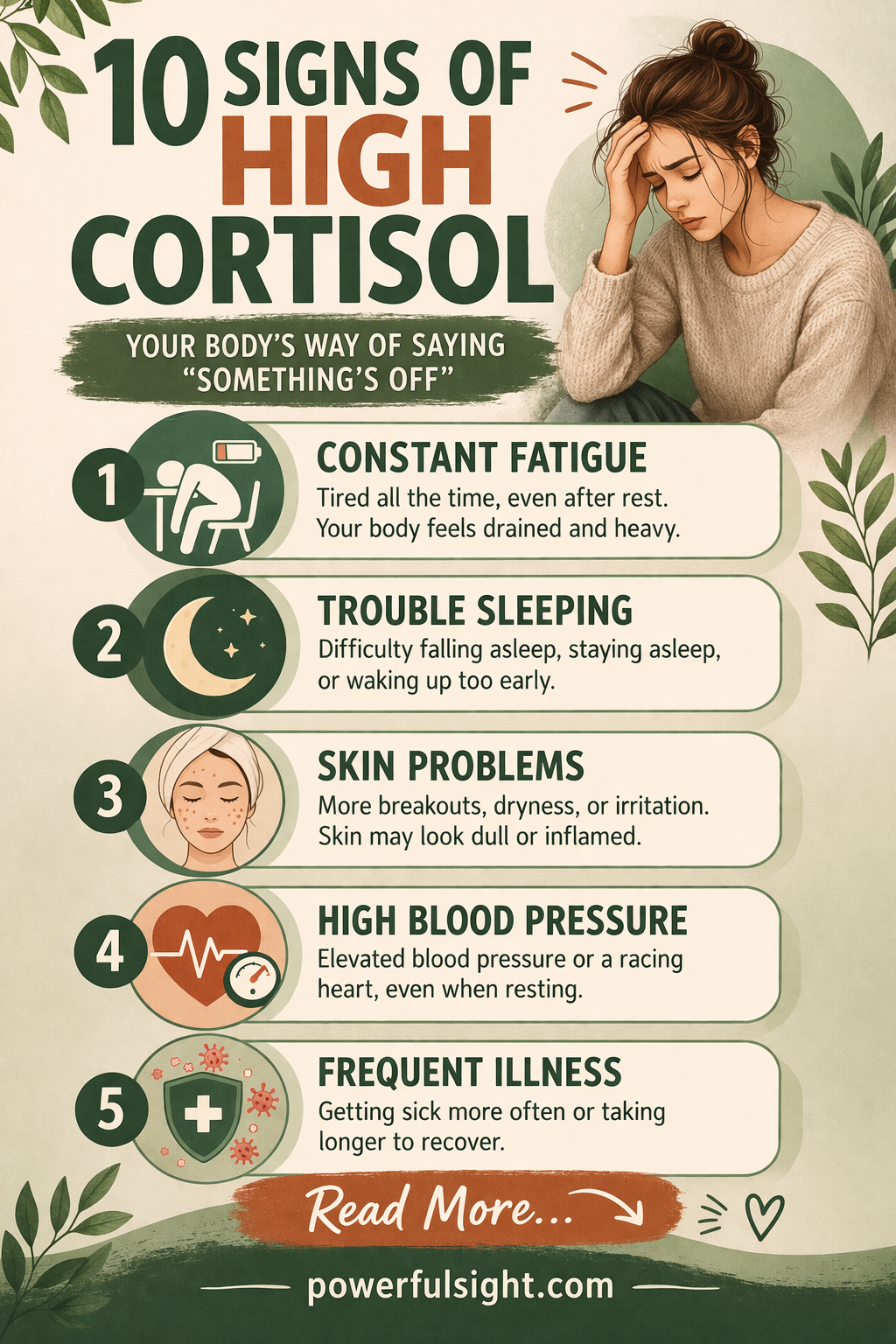

- 10 Signs Of High Cortisol - 03/04/2026
- 15 Foods That Help Blood Sugar Management - 03/04/2026
- 11 Effective Cortisol Reducing Food To Try - 03/04/2026

