There was a season in my life where everything felt heavy.
Not overwhelming. Not chaotic. Just a quiet, exhausting heaviness.
I would wake up each morning tired—not physically, but emotionally drained. Burned out on a level that sleep couldn’t fix.
I knew I had dreams, passions, and things I once cared about, but I couldn’t muster even the slightest enthusiasm for them anymore. It felt like the color had drained from everything, and I was just existing in shades of grey.
The worst part? Everything looked fine from the outside. On social media—and even in real life—people thought I was doing okay. But inside, I felt stuck. Lost. Trapped. And honestly… hopeless.
Here’s the thing about feeling hopeless:
It doesn’t always come from one big life event. Sometimes, you just drift into it—bit by bit, day by day—until one morning you wake up and realize…
You don’t believe things will ever get better.
If that sounds like you, please know this:
Hope is never gone forever. You don’t just “get it back.”
You build it.
Slowly. Piece by piece.
And today, I’m going to show you how.

Why People Feel Hopeless
Before we talk about rebuilding hope, we need to take a step back.
You didn’t wake up one day and suddenly lose it. There were factors that led you here—experiences that mattered.
Understanding why you feel this way is the first step toward finding your way back.
Here are some of the most common reasons:
1. Burnout
You’ve pushed yourself for too long without rest or reward. Eventually, your brain stops expecting positive outcomes—and with that, hope fades.
2. Repeated Disappointment
It’s not one failure—it’s many. Over time, those setbacks convince you that trying again isn’t worth it.
3. Emotional Pain
Breakups, betrayal, loss—pain teaches your mind to protect itself. One way it does that is by shutting down hope.
4. Lack of Direction
When you don’t know where you’re going, it’s hard to feel hopeful about the future.
5. Comparison
Social media amplifies this. Constantly seeing others’ “highlight reels” makes it easy to feel behind.
6. Toxic Environment
Negative people, constant bad news, or even harsh self-talk can slowly drain your sense of hope.
Hope fades when your mind no longer sees a believable path forward.
Related: 180 Inspirational Quotes About Hope In Hard Times
Signs You May Be Feeling Hopeless
You may not even realize it’s happening. It often shows up in subtle behavioral changes:
- You’ve become apathetic about things you used to care about
- You don’t set goals anymore
- You’ve stopped dreaming about the future
- You focus more on what’s going wrong than what’s going right
- You feel emotionally numb
- You procrastinate more than usual
- You avoid opportunities, thinking “what’s the point?”
- You’re more self-critical than ever
- You feel alone
One of my clients once told me:
“It’s not that I think life will be terrible… it’s that I don’t think it’ll get better.”
That’s what hopelessness often feels like—not intense despair, but quiet, persistent apathy.
Related: How To Relax After Work: 14 Ways To Unwind
How to Feel Hopeful Again
If you wait for hope to return on its own, it won’t.
Hope is rebuilt through action—through consistent effort, even when you don’t feel ready.
Here are 7 steps to help you rebuild it:
1. Shift Your Negative Self-Talk
Hope is influenced by the stories you tell yourself.
Instead of forcing positivity, shift from absolutes to possibilities:
- “Nothing ever works out for me” → “Some things haven’t worked out for me”
- “I’ll never reach my goals” → “I don’t know how I’ll reach my goals yet”
This shift creates space for hope to return.
2. Reconnect With Your “Why”
Ask yourself:
- What used to excite me?
- What kind of life do I want?
- What truly matters to me?
You don’t need all the answers—just a reason to move forward.

3. Create Small Wins
Big goals can feel overwhelming when you’re struggling.
Start small:
- Make your bed
- Take a short walk
- Complete one task
- Drink more water
- Send that message
Small wins rebuild momentum—and momentum fuels hope.
4. Limit Negative Inputs
Be honest with yourself:
- Are you consuming too much negative content?
- Following people who make you feel inadequate?
- Surrounded by negativity?
Replace that input with:
- Positive podcasts
- Uplifting content
- Meaningful conversations
- Journaling
- Quiet time
What you consume shapes how you feel.
5. Practice Gratitude (The Right Way)
Gratitude isn’t about ignoring problems—it’s about noticing what’s still good.
Instead of vague statements, be specific:
- “I’m grateful I enjoyed my coffee this morning.”
- “I’m grateful today felt slightly better than yesterday.”
Specificity makes gratitude real.
6. Take Action Before You Feel Ready
Waiting for motivation is a trap.
Action creates motivation—not the other way around.
Do one thing today that you’ve been avoiding.
Start first. Motivation will follow.
7. Surround Yourself With Support
You’re not meant to do this alone.
Find people who:
- Encourage you
- Listen to you
- Believe in you
This could be a friend, mentor, coach, or supportive community.
Sometimes, you just need to borrow belief until you rebuild your own.
Mindset Shifts That Help
Let these sink in:
- “I am not defeated.”
- “This is not the end of my story.”
- “I don’t need everything figured out to move forward.”
- “I may never feel ready—and that’s okay.”
- “Setbacks are lessons, not failures.”
- “I don’t need to find hope. I can build it.”
Daily Habits to Rebuild Hope
You don’t need a complete life overhaul—just consistent, simple practices.
Morning Reset (5–10 minutes)
- Take deep breaths
- Set a simple intention
- Remind yourself: “Today is a new day”
Movement (10+ minutes)
- Walk
- Stretch
- Exercise
Movement quickly improves mood.
Daily Wins
Each evening, write down:
- One thing you did well
- One thing you improved
Mindful Breaks
- Step away from your phone
- Sit in silence
- Let your mind reset
Connection
- Call or message someone
- Have a real conversation
Small habits, repeated daily, create real change.
What to Avoid
1. Waiting for Big Breakthroughs
Hope builds through small, consistent actions.
2. Comparison
Don’t compare your beginning to someone else’s middle.
3. Trying to Fix Everything at Once
Focus on one area at a time.
4. Ignoring Your Feelings
Acknowledge them—but don’t stay stuck in them.
5. Giving Up
Progress takes time. Keep going.
Conclusion
If you remember nothing else, remember this:
You’re not broken.
You’re not behind.
You’re not out of time.
You are simply paused.
I’ve been there more times than I can count. And every time I found my way back, it wasn’t through one big breakthrough.
It was through small steps.
Tiny decisions that eventually led to big change.
So do one thing from this list.
Right now.
Don’t overthink it. Don’t wait until you feel ready.
Just act.
Hope won’t return overnight—but if you keep showing up, day after day…
You’ll feel it coming back.
Slowly.
Quietly.
Surely.
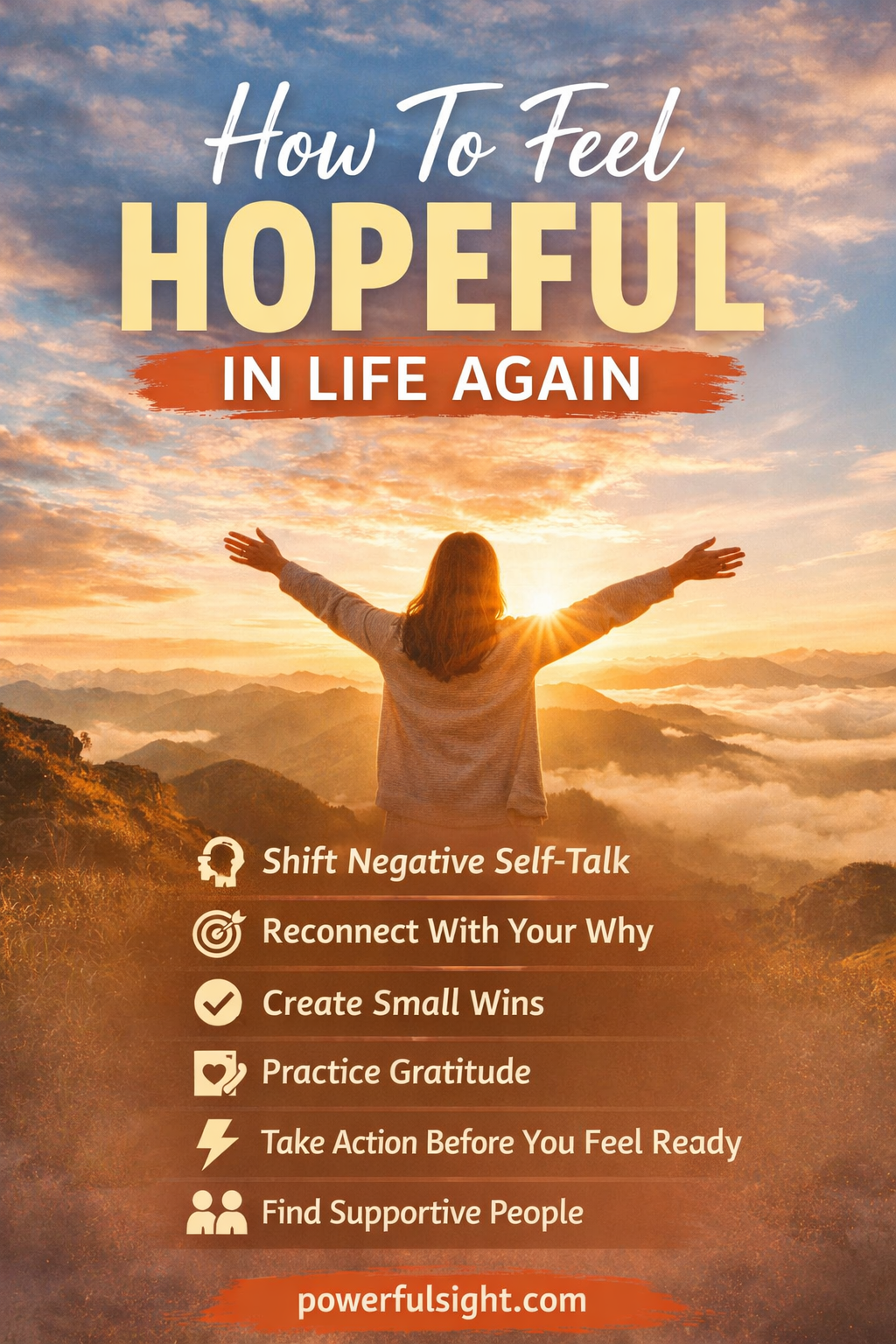
Save the pin for later

- How To Handle Toxic People - 11/04/2026
- How To Feel Hopeful In Life Again - 11/04/2026
- Why Do Guys Never Text First? 18 Reasons - 10/04/2026

