Kindergarten is the perfect time to help children notice feelings, name them, and handle them in simple ways. When kids start learning emotional intelligence early, they can share more easily, wait their turn, speak kindly, and calm down faster when big feelings show up.
That matters in a busy classroom or at home, where small moments can turn into tears, frustration, or shut-downs. With the right emotional intelligence activities for kindergarten, you can teach these skills through pictures, play, stories, movement, and short talks that fit young children well.
These ideas are simple enough to use right away, and they give kids practice with empathy, self-control, and communication.
Why emotional intelligence matters so much in kindergarten
Kindergarten is often the first place where children spend long stretches with peers, follow group directions, and handle small frustrations without a parent right beside them. That makes emotional intelligence a daily need, not a nice extra. When children can spot a feeling, name it, and choose a calm response, the whole classroom runs with less struggle.
It also gives kids a stronger base for learning. A child who can say “I’m worried” or “I feel mad” is already one step closer to asking for help instead of melting down. That simple shift can change how they handle friendships, rules, and hard moments in the day. For a broader look at how emotional skills support early learning, NAEYC explains why emotional intelligence matters in early childhood.
What young children learn when they name their feelings
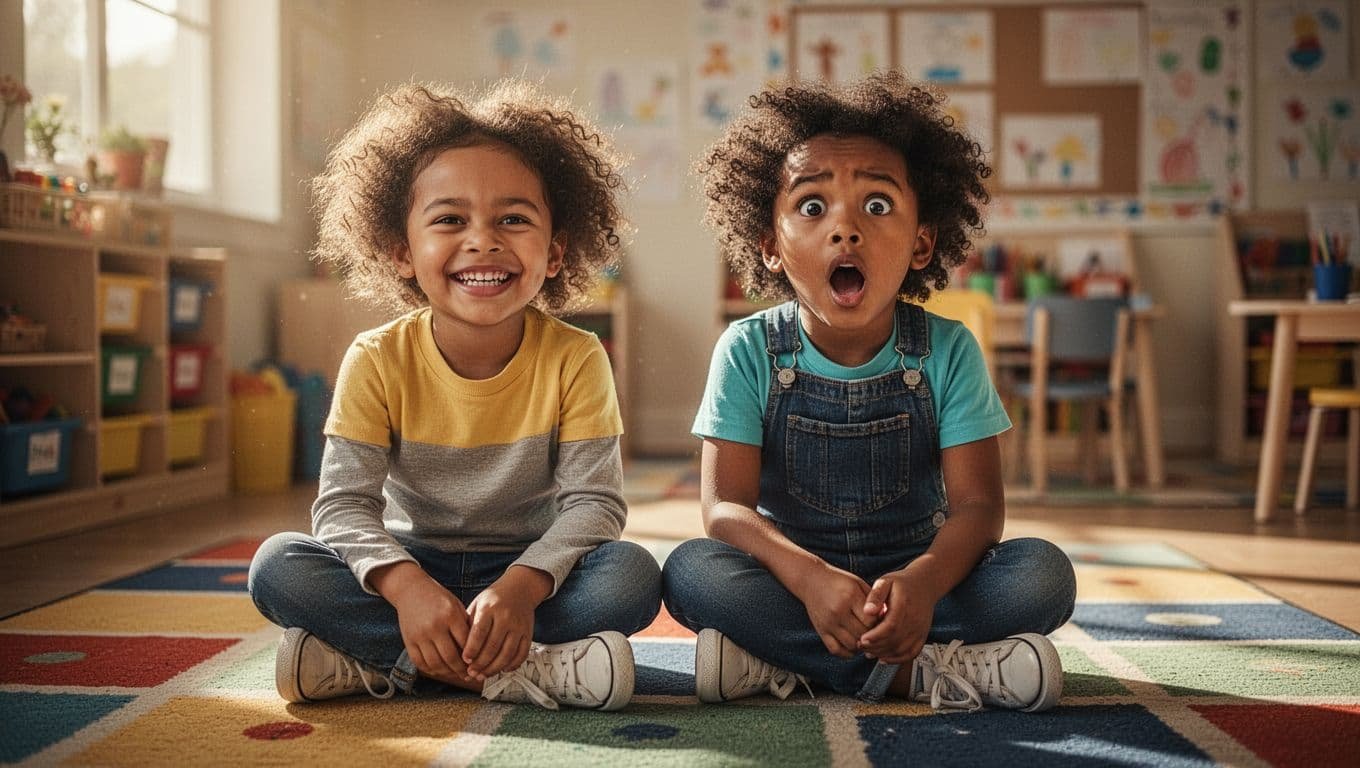
When a child learns words like happy, sad, mad, worried, and calm, those words act like labels on a messy box of toys. Everything inside starts to make more sense. The child may not fix the feeling right away, but they can finally see it for what it is.
That matters because unnamed feelings often spill out as tears, yelling, silence, or pushing. Once a child can say what hurts, adults can help in a clearer way. A simple sentence like “I’m mad because I wanted that block” gives the child a starting point for repair, breathing, or waiting.
Naming feelings also builds self-awareness. Children begin to notice patterns, like feeling worried during loud times or calm during quiet play. Over time, that awareness becomes the first step in self-control, since kids cannot manage what they cannot name. If you want a simple framework for building those skills, developing emotional intelligence starts with recognizing what a feeling looks and sounds like.
How emotional skills support behavior, sharing, and friendship
Emotional intelligence shows up in the smallest kindergarten moments. A child who can pause before grabbing a toy is more likely to take turns. A child who can hear “wait” without falling apart is more ready to follow directions and stay with the group.
It also helps children solve everyday problems without turning every disagreement into a crisis. When kids can say, “Can I have a turn next?” or “I don’t like that,” they use words instead of reactions. That makes sharing easier, friendships smoother, and classroom time less bumpy.
Young children do best when feelings are handled early, before frustration takes over.
Even simple classroom routines depend on these skills. Listening during circle time, cleaning up after play, and calming down after disappointment all ask a child to manage emotion first. Kids with stronger emotional skills usually recover faster, which means they can return to learning, playing, and connecting with others.
How to use these emotional intelligence activities without making them feel like a lesson
Kindergarteners respond best when emotional learning feels like part of play, not a lecture at the front of the room. Keep the tone light, the steps short, and the pace easy to follow.
That usually means brief games, simple words, and lots of movement. A child should be able to join in without sitting through a long explanation first.
Keep directions short and use pictures, gestures, and examples
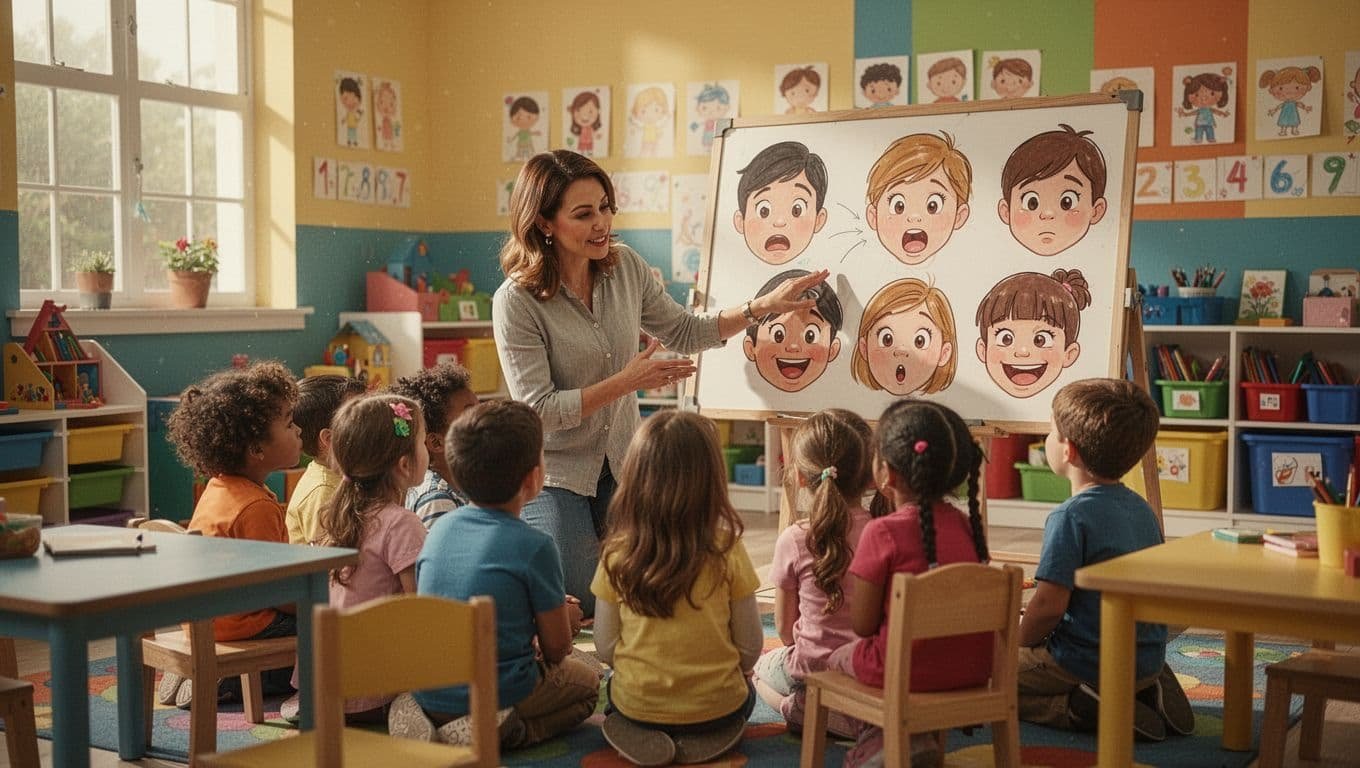
Young children follow along better when they can see the feeling, not just hear about it. A face, a hand motion, or a picture card often works better than a long talk.
Start by showing the emotion yourself. Smile wide for happy, fold your arms for mad, or make a slow, soft breath for calm. Then let the children copy you. If you want a deeper guide for building this kind of awareness at home, teaching children empathy can also help connect feelings to kind actions.
You can also keep the language plain:
- “Show me a happy face.”
- “Point to the scared card.”
- “How does your body look when you feel mad?”
Simple directions leave less room for confusion. They also keep the activity moving, which matters when children are still learning how to focus.
If a child looks lost, shorten the task instead of explaining more.
Visuals help the lesson stay friendly. Emotion cards, story pictures, and facial expressions turn an abstract idea into something a child can hold in mind. For example, before a turn-taking game, show a picture of a child waiting calmly. That small image can guide the whole activity.
Repeat the same activities often so the skills stick
Consistency matters more than variety. A child usually needs the same emotion game many times before it feels familiar.
That repetition is a good thing. It gives kids a safe routine, and they start to know what comes next. As a result, they can focus on the feeling skill instead of figuring out the rules again. NAEYC notes that emotional intelligence in early childhood supports attention, relationships, and school success, which is one reason short repeated practice works so well.
You do not need a new activity every day. In fact, repeating the same one with tiny changes often works better. Try using the same feelings game:
- during morning circle,
- after recess,
- before cleanup time.
That kind of rhythm makes the skill feel normal. The child learns, “I know this game, so I know what to do.”
Short routines also fit real kindergarten energy. Children come and go from excitement to frustration fast, so emotional learning should move with them. A quick matching game, a breathing break, or a role-play moment is often enough. For more ideas on building strong habits early, these life skills for kids show how small daily practices add up over time.
Keep the goal simple. Let the child hear the feeling, see it, and practice it again. That steady rhythm does more than a big speech ever will.
Emotion recognition games that help children spot feelings fast
Young children learn emotions best when they can move, guess, point, and copy. These games keep the focus on faces, body clues, and everyday situations, so feelings start to feel clear instead of confusing. Use a few of them often, and the words happy, sad, mad, scared, and surprised will begin to stick.
Feelings charades with simple emotion cards
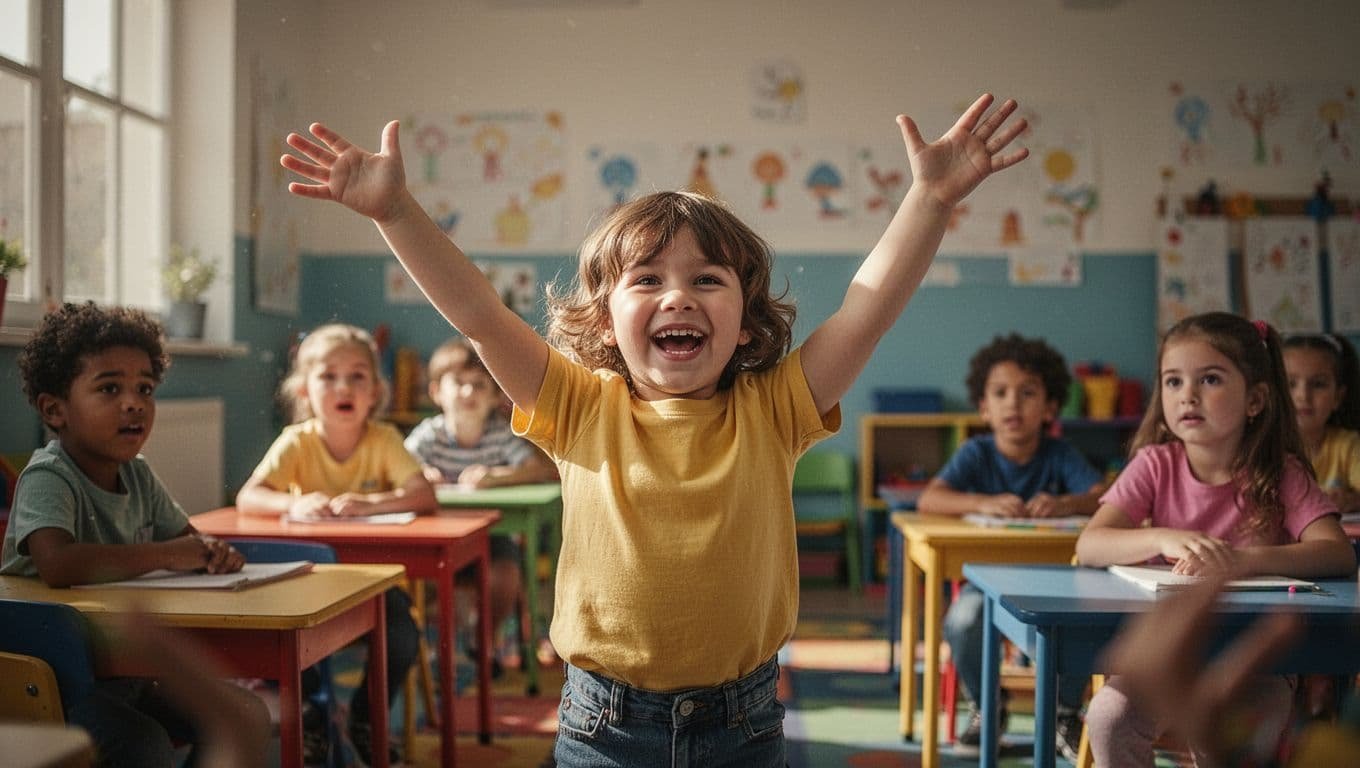
This game turns emotions into action. Give one child an emotion card, then ask them to act it out while the class guesses. A child might beam for happy, droop their shoulders for sad, cross their arms for mad, cover their face for scared, or open their eyes wide for surprised.
The fun is in the guessing, but the learning goes much deeper. Children begin to notice facial awareness because they watch eyebrows, mouths, and eyes closely. They also learn body language recognition, since a feeling often shows up in posture before words ever come out.
This game also builds confidence. Speaking in front of classmates can feel big, yet charades gives children a safe way to take the stage. Even shy kids often join in once they see that the room is cheering them on.
For the clearest results, keep the first round simple. Use just one emotion card at a time, and ask the class to name the feeling after the guess. Then let a few more children try. A quick turn-taking rhythm keeps the energy high and the attention sharp.
Mirror faces for noticing expressions
A mirror game helps children study their own faces up close. Place a hand mirror in front of each child, or have them stand in pairs and copy one another. Call out an emotion, and let them make the matching face.
A child can scrunch their nose for mad, make soft eyes for sad, or lift their eyebrows for surprised. Then you can ask, “What changed on your face?” That small question helps them notice the parts of an expression instead of just the whole feeling.
This activity is powerful because it connects the inside with the outside. Children start to see that what they feel inside often shows up on their face, and other people can read it too. That connection is a big step toward empathy and self-awareness.
Use a mirror game after a story or before a calm-down break. It gives children a chance to slow down, look, and compare. A simple guide to teaching children about emotions can also give you more playful ideas to pair with this kind of work.
Emotion matching with pictures, words, and situations
Matching games help children connect a feeling to a face and a reason. Set out three sets of cards, one with emotion words, one with pictures of faces, and one with short situations. Then ask children to find the right matches.
For example, a child might match:
- “sad” with a droopy face and losing a toy
- “happy” with a smiling face and getting a hug
- “mad” with a tense face and someone taking a turn too soon
- “scared” with a wide-eyed face and hearing a loud noise
- “surprised” with a shocked face and seeing a birthday cake
This kind of game helps children understand that feelings do not appear for no reason. They have triggers, and those triggers matter. When a child links a feeling to a real moment, they start to build better emotional language.
You can make it even easier by using only two sets at first, then adding the third when the child is ready. Some children will match the face to the word first. Others will go straight to the situation. Both paths work.
Feelings sort and color mood choices
Sorting games give children a simple way to organize what they feel. Use color cards, emoji faces, or small feeling jars, then let children place each picture where it belongs. Red might stand for mad, blue for sad, yellow for happy, and green for calm.
Colors work well because they are easy to spot fast. A child who cannot yet explain a feeling may still point to a color that fits. That gives them a clear way to speak without needing a full sentence.
You can place out a few color choices and ask, “Which color feels like your mood today?” Or hand out emoji faces and let children sort them into baskets labeled with different colors. Either way, the child gets practice naming a feeling in a low-pressure way.
When words get stuck, a color choice can do the talking.
A feelings jar can make this even more concrete. Put a color chip or small card into the jar that matches the child’s mood. Over time, children begin to see patterns in their choices, and that makes talking about emotions feel more normal.
Keep the games short, clear, and repeatable
These emotion recognition games work best when they feel light and familiar. Five minutes is often enough, especially with kindergarten attention spans. Short rounds help children stay with the activity and leave room for practice later in the day.
Repetition matters too. A child may need to guess the same feeling many times before it clicks. That is normal. Each round builds a stronger link between the face, the body, and the feeling word.
A simple rotation works well:
- Start with charades.
- Move to mirror faces.
- Finish with matching or sorting.
That pattern keeps the lesson fresh without making it feel complicated. The more often children see the same feelings in different forms, the faster they learn to spot them in real life.
Activities that help kids put feelings into words
Once children can spot a feeling, the next step is helping them say it out loud. That shift matters, because a feeling that stays locked inside often comes out as tears, silence, or a quick snap at a classmate.
These activities give kindergarten kids a safe bridge from emotion to language. They can point, draw, or use simple words until speaking feels easier. For children who need extra support with worry or fear, understanding childhood anxieties can also help adults respond with more care.
Feelings circle time check-ins
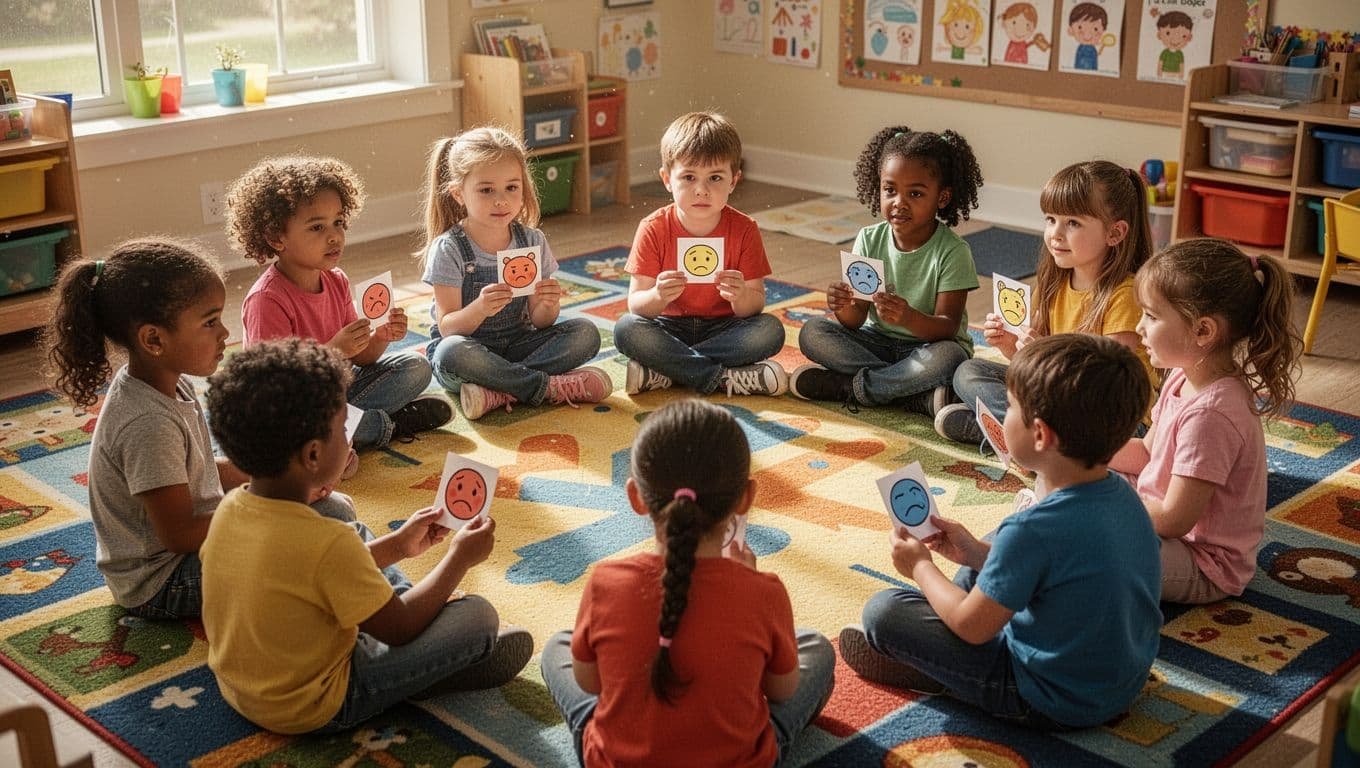
A daily check-in gives each child a small, steady moment to share a mood. You can pass around a card, an emoji face, or a color choice, then ask children to show how they feel today. One child may hold up blue for sad, while another chooses yellow for happy.
This routine builds trust because children learn that their feelings have a place in the room. It also helps adults notice who may need extra support that day, which can change how you guide them through play, group work, or transitions.
Keep it short and calm. A simple “I feel…” response is enough, and children who are not ready to speak can still point or hold up a card.
Emotion drawing with real-life moments
Some children find it easier to draw a feeling than explain it right away. Ask them to picture a time they felt happy, mad, hurt, or worried, then draw what happened. The picture can show a face, a place, or even a small moment from home or school.
Drawings take the pressure off speech. A child can share a crayon scene first, then tell the story behind it when they feel ready. That makes follow-up talk feel gentle instead of forced.
For example, a child might draw a playground scene with a fallen friend and say, “I felt sad when that happened.” That one sentence gives you a clear opening for comfort and problem-solving. Expressive art activities can also help children open up when words feel too big.
Sentence starters that make speaking easier
Many kindergarteners know what they feel, but they do not yet know how to say it. Sentence starters give them a simple path in. Phrases like “I feel ___ when ___” and “I need help with ___” turn a vague feeling into a usable message.
You can say the sentence aloud first, then let children repeat it with their own words. Some may need to point to a picture or whisper the first part before finishing the sentence. That is still progress.
A few easy starters work well:
- “I feel ___.”
- “I feel ___ when ___.”
- “I need help with ___.”
- “I feel better when ___.”
- “Can you help me with ___?”
These small frames support children who understand emotion but freeze when it is time to talk. They also make it easier for classmates to hear needs clearly, which can prevent small problems from growing into bigger ones.
Calm-down practice that teaches children what to do when feelings run high
Emotional intelligence is not only about spotting feelings. It also means knowing what to do with them when they feel big, loud, or sticky. Kindergarten children need simple calm-down steps they can remember in the middle of frustration, not just words for happy or sad.
The best practices are short, playful, and easy to repeat. When children learn a few steady tools, they can settle their bodies and make better choices before the moment gets bigger.
Breathing bubbles, finger breathing, and other kid-friendly calm tools
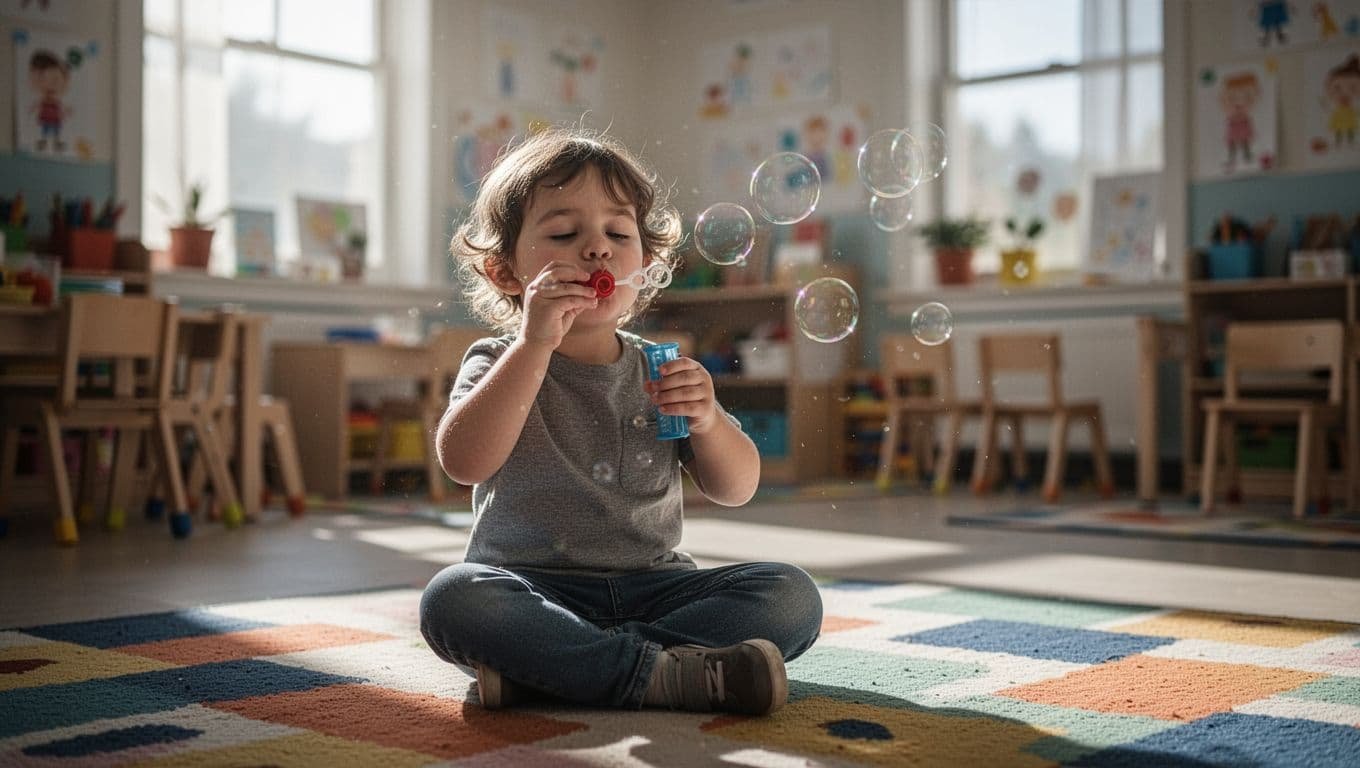
Slow breathing works best when it feels like a game. Children can blow pretend bubbles, trace each finger with a slow breath, or imagine they are smelling a flower and blowing out a candle. These images give the breath a shape, which makes the skill easier to remember under stress.
Keep the motion simple. Ask the child to breathe in through the nose, then blow out slowly through the mouth. A few calm breaths are enough, especially when you practice often during quiet moments.
A few easy tools work well together:
- Bubble breaths: Take a slow breath in, then blow out like making a bubble float away.
- Finger breathing: Trace one finger up on the inhale and down on the exhale.
- Flower and candle breathing: Smell the flower, then blow out the candle.
- Balloon breaths: Pretend the belly fills up like a balloon, then slowly let the air out.
These tools stay with children because they are visual and playful. When feelings run high, a child can remember, “I blow the bubbles,” without needing a long reminder. For more ideas that pair well with breathing practice, simple mindfulness techniques for students can give children short breaks that calm both body and mind.
Counting, squeezing, and other hands-on ways to reset
Some children calm down better when their hands are busy. Counting to five gives the mind a small job, while squeezing a pillow or stress ball helps release tight energy from the body. Pressing palms together can also give a child a firm, steady feeling when emotions start to wobble.
Movement matters here. Young children often carry frustration in their shoulders, hands, and legs, so a small action can help them reset. When they squeeze, press, or hug something soft, their body gets a clear message that it is safe to slow down.
Try a few options and let the child pick what feels best:
- Count slowly to five together.
- Hug a pillow or stuffed animal.
- Squeeze a stress ball or playdough.
- Press both hands together and hold for a few seconds.
- Stretch arms up, then bring them back down.
A calm body is easier for a young child to guide than a busy one.
The goal is not perfect stillness. It is a better next choice. A child who can count, squeeze, or stretch is already practicing self-control in a way that fits their age.
A calm corner that feels safe, not like punishment
A calm corner works best when it feels warm and welcoming. Set up a small spot with a soft rug, a pillow, a stuffed animal, and a few emotion pictures. Add simple tools like a breathing card, a fidget, or a small book with calm images.
The message should stay clear: this space is for recovery, not shame. Children should not feel sent away for having feelings. Instead, they should see the corner as a place where they can regroup and come back ready.
A helpful calm corner might include:
- soft seating or a cushion,
- emotion faces or feeling cards,
- a timer or sand timer,
- a squeeze toy or stress ball,
- a book or picture of calm actions.
Use a gentle script when sending a child there. Try, “Your body needs a break. Let’s go calm down and try again.” That keeps the tone kind and steady. The space should help a child feel safe enough to return to the group with a clearer mind, not smaller or embarrassed.
When calm-down practice becomes part of the routine, children stop seeing it as a punishment and start seeing it as a tool. That shift helps them pause, reset, and make better choices the next time big feelings show up.
Storytelling and role-play that build empathy and problem-solving
Stories and pretend play give children a safe way to step into someone else’s shoes. A lost toy, a worried puppy, or a friend left out at recess can open the door to real empathy.
These activities work because they feel playful, not heavy. Children can listen, act, talk, and try again, which makes the lesson stick.
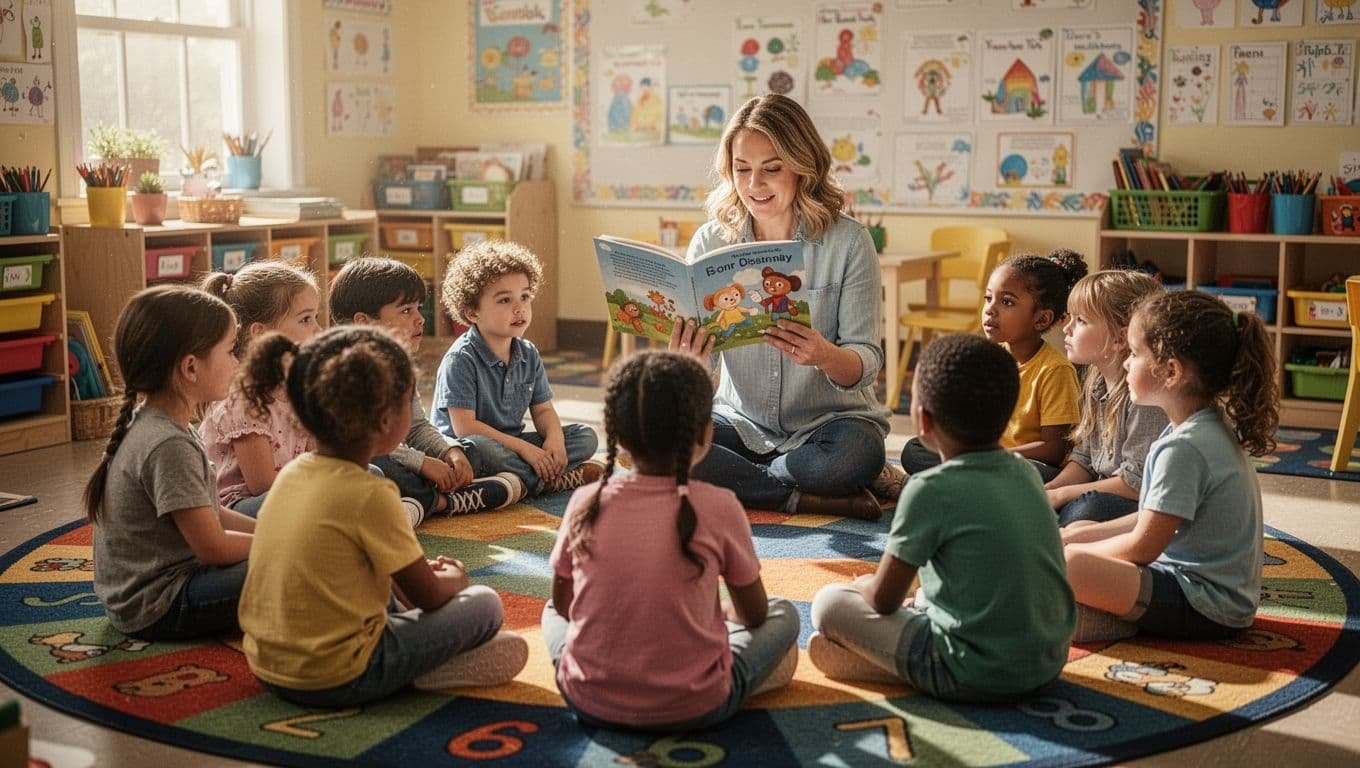
Pause during story time to ask how characters feel
Stop at a key moment and ask, “How does that character feel right now?” Then ask why. A child may notice that the character looks sad because a friend walked away, or nervous because the room got loud.
These small pauses train children to watch feelings closely. They also build reading comprehension, because kids must track the story, follow the clue, and explain what might happen next.
You can keep it simple with questions like:
- “What is the character feeling?”
- “What happened to make them feel that way?”
- “What could help them now?”
That kind of talk turns story time into a practice round for empathy. Children learn that feelings have reasons, and reasons matter.
Role-play common kindergarten problems
Pretend play works well because it lets children rehearse hard moments before they happen. Waiting for a turn, sharing blocks, asking for help, or losing at a game all feel easier after a little practice.
Try short scenes that look like real classroom life. One child can pretend to want the blue crayon while another is using it. Then let the children act out what to say and what to do next.
Role-play gives kids a script for the real moment. It also helps them see both sides of a problem. That can be as simple as switching roles and trying the same scene again.
Helpful practice scenes include:
- waiting for a turn on the slide,
- sharing blocks during play,
- asking a teacher for help,
- comforting a friend who feels left out.
For more ideas on raising children who consider others, teaching children to consider others’ feelings fits well with this kind of practice.
Kind words practice for helping and repairing
Words matter in the middle of a small conflict. Simple phrases like “Are you okay?,” “Can I help you?,” and “I am sorry” give children a gentle way to reach out.
Say the phrases out loud, let the class repeat them, then use them in pretend scenes. A child who practices kind words during calm time is more likely to use them when feelings are hot and hands are busy.
You can also pair words with actions. A soft voice, a helping hand, or a hug with permission makes the repair feel real. That mix of speech and action helps children understand that kindness is something they do, not just something they say.
A few easy repair phrases work well:
- “Are you okay?”
- “Can I help you?”
- “I am sorry.”
- “Do you want a turn next?”
- “Let’s try again.”
Storytelling and pretend play work best when they happen often. A short book talk, a quick puppet scene, or a two-minute role-play can teach more than a long lecture ever will.
Easy ways to make emotional intelligence part of the day
Emotional intelligence grows best in small, repeatable moments. A child does not need a long talk about feelings to start learning, they need practice during the day they already live. Morning greetings, snack time, cleanup, and goodbye time all give you chances to notice emotions, guide behavior, and keep the language simple.
The goal is to make these habits feel normal. When adults use the same calm words and steady routines every day, children begin to copy them. That is how emotional learning moves from a lesson on the wall into real life.
Use morning arrival, snack time, and cleanup as mini teaching moments
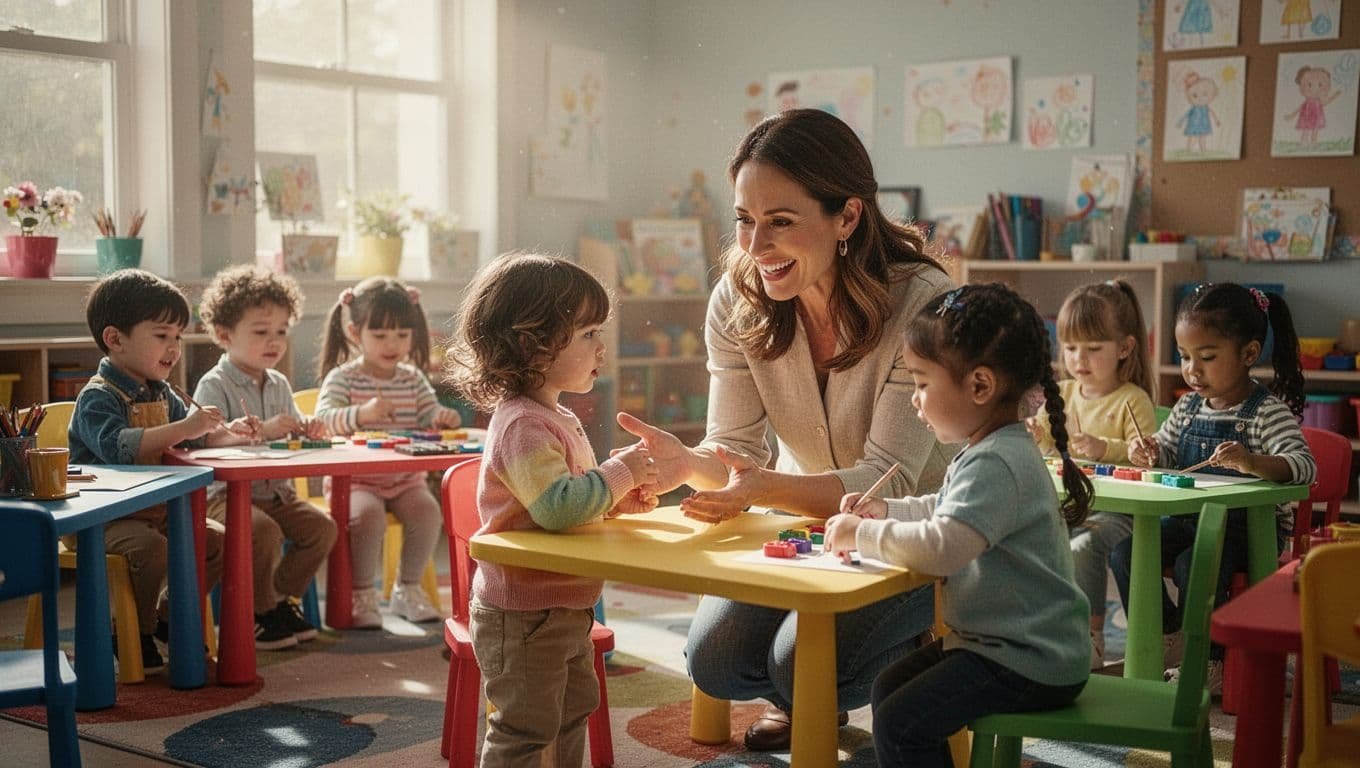
Routine moments are perfect for quick emotional check-ins. At arrival, greet each child by name and ask a simple question like, “How are you feeling today?” During snack time, notice who is waiting patiently, sharing, or getting frustrated, then name what you see in a calm voice.
Cleanup gives you another chance to guide without stopping the day. You can say, “I see you used kind hands,” or “Thank you for waiting your turn.” Those small comments teach children that emotional control and kindness matter just as much as finishing the task.
You can also use these moments to model patience. If a child spills juice or struggles with a zipper, slow your own voice and body down. Children learn from the tone you use, not just the words you say. Daily classroom routines that support emotional intelligence work best when adults stay steady and kind.
Notice progress and celebrate small emotional wins
Big growth starts with tiny signs. A child who says “I’m mad” instead of crying has made progress. So has the child who takes one deep breath, waits a minute, or helps a friend pick up blocks.
Keep your praise focused on the action, not perfection. Say, “You used your words,” or “You calmed your body before talking.” That kind of feedback shows children exactly what to repeat next time.
It helps to watch for the quiet wins too. Maybe a child joins circle time after feeling upset, or maybe they offer a tissue to a classmate. Those moments may look small, but they show a child is building emotional strength one step at a time.
Small wins matter because they show a child can pause, choose, and try again.
A short note home can help parents notice the same progress. When school and home use the same language, children hear a steady message all week. That consistency matters, and it supports the kind of habits described in why emotionally intelligent people are happier.
Match activities to home or classroom needs
Not every child needs the same kind of support. Some need help calming a busy body, while others need more practice naming feelings or showing empathy. If a child melts down often, calming games and breathing tools may help most. If a child struggles to read others, story talk and role-play may fit better.
Choose activities that match the child’s current stage, not the one you hope they reach tomorrow. A child who cannot yet say “I feel worried” may need picture cards before sentence starters. Another child may already know the words, but still need practice using them during conflict.
You can keep the week balanced with a simple routine:
- Use a feeling check-in on Monday.
- Practice a calm-down tool on Tuesday.
- Try a role-play on Wednesday.
- Read a story about feelings on Thursday.
- Review kind words and repair on Friday.
Teachers can do this in five minutes at morning meeting. Parents can do the same at breakfast, bath time, or bedtime. Emotional learning sticks when adults treat it like brushing teeth, something simple that happens again and again.
Conclusion
These emotional intelligence activities for kindergarten work because they meet children where they are, with pictures, play, movement, and short chances to try again. When kids name feelings, practice calm-down tools, and rehearse kind words, the lesson starts to stick.
The real progress comes from repetition. A few playful activities used often will do more than one big speech about feelings, because young children learn by doing the same skill over and over until it feels natural.
Keep it simple, keep it warm, and stay patient as they grow. Over time, those small daily moments help kindergarteners build better friendships, stronger self-control, and a kinder classroom life.
Save the pin for later

- 60 Color Tattoos That Healed Beautifully - 25/09/2026
- 40 Most Painful Tattoo Spots - 24/09/2026
- 20 Tattoo Aftercare Mistakes That Ruin Fresh Ink - 23/09/2026

