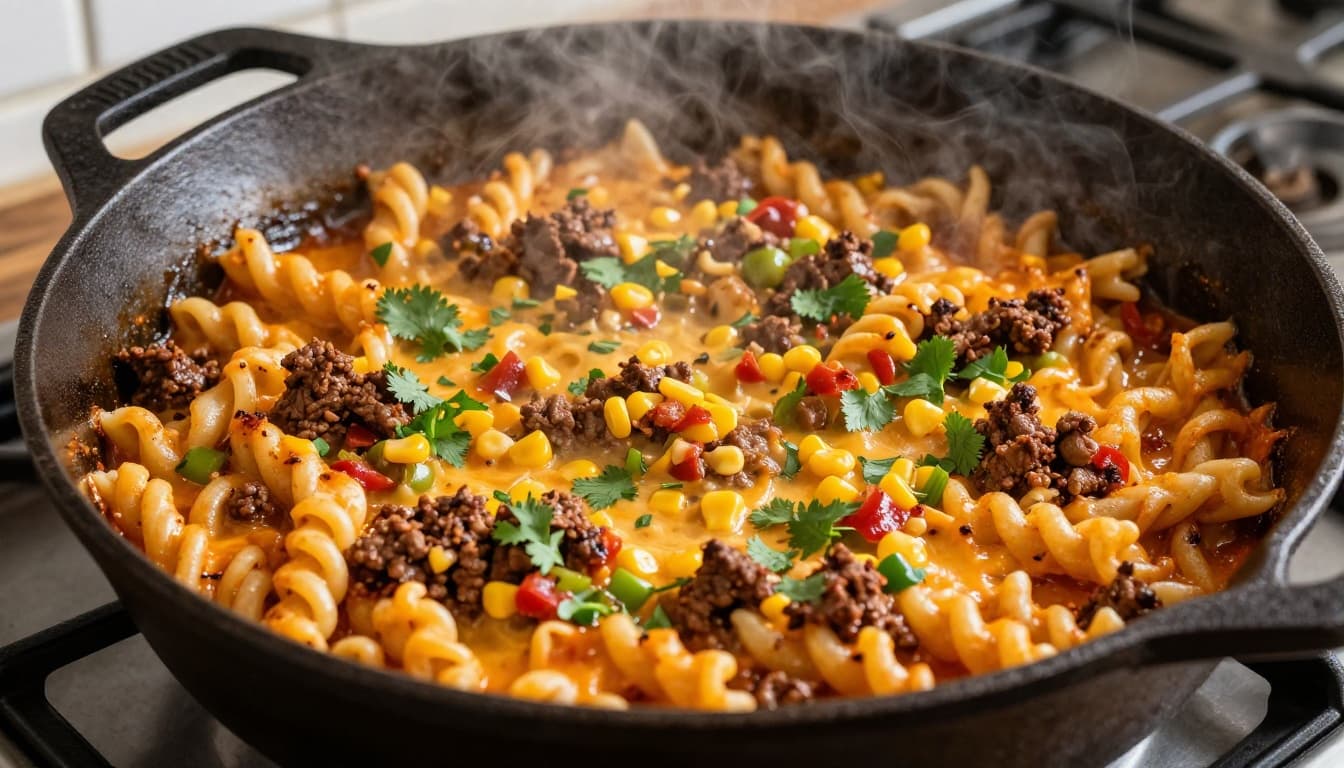
One-pan taco pasta brings taco night, pasta, and easy cleanup into one skillet, which is exactly what busy weeknights need. It’s quick, cheesy, and made with simple pantry ingredients, so you can get dinner on the table without a long grocery list or a sink full of dishes.
It also works well for picky eaters and budget-friendly family meals because the flavors are familiar, filling, and easy to adjust. If you want a warm, crowd-pleasing dinner that doesn’t take much effort, this recipe fits the bill.
Why One-Pan Taco Pasta Works So Well on Busy Nights
One-pan taco pasta checks a lot of weeknight boxes at once. It’s fast, filling, easy to adjust, and built around flavors most people already like. That makes it a smart choice when you want dinner on the table without a long prep list or a pile of dishes.
The flavor combo that makes it an easy win
Taco seasoning gives the dish its bold, familiar backbone. Salsa adds tang, moisture, and a little heat, while ground beef makes it hearty enough to feel like a real meal. Then the cheese pulls everything together with a creamy finish that softens the spice and makes each bite feel comforting.
That mix works well because it hits familiar comfort-food notes without tasting plain. Kids usually like the cheesy pasta and mild taco flavor, and adults enjoy the savory, layered taste. If you want a dinner that feels like taco night but eats like pasta, this is an easy yes.
Why one pan saves time and effort
Cooking everything in one skillet or deep pan cuts the work in half. You brown the beef, stir in the pasta and sauce, then let it all simmer together. That means less measuring, less stovetop juggling, and fewer dishes waiting in the sink.
It also makes weeknight cooking feel more manageable. You can keep an eye on one pan, serve straight from it, and move on with your evening. For another simple dinner that follows the same easy pattern, try one-pot shredded beef ramen.
One pan does more than save cleanup time, it keeps dinner simple enough to actually use on a busy night.
What makes it budget-friendly and family-friendly
This recipe leans on simple ingredients like pasta, ground beef, taco seasoning, salsa, and cheese. Those are common pantry and fridge staples, so you can often make it without a special grocery run. In many kitchens, that alone makes it a repeat dinner.
It also stretches well for families. Pasta adds volume, beef adds protein, and the sauce ties everything together so it feeds a crowd without much cost. Meals like this stay popular because they feel generous, even when the ingredient list stays short.
What You Need to Make It Taste Great
The flavor in one-pan taco pasta comes from a few basic ingredients working together. Each one has a job, and when you use them well, the skillet tastes rich, balanced, and satisfying instead of flat.
The base ingredients that build the skillet
Start with ground beef, because it gives the dish a savory, hearty backbone. As it browns, it adds depth and a little richness to the sauce, which helps the pasta taste like a full meal.
Onion and garlic do the flavor lifting early. Onion brings sweetness as it softens, while garlic adds that warm, familiar aroma that makes the whole kitchen smell like dinner is already halfway done.
Taco seasoning is what gives the recipe its bold taco flavor. It usually brings chili powder, cumin, paprika, garlic, and salt into one easy blend. If you want a more detailed breakdown of pasta cooking styles, Bon Appétit’s pasta shape guide is a helpful reference for home cooks who like to match shape with sauce.
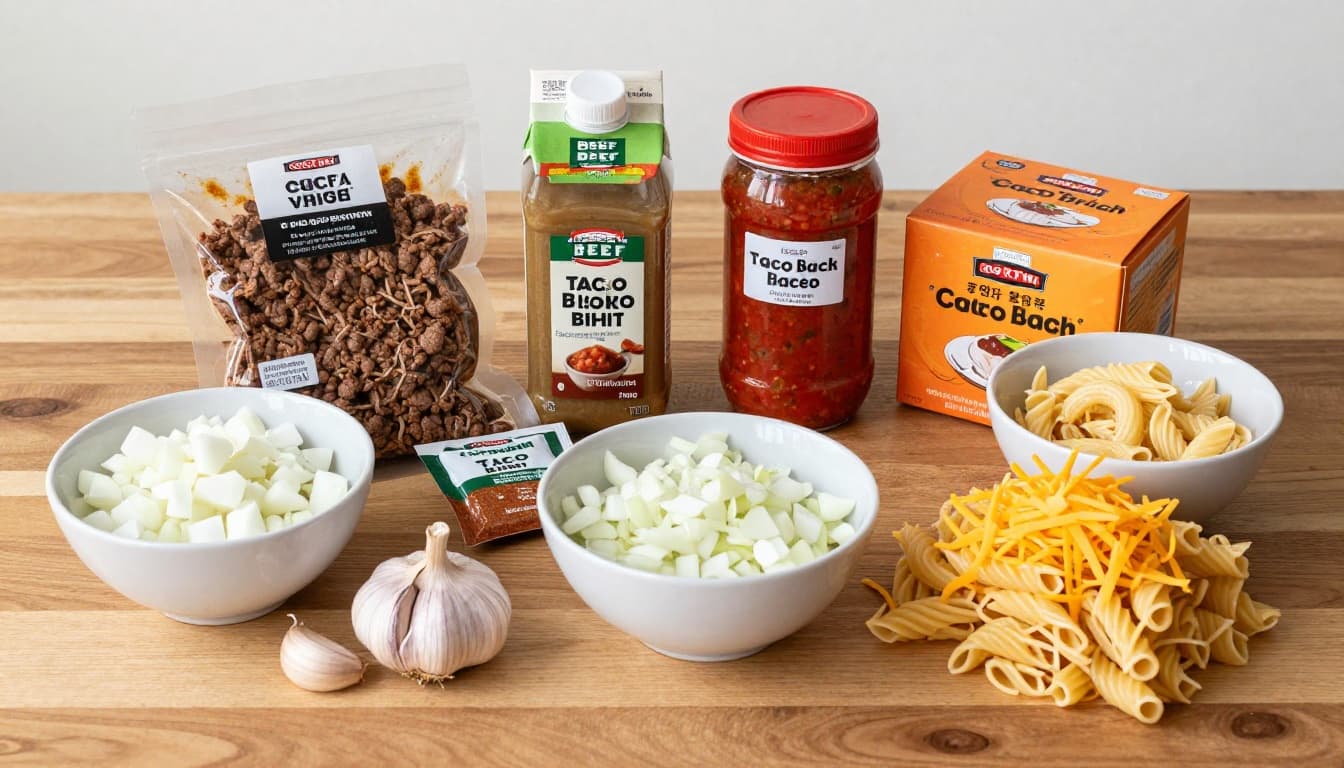
Broth is what helps the pasta cook right in the pan. It keeps the mixture moist, carries the seasoning through every bite, and turns into part of the sauce as the pasta absorbs it.
Salsa adds tang, tomato flavor, and a little heat. It also gives the sauce body, so the finished dish feels saucy instead of dry.
Pasta gives the dish structure and makes it filling. As it cooks in the skillet, it soaks up the taco flavor and ties the whole pan together.
Finally, cheese smooths out the spice and gives the pasta that creamy, melty finish people expect from a comfort meal. Sharp cheddar, Mexican blend, or Monterey Jack all work well here.
Best pasta shapes for a one-pan dinner
Short pasta shapes work best because they cook evenly in a skillet and stay easy to stir. Rotini, shells, elbows, and penne all hold sauce in their curves, ridges, or hollow centers, so every bite gets plenty of flavor.
Long noodles can tangle and clump in a shallow pan. They also cook less evenly when they sit in a thick, chunky sauce. Short pasta gives you better control, which matters when the whole meal cooks in one pan.
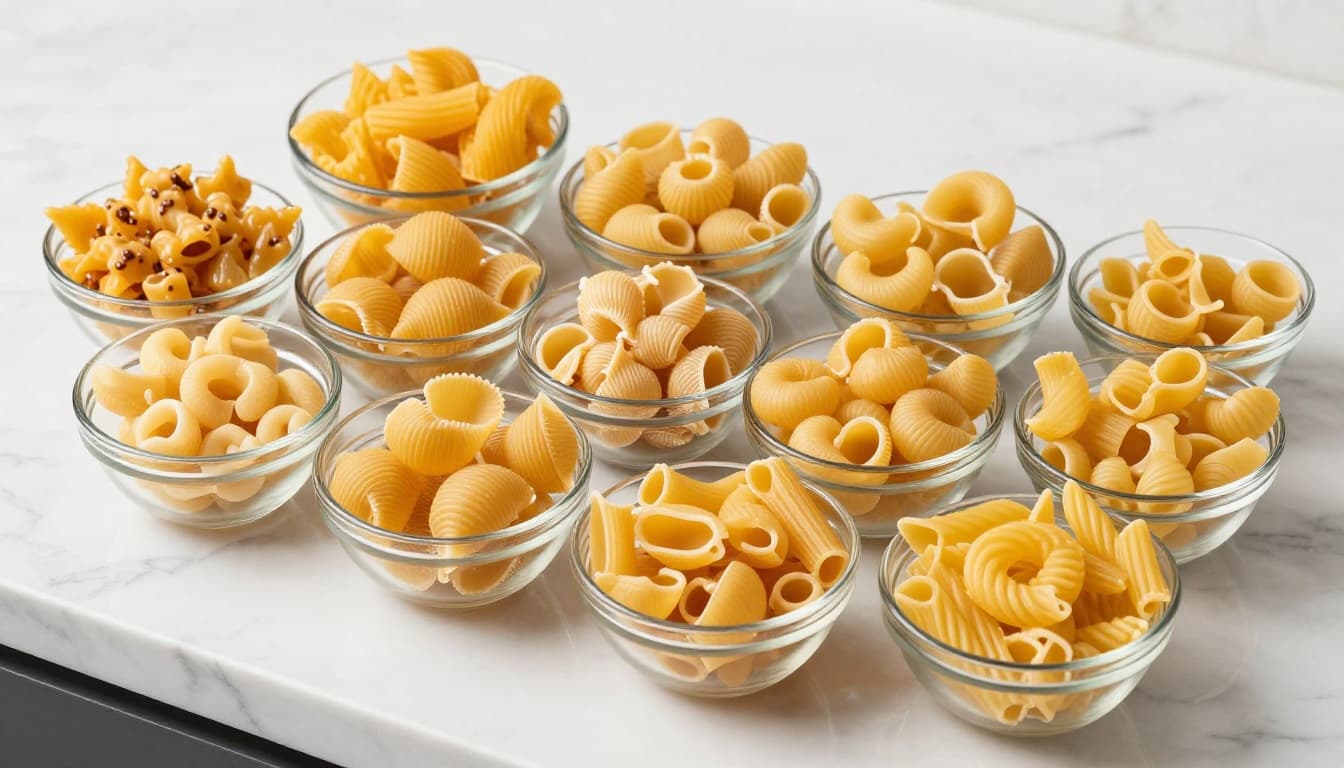
If you want the most reliable result, choose a shape with a similar cook time to the rest of the ingredients. That keeps the pasta tender without turning mushy.
Easy swaps if you need to use what you have
This recipe is flexible, so use what fits your fridge and pantry. Ground turkey or chicken works well if you want a lighter skillet dinner. The flavor is milder, so you may want a little extra seasoning or a stronger salsa.
You can also stir in black beans, corn, or extra vegetables like bell peppers. Those add color, texture, and more body to the meal without making it harder to cook.
Cheese is easy to change too. Cheddar, Monterey Jack, Colby Jack, or pepper Jack all melt nicely and bring their own flavor. Pepper Jack adds a little heat, while cheddar keeps things classic.
If you need a meatless version, skip the beef and add more beans or veggies. The recipe still works because the pasta, salsa, broth, and cheese carry plenty of flavor on their own.
How to Make One-Pan Taco Pasta Without Dry or Mushy Pasta
The trick to great one-pan taco pasta is simple: keep the skillet hot enough to cook the pasta, but not so hot that the liquid disappears too soon. You want a saucy pan that finishes creamy, not a dry pile of noodles or a soupy mess.
A few small choices make a big difference here. Brown the meat well, add the liquid in the right order, stir often, and stop cooking at the right moment. That keeps the pasta tender and the sauce balanced.
Start by building flavor in the pan
If you use onion, cook it first in a little oil until it softens. That gives the dish a sweeter base and keeps the onion from tasting sharp in the finished pasta.
Next, add the ground beef and break it up as it browns. Let it get some color instead of rushing through this step, because browned meat adds depth. After that, stir in the garlic and taco seasoning so the spices bloom in the hot pan.
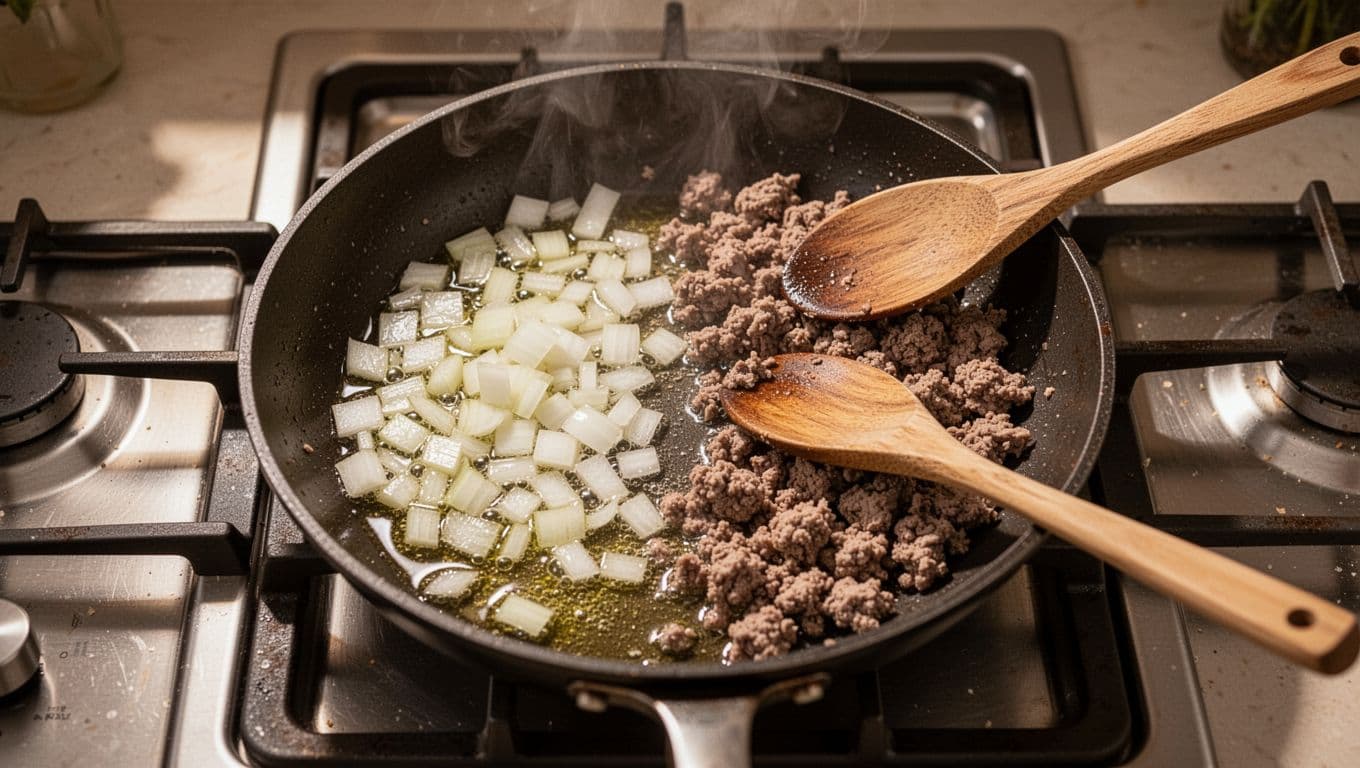
That order matters. If you add garlic too early, it can burn. If you add seasoning too late, the flavor stays flat. A good taco pasta starts like a good taco filling, layered and savory.
A well-browned meat base gives the pasta more flavor, so the final dish tastes rich instead of one-note.
Add the liquid and pasta at the right time
Once the beef is seasoned, pour in the broth and salsa, then add the uncooked pasta right away. The pasta needs enough liquid to cook evenly, and the sauce needs room to move around the pan.
Stir well at this stage. That first stir keeps the pasta from clumping and helps every piece get coated with flavor. It also keeps the pasta from sticking to the bottom as the liquid starts to simmer.
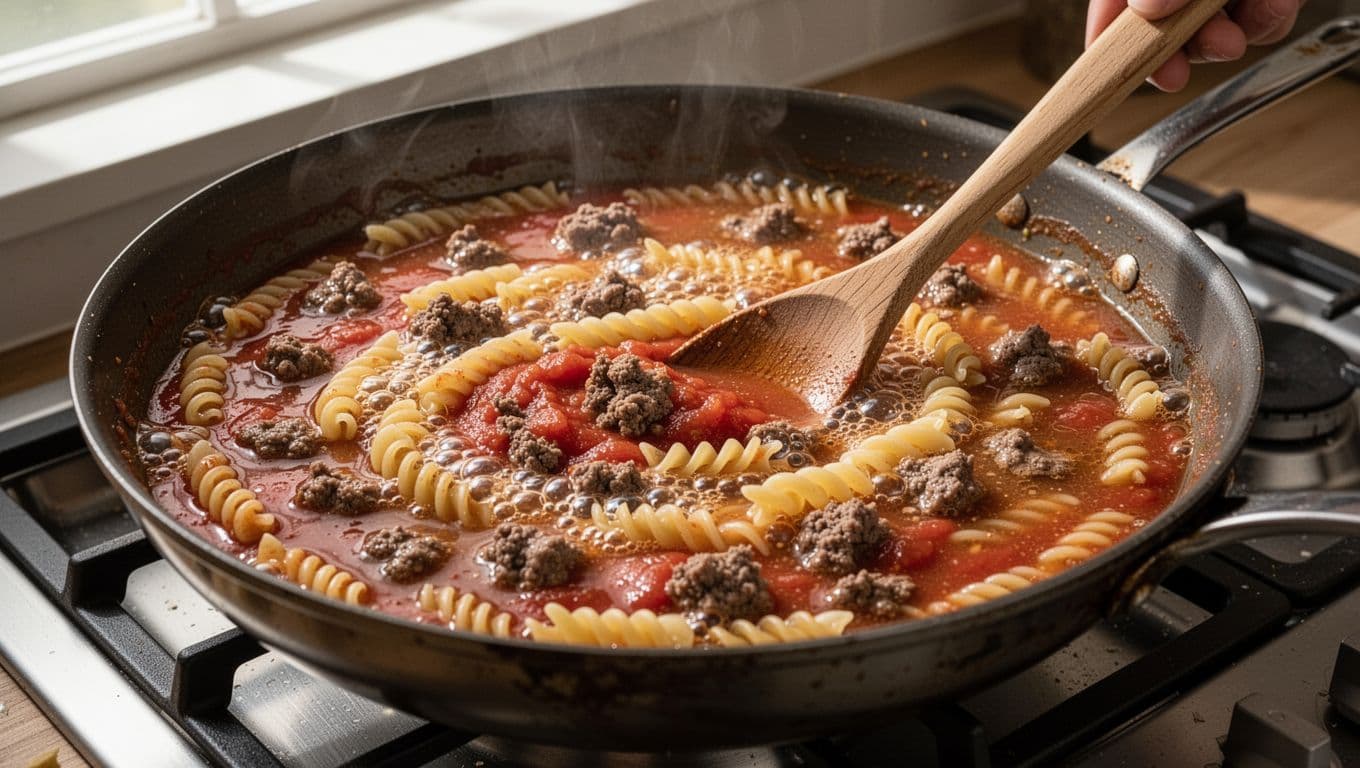
Keep the heat at a steady simmer, not a hard boil. Stir every few minutes so the liquid cooks down evenly. For more on keeping pasta at the right texture, Well Plated’s taco pasta tips give a helpful reminder to stop at al dente and add liquid if the pan looks dry.
Finish with cheese so it turns creamy and rich
When the pasta is almost tender and most of the liquid has cooked down, lower the heat. Then stir in the cheese slowly so it melts into the sauce instead of clumping on top.
This is the point where the dish turns creamy. The cheese thickens what’s left in the pan and gives the pasta that smooth, rich finish people expect from taco pasta. If the heat stays too high, the sauce can tighten too fast or turn greasy.
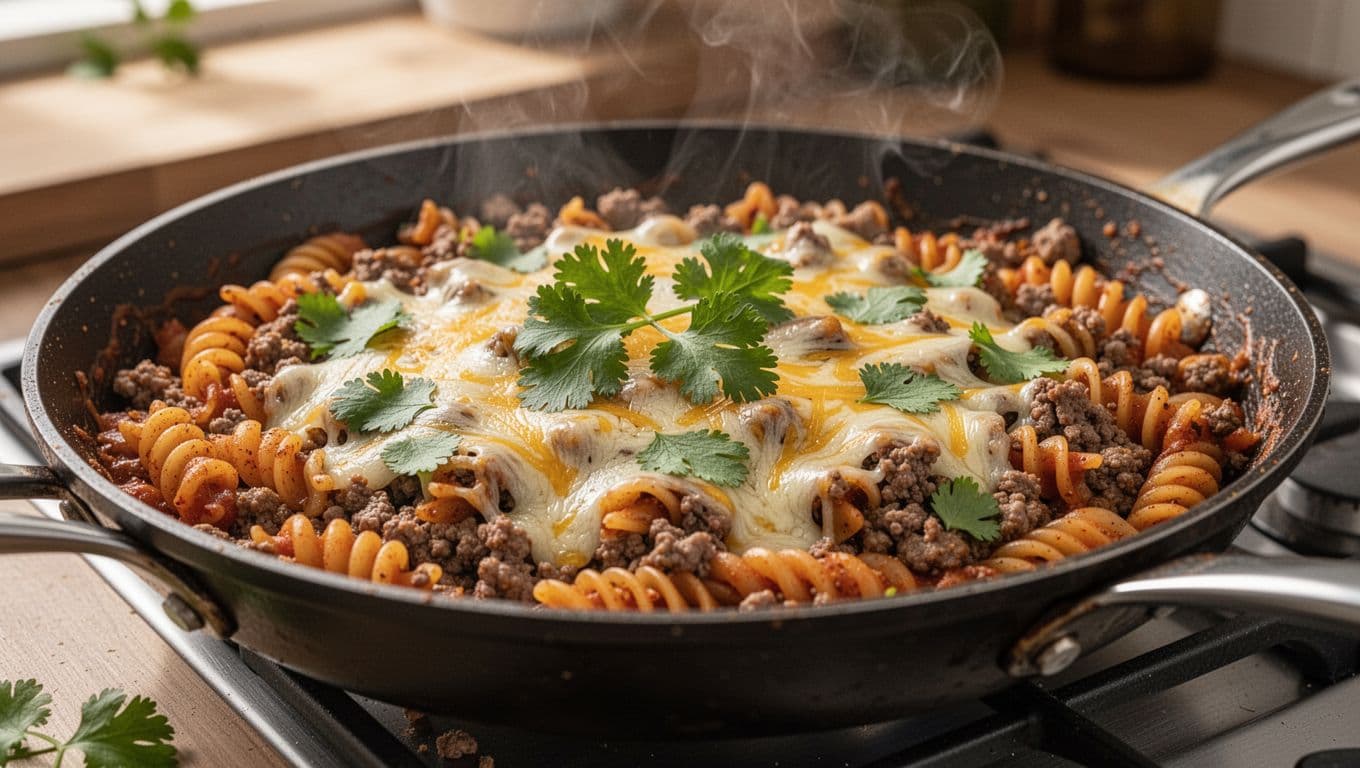
After the cheese melts, let the pasta rest for a few minutes off the heat. That pause helps the sauce thicken and settle, so it clings to the noodles instead of pooling in the pan.
Know the signs that it is done
The easiest cue is the pasta texture. It should be tender with a little bite, not soft all the way through. Most of the liquid should be absorbed, but the pan should still look glossy and saucy.
If the skillet looks too dry before the pasta is done, add a splash more broth. Do it a little at a time, then stir and let it simmer again. That small fix is usually enough to bring the sauce back.
A finished pan should look creamy, not soupy. If you can drag a spoon through it and the sauce slowly closes back in, you’re in the right place. Serve it right away while the cheese is still silky and the pasta is at its best.
Simple Ways to Make It Your Own
One-pan taco pasta is easy to adapt, which is part of why it works so well on busy nights. Once you know the base recipe, you can adjust the heat, add extra vegetables, or make the sauce richer with what you already have in the kitchen.
Make it mild, medium, or spicy
If you want a milder pan, start with mild salsa and a standard taco seasoning packet. That keeps the flavor familiar without much heat, which is perfect for kids or sensitive eaters.
For a medium version, add a little more taco seasoning or use salsa that has some kick. You can also stir in Rotel with green chiles for a little extra bite without making the dish too hot.
If you like more heat, swap in hot taco seasoning or add diced chiles. A small amount goes a long way, so taste as you go. You can always add more spice at the end, but it’s hard to pull it back once it’s in the pan.
Add more vegetables without losing the comfort food feel
Extra vegetables fit right in here as long as you keep the seasoning balanced. Bell peppers add sweetness and color, corn brings a little pop, and black beans make the dish heartier without changing the comfort-food feel.
You can also add diced tomatoes for more juiciness or stir in a few handfuls of spinach near the end so it wilts into the sauce. That keeps the skillet looking fresh while still tasting rich and cheesy.
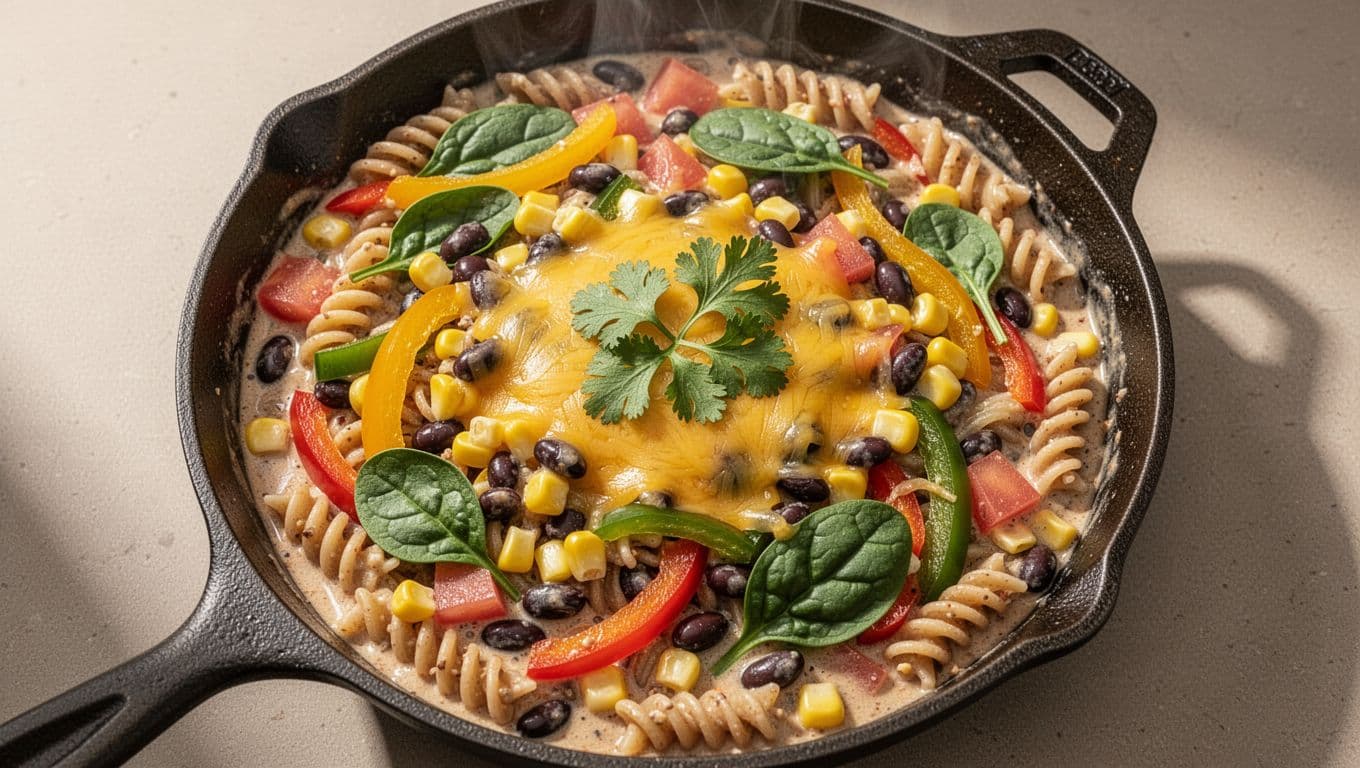
Keep the balance simple, though. If you add a lot of vegetables, use a little extra salsa or broth so the pasta stays saucy. That way, the meal still tastes like taco pasta, not a vegetable skillet with noodles.
Turn it into a creamier or lighter meal
For a creamier finish, stir in sour cream, a splash of milk, or a few cubes of cream cheese after the pasta cooks. Extra cheese also works well if you want a thicker, richer sauce.
If you want a lighter version, use lean meat or skip the beef and add extra beans instead. You still get a filling dinner, but it feels a little less heavy.
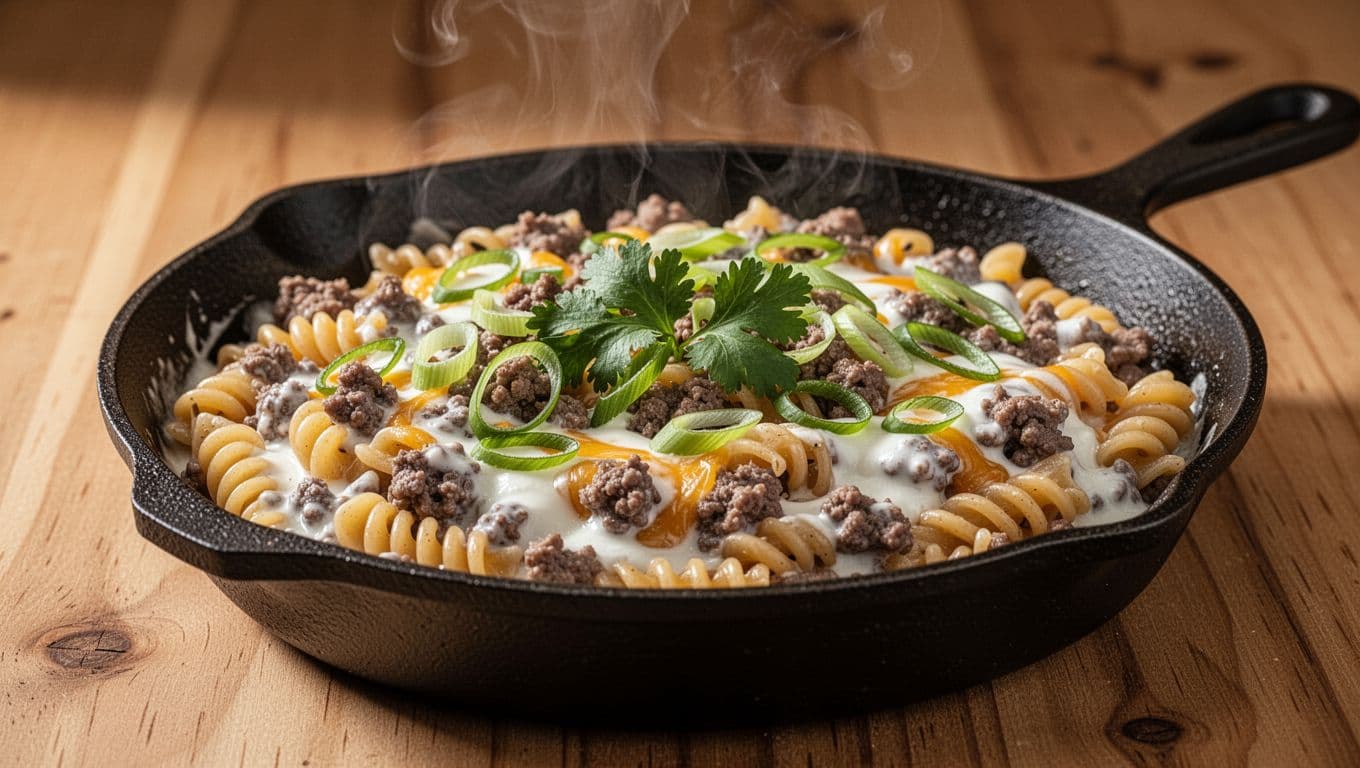
A simple swap like that changes the whole mood of the dish. Creamy makes it richer, while beans and lean meat keep it balanced and weeknight-friendly.
What to Serve With Taco Pasta and How to Store Leftovers
Taco pasta is rich, cheesy, and filling, so the best sides are the ones that add freshness, crunch, or a little contrast. The leftovers are just as useful, as long as you store and reheat them the right way. With a few smart add-ons, this one-pan dinner can feel complete on night one and still taste great the next day.
Toppings that add fresh flavor and texture
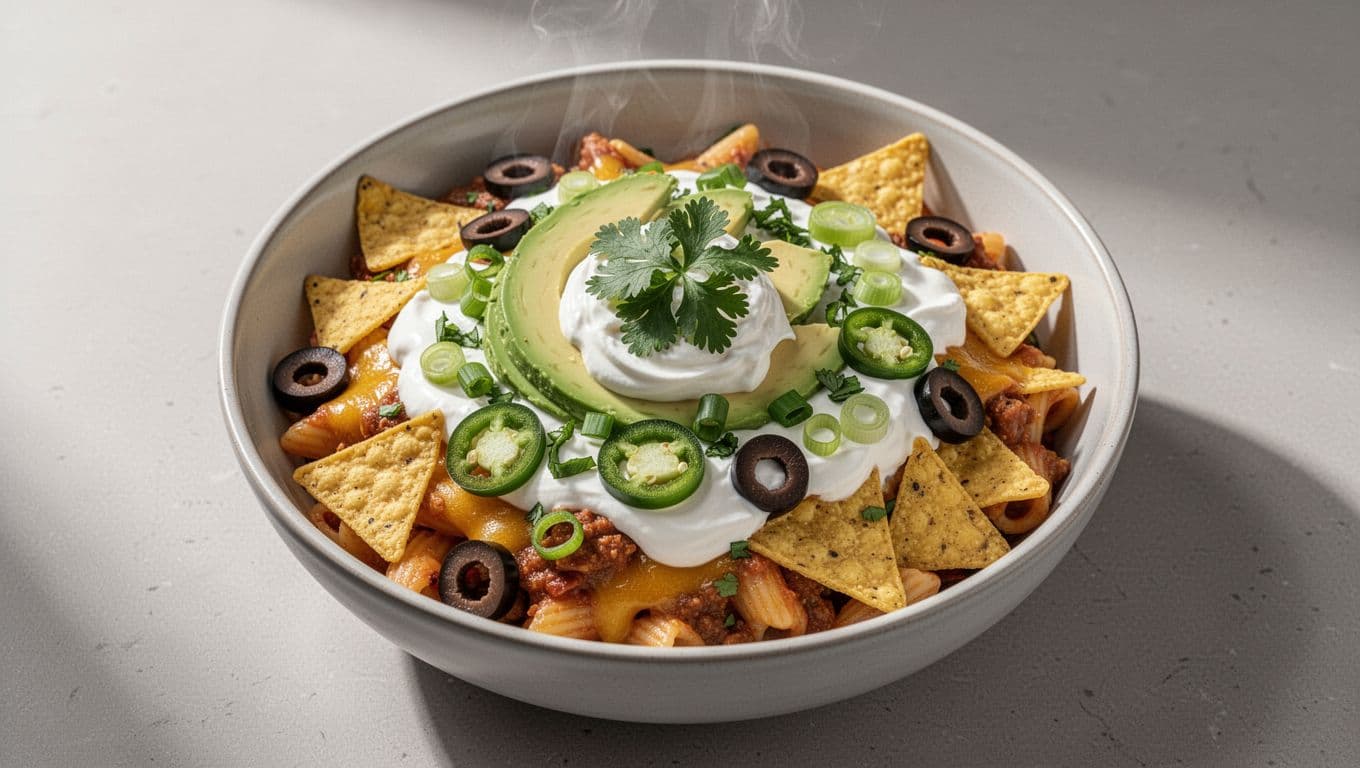
Toppings are the easiest way to make taco pasta feel brighter and more finished. A spoonful of sour cream or Greek yogurt cools the spice, while cilantro and green onions add a fresh, sharp bite. If you want more richness, add avocado or a few spoonfuls of guacamole.
For crunch, sprinkle on crushed tortilla chips right before serving. Sliced jalapeños and black olives also work well if you want more taco-night flavor. A little salsa on top ties everything together and keeps the dish from feeling too heavy.
A few topping ideas that work especially well:
- Sour cream or Greek yogurt
- Chopped cilantro
- Diced avocado
- Sliced jalapeños
- Green onions
- Black olives
- Crushed tortilla chips
If you want more topping inspiration, Well Plated’s taco pasta topping ideas are a helpful place to start.
Easy sides that round out the meal
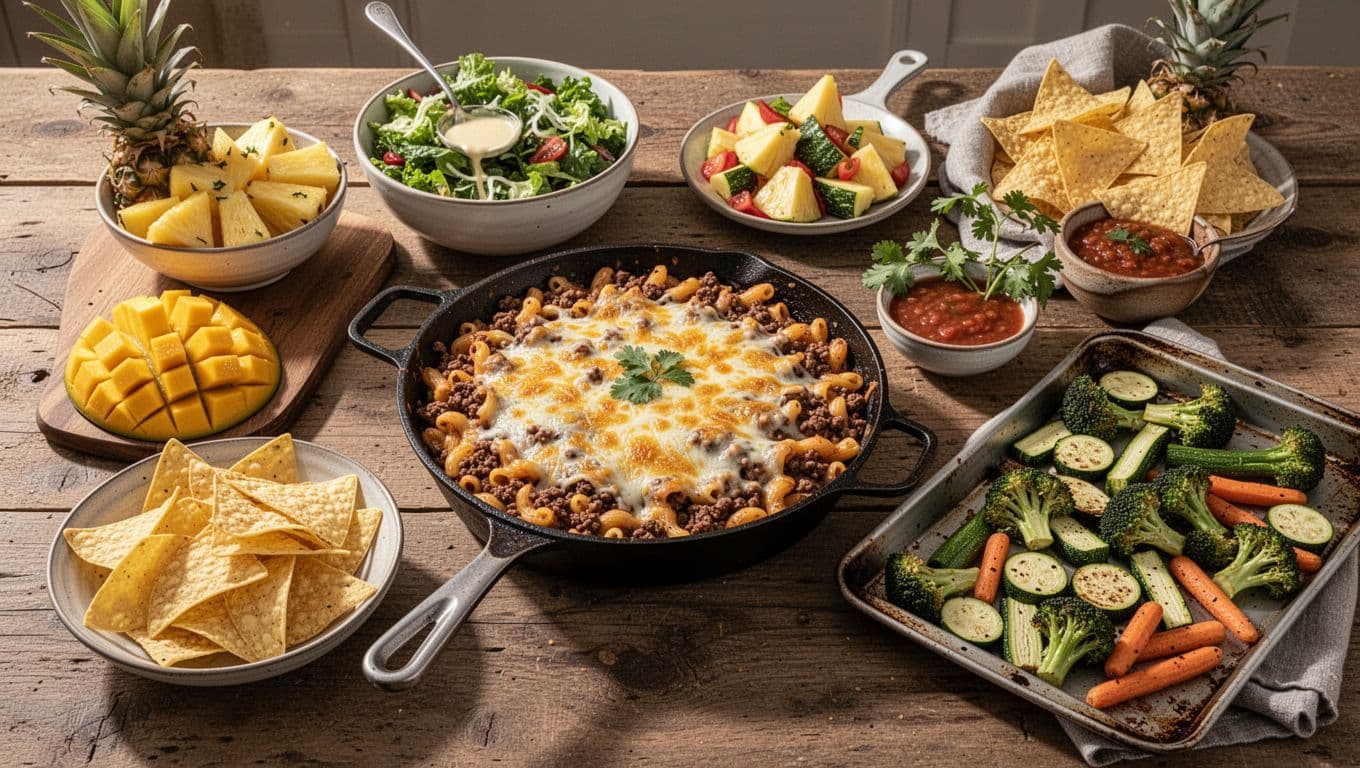
Because taco pasta is already hearty, keep the sides simple. A green salad with a light dressing adds crunch and balances the cheese. Fruit, like pineapple, grapes, or melon, brings a sweet, fresh finish.
You can also serve:
- Tortilla chips with salsa or guacamole
- Roasted vegetables for an easy extra vegetable
- Warm bread or dinner rolls if you want a more filling meal
How to store, reheat, and refresh leftovers
Let the pasta cool, then store it in an airtight container in the fridge for up to 3 to 4 days. If you know you’ll reheat it later, keep toppings like chips, avocado, and cilantro separate so they stay fresh.
For reheating, use the stovetop or microwave. On the stove, warm it over low to medium heat and stir often. In the microwave, heat in short bursts, stirring between each round so it warms evenly.
The sauce usually thickens after chilling, so add a splash of broth or water when reheating. That small step brings the texture back and helps the pasta taste creamy again instead of stiff.
Conclusion
One-pan taco pasta is an easy answer when dinner needs to be fast, filling, and low-stress. It brings together bold taco flavor, creamy cheese, and simple pantry ingredients in one skillet, so cleanup stays just as manageable as the cooking.
The best part is how flexible it is. You can keep it mild, add heat, or switch in beans and vegetables to fit your table, which makes it a strong choice for family taco night or any busy weeknight.
If you want a dinner that feels comforting without taking over your evening, this recipe is an easy one to keep on repeat.
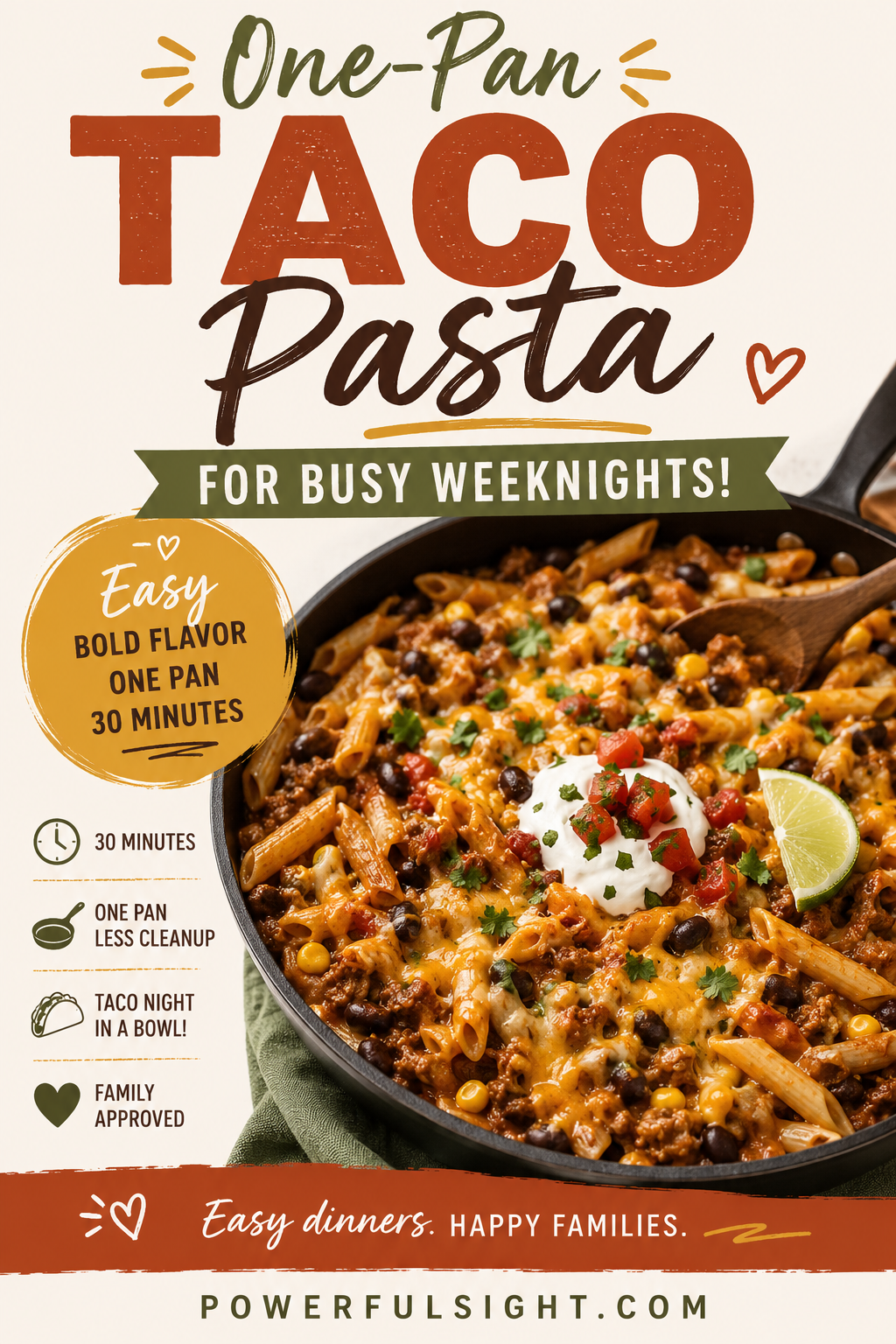
Save pin for later

- 60 Color Tattoos That Healed Beautifully - 25/09/2026
- 40 Most Painful Tattoo Spots - 24/09/2026
- 20 Tattoo Aftercare Mistakes That Ruin Fresh Ink - 23/09/2026

