Busy weeknights can turn dinner into a last-minute scramble, especially when you want something healthy without spending an hour in the kitchen. A smart pantry makes that problem smaller fast, because the right basics help you cook faster, spend less, and keep stress off the stove.
The best pantry staples are flexible ingredients you can turn into soups, bowls, pastas, and skillet meals with little effort. When your shelves hold a few reliable proteins, grains, sauces, and seasonings, dinner feels easier to pull together, even when the fridge looks bare. If you want ideas that fit this style, these anti-inflammatory dinner recipes are a good place to start.
The good news is that you don’t need a huge grocery haul to get there; you just need the right items in the right mix. Here’s how to stock your pantry so fast healthy dinners become the default, not the exception.
What makes a pantry staple worth keeping?
A good pantry staple earns its shelf space by doing more than one job. It should last a long time, cook without drama, and help you build a real meal without a second trip to the store.
The best staples also stretch your budget. One can of beans, one box of pasta, or one bag of rice can become dinner in more than one way, which makes meal planning easier during a busy week. If a food is cheap, filling, and flexible, it belongs on the shelf.
Look for ingredients that cook fast and work in many recipes
Fast-cooking pantry foods make weeknight cooking feel manageable. Canned beans, whole-wheat pasta, lentils, rice, canned tomatoes, and tuna can all move in different directions with little effort.
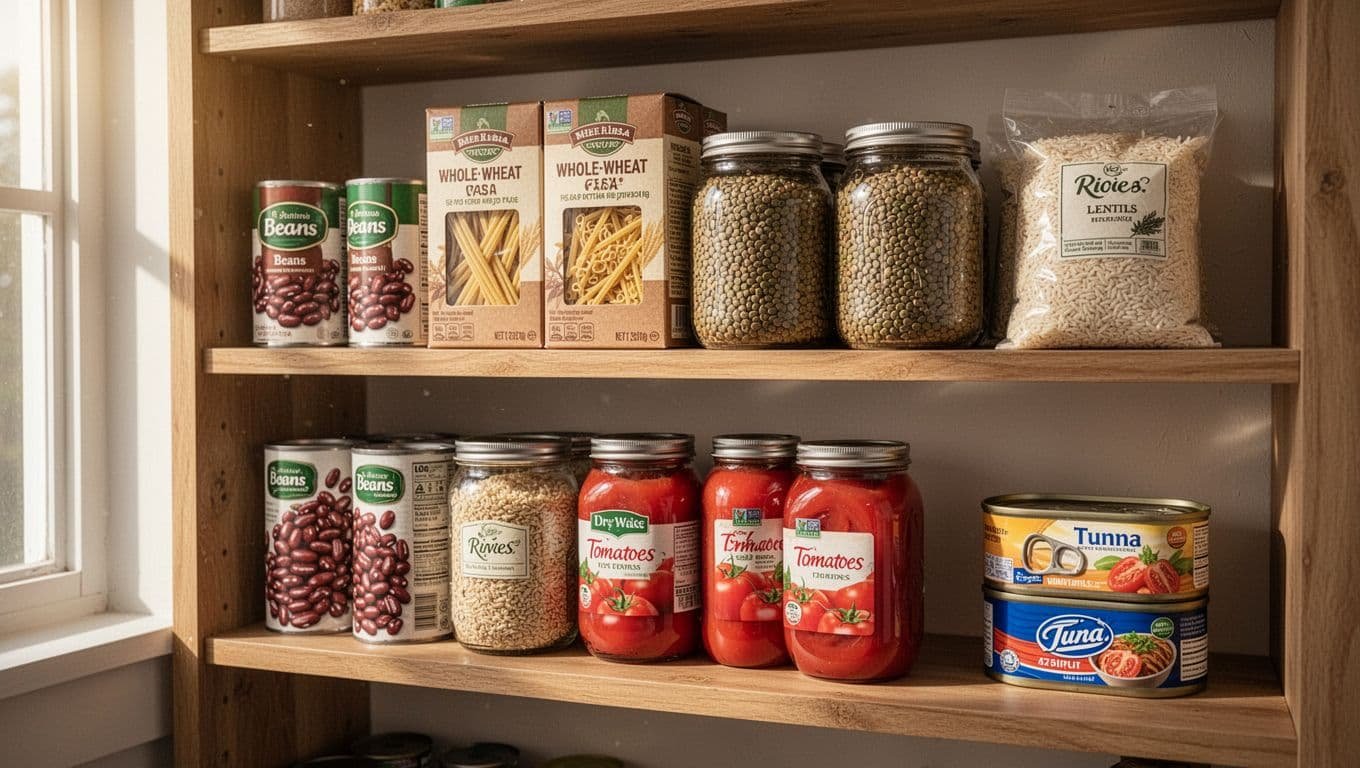
Beans and lentils work well in bowls, soups, salads, and chili. Rice can anchor a veggie bowl one night and a stir-fry the next. Whole-wheat pasta pairs with canned tomatoes for a quick sauce, then gets even better with tuna or beans mixed in.
That kind of overlap matters. A pantry full of one-use items gets ignored, while versatile staples get used before they expire. For more ideas on how beans and legumes support steady energy, see these beans and lentils for blood sugar control.
A simple test helps: if one ingredient can fit into at least three meals, it probably deserves a spot in your pantry.
Choose staples with real nutrition, not just convenience
Convenience helps, but nutrition is what makes pantry food worth keeping. Look for fiber, protein, and a little healthy fat, because those keep meals satisfying instead of empty.
Shelf-stable food can still be healthy when you pick the right versions. No-salt-added vegetables, beans packed in water, and low-sodium broth are smart buys. According to EatingWell’s pantry staple guide, low-sodium beans and quick-cooking lentils are among the most useful pantry basics for fast dinners.
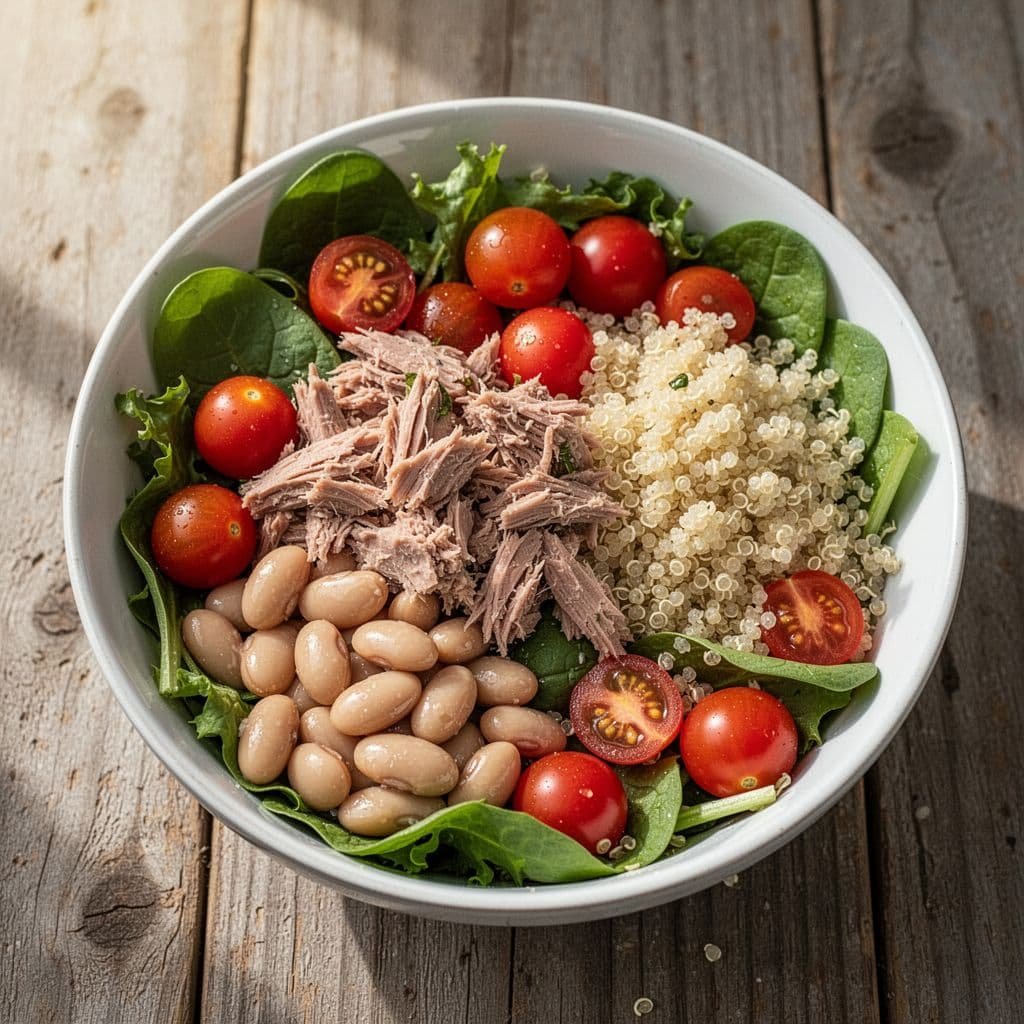
Canned tuna adds lean protein, while canned tomatoes bring flavor without much prep. Together, these foods can turn plain grains into a meal that actually keeps you full. That balance is the real goal, because healthy pantry food should give you more than calories, it should give you fuel.
The core pantry staples that make dinner happen fast
A well-stocked pantry takes the pressure off weeknight cooking. Instead of starting from zero, you can pull together a meal with a few building blocks that already work well together.
The smartest staples are the ones that add protein, fiber, texture, and flavor without much effort. When you keep those basics on hand, dinner stops feeling like a project and starts feeling like a simple assembly job.
Beans, lentils, and chickpeas for quick protein
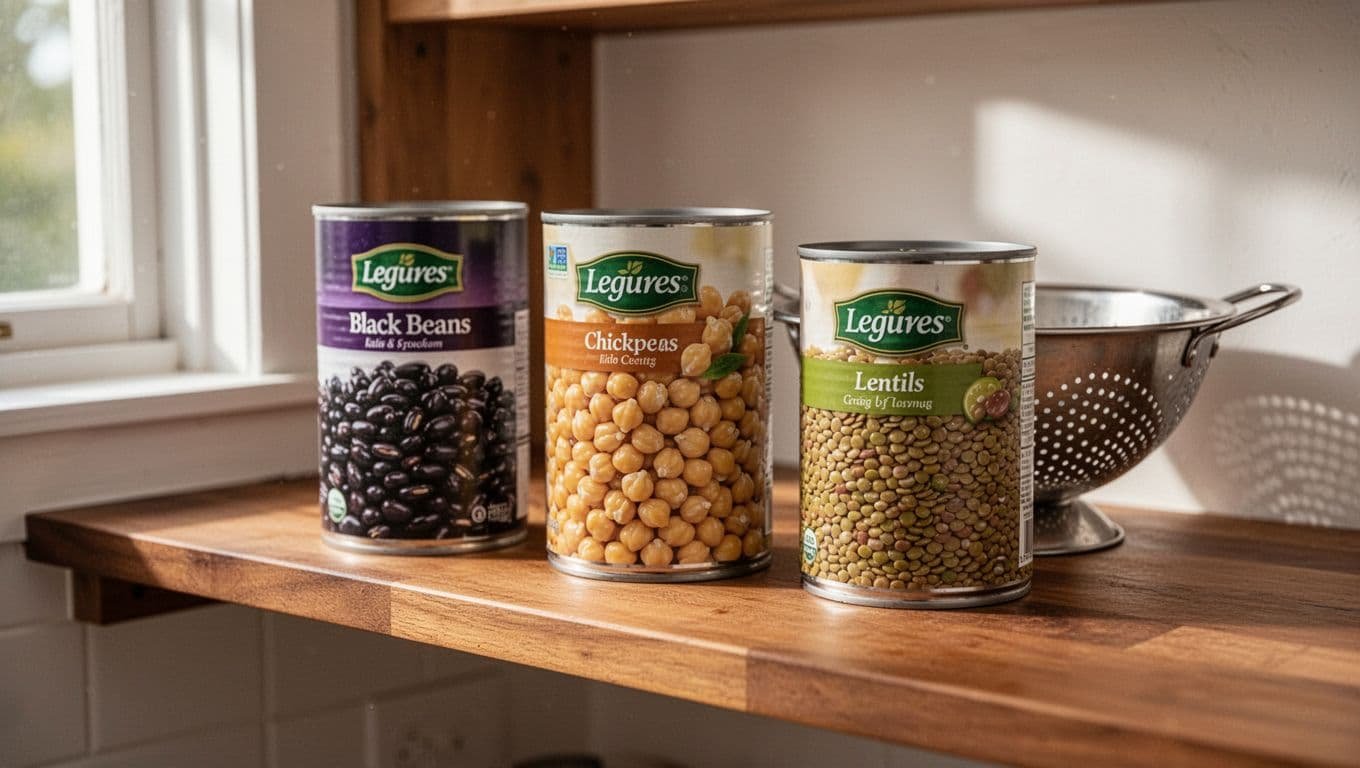
Beans, lentils, and chickpeas are some of the best pantry buys because they pull a lot of weight. They bring protein, fiber, and bulk, so a small amount can turn a light side into a real dinner.
Canned versions are the fastest option, since they only need a rinse and a warm-up. Rinsing canned beans also helps cut sodium, which makes them a better fit for everyday meals. Dry legumes take longer, but they cost less and work well if you cook in batches.
These ingredients fit almost anywhere. Stir them into soups, pile them into tacos, spoon them over grain bowls, mix them into pasta, or toss them into salads for more staying power.
A few easy uses make them even more valuable:
- Soups and stews get thicker and more filling.
- Tacos and wraps need little more than seasoning and salsa.
- Pasta becomes heartier with chickpeas or white beans.
- Salads feel like dinner instead of a side dish.
- Bowls get a solid base without extra cooking.
If you want more ideas for bean-based meals, fiber-rich staples like chickpeas for insulin balance fit right into this kind of pantry plan.
Whole grains that cook fast and keep you full
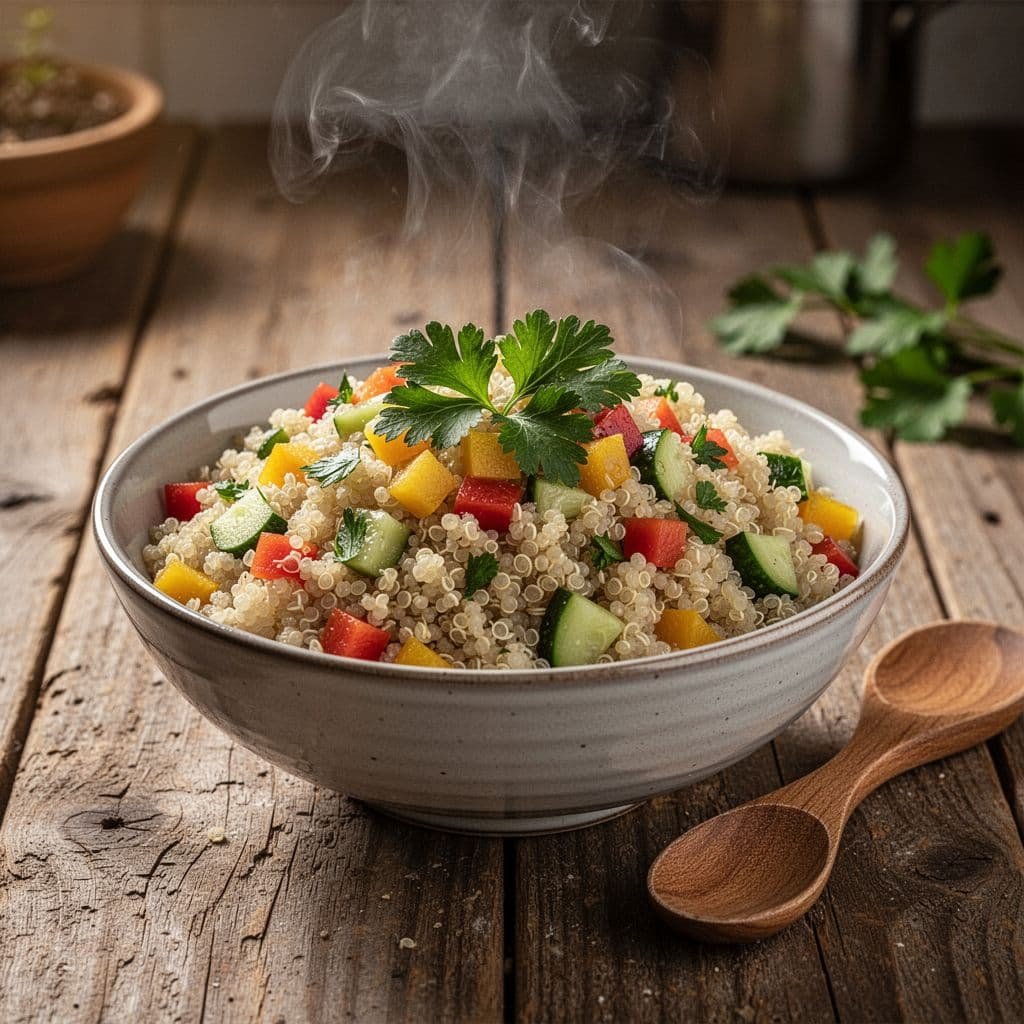
Whole grains help dinner feel complete. They soak up sauce, give meals more texture, and keep you full longer than refined grains usually do.
Brown rice and quinoa are solid choices because they pair well with beans, vegetables, and almost any sauce. Whole-wheat pasta is another smart staple, especially on nights when you want something familiar and quick. Couscous or similar quick-cooking grains work well when time is tight, while instant oats can do more than breakfast and even work in savory bowls.
The real advantage is balance. Grains add steady carbs, then beans, vegetables, or protein round out the plate. That simple mix keeps dinner from feeling thin or one-note.
Here are the grains worth buying first:
- Brown rice for bowls, stir-fries, and simple side dishes.
- Quinoa for salads, skillet meals, and protein-packed bowls.
- Whole-wheat pasta for fast pasta nights with beans or tuna.
- Instant oats for quick savory meals or breakfast-for-dinner.
- Couscous for the fastest side of all.
For more meal ideas built around grains, quick grain bowls for balanced lunches can also translate well to dinner.
Canned vegetables and tomatoes that build instant flavor
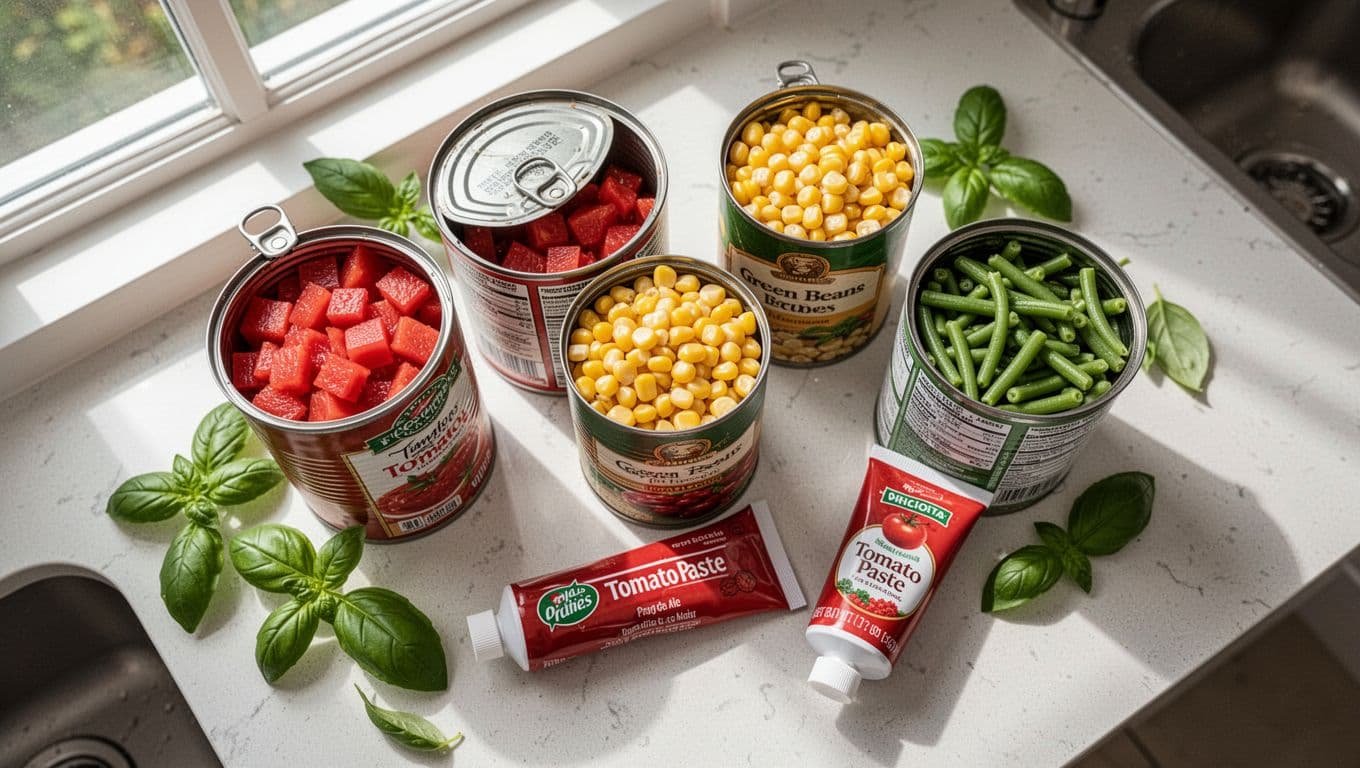
Canned vegetables help you put color and texture on the plate without extra chopping. They are practical, affordable, and ready when fresh produce runs low.
No-salt-added tomatoes and tomato paste do a lot of heavy lifting. Tomatoes can become the base for pasta sauce, soup, chili, or stew in minutes. Tomato paste adds a stronger, richer flavor, which helps a simple pan of beans or vegetables taste more complete.
Corn, green beans, and pumpkin also earn a spot on the shelf. Corn adds sweetness, green beans bring crunch, and pumpkin works well in soups, sauces, and even savory curries. Other shelf-stable vegetables can fill in the gaps when you need more volume fast.
A good rule is to keep at least one tomato product and one or two plain vegetables on hand. That way, you can build a meal that feels fresh, even when it starts from a can. For a pantry list that puts tomatoes to work fast, 30-minute dinner pantry staples make a useful reference.
Shelf-stable proteins for nights when you need dinner now
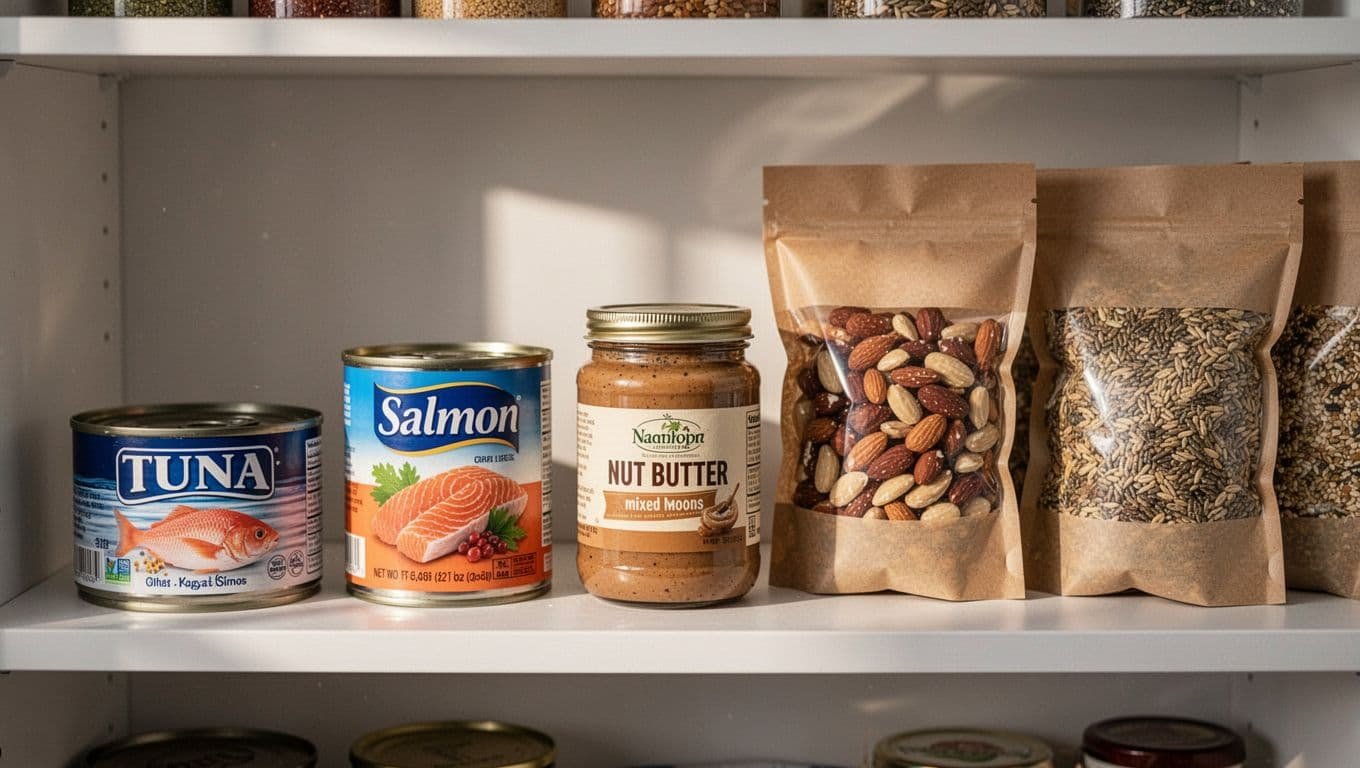
Some nights call for protein that barely needs cooking. That is where canned tuna, canned salmon, canned chicken, nut butters, nuts, and seeds come in.
Tuna and salmon are especially useful because they move into pasta, salads, and rice bowls with almost no prep. Add olive oil, lemon, or mustard, and you have dinner in minutes. Canned salmon also brings a softer texture and works well in patties, grain bowls, or mixed with yogurt for a quick spread.
Canned chicken is another easy backup for tacos, soups, and casseroles. Meanwhile, nut butters, nuts, and seeds help when you need a fast meal with healthy fat and extra protein. Peanut butter can turn noodles into a quick sauce, while seeds add crunch to bowls and salads.
If you keep a few of these proteins in rotation, dinner gets much easier:
- Canned tuna for pasta, rice bowls, and salads.
- Canned salmon for bowls, patties, and sandwiches.
- Canned chicken for soups, wraps, and skillet meals.
- Nut butters for sauces, dressings, and quick snacks.
- Nuts and seeds for toppings and texture.
Flavor boosters that turn simple food into real meals
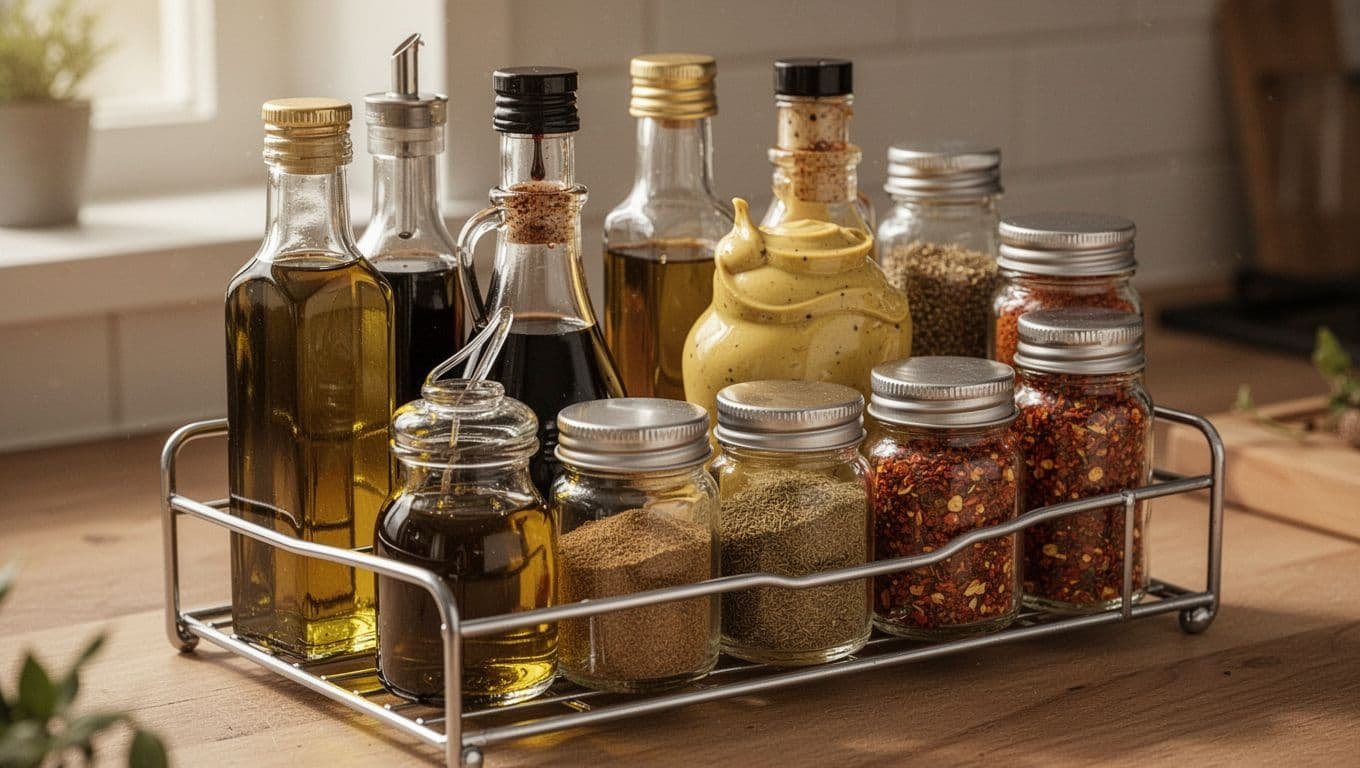
The pantry basics above do the heavy lifting, but flavor boosters make them worth eating. Without them, dinner can taste flat. With them, the same ingredients feel fresh and complete.
Olive oil and canola oil are the start of many quick meals. Use them to sauté vegetables, finish grains, or mix into simple dressings. Broth adds depth to soups, rice, and beans, while coconut milk brings creaminess to curries and noodle dishes.
Salsa, soy sauce, vinegar, and mustard are fast fixes for bland food. Salsa wakes up beans and eggs, soy sauce gives grains and vegetables salt and umami, vinegar sharpens rich dishes, and mustard adds bite to dressings and pan sauces.
Keep the spice rack simple but useful. Garlic powder, cumin, chili flakes, and dried herbs can change the mood of a meal in seconds. That means a can of beans or a pot of rice does not stay plain for long.
A pantry full of these staples gives you more than ingredients. It gives you options, and that is what makes fast healthy dinners possible on ordinary weeknights.
How to mix your pantry staples into healthy dinners in minutes
Once the basics are on your shelf, dinner gets much easier. The trick is to stop thinking in recipes and start thinking in patterns. When you can match a grain, a protein, a vegetable, and a sauce, you can build a real meal without staring at the pantry for 20 minutes.
That simple structure works because each part has a job. The grain gives you a base, the protein makes it filling, the vegetable adds color and fiber, and the sauce ties everything together. You can swap ingredients as needed and still end up with something balanced, fast, and satisfying.
Use a simple formula: grain, protein, vegetable, sauce
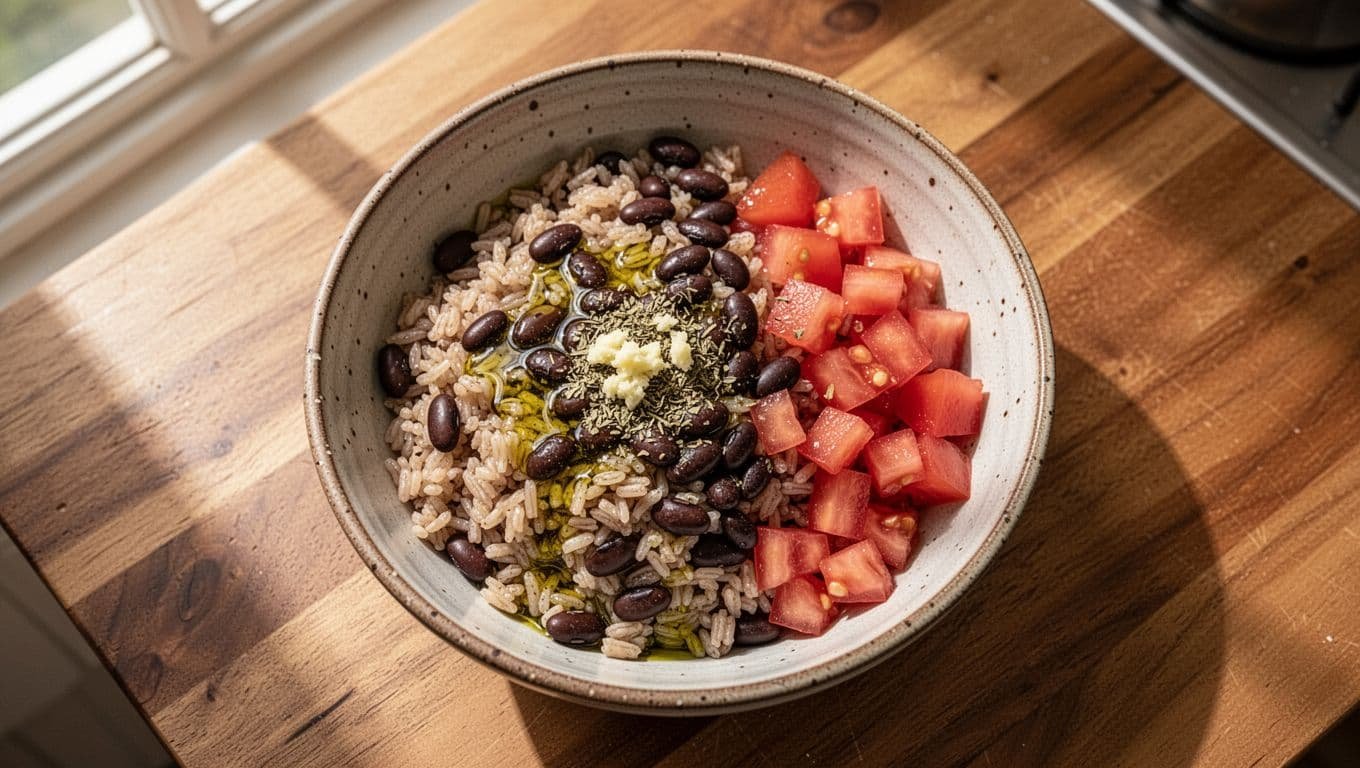
The easiest weeknight dinners follow a repeatable formula: grain + protein + vegetable + sauce. Keep that in mind, and you can build dinner from almost anything in your pantry.
For example, rice plus beans plus tomatoes plus salsa makes a fast burrito bowl. Pasta plus tuna plus olive oil plus garlic turns into a simple pantry pasta. Quinoa plus chickpeas plus canned corn plus lemon and mustard gives you a bright grain bowl. Even brown rice, lentils, and tomato paste can become a hearty, filling meal.
A few more combinations make the pattern stick:
- Rice, black beans, and salsa for a quick bowl.
- Whole-wheat pasta, tuna, and olive oil for a light dinner.
- Quinoa, chickpeas, and canned tomatoes for a protein-rich bowl.
- Couscous, lentils, and mustard vinaigrette for something fast and fresh.
If you can name four parts, you can make dinner. That saves time and cuts decision fatigue fast.
This method also keeps you flexible. If you’re short on one item, swap in another from the same group. That is why pantry cooking works so well on busy nights.
Make one-pot meals, bowls, and skillet dinners
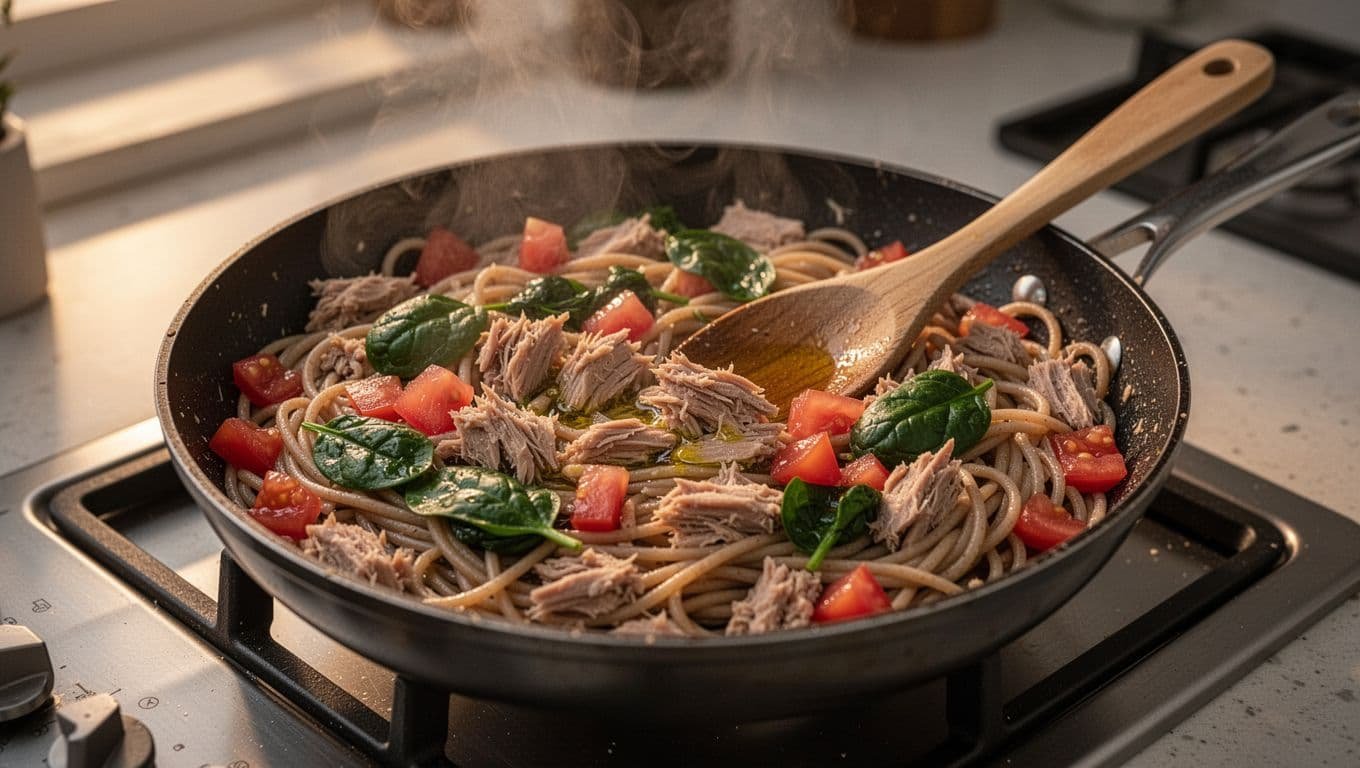
One-pot meals are perfect for pantry food because they keep things simple. Soups, stews, pasta, stir-fries, grain bowls, and skillet dinners all let you cook, mix, and serve with very little cleanup.
That matters on nights when you’re tired. Instead of juggling several pans, you use one pot or skillet and let the ingredients work together. Canned tomatoes, beans, broth, and quick-cooking grains all fit this style well, and they build flavor as they simmer.
Healthy pantry dinners also get easier when you think in bowls. Start with rice, quinoa, or pasta, then add beans, tuna, or chickpeas, then finish with a sauce or dressing. For more ideas in this style, these high-protein low-carb bowls show how flexible a bowl format can be.
A few good pantry-friendly formats include:
- Soup or stew with beans, tomatoes, broth, and spices.
- Skillet pasta with tuna, garlic, olive oil, and canned vegetables.
- Stir-fry with rice, chickpeas, and soy sauce.
- Grain bowl with quinoa, beans, and a quick vinaigrette.
These meals save time because everything happens in one place. They also use up pantry odds and ends before they go stale, which makes them practical as well as fast.
Keep a few backup dinners for extra-busy nights
Some nights need dinner that’s almost automatic. That is where backup meals help. Keep a short list of 15 to 20 minute dinners you can make without planning, because that is when pantry staples matter most.
Bean quesadillas are a strong option. Warm beans in a pan, add cheese if you have it, then fold into tortillas and crisp both sides. Tuna pasta works the same way, since hot pasta, tuna, olive oil, and garlic come together with almost no effort.
Other reliable backups include chickpea salad, lentil soup, and peanut noodles. Chickpea salad can be as simple as chickpeas, mustard, olive oil, and any chopped vegetable you have. Lentil soup only needs broth, lentils, tomatoes, and seasoning. Peanut noodles mix cooked noodles with peanut butter, soy sauce, and water until smooth.
Keep these meals in your back pocket:
- Bean quesadillas for a hot, fast dinner.
- Tuna pasta when you need protein in minutes.
- Chickpea salad for a no-fuss cold meal.
- Lentil soup for a filling one-pot dinner.
- Peanut noodles when you want something quick and comforting.
With a few pantry formulas and backup meals, you can stop asking what’s for dinner and start assembling it in minutes.
How to stock your pantry without wasting money or space
A useful pantry starts small. If you buy too much at once, you end up with crowded shelves, duplicate items, and food that sits untouched until it expires.
Start with a few foods you already cook often, then build from there. That keeps your spending focused and gives you a pantry that actually helps on busy nights.
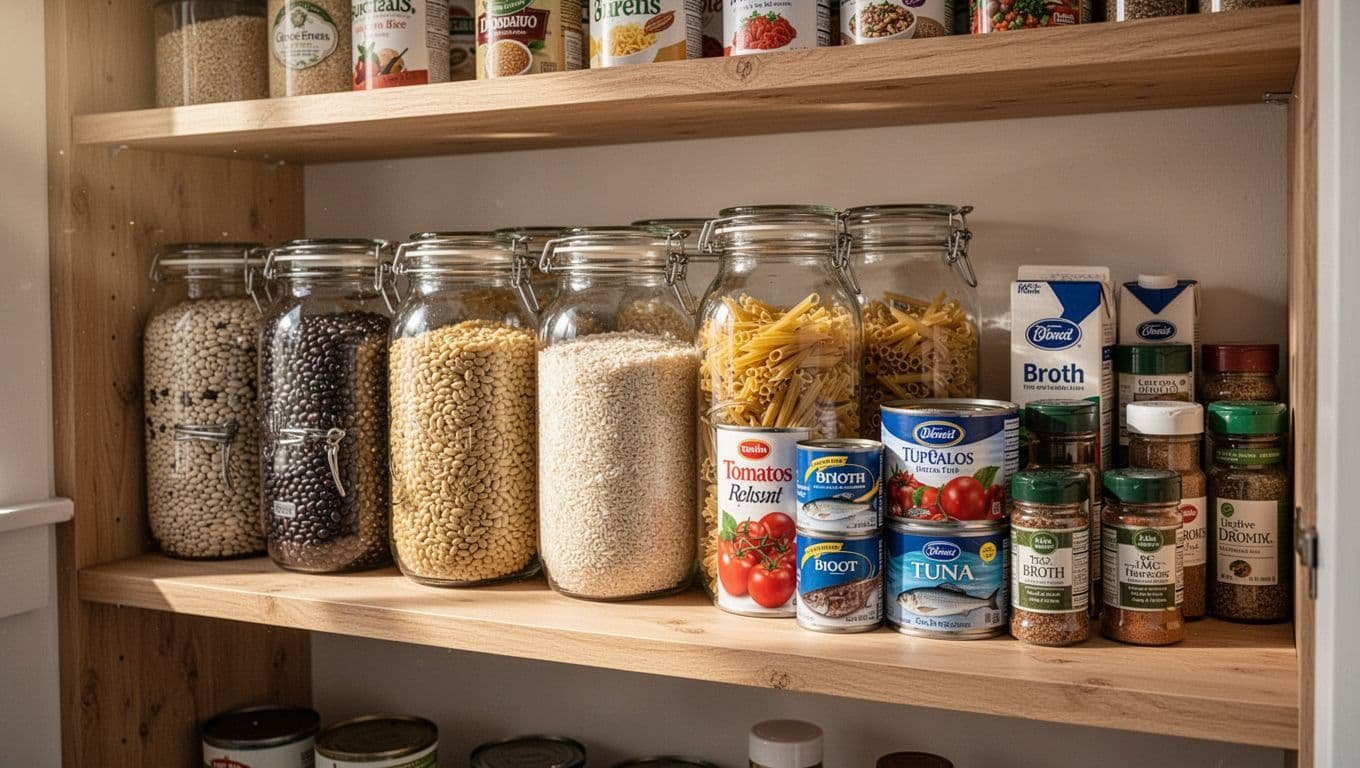
Start with a short list of high-use basics
Buy the staples that work in many meals before anything extra. Beans, rice, pasta, canned tomatoes, canned fish, broth, and spices cover a lot of ground, so they earn their space fast.
Those foods are flexible and budget-friendly. Beans can go into soups or bowls, rice can anchor stir-fries and casseroles, and pasta works with tomatoes, oil, or canned fish. Broth and spices pull the whole meal together without needing a long grocery list.
A smart first round looks like this:
- Beans or lentils for protein and fiber.
- Rice or pasta for quick bases.
- Canned tomatoes for sauce, soup, and chili.
- Canned tuna or salmon for fast meals.
- Broth for soups and cooked grains.
- Basic spices like garlic powder, cumin, chili flakes, and dried oregano.
If you can make three dinners with one item, it belongs on the shelf.
Store and rotate your food so nothing gets lost
Good storage saves money because it helps food stay fresh and visible. Keep similar items together, then label jars and containers with the purchase date or expiration date so you can see what came first.
Use a simple first in, first out system. Put newer groceries behind older ones, and reach for the oldest item first. That habit cuts waste and keeps half-used bags and cans from disappearing into the back of the cupboard.
Clear containers help too. They make it easy to spot what you already have, which keeps you from buying a second bag of rice when one is already sitting there. For more pantry ideas that work well with a simple storage system, how to stock your pantry is a practical reference.
Conclusion
A strong pantry makes healthy dinners faster, cheaper, and a lot less stressful. When you keep beans, lentils, whole grains, canned tomatoes, shelf-stable protein, and a few good flavor boosters on hand, you can turn simple ingredients into real meals with very little effort.
The best pantry plan is also the simplest one. Start with a few items you’ll use often, then add more as you notice gaps in your weeknight routine. That way, your shelves stay useful instead of crowded, and your dinner choices stay flexible.
Even a handful of smart staples can change the way weeknights feel. Build your pantry one item at a time, and dinner gets easier every week.
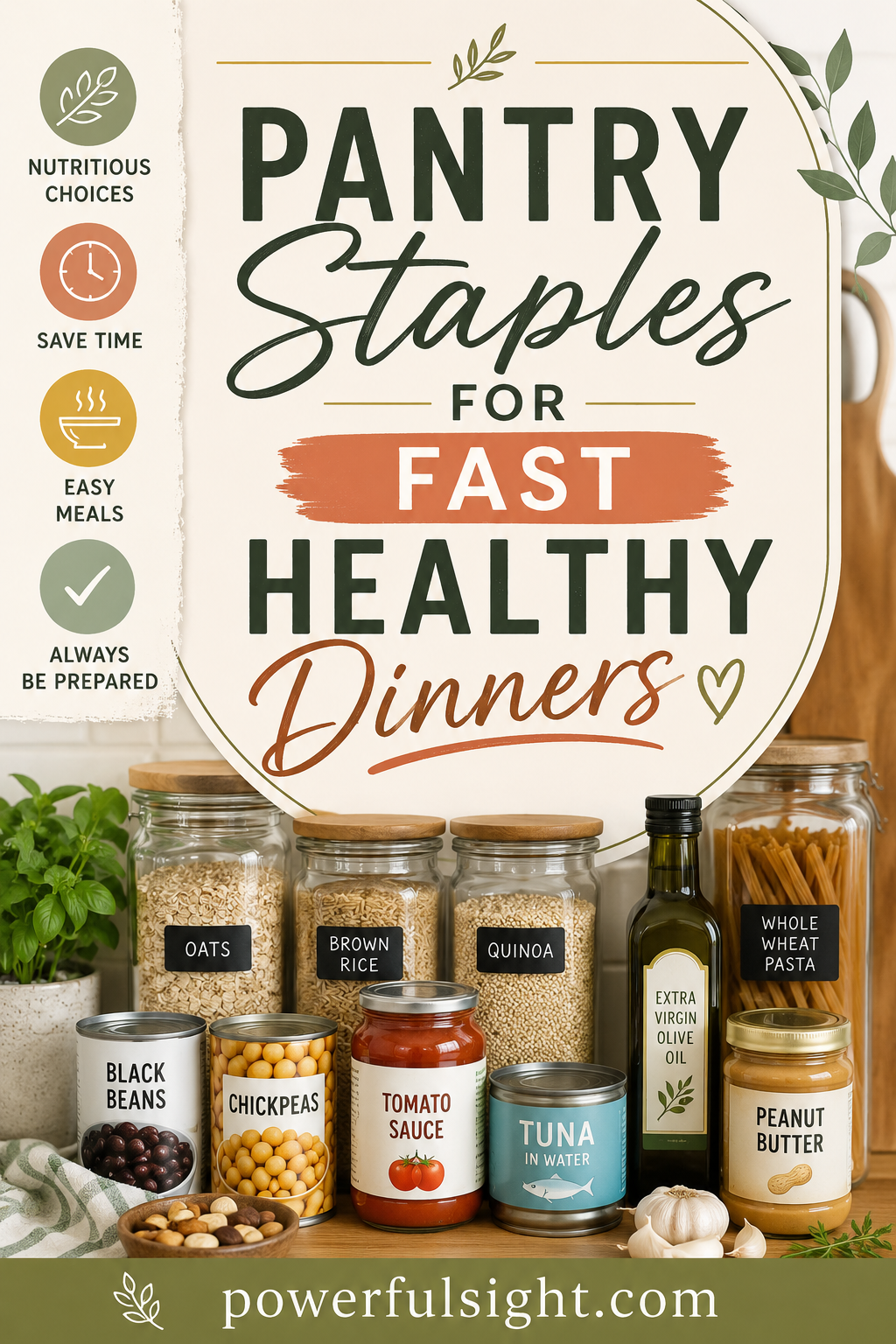
Save the pin for later

- Healthy Air Fryer Recipes for Beginners - 21/09/2026
- Healthy Snacks for Late Night Cravings - 21/09/2026
- High Protein Meal Prep Ideas for Easy Weekly Meals - 21/09/2026

