Every tattoo hurts. Anyone who tells you otherwise is either lying or got numb and forgot. But where you get inked makes an enormous difference, and the people who’ve sat through the worst spots have stories to prove it.
That’s what this ranking is built on: firsthand accounts from people who actually felt the needle hit bone, nerve clusters, and paper-thin skin. Pain isn’t random. It depends on how thick the skin is, how many nerve endings crowd the area, and how close the needle gets to bone. That’s why a calf tattoo feels like a back scratch while the ribs or sternum feel like a cat scratching the same spot over and over.
Below, you’ll find 40 spots grouped into pain tiers, from mild to the ones people describe as pure endurance tests. If you’re planning your first tattoo, this list might save you from a very rough afternoon.
What Makes Some Tattoo Spots Hurt More Than Others?
A tattoo needle punctures your skin between 50 and 3,000 times a minute, so your body’s reaction depends a lot on what the needle meets when it lands. Three things decide how much a spot will sting: nerve endings, skin thickness, and bone. Once you understand those, you can predict the pain of almost any location on your body before the artist ever turns on the machine.
Nerve Endings, Thin Skin, and Bone: The Pain Trifecta
Nerves come first. Some areas of your body are packed with sensory nerve endings because they’re built for touch detection. Your hands, feet, lips, and ribs all report sensation to your brain with extreme detail, and they register every needle pass just as precisely. That’s why a foot tattoo can feel electric while a calf tattoo feels dull.
Skin thickness comes second. Thin skin over a bony surface gives the needle almost no cushion. There’s nothing between the tip and the bone except a small layer of dermis, so you feel vibration travel straight through you. Ribs, sternum, spine, ankles, and elbows all fit this pattern.
Fat padding is the third factor, and it works in your favor. Fatty tissue absorbs shock the way padding absorbs a punch. Areas with more flesh, like thighs, upper arms, and calves, generally rank among the least painful spots.
Put the three together and the worst spots make sense: the ribs have dense nerves, thin skin, and constant movement from breathing. Feet combine nerves and bone. The spine hits bone directly. If a spot has at least two of these traits, expect above-average pain.
Why Pain Tolerance Is Personal
Here’s the frustrating part: the same spot can feel completely different on two people. One person’s rib tattoo is “annoying,” and another’s is “the worst hour of my life.” Both are telling the truth.
Your body’s pain response changes based on how you walk into the shop. Poor sleep lowers your pain threshold. Dehydration makes skin tougher for the needle and sensitivity higher. Stress and anxiety tighten muscles, which makes the experience worse. Even caffeine and hunger play a role.
Session length matters too. Pain accumulates as adrenaline fades, so hour four of a rib piece feels nothing like minute ten. And if you’re mapping out your own pain checklist, our tattoo aftercare guide covers what to do once the needle work is over.
The takeaway is simple: pick your spot with the trifecta in mind, and schedule the session when you’re rested, fed, and hydrated.
The Most Painful Tattoo Spots: Tier One Torture
Tier one is where tattoos stop being decoration and start being endurance tests. These are the spots that artists warn you about, the ones where people tap out mid-session or schedule multiple short appointments instead of one long sit. If a location appears in this tier, it earned the ranking the hard way: thin skin, dense nerves, or bone right under the needle. Often all three.
Ribs, Sternum, and Stomach: Torso Tattoos That Test You
Rib tattoos top almost every “worst pain” list, and the reason is mechanical. Your ribs expand and contract with every breath, so the skin is never still. Each inhale moves the needle’s target; each exhale brings the bone closer to the tip. People describe the sensation as a hot scratch that repeats 50 times a minute without pause, and because you can’t stop breathing, you can’t stop the pain.
The sternum is its own special punishment. The needle sits directly over chest bone with almost no cushion, so vibration travels through your ribcage like a tuning fork. Many people say it’s the only spot that made them involuntarily gasp. Add the hip area and stomach, where skin is thin and stretchy over organs, and the whole torso becomes a zone where even tattoo veterans white-knuckle the table.
Spine, Neck, and Head: Tattoos Close to Bone and Nerves
Spinal tattoos feel exactly like you’d expect: the needle taps directly on vertebrae, and the vibration rattles up your back. People report a deep, bone-level ache rather than a surface sting. It’s tolerable for short pieces, but long sessions leave your whole back feeling bruised.
The neck and throat are different animals. This area is loaded with nerves close to the surface, near your carotid arteries and windpipe, so the pain arrives as sharp, electric jolts. Many describe a rattling sensation in their jaw and skull. The skin is thin, the muscles twitch on their own, and sessions here exhaust people quickly even when the tattoo is small.
Head tattoos, including the scalp and skull, bring the same vibration problem as the sternum: bone hums under the needle. Face tattoos add constant nerve density on top of that.
Feet, Ankles, Hands, and Elbows: The Extremity Gauntlet
Extremities combine every pain factor at once. Your feet and ankles have thin skin stretched over bones, tendons, and joints. When the needle crosses an ankle bone or a knuckle, people compare it to a needle dragging directly on bone. Toes are worse per square inch because there’s nowhere to hide.
Hands and fingers follow the same script, and they bring a bonus problem: healing. Hand tattoos fade, blur, and crack during healing because you use your hands constantly and the skin regenerates fast. Many artists require touch-ups. Elbows and knees round out the tier, since tattooing skin that’s stretched over a joint feels sharp and gritty, and the healed result often needs revisiting too. Pain plus aftercare headaches make the extremity gauntlet a two-part challenge.
If you’re weighing whether a small wrist or ankle piece is a smart first test, our guide to first tattoo tips walks through sizing and placement decisions before you commit.
The Sneaky Painful Spots People Never Expect
Then there are the spots that ambush people. They look soft, fleshy, harmless. Then the needle starts.
The armpit sits at the top of this list and arguably the whole article. It’s packed with nerve clusters and lymph nodes, the skin is paper thin, and the area is so sensitive that many artists refuse to tattoo it. People who’ve done it describe it as the single worst experience of their tattoo history.
The inner bicep surprises everyone because the outer arm is famously easy. Inside, the skin is thin and tender, and the pain scales fast. Inner thighs and groin follow the same pattern: soft skin, dense nerves, and an area your body instinctively protects. And a nipple tattoo or chest piece near it? The area is one of the most nerve-dense zones on the body, so what looks like a simple addition turns into a session people don’t repeat.
The lesson: don’t judge a spot by how padded it looks. Ask your artist, because they know which “easy” locations actually hurt.
Moderately Painful Tattoo Placements: The Middle Ground
Not every tattoo has to be a battle. Between the walk-in-the-park spots and the tier one torture zones sits a wide band of placements that hurt, sometimes genuinely, but stay manageable. Most people can sit through a full session here without tapping out. These spots usually have one pain factor working against them instead of two or three, and that difference shows up fast in the chair.
Outer Thigh, Bicep, and Forearm: Fleshy but Forgiving
The outer thigh is about as friendly as a large canvas gets. There’s decent fat padding and no bone close to the surface, so the needle lands on muscle and fat rather than skeleton. Expect a dull, consistent sting that builds during long sessions rather than sharp jolts.
The bicep follows the same logic. The outer arm is famously easy, and while the inner side tightens things up, most people rate the whole area as a solid five or six out of ten. The forearm ranks similarly, and its visibility makes it a popular first larger piece. Small warning: the skin right over the wrist bone and near the elbow crease stings more than the rest of the arm.
Shoulder, Upper Back, and Calf: Padding With a Few Hot Spots
The shoulder has muscle between the needle and bone, but the cap itself and the area near the armpit sharpens things. People usually describe it as annoying rather than painful, with a couple of flare-ups when the needle crosses the bony point.
The upper back is one of the most comfortable large canvases on the body. Thick skin, thick muscle, no nerve clusters worth worrying about. The spine itself gets meaner, but even a few inches to either side of it stays tame. The calf ranks low too, although tattooing directly over the shin bone or the back of the knee will wake you up.
Butt and Ear: Weird Entries With a Catch
The butt sounds like a joke answer, but it’s legitimately one of the easier placements. Heavy fat padding absorbs most of the needle’s shock. The catch is the tailbone and the crease areas, where the pain jumps quickly.
The ear is the odd one here. It’s small, but tattooing cartilage vibrates through your whole head, similar to the sternum in miniature. Most people finish because the piece is tiny, not because it feels easy. It’s a spot you tolerate for twenty minutes, not a spot you plan a six-hour session around.
The pattern across this tier: one weakness, not a stack of them. If you’re building tolerance for a future rib or spine piece, these middle-ground spots are a smart training ground. Sit a few long sessions here first, and you’ll walk into the harder placements with a realistic sense of what your body can handle.
The Least Painful Tattoo Spots for Your First Ink
If the tier one list made you second-guess the whole idea, breathe easy. Plenty of placements barely register on the pain scale, and they happen to be some of the most popular spots for first tattoos. The pattern is simple: look for muscle or fat between the needle and the bone. Padding is your friend, and the more of it a spot has, the duller the sensation feels.
Outer Forearm, Outer Bicep, and Thigh: The Beginner Favorites
The outer forearm is the classic first tattoo spot for a reason. Thick skin, solid muscle, and zero nerve clusters worth dreading. Most people describe the feeling as light scratching, and many admit they expected worse. It’s also easy to show off or cover up, which matters more than you think on tattoo number one.
The outer bicep rates almost identically. Flesh absorbs the needle’s vibration, and the arm stays still in your control. The outer thigh goes one better with even more padding, making it one of the least painful large canvases on the body. If you want a bigger piece without the endurance test, the thigh is the smart pick.
Shoulder, Upper Back, and Calf: Room to Go Big
The shoulder gives you muscle over the shoulder blade and a wide, forgiving surface. There’s a brief sting when the needle crosses the bony cap, but it passes fast. The upper back is arguably the most comfortable large-canvas spot on the entire body. Thick skin and dense muscle mean you can sit for hours without the pain snowballing.
The calf rounds out the beginner-friendly list. It’s fleshy, low in nerve density, and easy to keep relaxed in the chair. Just ask your artist to steer clear of the shin bone and the back of the knee, the two hot spots on an otherwise easy leg.
Why You Should Start Here, Not on Your Ribs
There’s real value in earning your tougher placements. A first tattoo on a forgiving spot teaches you things no article can: how your body reacts to the needle, how long you can sit comfortably, and how you handle the healing process. Walk into a rib or armpit session without that experience and you’re guessing at your own tolerance, often painfully.
Start easy, heal clean, and build up. By tattoo three or four, you’ll know exactly what your body can take, and the scary spots on the list will look a lot less intimidating.
How to Handle the Pain: Tips From Tattooed Veterans
Knowing which spots hurt is only half the battle. The other half is showing up prepared and knowing what to do when the needle hits hour two. These tips come straight from people who’ve sat through rib pieces, spine work, and worse, and they apply to any placement on the list.
Before the Appointment: Sleep, Eat, and Skip the Alcohol
Your body handles pain better when it’s running on full tanks. Sleep is the biggest lever: a solid seven to eight hours the night before measurably raises your pain threshold, while a bad night does the opposite. Veterans consistently say their worst sessions followed their worst sleep.
Eat a real meal about an hour before your appointment. Low blood sugar makes you shaky, dizzy, and far more sensitive to every needle pass. Bring a snack for long sessions, because your body burns through energy faster than you’d expect while being tattooed.
Hydrate for a full day beforehand, not just the morning of. Well-hydrated skin takes ink more easily and feels less tender. Meanwhile, skip the alcohol the night before, even “just a couple beers.” Alcohol thins your blood, which means more bleeding, more ink rejection, and a fidgety session your artist will remember. The same goes for aspirin and other blood thinners unless a doctor prescribed them.
Finally, if this is your first tattoo, start small on a forgiving spot. A two-hour piece on the forearm teaches you your limits; a five-hour rib session on day one teaches you nothing except regret.
During and After: Realistic Ways People Cope
Pain in the chair comes in waves, and knowing that changes everything. The needle feels brutal for a few minutes, then your brain adjusts and it fades to background noise. When a wave hits, slow your breathing: inhale for four counts, exhale for six. Boxed breathing keeps your muscles loose, and loose muscles genuinely hurt less than clenched ones.
Breaks are allowed. Most artists will pause when you ask, though too many pauses stretches the session and can make the skin puffy. Ask for one at sensible milestones instead of every ten minutes.
Numbing creams exist, and products with lidocaine like Hush or Zensa work for many people. The catch: some artists refuse to work over them, arguing they change skin texture, so ask your artist before you show up slathered in cream. Some studios sell their own preferred brand at the counter.
Honesty helps too. If the pain becomes unbearable halfway through a large piece, most artists would rather reschedule the rest than fight a flinching client for three hours. Tapping out of a huge session isn’t failure; it’s how people end up with tattoos they’re happy to wear instead of rushed, shaky linework.
The veterans’ consensus is simple: prepare your body, breathe through the waves, and speak up when you need to. The pain ends. The tattoo is forever, so give yourself the best conditions to get through it.
Conclusion
Pain is temporary. Ink is permanent. A rib or sternum session might test you for a few hours, and the soreness fades within a week or two, but the design stays on your skin for life. That’s why placement should follow design, meaning, and lifestyle first, with pain ratings as a tiebreaker rather than a dealbreaker.
The rankings give you a map of what to expect, but your body gets the final word. Pain tolerance stays personal, which is exactly why firsthand accounts beat any chart. If you’re new to tattoos, start on a forgiving spot, prepare well, and build up to the tougher zones. Once the session ends, solid tattoo aftercare decides how that permanent art looks for decades.
So, which spot hurt the most for you? Add your story in the comments and help keep this community ranking alive for the next nervous first-timer.
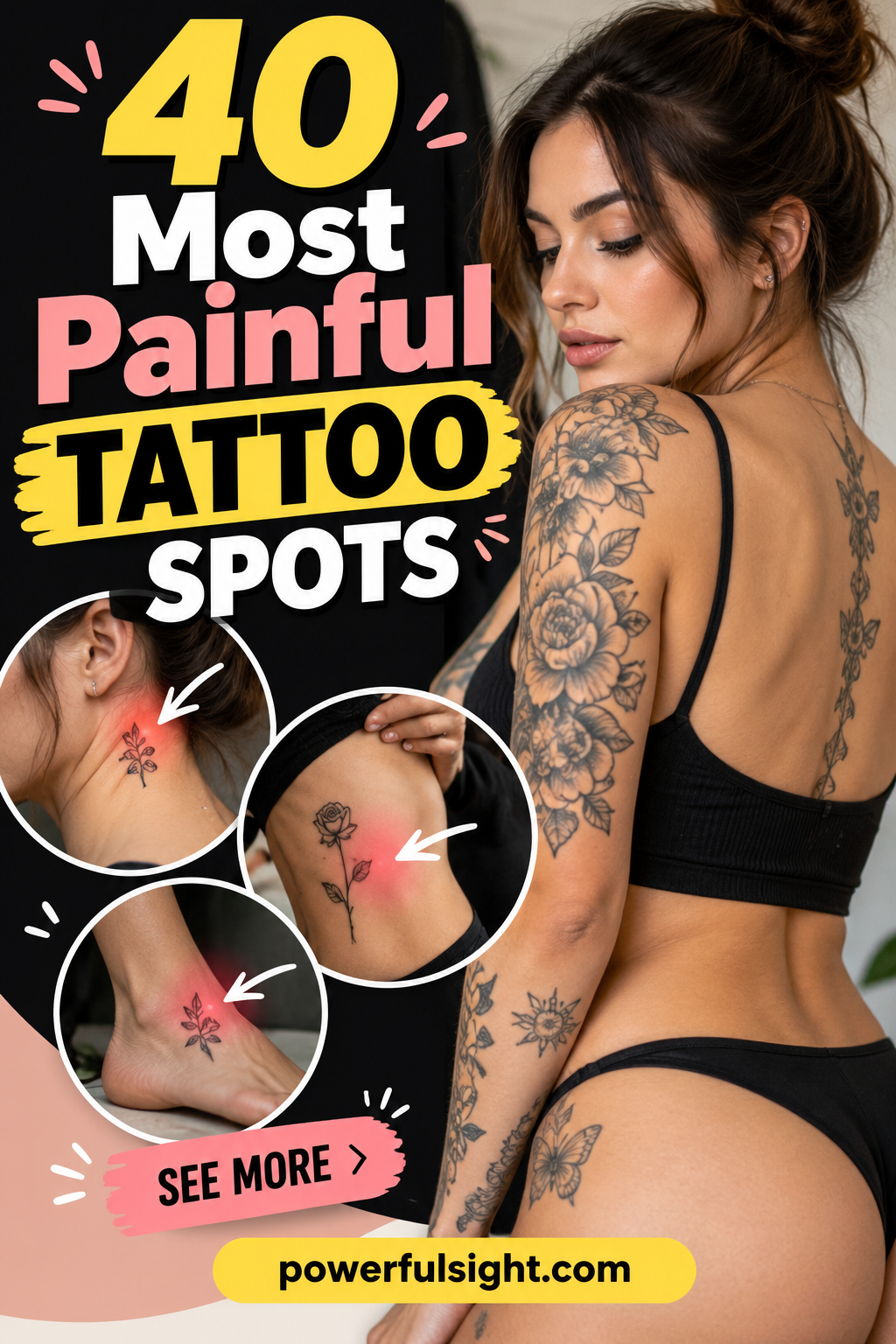
Save the pin for later

- 60 Color Tattoos That Healed Beautifully - 25/09/2026
- 40 Most Painful Tattoo Spots - 24/09/2026
- 20 Tattoo Aftercare Mistakes That Ruin Fresh Ink - 23/09/2026

