If you’d met me a few years ago, “organized” wouldn’t have been the word I’d use to describe myself.
Actually… “overwhelmed” would’ve been more like it.
My desk was messy. My inbox was overflowing. My to-do list was in five different places.
I felt busy all the time—but I wasn’t very productive.
I felt tired, stressed out, and like I was constantly playing catch-up.
Then one Sunday night, I realized I’d forgotten about an important deadline… again.
I was sitting at my kitchen table, buried under half-used planners and sticky notes. I felt defeated.
Enough.
I was tired of always feeling busy but never getting things done. That night, I decided I needed to learn how to be organized in life.
How to be productive, calm, and in control.
So I did.
And today, I’m sharing everything I learned with you.
The mindset shifts. The systems. The daily habits. The time management strategies.
Everything you’ll learn below is actionable. It’s what actually changed my life. No fluffy advice.
Here’s how I went from chronically disorganized to balanced and organized.
Why Wasn’t I Organized? (Root Causes)
Before I could make changes, I had to identify why I was so disorganized.
Mindset
I fell into the trap of thinking, “I’m just not an organized person.”
Boy, was that mindset holding me back.
I saw being organized as a personality trait that you either had or didn’t.
Learning how to become organized wasn’t something I thought you could actually do.
Feeling Out of Control
I thought “busy” and “productive” were the same thing.
My calendar? Bare.
But my days were full of stress because I was constantly putting out fires.
Lack of Time Management
I juggled tasks in my head.
Responded to emails as they popped up.
Rolled with whatever came my way that day.
I didn’t have any solid time management strategies or systems in place.
Poor Systems
If you remember earlier, I said I responded to “whatever came my way.”
That’s because I had no good systems in place.
How Did I Become Organized? (Mindset Shift)
If you looked in my bag today, you’d see a planner. Maybe some to-do lists.
But you wouldn’t find the magic secret that changed my life.
The real changes happened in how I viewed organization.
1. Stop Trying to “Get Organized”
The first thing I did was stop trying to “get organized.”
Instead, I started asking myself:
“What would ____ do?”
Fill in the blank with your most organized coworker, your spouse, a celebrity—whoever.
I asked this question because I shifted how I saw my identity.
I stopped saying:
“I need to get organized.”
And started saying:
“I’m becoming an organized person.”
Do this:
Start telling yourself:
“I’m someone who makes time to plan.”
“I’m someone who stays focused at work.”
“I’m someone who always completes my tasks.”
Repeat these phrases every time you complete a task that contributes to your new identity.
When you clean your desk? You’re becoming an organized person.
When you finish a project? You’re becoming an organized person.
By using this framework, you’re casting votes for your new identity.
And with enough votes, a new identity wins.
Related: How To Be Satisfied In Life
2. Think Long-Term
Before my mindset shift, I optimized my life for comfort.
After my mindset shift, I optimized my life for how it would feel in the long term.
Will this make my life easier next week?
Am I going to regret saying yes to this?
Am I making life more difficult for myself down the road?
Once I started thinking long-term about my decisions, I got more organized—fast.
How to Be Organized: My Step-by-Step System
Here’s how I built my organization system, step by step.
1. Declutter
Unless you’re starting from scratch like I did, you likely have some physical clutter.
If you don’t enjoy living in chaos, start by decluttering.
You’ll feel less stressed just by getting rid of things you no longer use.
My Decluttering Process
Step 1: Choose a section of your home to declutter. It can be as small as one desk drawer or as big as your entire house.
Step 2: Throw away, donate, or discard anything you don’t use.
Pro Tip: Ask yourself if you use the item and if it adds value to your life. If you answer no to both questions, toss it.
2. Build Daily Routines
When I first started learning how to be organized, I thought routines were restrictive.
They’re the opposite.
They created space for me to breathe.
My Daily Routines
Make my bed → Helps me start my day feeling productive.
10-minute planning session → Helps me sleep better at night.
Check email twice a day → Prevents email overwhelm.
Schedule the hardest tasks first → Ensures my biggest priorities get done.
Instead of wondering, “What should I do today?” you have a starting point.
Stability.
Related: How To Boost Your Wellness Routine
3. Implement a Weekly Planning Routine
I spend 30–45 minutes every Sunday planning my week.
Here’s how I structure it:
Review what went well last week.
Jot down 3–5 wins.
Review upcoming due dates.
Check my calendar carefully.
Schedule time for the hard stuff first.
Block big chunks of focused time.
Block off personal time.
Rest is productive too.
Identify the top 3 goals for the week.
Ask: What matters most?
Everything I need to do goes into this session.
4. Organize Your Digital Life
My digital life used to be a mess.
Inbox? Chaos.
Documents? Disorganized.
Phone? Distracting.
Here’s how I fixed it.
My Email System
Goal: Process email 2–3 times per day and keep it manageable.
How I did it: Unsubscribed from newsletters. Used simple folders (Action, Waiting, Archive). Stayed consistent.
Related: Mental Health Vision Board Inspiration
How I File Documents
Goal: Reduce paper clutter and easily find what I need.
How I did it: Kept it simple. Personal goes in “Personal.” Work goes in “Work.” School in “School.” Business in “Business.” Confidential documents are stored securely.
How I Organized My Phone
Goal: Reduce friction and distractions.
How I did it: Uninstalled unused apps. Turned off unnecessary notifications. Moved social apps off my home screen.
5. Create a Task Management System
Before my new systems, I had tasks written everywhere.
On sticky notes. On my computer. In my phone.
I never knew where to look.
Now I have ONE place for my tasks.
The rule: Have one source of truth.
Whether that’s:
-
A paper planner
-
A digital app
-
A small notebook
Pick one and stick to it.
I categorize my tasks as:
-
Work
-
Personal
-
Long-term
6. Use Time Blocking
Time blocking is a game-changer.
Instead of hoping I’ll get to everything, I schedule my days intentionally.
Example:
9:00–10:30 AM: Deep work
11:00–12:00 PM: Respond to emails
2:00–3:00 PM: Project work
By scheduling like this, I know exactly what to do and when to do it.
Your calendar should reflect reality. Block time to get things done.
7. Set Your Priorities
Once I clarified my weekly plan, I chose daily priorities.
I stopped saying yes to everything.
Each day, I ask:
What’s the one big thing I want to accomplish?
And 2–3 smaller tasks.
That’s it.
If those get done, it’s a successful day.
My stress levels dropped significantly because of this.
8. Learn to Say No
Life will always pull you in a million directions.
You have to guard your time.
Ask yourself:
Does this align with my goals?
Do I realistically have time for this?
What am I giving up if I say yes?
If you want to be productive, protect your time.
Tiny Changes That Keep Me Organized
These small daily habits help me stay organized.
Morning Reset
Make my bed.
Put away visible clutter.
Scan my calendar.
Review my top three priorities.
It takes 10 minutes—but changes my whole day.
Evening Reset
Tidy my workspace.
Prepare for tomorrow.
Review my task list.
I go to bed with less mental clutter.
Sunday Review
What went well?
What didn’t?
What needs adjustment?
Organization doesn’t just happen. You maintain it intentionally.
Tools
Everyone prefers different tools. These are mine:
Planner – Weekly and daily planning
Google Calendar – Time blocking
Todoist – Recurring tasks
Google Drive – File storage
Notes app – Quick capture
Tools don’t matter nearly as much as consistency.
Using your system is what matters.
My Organizing Mistakes and Lessons
Trying to become organized is a process.
Here’s where I messed up.
Perfect vs. Simple Systems
I wanted my system to be beautiful.
Color-coded.
Functional.
Complex.
It didn’t last.
A year later, I was back at square one.
Keep it simple.
Too Much Change at Once
I tried to:
Declutter my whole house.
Implement morning and evening routines.
Change my sleep habits.
Start meal prepping.
All at once.
I burned out.
Stick to improving one area of your life at a time.
Copying Other People’s Systems
Pinterest and Instagram are great for inspiration.
Not for building your exact system.
You aren’t those influencers.
Your organization system should work for you.
My Life After Becoming Organized
Here’s what improved.
Mental Clarity
I have more headspace.
I forget less.
I remember more.
I get more done.
Struggle with anxiety? Getting organized genuinely helped me.
More Free Time
This sounds crazy coming from someone who teaches organization.
But when I stopped procrastinating and started planning properly, I gained more free time.
Bonus: I get to spend more time doing things I enjoy.
Conclusion
You don’t have to live overwhelmed.
By starting where you are—one habit at a time—you can live an organized life too.
Here’s something I can guarantee:
If you can throw out one sweater you never wear, you can organize your life.
Start today.
Don’t live chaotically. Start living organized.
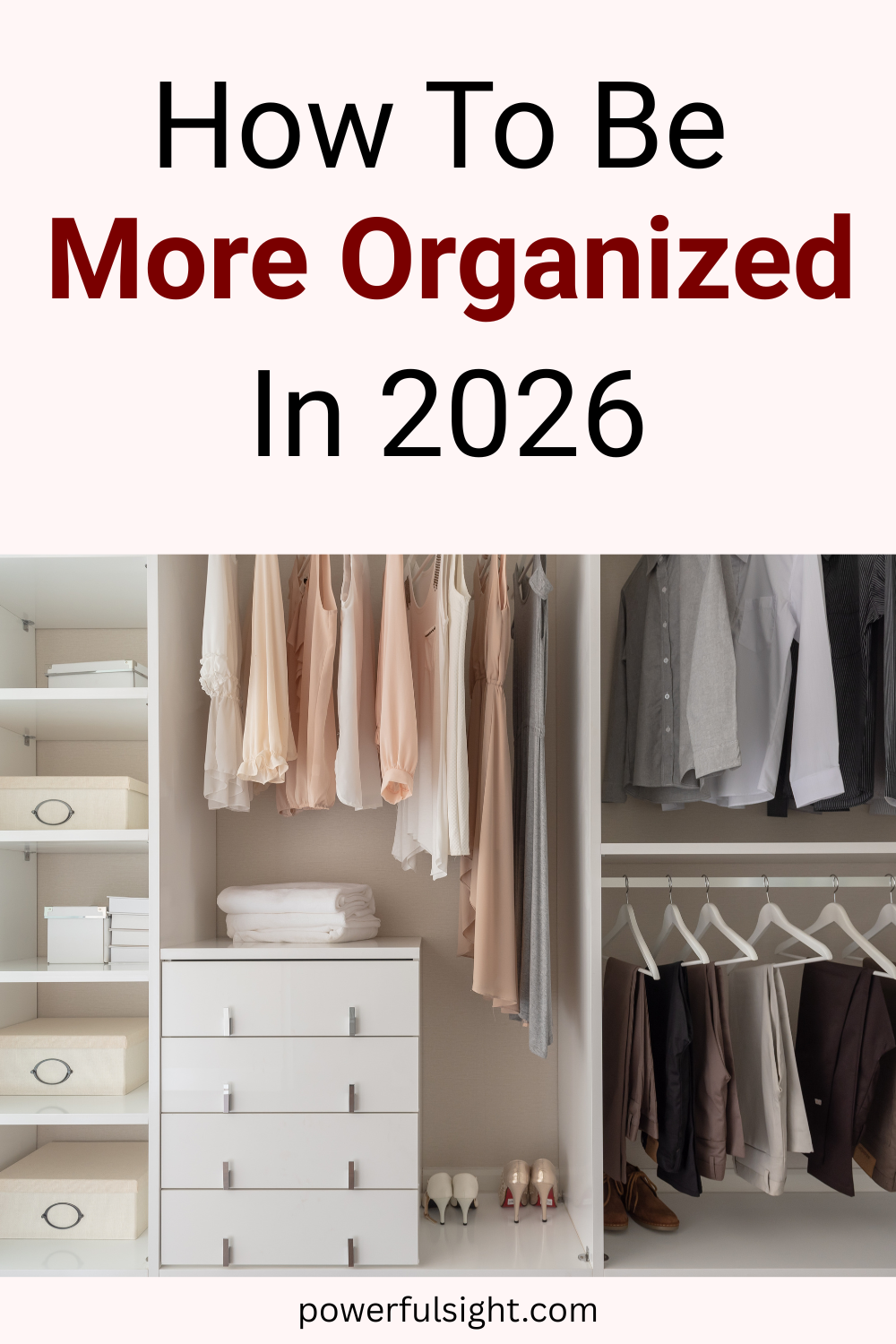
Save the pin for later

- How To Handle Toxic People - 11/04/2026
- How To Feel Hopeful In Life Again - 11/04/2026
- Why Do Guys Never Text First? 18 Reasons - 10/04/2026

