A child feels sick during math class, a sudden storm delays dismissal, or a phone dies just when they need to call home. These moments can turn an ordinary school day into a stressful one, but a small back to school emergency kit can help your child handle short-term problems safely and calmly.
The kit might include water, a shelf-stable snack, a flashlight, a whistle, tissues, hand sanitizer, bandages, emergency contact details, and any approved medication they may need. Its contents should match your child’s age, health needs, school rules, and the situations they may realistically face. It also helps to practice basic safety skills, such as knowing whom to contact and where to find help, alongside preparing essential school supplies.
This kit doesn’t replace the school’s emergency plan or a complete home disaster kit. Instead, it gives your child a few practical tools while they wait for instructions, family pickup, or normal school services to resume. Next, we’ll look at what to pack, how to adjust the kit for different ages and medical needs, and how to keep everything ready throughout the school year.
Key Takeaways
- Keep a small, school-approved emergency kit in your child’s backpack, with water, a shelf-stable snack, tissues, sanitizer, and bandages.
- Add a flashlight, spare batteries, whistle, and written emergency contacts for power outages or delayed pickup.
- Pack prescription medication only as the school permits, and include allergy supplies or other approved health items.
- Adjust the kit for your child’s age, medical needs, climate, and daily travel routine.
- Review supplies each semester using guidance from Ready.gov’s emergency kit checklist and the American Red Cross supply guide.
What Belongs in a Back To School Emergency Kit?
A back to school emergency kit should handle small problems during a school day without weighing down your child’s backpack. Keep it compact, clearly labeled, easy to open, and separate from ordinary supplies such as pencils, folders, and gym clothes.
Ask the school what students should bring before packing anything. Many schools already keep first-aid materials, water, emergency food, and communication plans on-site. Your child’s kit should support those arrangements, not conflict with them.
Everyday School Supplies vs. Emergency Items
A pencil case belongs with school supplies. A small pouch containing bandages, tissues, and emergency contacts belongs in the emergency kit. Keeping the two groups separate helps your child find the right item quickly.
The kit can fit inside a bright zipper pouch or a lightweight waterproof bag. Choose containers your child can open independently, and add a simple label with their name. Avoid glass, sharp tools, bulky containers, and anything the school has prohibited.
The Main Categories to Pack
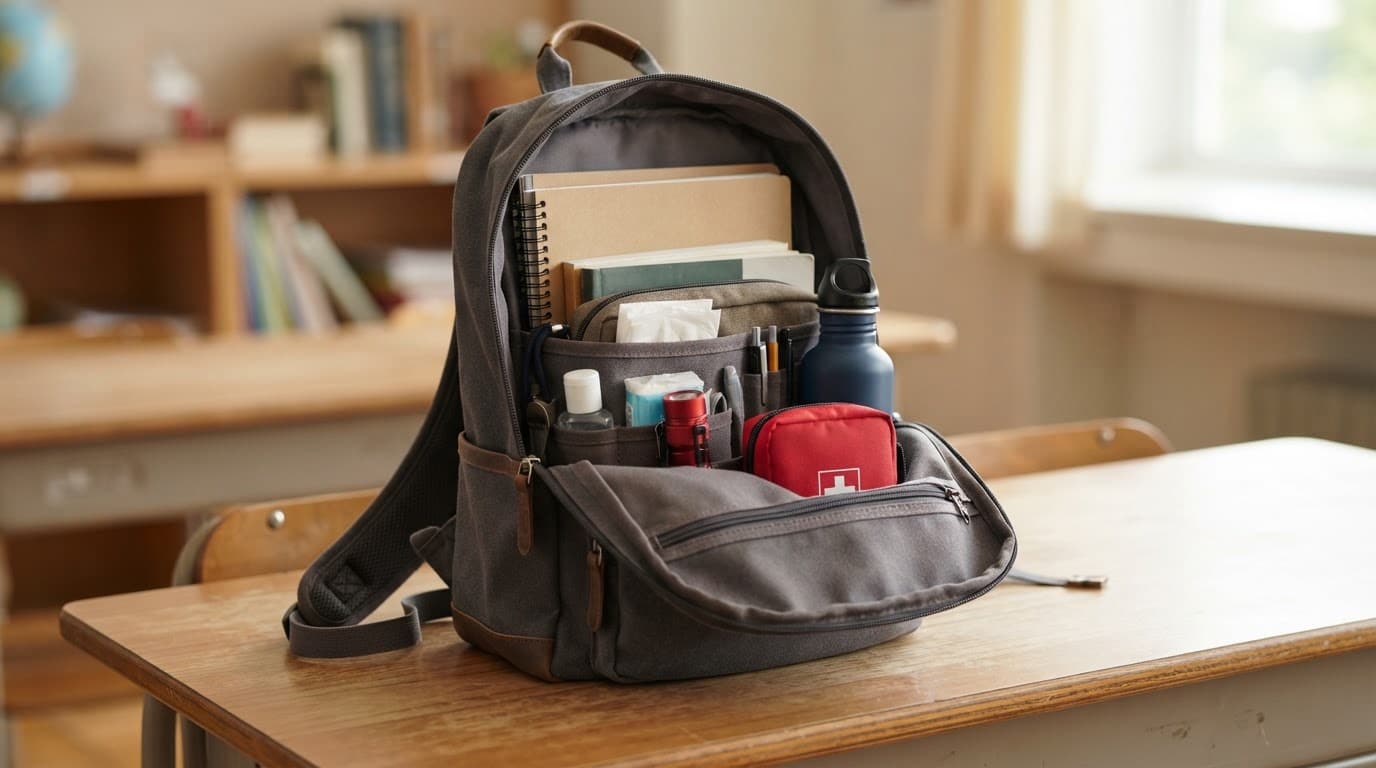
A practical kit usually includes:
- A contact card with your child’s name, caregiver phone numbers, pickup instructions, allergies, and important medical details.
- A refillable water bottle and one shelf-stable snack, such as a granola bar or package of raisins.
- Adhesive bandages, gauze, and any school-approved first-aid items.
- Tissues, hand sanitizer, menstrual products, and a few personal hygiene supplies.
- A small flashlight, spare batteries, and a whistle for power outages or delayed dismissal.
- A compact poncho, rain cover, or warm layer suited to your local weather.
- One comfort item, such as a family photo or small soft toy, for a younger child.
- Approved personal medical supplies, including prescribed medication, an epinephrine auto-injector, inhaler, or diabetes supplies.
Write emergency contacts on paper because a dead phone cannot display a number. For broader preparation guidance, compare the recommendations in Ready.gov’s emergency kit checklist with your school’s rules.
Keep the Kit Smaller Than a Home Emergency Kit
A backpack kit covers a short disruption, such as a delayed pickup, minor injury, or sudden weather problem. It doesn’t need the food, tools, blankets, radio, and multi-day water supply found in a home 72-hour emergency kit. The American Red Cross supply guide can help you keep those larger supplies at home.
Before the first school day, practice opening the pouch and reading the contact card. Then review it each semester as your child’s needs and school routine change, using these new-semester preparation tips.
Pack These Everyday Essentials for Small Problems
A useful Back To School Emergency Kit handles ordinary disruptions without turning a backpack into a suitcase. Choose compact items your child can use independently, then review the pouch whenever the school year, weather, or health needs change.
Choose Food and Water That Will Actually Get Used
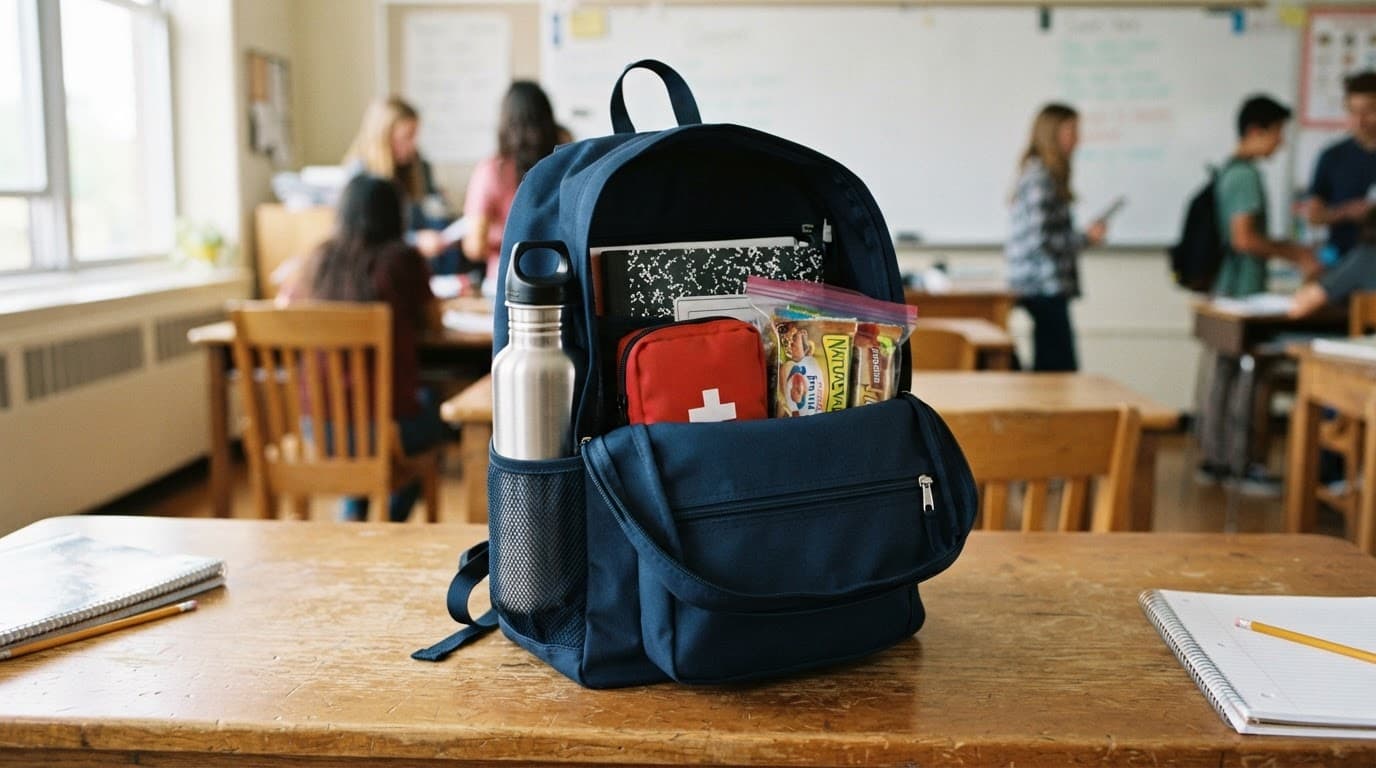
Pack a refillable water bottle and two small, nonperishable snacks your child already enjoys. Granola bars, crackers, dried fruit, applesauce pouches, and allergy-safe snack bars work well because they take little space and need no refrigeration.
Check expiration dates when you pack the kit. Replace anything that is close to expiring, and avoid chocolate, yogurt, soft cheese, or other heat-sensitive foods that can spoil or become messy in a warm backpack. Younger children also need snacks that match their chewing skills, so avoid hard, sticky, or unusually large pieces that could create a choking risk.
Before choosing food, review the school’s allergy policy. Some schools ban nuts, peanut products, or shared homemade food. Pack sealed, single-serving items instead of anything your child may offer to classmates. Check the water bottle often for leaks, odors, and damage, then refresh the snacks before they expire.
A school bag doesn’t need the full emergency water supply recommended for a home kit. The school has its own emergency plan and stored resources, so one practical bottle is usually enough for a child’s daily needs. Families should follow individual healthcare plans for diabetes, food allergies, celiac disease, or other special diets.
Add Personal Health and Hygiene Supplies
Keep minor problems manageable with a few lightweight supplies:
- Adhesive bandages and a small piece of gauze can cover a scrape or blister.
- Alcohol-free cleansing wipes, antiseptic wipes, tissues, and hand sanitizer support basic cleanliness.
- Menstrual products help older students handle an unexpected period without leaving class unprepared.
- Spare underwear and a small zip bag can help after spills, accidents, or wet clothing.
These items support minor issues, but they don’t replace trained adult care. Never pack loose prescription medicine or any product the school hasn’t approved. Instead, coordinate medication storage with the school nurse and follow the school’s process for inhalers, epinephrine auto-injectors, diabetes supplies, or seizure medication. Medication should remain in its original labeled container and match the instructions from the prescribing physician.
Prepare for Weather, Clothing, and Comfort
Backpack weight matters, especially for younger children. Choose supplies that match your climate, daily commute, and school schedule. A lightweight extra layer, rain poncho, hat, sunscreen where appropriate, spare socks, and a change of clothes can prevent a small weather problem from becoming a miserable afternoon.
Store clothing and hygiene items in small waterproof pouches, and label them clearly with your child’s name. Younger children and students with medical needs may benefit most from a complete change of clothes.
A familiar comfort item can also help a child manage anxiety or sensory overload. Consider a family photo, soft fabric square, or small quiet object, but check whether the school allows it. The best kit feels familiar, useful, and light enough to carry every day.
Build the Kit Around Your Child’s Age and Daily Routine
One emergency kit should not look identical for a kindergartner, a middle schooler, and a high school student. Reading ability, backpack space, transportation, after-school plans, and comfort with handling problems all change with age. Pack for the child’s actual day, not an imaginary emergency.
Teach each item without creating fear. Explain that the kit is a small set of tools for ordinary problems, such as a scraped knee, a wet shirt, a delayed bus, or a dead phone. Practice finding the contact card, showing it to a trusted adult, and asking for help.
A Simple Kit for Preschool and Elementary Students
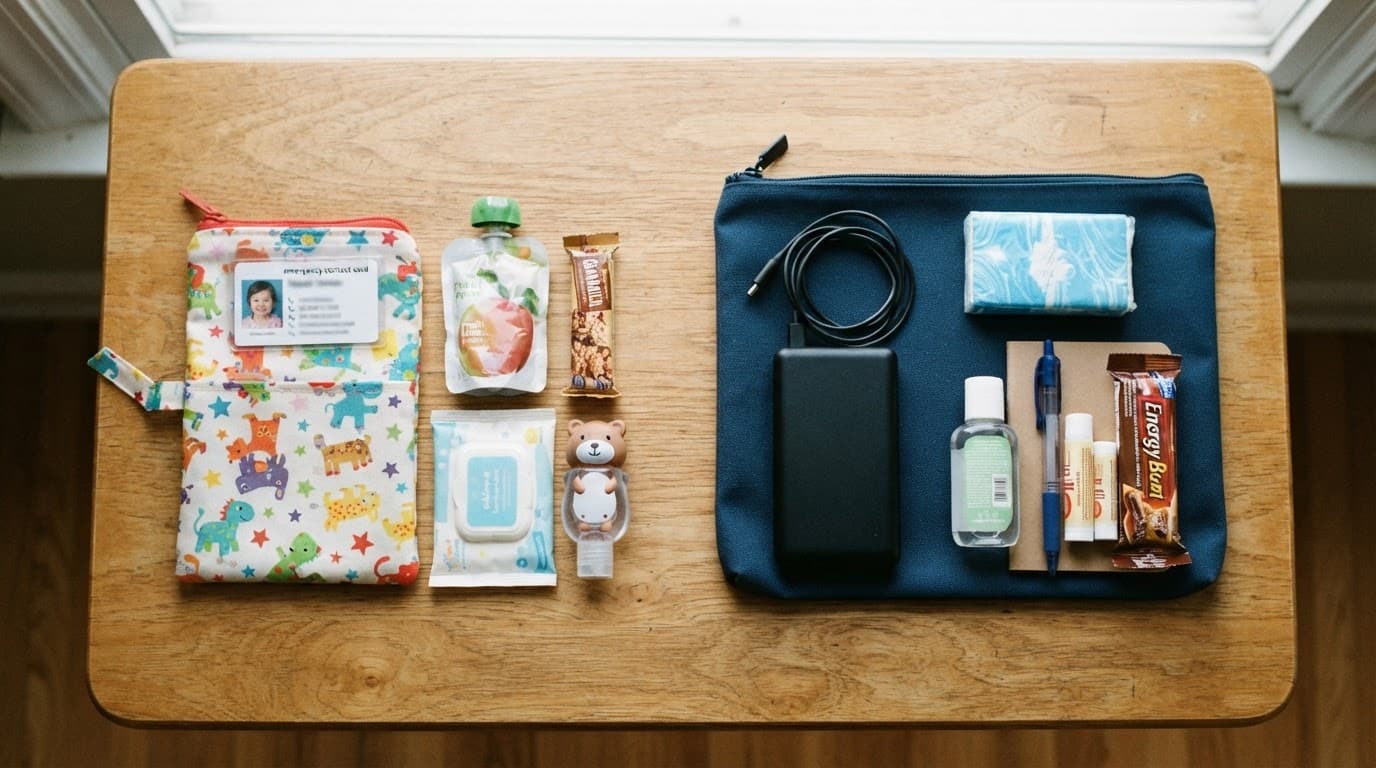
Young children need a small, easy-to-recognize pouch with only the items they can use safely. A picture-labeled contact card can show a caregiver’s name, phone number, and a trusted adult the child knows. Add water, one or two approved snacks, tissues, wipes, adhesive bandages, a change of clothes, and a lightweight extra layer.
A small family photo or soft comfort item may help during a long pickup delay or an unfamiliar situation. Keep tiny objects, loose batteries, and choking hazards away from children who still put items in their mouths. Follow classroom rules for food, toys, personal belongings, and allergy-safe products.
Caregivers should practice the routine before school starts:
- Show the child where the contact card is stored.
- Practice identifying teachers, the front-office staff, bus drivers, and other trusted adults.
- Role-play a simple request, such as, “I need help calling my caregiver.”
- Let the child open the pouch and identify each item.
Keep the practice calm and brief. A child who knows what the pouch contains is less likely to feel frightened when using it.
A More Independent Kit for Middle and High School Students
Older students can carry a slightly more flexible kit for longer days, public transportation, sports, clubs, field trips, and part-time jobs. Include a student-friendly contact card, water, sealed snacks, hygiene products, basic first aid, weather protection, and supplies for medical or sensory needs. A portable charger may help, but only if the school allows it.
A high school student can check expiration dates, recharge the charger, replace used bandages, and tell an adult when something is wrong. However, privacy matters. The contact card should contain only necessary information, and students should keep medication private and never share it with friends. Prescription medicine must follow the school’s storage and administration policy.
Review the kit when custody schedules, bus routes, sports seasons, or commute times change. A student who spends three hours away from home needs different supplies than one who walks straight home after the final bell. For age-appropriate planning activities, families can also review Ready.gov’s student emergency planning curriculum.
Keep Medical, Contact, and Safety Details Up to Date
A back to school emergency kit is only useful when its information matches your child’s current needs. Review the pouch, school records, and family plans whenever your address, phone number, custody arrangements, or health information changes.
Coordinate With the School Before Packing Medication

Read the student handbook, then contact the school nurse or main office before sending prescription medication, over-the-counter products, inhalers, epinephrine auto-injectors, glucose supplies, or medical devices. District rules differ. The school may require a physician’s form, written parent permission, original labeled containers, locked storage, or an emergency backup supply.
Daily medication may need to remain with the nurse rather than in your child’s backpack. An inhaler or epinephrine auto-injector may have separate rules for self-carrying, classroom access, and staff support. Ask how the school stores, records, replaces, and handles each item. Never change a medication routine or dose based on a backpack plan.
Give the school current health records and medical forms instead of relying only on a contact card. Some schools require annual updates for children with conditions that could need emergency care, as shown in this annual emergency form.
Update the school after a new diagnosis, allergy, accessibility need, communication preference, or emergency treatment plan. Confirm that staff know how your child communicates distress, uses mobility equipment, or needs help during an evacuation.
Teach a Calm Response Instead of a Fearful One
Practice a short script your child can remember:
“Stay with your teacher or another trusted adult. Listen for instructions. Use your contact card if you need help. Leave only with an approved person.”
Explain that the kit is a set of practical tools, not a warning that something bad will happen. Your child should never investigate danger, use unfamiliar tools, approach an emergency scene, or share personal information online. They should tell an adult if someone asks for their address, school, passwords, or family details.
At home, practice one simple drill. Ask your child to find the contact card and water bottle, then walk to a trusted adult. Keep the exercise brief and calm. Rehearsal turns the pouch into a familiar routine rather than a source of fear.
Write only necessary information on the card, protect it from public view, and review approved pickup names after a move, phone change, divorce, or custody update. The school should receive those changes through its official records system as well.
Make the Kit School-Friendly, Affordable, and Easy to Carry
A back to school emergency kit should fit inside the backpack without competing with books, lunch, or sports gear. The goal is a small set of useful supplies, not expensive survival equipment that your child rarely uses.
Use a Compact Packing System
Choose a labeled zipper pouch, pencil case, or small waterproof bag that your child can open without help. Group similar items together so a stressful moment doesn’t turn into a backpack search.
- Keep bandages, tissues, and approved health supplies in one health pouch.
- Store sealed snacks and a clean water bottle where your child can reach them quickly.
- Place the contact card and tissues in an outer pocket.
- Pack spare socks or clothing in a separate waterproof bag.
- Keep a small flashlight in an easy-to-find section, if the school permits it.
Simple labels such as “health,” “food,” or “contacts” help younger children find supplies. Use words, colors, or pictures that match your child’s reading ability. Every zipper, snap, and container should be familiar. If your child needs an adult to open it, the kit isn’t ready yet.
Place heavier objects close to the wearer’s back, then remove anything bulky or duplicated. A water bottle, flashlight, and pouch can add weight quickly. Have your child wear the packed backpack for a few minutes before the first school day. Adjust the contents if the straps pull, the bag feels unbalanced, or the child struggles to walk comfortably.
Shop Smarter With What You Already Have
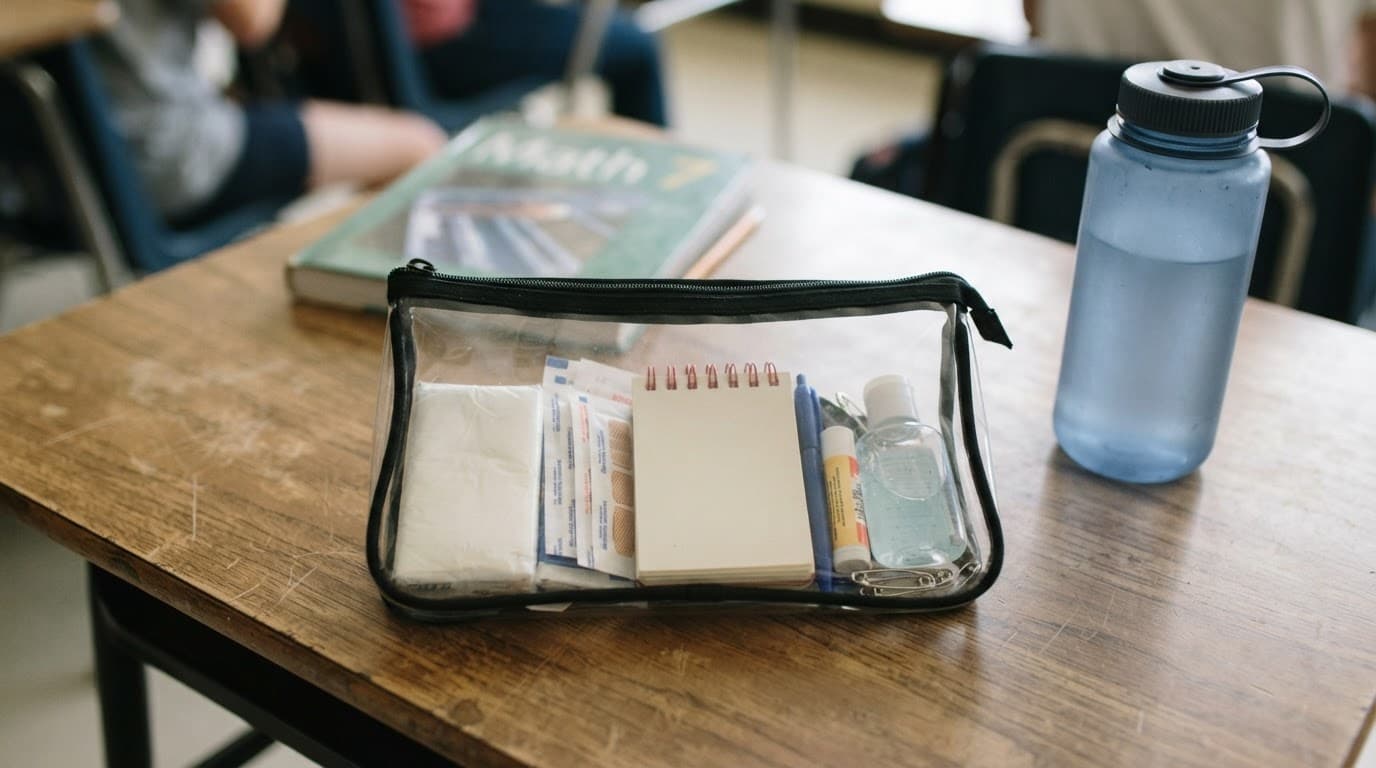
You may already own most of what belongs in a low-cost kit. A clean reusable water bottle, sealed snack, travel tissues, adhesive bandages, spare socks, and a small flashlight can cover everyday needs without a special shopping trip.
A practical starter setup might include:
- One labeled pencil case or zipper pouch
- Two sealed snacks your child already eats
- Travel tissues and two or three bandages
- One pair of spare socks
- A small flashlight with reliable spare batteries
- A written contact card
Spend first on health, contact information, hydration, and weather protection. Decorative accessories, oversized tools, poor-quality batteries, and bulky gear can wait. Replace food, batteries, and worn supplies when needed, rather than rebuilding the entire kit each year. Reusable containers and washable clothing also reduce waste and repeat costs.
Before purchasing anything, check the school’s supply list and district guidance. Rules may restrict electronics, power banks, food allergens, scissors, whistles, aerosols, sharp objects, and even certain flashlights. A school-approved kit is more useful than a fuller one that must stay at home. For families with several children, buy shared basics in multipacks, then give each child a clearly labeled pouch with age-appropriate personal supplies.
Check, Replace, and Practice the Emergency Kit All Year
Packing a Back To School Emergency Kit once is not enough. Food expires, batteries lose power, clothes stop fitting, and your child’s schedule changes. A short monthly check keeps the pouch useful without turning preparation into a major project.
Use a Seasonal Refresh Schedule
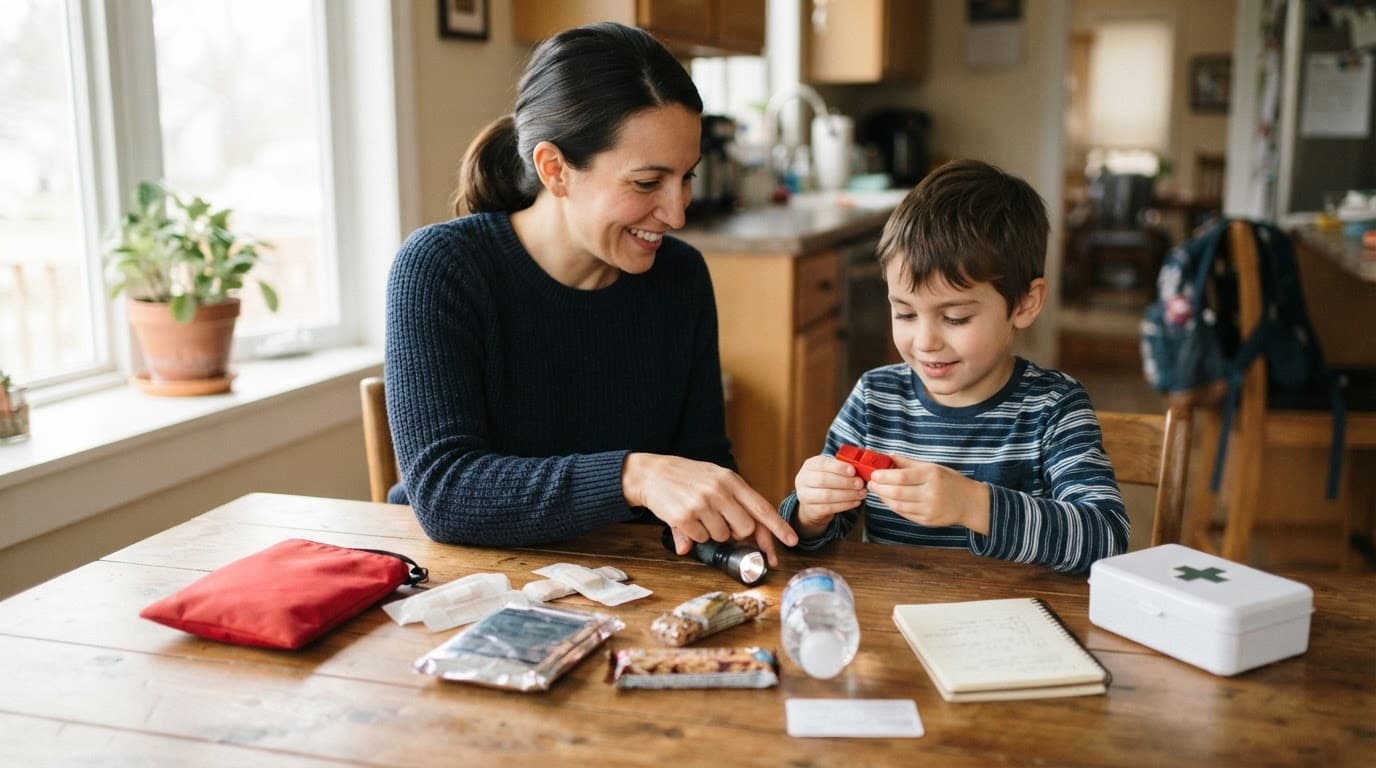
Review the kit at the start of every school term, then check it whenever daylight, temperature, or activities change. A quick monthly review can cover:
- Food expiration dates, melted packaging, leaks, odors, and heat damage.
- Water bottle cleanliness, leaks, cracks, and unusual smells.
- Flashlight batteries, spare battery power, and charger function.
- Clothing size, spare socks, rain protection, and warm layers.
- Sunscreen, lip balm, hygiene supplies, and approved medication dates.
- Emergency phone numbers, pickup details, allergies, and medical information.
Replace summer clothing with warmer layers before cold weather arrives. Add a compact poncho or rain cover during wet seasons. Sunscreen and lip balm may matter more during sunny months, outdoor learning, sports, or long walks home.
Hot backpacks need extra attention. Chocolate, soft snacks, and other heat-sensitive foods can melt, leak, spoil, or become unsafe. Replace damaged food immediately, and keep sealed snacks in a cool, dry part of the bag.
Run another review before field trips, long bus rides, overnight activities, sports seasons, and family moves. A new address, phone number, custody arrangement, or after-school plan may require an updated contact card. Families should also follow local weather alerts and school messages. The kit supports the school plan, but it doesn’t replace official instructions or emergency communication.
For broader household preparation, compare the child’s small kit with Ready.gov’s kit guidance, while keeping the backpack version compact and age-appropriate.
Practice the Three Things Children Need to Remember
During a calm moment, rehearse three simple habits:
- Stay with a trusted adult. Your child should remain with a teacher, school staff member, bus driver, or another approved adult.
- Follow school instructions. Explain that staff will provide directions during weather delays, evacuations, or changes to pickup.
- Use the contact card when communication is needed. A written card helps when a phone is lost, uncharged, or unavailable.
Keep practice brief and ordinary. Ask your child to find the card, identify a trusted adult, and say, “I need help contacting my caregiver.” There’s no need to stage a frightening emergency.
Invite your child to inspect the kit with you. They can test the flashlight, check clothing fit, choose an approved snack, and report anything missing or expired. Older students can help update contacts and test a charger. These small tasks build responsibility and make the kit familiar before your child needs it. For help establishing a steady school-day rhythm, review these morning habits for students.
Know the Difference Between a School Bag Kit and a Home Emergency Kit
A Back To School Emergency Kit is designed for one child during a school-day disruption. It should fit inside a backpack and cover short-term personal needs, such as water, a snack, basic hygiene supplies, a flashlight, written contacts, and approved medical items. The kit supports your child while they wait for instructions, reunification, or a safe ride home.
A home emergency kit has a different job. It supports the whole household during a longer outage, evacuation, or period without normal services. It may include several days of water and shelf-stable food, a battery-powered or hand-crank radio, blankets, extra clothing, cash, copies of important documents, spare keys, tools, sanitation supplies, medications, and larger household items. The Ready.gov emergency supply checklist offers a useful starting point for building that larger home supply.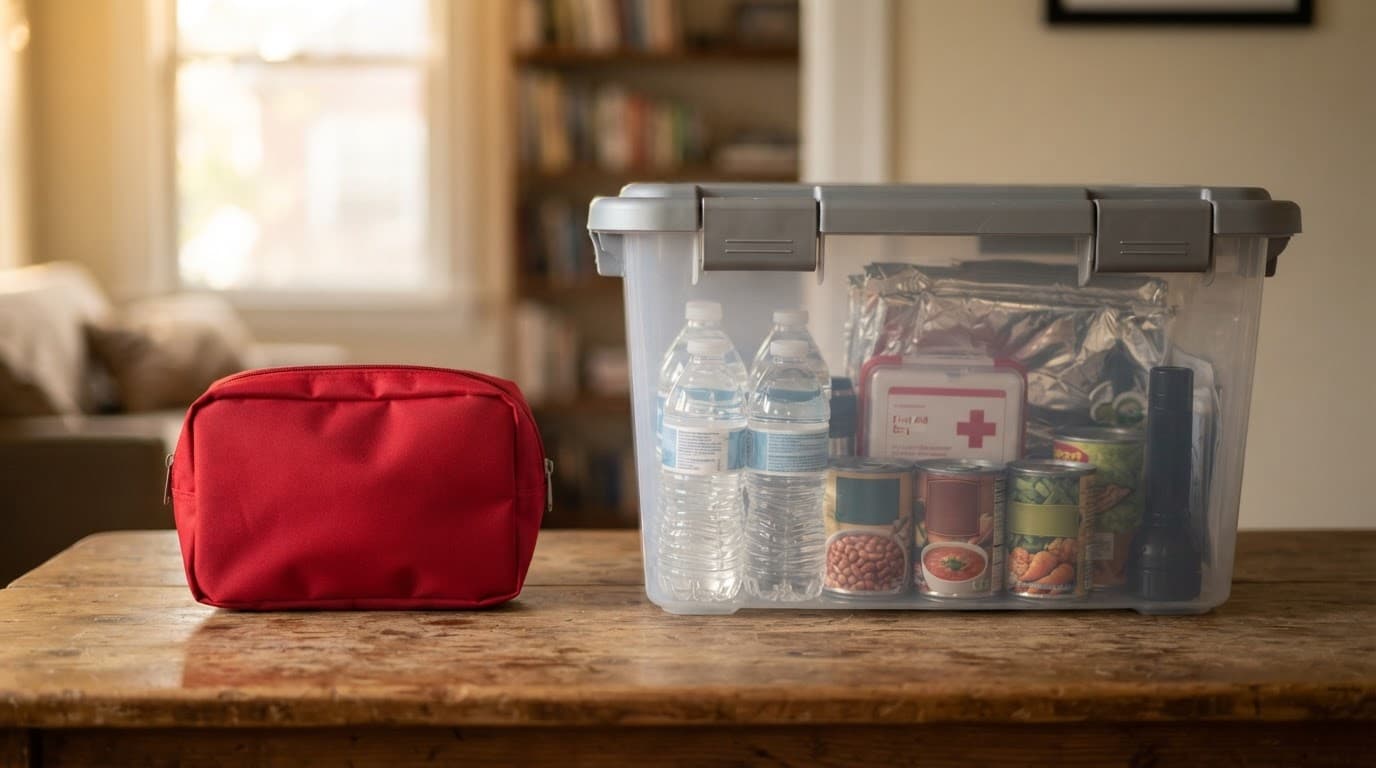
The size difference matters. A child should not carry several gallons of water, heavy blankets, canned food for the family, or a toolbox to school. Those supplies belong in an accessible place at home. The backpack kit handles immediate, individual needs, while the home kit gives caregivers the supplies needed to care for everyone.
Keep both kits connected to the same family plan. Your child should know where the home kit is stored, but they should also understand that school staff will direct students during a disruption. The backpack pouch is one small piece of preparation, not a replacement for school procedures or household supplies.
Plan for Family Communication During a Disruption
Before school starts, agree on an out-of-area contact your family can call or text. A relative or trusted friend outside your local area may be easier to reach if nearby phone networks become busy. Write that person’s name and number on your child’s contact card, along with caregiver numbers.
Choose a familiar meeting place, such as a relative’s home or a public location outside the immediate neighborhood. Also list the adults approved to pick up your child, and update those names through the school’s official system whenever plans change.
Create a backup plan for a dead phone battery, poor signal, canceled buses, or unavailable transportation. Most importantly, tell your child to remain with school staff and follow the school’s reunification process. They should never leave independently or accept a ride from someone who isn’t approved.
A paper contact card still works when a phone battery, signal, or app does not.
Conclusion
A Back To School Emergency Kit gives your child practical support when a normal school day takes an unexpected turn. Water, safe snacks, contact information, basic first aid, hygiene supplies, weather protection, and approved personal medication can help with small problems while your child waits for a trusted adult or school instructions.
The kit should match your child’s age, health needs, daily routine, and school rules. Involve your child when you pack it, then practice finding the contact card, opening the pouch, and asking a trusted adult for help. Regular checks also keep snacks fresh, clothing the right size, batteries working, and medical details current.
Preparation should create comfort and clear communication, not fear. Set aside 15 minutes before the next school morning to gather the supplies, check the rules, and let your child test the packed kit.
Save the pin for later

- Healthy Air Fryer Recipes for Beginners - 21/09/2026
- Healthy Snacks for Late Night Cravings - 21/09/2026
- High Protein Meal Prep Ideas for Easy Weekly Meals - 21/09/2026

