Hunger can show up at the worst time: you’re tired, it’s late, and suddenly you want something sweet or salty. You don’t have to ignore genuine hunger or reach for highly processed foods, though. A small snack can be reasonable when your stomach is keeping you awake, while a large meal close to bedtime may leave you feeling full, uncomfortable, or more prone to heartburn.
The best choices are simple, nutrient-dense foods that offer enough protein, fiber, or healthy fat without feeling heavy. You’ll also need to consider portion sizes, snack timing, sleep-friendly ingredients, and foods that may worsen reflux or disturb sleep. If nighttime eating often turns into overeating, these satisfying snacks for late-night cravings can help you choose with more intention.
Next, let’s look at practical snack ideas and the timing habits that make them easier on your body.
Healthy Snacks for Late Night Cravings That Are Filling and Sleep-Friendly
The best late-night snacks are small, nutrient-dense, and easy to digest. A useful combination includes protein with fruit, a fiber-rich carbohydrate, or a small amount of healthy fat. For many people, about 150 to 250 calories is enough, although your needs depend on your body, activity level, and hunger. The goal is to feel satisfied without turning a snack into a second dinner. The Sleep Foundation’s bedtime snack guidance also recommends balancing protein and carbohydrates rather than relying on sugary foods alone.
Greek Yogurt, Cottage Cheese, and Other Protein-Rich Choices
Plain Greek yogurt is an easy option because it provides protein in a light, creamy serving. Try about three-quarters of a cup with a small handful of berries. The fruit adds natural sweetness and fiber, while choosing plain yogurt helps you avoid the added sugar found in many flavored varieties.
Cottage cheese works well with pineapple, sliced peaches, or a few tart cherries. Start with roughly half a cup and add enough fruit to make it appealing without creating a large bowl. Tart cherries are often discussed in sleep nutrition, but they may support sleep for some people rather than guarantee better rest.
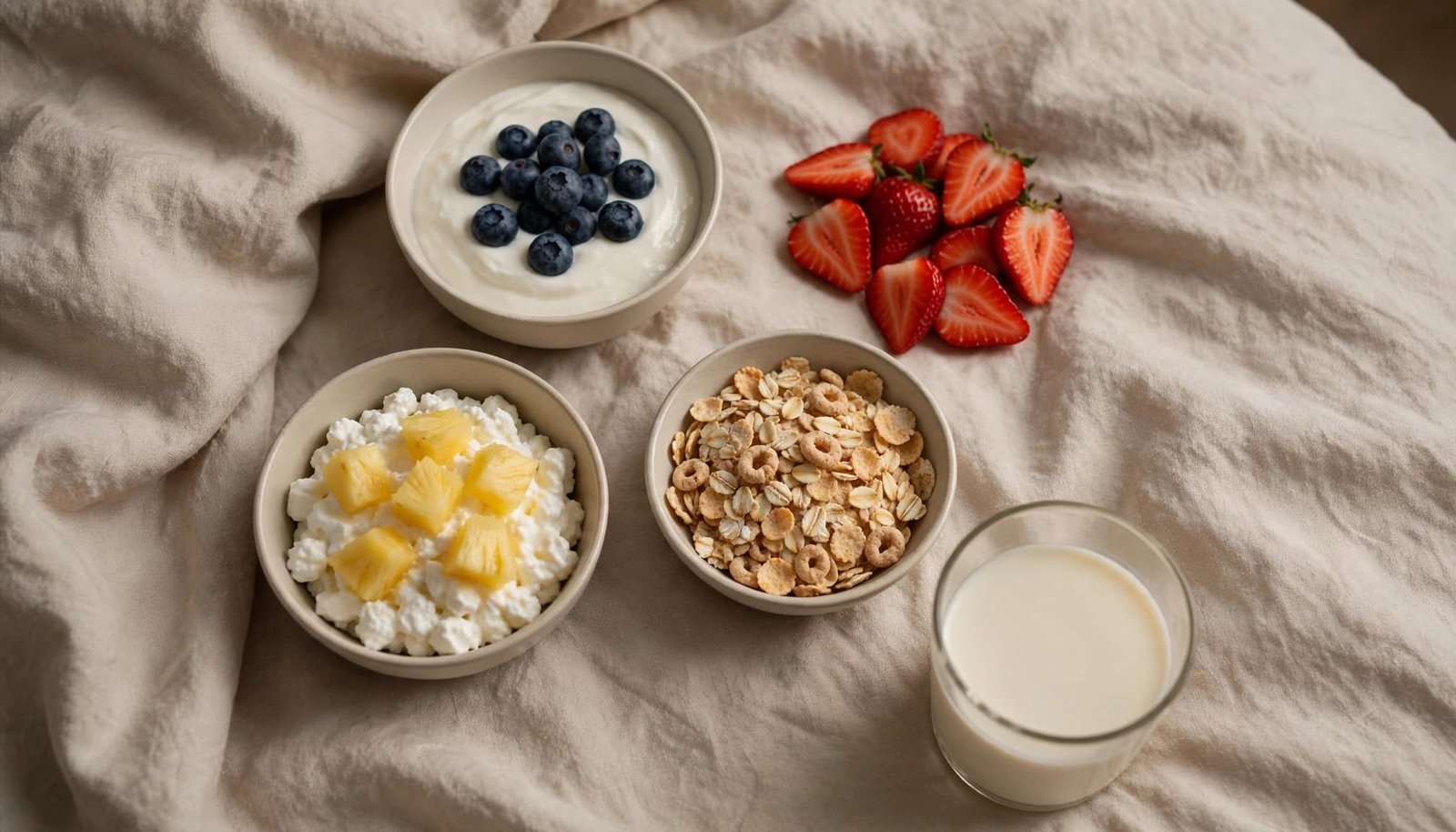
If you prefer something warm, heat a small glass of milk and pair it with a modest serving of low-sugar fortified cereal. Keep the cereal portion closer to a snack bowl than a full breakfast. Dairy-free eaters can choose unsweetened soy yogurt, which usually offers more protein than many oat, coconut, or almond-based alternatives.
Check labels for plain or lower-sugar products, and choose reduced-fat options if rich foods tend to cause discomfort. If you want more combinations built around protein and fiber, these high-fiber snacks for controlling cravings offer additional ideas.
Fruit, Whole Grains, Nuts, and Seeds for a Simple Sweet Snack
Fruit can satisfy a sweet craving while whole grains add fiber and longer-lasting fullness. An apple with about one tablespoon of almond butter or a small banana with peanut butter gives you carbohydrate, protein, and a little healthy fat in a manageable portion.
For a warm choice, prepare a small bowl of plain oatmeal with cinnamon. You can add a few chopped nuts, but avoid turning it into a heavily sweetened dessert. Whole-grain crackers with a little cheese also provide a practical mix of carbohydrate and protein when you want something savory.
Nuts and seeds are nutritious, yet their calories add up quickly. A small handful of pistachios, almonds, or pumpkin seeds is usually enough for a late snack. You can also try a small serving of tart cherries or a little unsweetened tart cherry juice. Research on tart cherries and sleep remains limited, so treat them as an optional food, not a guaranteed sleep aid.
How to Choose the Right Snack When You Are Hungry at Night
A late-night craving doesn’t always mean you need food. It may come from thirst, boredom, stress, habit, or a dinner that was too small. A brief pause can help you identify the signal without ignoring genuine hunger.
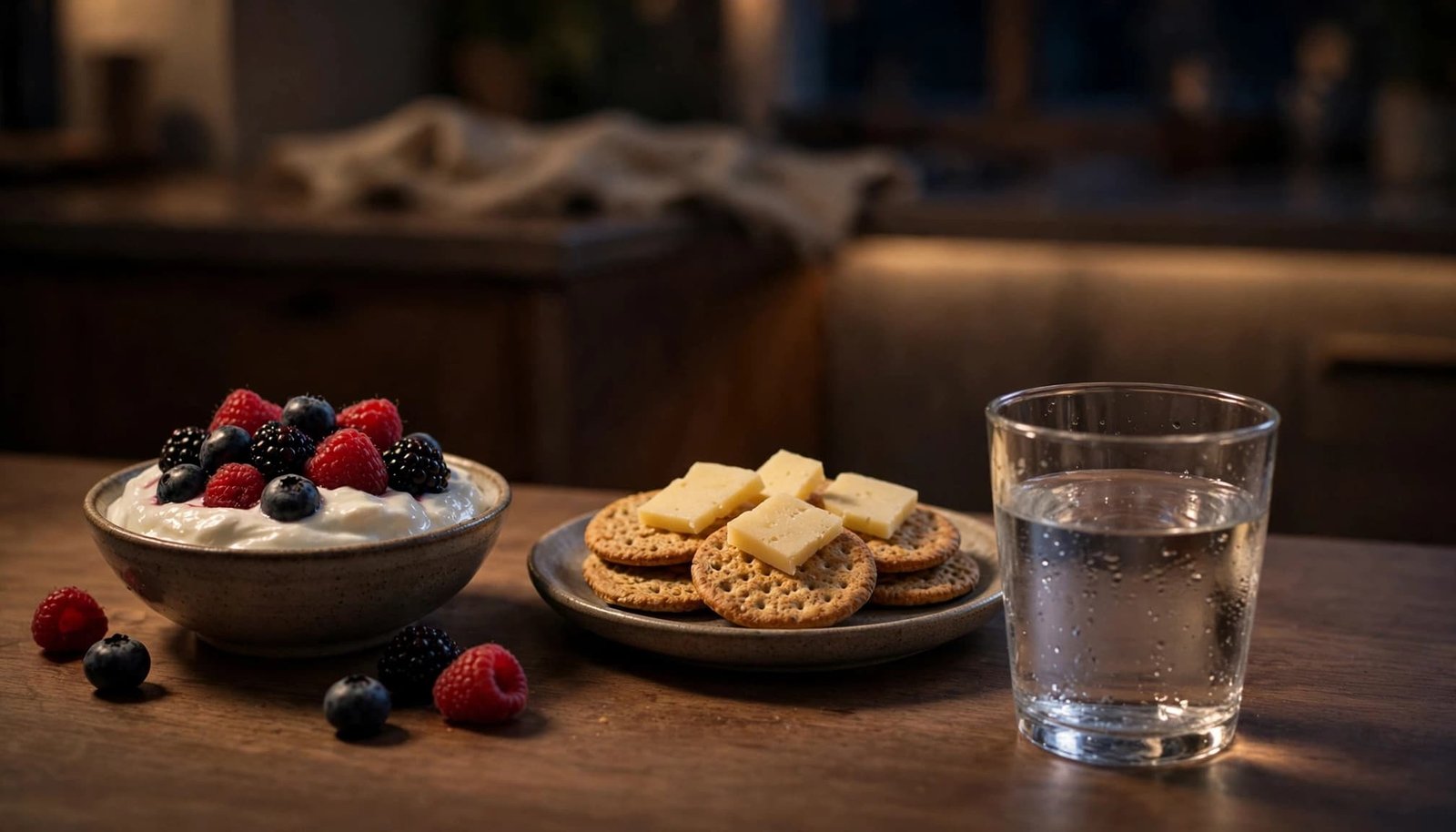
Start with a glass of water, then wait a few minutes. Notice whether you feel physical hunger, such as stomach emptiness, low energy, or persistent hunger that builds gradually. If the urge appears only while watching television or after an emotional day, try changing rooms, brushing your teeth, or practicing slow breathing first. When hunger remains, choose a small snack and eat it slowly.
Match the Snack to the Craving
Your craving can point you toward a satisfying choice without dictating the entire snack. For a sweet taste, try fruit with plain yogurt, berries with cottage cheese, or a small bowl of oatmeal with cinnamon. These options provide more staying power than candy alone.
When you want something salty or crunchy, choose roasted edamame, whole-grain crackers with cheese, a modest portion of air-popped popcorn, or a small serving of unsalted nuts. For chocolate cravings, a little dark chocolate paired with fruit or yogurt can satisfy you. However, chocolate contains caffeine, so it may disturb sleep if you’re sensitive or eat it close to bedtime.
Stronger hunger calls for protein plus carbohydrate, not just chips or sweets. Try a banana with peanut butter, yogurt with berries, or crackers with cheese. If you skipped dinner, exercised late, or manage blood sugar needs, you may need more than a very small snack. You can find more balanced ideas in these healthy snacks for steady energy.
Use Timing and Portion Size to Protect Your Sleep
Many people do well with a light snack 30 to 120 minutes before bed, but your ideal timing depends on hunger, digestion, and bedtime. Someone who eats dinner at 5 p.m. and goes to bed at 10 p.m. may need a small snack around 8:30 p.m. Someone who exercises at 9 p.m. may feel better with a recovery snack after training, then a short period upright before lying down.
As a general starting point, keep a late-night snack around 150 to 250 calories. That range isn’t a rigid prescription, but it can prevent a snack from becoming a second dinner. Large, high-fat, spicy, or greasy meals close to lying down may increase indigestion or reflux. For more evening habits that support restful sleep, review these healthy habits for deeper sleep.
Eat without rushing, pause halfway, and stop when you’re comfortably satisfied. If you have a medical condition, are pregnant, are recovering from an eating disorder, or follow a prescribed nutrition plan, use guidance from a qualified clinician instead.
Easy Late-Night Snack Ideas You Can Prepare in Minutes
The best late-night snacks require little effort, create minimal cleanup, and provide enough protein, fiber, or healthy fat to satisfy you. Keep portions modest, especially if you plan to lie down soon. These light late-night snack ideas can help you avoid turning a quick bite into a second dinner.
No-Cook Snacks for When You Want Something Fast
Most of these choices take less than five minutes and need only a bowl, plate, or spoon:
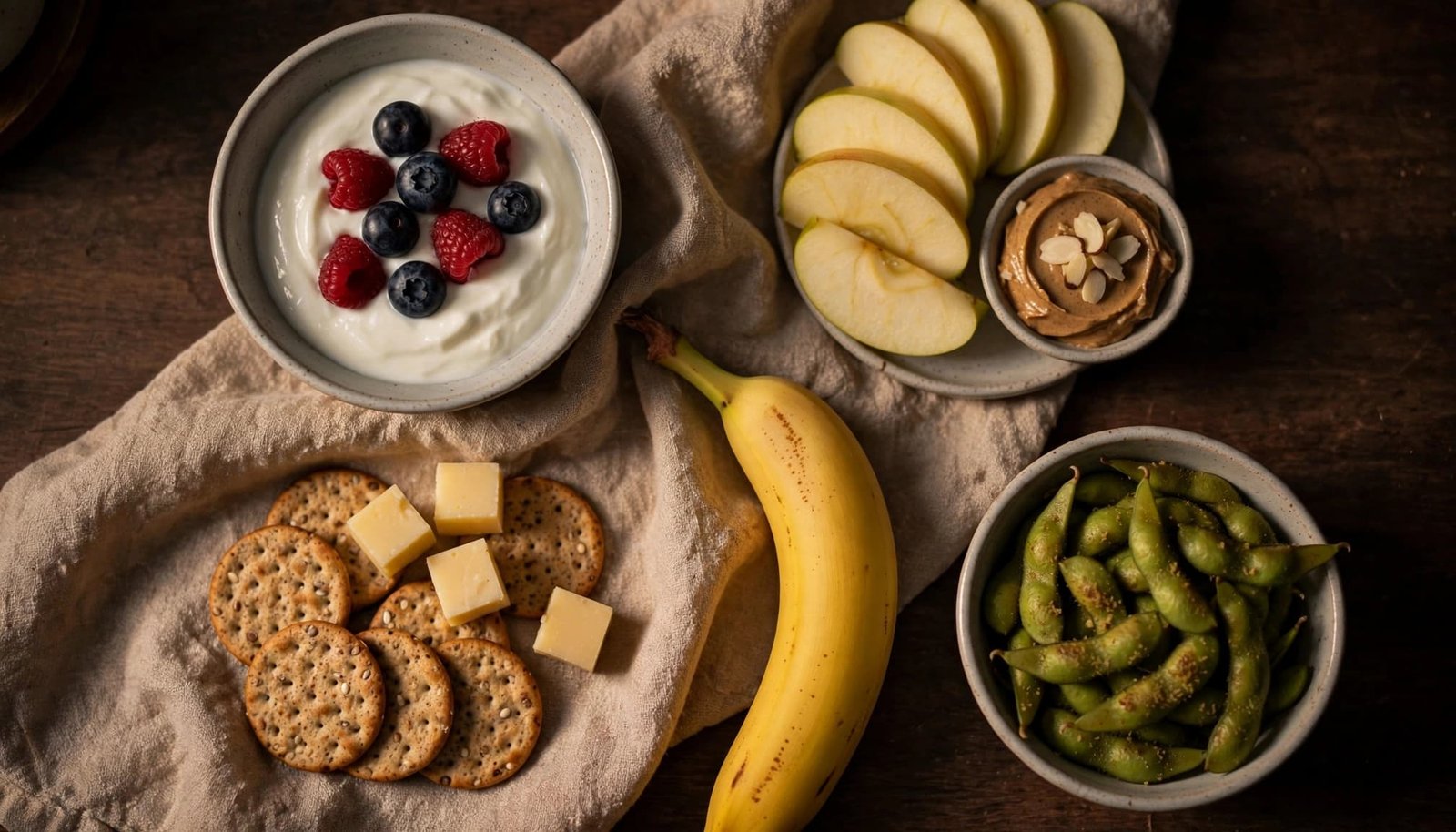
- Spoon about three-quarters of a cup of plain Greek yogurt into a bowl, then add berries. Use cinnamon or a few chopped nuts instead of sugar.
- Pair one small banana with one tablespoon of peanut or almond butter. Choose unsweetened nut butter when possible.
- Slice an apple and serve it with a small portion of almonds or one tablespoon of almond butter.
- Combine half a cup of cottage cheese with a few tart cherries, peach slices, or pineapple.
- Eat four or five whole-grain crackers with one ounce of cheese. Lower-sodium cheese and crackers can reduce the salt load.
- Serve a small handful of roasted edamame when you want something crunchy and savory.
Pre-portion nuts and edamame into small containers instead of eating from the bag. Wash fruit when you bring it home, and keep single-serving yogurt cups ready in the refrigerator. These small steps remove friction when you’re tired and make a balanced choice easier.
You can adjust the texture and flavor without greatly increasing the portion. Choose smooth yogurt or cottage cheese if you want something soft, or add crunchy almonds and roasted edamame for more bite.
Warm and Make-Ahead Snacks for Comfort at Bedtime
Warm food can feel satisfying when you want comfort, but keep it light rather than heavily sweetened or high in fat. Prepare a small bowl of plain oatmeal with cinnamon, then add one teaspoon of chia seeds, ground flaxseed, or pumpkin seeds. A half-cup serving of cooked oatmeal is often enough for a late snack.
A boiled egg with a few whole-grain crackers offers protein and carbohydrate without much preparation. If you prefer scrambled eggs, cook one egg in a nonstick pan with minimal oil. Another simple option is warm milk with a small serving of low-sugar cereal. Use unsweetened dairy or fortified soy milk if that fits your diet.
For make-ahead choices, prepare overnight oats, chia pudding, or yogurt cups earlier in the day. Keep each serving in its own container so you can grab one without measuring while sleepy. Add fruit for sweetness, but skip large amounts of syrup, honey, or sweetened granola.
Even homemade snacks can become too large. Portion ingredients before storing them, and stop when your hunger is satisfied rather than finishing everything because it is available.
Foods to Limit When Late-Night Cravings Hit
Some foods are fine at noon and trouble at midnight. Caffeine, sugar, fat, spice, alcohol, and salt each affect your body differently, and the closer you get to bedtime, the more those effects matter. Knowing which choices tend to cause discomfort makes it easier to pick something that satisfies you without costing you sleep.
Caffeine, Sugar, and the Cravings That Follow
Caffeine hides in more places than coffee. Energy drinks, black and green tea, cola, dark chocolate, and some desserts all contain it. A peer-reviewed sleep study found that caffeine taken even six hours before bedtime still disrupted sleep, and the Sleep Foundation suggests stopping caffeine eight or more hours before bed. If you crave chocolate late at night, keep the portion small and notice how your body responds.
Sugary foods create a different problem. A candy bar or soda can spike your blood sugar, then leave you hungrier than before as it drops. The Children’s Hospital of Philadelphia also lists candy, ice cream, and baked goods among common reflux triggers, so sweets can work against your comfort in two ways.
Heavy, Spicy, Salty, and Alcoholic Choices
Fried and high-fat foods, like french fries, bacon, or creamy sauces, digest slowly and can sit in your stomach for hours. Mayo Clinic heartburn guidance recommends stopping eating about three hours before bed and skipping high-fat and spicy foods in that window. Spicy dishes, hot sauce, and curry can worsen reflux once you lie down.
Alcohol may make you drowsy at first, but it fragments sleep later in the night. Very salty snacks, such as chips or salted nuts, can leave you thirsty and may irritate reflux that is already present, which may wake you up for water.
You don’t need perfection here. Tolerance varies from person to person, and one late slice of pizza won’t ruin anything. These swaps are simply easier on your body:
| Common craving | A lighter swap |
|---|---|
| Salty chips | Air-popped popcorn or whole-grain crackers |
| Ice cream | Greek yogurt with berries |
| Chocolate bar | Small piece of dark chocolate with fruit |
| Soda | Tart cherry juice or herbal tea |
When Nighttime Hunger May Point to a Bigger Pattern
Frequent late-night hunger often has a daytime cause. Skipping breakfast, eating a very small dinner, or getting too little protein and fiber can leave your stomach growling hours later. Intense evening workouts, poor sleep, and restrictive dieting have the same effect.
If this happens often, review your full day of meals instead of just fighting the nighttime snack. Adding protein at breakfast or a more substantial dinner may quiet the evening cravings on their own. These evening habits for better sleep can also help you spot patterns beyond food.
That said, some signals deserve attention beyond snack swaps. Intense hunger that arrives most nights, frequent reflux, unusual thirst, blood sugar concerns, or eating that feels out of control are all reasons to talk with a doctor or registered dietitian. Getting support is a practical step, not a failure.
Build a Simple Late-Night Snack Routine That Works for You
A routine takes the decision out of the moment you’re most tired. Instead of standing in front of the pantry at 10 p.m., you reach for something you already trust. Keep two or three balanced options stocked, choose your serving before you sit down, and eat away from screens when you can. Pair the snack with a relaxing bedtime routine, and your body gets a clear signal that the day is ending.
Start With a Mix-and-Match Formula
Most nights, you don’t need a recipe. Build your snack from three parts: one protein source, one fruit or whole-grain carbohydrate, and an optional small amount of healthy fat. Greek yogurt with berries and a few chopped almonds fits the pattern, and so does a boiled egg with whole-grain crackers.
Pick foods you genuinely like, because a routine survives only when the food appeals to you. Rotate two or three favorites rather than forcing variety every night.
A Sample Seven-Day Rotation
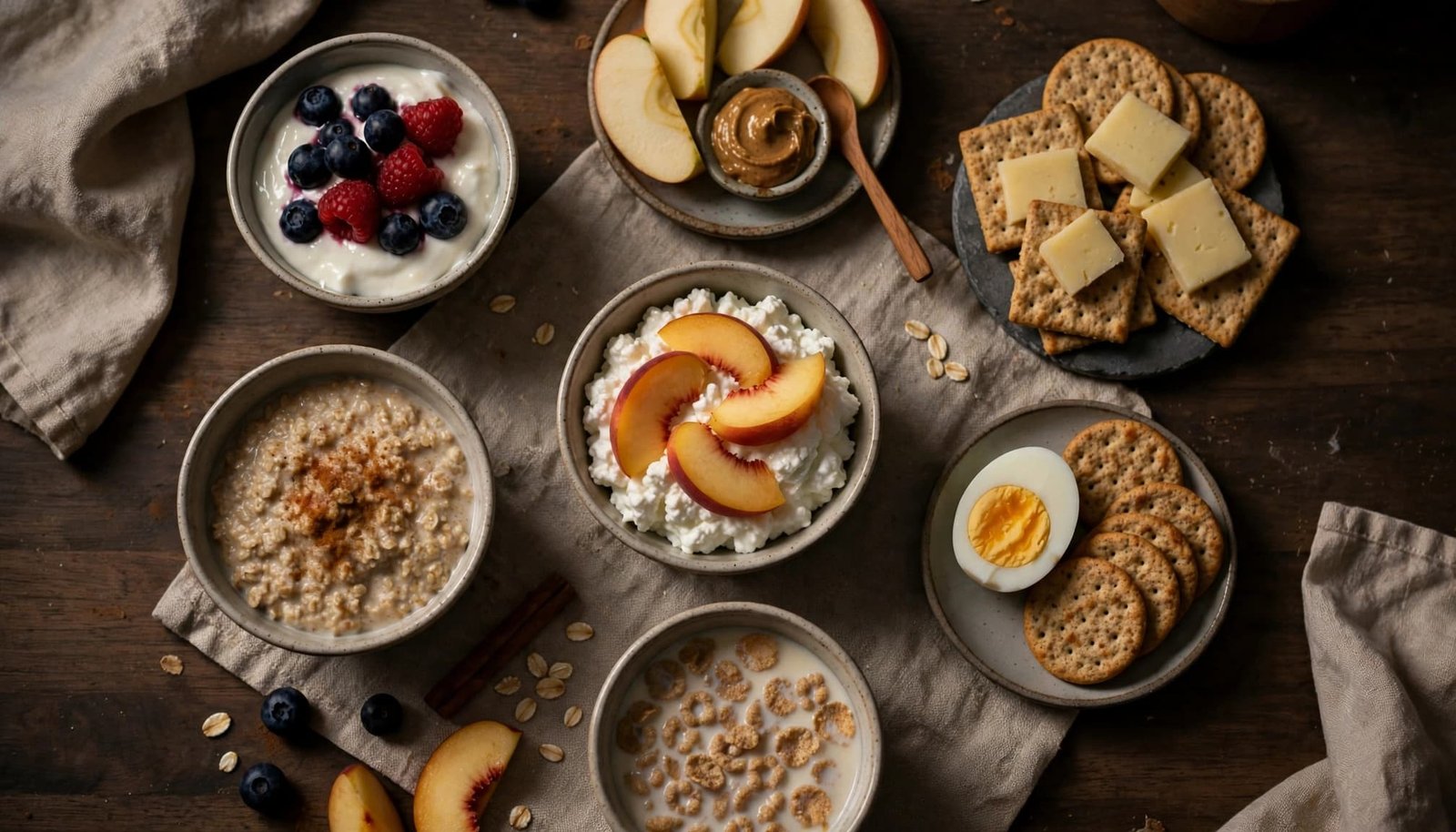
Here’s one week you can copy or shuffle. Every serving stays modest, and swapping a day changes very little.
| Day | Snack idea |
|---|---|
| Monday | Greek yogurt with blueberries |
| Tuesday | Apple slices with almond butter |
| Wednesday | Cottage cheese with peach slices |
| Thursday | Whole-grain crackers with cheese |
| Friday | Warm oatmeal with cinnamon |
| Saturday | Boiled egg with a few crackers |
| Sunday | Warm milk with low-sugar cereal |
Treat the list as a template, not a contract. If crackers with cheese lose their appeal, trade them for roasted edamame and keep the same slot.
Track What Works Without Counting Calories
A few notes on your phone are enough. After each late snack, jot down what you ate, how well you slept, and whether heartburn or hunger woke you. That takes less than a minute and requires no math.
Two or three trials of a new snack tell you more than one perfect or terrible night ever will.
Timing deserves the same attention. The NIDDK’s reflux nutrition guidance advises finishing meals at least three hours before you lie down, so give a small snack a similar buffer when you can.
After a couple of weeks, patterns will surface. Maybe yogurt agrees with you while ice cream doesn’t, or a 9 p.m. snack beats one at 11. Trust what your own nights show you, stay consistent with the choices that work, and stay flexible with everything else. A routine you can bend is a routine you’ll actually keep.
Conclusion
Late-night snacking doesn’t need to be a source of guilt. The most reliable approach is simple: pair protein with fruit, fiber, or a whole grain, keep the portion modest, and eat it with sleep and digestion in mind. That one formula covers yogurt with berries, crackers with cheese, and warm oatmeal alike.
What you skip matters just as much. Caffeine, heavy or greasy foods, excess sugar, and spicy meals close to bedtime are the choices most likely to cost you rest, and if you wake up tired despite sleeping a full night, how late-night snacks affect sleep quality is worth a closer look.
Above all, respond to real hunger without guilt, and if cravings show up most nights, review your daytime meals rather than blaming the hour. Tonight, pick one or two options from this list and have them ready before evening arrives.
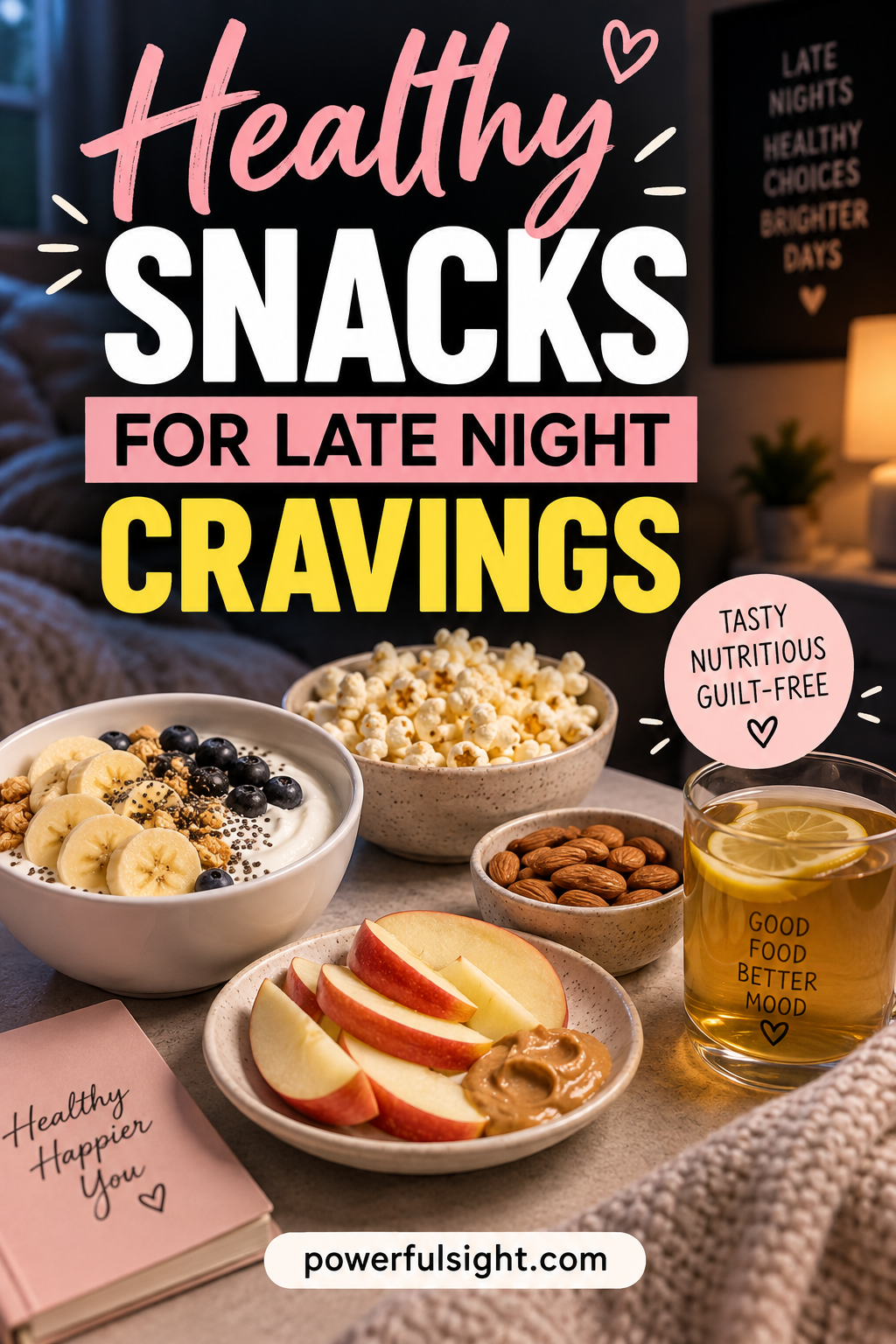
Save the pin for later

- Healthy Air Fryer Recipes for Beginners - 21/09/2026
- Healthy Snacks for Late Night Cravings - 21/09/2026
- High Protein Meal Prep Ideas for Easy Weekly Meals - 21/09/2026

