You want dinner to be quick, crispy, and satisfying, but you don’t want to pour in much oil or learn complicated cooking techniques. That’s where healthy air fryer recipes for beginners can help, especially when you’re starting with simple ingredients and clear instructions.
An air fryer works well for vegetables, lean proteins, fish, and easy snacks, but the appliance doesn’t automatically make every food healthy. A light coating of oil, sensible portions, and balanced sides matter just as much as the cooking method.
This post will introduce beginner-friendly recipes, practical temperature guidance, and food safety tips, including when to check chicken or fish with a food thermometer. You’ll also learn how to turn one crispy ingredient into a complete meal with vegetables, grains, beans, or a salad, such as serving crispy air fryer salmon bites with fresh produce and a simple side. First, let’s cover the basic air fryer habits that make these recipes easier to follow.
Why Healthy Air Fryer Recipes for Beginners Are Easy to Master
Air frying is simple because hot air moves rapidly around the food, cooking and browning its surface with little added oil. Compared with deep frying, this can reduce the oil used during cooking. However, ingredients, portions, sauces, and cooking methods still determine how nutritious your meal is.
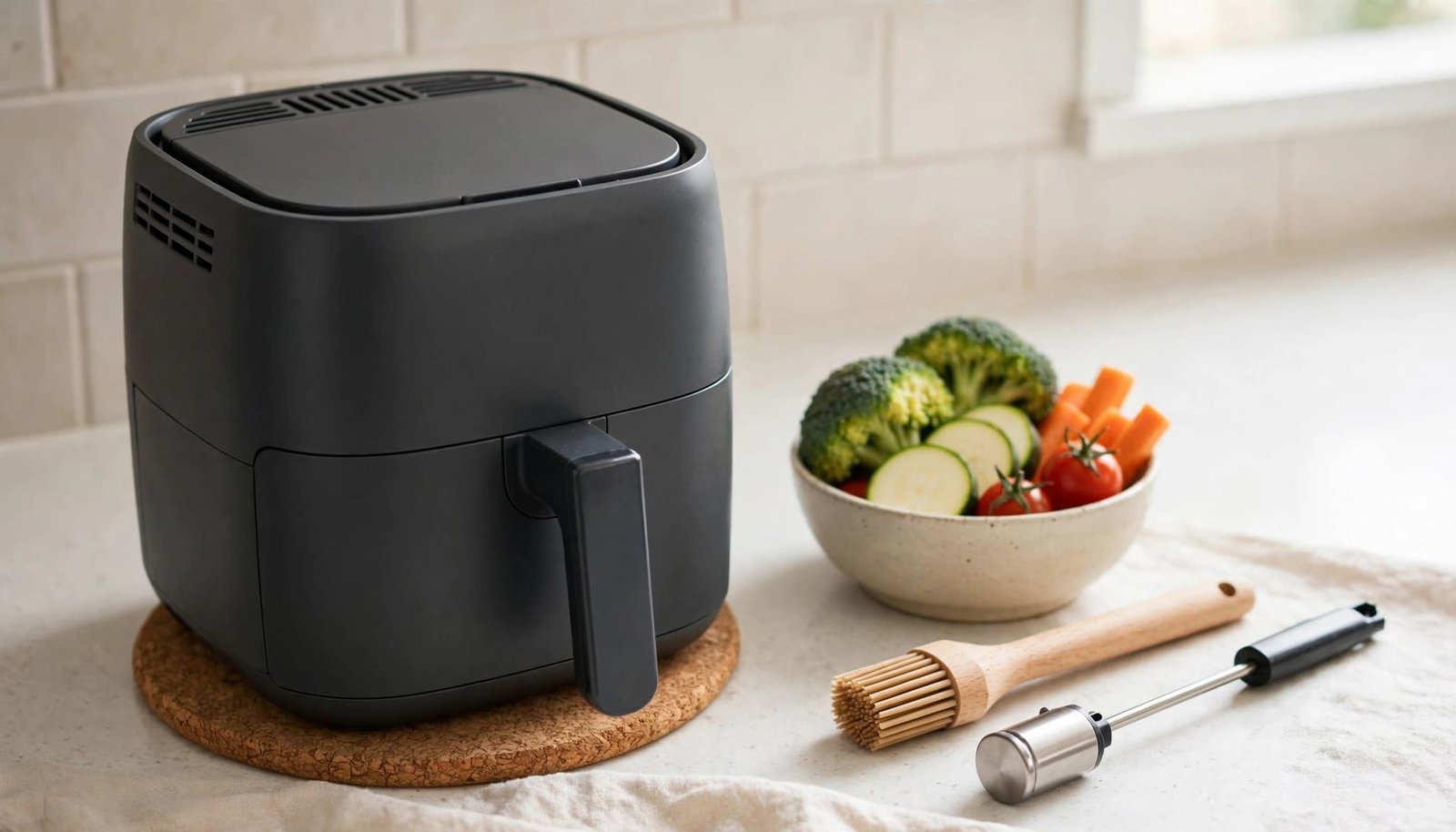
The simple air fryer setup every beginner needs
Start by reading your appliance manual. Models differ in basket size, heating strength, preheating instructions, and approved accessories. Place the air fryer on a heat-safe surface with open space around its vents. Keep it away from walls, cabinets, and anything that could block airflow.
Before cooking, pat ingredients dry and cut them into similar-sized pieces. Add a small amount of high-heat cooking oil, then arrange the food in a loose single layer. Space between pieces lets hot air reach every surface. If the basket is too full, moisture gets trapped, so the food steams instead of becoming crisp.
Most everyday foods cook well at 375 to 400°F. Delicate ingredients and baked foods often need about 350 to 360°F. Preheat only when your model or recipe calls for it, because some air fryers heat quickly without that step. Shake the basket or flip larger pieces halfway through, then begin checking early. Cooking time changes with the food’s size, moisture, basket design, and appliance strength.
Use a small brush or a non-aerosol oil sprayer instead of aerosol cooking spray. Aerosol cans may damage some nonstick coatings. Also, follow the manufacturer’s instructions before using parchment liners or foil. Any liner should be air-fryer safe, secured beneath food, and kept away from the heating element. Clean the basket, tray, and heating area as directed, especially after cooking fatty foods.
For a balanced meal, pair a crisp protein or vegetable with produce, beans, whole grains, or a simple salad. For example, an air-fried protein can become the centerpiece of easy protein-packed bowl meals.
Safe temperatures to remember while cooking
A golden crust proves that food browned, not that meat reached a safe temperature. Use an instant-read thermometer in the thickest part, avoiding bone and contact with the basket.
| Food | Safe internal temperature |
|---|---|
| Poultry and reheated leftovers | 165°F |
| Ground beef, pork, and lamb | 160°F |
| Whole cuts of beef, pork, and lamb | 145°F, then rest 3 minutes |
| Fish and shellfish | 145°F |
These temperatures follow the USDA safe temperature chart. Check smaller foods early, since air fryers can cook the edges before the center reaches a safe temperature.
Healthy Air Fryer Recipes for Beginners to Try First
Start with recipes that use familiar ingredients, short seasoning lists, and forgiving cooking methods. These healthy air fryer recipes for beginners make it easier to learn how your appliance handles vegetables, chicken, and fish without relying on heavy breading or excess oil.
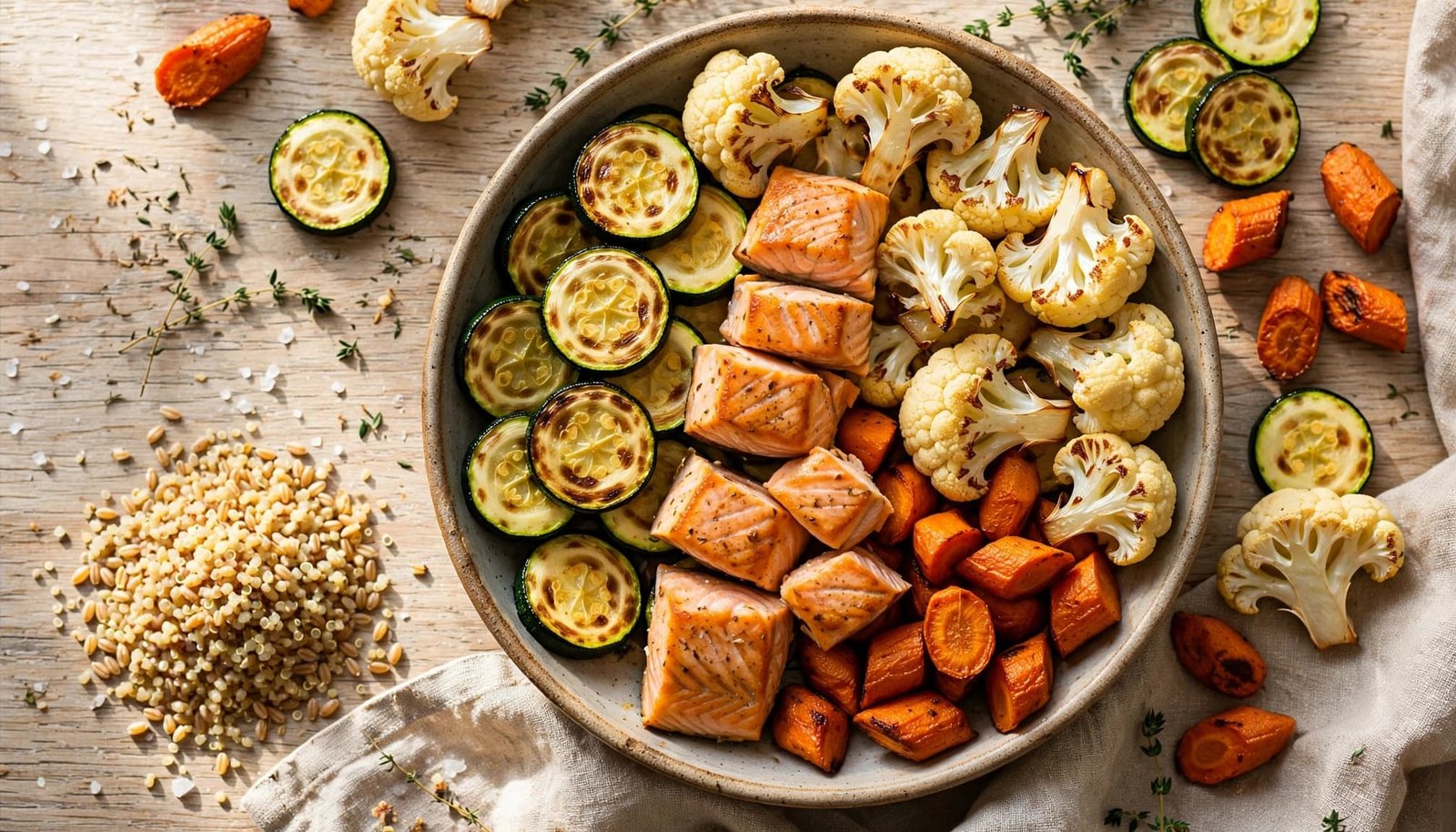
Crispy zucchini and other easy air fryer vegetables
Zucchini is an ideal first recipe because it cooks quickly and needs little preparation. Slice one zucchini into rounds or chips, toss it with a small amount of olive oil, garlic powder, paprika, and black pepper, then arrange the pieces in a single layer. Cook at about 400°F until tender with lightly browned edges, checking early because thin slices can finish quickly. For more ideas, browse these healthy zucchini recipes.
The same method works with cauliflower florets, Brussels sprouts, carrot sticks, asparagus, and thinly sliced cabbage-like greens. Firm vegetables usually need more time, while leafy greens can crisp in only a few minutes. Shake the basket or turn larger pieces halfway through cooking. Too much oil can leave vegetables greasy instead of crisp, so coat them lightly.
Simple chicken breasts and thighs with balanced seasoning
For an easy protein, use boneless, skinless chicken breasts or thighs. Rub the chicken with a little oil, salt, pepper, paprika, garlic powder, and dried herbs. If a breast is thick on one side, gently pound it to an even size before cooking. Uniform pieces cook more evenly and reduce the chance of dry edges with an undercooked center.
Set the air fryer between 375°F and 400°F, depending on your model and the size of the chicken. Begin checking before the recipe’s estimated finish time, then use a thermometer in the thickest part. Chicken must reach 165°F for safety. The USDA safe temperature chart confirms the same standard for all poultry.
Serve the chicken with air-fried vegetables and a whole grain, beans, or a small portion of potatoes. That combination creates a more balanced meal than eating the protein alone.
Quick salmon bites and mild fish for busy nights
Salmon bites are another beginner-friendly choice because small pieces cook quickly and take on simple flavors. Cut salmon into even cubes, then season with lemon, garlic, paprika, and a small amount of oil. A light yogurt-based sauce can add moisture after cooking. You can also find more ideas among these crispy air fryer salmon bites.
Cod is a mild alternative with a delicate texture. Keep fish pieces in a loose single layer, avoid overcrowding, and check small pieces early. Fish should reach 145°F, flake easily with a fork, and remain moist rather than dry.
A few healthier comfort-food swaps
Air-fried food isn’t automatically healthy, so choose practical swaps. Make seasoned potato wedges instead of deep-fried fries, use air-fried cauliflower instead of heavily breaded sides, and keep lightly seasoned frozen vegetables available when fresh produce runs out.
Breading, cheese, sugary sauces, and oversized portions can add calories quickly. Simple seasonings and repeatable meals make it easier to enjoy comfort-food textures while keeping vegetables and lean proteins at the center of your week.
How to Build a Balanced Air Fryer Meal
A crispy protein becomes a complete dinner when you pair it with vegetables and a satisfying carbohydrate. Use a simple plate formula: one protein, one or two vegetables, and a whole grain or starchy side. Add fruit or a light sauce when the meal needs extra freshness or moisture.
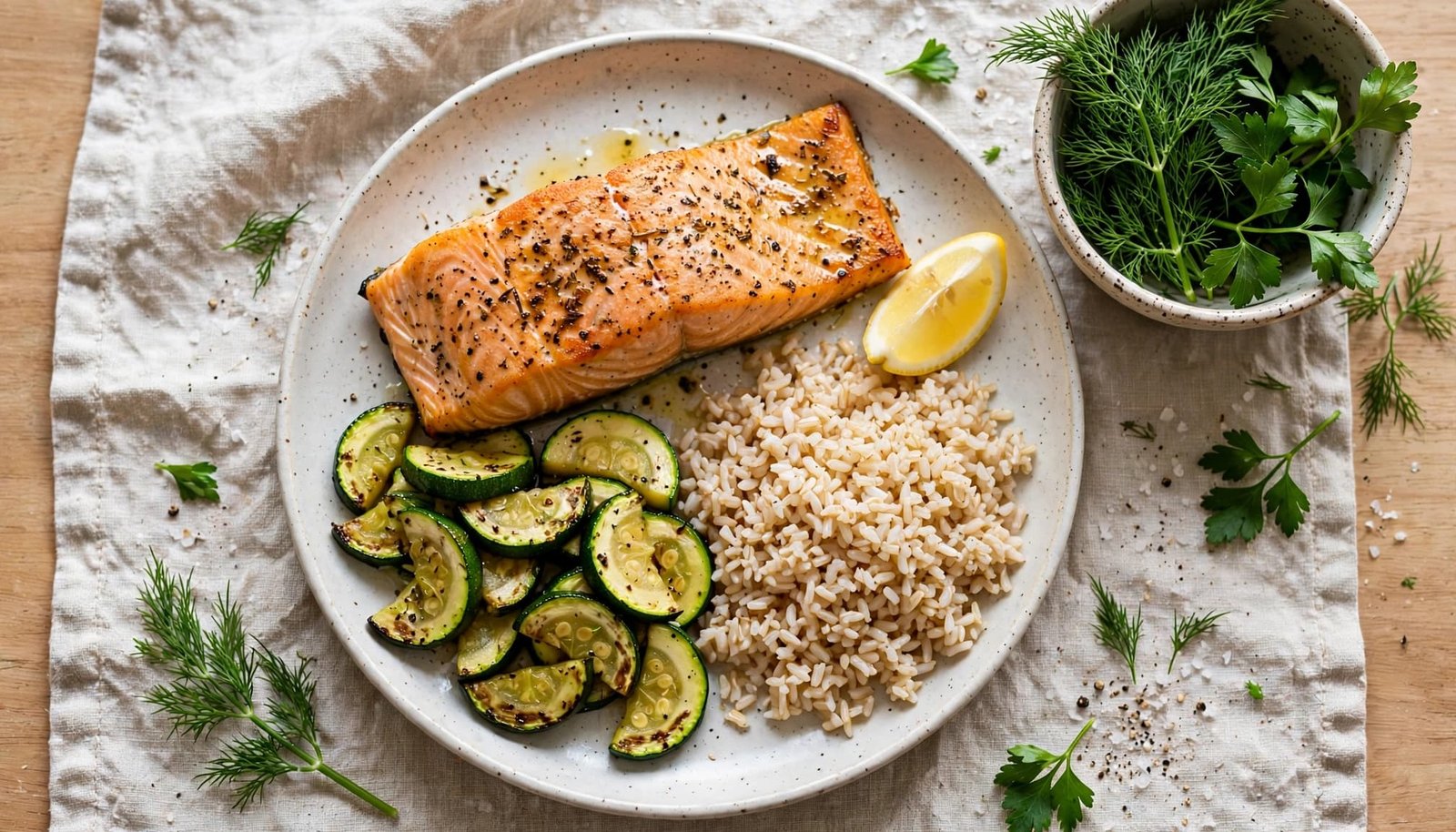
For example, serve air-fried salmon with zucchini and brown rice. Chicken thighs work well with carrots and a baked potato, while air-fried cauliflower and chickpeas pair naturally with a whole-grain pita. Adjust portions based on your hunger, activity, and personal nutrition needs. You might serve more vegetables when you want a larger meal, or add extra rice, beans, or potatoes for greater staying power.
Frozen foods can make this formula easier on busy nights. Choose plain frozen vegetables, fish, or chicken when possible, then check the label for added sodium, saturated fat, and breading. A seasoned frozen product may need less oil and sauce than you expect.
Use simple seasoning formulas instead of heavy sauces
Simple seasonings bring out the food’s flavor without covering it in a thick, creamy, or sugary sauce. Measure oil with a teaspoon instead of pouring freely, since a small amount often coats a full serving of vegetables or protein.
Try these combinations:
- Mix garlic, lemon juice or zest, and dried herbs with fish or chicken. Dill, parsley, oregano, and Italian seasoning all work well.
- Combine paprika, cumin, and black pepper for potatoes or vegetables. Add a pinch of salt, then taste after cooking.
- Stir soy sauce, ginger, and a small amount of sesame oil into salmon or vegetables. Use soy sauce sparingly if you’re watching sodium.
Fresh herbs, citrus, vinegar, garlic, and dried spices add strong flavor with little added fat or sugar. A squeeze of lemon after cooking can also brighten food that tastes flat, while a teaspoon of vinegar can balance roasted vegetables.
Make air fryer meal prep easier without losing texture
Prepare vegetables by washing, trimming, and cutting them into similar-sized pieces. You can also portion raw proteins and mix dry seasonings ahead of time, then store everything separately in the refrigerator until cooking. For more ideas, see these flexible chicken and salmon meal prep ideas.
After cooking, cool leftovers promptly by dividing them into shallow containers. Refrigerate perishable food within two hours, and don’t leave cooked meat or fish sitting at room temperature for an extended period. Store leftovers in a refrigerator kept at 40°F or below, and use them within three to four days.
Reheat leftovers until steaming hot, with the center reaching 165°F. The air fryer usually restores crispness better than the microwave, although moist foods may need a covered dish or a small amount of added liquid. Turn or shake food during reheating so the center warms evenly.
Common Air Fryer Mistakes That Ruin Healthy Meals
Air frying is simple, but small habits can leave food soggy, greasy, smoky, or unsafe. Most problems come from blocking airflow, guessing doneness, or ignoring instructions for your specific model.
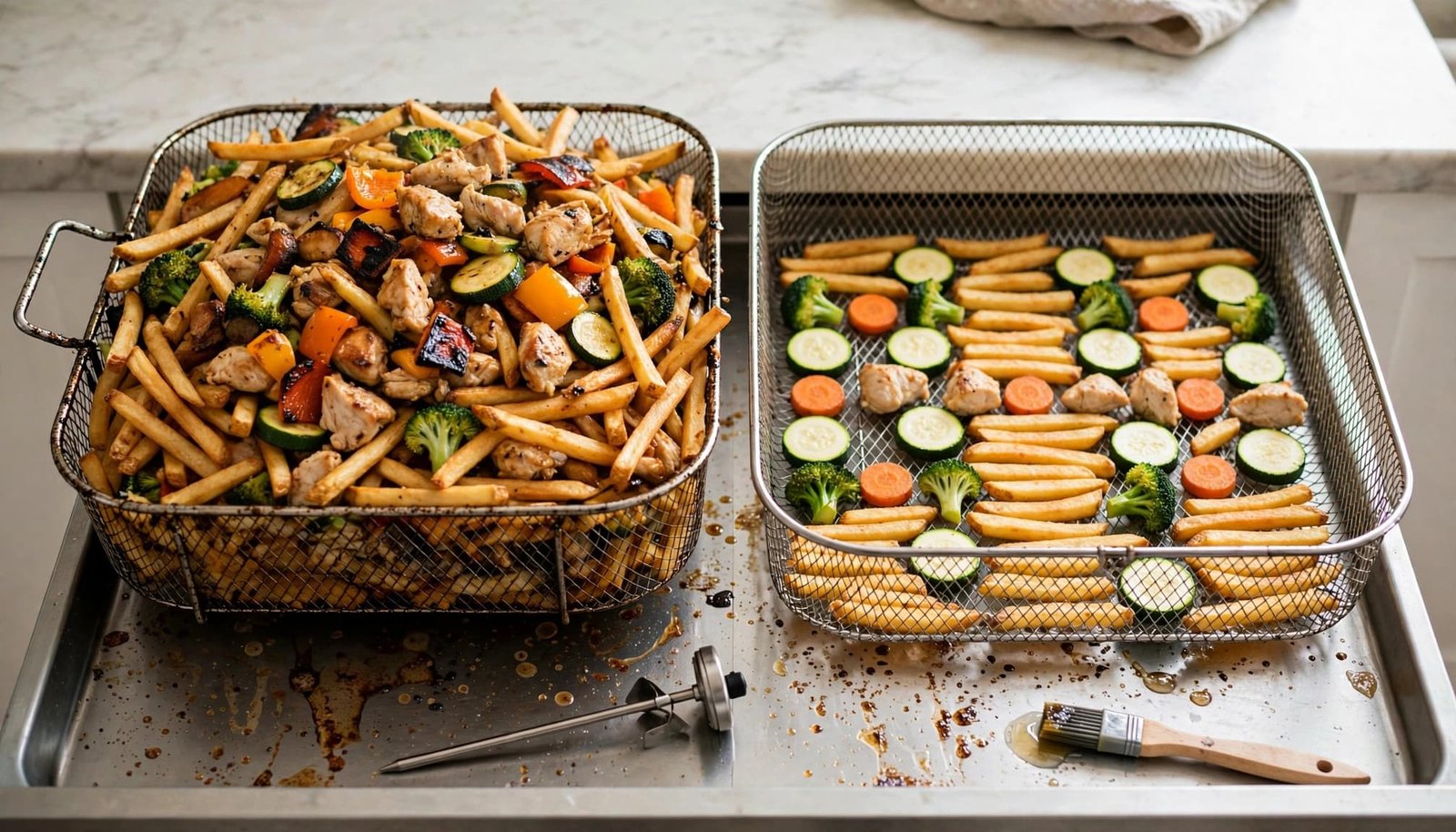
Overfilling the basket and skipping the halfway check
A crowded basket blocks hot air, so food cooks unevenly and softens instead of becoming crisp. Stacking pieces creates the same problem because the lower layers steam beneath the food above them.
Keep ingredients in a loose single layer, with space around each piece. Cook in batches when necessary. A slightly longer second batch will taste much better than one overloaded batch of limp fries or undercooked chicken.
Small vegetables and fries benefit from a shake halfway through cooking. Turn larger pieces, such as chicken breasts, fish fillets, or thick potato wedges, so both sides brown evenly. If the recipe requires preheating, complete that step before adding food. Also, check your appliance manual because basket capacity, rack placement, and preheating instructions vary by model.
Using too much oil or the wrong kind of spray
Air fryers need only a light coating of oil to help food brown. Pouring in too much can make vegetables greasy, create smoke, and leave excess fat pooled in the drawer.
Instead, measure the oil with a teaspoon, then brush or toss it with the ingredients before cooking. Olive, avocado, canola, and other suitable cooking oils can work, depending on the recipe and temperature. The goal is a thin coating, not a puddle.
Avoid aerosol cooking spray when your manufacturer warns that it may damage the basket’s nonstick coating. A pump sprayer or small oil brush gives you better control and creates less residue. Fatty foods need extra care, too. Bacon and similar ingredients release grease at high temperatures, which can smoke as drippings collect below. Choose a suitable temperature, cook smaller amounts, and clean grease from the basket and drawer after they cool.
Trusting appearance instead of temperature
A browned crust only shows that the surface cooked. The center may still be underdone, while pale food can already have reached a safe temperature. For chicken, meat, fish, and reheated leftovers, use an instant-read thermometer rather than relying on color or the timer.
Check the thickest part without touching bone or the basket. Chicken and other poultry should reach 165°F, fish should reach 145°F, ground meat should reach 160°F, and whole cuts of beef, pork, or lamb should reach 145°F, followed by a three-minute rest. You can verify these standards in the FoodSafety.gov temperature chart.
Begin checking early, especially when cooking small salmon bites, thin vegetables, or small chicken pieces. They can finish several minutes before a recipe’s estimated time.
A Beginner’s Plan for Cooking Healthy Air Fryer Food This Week
A simple weekly plan helps you learn your air fryer without buying a cabinet full of specialty ingredients. Choose one or two proteins, two vegetables, one carbohydrate, and two seasoning combinations, then reuse them in different meals.
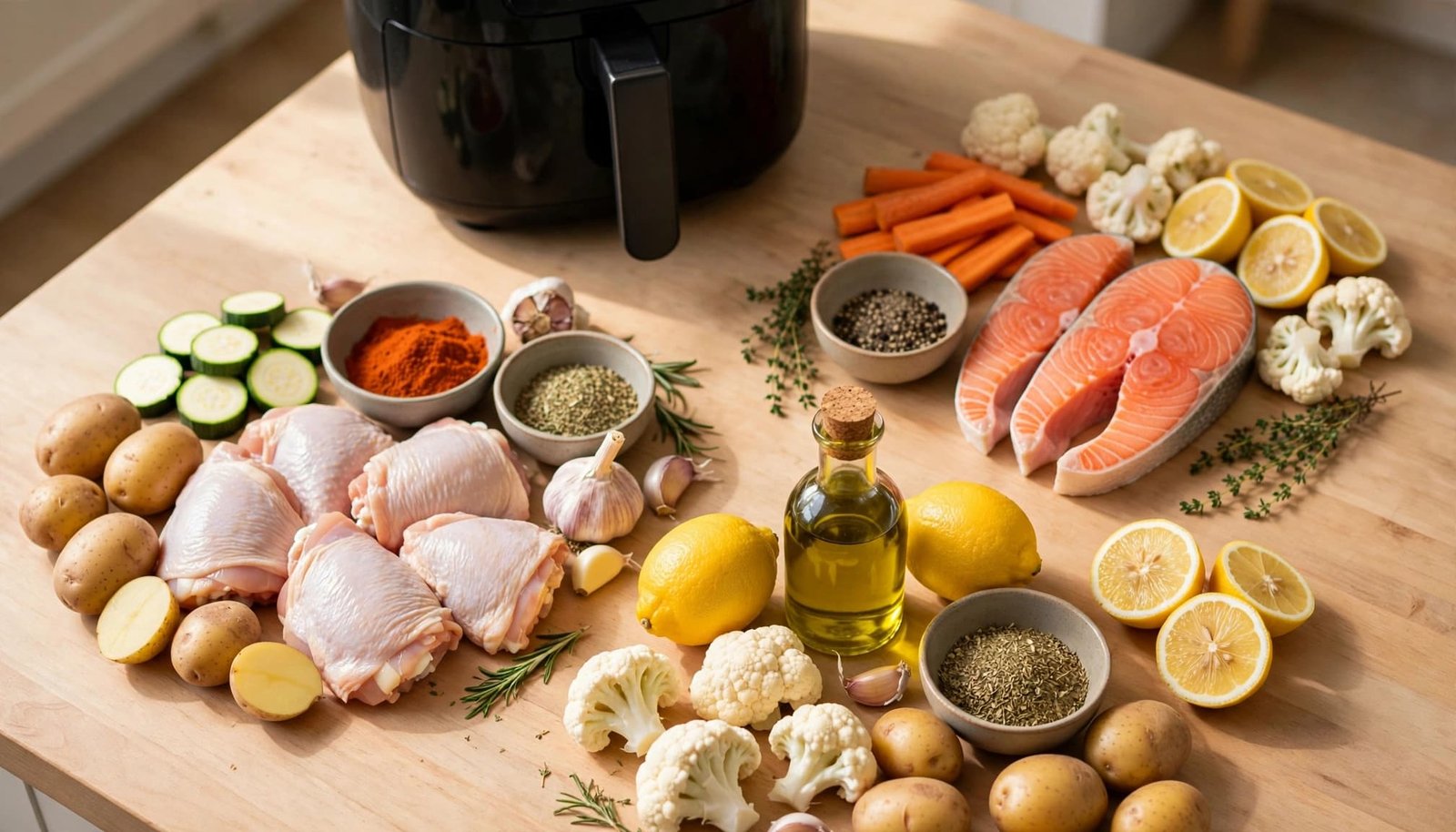
A short shopping list for affordable beginner meals
Build your list around chicken breasts or thighs, salmon or cod, zucchini, carrots, cauliflower, Brussels sprouts, potatoes, and a bag of plain frozen vegetables. Add lemons, garlic, dried herbs, paprika, black pepper, and a small bottle of cooking oil.
These ingredients can create several combinations without requiring specialty products:
- Chicken with carrots and potatoes works with garlic, paprika, and black pepper.
- Salmon or cod pairs well with zucchini, lemon, and dried herbs.
- Cauliflower, Brussels sprouts, and frozen vegetables can become quick side dishes.
- Potato wedges can accompany chicken, fish, or a simple side salad.
- Cauliflower and chickpeas make a satisfying meatless meal when seasoned with paprika and garlic.
Choose fresh or frozen produce based on price, availability, and convenience. Frozen vegetables can save time and reduce waste, while fresh zucchini, lemons, and potatoes are often easy to use across several meals. For broader nutrition guidance, the USDA’s food and nutrition resources can help you compare food groups and serving ideas.
How to adjust recipes for your air fryer
Begin with the recipe’s suggested temperature, then check the food before the minimum cooking time ends. Turn larger pieces or shake smaller foods when the recipe directs you to do so. If the center needs more time, continue cooking in short intervals.
Piece size changes everything. Small chicken chunks and thin zucchini slices cook faster than thick breasts or whole potatoes. Dense foods, frozen vegetables, and a full basket usually need more time. When the basket is crowded, cook in multiple batches instead of forcing everything into one layer.
Change only one factor during your next batch, such as temperature, cooking time, or piece size. Record the food, temperature, cooking time, and result in a short cooking log. Your notes will become a practical guide for your specific appliance.
A flexible seven-day meal plan
Use this simple rotation, then swap meals according to your schedule:
- Start with chicken and carrots, seasoned with garlic, paprika, and black pepper.
- Serve salmon with zucchini, lemon, and dried herbs.
- Cook cauliflower with chickpeas for a meatless dinner.
- Make potato wedges with a side salad and leftover chicken.
- Air fry cod with frozen vegetables and lemon.
- Combine leftover roasted vegetables with a fresh protein.
- Repeat the meal your air fryer handled best, or use remaining ingredients in a grain bowl.
Wash and cut produce when you unpack your groceries. Portion chicken and fish before refrigerating or freezing them, and keep seasonings together for quick access. As you repeat the plan, adjust one variable at a time until you learn how your model cooks each ingredient.
Conclusion
Healthy air fryer recipes for beginners become easier when you focus on a few repeatable habits. Use less oil, leave room for airflow, and choose simple whole-food ingredients such as zucchini, chicken, salmon, or other forgiving options. Pair each protein with vegetables and a satisfying side, using healthy sheet pan meals for more simple meal-building ideas.
Check chicken, fish, and other meats with a food thermometer instead of judging doneness by color. Also, adjust cooking times and temperatures for your individual appliance, since air fryers vary. You don’t need a perfect first meal. Start with one easy recipe, learn how your machine cooks, and repeat the process until preparing vegetables and lean proteins feels like a normal part of your routine.
Save the pin for later

- Healthy Air Fryer Recipes for Beginners - 21/09/2026
- Healthy Snacks for Late Night Cravings - 21/09/2026
- High Protein Meal Prep Ideas for Easy Weekly Meals - 21/09/2026

