High protein meal prep ideas make it easier to eat healthy, filling meals during busy weeks, even when cooking feels like one more task on your list. With a few flexible ingredients, you can prepare satisfying breakfasts, lunches, dinners, and snacks that are ready when hunger hits.
This guide includes budget-friendly options, vegetarian meals, and practical storage advice, with a flexible target of about 25 to 40 grams of protein per meal. Your ideal intake depends on factors such as your body size, activity level, health, and personal goals, so use that range as a planning guide rather than a rule. Start with these meal prep ideas for a less repetitive week, then build a routine that fits your schedule.
How to Build High Protein Meal Prep Ideas That Fit Your Goals
The easiest high protein meal prep plans use a simple structure: one protein source, one filling carbohydrate, vegetables or fruit, and a flavorful sauce or topping. A useful starting range is 25 to 40 grams of protein per meal, although active people may need more based on their total diet, training, body size, and personal goals.
Your priorities should guide the ingredients. Choose chicken, lean beef, or tofu for muscle support; beans, lentils, and vegetables for filling meals; and eggs, canned tuna, or Greek yogurt when you need affordable, quick options. Portion size matters, but so does consistency. A meal you enjoy and can prepare each week is more useful than an impressive recipe you only make once.
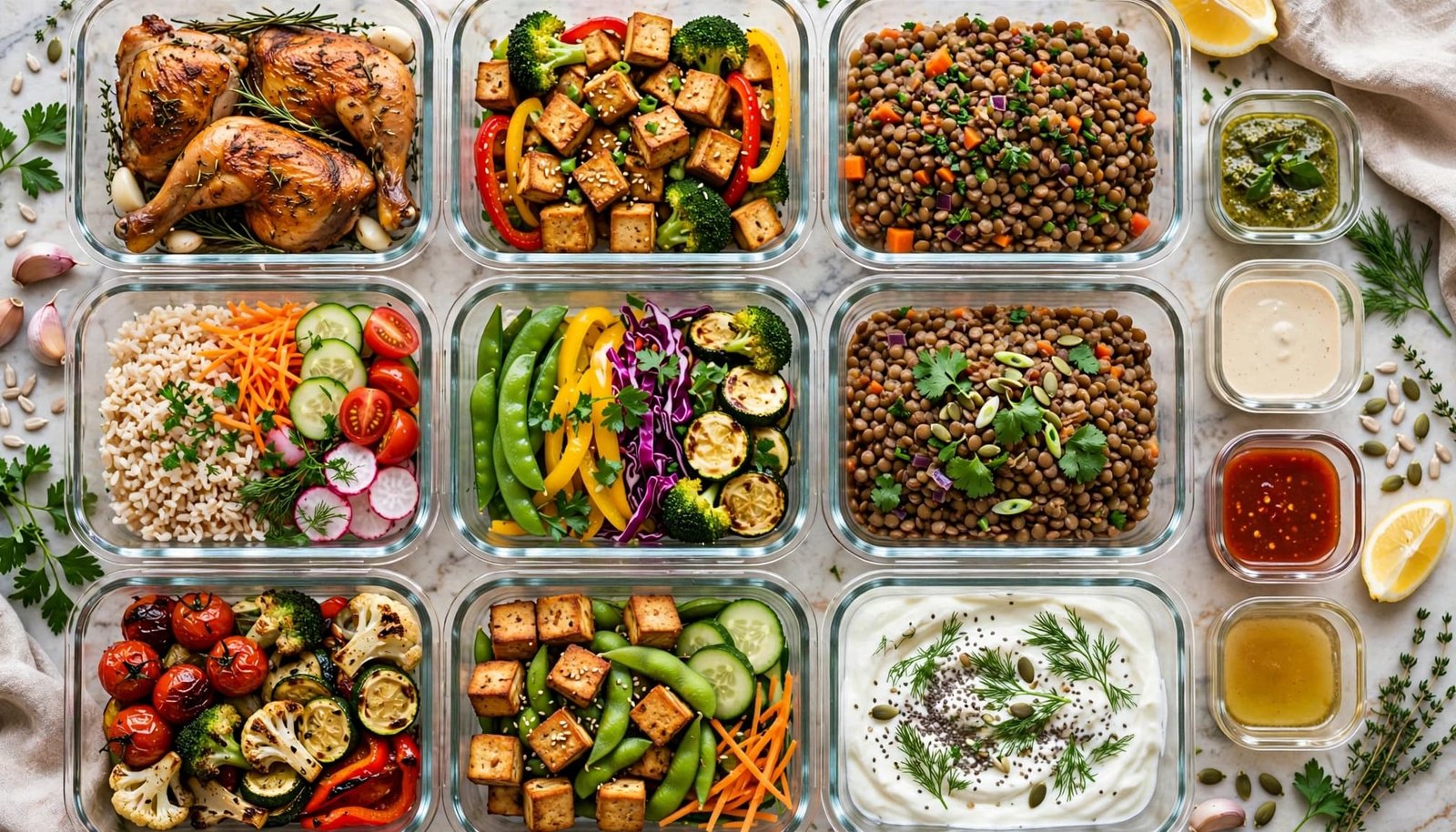
Choose protein foods that store and reheat well
Some proteins become more useful during meal prep because they keep their texture for several days. Chicken breast works well with marinades and sliced chicken thighs stay moist after reheating. Lean ground turkey and lean beef are easy to season for bowls, tacos, pasta, or chili.
Eggs, Greek yogurt, cottage cheese, and canned tuna need little cooking. Use eggs in breakfast burritos or egg bites, Greek yogurt in snack bowls and sauces, cottage cheese with fruit or toast, and tuna in wraps or grain bowls. Tofu and tempeh also hold up well, especially when baked or added to stir-fries. Beans, lentils, and edamame bring protein, fiber, and satisfying texture without costing much. These protein-rich pantry ingredients can support a budget-friendly plan.
Fish tastes best when you schedule it earlier in the week. Soups, chili, beans, lentils, and tofu often hold their quality longer, while delicate fish can become dry or develop a strong odor after several days. Refrigerate cooked food within two hours, keep it at 40°F or below, and follow FoodSafety.gov’s cold food storage guidance. Freeze portions you won’t eat within three to four days.
Sauces and toppings protect variety as well as texture. Store salsa, yogurt dressing, pesto, avocado, nuts, and crunchy vegetables separately so meals don’t become soggy. Add broth, tomato sauce, or a light marinade to lean meats before reheating to keep them tender.
Use a simple meal prep formula instead of cooking random recipes
Start each week with two proteins, two carbohydrates, two vegetables, and two sauces. For example, pair chicken and lentils with rice and roasted potatoes, then add broccoli, peppers, salsa, and a lemon-yogurt dressing.
The same ingredients can take on different flavors. Taco seasoning creates bowls with salsa and avocado, while lemon, oregano, and cucumber make a Mediterranean meal. Soy sauce and ginger turn the ingredients into a stir-fry, and curry paste with coconut milk creates a different dinner without another shopping trip.
Prepare three or four refrigerated meals, then freeze extra portions instead of filling the refrigerator with more food than you can safely eat. This approach supports muscle-focused meals, weight management, lower grocery costs, and simply eating more filling food throughout the week.
High Protein Meal Prep Ideas for Breakfast, Lunch, and Dinner
A reliable weekly plan needs meals you can batch, pack, and enjoy cold or reheated. These combinations include animal-based and vegetarian choices, with sauces and toppings added later to keep each container fresh.
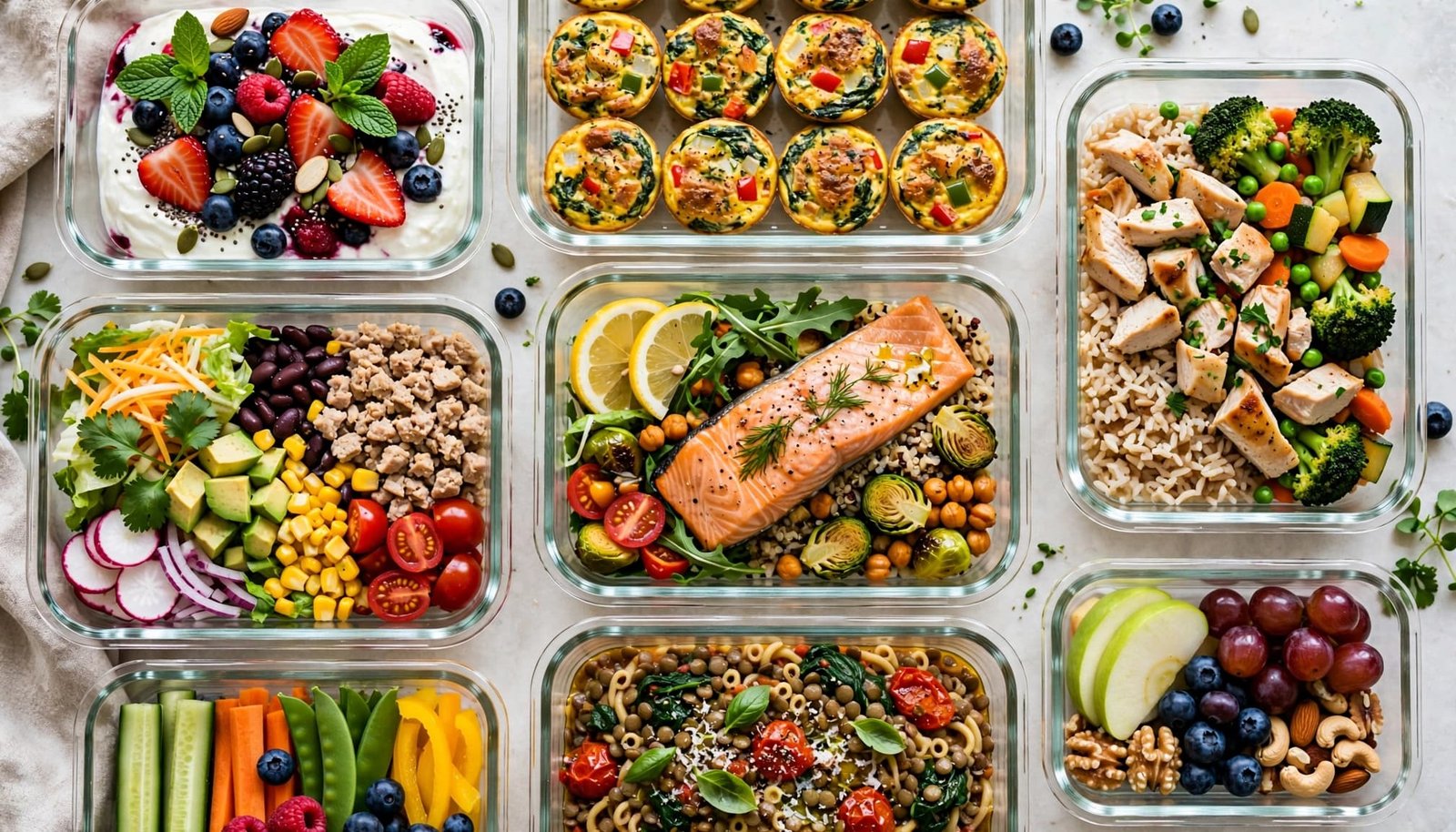
Make-ahead breakfasts with 25 to 35 grams of protein
Sweet breakfasts are easy to assemble. Layer Greek yogurt with berries and chia seeds, or combine cottage cheese with peaches, bananas, or cinnamon. For extra texture, pack granola, nuts, or seeds separately and add them before eating. Overnight oats also work well with Greek yogurt or protein powder, milk, fruit, and chia seeds.
For a savory option, bake egg muffin cups with eggs, cottage cheese, spinach, peppers, and turkey sausage. Breakfast burritos combine scrambled eggs, black beans, cheese, and salsa in a whole-wheat tortilla. Freeze burritos individually, then thaw them overnight. Reheat egg-based meals at medium power in short intervals, turning or stirring when possible. Gentle heating keeps eggs tender instead of rubbery. These high-protein egg bites also make an easy grab-and-go choice.
Filling chicken, turkey, and beef lunch bowls
Prepare a large batch of chicken, rice, and roasted vegetables, then change the flavor with lemon herbs, salsa, or yogurt sauce. Ground turkey taco bowls pair well with rice, beans, cabbage, corn, and hot sauce. Lean beef burrito bowls can use potatoes or quinoa instead of rice, with black beans, salsa, and avocado added just before serving.
Chopped chicken salads offer a lighter cold lunch. Pack the chicken, greens, vegetables, and toppings together, but keep the dressing separate. Rotate the base ingredients so the same protein doesn’t feel repetitive. Rice, quinoa, potatoes, cabbage, frozen vegetables, beans, salsa, hot sauce, and yogurt-based sauces can create several combinations from one cooking session. For more portable options, try these easy healthy lunches for work.
Easy high protein dinners that freeze well
Turkey chili, beef chili, chicken curry, meatballs, and lentil pasta bowls freeze better than delicate salads. Portion them into shallow containers, cool them promptly, and freeze anything you won’t eat within three or four days. Shredded chicken with roasted sweet potatoes also reheats well, especially with broth or salsa added before warming.
Salmon grain boxes are best eaten earlier in the storage window because cooked fish loses quality faster than chili or curry. Refrigerate perishable meals within two hours, keep them at 40°F or below, and follow USDA leftovers guidance for storage and freezing.
Portable snacks and no-cook protein options
Snacks help fill protein gaps without turning every meal into an oversized portion. Pack hard-boiled eggs, Greek yogurt, cottage cheese, tuna packets, edamame, roasted chickpeas, or jerky with vegetables and fruit.
For work or school, use a divided container with eggs, carrots, grapes, and roasted chickpeas. A small cooler keeps yogurt, cottage cheese, and edamame cold during travel. After a workout, pair a tuna packet or jerky with fruit, or pack Greek yogurt with berries. Keep portions practical so snacks support your meals rather than replace them.
Vegetarian High Protein Meal Prep Ideas That Stay Satisfying
Vegetarian meal prep feels more satisfying when each container combines a protein-rich food, a filling grain, vegetables, and a flavorful sauce. Beans, lentils, tofu, tempeh, quinoa, dairy, eggs, and seeds can cover the week without relying on the same meal every day.
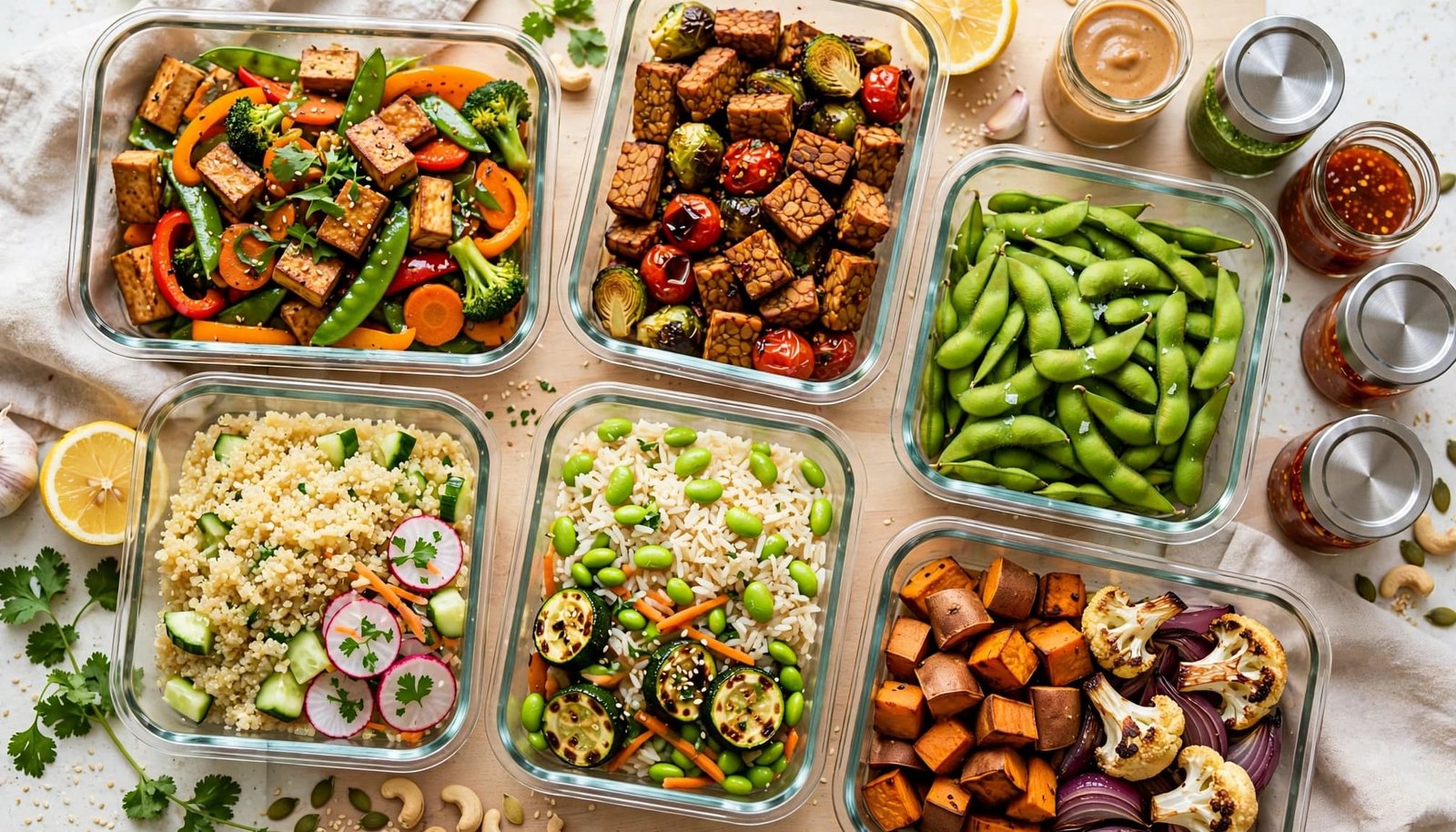
Build plant-based bowls with beans, tofu, tempeh, or edamame
Tofu and tempeh stay firm when you remove excess moisture before cooking. Press tofu for 15 to 30 minutes, cut it into cubes, then toss it with soy sauce, garlic, ginger, and a small amount of cornstarch. Bake or air-fry it until the edges turn crisp. Tempeh has a denser texture, so steam it for 10 minutes first, then marinate and sear or roast it until browned.
Pair either protein with rice, quinoa, roasted vegetables, or whole-wheat noodles. Add black beans to a burrito bowl, lentils to a curry, or shelled edamame to a grain bowl when you want more protein without much extra cooking. Quinoa and legumes also add fiber, which helps a plant-based meal stay filling between meals.
Rotate sauces to keep the same base from tasting repetitive:
- Peanut-lime sauce works well with tofu, cabbage, carrots, and rice.
- Soy-ginger sauce suits tempeh, broccoli, mushrooms, and noodles.
- Salsa adds moisture to black bean burrito bowls and roasted vegetables.
- Tahini dressing pairs with chickpeas, quinoa, cucumbers, and greens.
- Curry sauce turns lentils, tofu, or chickpeas into a hearty meal.
Store wet sauces separately whenever possible. Add them after reheating so the grains stay fluffy and roasted vegetables keep their texture.
Prepare vegetarian breakfasts, soups, and salads in batches
Bake egg and vegetable frittata cups with eggs, cottage cheese, spinach, peppers, and herbs. For a dairy-based breakfast, portion Greek yogurt or cottage cheese with fruit, chia seeds, hemp seeds, or nuts. These high-protein breakfast ideas can help you combine dairy, eggs, soy foods, and seeds across the week.
Lentil soup, chickpea salad, and black bean salad are practical batch recipes. Cook a large pot of lentils or beans, then use them in soup, grain bowls, wraps, and salads. Chickpeas work with cucumber, tomato, parsley, and tahini, while black beans pair with corn, peppers, quinoa, and salsa.
For a filling cold meal, build high-protein vegetarian salads with beans or lentils, a grain, and a substantial topping. Pack leafy greens, crunchy vegetables, toppings, and dressing separately because dressed greens become soggy. Refrigerate cooked beans, lentils, and prepared meals promptly, then use them within three to four days.
Budget-Friendly Meal Prep Ingredients That Deliver More Protein
Affordable high-protein meal prep depends on repeatable staples, not expensive specialty foods. Build meals around low-cost proteins, filling carbohydrates, frozen produce, and a few flavor boosters. Depending on local prices, portion sizes, and store brands, a simple plan can often stay near $4 per serving without promising the same total at every store.
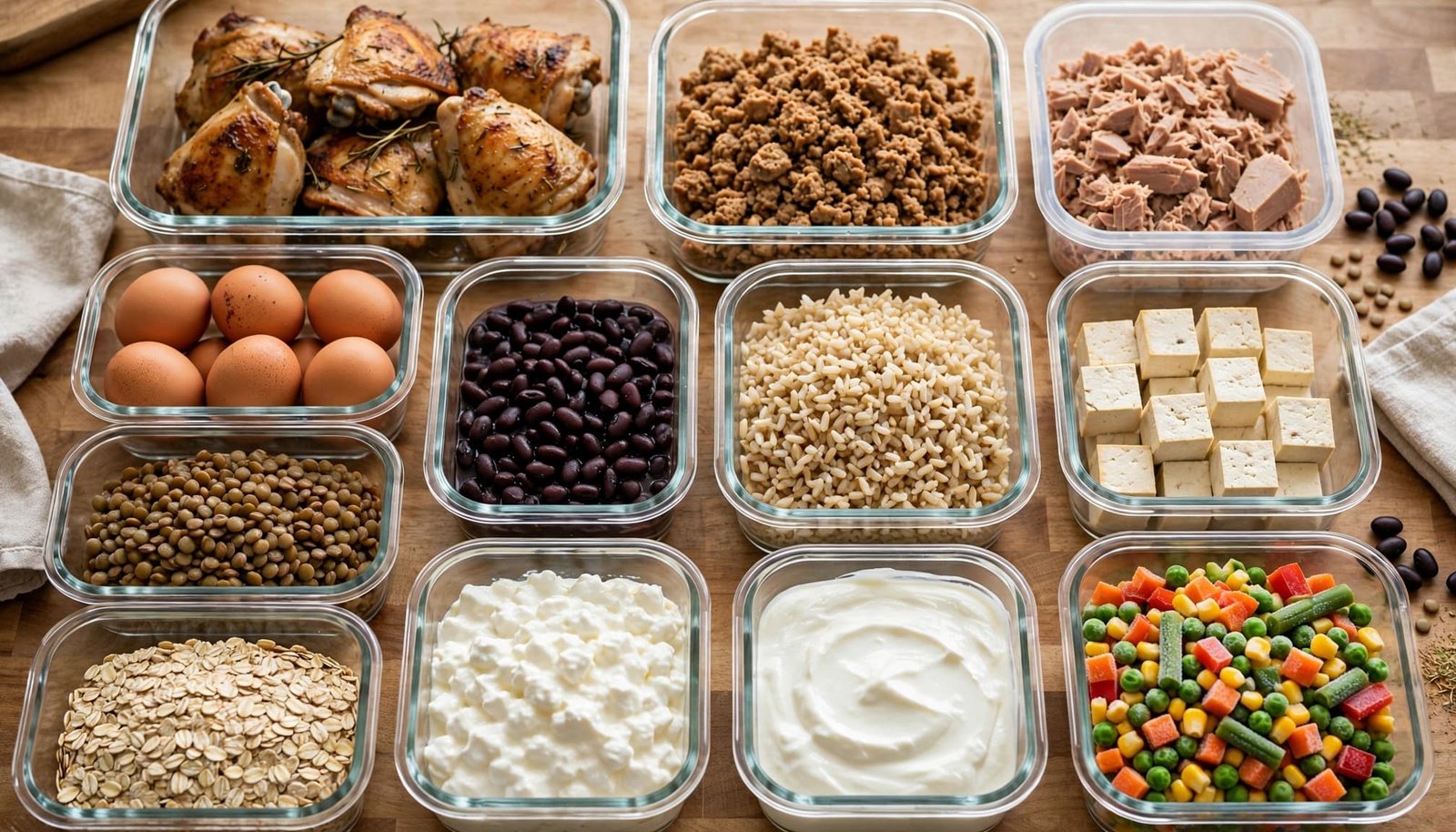
Stretch meals with beans, lentils, eggs, oats, and frozen vegetables
Beans and lentils can stretch ground turkey, chicken, or beef without making a meal feel skimpy. Add black beans to taco meat, lentils to turkey chili, or chickpeas to a grain bowl. You get more servings, added fiber, and a useful protein boost from the same package of meat.
For other low-cost protein choices, rotate chicken thighs, canned tuna, tofu, cottage cheese, plain Greek yogurt, eggs, and ground turkey. Chicken thighs often stay moist after reheating, while tuna, cottage cheese, and yogurt require almost no cooking. Eggs work well in breakfast burritos, egg cups, and fried rice. Oats provide a low-cost base for overnight oats, especially when you add Greek yogurt, milk, cottage cheese, chia seeds, or peanut butter. These budget-friendly high-protein breakfast ideas make oats and eggs easier to repeat during the week.
Frozen vegetables also protect your grocery budget. They last longer than delicate fresh produce, reduce waste, and work in stir-fries, soups, rice bowls, and egg dishes. Choose plain bags when possible so you control the oil and seasoning.
A practical shopping list for several meals might include:
- Chicken thighs or ground turkey for bowls, wraps, and chili.
- Eggs, Greek yogurt, and cottage cheese for breakfasts and snacks.
- Canned tuna and tofu for quick lunches.
- Black beans, lentils, oats, rice, and potatoes for filling bases.
- Frozen broccoli, peppers, spinach, corn, or mixed vegetables.
- Salsa, tomato sauce, soy sauce, curry powder, garlic, ginger, lemons, and dried herbs.
Buy larger packages only when you’ll use them soon or freeze them safely in meal-sized portions. Keep the refrigerator at 40°F or below, and refrigerate or freeze perishable food within two hours. Cooked leftovers generally keep for three to four days in the refrigerator, so freeze extra servings before they sit too long.
Use sauces and seasonings to make the same ingredients taste new
A few inexpensive flavor boosters can turn one batch of chicken, beans, rice, or vegetables into several different meals. Taco seasoning with salsa creates burrito bowls, while curry powder with coconut milk or tomato sauce changes the same ingredients into a warm curry.
For a quick stir-fry, combine soy sauce with garlic and ginger. Lemon, dried herbs, and yogurt make a fresh sauce for chicken, potatoes, lentils, or roasted vegetables. Keep sauces separate until serving when you want rice and vegetables to retain their texture.
Changing the seasoning keeps meal prep fatigue away without requiring another expensive grocery trip. One affordable batch can become tacos on Monday, curry on Wednesday, and a lemon-herb bowl later in the week.
How to Prep, Store, and Reheat Protein-Packed Meals Safely
Safe meal prep starts with a fridge-first, freezer-backup system. Cook only what you can eat soon, cool it quickly, and freeze extra portions before they reach the end of their storage window.
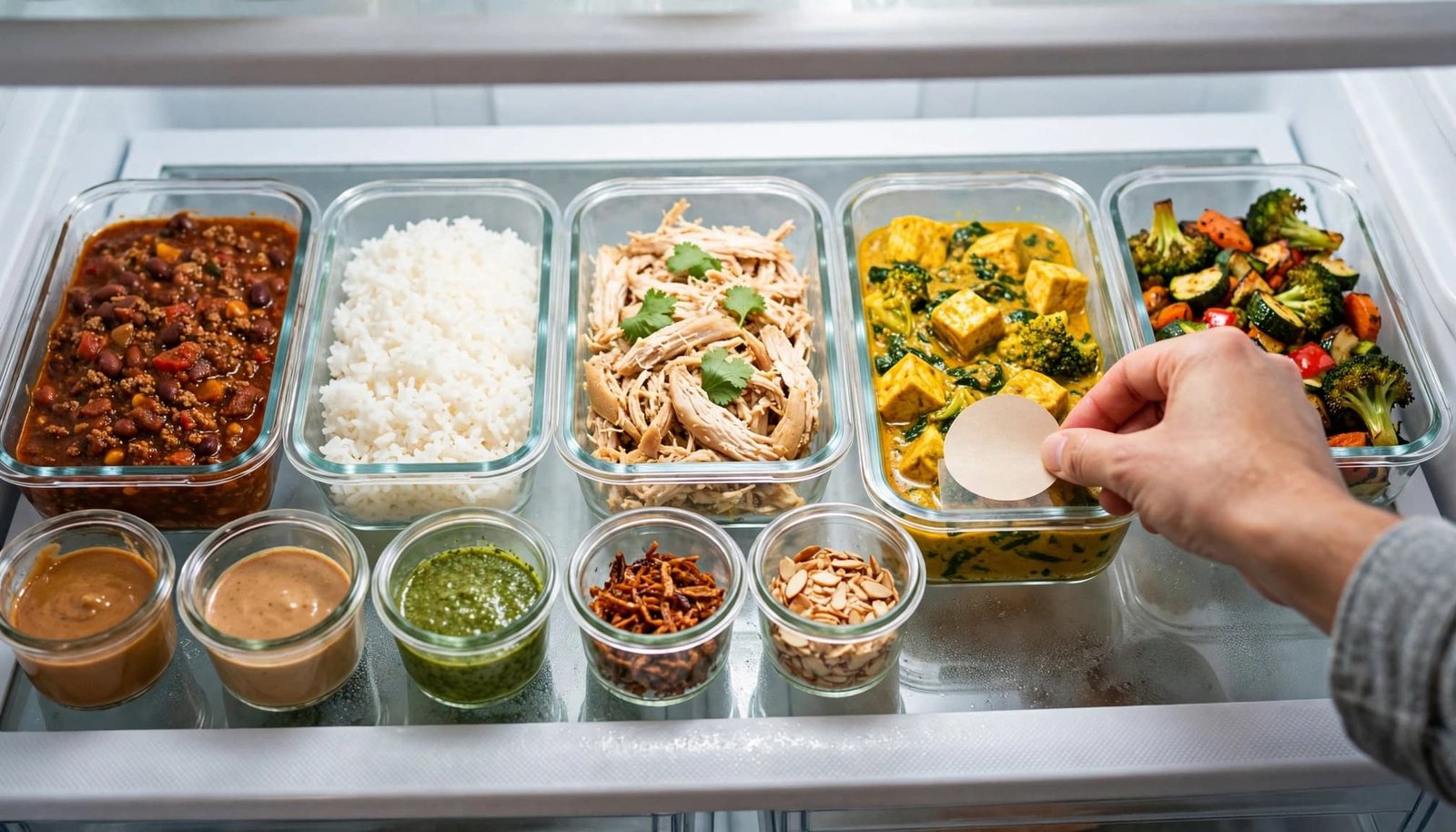
Cool and portion meals before putting them in the fridge
Divide a large batch of chili, rice, chicken, or curry into shallow containers instead of placing one deep, hot pot in the refrigerator. Smaller portions cool faster and reduce the time food spends between 40°F and 140°F, the temperature range where bacteria grow quickly.
Refrigerate cooked food within two hours, or within one hour when the air temperature is above 90°F. Leave the lids slightly loose while steam escapes, then seal the containers once the food has cooled. Keep your refrigerator at 40°F or below.
Write the meal name and preparation date on each container. That quick label prevents the familiar question, “When did I make this?” Portion meals according to your hunger and protein needs, too. One container might hold a larger serving of chicken and rice after a workout, while another could contain a smaller portion with extra vegetables.
Keep ingredients separate when they lose quality after storage. Store sauces, fresh greens, avocado, crunchy toppings, and delicate vegetables in small containers, then add them just before eating. For more practical guidance on keeping prepared food cold during travel, see these safe ways to pack hot and cold lunches.
Know what belongs in the fridge and what should go in the freezer
Most cooked meat, poultry, fish, rice, pasta, and mixed dishes should be eaten within three to four days when refrigerated at 40°F or below. Beans, lentils, tofu, and some grains may keep well for about four to five days, but use smell, texture, and reliable food safety guidance rather than stretching the timeline.
Freeze extra chili, soups, curries, shredded chicken, cooked beans, and tofu meals before the refrigerator window closes. They usually keep good quality for about two to three months, although frozen leftovers remain safe longer when continuously frozen. The USDA freezing guidance explains why quality declines over time.
Hard-boiled eggs in the shell can last about seven days in the refrigerator. Don’t freeze them, because the whites become rubbery and watery. Thaw frozen meals in the refrigerator, then reheat leftovers until they are hot throughout, ideally reaching 165°F.
Keep reheated meals moist, fresh, and enjoyable
Add a splash of water or broth to rice, quinoa, and other grains before reheating. Warm chicken, beef, tofu, and fish gently, and keep sauces separate when possible so they don’t make the meal soggy.
After heating, add lemon juice, fresh herbs, salsa, yogurt sauce, or greens. Assemble crisp toppings immediately before eating. A practical routine is to cook once, refrigerate the first few meals, freeze later portions, and refresh delicate ingredients halfway through the week.
Conclusion
High protein meal prep works best when you set a realistic protein target, prepare a few flexible components, and keep flavors easy to change. Build each meal around a protein source, filling base, vegetables, and a sauce, then include affordable options such as beans, lentils, eggs, tofu, or Greek yogurt. Refrigerate cooked meals within two hours, keep them at 40°F or below, and freeze portions you won’t eat within three to four days.
Successful meal prep doesn’t require seven identical containers. Start with two or three recipes, such as breakfast jars, chicken bowls, and chili, then adjust portions, seasonings, and storage based on what you enjoy. You can also rotate in these high-protein low-carb bowls when you want a different base.
A flexible routine is easier to maintain than a perfect plan, and the best meals are the ones you’re ready to eat when a busy day gets in the way.
Save the pin for later

- Healthy Air Fryer Recipes for Beginners - 21/09/2026
- Healthy Snacks for Late Night Cravings - 21/09/2026
- High Protein Meal Prep Ideas for Easy Weekly Meals - 21/09/2026

