Busy evenings can turn dinner into a mess fast, especially when you’re feeding a hungry family and the sink is already full. Sheet pan meals solve that problem with one simple setup: protein, vegetables, and seasoning all roasted together on a single pan.
That means less prep, less cleanup, and fewer dishes piled up after you eat. It also gives you plenty of room to make dinner taste good, whether you want bold spices, cozy comfort food, or something lighter like easy anti-inflammatory meal ideas. Keep reading for the best sheet pan meals that make weeknights easier without giving up flavor.
What makes a sheet pan meal worth making again and again
The best sheet pan dinners do more than save time. They give you a dependable formula you can use on busy nights without thinking too hard. When a meal is fast, balanced, and easy to clean up, it earns a permanent spot in the weeknight rotation.
What keeps people coming back is consistency. The ingredients cook at a similar pace, the seasoning tastes good without much effort, and the pan stays easy to wash. That mix matters when dinner needs to get on the table quickly and still feel like a real meal.
Choose ingredients that cook at the same pace
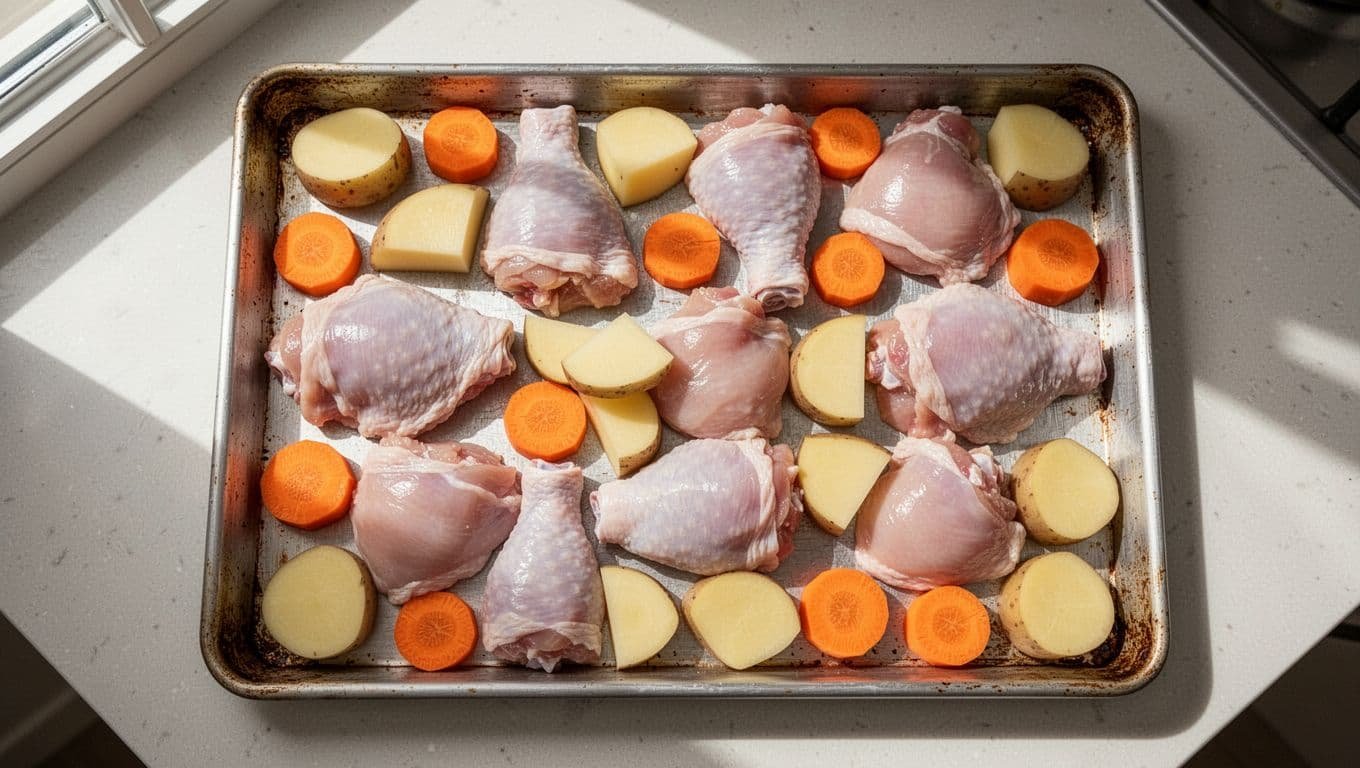
A great sheet pan meal starts with smart pairings. Chicken with potatoes, sausage with peppers, and salmon with asparagus all work because the ingredients finish around the same time. That means you get tender vegetables and juicy protein instead of dry meat or mushy sides.
Cutting everything into similar sizes helps even more. Small potato chunks cook at the same speed as bite-size chicken pieces, while thin pepper strips roast faster than thick wedges. When the pieces match, the oven does a better job, and you spend less time rescuing dinner at the last minute.
If you want more ideas for balanced, high-protein low-carb bowls follow a similar idea with simple, filling ingredients that work well together.
Good sheet pan dinners are built like a team, not a pile of random ingredients.
Keep the seasoning simple but flavorful
The easiest sheet pan meals rely on a few strong basics. Olive oil, salt, pepper, and pantry spices can carry a dish farther than a long ingredient list ever will. Garlic, paprika, Italian seasoning, lemon, and soy sauce all add depth without extra work.
Simple seasoning also makes repeat meals less boring. One night can taste smoky with paprika and garlic, while the next leans bright with lemon and herbs. If you want even more flavor, add a sauce after roasting so the pan stays crisp and the food doesn’t turn soggy.
A few reliable flavor combinations go a long way:
- Garlic and paprika for chicken, potatoes, or cauliflower
- Italian seasoning and lemon for salmon, zucchini, or green beans
- Soy sauce and garlic for chicken, broccoli, or carrots
That kind of flexibility is what makes sheet pan dinners worth repeating. You can swap the protein, change the seasoning, and still keep the same easy method.
Use smart prep tricks to cut cleanup even more
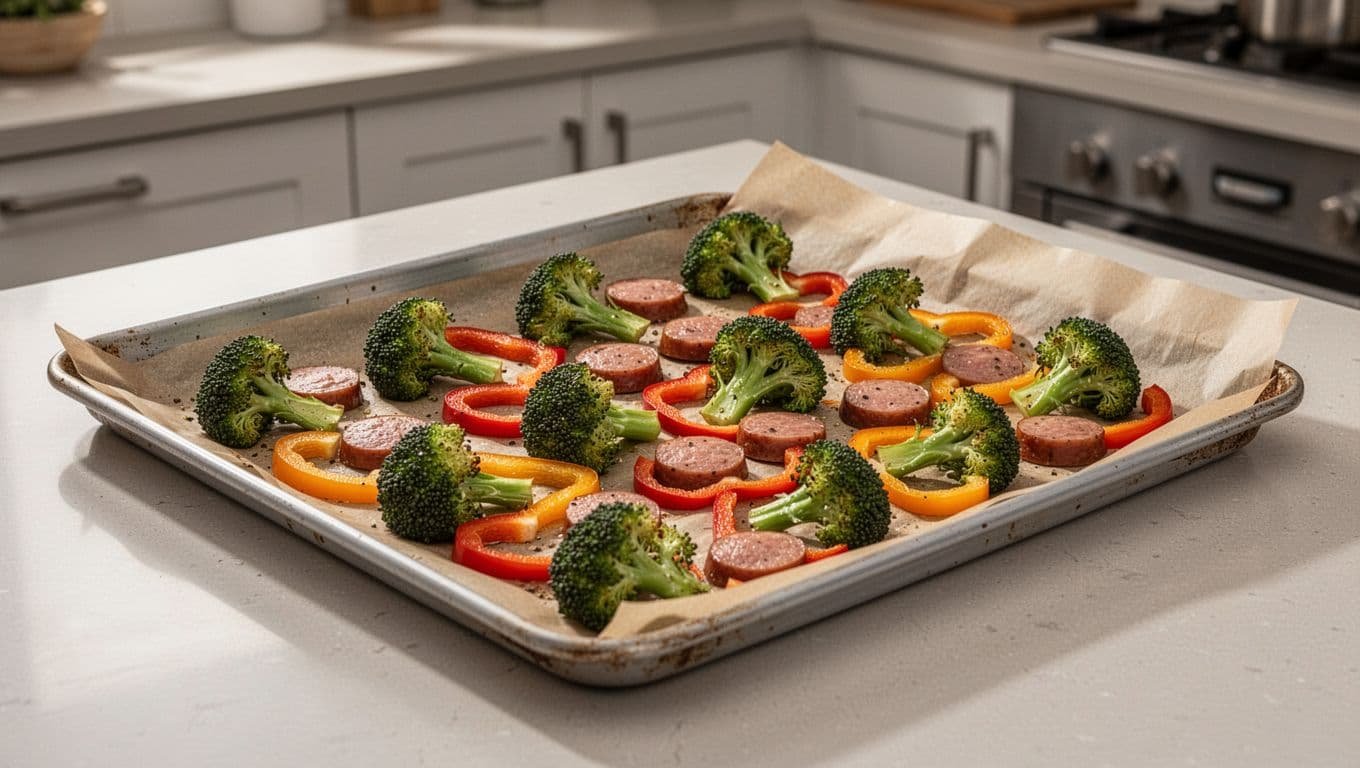
Small prep choices make a big difference. Line the pan with foil or parchment paper, and cleanup gets much easier after dinner. You can lift off the liner, toss it, and wipe the pan in seconds instead of scrubbing stuck-on bits.
A large rimmed baking sheet also helps. It gives the food room to roast properly, so the ingredients brown instead of steam. If the pan looks crowded, split the meal across two pans. That extra space is worth it because crowded food cooks unevenly and loses that roasted edge people want.
These habits keep dinner practical:
- Line the pan so cleanup stays simple.
- Leave space between pieces so everything browns well.
- Use a rimmed sheet pan to catch juices and keep the oven cleaner.
- Avoid overfilling the pan because crowded food steams instead of roasts.
When those small steps become routine, sheet pan meals stop feeling like a shortcut and start feeling like a smart dinner system.
The best sheet pan meals for weeknight dinner
When dinner needs to be easy, sheet pan meals give you plenty of room to keep things simple. You can build a full meal around one protein, a few vegetables, and a seasoning mix that fits your mood. That means less planning, less cleanup, and more dinners that actually happen on time.
The best part is how flexible these meals are. You can swap vegetables based on what’s in the fridge, use a different sauce, or change the spice mix without changing the whole method. That makes sheet pan dinners a smart fix for busy nights, picky eaters, and half-empty produce drawers.
Chicken sheet pan dinners that stay juicy and filling
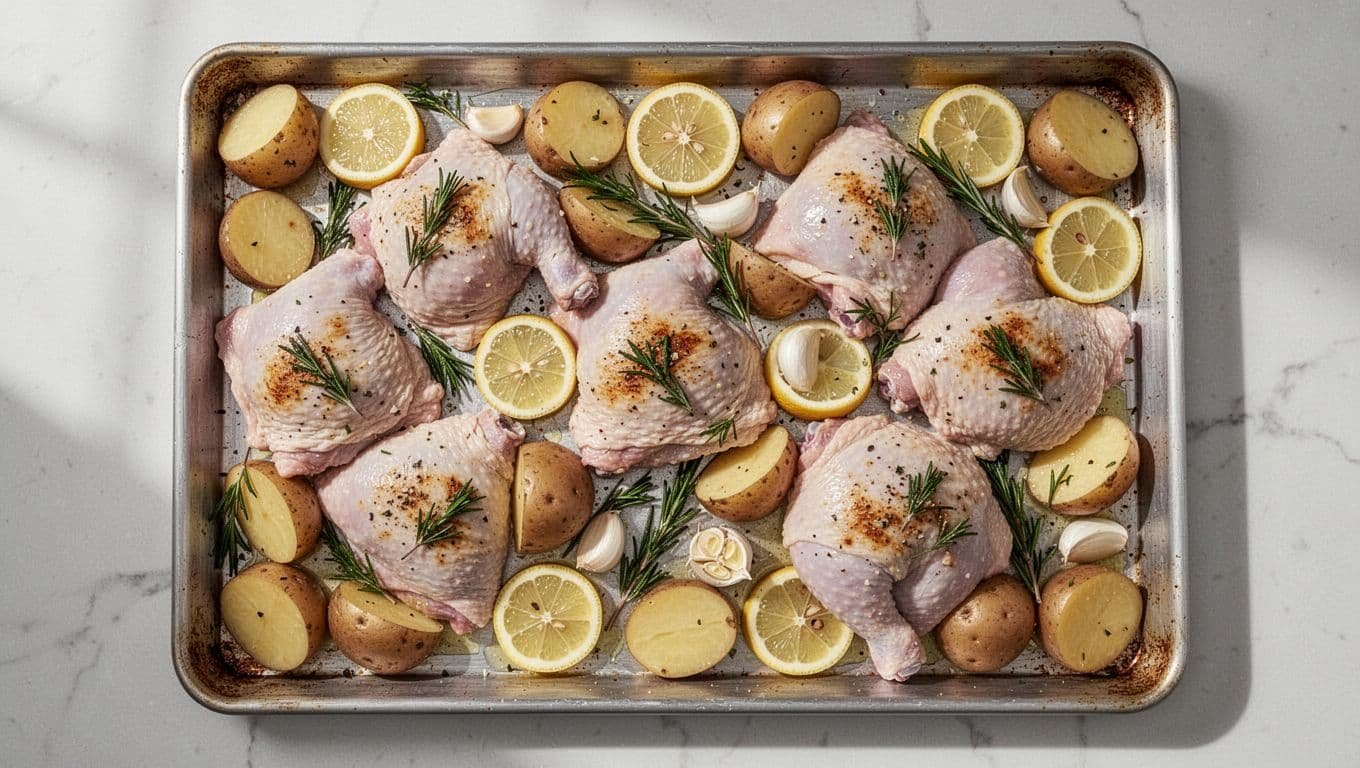
Chicken is one of the easiest proteins for sheet pan cooking because it works with almost any flavor. Lemon garlic chicken with potatoes feels fresh and classic, honey mustard chicken with green beans brings a little sweetness, and fajita-style chicken with peppers and onions gives you a full dinner with built-in color. If you want more balance on the plate, the right leafy sides can help round out the meal without adding work.
Chicken also reheats well, so leftovers don’t feel like a punishment. For weeknights, that matters. A dinner that can become lunch the next day saves time twice.
To keep chicken juicy, use thighs when you can, or choose evenly sized breasts and avoid overcooking them. A light coat of oil helps, and a thermometer takes the guesswork out of it. Chicken is done when the thickest part reaches 165°F, but pulling it from the oven as soon as it hits that point keeps it tender.
A few easy combinations work especially well:
- Lemon garlic chicken with potatoes for a bright, simple dinner
- Honey mustard chicken with green beans for a sweet-savory mix
- Fajita chicken with peppers and onions for tacos, bowls, or rice
If the potatoes need more time, start them first. Then add the chicken partway through so everything finishes together. That small step keeps the meal filling without drying out the meat.
Sausage and vegetable trays for almost no prep
Sausage is the weeknight shortcut that still tastes like a real dinner. It brings seasoning with it, so you don’t need much more than vegetables, oil, and a little salt and pepper. That makes it one of the easiest sheet pan dinner options when you’re tired and hungry.
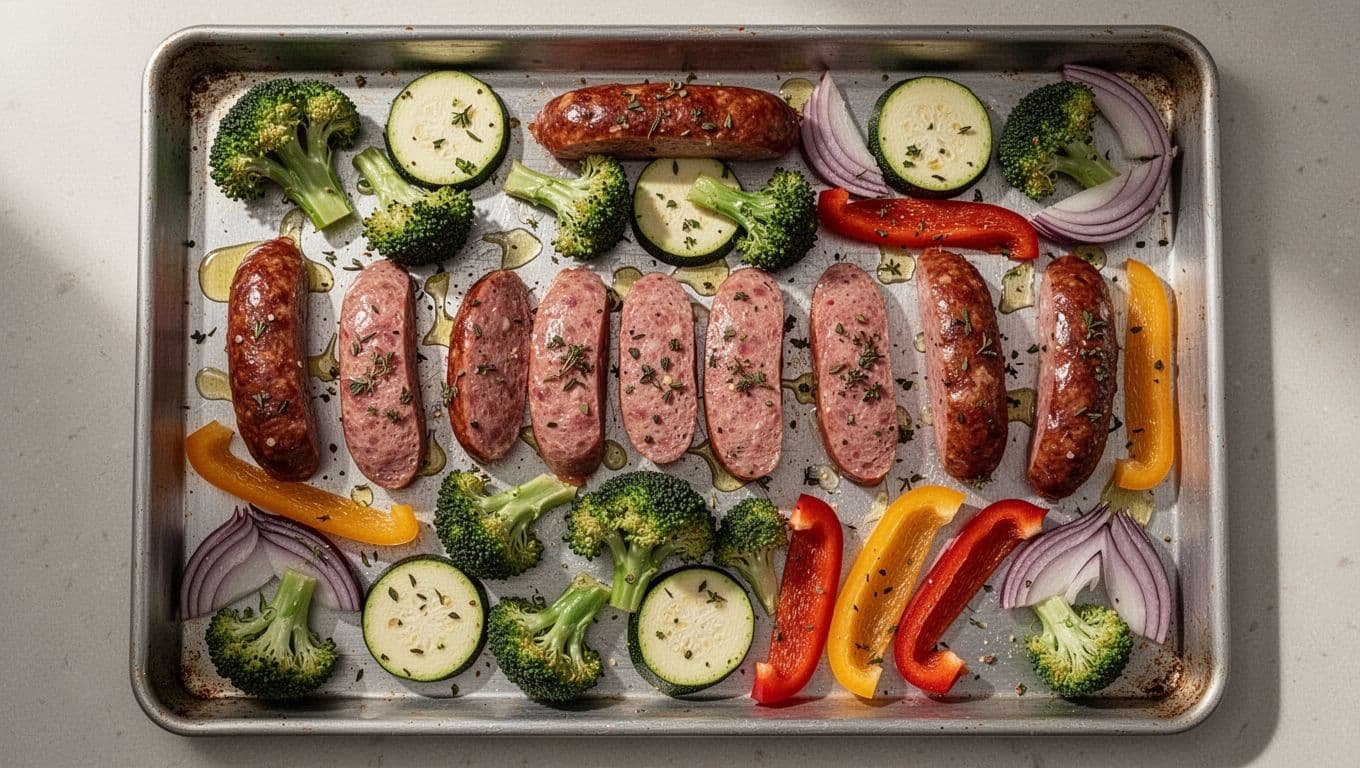
You can use pre-cooked sausage for the fastest version, or fresh sausage if you have a little more time. Either way, pair it with sturdy vegetables that roast well, like broccoli, potatoes, zucchini, or bell peppers. For another easy take, sheet pan chicken sausage with vegetables follows the same idea and keeps prep light.
This style works because the ingredients are forgiving. Broccoli gets crisp at the edges, potatoes turn soft inside, and sausage browns fast without much fuss. As a result, you get big flavor without juggling several pans.
Try these easy combinations:
- Smoked sausage with broccoli and potatoes for a hearty, no-think dinner
- Chicken sausage with zucchini and peppers for a lighter tray
- Sausage with onions and green beans when the fridge is nearly empty
If you want more flavor, toss everything with Italian seasoning, garlic powder, or a little mustard before roasting. You can also add a splash of lemon at the end to brighten the whole pan. That last step keeps the meal from tasting flat.
Salmon and other quick-cooking seafood meals
Salmon is the best pick when dinner needs to hit the table fast. It cooks quickly, pairs well with simple seasonings, and doesn’t need much more than a few vegetables on the pan. Lemon, dill, and garlic are easy choices that keep the flavor clean and fresh.
For a balanced sheet pan dinner, salmon with asparagus is a classic. Cherry tomatoes also work well because they soften and burst in the oven, while green beans give you a crisp-tender side that doesn’t need much attention. If you want a simple reference point, this sheet-pan salmon and veggies meal shows how easy that combo can be.
Seafood is a good fit for nights when you don’t want to wait around. Salmon fillets usually cook in about the same time it takes to roast quick vegetables, so dinner comes together fast. That also means you need to watch it closely, because seafood turns dry if you leave it in too long.
Keep it simple with these pairings:
- Salmon with asparagus and lemon for a clean, light dinner
- Salmon with cherry tomatoes and garlic for something bright and juicy
- Salmon with green beans and dill for an easy family meal
If you’re using thicker vegetables, give them a head start in the oven before adding the fish. That way, the salmon stays tender while the vegetables finish roasting. A quick pan of seafood can feel like a lot of effort, but it rarely is.
Vegetarian sheet pan meals that still feel hearty
Meatless sheet pan dinners can still leave you full if you build them with protein and sturdy vegetables. Roasted chickpeas with vegetables give you crunch and staying power. Tofu with broccoli and carrots adds protein without much prep, and loaded veggie trays with potatoes and cauliflower bring enough substance for a full dinner.
The key is choosing ingredients that roast well and hold their shape. Chickpeas crisp up nicely, tofu soaks up seasoning, and potatoes make the meal feel complete. You can also use the vegetables you already have, which keeps waste down and makes dinner easier.
A good vegetarian tray does not feel like a backup plan. It feels like a real meal with texture, color, and enough heft to satisfy. A little olive oil, spice, and a squeeze of lemon can do a lot of work here.
For easy meatless options, try:
- Roasted chickpeas with carrots and peppers for a fast, filling tray
- Tofu with broccoli and garlic for a simple high-protein dinner
- Potatoes with cauliflower and onions for a cozy, roasted mix
When you want more protein, add feta, beans, or a yogurt-based sauce after roasting. That gives the meal more staying power without making cleanup harder. Vegetarian sheet pan dinners work best when they are built with the same care as any other dinner, and they hold up just as well on a busy night.
How to build a balanced sheet pan dinner without overthinking it
A balanced sheet pan dinner doesn’t need a recipe card with ten steps. It just needs a simple structure that makes sense in the oven and on the plate. Start with one protein, add a few vegetables, coat everything with fat, and finish with a seasoning blend that gives the pan one clear flavor.
That basic formula works because it keeps dinner flexible. You can use what you already have, swap ingredients based on the season, and still end up with a meal that feels complete.
Start with a protein, then add vegetables that match
Pick one protein first, then build around how long it needs to cook. Chicken thighs, sausage, and salmon all work well, but they need different vegetable partners. Chicken can handle potatoes and carrots, while salmon does better with asparagus, green beans, or zucchini.
The easiest way to avoid a soggy or uneven pan is to match the cooking speed of your ingredients. Hard vegetables like potatoes, sweet potatoes, carrots, and beets need a head start. Faster vegetables like broccoli, asparagus, peppers, cherry tomatoes, and zucchini cook more quickly, so they may need to go in later or be cut larger.
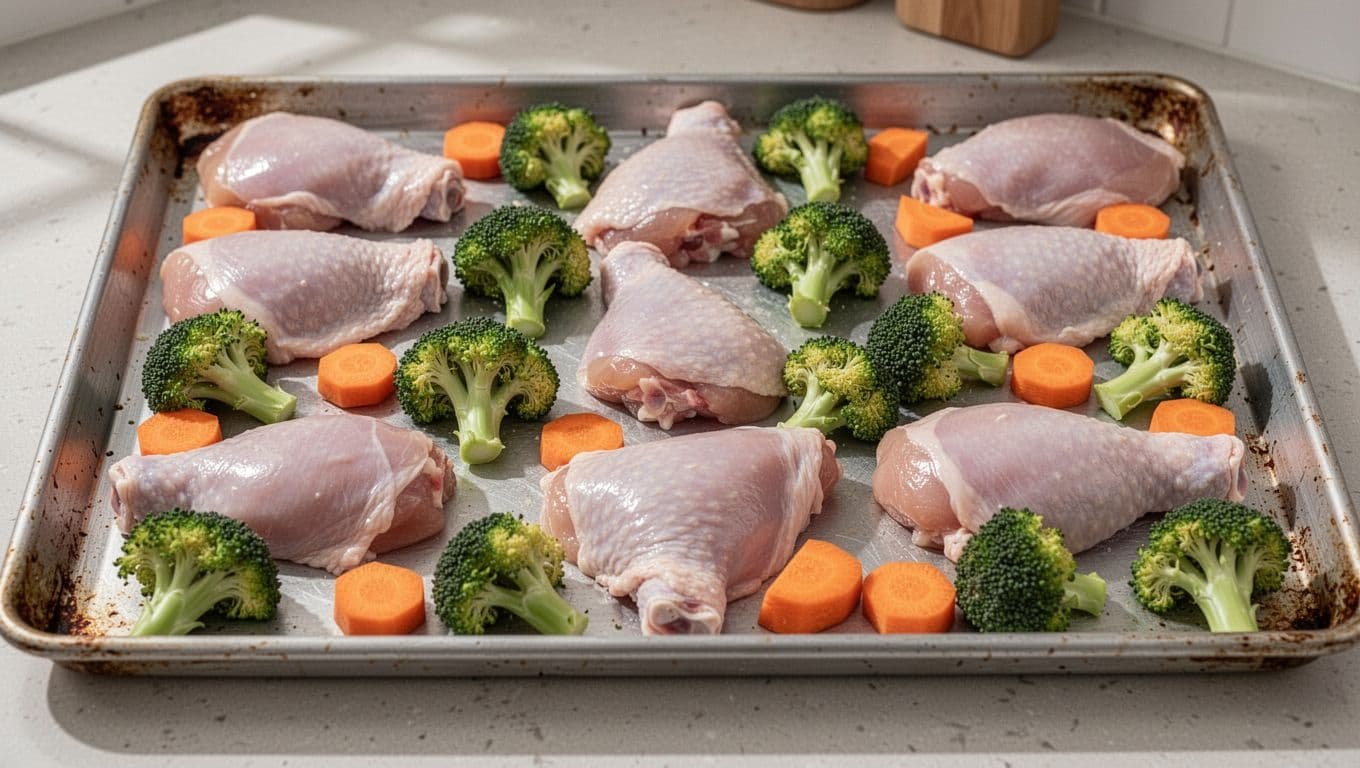
A simple match-up helps:
- Chicken thighs with potatoes, carrots, or broccoli
- Sausage with peppers, onions, or zucchini
- Salmon with asparagus, green beans, or cherry tomatoes
- Tofu with broccoli, cauliflower, or snap peas
If you want a quick rule, think about texture. Dense vegetables need more time, so slice them smaller or give them a short par-cook. Tender vegetables can stay whole or go in halfway through. That small bit of planning keeps dinner moving without making it fussy.
For a deeper look at cooking times, this sheet-pan dinner guide breaks down how different vegetables and proteins roast together.
If one ingredient needs a long roast and another cooks in a flash, they do not belong on the pan at the same time.
Add a sauce or seasoning blend that ties everything together
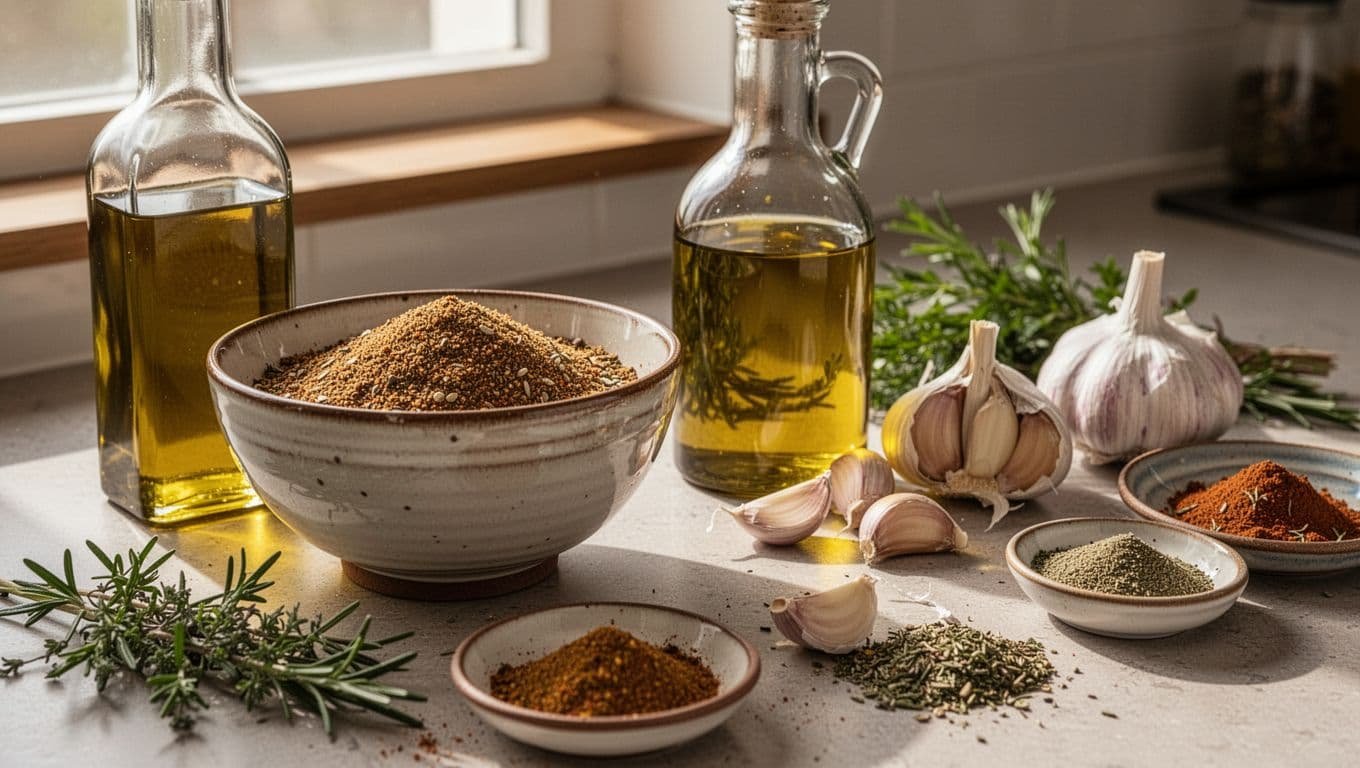
Once the protein and vegetables are set, choose one flavor direction and keep it simple. A good seasoning blend makes the whole pan taste like a planned meal instead of random leftovers. Olive oil helps everything brown, while spices and sauces carry the flavor across every bite.
You do not need a long ingredient list here. Taco seasoning gives you an easy Tex-Mex dinner, garlic herb butter brings a rich roasted finish, teriyaki-style sauce adds sweet and savory notes, and Mediterranean seasoning works well with chicken, zucchini, tomatoes, and onions. If you want a broader flavor base, this simple peanut chicken bowl shows how one sauce can tie a whole meal together.
A few easy flavor paths work especially well:
- Taco seasoning with chicken, peppers, and onions
- Garlic herb butter with potatoes, green beans, and salmon
- Teriyaki-style sauce with broccoli, carrots, and sausage
- Mediterranean seasoning with chicken, zucchini, and tomatoes
Mix the seasoning with oil before it hits the pan, so every piece gets coated. If you’re using a sauce with sugar, like teriyaki or honey mustard, keep an eye on the heat so it doesn’t burn. In that case, a little sauce added near the end often works better than a heavy coat at the start.
Know when to roast, broil, or add ingredients later
Not everything belongs on the pan at the same time. Sturdy ingredients can roast from the start, but delicate vegetables and quick-cooking foods need a later entrance. That keeps them from turning dry, soft, or burned before dinner is ready.
Roasting is the best default because it gives you browned edges and steady heat. Broiling works well at the end when you want a little color on salmon, chicken skin, or vegetables. Still, broil with care, because food can go from golden to scorched fast.
Use this timing logic:
- Start first with potatoes, carrots, beets, or bone-in chicken.
- Add next with broccoli, cauliflower, onions, or sausage if they need less time.
- Finish later with asparagus, zucchini, cherry tomatoes, shrimp, or leafy greens.
- Broil briefly when you want extra browning on top.
This is also where size matters. Thin slices cook faster, large chunks cook slower, and a crowded pan traps steam. If a vegetable cooks in half the time of your protein, either slice it bigger or add it halfway through. That one habit saves dinner from the usual sheet pan problems, like limp broccoli or overdone salmon.
The best sheet pan dinners feel easy because the formula is simple: one protein, two or three vegetables, a fat for roasting, and one clear seasoning idea. Once you learn that pattern, you can mix and match what you have in the fridge and still get dinner on the table without thinking too hard.
Small mistakes that can ruin a sheet pan meal
Sheet pan dinners look simple, but a few small habits can throw them off fast. The good news is that most problems are easy to fix once you know what to watch for. A crowded pan, uneven cuts, or weak seasoning can turn a crisp, flavorful dinner into something soggy and flat.
The goal is not perfection. It’s getting the basics right so your food roasts the way it should. Small adjustments make a big difference here, especially on busy nights when you want dinner to work on the first try.
Do not crowd the pan
Too many ingredients on one pan trap steam. Instead of roasting, the food sits in its own moisture and turns soft. That’s when vegetables lose their edges and chicken skin stays pale.
Give everything room to breathe. A little space between pieces helps hot air move around the food, which is what gives you browning and better texture. If the pan looks packed, split the meal across two pans. That small move is better than forcing everything onto one sheet and hoping for the best.
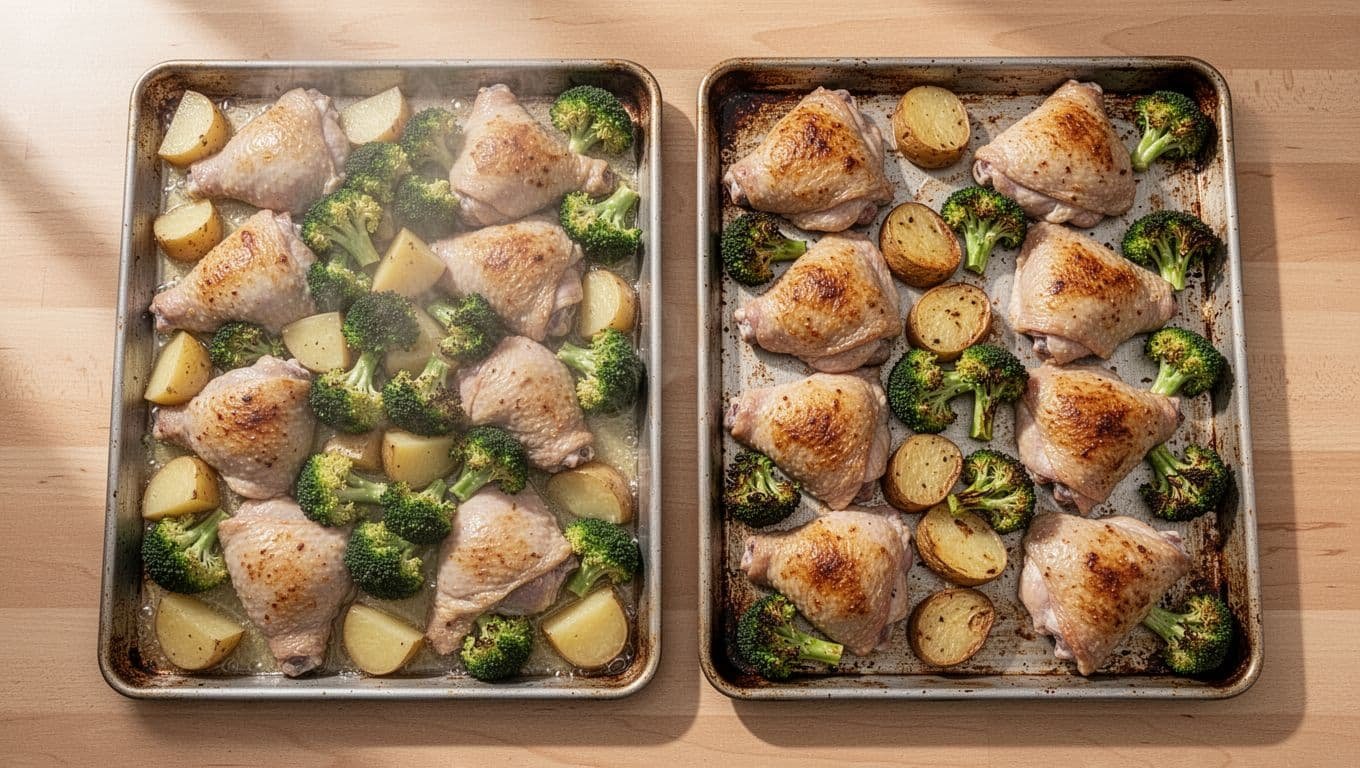
If the ingredients are touching all over, they are more likely to steam than roast.
This matters most with vegetables that need browning, like broccoli, Brussels sprouts, or potatoes. Crowding hides their surfaces from heat, so they never get that roasted finish people love.
Cut vegetables too large or too small
Uneven pieces cook at different speeds. One tray might have crisp edges on the zucchini while the carrots are still hard in the middle. Similar sizes help everything finish at the same time, so you’re not pulling pieces off the pan one by one.
Dense vegetables usually need smaller cuts than soft ones. Potatoes, carrots, and squash take longer, so chop them into smaller, even pieces. Softer vegetables like zucchini, onions, and bell peppers can stay a little larger because they cook faster.
A simple rule helps:
- Cut hard vegetables smaller so they can catch up.
- Keep softer vegetables larger so they do not overcook.
- Match pieces as closely as you can for more even roasting.
That extra minute with a knife saves a lot of frustration later. It also keeps dinner from looking scattered, since the whole pan finishes at the same time.
Forget to dry or season ingredients well
Wet vegetables steam before they brown. That’s one of the fastest ways to lose the crisp texture sheet pan meals are known for. After rinsing produce, pat it dry so the oven can do its job.
Seasoning matters just as much. Salt and spices are not a garnish here, they are part of the cooking process. Without enough seasoning, the food can taste flat even if the texture is right.
A simple habit solves both problems:
- Pat ingredients dry before they go on the pan.
- Toss with oil so the seasonings stick.
- Season before baking so every bite has flavor.
Salt, pepper, garlic powder, paprika, and dried herbs all work well. If you wait until the end, the seasoning sits on top instead of soaking into the food. A quick toss before roasting gives you a better result with very little effort.
For the best sheet pan meals, those small details matter more than fancy recipes. Dry the ingredients, keep the pan uncrowded, and cut everything to a similar size. Once you get those basics down, weeknight dinner gets a lot more predictable.
Make sheet pan dinners work even on your busiest nights
Sheet pan dinners work best when you stop treating them like a last-minute scramble. A little planning earlier in the day, smart use of leftovers, and a short list of repeatable combos can turn them into a weeknight habit instead of a backup plan.
That matters on nights when you’re tired, short on time, and still need a real dinner on the table. The goal is simple, cut the evening work down before dinner ever starts.
Prep ingredients earlier in the day
A few minutes of prep in the morning or afternoon can save a lot of stress later. Chop the vegetables, mix the seasoning, or marinate the protein while you still have energy. Then dinner only needs to go on the pan and into the oven.
This works especially well for busy parents and anyone coming home after a long shift. If the chicken is already seasoned and the potatoes are already cut, you’ve taken out the hardest part. Store everything in the fridge in separate containers so it stays fresh and ready to use.
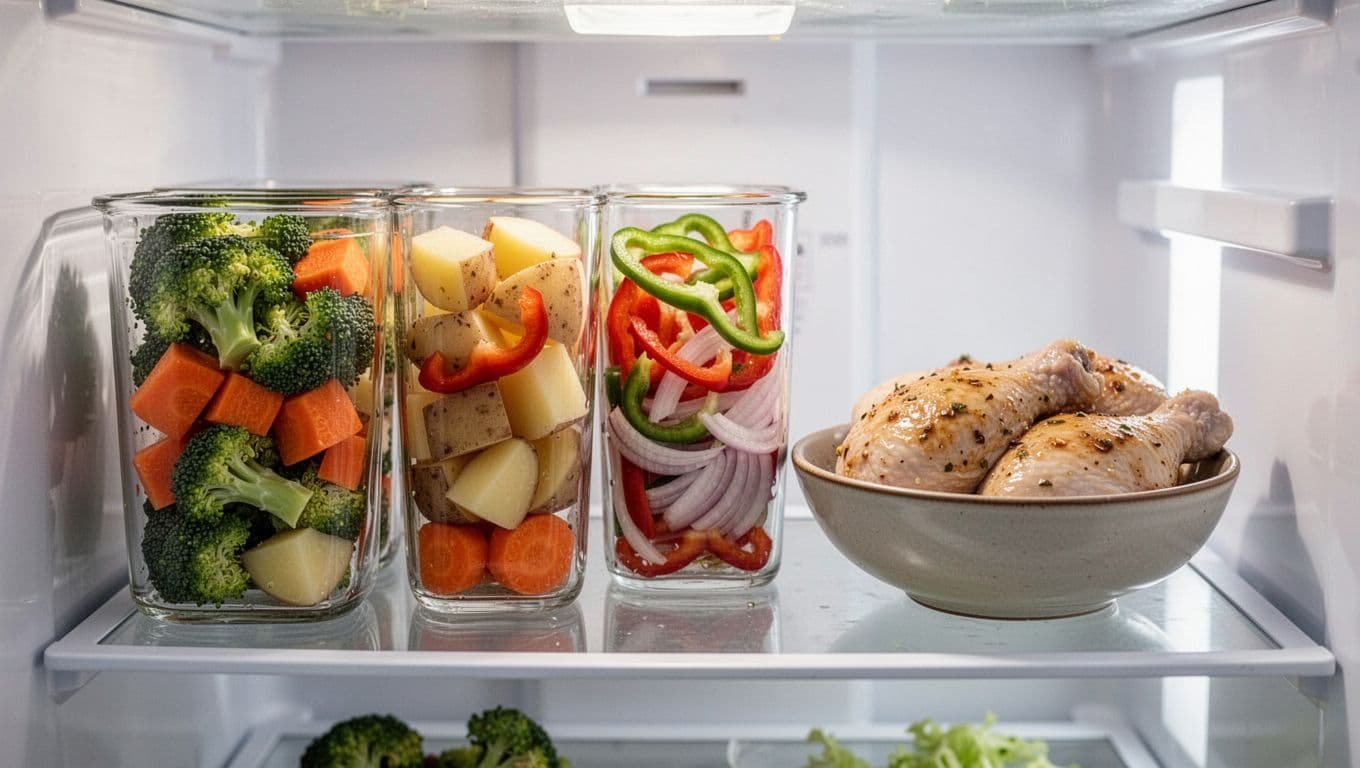
A simple prep routine can look like this:
- Chop sturdy vegetables like carrots, potatoes, broccoli, and onions.
- Mix seasoning ahead of time so you can toss and roast fast.
- Marinate chicken or tofu in a sealed container for better flavor.
- Keep prepped items chilled until you’re ready to bake.
That small head start can turn a 45-minute dinner into something much easier. It also makes it easier to stick with healthy work lunch ideas the next day, since the same prep can carry over into lunch.
Use leftovers in a new way the next night
Leftover sheet pan food is more useful than people think. Roasted chicken, vegetables, and potatoes can become bowls, wraps, salads, or breakfast hash without much extra work. One dinner can easily stretch into two or three meals.
For example, tuck leftover chicken and peppers into a tortilla with cheese or avocado for a quick wrap. Spoon roasted vegetables over greens for a warm salad, or serve them over rice or quinoa for a filling bowl. You can also chop everything smaller and crisp it in a skillet with eggs the next morning.
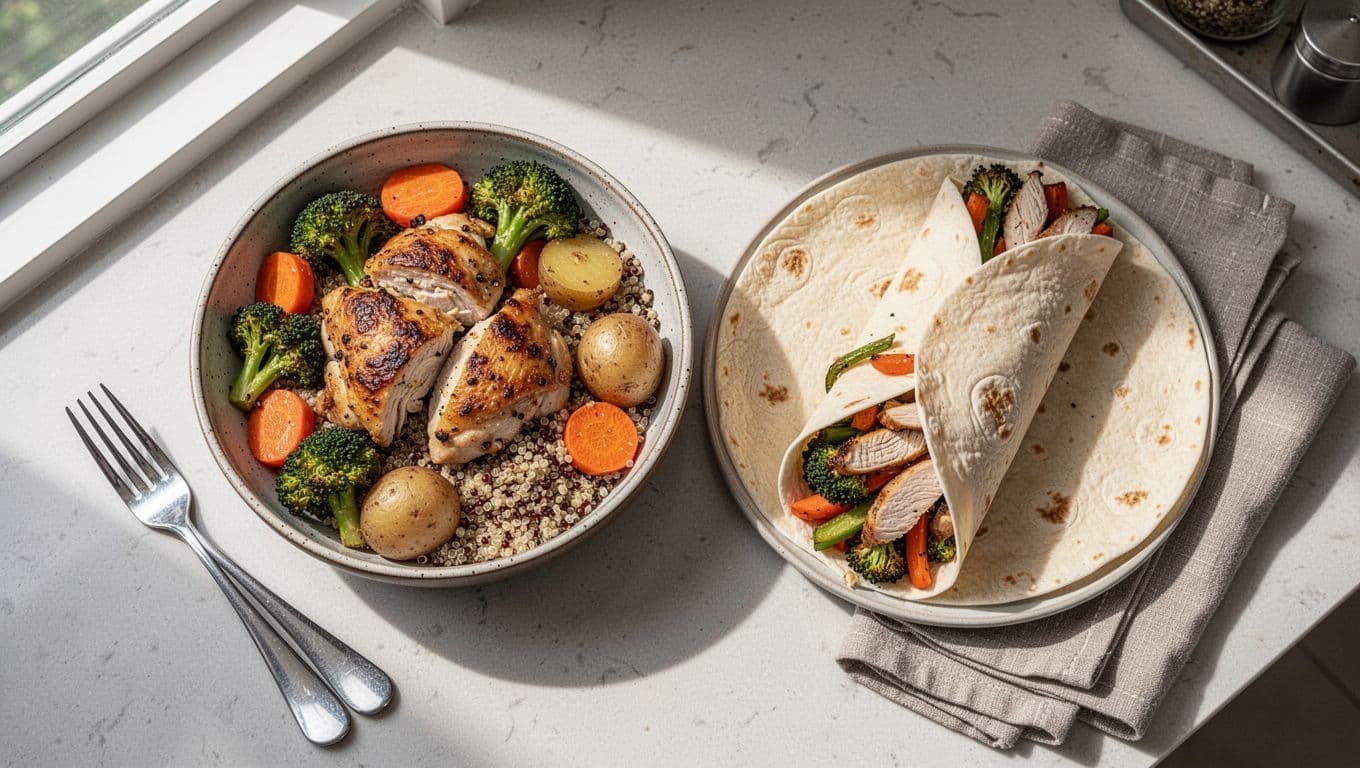
A few easy second-night ideas work especially well:
- Bowls with rice, greens, or quinoa, plus leftover protein and vegetables.
- Wraps with sauce, cheese, and chopped sheet pan fillings.
- Salads with warm roasted vegetables over lettuce or spinach.
- Breakfast hash with potatoes, onions, and eggs.
If you want dinner to feel lighter after a heavy roast, this is the easiest fix. You get a fresh meal without cooking from scratch again, and that saves real time during the week. For more lunch-style ways to stretch dinner, quick lunches with leftovers can help you use the same strategy at midday too.
Keep a few go-to combinations on repeat
Meal planning gets easier when you stop starting from zero every week. Save three to five sheet pan combinations that your family already likes, then rotate them on repeat. Familiar meals cut decision fatigue and make shopping much simpler.
You do not need a huge list. A few dependable pairings are enough to build a stress-free routine. Chicken with potatoes and green beans, sausage with peppers and onions, and salmon with asparagus are all easy wins.
Use this simple system:
- Pick one protein you know cooks well.
- Match it with two vegetables that roast at the same pace.
- Keep one seasoning mix or sauce tied to that combo.
- Repeat it often enough that grocery shopping becomes automatic.
That kind of rotation keeps weeknights calm. You already know what the meal looks like, how long it takes, and what to buy. On the busiest nights, that kind of certainty is what makes dinner happen at all.
The easiest sheet pan dinners are the ones you do not have to rethink every week.
A short list of favorites also makes it easier to swap ingredients when the fridge is half empty. If broccoli is gone, use cauliflower. If chicken feels boring, try sausage or tofu. The structure stays the same, so dinner still comes together without extra effort.
Conclusion
Sheet pan meals make weeknight dinners feel manageable again. You get one pan, simple prep, and a lot of room to mix proteins, vegetables, and flavors that actually work for your schedule.
That is the real appeal of the best sheet pan meals for clean-up-free nights; they give you dinner without a sink full of dishes. You do not need fancy skills to make them work, just a good pan, a few smart ingredients, and a plan that keeps everything cooking at the same pace.
When dinner needs to be easy, this is a reliable answer. Keep a few favorites on repeat, and the next busy night can still end with a solid meal and a clean kitchen.
Save the pin for later

- Healthy Air Fryer Recipes for Beginners - 21/09/2026
- Healthy Snacks for Late Night Cravings - 21/09/2026
- High Protein Meal Prep Ideas for Easy Weekly Meals - 21/09/2026

