Healthy dips are an easy win for parties, game day, and everyday snacking because they bring big flavor without a lot of effort. The best healthy dips taste rich and satisfying without relying on heavy cream, piles of cheese, or too much salt.
That makes them a smart choice when you want something crowd-friendly and a little lighter at the same time. If you like planning ahead, you may also want these make-ahead appetizers for parties, since dips pair well with simple prep and easy serving. Keep reading for the most useful healthy dip ideas, what makes them better for you, and the smartest dippers to serve alongside them.
What makes a dip appetizer healthy and still tasty?
A good healthy dip appetizer does more than cut calories. It also gives you protein, fiber, and healthy fats so a few bites actually feel satisfying. Just as important, it keeps flavor front and center with herbs, spices, citrus, garlic, and other bright ingredients.
The best dips taste creamy, bold, and fresh without leaning on heavy fillers. That balance matters whether you are making a party dip at home or picking up a tub at the store.
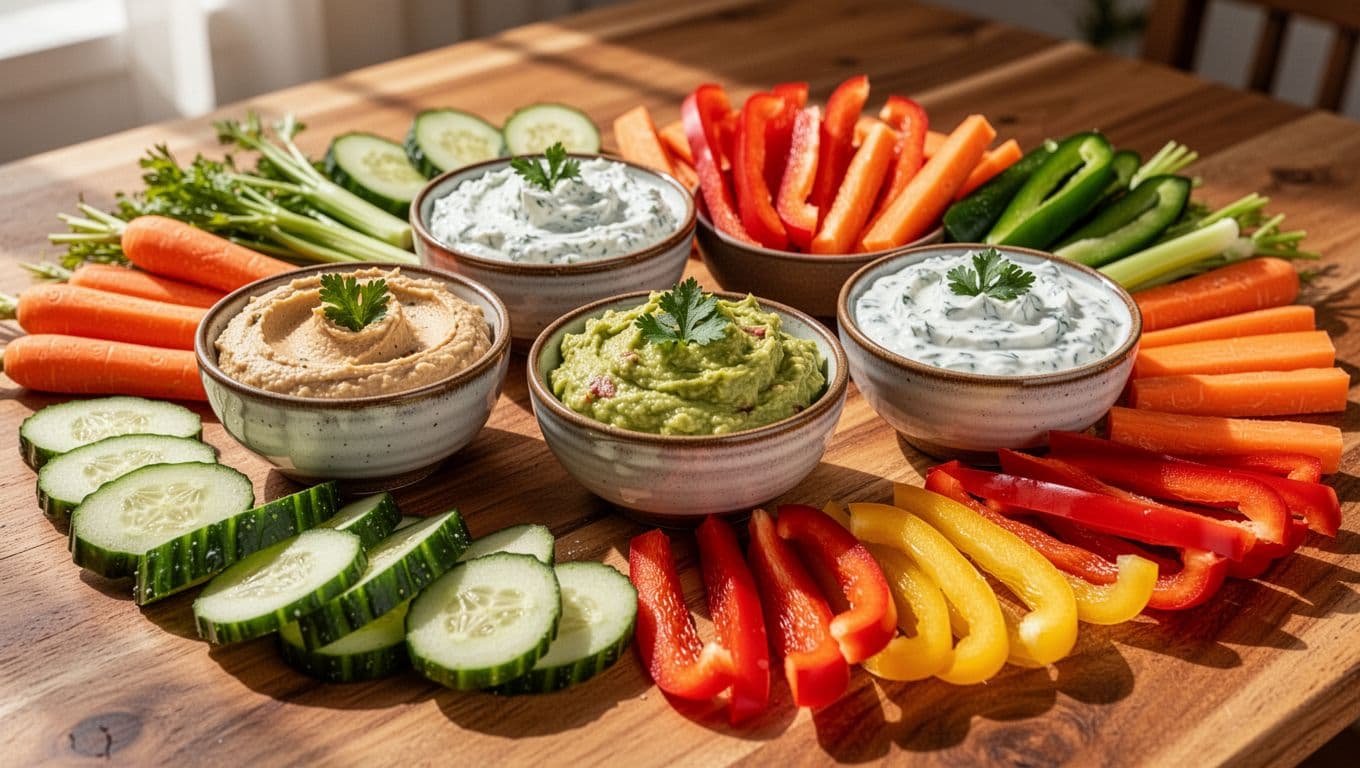
The ingredients that help dips feel filling
The most satisfying healthy dips usually start with a strong base. Greek yogurt adds tang and creaminess, while beans and chickpeas bring both protein and fiber, which helps a dip feel more complete. Avocado, nuts, and tahini add richness, so the texture feels silky instead of thin or flat.
Vegetables matter too. Roasted peppers, spinach, onions, herbs, and even grated cucumber can add body and freshness without weighing the dip down. That mix of texture and flavor keeps every scoop interesting.
A better-for-you dip often includes a few of these ingredients:
- Greek yogurt for a creamy base and extra protein
- Beans or chickpeas for fiber, thickness, and staying power
- Avocado for smooth texture and healthy fats
- Nuts or tahini for a richer finish and deeper flavor
- Vegetables for volume, color, and freshness
A dip feels more satisfying when it has something to chew on, something creamy, and something bright.
Ingredients that can make a dip less healthy
Some dips start to feel heavier than they should because of the base. Too much mayonnaise, cream cheese, or processed cheese can push the fat and sodium up fast, while still leaving the dip pretty one-note. Added sugar can sneak in too, especially in sweetened party dips or store-bought versions with flavored mix-ins.
Salt is another thing to watch. A little seasoning helps a dip taste alive, but too much sodium can drown out the herbs, lemon, lime, or garlic that should be doing the real work. The same goes for sugary add-ins, which can make a dip taste processed instead of fresh.
Small swaps make a big difference here. Try Greek yogurt in place of part of the sour cream, use mashed avocado instead of extra mayo, or stir in lemon juice and herbs before reaching for more salt. Those changes keep the dip creamy and flavorful, but a lot lighter on the plate.
Healthy dip appetizers you can make in minutes
When you need something crowd-friendly without a long prep list, quick dips are hard to beat. The best ones use a short ingredient list, a blender or food processor, and flavors that taste fresh right away. That means you can put out a party dip that feels complete, not like an afterthought.
A smart shortcut is to build around one creamy base, then layer in herbs, citrus, spices, or salsa. That keeps the dip light, but still rich enough to stand up to chips, crackers, and crisp vegetables.
Creamy dips with Greek yogurt or cottage cheese
Greek yogurt and cottage cheese work well because they bring body, tang, and protein without making the dip heavy. They also mix easily with fresh herbs and seasonings, so you can turn one base into several different flavors in minutes. For more ideas that use the same kind of simple approach, healthy dip recipes can be a good starting point.
A cucumber-dill dip tastes cool and fresh, especially with cucumber, lemon, garlic, and chopped dill. A ranch-style herb dip gets its flavor from parsley, chives, and onion powder, which gives you that classic party taste with a lighter finish. If you want something bolder, a spicy salsa yogurt dip adds heat and acidity at the same time, so each bite feels bright and lively.
You can also use cottage cheese for an extra creamy result. Once it’s blended smooth, it almost behaves like a thick whipped spread, which makes it easy to serve with sliced peppers, cucumbers, or pita chips. For a mixed appetizer platter, that kind of dip fits right in with easy picnic appetizers and dips.
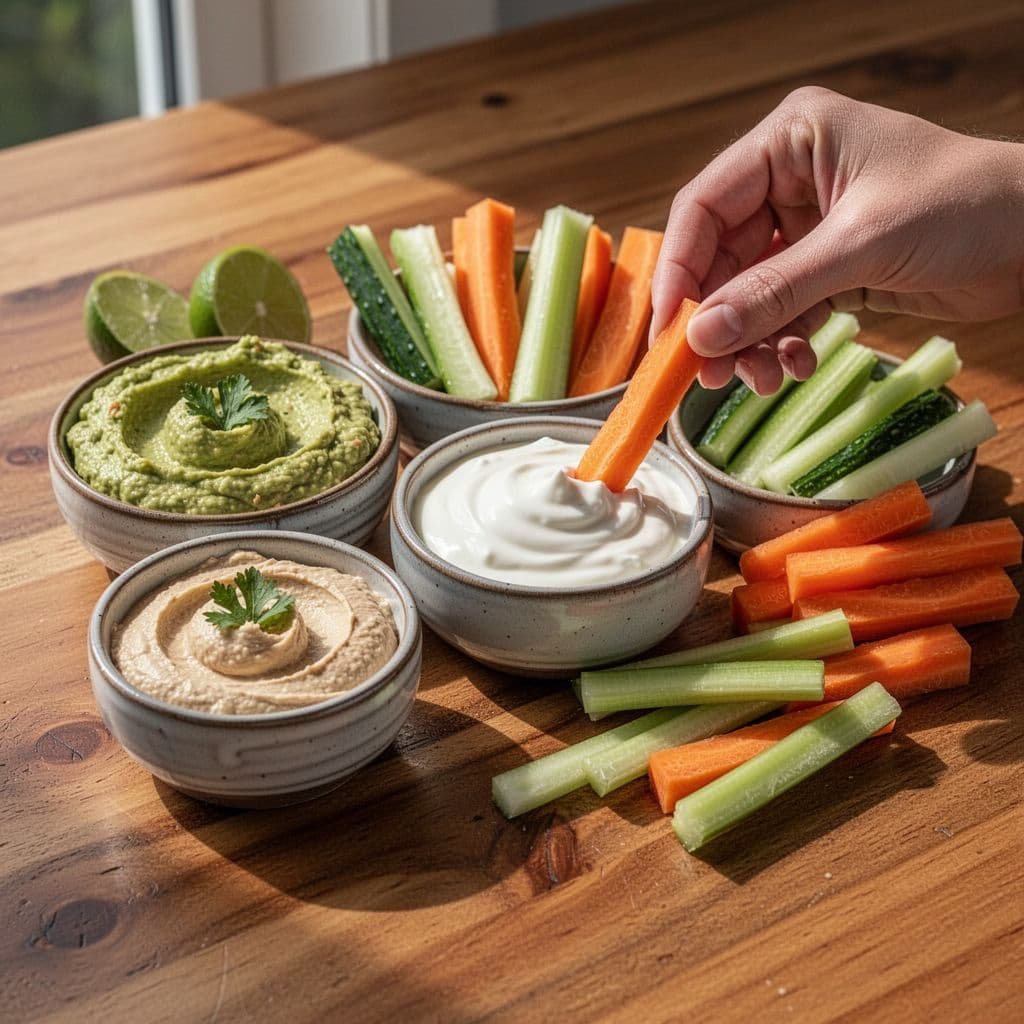
A yogurt-based dip feels indulgent when the texture is thick and the seasoning is bold.
Bean-based dips that bring protein and fiber
Bean dips are one of the easiest ways to make a snack more filling. Chickpeas, white beans, black beans, and edamame all bring protein and fiber, so the dip holds up better than something thin and purely creamy. They also blend fast, which is exactly what you want when guests are on the way.
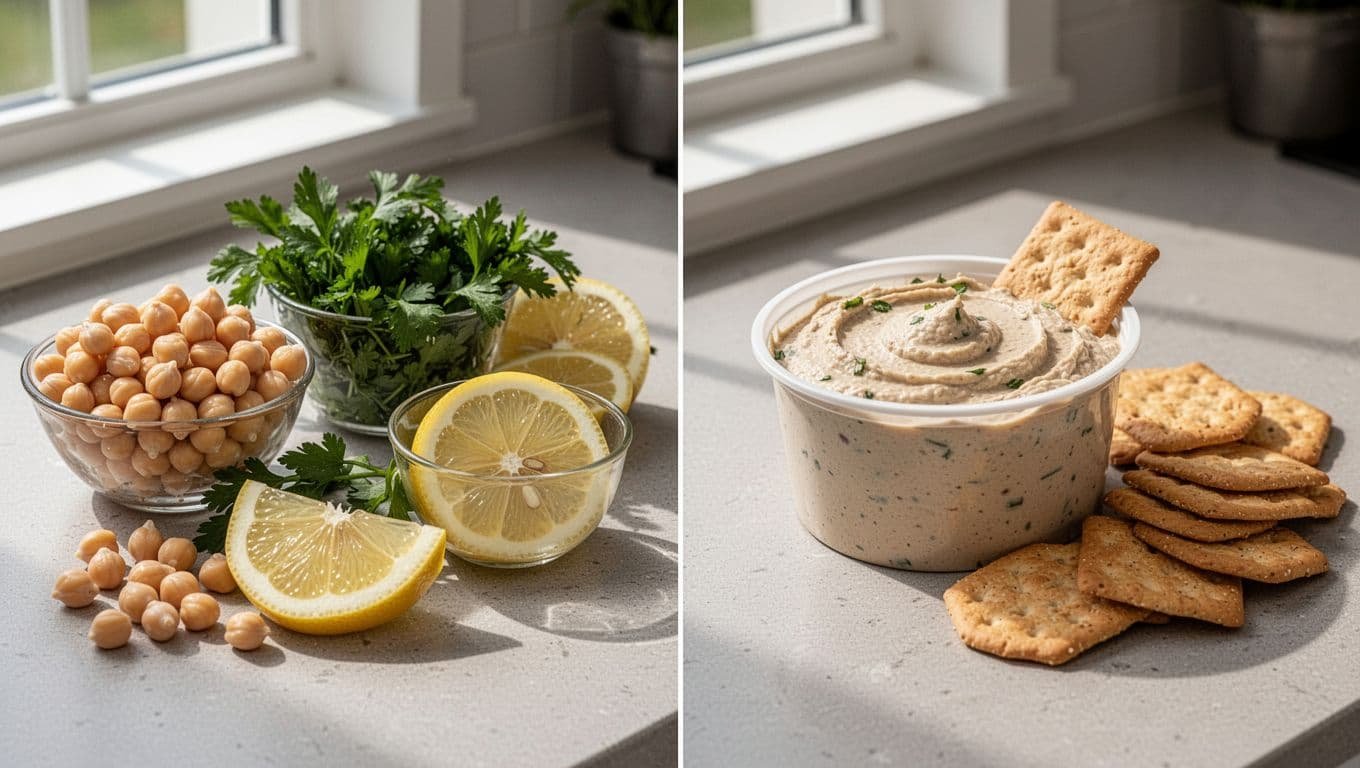
Classic hummus is still a top choice because it’s smooth, savory, and easy to season with cumin, garlic, and lemon. White bean dip feels milder and silkier, while black bean dip brings a deeper, earthier flavor that pairs well with smoked paprika. Edamame dip has a fresh, green taste that works nicely with lemon and garlic.
If you want the flavor to pop, keep the spices simple and direct:
- Cumin for warmth and a little depth
- Garlic for a sharp, savory edge
- Smoked paprika for a roasted finish
- Lemon juice for brightness and balance
These dips do more than fill the bowl. They also make the snack table feel more substantial, especially when you set them out with veggie sticks, toasted pita, or whole-grain crackers. If you want a higher-protein option, healthy dips from Taste of Home show how beans and yogurt can do most of the work.
Fresh dips built around avocado, herbs, and citrus
Avocado-based dips bring a creamy texture fast, and they don’t need many extras to taste good. Guacamole is the obvious favorite, but it stays interesting when you add lime, onion, cilantro, and a pinch of salt. Lemon or lime also helps slow browning, so the dip looks fresher longer and tastes brighter.
You can take the same idea in a different direction with a pesto-style spinach dip. Spinach, basil, garlic, lemon, and a little olive oil make a bold dip that tastes fresh and a little peppery. It’s especially good when you want something green, light, and full of flavor without a long ingredient list.
Other quick blends work just as well. Avocado mixed with Greek yogurt, salsa, or herbs gives you a smooth dip with more depth, and it comes together in minutes. That makes it a smart choice when you need something that feels a little special but still easy enough for a last-minute spread.
For serving, keep the dippers simple too. Cucumber rounds, carrot sticks, snap peas, pita chips, and baked tortilla chips all let the dip shine without adding much extra work.
The best healthy dips to serve with your appetizers
A great healthy dip still needs the right dipper. If the base is creamy, bright, or protein-rich, the snack works best when the scoop adds crunch, color, and a little fiber. That balance keeps the platter light without feeling skimpy.
The smartest spread mixes raw vegetables with a few whole-grain or baked options. That way, guests who want something crisp and fresh can load up on vegetables, while anyone who wants a more filling bite still has a few sturdy choices on the table.
Crunchy vegetables that keep the snack light
Vegetables are the easiest healthy dippers to prep, and they work beautifully with creamy dips. Their crisp texture cuts through hummus, yogurt dips, guacamole, and bean spreads, so each bite feels fresh instead of heavy. They also add color fast, which makes the platter look more inviting.
The best options are simple and familiar:
- Cucumber slices bring a cool, refreshing crunch that pairs well with dill, yogurt, and herb-based dips.
- Bell pepper strips add sweetness and bright color, which works especially well with savory hummus or bean dip.
- Carrot sticks hold up well and give you a firmer bite for thicker dips.
- Celery adds snap and a clean flavor that balances richer spreads.
- Broccoli florets catch dip in all the little folds, so they are great with thick, creamy options.
- Snap peas taste sweet and crisp, and they need almost no prep beyond rinsing.
- Radishes bring peppery bite and a pretty pink edge to the platter.
Prep makes all the difference here. Wash the vegetables well, slice them into easy-to-grab pieces, then chill them before serving so they stay crisp. If you want them to look extra fresh, keep a bowl of ice water nearby for carrots and celery until the party starts.
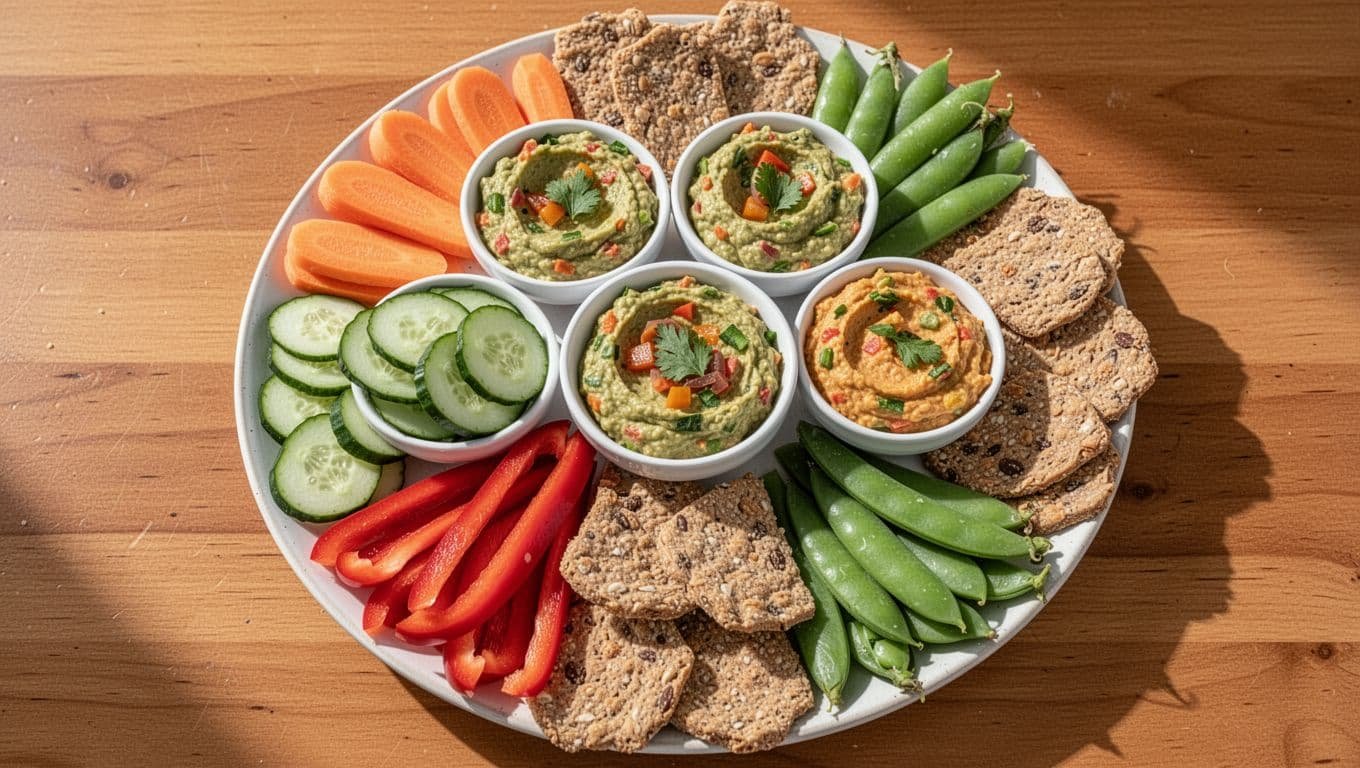
Whole-grain and baked options for more staying power
Raw vegetables are the lightest choice, but they are not always enough on their own. When guests want something more filling, whole-grain and baked dippers add staying power without making the snack feel greasy or oversized. They also give creamy dips a sturdier base, which helps with thicker spreads.
A few good choices work especially well:
- Pita chips or pita wedges offer a toasty, sturdy bite that pairs nicely with hummus and yogurt dips.
- Rye crackers bring a deeper, earthy flavor and a crisp texture that holds up well under thicker dips.
- Whole-grain toast points feel simple and classic, especially with bean dips or avocado spreads.
- Baked tortilla chips add crunch without the heaviness of fried chips, so they fit right into a lighter appetizer board.
For the best balance, mix these with your raw vegetables instead of relying on them alone. A platter with cucumber, peppers, and snap peas, plus a small pile of whole-grain crackers with good fiber, gives guests options without overwhelming the table. That mix keeps the snack spread lively, satisfying, and easy to keep eating.
How to make healthy dip platters look party-ready
A healthy dip platter looks polished when it feels planned, not crowded. The goal is simple: give each dip room to breathe, then use color and texture to make the board feel full and inviting.
Start with two or three dips that look and taste different. That mix keeps the platter interesting and helps guests build bites they actually want to keep eating.
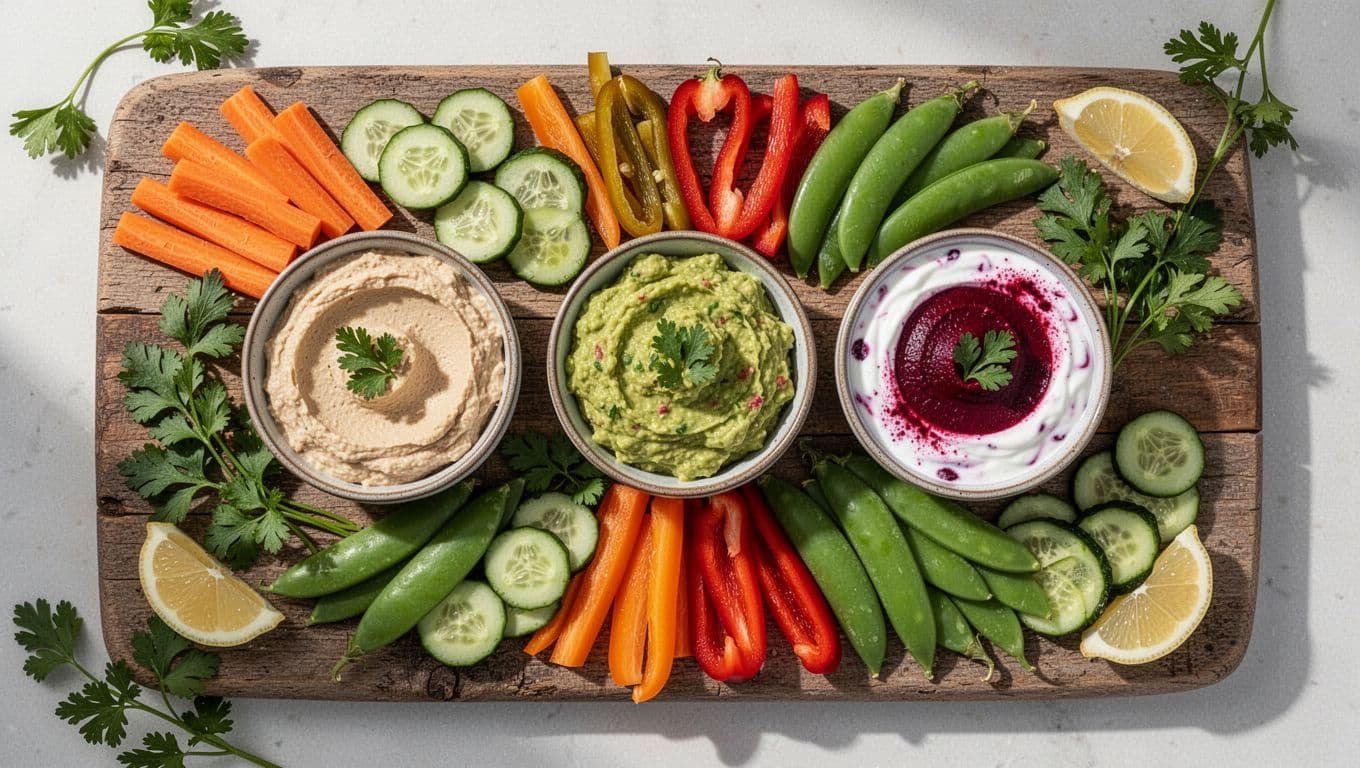
Build a balanced dip board with contrast
A strong board needs contrast in both flavor and appearance. Put a creamy dip next to a chunky one, then add something fresh or tangy so the flavors do not flatten out. For example, hummus, guacamole, and a yogurt-herb dip work well together because each one brings a different texture and finish.
Bold dips should sit beside milder ones. A smoky bean dip can crowd the board if everything else is equally assertive, but it feels balanced next to plain Greek yogurt dip or cucumber-dill dip. That way, guests can move from rich to light without the flavors fighting each other.
Color helps just as much as taste. Green guacamole, golden hummus, pink beet dip, or white tzatziki make the platter look lively with very little effort. If you want more inspiration for healthy party dips, these healthy dip ideas show how a few well-chosen ingredients can create variety fast.
Make it easy for guests to eat and enjoy
Serve each dip in a small bowl so people can grab what they want without mixing flavors. Small spoons or spreaders help too, especially for thicker dips like bean spreads or whipped cottage cheese. Sturdy bowls also matter because they keep the board neat instead of letting everything slide around.
Keep wet and dry dippers in separate groups. Cucumbers, peppers, and snap peas stay crisp when they are parked on one side, while crackers and pita chips stay crunchy on another. That little separation makes the platter easier to use and cleaner to look at.
For longer gatherings, keep cold dips chilled by nesting the serving bowl inside a larger bowl of ice or swapping in a chilled platter halfway through the party. Finish with fresh herbs, lemon wedges, and grouped veggies around the edges. Those small touches make the board look styled, even when the prep was simple.
Store-bought vs. homemade healthy dips, what should you choose?
Both options can work well, but they fit different situations. Homemade dips usually give you more control over the ingredients, texture, and salt level, while store-bought dips save time and can still be a smart pick when the label is simple and the nutrition looks solid.
If you’re making a small batch for a relaxed night, homemade often makes sense. If you’re feeding a crowd or need something on the table fast, a clean packaged dip can be the better move. The best choice depends on your schedule, budget, and how many people you’re serving.
What to check on the nutrition label
The nutrition label tells you a lot in a few seconds. Start with the serving size, because a dip can look light on paper and still add up fast if the serving is tiny. A label that lists 2 tablespoons, for example, may not match the amount people really scoop at a party.
Next, look at sodium, added sugar, saturated fat, and protein. Lower sodium helps the dip taste fresh instead of overly salty, while added sugar should stay low unless you’re buying a sweet-style dip. Saturated fat matters too, especially in dips made with cream cheese or heavy dairy bases.
Protein is a useful clue because it often means the dip will feel more satisfying. Dips with chickpeas, beans, Greek yogurt, or cottage cheese usually do better here. When you want a quick label check, a short ingredient list and a decent protein count are good signs, and FDA guidance on the Nutrition Facts label is a helpful reference if you want a refresher.
A simple label checklist looks like this:
- Serving size that matches how people actually eat
- Sodium that stays reasonable for your meal
- Added sugar that stays low
- Saturated fat that does not dominate the recipe
- Protein that helps the dip feel filling
When a packaged dip is a good shortcut
Some nights call for speed, and that’s fine. Party prep gets easier when you can open a tub, add a garnish, and move on to the rest of the spread. Packaged dip can also help when you’re hosting a larger group, since it saves time and keeps cleanup simple.
Choose plain hummus, tzatziki, salsa, or guacamole when the label is clean and the ingredient list stays short. These options can fit a healthy appetizer table well, especially when they’re built on recognizable ingredients instead of fillers and heavy additives. If you want more room on your menu for other dishes, that shortcut can be a smart trade.
Packaged dips also make sense when the event is casual and the budget is tight. A good store-bought dip paired with fresh vegetables, whole-grain crackers, or pita chips can look polished without much effort. For a bigger spread, you can mix one ready-made dip with one homemade option and get the best of both.
When the label looks simple, the shortcut can still feel thoughtful, not processed. That balance is often the sweet spot for busy hosts.
Conclusion
Healthy dip appetizers work because they keep the snack table simple, filling, and easy to share. When you build dips with smart ingredients like Greek yogurt, beans, avocado, herbs, and citrus, you get more flavor and better texture without piling on heaviness.
The best spread also pairs those dips with the right dippers, like crisp vegetables, whole-grain crackers, or baked pita chips. A few well-chosen ingredients and a clean presentation are enough to make the platter feel fresh and crowd-pleasing.
Healthy dips don’t need a complicated recipe to stand out. They just need good ingredients and a little balance.
Save the pin for later


- Healthy Air Fryer Recipes for Beginners - 21/09/2026
- Healthy Snacks for Late Night Cravings - 21/09/2026
- High Protein Meal Prep Ideas for Easy Weekly Meals - 21/09/2026

