The curve of the hip gives a tattoo room to follow your body, which is why it’s such a popular placement for women. A small flower can feel feminine and private, while a larger ornamental design can make a bold statement; a fine-line symbol or meaningful phrase may stay mostly yours to see.
These hip tattoos for women include florals, fine-line art, script, celestial symbols, animals, and ornamental designs, with visual inspiration for each idea. Before booking, remember that the area can feel tender, especially where waistbands, underwear, or tight clothing rub against fresh ink. Most tattoos take about two weeks to heal, so loose, breathable clothing and careful aftercare matter while the skin recovers.
Your artist’s experience, sanitation practices, design size, detail, and location all affect the price, so ask for a clear quote during your consultation. For more personal inspiration, browse these meaningful tattoo ideas for women before choosing the piece that feels right for your body and story. Here are 15 hip tattoo ideas to help you find a design you’ll feel confident wearing.
Key Takeaways
- Choose a symbol tied to your memories, values, relationships, or personal growth.
- Hip tattoos can stay private, so consider whether you want delicate detail or a bold statement.
- Match the design to your body’s natural curve, then ask your artist about size, placement, and aging.
- Select a licensed artist who follows strong sanitation practices and provides clear aftercare instructions.
- Treat fresh ink like a healing wound: wear loose clothing, avoid swimming, and follow AAD tattoo-care guidance. Explore meaningful ankle tattoo ideas for additional symbolic inspiration.
15 Hip Tattoos for Women That Feel Personal and Beautiful
The best design depends on your personal meaning, preferred style, pain tolerance, clothing habits, and how visible you want the tattoo to be. Use these ideas to compare delicate details, readable lettering, and larger artwork that follows your natural curves.
Floral hip tattoos for a soft, natural look
Flowers can make hip tattoos for women feel gentle without looking generic. Your artist can follow the upper hip or sweep the design toward the thigh.
- A fine-line wildflower sprig can honor a birth flower, favorite season, or meaningful place. Keep it small along the upper hip for a discreet look, but leave enough space between stems and petals so the details stay clear.
- A blooming rose or peony creates a fuller, more romantic statement. A larger flower usually holds its shape better over time than extremely tiny details. Add limited shading in a favorite color, or choose a meaningful stem.
- A curved vine with small leaves can trace the hip bone and flow naturally toward the thigh. Fine lines feel airy, while bolder outlines create stronger contrast and may remain easier to read as the tattoo ages.
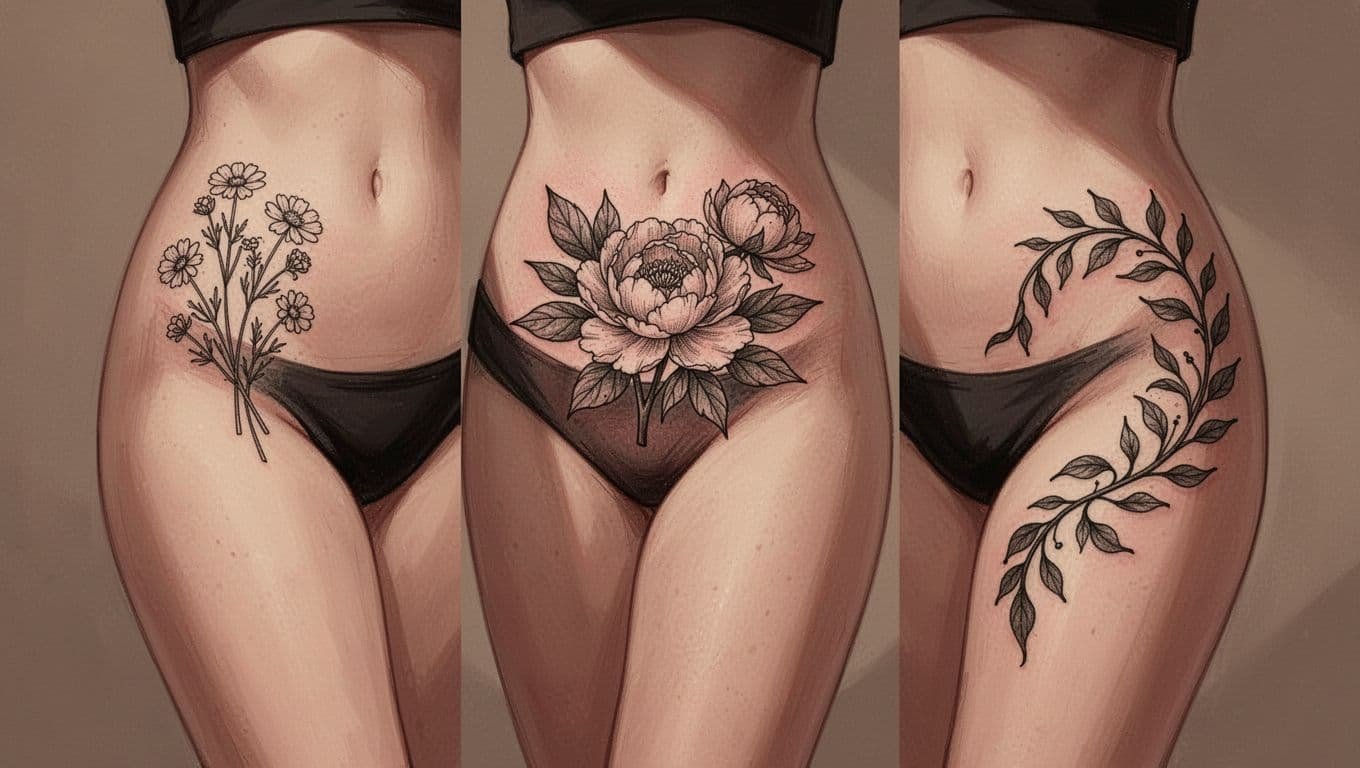
Three floral directions for upper-hip and thigh placement.
Delicate symbols and celestial designs with quiet meaning
Small symbols work well in a discreet area because you can keep them private beneath underwear or a waistband. Still, a design that is too tiny may blur or lose detail with age, so ask your artist for a durable size.
- A crescent moon with stars can create a calm, dreamy feeling. Place it near the front hip or side hip, with enough space between each star to prevent the design from becoming a dark cluster.
- A tiny sun can suggest hope, warmth, or a fresh start. A simple circle with short rays works best slightly above the waistband, where the shape remains visible without excessive fine detail.
- A minimalist butterfly can express freedom and personal change. Position it on the side hip or angle it toward the thigh, keeping the wings large enough for the outline to remain recognizable.
Script and personal symbols that tell your story
Words and dates can honor a person, milestone, value, or new beginning without revealing private details. Choose language that will still feel meaningful years from now, rather than selecting a phrase only because it is trending.
- A short word or mantra suits the front hip or upper side hip. Test several fonts first, then check the spelling and meaning carefully. Text should be large enough to remain legible on curved skin.
- A meaningful date in simple lettering can mark a birthday, anniversary, recovery, or turning point. Straightforward numerals often age better than ornate script, especially when the tattoo sits near a waistband.
- A small heart or lock-and-key design can carry personal meaning without showing sensitive details. Keep the shapes clean and avoid packing multiple tiny elements together.
Animal and nature tattoos with a little more personality
Animal designs give hip tattoos a stronger sense of movement. Your artist can shape a body along the hip curve, but wings and tails need enough room to avoid looking crowded.
- A fine-line snake can suggest transformation, protection, or independence. Let its body curve along the side hip, and choose an illustrative style if you want more character than a realistic design.
- A small bird in flight brings a sense of movement and freedom. Place it above the waistband or angle it toward the thigh, leaving open space around the wings.
- A butterfly or moth with delicate shading can feel mysterious, personal, or transformative. Minimalist work stays light, while illustrative shading adds texture without requiring photorealistic detail.
Ornamental hip pieces that follow the body’s curves
Ornamental tattoos can elongate the side of the body and create a more dramatic statement. Ask your artist to design around your natural shape instead of copying a reference image made on flat paper.
- A lace-inspired ornamental piece works as a small accent over the upper hip. Fine lines and repeating shapes create a decorative effect, but the pattern needs enough spacing to heal clearly.
- A fine-line mandala can sit over the hip bone or spread slightly toward the waist. A small version feels discreet, while a larger custom composition takes more time, costs more, and requires more healing care.
- A floral or celestial hip-to-thigh wrap creates the boldest effect. The full placement should follow the side of your body, with flowers, stars, or leaves arranged to guide the eye downward.
For long-term color and line quality, protect healed ink from ultraviolet exposure with SPF 30 or higher sunscreen. Before booking, browse personal wildflower spine tattoos for more ideas about graceful botanical placement.
How to Choose the Right Hip Tattoo Design and Placement
Choosing among hip tattoos for women becomes easier when you compare the design with your lifestyle, clothing, and comfort. The right placement should support the artwork, protect its details, and feel natural on your body.
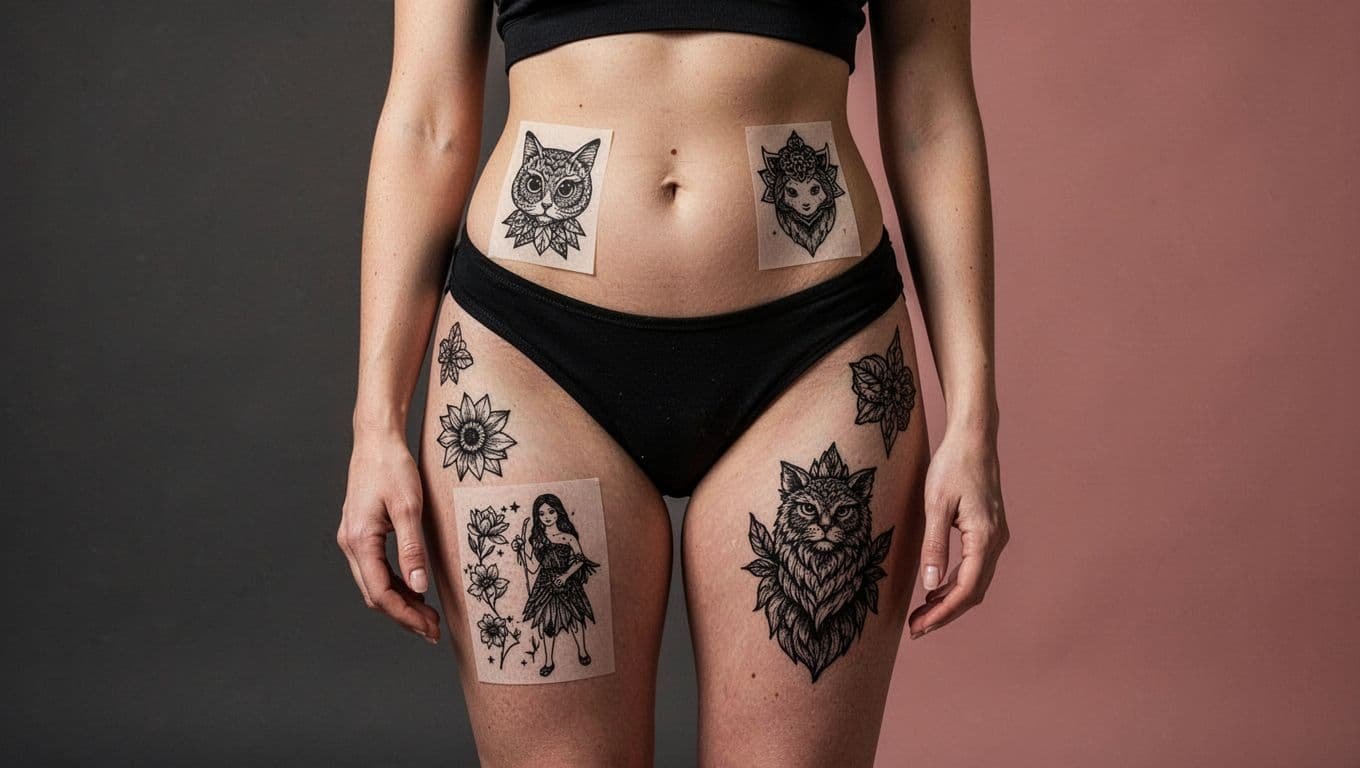
Compare the main hip tattoo placements
Each area creates a different look and level of visibility:
- Front hip: This placement sits near the front of the hip bone and works well for small symbols, script, butterflies, and simple florals. Underwear and low-rise jeans may reveal part of the tattoo.
- Side hip: A side-hip tattoo follows the body’s curve and offers more room for vines, snakes, moons, and ornamental shapes. High-waisted jeans and leggings usually cover it.
- Upper hip: Designs placed just below the waist can stay private under underwear, swimsuits, and everyday clothing. However, waistbands may rub against fresh ink.
- Back hip: This area feels more discreet and suits symmetrical designs, small florals, initials, or meaningful dates. Bikini bottoms and low-rise clothing can make it visible.
- Hip-to-thigh: Larger compositions can flow downward toward the upper thigh. This placement gives ornamental, floral, and animal designs space to move, but it may show more with shorts, swimsuits, and high-cut underwear.
Your clothing habits matter as much as the mirror view. Check where your underwear elastic, jeans, leggings, shapewear, and swimsuit edges sit. A tattoo placed directly beneath a tight waistband may face repeated friction while healing. The FDA also recommends confirming that tattoo equipment is clean and sanitary before your appointment, since unsterile needles can spread infection. Read its tattoo safety guidance before choosing a studio.
Match the design size to the placement
Size affects both visibility and how well the tattoo keeps its shape over time. Use these ranges as a starting point, then let your artist adjust them for your anatomy and chosen style:
- Micro designs under 2 inches suit simple hearts, stars, initials, and tiny symbols. Avoid packing several details into this space.
- Small designs around 2 to 4 inches work well for butterflies, single flowers, moons, and short words.
- Medium pieces around 4 to 6 inches allow more readable script, shading, leaves, and animal details.
- Larger compositions around 6 to 10 inches or more fit hip-to-thigh artwork, sweeping vines, mandalas, and layered ornamental designs.
Fine-line tattoos create an airy, delicate appearance, while blackwork offers stronger contrast and a bolder finish. Color makes flowers, birds, and celestial designs stand out, but it may need more sun protection after healing. Script should have enough space for every letter to remain clear. Ornamental work looks best when its repeated shapes follow the curve instead of fighting it.
Before booking, apply a temporary tattoo or tape a paper stencil to your skin. Wear your usual jeans, leggings, underwear, or swimsuit over it, then walk, sit, and bend. Take photos from several angles. This simple test shows whether the design feels too large, too hidden, or too close to a rubbing waistband.
Use this checklist before booking
Ask yourself:
- Does the design connect to a memory, value, relationship, or personal milestone?
- Does its style match the way you usually dress?
- How visible should it be with underwear, swimsuits, jeans, leggings, and low-rise clothing?
- Will clothing friction bother the area during healing?
- Could you add another tattoo beside it later?
- Will the image still feel right if your taste changes?
For more symbolism, browse these love tattoo meanings before finalizing a design. A thoughtful stencil test and an honest placement check can turn a beautiful reference image into a tattoo that truly feels like yours.
What Hip Tattoos Feel Like: Pain, Skin, and Healing Time
Hip tattoos for women can feel manageable, tender, or surprisingly intense, depending on your body and the exact placement. Pain varies with your sensitivity, the tattoo’s size, the session length, and your artist’s technique. Even your energy level matters. A long appointment often feels harder when you’re tired, hungry, or tense.
Where hip tattoos hurt the most
The outer hip usually has softer flesh and may feel less sharp than areas close to the hip bone. Many people describe the sensation as a steady scratching or hot vibration. As the needle moves toward the iliac crest, the upper edge of the hip bone, the feeling can become sharper and more intense because there is less cushioning.
Placement also changes how much the skin moves during the appointment. A design near the front hip may feel sensitive when you shift position, while a side-hip or hip-to-thigh tattoo may require longer stretches of stillness. Fine-line work can take less time, but repeated passes over the same area may increase irritation. Larger shaded or colored pieces usually create more tenderness because they cover more skin.
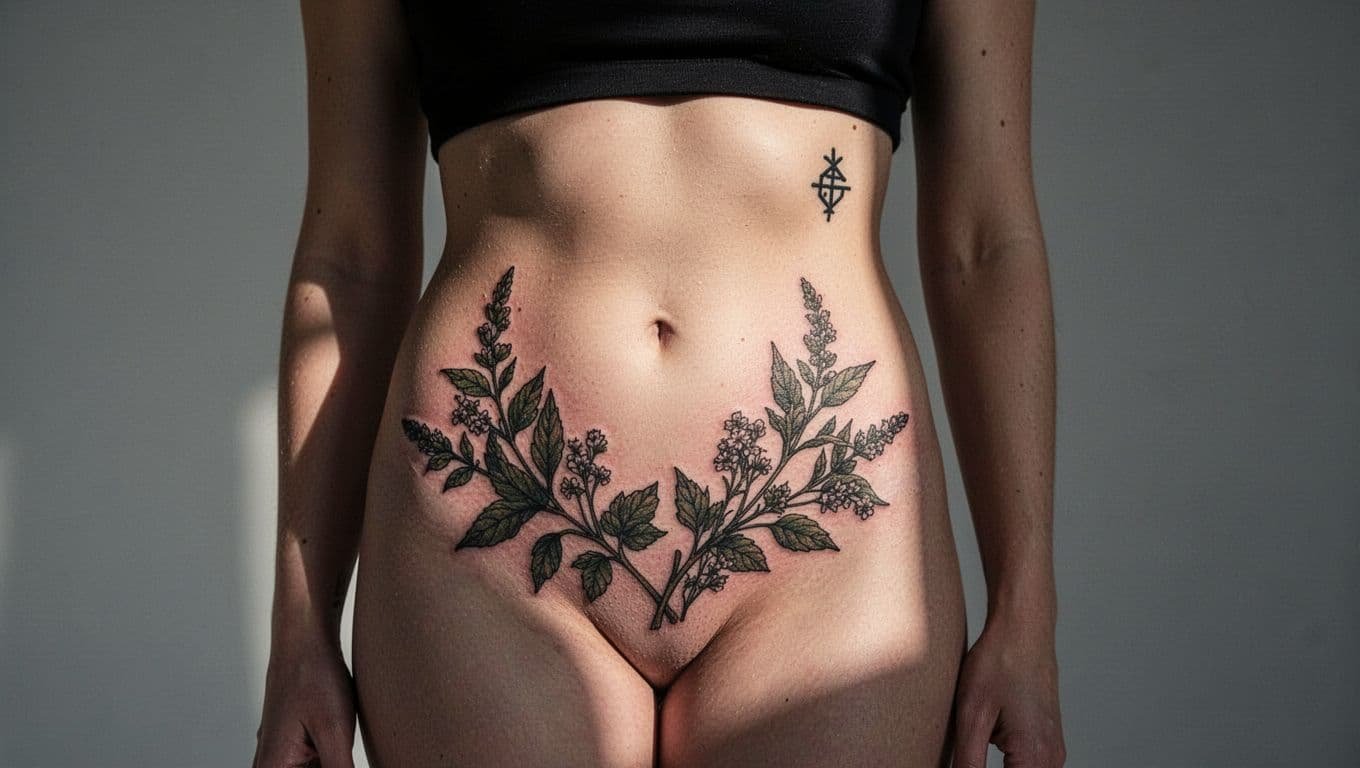
Outer-hip flesh often feels softer than placement directly over the hip bone.
Before your appointment, tell your artist if the pain becomes difficult to manage. You can also ask for short breaks. A calm, experienced artist will help you adjust your position without rushing you.
What healing feels like
Most tattoos take about two weeks to heal, although deeper layers of skin may continue recovering for two to four weeks. The surface can look settled before the skin underneath has fully repaired itself, so don’t treat a smooth-looking tattoo as completely healed.
During the first few days, mild warmth, tenderness, redness, and swelling are common. You may also notice a small amount of clear fluid. Later, the tattoo can itch, peel, flake, or form light scabs. These symptoms should gradually improve rather than become stronger. Follow the American Academy of Dermatology’s tattoo-care advice, including gentle washing, moisturizing, and avoiding direct sun while the skin heals.
Contact a healthcare professional if pain worsens, redness spreads or becomes darker, swelling increases, or the area produces pus. Fever, chills, foul-smelling drainage, open sores, or unusual swelling also need medical attention. The AAD explains more about warning signs of tattoo skin reactions.
How to make the appointment easier
Eat a proper meal beforehand and drink water throughout the day. Wear loose, breathable clothing that won’t press against the stencil or fresh tattoo. Afterward, plan a low-friction day with minimal walking, exercise, sweating, and waistband contact. Avoid swimming and soaking the tattoo until it heals, then give your skin time to recover before judging the final result.
Hip Tattoo Aftercare When Clothing and Waistbands Rub
A healing hip tattoo needs clean skin, light moisture, and as little rubbing as possible. Because jeans, leggings, underwear, and waistbands can sit directly over the area, clothing choices matter just as much as washing. Follow your tattoo artist’s bandage instructions first, since the recommended removal time depends on the dressing used.
Clean and moisturize the tattoo gently
Once your artist says it’s time to remove the bandage, wash your hands before touching the tattoo. Then wash the area gently twice a day with mild, fragrance-free soap and warm water. Use clean fingertips rather than a washcloth, sponge, or exfoliating glove. Scrubbing can irritate the skin and disturb the healing surface.
Pat the tattoo dry with a clean paper towel or soft, freshly washed towel. Give it a few minutes to air-dry, then apply a thin layer of your artist-recommended moisturizer. A simple, fragrance-free, water-based lotion is usually appropriate. Heavy layers can trap moisture, so the tattoo should look lightly moisturized rather than greasy. The American Academy of Dermatology’s tattoo-care guidance also recommends a water-based lotion or cream for dry tattooed skin.

Loose, breathable clothing helps reduce pressure and rubbing around a healing hip tattoo.
Keep waistbands and fabric from rubbing
Loose, breathable clothing gives the skin room to recover. Choose soft cotton pajamas, relaxed shorts, roomy dresses, or loose lounge pants during the first several days. Avoid anything that presses repeatedly against the tattoo, especially tight jeans, leggings, shapewear, and underwear with firm elastic.
If your underwear edge crosses the tattoo, choose a softer style that sits above or below the area. Also check your sleepwear, since a twisted waistband can rub the same spot for hours. Change out of damp clothing after exercise, and avoid workouts that create heavy sweating or repeated friction until the skin settles.
A waistband that feels only mildly irritating can still cause repeated rubbing over several hours, so move it away from the tattoo whenever possible.
Don’t pick peeling skin or scabs, even when the itch feels distracting. Avoid exfoliating products, scrubs, shaving over the area, and any moisturizer that stings. Contact a healthcare professional if redness spreads, pain worsens, swelling increases, or drainage smells unpleasant.
Follow the healing process day by day
Healing doesn’t follow an identical schedule for everyone, and larger or heavily shaded hip tattoos may stay tender longer.
- Days 1 to 3: The tattoo may feel warm, sore, swollen, or slightly wet. Follow the bandage instructions, wash gently when directed, and keep clothing from touching the fresh ink tightly.
- Days 4 to 7: Tenderness often begins to ease, while itching, dryness, or light peeling may appear. Continue gentle washing and thin moisturizer applications.
- Days 8 to 14: Flaking may continue, and the tattoo can look dull or uneven as the surface settles. Let loose skin fall away naturally.
- After two weeks: The surface may look healed, but deeper skin can still recover. Keep avoiding friction, soaking, and irritating products until the skin feels fully normal.
Don’t soak the tattoo in a pool, hot tub, bathtub, or open water while it heals. Protect fresh ink from direct sun with loose clothing, but wait until the tattoo has fully healed before applying sunscreen. Afterward, use broad-spectrum, water-resistant SPF 30 or higher and reapply it at least every two hours when outdoors.
Finding a Safe Artist and Planning the Tattoo Cost
The right artist affects more than the final picture. Their experience determines how well the design follows your hip, how clean the lines stay, and how comfortably you move through the healing process. Before you compare prices, compare portfolios, studio standards, and communication.
Review healed work before booking
Fresh tattoos often look impressive because the ink is dark and the skin is slightly swollen. Healed tattoos show the artist’s real skill. Look for photos taken several months after the appointment, not only freshly finished pieces.
Pay attention to examples that match your planned design:
- Fine lines should remain clean without looking broken, blurry, or uneven.
- Lettering should stay readable, with consistent spacing and carefully shaped characters.
- Florals need balanced petals, smooth curves, and shading that has not turned muddy.
- Curved placements should follow the hip naturally instead of appearing distorted when the body moves.
- Skin tones similar to yours can help you judge how black ink, color, and shading may heal on your skin.
Ask whether portfolio photos show the artist’s own work. You can also request healed examples during a consultation. A trustworthy artist will discuss how size, pigment, sun exposure, and skin texture affect the finished tattoo.
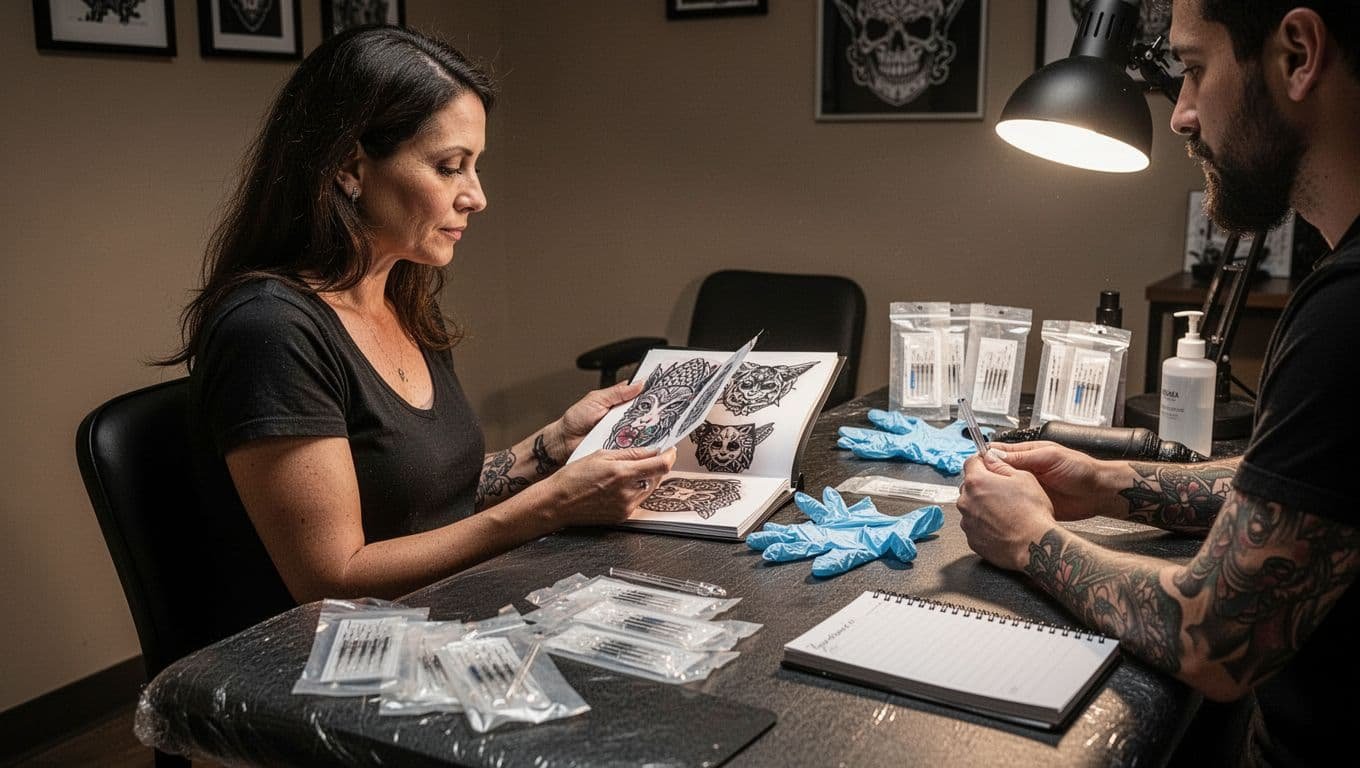
Reviewing healed work and studio practices helps you choose with confidence.
Check the studio’s safety practices
Choose a reputable studio that follows your state and local licensing or permitting rules. Requirements differ across the United States, so ask to see current credentials or learn how to verify them through the relevant local health department.
During your visit, look for a clean, organized setup. The artist should open single-use needles in front of you, wear fresh gloves, and use disposable ink caps and barriers. Reusable tools should undergo proper sterilization, usually with an autoclave. Practical infection-control guidance also emphasizes disposable needles, new gloves, and sterilized equipment for each client, as explained in this tattoo studio safety guide.
Your consultation should include clear consent practices. The artist needs to explain the placement, stencil, expected discomfort, estimated time, and aftercare before starting. You should receive written aftercare instructions and have enough time to ask questions. Leave if anyone pressures you, avoids safety questions, or refuses to explain the process.
Build a realistic tattoo budget
Tattoo prices vary by city, artist demand, detail, color, and session length. In the US, many studios set a shop minimum of about $80 to $150, even for a tiny design. Established artists often charge around $150 to $250 per hour, while high-demand artists may charge $300 or more per hour.
Use these ranges for planning rather than treating them as a guaranteed quote:
| Tattoo type | Common planning range |
|---|---|
| Tiny flash design | $150 to $250 |
| Small custom hip tattoo | $250 to $600 |
| Medium custom tattoo | $600 to $1,500 |
| Large hip-to-thigh piece | $1,200 to $2,500 or more |
Before paying a deposit, ask whether the artist charges by the hour or by the piece. Also confirm the deposit amount, shop minimum, number of design revisions, touch-up policy, and extra charges for color changes or major alterations. Large custom hip-to-thigh tattoos may require multiple appointments, so request an estimated total budget.
A low quote can look tempting, but skill, hygiene, and body-specific design matter more than the cheapest price. Your tattoo will live on your skin for years, so choose an artist whose work and standards make you feel safe.
Conclusion
These 15 hip tattoo ideas show how personal this placement can be. A wildflower, moon, butterfly, meaningful word, animal, or ornamental piece can follow the body’s curve while holding a memory, value, or milestone close. The strongest choice is a design with lasting meaning, sized so its lines and details remain clear as the tattoo ages.
Before booking, test the placement with a temporary stencil and check how your usual clothing fits around it. Choose a skilled, hygienic artist who can adapt the artwork to your shape, explain aftercare, and show healed examples of their work. Budget for quality rather than choosing the lowest price, especially when the tattoo includes fine detail, shading, color, or a larger hip-to-thigh composition. During healing, loose clothing can help reduce friction from waistbands and underwear.
A hip tattoo can stay private beneath everyday clothing or become a confident statement when you choose to show it. There is no correct level of visibility, size, style, or symbolism. Save your favorite references, discuss the concept and placement with your artist, and give yourself time before booking. The most beautiful hip tattoo is the one that feels unmistakably like your own.
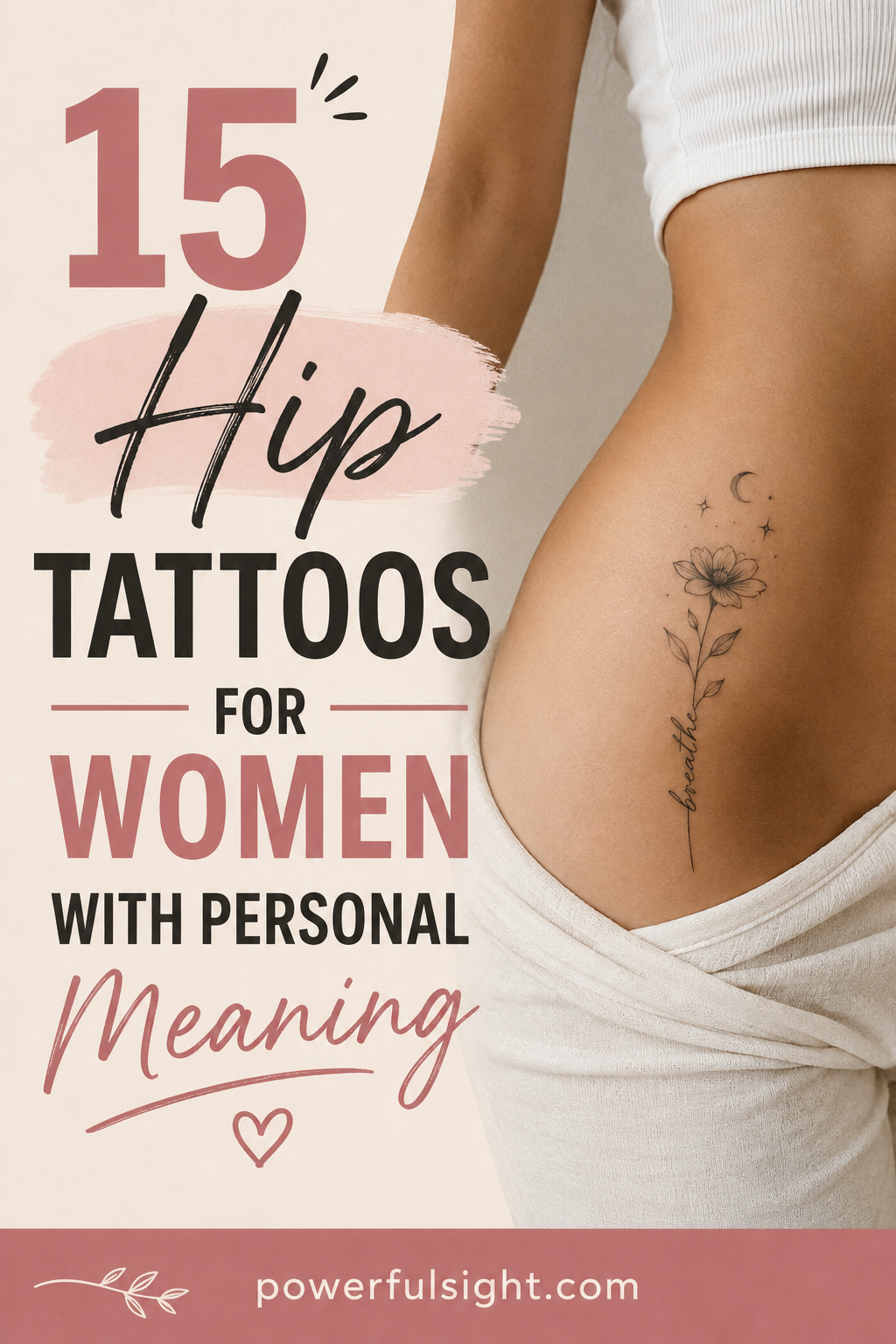
Save the pin for later

- 25 Gothic Tattoo Ideas for a Bold, Dark Look - 21/09/2026
- 34 Black Fine Line Tattoo Ideas for a Delicate Look - 21/09/2026
- 23 Micro Tattoo Ideas for Women With Meaning - 21/09/2026

