Black fine line tattoos appeal to anyone who wants ink that feels clean, delicate, and personal without taking over the skin. Their simple black outlines are easy to customize, whether you prefer a tiny flower, meaningful symbol, graceful animal, or short piece of script.
This collection features 34 ideas across floral, celestial, animal, symbolic, geometric, and script styles, with inspiration for both subtle and more detailed designs. Fine-line work needs thoughtful spacing and an experienced tattoo artist because thin lines can soften or fade faster than bold designs. Placement also affects how well the tattoo ages, especially in areas exposed to friction and frequent movement, so this tattoo placement guide can help you compare suitable locations.
As you browse, you’ll also find practical guidance on pain, longevity, aftercare, and choosing a design that fits your style and daily routine. Start with these black fine line tattoo ideas, then narrow your favorites by size, placement, and personal meaning.
34 Black Fine Line Tattoo Ideas for a Delicate, Personal Look
Black fine line tattoos stay delicate when the design has open skin, clean spacing, and details that match its size. These ideas cover botanical, celestial, animal, symbolic, script, and ornamental styles, with options for personal meaning and customization.
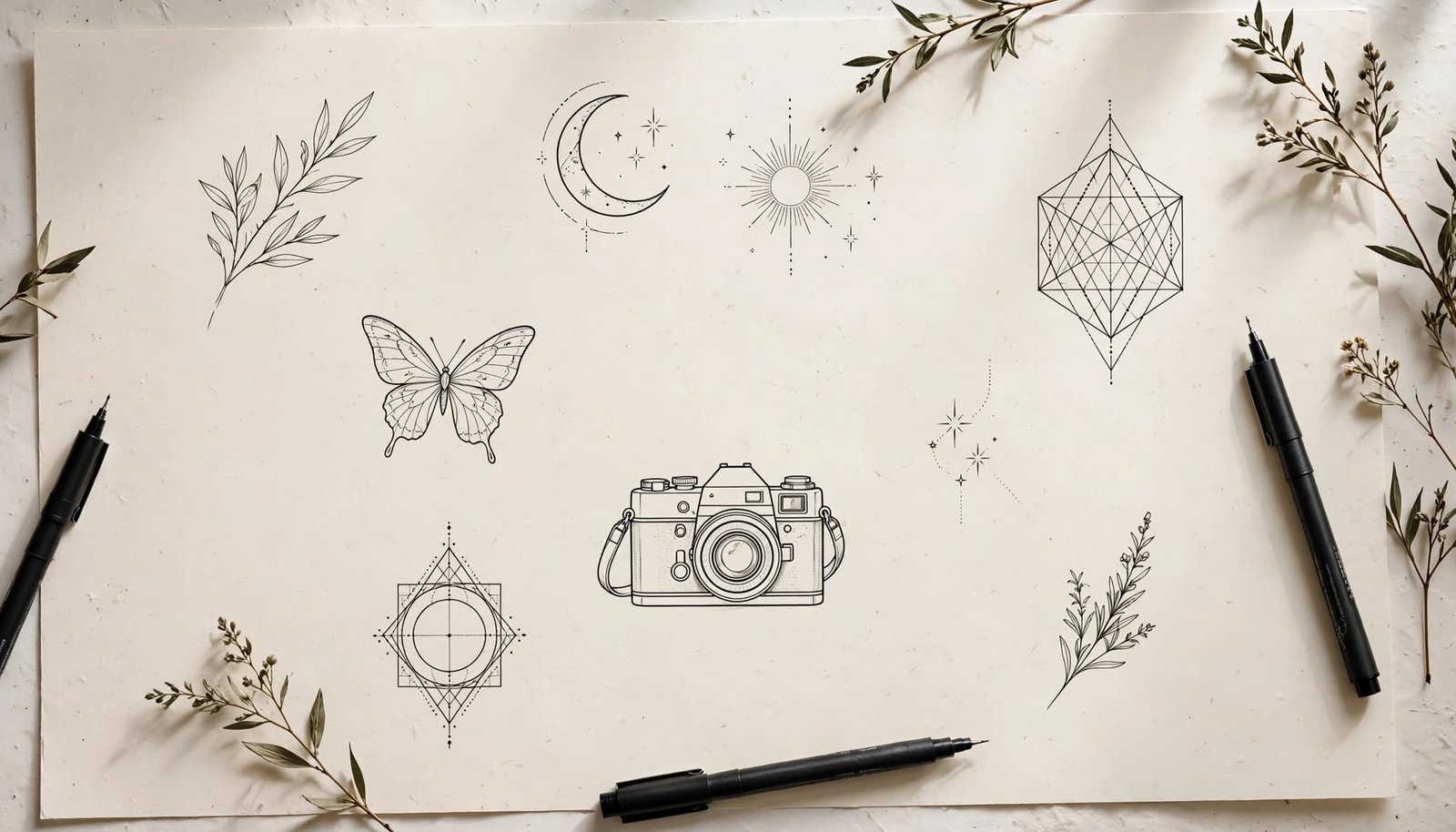
Botanical and Celestial Designs That Stay Light and Elegant
Flowers can honor growth, memory, love, or a favorite season. Celestial tattoos may suggest hope, change, curiosity, or a sense of direction. Open skin and thin stems help each design remain readable instead of turning into a dense black patch.
- Wildflower sprig: A slim stem with scattered petals works well as a small tattoo; add a birth flower or tiny date.
- Fine line rose: An airy rose outline feels romantic and refined; customize it with initials hidden inside one leaf.
- Peony: Layered petals create a softer, fuller look, so leave extra space; add a meaningful birth month.
- Lilies of the valley: Small bell-shaped blooms suit the ankle or wrist; include a few delicate dots for movement.
- Forget-me-nots: Tiny clustered flowers can honor memory or someone special; add one blue-inspired outline without using color.
- Delicate flower bouquet: Several thin stems create a personal arrangement; choose flowers linked to family members or favorite seasons.
- Crescent moon with stars: This compact design suggests hope and guidance; customize it with initials or three small dots.
- Moon phases: A horizontal sequence needs clear spacing between each phase; add a short date beneath the center moon.
- Constellation: Fine stars connected by restrained lines make a meaningful small tattoo; use your zodiac constellation for personalization.
- Tiny planet: A simple ringed planet suits the wrist or collarbone; add a few orbiting dots without crowding it.
- Sun and moon pairing: Opposite shapes can express balance or change; personalize the sun with short rays or a tiny initial.
- Simple galaxy doorway: An arched doorway filled with sparse stars needs more room than a basic planet; add one short date inside.
For placement inspiration, compare these with other fine-line hip tattoo ideas, especially when a design needs a longer vertical shape.
Animals and Everyday Objects With Personal Meaning
A skilled artist can suggest texture and movement with a few carefully placed lines. Tiny symbols suit wrists, fingers, ankles, and behind the ear, while detailed animals and landscapes need enough room to keep their features distinct.
- Dragonfly: Transparent wings and a slim body suggest freedom and change; add four tiny dots around it.
- Snake: A curved outline can symbolize transformation or protection; extend its body along the forearm for better readability.
- Deer: Simple antlers and a calm profile suggest gentleness and nature; choose a larger size to preserve facial details.
- Butterfly: Open wings represent transformation and freedom; add a small flower beneath it for a personal connection.
- Small bird: A single flying bird feels light and mobile; include a short line of dots to suggest its path.
- French bulldog outline: A recognizable ear and muzzle shape can honor loyalty; use a slightly larger size for accurate features.
- Mermaid silhouette: A flowing tail suggests imagination and independence; place it vertically and add a few wave lines.
- Camera: A simple camera outline suits travelers and photographers; add a tiny initial inside the lens.
- Shell: Curved ribs create texture with very few lines; customize it with a small pearl or date.
- Hourglass: This symbol speaks to time and change; leave space around the frame so its shape stays crisp.
- Paper boat with waves: A small boat suggests travel and adventure; add two or three open wave lines beneath it.
- Mountain landscape: Layered peaks connect the design to nature and exploration; choose the forearm or calf instead of an overly tiny placement.
The FDA notes that tattoos can fade and that pigment may blur when placed too deeply, so precise technique and sensible sizing matter for fine line work. Its tattoo safety guidance also recommends choosing a reputable studio and watching for unusual healing problems.
Minimal Symbols, Script, and Ornamental Linework
Simple symbols are easy to personalize with initials, dates, or decorative dots. Larger mandalas and bands need more room, while geometric designs depend on even spacing and precise stencil work.
- Short meaningful word: Keep lettering large enough to read after healing; verify spelling, font size, and the exact typeface first.
- Personal mantra: A short phrase needs more room than one word; test the stencil on your skin before booking.
- Fine line heart: A single outline works almost anywhere; add an initial or tiny dot inside the shape.
- Tiny dagger and snake: This compact pairing suggests courage and transformation; keep the snake’s curves open around the dagger.
- World map: A thin continental outline represents travel and connection; choose the forearm or ribs so small shapes don’t merge.
- Camera aperture or geometric lens: Repeated wedges create a precise focal point; add a tiny star in the center.
- Fine line mandala: Symmetrical petals create ornamental balance, but the design needs enough room for clean spacing.
- Fibonacci-inspired geometric shape: Curved proportions create a thoughtful mathematical pattern; use a larger placement to preserve accuracy.
- Ornamental armband: Repeating leaves, dots, or arches can form delicate jewelry; leave consistent gaps around the entire band.
- Abstract sun or wave symbol: A few curved lines create a personal symbol of energy or calm; add initials or a meaningful date.
Script deserves extra care because cramped letters can lose clarity as the ink softens. Ask your artist to review the stencil at the actual size, then choose a placement that gives every line room to breathe.
How to Choose a Black Fine Line Tattoo That Will Age Well
A beautiful reference photo is only the starting point. The best black fine line tattoo also suits your meaning, body, routine, skin movement, and willingness to protect it from the sun or schedule a touch-up later.
Fine line does not mean every tattoo should be extremely small. Tiny details can crowd together as the ink settles, while a slightly larger design may keep its shape and spacing for much longer. Leave open skin between elements, simplify busy concepts, and choose a size that gives each line room to remain readable.
Match the Design to Its Meaning and Your Daily Style
Start with the reason you want the tattoo. It might connect to a memory, personal value, loved one, favorite place, life change, or image that has stayed with you. Once you identify that idea, choose a motif that expresses it without requiring too many details.
For example, you could pair:
- A birth flower with a crescent moon to connect family and personal growth.
- A mountain range with a meaningful date to honor a trip or turning point.
- A snake with a floral frame to combine transformation with softness.
- A small bird with a line of dots to suggest freedom, movement, or a new beginning.
Two compatible elements often feel more personal than a copied trend. However, combining too many symbols can make a fine line tattoo look crowded. If the concept needs several tiny features, ask the artist which details can disappear without changing the main meaning.
Your lifestyle matters as much as the symbolism. Decide whether you want the tattoo to be visible at work, easy to cover, bold enough to notice, or barely apparent. A delicate design on the forearm makes a different daily statement than the same design on the ribs or upper thigh. For more inspiration, browse these unique fine-line tattoo ideas and note which concepts still feel personal rather than simply attractive.
Bring reference images to your consultation, but don’t ask an artist to copy a design without adapting it to your body. Skin curves, muscle shape, and available space can change the way a motif looks. A skilled artist may redraw the reference with cleaner spacing, a better angle, or fewer details so it follows your natural lines.
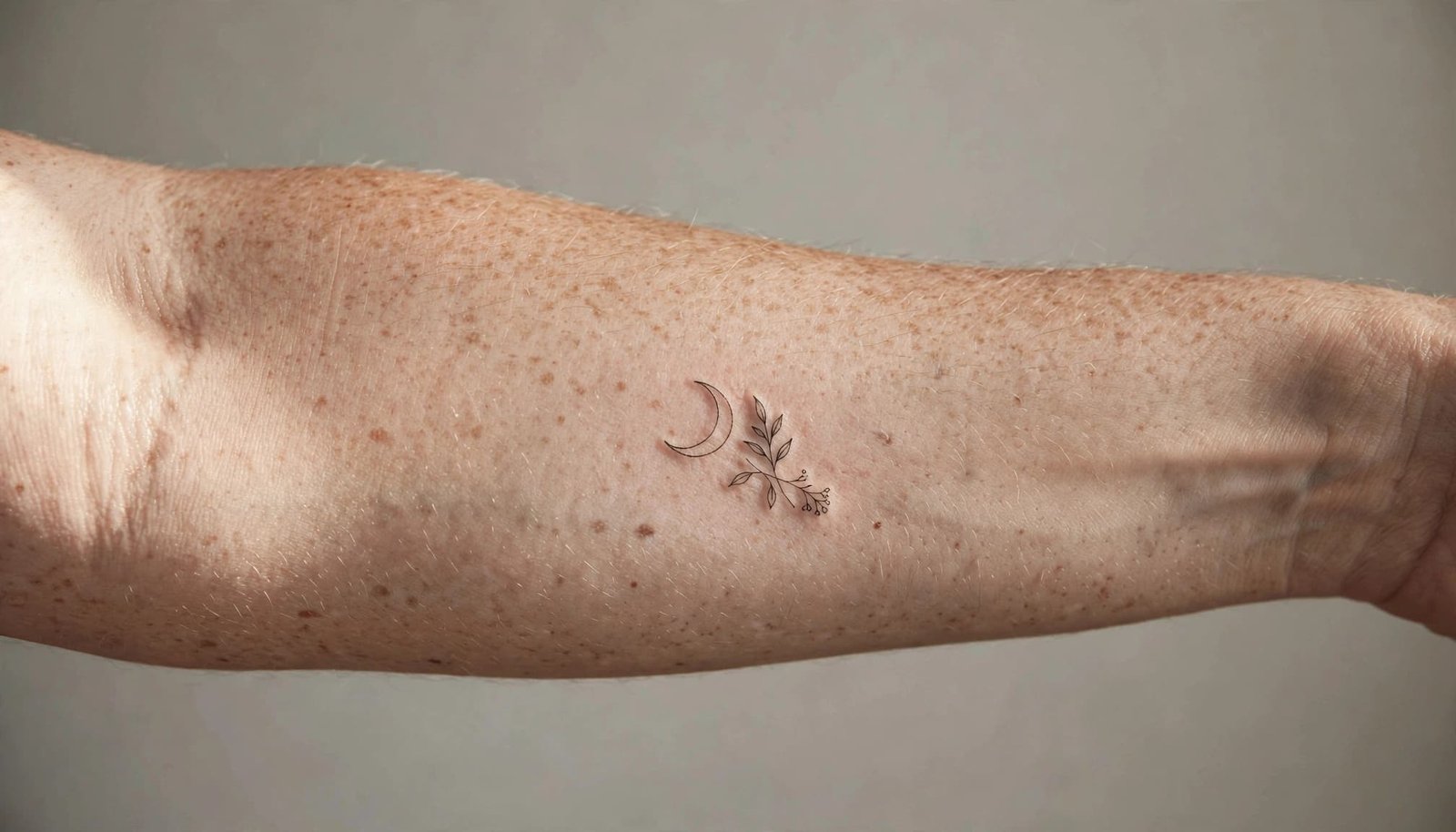
Choose a Placement That Supports Detail and Long-Term Clarity
Placement affects readability, comfort, sun exposure, and how often the skin bends or rubs against clothing. No location is perfect for everyone, so compare the design’s shape with your normal routine.
The forearm and upper arm often provide stable, readable surfaces for botanical designs, animals, dates, and vertical symbols. The inner bicep offers more privacy and usually protects the tattoo from constant sun, although the skin can feel sensitive. A shoulder blade or upper back gives larger designs room to breathe, while the thigh and hip suit private pieces with longer curves or more detail.
The collarbone creates an elegant horizontal placement, but the area sits close to bone and may feel more painful. Ribs and the spine can also be sensitive for the same reason. They work well for narrow designs, yet the natural curve and movement of the body may require careful stencil adjustments.
Wrists can suit simple symbols, short words, and small flowers, but frequent bending and washing may affect delicate lines. Ankles offer a graceful location for small vertical designs, bands, and botanical motifs. Browse these ankle tattoo ideas if you want inspiration for a design that follows the leg without becoming too wide.
Hands, fingers, and feet need extra consideration. They face friction, movement, washing, and sun exposure, so fine line work in these areas may fade or need maintenance sooner. Ask whether the artist regularly tattoos that placement before choosing a design with very small details.
A placement that looks perfect in a photo may need a different size or angle on your body. Always review the stencil while standing, sitting, and moving naturally.
Check the Artist’s Healed Work Before Booking
Fresh tattoos often look darker and sharper than settled tattoos. Ask to see healed examples, ideally several weeks or months old, so you can judge how the artist’s line weight, spacing, and small details hold up. The skin can look lighter as it heals, and the final appearance may take several weeks to settle.
During your consultation, ask about the needle configuration, expected line weight, studio sterilization, and touch-up policy. A reputable artist should explain how they protect your skin, dispose of single-use materials, and provide aftercare instructions. The American Academy of Dermatology recommends broad-spectrum, water-resistant SPF 30 or higher after the tattoo has fully healed because ultraviolet light can fade tattoo ink. While healing, protect the area with clothing and avoid applying sunscreen to open or peeling skin.
Your artist should also discuss skin movement, sun exposure, and the design’s realistic lifespan. Touch-ups are sometimes part of fine line tattoo care, especially in exposed or high-friction areas. Choosing a slightly larger, simpler design now may reduce the need for repeated corrections later.
Fine Line Tattoo Pain, Longevity, and Aftercare
Fine line tattoos are often easier to tolerate than heavy blackwork because artists use smaller needle groupings and create less trauma in the skin. However, pain, healing, and longevity still depend on the placement, design, technique, and your daily routine.
What Makes Fine Line Tattoos Fade or Blur Faster
Ultraviolet exposure is one of the biggest causes of premature fading. Sunlight breaks down tattoo pigment over time, which can make black ink look gray and reduce the contrast between delicate lines. Friction also matters. Tight clothing, watchbands, shoes, frequent shaving, and repeated rubbing can wear down tattoos placed on the hands, feet, ankles, wrists, and waist.
Frequent movement may affect clarity as well. Skin over joints, fingers, ribs, and the spine bends and stretches throughout the day, so fine details can soften sooner in those areas. Sweat and repeated washing may add irritation during healing, especially when the tattoo sits on an exposed or high-contact part of the body.
Design choices also influence how well a tattoo ages. Poor spacing can cause nearby lines to merge as the ink settles. Overly tiny lettering, miniature faces, dense shading, and crowded symbols may look impressive in a fresh tattoo but lose definition when the skin heals. Inconsistent technique can create uneven line depth, patchy pigment, or unnecessary skin trauma.
Some softening is normal and doesn’t automatically mean the tattoo was done badly. Fresh ink often looks darker, sharper, and more precise than it will after the surface heals. For that reason, judge an artist by healed results, not only by fresh photographs taken immediately after an appointment.
An experienced fine line artist may increase the line weight slightly, simplify small details, or recommend a larger design. Those changes give the ink more space and help the main shape remain readable. Good aftercare supports that result, but it can’t fully correct a design that was too small, too crowded, or placed where constant friction breaks down clarity.
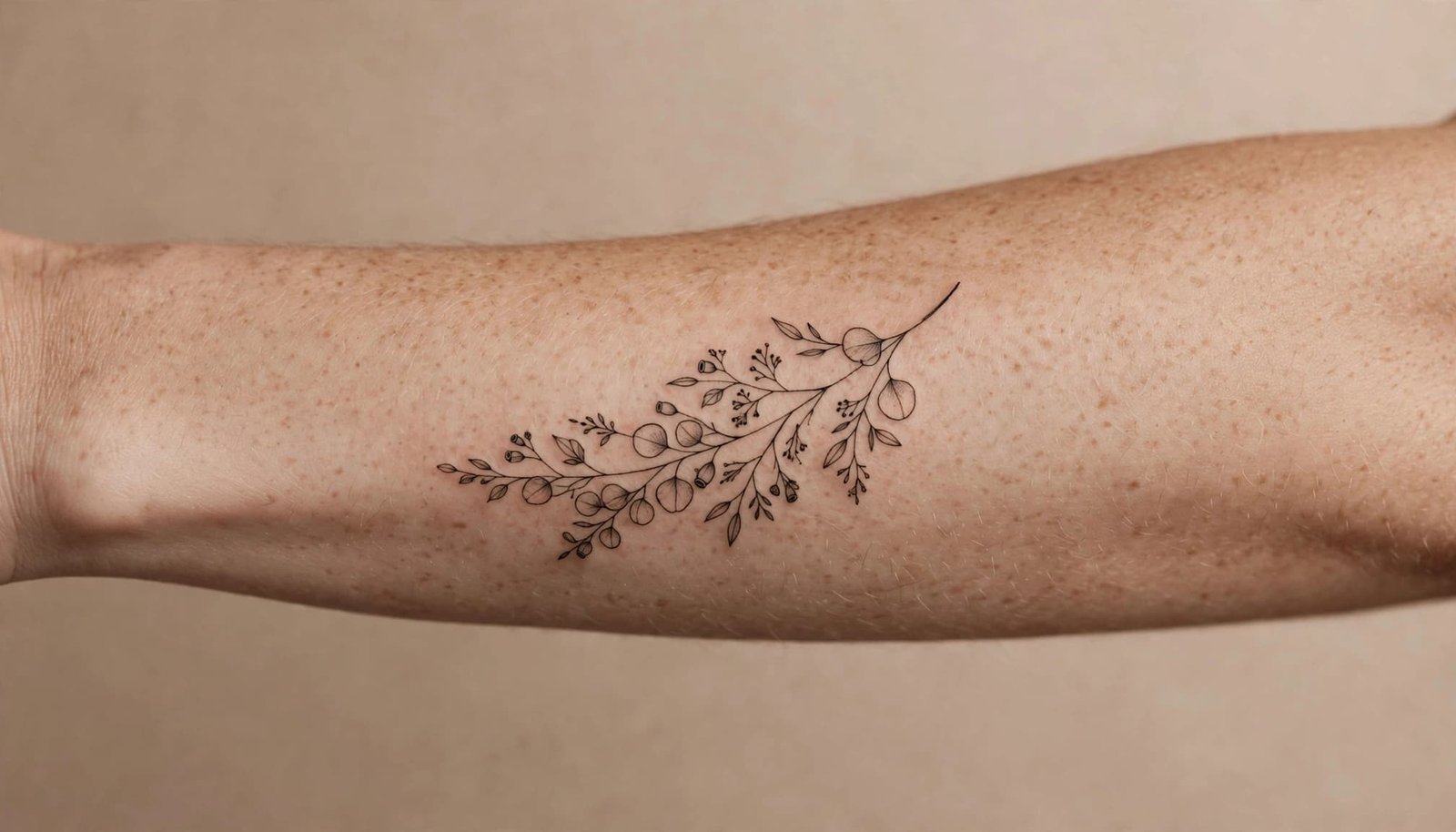
How Painful Is a Fine Line Tattoo?
Most people describe fine line tattooing as a scratchy, warm, or vibrating sensation rather than intense pressure. A general pain range is 3 to 5 out of 10, although your personal tolerance and the length of the appointment can change that experience.
Placement usually matters more than the style itself. Ribs, collarbones, sternum, and the spine may feel sharper because they have less padding and sit closer to bone. The outer upper arm and thigh are often easier for many clients. You can also review this guide to what getting a tattoo feels like before choosing a sensitive placement.
How Long Do Fine Line Tattoos Last?
Well-cared-for fine line work may stay defined for roughly five to ten years, but no tattoo has a fixed expiration date. Thin lines can soften sooner than bold lines, especially when they sit on the fingers, hands, feet, ankles, or other areas exposed to friction and sunlight.
Touch-up timing varies widely. Some tattoos need attention after six to twelve months, while others remain attractive for several years before the lines lose noticeable contrast. Your artist can give a more useful estimate after considering the design size, skin movement, ink saturation, placement, and expected sun exposure.
Basic Aftercare for Clearer Healing
Follow your artist’s bandage instructions because products and application methods differ. Once you’re told to remove the covering, wash the tattoo gently with clean hands and mild soap, then pat it dry. Apply only a thin layer of the recommended moisturizer. Heavy products can trap moisture and irritate the area.
Avoid picking flakes or scabs, even when the tattoo feels itchy. Limit swimming, hot tubs, baths, and soaking while the skin heals. Surface healing often takes two to four weeks, while deeper settling can continue for longer.
After the tattoo has fully healed, protect it with broad-spectrum, water-resistant SPF 30 or higher. The American Academy of Dermatology’s tattoo care guidance recommends applying sunscreen before sun exposure and reapplying it regularly outdoors.
Tattoo Safety and Warning Signs
Choose a licensed or properly regulated studio that uses sterile, single-use needles and follows clear hygiene procedures. Tell the artist about allergies, sensitive skin, medications, or previous reactions before the appointment. Tattoo inks can cause allergic reactions, and contaminated equipment or ink can cause infection.
Mild redness, tenderness, peeling, and itching can occur during normal healing and should gradually improve. Increasing pain, spreading redness, warmth, pus, foul-smelling drainage, fever, or red streaks require medical attention. Seek urgent care for trouble breathing, widespread hives, or facial swelling, which may indicate a serious allergic reaction.
Conclusion
These 34 black fine line tattoo ideas show how a simple outline can carry personal meaning without taking over your skin. Whether you prefer a flower, animal, celestial symbol, script design, or geometric motif, choose a concept that still feels right beyond the initial trend.
Save a few favorite designs, then compare their spacing, size, and placement before booking. Review healed work from qualified artists, ask how the tattoo may age, and request a custom sketch that suits your body instead of copying a reference blindly. If you’re considering a high-friction location, browse these small black finger tattoos with realistic maintenance in mind.
The strongest choice balances meaning, clean spacing, suitable placement, artist skill, and ongoing sun protection or touch-ups. A simple black fine line tattoo can be deeply personal without being complicated.
Save the pin for later

- 25 Gothic Tattoo Ideas for a Bold, Dark Look - 21/09/2026
- 34 Black Fine Line Tattoo Ideas for a Delicate Look - 21/09/2026
- 23 Micro Tattoo Ideas for Women With Meaning - 21/09/2026

