A fine black vine begins at the base of the back, curls around each vertebra, and opens into small leaves just below the neck. Along the spine, a tattoo can look delicate at first glance, yet its length and placement give it a bold presence that changes with every movement.
Choosing the right design takes more than finding a beautiful reference photo. The best spinal tattoo balances personal meaning with your body shape, readable details, and an artist’s ability to work with a narrow, curved placement. Fine-line botanicals can feel soft and organic, while ornamental patterns add symmetry and a jewelry-like finish. Celestial symbols, meaningful script, and bolder artwork also work well when the scale and line weight suit your back.
These Elegant Spinal Tattoo Ideas for Every Style will help you compare graceful details, stronger compositions, and practical placement choices before you book your appointment. For visual inspiration, browse this spine tattoo design video before exploring the styles that fit your story.
How to Choose Elegant Spinal Tattoo Ideas for Every Style
Elegant spinal tattoo ideas work best when the design feels natural on your back, fits your daily life, and leaves enough room for the artwork to age well. Before choosing a reference image, consider the tattoo’s length, visibility, line weight, and the amount of movement across your skin.
Match the Design Length to Your Back and Your Lifestyle
A neck-to-mid-back tattoo creates a clear vertical statement. Fine-line vines, ornamental patterns, celestial symbols, and meaningful script can follow the spine from beneath the neck toward the middle back. This placement draws attention to the body’s center and often looks striking with an open-back dress, a swimsuit, or a low-backed top.
Upper-back designs offer a little more flexibility. A small floral cluster between the shoulder blades can feel balanced without covering the entire back. You might also place a short symbol just below the neck, where hair can conceal it during work or formal occasions. Since the shoulder blades move when you lift your arms, ask the artist to check how the design sits while your shoulders are relaxed and raised.
Mid-back tattoos usually provide a strong balance between visibility and privacy. Clothing often covers this area, but a cropped top or open-back style can reveal the design. A vertical branch, a short line of lettering, or a symmetrical ornamental motif can fit neatly here without requiring a long appointment or a large commitment.
Lower-back tattoos create a more private option, especially when the design sits near the waistline. A small flower, moon, star, or minimalist emblem may appear only with swimwear, low-rise clothing, or a backless outfit. The placement also connects with the renewed interest in lower-back tattoos, but the design can feel polished when you choose careful spacing and a refined scale.
Your lifestyle matters as much as your preferred style. Long hair may hide an upper-back tattoo, while short hair can make it visible every day. Swimwear, gym clothing, formal dresses, and workplace dress codes may change how often others see it. Before booking, ask your tattoo artist to stencil or digitally test the design at the intended size. A beautiful sketch can look crowded when reduced, or too faint when enlarged.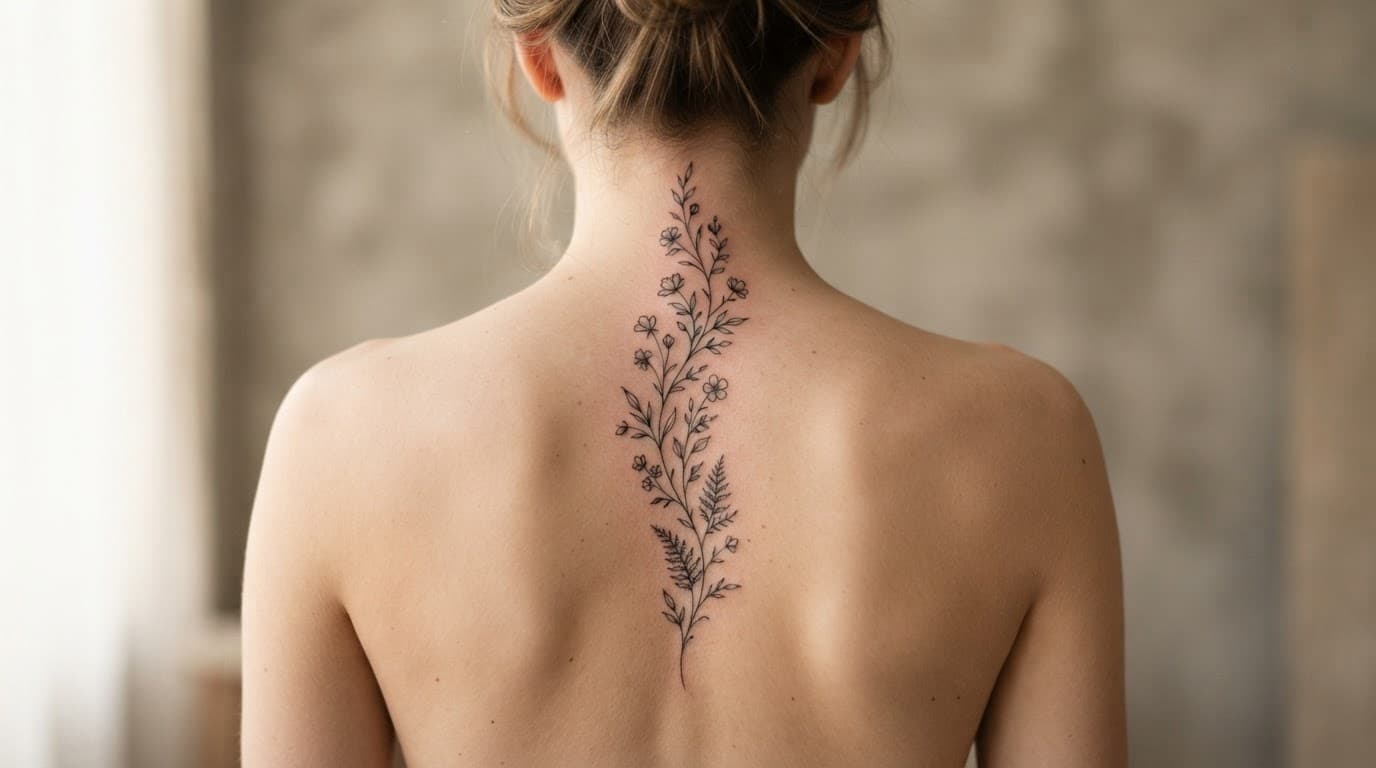
Use Negative Space to Keep Fine Details Looking Light
The spine is a narrow, vertical canvas, so open space helps each detail breathe. When flowers, stars, leaves, or letters sit too close together, the tattoo can lose its airy appearance and become a dark column.
Fine-line work depends on controlled line weight. Delicate outer lines can create a soft look, while slightly stronger central details keep the design readable. Your artist may vary the thickness around petals or leaves, but every line still needs enough room to remain distinct as the tattoo settles.
Dot placement also affects the final mood. A few widely spaced dots can suggest movement around a star or ornamental shape. Dense dotwork creates more shadow and visual weight, which may suit a bold design but can reduce the lightness you want from elegant spinal tattoo ideas.
Tiny details need a practical minimum size. A miniature flower may lose its petals if it is too small, and fine lettering can blur when individual characters sit tightly together. Leaves need enough surface area to show their shape, while stars need enough space between points to remain crisp.
More detail does not automatically create a more elegant tattoo. On the spine, restraint often gives the design its cleanest finish.
Ask your artist which features should remain and which can be removed. One well-spaced flower may look more refined than five crowded blooms. The strongest design usually treats negative space as part of the artwork, not as unused skin.
Fine-Line Botanical Spine Tattoos That Feel Soft and Natural
Fine-line botanicals follow the spine with a light, airy quality that suits elegant tattoo ideas. Their beauty comes from restraint: thin contours, open skin, gentle curves, and enough room for each petal or leaf to remain clear. Instead of forming a rigid stripe down the back, the design can appear to grow naturally along the body’s center.
A tattoo artist can adjust the composition to follow your proportions, placing the strongest detail near the upper, middle, or lower spine. Browse examples of elegant fine-line spine tattoos to compare how different floral arrangements change the overall balance.
Long-Stemmed Flowers, Vines, and Wildflower Chains
A long-stemmed flower can create a calm, modern focal point. One slender stem placed along the spine feels intentional without looking overly decorative. A single tulip, poppy, or lily may begin near the middle back, then taper toward the neck or lower back. This approach suits you if you prefer a quiet design with one recognizable botanical shape.
Roses bring a more romantic mood. Their layered petals create visual depth, even when the artist uses a light line weight. One open rose can anchor the upper spine, while a narrow stem keeps the lower portion graceful rather than crowded. For a softer result, ask for delicate petal contours instead of heavy shading.
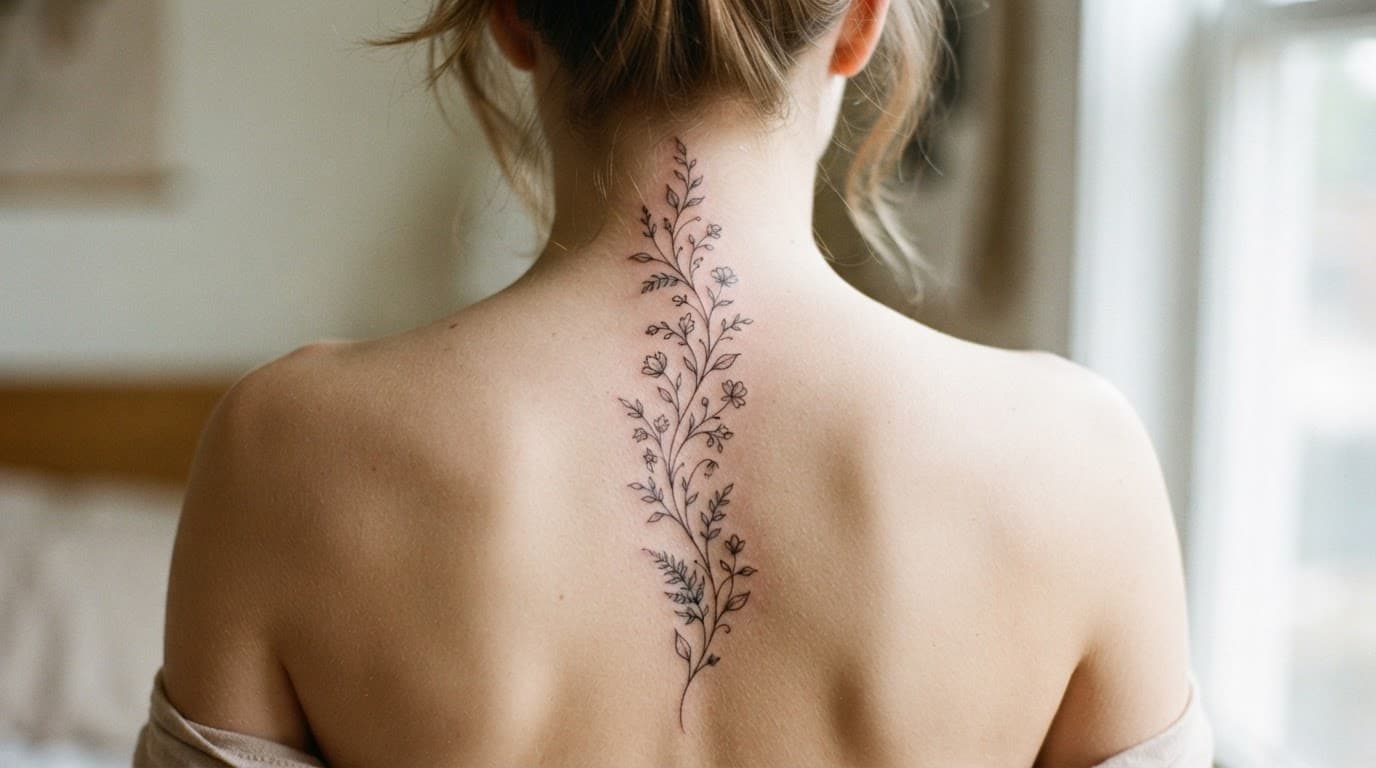
Vines feel more organic because they can curve slightly around the spine. Small leaves may turn toward one side, then return toward the center, creating movement as your back shifts. A vine also gives the artist room to vary the spacing, so the tattoo feels grown rather than measured.
Wildflower chains carry a freer, more personal feeling. You might combine a tiny daisy with a sprig of lavender, a poppy bud, or a flower connected to a meaningful season. The irregular shapes make the tattoo feel collected, almost like a pressed garden gathered over time.
Natural tapering keeps any of these designs from becoming a rigid column. Let the stems narrow at the ends, vary the distance between blooms, and leave more open space around the smallest flowers. Uneven spacing can create balance when each element follows the curve and rhythm of the back.
Lotus, Leaves, and Small Floral Symbols
Compact botanical spine tattoos suit readers who want symbolism without a large commitment. A lotus can sit between the shoulder blades or just below the neck, where its symmetrical petals create a centered, polished shape. Its vertical form also works well when you want a small tattoo that still relates clearly to the spine.
A fern brings a softer, more natural mood. Its narrow fronds can angle gently away from the vertebrae, while an olive branch suggests peace and simplicity through curved leaves and a restrained outline. A small flower, such as a daisy or forget-me-not, can carry personal meaning without filling much skin.
For a balanced composition, pair one central flower with a few supporting details:
- Add two or three leaves to frame the main bloom without making it look heavy.
- Use a short botanical accent above or below the flower to extend the vertical shape.
- Place a few small dots near the stem when you want subtle movement and extra air.
- Keep the accents smaller than the focal flower so the design has a clear visual center.
The best compact designs use empty skin as part of the composition. A lotus with widely spaced leaves may feel more refined than a larger cluster packed tightly down the back. Ask your artist to preserve the soft gaps that let each line stay readable as the tattoo settles.
Celestial, Ornamental, and Geometric Designs With Vertical Flow
Vertical designs suit the spine because they follow the body’s natural centerline. Repeated symbols can create a steady rhythm, while changing sizes and spacing keeps the tattoo from looking stiff. Celestial motifs feel airy and personal, ornamental details add a jewelry-like finish, and geometric forms bring a precise, structured quality to elegant spinal tattoo ideas.
Moon Phases, Constellations, and Star Trails
A row of moon phases creates one of the clearest celestial spine tattoo designs. Each phase can sit beneath the next, forming a slim column that moves from the neck toward the lower back. Identical spacing gives the tattoo a calm, orderly mood, while slightly larger moons near the center create a gentle focal point.
For a softer look, use fine outlines with little or no shading. A black crescent can add contrast without making the design heavy. You could also place a full moon at the center, then taper into smaller crescents above and below. The result feels balanced but still delicate.
Constellations create a more scattered rhythm. Instead of placing every symbol directly on the spine, the artist can allow tiny stars and connecting points to drift slightly from side to side. This asymmetrical constellation trail feels more natural, as if a narrow section of the night sky is traveling down your back. A meaningful constellation can add a personal reference without requiring lettering.
You can compare different arrangements in these celestial spine tattoo designs before deciding whether your composition should feel symmetrical, scattered, or slightly mysterious. Small stars, dots, and connecting marks need enough space to remain separate after healing. If they sit too close together, they may blur into dark specks over time.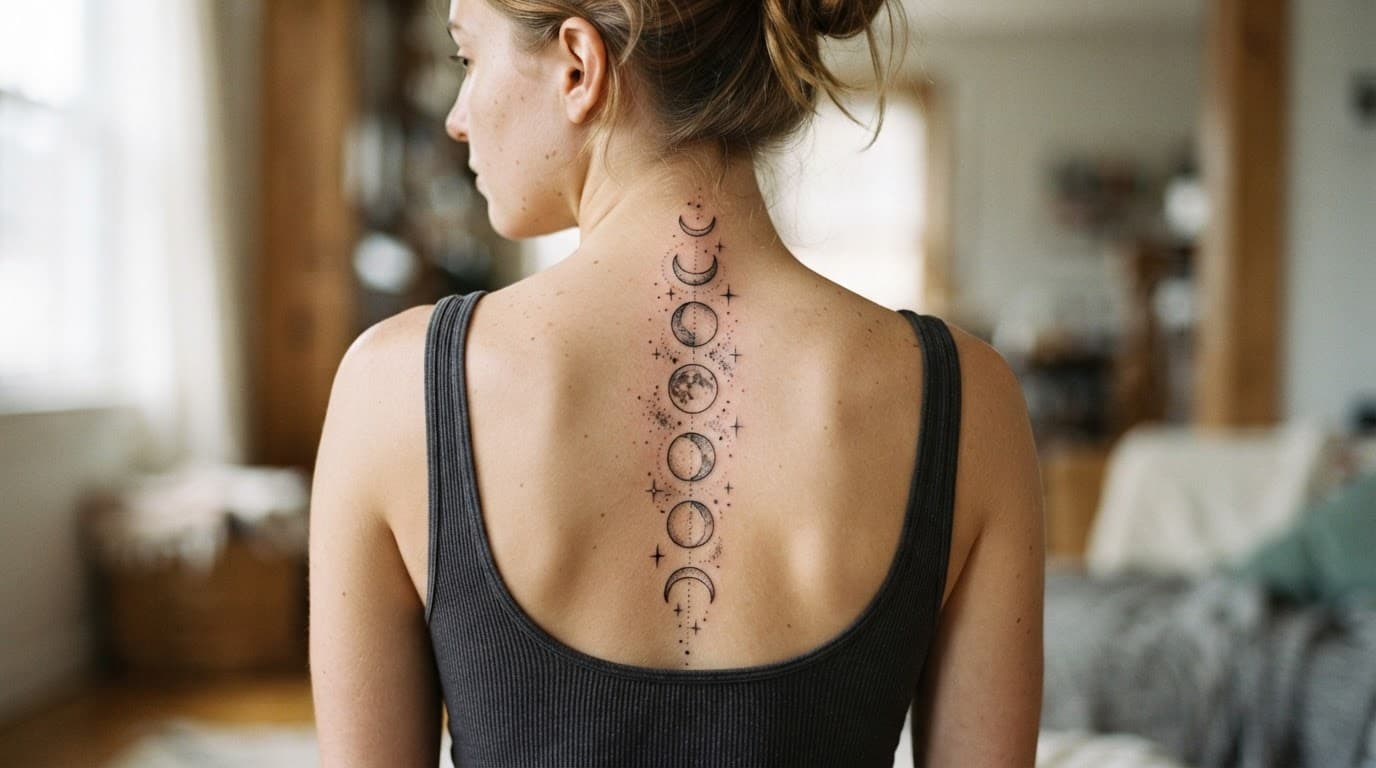
Size matters just as much. A star that is too tiny may lose its points, while a dot that is too faint may disappear into the skin. Ask your artist to adjust the smallest details to suit your skin, line weight, and the length of the tattoo.
Celestial designs look most graceful when the empty skin between each moon or star remains part of the composition.
Ornamental Drops and Geometric Spine Patterns
Ornamental spine tattoos often resemble a pendant suspended along the back. Symmetry keeps the design centered, while curved borders soften the straight vertical placement. Fine dotwork can shade the inner shapes, and delicate filigree can create the look of lace or engraved metal without filling the entire back.
A teardrop-shaped ornamental design works well near the middle or lower spine. Its pointed lower edge gives the tattoo direction, while curved side borders guide the eye downward. You might place one larger drop between the shoulder blades, then add smaller motifs below it. Repeated shapes can create a polished pattern, especially when the gaps remain consistent.
Geometric spine tattoos depend on careful alignment. Circles, diamonds, arches, and sacred-geometry forms can look striking when their central points follow the vertebrae. However, the shoulders and hips rarely sit at perfect mirror-image angles. A design that looks symmetrical on paper may need small adjustments to follow your actual body.
Before tattooing, ask the artist to apply the stencil and check it while you stand naturally. View it from straight on, from both sides, and with your shoulders relaxed. If the pattern stretches toward the hips, check the placement while you shift your weight as well. A stencil check from several angles can reveal tilted borders, uneven spacing, or a lower point that lands off-center. For more visual references, browse these ornamental celestial back tattoo ideas, then bring only the shapes and spacing you genuinely want to your consultation.
Meaningful Script, Symbols, and Custom Personal Details
Personal details can give elegant spinal tattoo ideas a lasting emotional center. A single word, date, symbol, or small botanical reference can tell your story without turning the back into a crowded collection of images. Keep the composition focused, then let spacing and skin show the design’s delicate character.
Fine Script and Short Quotes That Stay Easy to Read
A short phrase usually ages better than a long sentence in a fine-line style. The spine is a narrow, curved placement, so lengthy text forces the letters to become smaller or sit closer together. Over time, those tight details can soften and lose clarity. One meaningful word such as “breathe,” “becoming,” or “always” often has more visual strength than a full paragraph.
A phrase of three to seven words can create a graceful vertical flow without overwhelming the back. You might use a personal reminder, a family expression, or a short line that carries emotional weight. If you prefer a longer quote, ask your artist whether the lower spine offers enough width and movement for comfortable spacing.
Script lettering brings a handwritten, intimate feeling. Its connected strokes can follow the body’s natural curve, especially when the letters have open counters and generous spacing. However, a flowing script can become difficult to read when flourishes overlap or the capitals grow too elaborate.
Clean serif lettering gives the tattoo a classic, bookish appearance. Small serifs can add character while keeping each letter distinct. Sans-serif lettering feels more modern and direct, with simple forms that often suit a minimalist spinal tattoo. Compare both styles beside your other tattoo ideas, then choose the one that still looks clear without decoration.
Ask the artist to show the lettering at its actual tattoo size, not only as a large design on a phone or tablet. View the mockup while standing, sitting, and twisting slightly. Fine-line tattoos can heal with a soft, subtle finish, but proper sizing and spacing help preserve their clarity. This fine-line tattoo style guide offers useful context when comparing delicate line choices.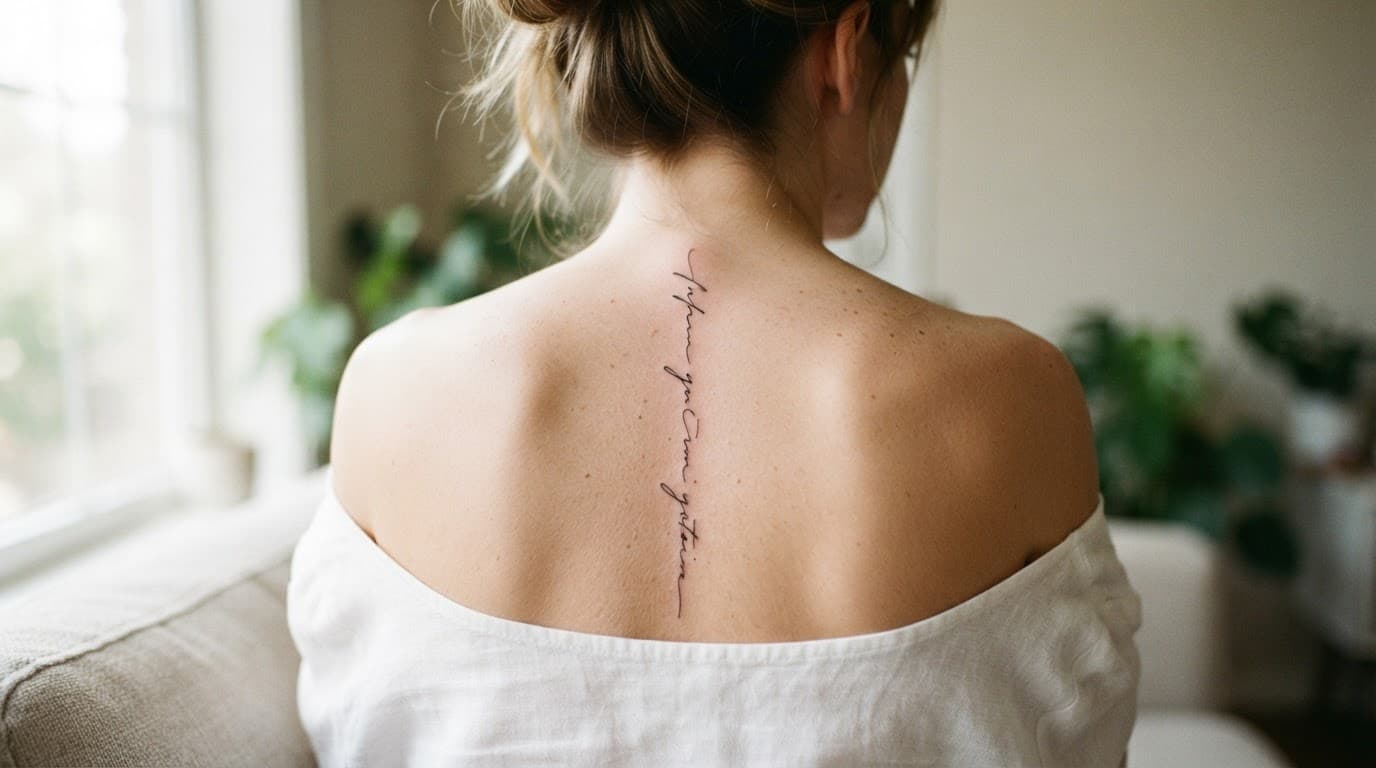
Before your appointment, check every detail carefully:
- Confirm the spelling, capitalization, and punctuation.
- Verify the language with a fluent speaker if the phrase is translated.
- Check accents, diacritics, and letter direction for non-English text.
- Read the final stencil yourself before the artist begins.
A second review can catch a mistake, but your approval should come last. Once the stencil sits on your spine, take a quiet moment to read it from top to bottom.
Coordinates, Dates, Birth Flowers, and Quiet Symbols
Personal information can become an elegant vertical composition when each element has a clear place. Coordinates might run down the center of the spine, with a tiny star beside the location or a small dot marking a meaningful point. Keep the numbers evenly spaced, and use a simple font so the coordinates feel like part of the design rather than a block of data.
A family birth-flower line offers another graceful option. Place one small flower for each person, then connect the stems with a fine curve that follows the spine. Varying the flower shapes creates personal detail, while keeping them similar in size prevents the tattoo from feeling busy.
Dates work well when framed by leaves, small dots, or a narrow oval. You could use a wedding date, a child’s birth date, or the day you reached an important turning point. Roman numerals can add a traditional feel, while clean numbers look more contemporary and are easier to read.
Other quiet symbols include a tiny star for guidance, a crescent moon for change, or a simple wave tied to a meaningful place. Choose one main idea and let the supporting detail remain small. A custom spinal tattoo often feels most elegant when the meaning reveals itself gradually, like a handwritten note meant for one person.
What Spinal Tattoos Feel Like, Cost, and Need During Healing
A spinal tattoo combines a narrow placement with a long design, so the experience depends on size, detail, session length, and your artist’s technique. Plan for more than the tattoo itself. The consultation, custom artwork, appointment, aftercare, and possible touch-up can all affect the final result.
How Much Does an Elegant Spine Tattoo Usually Cost?
There is no single standard price for a spine tattoo. A small symbol may fit within a studio minimum, while a full-length floral vine or ornamental composition can require several hours and a custom design fee.
Many artists charge by the hour, especially for detailed linework or designs that need careful placement. Others quote a flat project price. Studio minimums still apply when the tattoo takes only a short time, and custom artwork may add a separate fee before the appointment begins.
A reputable artist may cost more than the lowest quote, but price alone doesn’t tell you whether the work will heal cleanly. Compare artists by their healed tattoo photos, line quality, spacing, composition, and experience with back placements. Fresh tattoos often look darker and sharper than healed work, so ask to see results after the skin has settled.
Before booking, ask what the estimate includes:
- The consultation and custom design time
- The tattoo appointment and supplies
- A stencil adjustment or placement session
- Any included touch-up policy
- A deposit, cancellation terms, or rescheduling fee
- The expected number of sessions
A short spinal symbol might take less than an hour, yet a long composition may require a full session or multiple appointments. Fine details, dense dotwork, shading, and careful symmetry all increase the time involved. Budget for a clean, hygienic studio and an artist whose portfolio proves consistent results. Saving money on the quote can cost more if poor linework requires correction or a cover-up later.
Pain, Appointment Length, and Healing Basics
Spinal tattoos often feel sharper over the vertebrae and more sensitive where the skin sits close to bone. Areas with more muscle may feel easier, while the upper back, shoulder blades, and lower spine can vary from person to person. Most people describe the sensation as manageable, but a long appointment can become tiring.
Tell your artist when you need a break. Short pauses can help you stretch, drink water, and settle your muscles. Eat beforehand, bring water, and wear clothing that gives the artist easy access without creating pressure on the fresh tattoo afterward.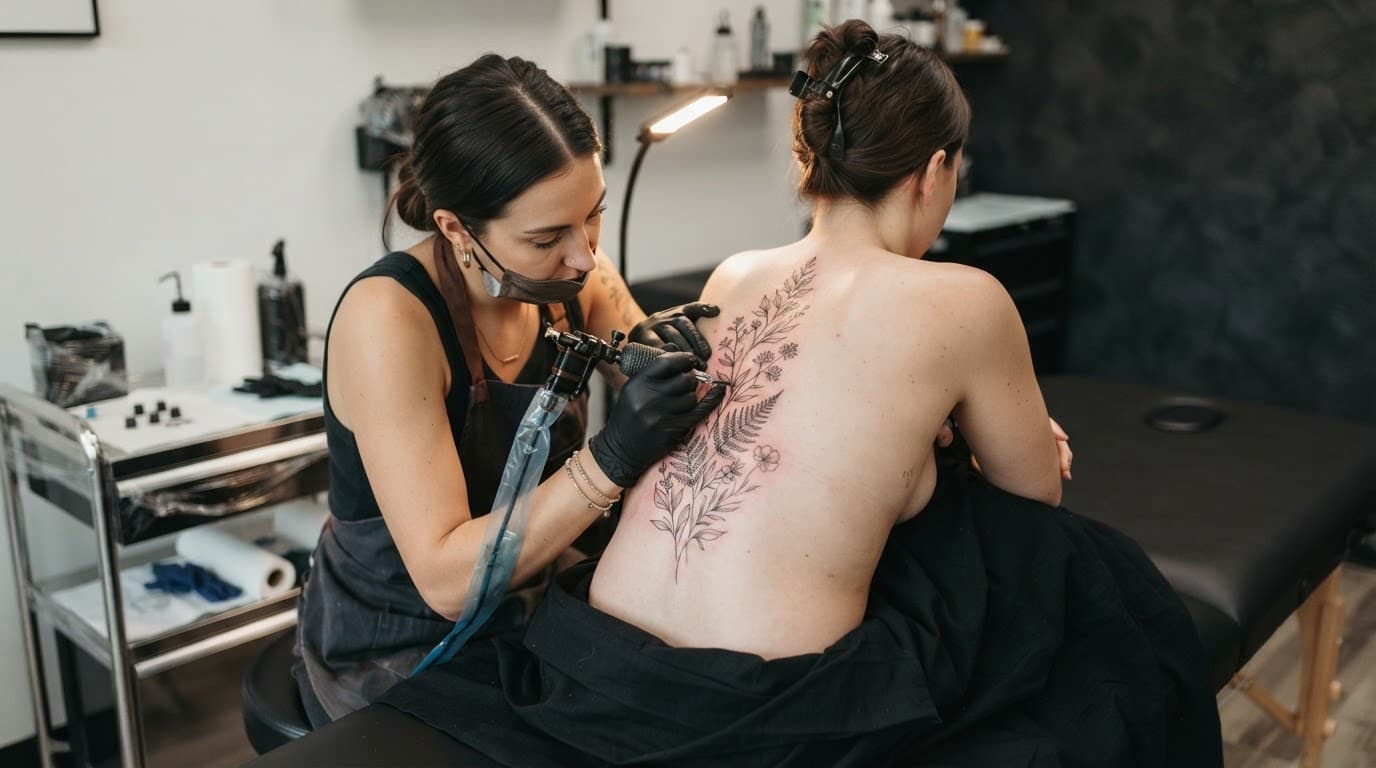
Loose, breathable shirts work well during healing. Avoid tight waistbands, rough fabrics, backpacks, and clothing that repeatedly rubs the design. Follow the artist’s cleaning and moisturizing instructions, because bandage types and healing methods differ. General guidance includes washing gently with clean hands, avoiding scratching or picking, and keeping the area away from soaking water while it heals. Healthline’s tattoo aftercare guidance also recommends protecting a healing tattoo from sun exposure.
Don’t copy a random aftercare routine if it conflicts with your artist’s instructions. After the skin has fully healed, apply broad-spectrum sunscreen whenever your back will be exposed. Careful healing protects the fine lines and open spacing that give elegant spinal tattoo ideas their graceful finish.
How to Find the Right Tattoo Artist and Prepare Your Design
The right artist does more than copy a reference image. They understand how a vertical design moves with your spine, how fine lines settle over time, and how to adjust the artwork for your proportions. Before booking, study the portfolio carefully and use the consultation to confirm that your idea, placement, budget, and expectations all match.
Portfolio Checks That Matter More Than a Pretty Sketch
A polished sketch can show artistic talent, but it doesn’t prove that the artist tattoos cleanly. Start with completed work on real skin, then look for several recent examples in the same style and scale as your design. A portfolio should show consistency across many tattoos, not one impressive piece surrounded by unrelated work.
Pay close attention to healed tattoos. Fresh ink often looks darker and sharper than it will after the skin settles. Ask whether the artist can show healed photos, ideally work that is at least six months old. Look for lines that remain clear, smooth shading, readable details, and enough space between small elements. If every image is heavily filtered, cropped, or freshly completed, you don’t have enough information to judge the long-term result.
Zoom in on close-up photos. Fine-line work should have controlled, steady contours rather than shaky edges or uneven thickness. Botanical designs need recognizable petals and leaves, while ornamental tattoos depend on clean curves and consistent spacing. Check whether the artist maintains the same quality across different pieces, not just in one favorite tattoo.
Composition matters just as much as line quality. Look for examples where the artist balances the focal point, supporting details, and open skin. A design can contain beautiful individual elements and still feel crowded or poorly arranged.
Because the spine curves and shifts with movement, search for spine-specific placements, not only general back tattoos. Centering can change when your shoulders relax, lift, or rotate. A design that looks straight on paper may tilt once it follows your actual vertebrae and shoulder movement.
Try to find examples on body types similar to yours. Compare long and short backs, broader and narrower shoulders, and different skin textures. A skilled artist should adapt the design rather than force every client into the same template. You can also review this tattoo artist portfolio guide while comparing healed work and style consistency.
The Questions to Ask Before You Book
A consultation should feel collaborative, clear, and pressure-free. You should have time to explain your idea, ask practical questions, and decide whether the artist feels right before paying a deposit.
Bring your reference images, but also describe what you want to change. Then ask:
- What is the estimated price, and is it hourly or a flat rate?
- How much is the deposit, and what happens if you reschedule or cancel?
- How many design revisions are included?
- When will I see the final design, and can I request changes before the appointment?
- How long will the appointment take, and might the tattoo need more than one session?
- Can I take short pain or stretching breaks during the session?
- What aftercare instructions will you provide, and when will I receive them?
- Are touch-ups included, and how long should I wait before requesting one?
- How will you position and adjust the stencil so it follows my spine?
- Can I view the stencil while standing naturally, with my shoulders relaxed?
Ask the artist to check the stencil from straight on and from both sides. If the design reaches toward the shoulders or lower back, look at it while shifting your posture. The best booking decision comes after you understand the design, cost, timing, placement, and healing plan.
Conclusion
The right spinal tattoo turns the body’s natural centerline into a graceful piece of art. Airy botanical stems, celestial trails, ornamental geometry, and meaningful script each create a different mood, yet every style depends on thoughtful proportions and placement.
Elegant Spinal Tattoo Ideas for Every Style work best when the composition has enough room to breathe. Clean spacing, readable details, and a size that suits your back matter more than copying a popular trend. An experienced artist can adjust the design so it follows your shape and remains balanced as you move.
Choose a tattoo with personal meaning, review the stencil carefully from every angle, and follow your artist’s aftercare instructions. Give the skin time to heal before judging the final result, because the finished tattoo should feel like part of you, not just a beautiful reference brought to life.
Save the pin for later


- 25 Gothic Tattoo Ideas for a Bold, Dark Look - 21/09/2026
- 34 Black Fine Line Tattoo Ideas for a Delicate Look - 21/09/2026
- 23 Micro Tattoo Ideas for Women With Meaning - 21/09/2026

