Hearing your husband say something hurtful can leave you feeling confused, rejected, or afraid about the future of your marriage. Still, one angry sentence doesn’t prove he regrets marrying you. People sometimes speak harshly during stress or conflict and later recognize that their words were unfair.
The greater concern is a repeated pattern of comments such as “I should never have married you,” “My life would be better without you,” or “I settled for this marriage.” Pay attention to the pattern around those words, including his tone, emotional distance, lack of affection, frequent criticism, and unwillingness to discuss or repair the damage. Communication may become brief and practical, while meaningful conversations and shared plans disappear.
The ten statements below are warning signs to examine, not proof of what your husband privately thinks. Each one needs context, including how often he says it, whether he takes responsibility afterward, and whether his behavior changes. You’ll also learn how to respond without escalating the conflict, when marriage counseling may help, and what steps to take if his words come with threats, intimidation, or any risk to your safety. First, consider the statements that may reveal regret or growing resentment in a marriage.
Key Takeaways
- One harsh comment doesn’t prove your husband regrets marrying you; repeated statements and patterns deserve closer attention.
- Emotional distance, constant criticism, reduced affection, and avoiding conversations can point to serious marital dissatisfaction.
- Regret may appear through comments about settling, wanting a different life, or believing marriage ruined his future.
- Consider the context, frequency, tone, and whether he takes responsibility after hurting you.
- If his words include threats, intimidation, or controlling behavior, prioritize your safety and seek trusted support immediately.
When His Words Suggest He Regrets Marrying You
These statements may point to regret, emotional withdrawal, or serious relationship distress. However, no single phrase proves what your husband feels. Pay attention to repetition, context, tone, his actions, and whether he accepts responsibility after hurting you.
“I should never have married you” and “I made a mistake choosing you”
Direct regret statements can cut into your sense of security because they attack the foundation of the marriage. He may be expressing a lasting belief, speaking from anger, carrying resentment, or trying to wound you during a fight.
For example, he might say, “I knew marrying you was a mistake” after an argument about money. One angry comment needs context, but repeated statements deserve serious attention. Does he repeat them when calm? Does he explain what he regrets and discuss possible solutions? Does he apologize without blaming you for his cruelty?
A serious conversation about marital problems sounds different from name-calling. A responsible partner might say, “I feel unhappy in this marriage, and I want us to discuss what needs to change.” Emotional abuse sounds more like, “You ruined my life, and everything wrong with me is your fault.”
Don’t argue about your worth or beg him to reassure you. Instead, say, “When you say you regret marrying me, are you describing a temporary feeling, or are you saying you no longer want this marriage?” His answer, and his willingness to repair the damage, will tell you more than the insult alone.
“You can never do anything right” and “You are the reason I am unhappy”
Broad blame and constant criticism can create a home where you feel judged before you even speak. Words such as “never” and “always” turn one problem into an attack on your entire character. Over time, contempt and fault-finding may show growing resentment or emotional disconnection.
Still, people sometimes use absolute language during unresolved conflict. The important question is whether he can later discuss a specific concern respectfully.
Respectful feedback sounds like, “I felt overwhelmed when the bills weren’t paid on time. Can we create a better system?” Harmful criticism sounds like, “You never do anything right. You’re the reason I’m miserable.”
Research published in a study of communication and relationship satisfaction connects worsening communication with declines in relationship satisfaction. That doesn’t prove regret, but it shows why repeated attacks should not be dismissed.
“We are more like roommates” and “Our relationship is only practical now”
These phrases describe emotional and physical disconnection. Maybe affection has faded, meaningful conversations have become rare, and your time together centers on bills, chores, schedules, or children.
Low intimacy doesn’t automatically mean he regrets marrying you. Stress, depression, illness, grief, exhaustion, and long-running conflict can all reduce closeness. The concern grows when he also avoids shared time and refuses to discuss change.
Ask whether he wants to rebuild connection through honest conversations, counseling, or regular time together. A marriage can survive a dry season when both partners are willing to address it.
“I see a future without you” and “I would be happier on my own”
These statements may mean he is emotionally preparing for separation, especially when they come with withdrawal, separate plans, new financial arrangements, or repeated talk about living alone. However, you cannot treat his private thoughts as proven facts based on one conversation.
Ask calmly, “Do you want to work on this marriage, consider a trial separation, or start discussing divorce?” If separation seems possible, seek private legal and financial advice before making major decisions. You deserve clear information, not panic or guesswork.
“I need space from this marriage” and “I do not know if I want to keep trying”
Uncertainty and requests for distance don’t always mean the marriage is over. Healthy space has clear boundaries, a purpose, and a time to reconnect. Indefinite avoidance leaves you waiting without knowing what happens next.
Ask what space means, how long it will last, how you will handle household responsibilities, and when you will talk again. Honest uncertainty can become the starting point for counseling or a respectful decision, but only when both people participate.
What These Statements May Mean Beyond Marital Regret
Words alone cannot prove that a husband regrets marrying his wife. A painful statement may point to regret, but it may also come from unresolved resentment, burnout, depression, work pressure, money problems, an affair, fear of conflict, or poor communication skills. Sometimes a person feels overwhelmed by the marriage without genuinely wanting to leave it.
The meaning becomes clearer when you examine what happens over time. Look at his private behavior as well as his public behavior. Does he act warm and supportive around others but distant or cruel at home? Has intimacy changed? Does he avoid affection, meaningful conversations, and shared plans? Most importantly, does he show any willingness to repair the relationship?
Look at the pattern, not one painful argument
One harsh sentence during a heated argument may reflect anger, fear, or emotional overload. It still deserves attention, but it shouldn’t become the only evidence you use to judge your marriage. Ask yourself:
- Was the statement isolated, or does he repeat it during different conflicts?
- Did he say it while calm, or only when emotions were high?
- Did he offer a sincere apology afterward?
- Does his behavior support the words?
- Can he discuss the problem without attacking your character?
A person who feels regret may also be struggling with depression, exhaustion, financial pressure, or disappointment about how life turned out. Those issues can affect the marriage without proving that you are the problem. An affair or a desire to leave can also create distance, secrecy, and unusual defensiveness, but you shouldn’t accuse him based on suspicion alone.
Regret becomes more concerning when the same pattern continues despite calm conversations. Persistent emotional distance, negative communication, loss of affection, avoidance, and plans for a life without you carry more weight than one insult.
You can make a brief note of what you observe, without monitoring him obsessively. Record the date, general situation, exact statement, your response, his response, and whether his behavior changed later. This record can help you see a pattern instead of forcing you to rely on memory during stressful moments.
Notice whether he wants repair or only wants to blame
Repair language focuses on responsibility and practical change. He may ask what he can do differently, admit where he contributed to the problem, listen without interrupting, or agree to counseling. He may also show patience while trust and closeness rebuild.
Blaming language moves in the opposite direction. Threats, mockery, insults, constant defensiveness, and refusal to listen leave no room for a healthy conversation. A statement such as “I want us to fix this, and I know I have work to do” is very different from “You caused all of this, so deal with it.”
An apology matters only when actions change. If he says sorry but repeats the same cruelty, the apology hasn’t repaired the harm. Likewise, you cannot repair a marriage by yourself, no matter how carefully you communicate or how much responsibility you accept.
Both partners must choose honest discussion, accountability, and consistent effort. If he wants to leave, you deserve clarity. If he wants to stay, his conduct should show that choice.
How to Respond When Your Husband Says He Regrets the Marriage
Hearing your husband say he regrets marrying you can trigger panic, anger, or the urge to prove your worth. Before you respond, pause and let the immediate emotion settle. You need clarity about what he means, not a rushed promise that you will change everything.
Choose a private time when neither of you is exhausted, intoxicated, or already shouting. If the first exchange happened during an argument, say that you want to revisit it when both of you can speak calmly. Avoid begging him to stay, retaliating with your own insults, involving your children, or making major promises in the heat of the moment.
Ask direct questions that lead to clarity
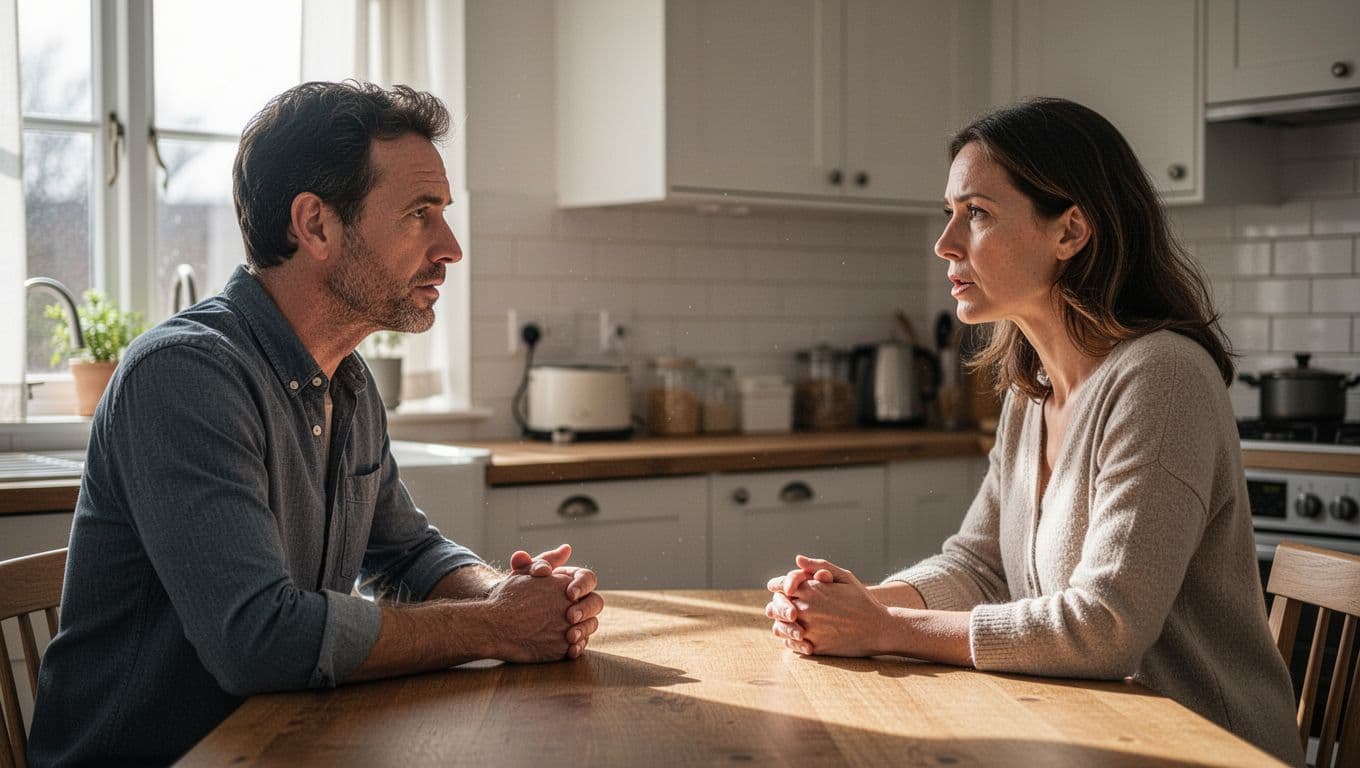
Start by naming the exact words that caused concern. Don’t soften the statement so much that its meaning disappears. You might say, “When you say you made a mistake marrying me, are you saying you want to leave, or are you describing how unhappy you feel right now?”
Then give him time to answer. Listening doesn’t mean agreeing with every accusation, and you don’t need to defend yourself before you understand the issue. If he gives a vague response, ask for examples and focus on behavior rather than debating who is the better spouse.
Useful questions include:
- “What do you regret about our marriage?”
- “When did these feelings begin to change?”
- “Is there a specific problem you want us to address?”
- “Do you want to rebuild trust and closeness with me?”
- “What changes are you willing to make yourself?”
- “What do you need from me, and what will you do differently?”
- “What timeline feels realistic for checking our progress?”
A clear answer should lead to a real conversation about actions. For example, if he says he regrets the marriage because he feels ignored, ask which situations created that feeling and what consistent changes might help. You can acknowledge your part without accepting blame for every problem.
A marriage cannot improve around a vague accusation. It needs a shared description of the problem and a willingness to change specific behavior.
Write down the agreements you reach, such as weekly conversations, counseling, better financial communication, or protected time together. Set a date to review whether both of you are following through. If he refuses every practical step but continues saying he regrets marrying you, his behavior is giving you important information.
Set boundaries when honesty becomes cruelty
Your husband can express dissatisfaction without humiliating you. Regret, frustration, or disappointment never gives him permission to insult you, threaten divorce to control you, mock your appearance, monitor your movements, or attack you during every disagreement.
State the limit in simple language: “I am willing to discuss our problems, but I will end the conversation if you insult or threaten me.” Then follow through. Leave the room, end the call, or continue the discussion later when he can speak respectfully. A boundary controls your response, not his behavior.
If he uses intimidation, coercive control, threats, stalking, or physical violence, treat the situation as a safety concern rather than a communication problem. Contact a trusted person or local domestic violence service, and consider making a safety plan. Resources about setting boundaries with an abusive husband may help you recognize harmful patterns.
Couples counseling is not the first step when you fear retaliation or violence. Prioritize your safety, seek individual support, and choose a secure way to communicate. You deserve an honest conversation, but you never have to remain in a threatening one.
Can a marriage recover when he regrets marrying you?
A marriage can recover when a husband regrets marrying you, but regret alone won’t repair the relationship. Both partners must freely choose honest conversations, shared goals, and consistent behavior changes. You can’t carry the entire marriage while he watches from a distance.
Meaningful repair may include couples counseling with a licensed therapist, individual counseling, scheduled conversations, and a gradual return to affection. A review of couple therapy research found that therapy can improve relationship satisfaction for many couples, especially when both partners participate honestly.
However, counseling isn’t the first step when there is active abuse, intimidation, coercive control, or fear of retaliation. In that situation, seek individual support and focus on safety. You can also review these signs your marriage needs help to assess the seriousness of the situation.
Signs he is serious about rebuilding the relationship

A husband who wants to save the marriage may still feel confused, angry, or disappointed. The clearest evidence comes from what he does after difficult conversations. Consistent action matters more than emotional promises.
Look for signs such as:
- He takes responsibility for hurtful words and behavior without adding excuses or blaming you.
- He stops making cruel remarks, threatening divorce, or using regret as a weapon during arguments.
- He makes regular time for serious conversations instead of avoiding every uncomfortable subject.
- He follows through on agreements, whether they involve counseling, finances, household duties, or time together.
- He shows curiosity about your feelings and listens without immediately defending himself.
- He agrees to couples counseling with a licensed therapist and considers individual counseling when personal issues affect the marriage.
- He helps create shared goals, such as improving communication, rebuilding affection, or addressing a trust violation.
- He accepts that trust returns slowly and doesn’t demand instant forgiveness or closeness.
Progress may look ordinary at first. He might check in when he said he would, speak respectfully during conflict, or make a small change without expecting praise. Those choices matter because they create a reliable pattern you can observe.
You also need room to share your hurt. Repair cannot mean that you stay silent to keep him interested. Both partners should be able to describe what happened, what needs to change, and how they will measure progress.
Signs he has emotionally checked out
Emotional withdrawal becomes more concerning when it continues after reasonable attempts to reconnect. A husband who has checked out may refuse every meaningful conversation, show no interest in changing, and treat your efforts as an annoyance.
Watch for a persistent pattern of:
- Refusing to communicate, even when you choose a calm time and speak respectfully.
- Making no effort toward affection, shared time, counseling, or practical improvements.
- Using contempt, mockery, eye-rolling, insults, or disgust whenever you raise concerns.
- Keeping ongoing secrets about money, communication, living arrangements, or major personal plans.
- Building a separate future that excludes you while avoiding an honest discussion about the marriage.
- Repeatedly threatening divorce without taking part in a respectful conversation about next steps.
- Rejecting every reasonable attempt at repair, then blaming you for the distance.
You shouldn’t keep trying to prove your value to someone who has chosen disengagement. His refusal to participate is information, even if he never clearly says the marriage is over.
That doesn’t require you to make an immediate decision. Talk with trusted people, organize important financial records, understand your household responsibilities, and consider private legal advice if separation appears possible. Support can help you think clearly while you decide what is healthiest and safest for you.
Protect your self-worth while deciding what comes next
Your husband’s regret, anger, or dissatisfaction does not define your value. His words may describe his feelings, his choices, or the problems in the marriage, but they don’t decide whether you are lovable, capable, or worthy of respect.
Before making a major decision, create some emotional space. Speak privately with a trusted friend, therapist, faith leader, or support group. Choose someone who can listen without pressuring you to stay or leave. Protect your children from adult details, too. They should not carry messages, take sides, or feel responsible for repairing the marriage.
Make a decision based on respect, safety, and consistent effort
Start by assessing whether you feel safe at home. Emotional safety includes being able to speak without fear of insults, threats, punishment, or retaliation. Physical safety matters just as much. If your husband intimidates, controls, stalks, threatens, or hurts you, seek confidential support and make a safety plan before attempting difficult conversations.
Next, look at responsibility. Does he acknowledge his hurtful words and recognize his part in the conflict? A healthy discussion includes accountability from both partners. You can admit your mistakes without accepting blame for his cruelty, dishonesty, or refusal to communicate.
Finally, watch for steady improvement. Promises can sound reassuring after a crisis, but actions provide clearer information. Look for respectful communication, follow-through on agreements, willingness to attend counseling, and a genuine effort to rebuild trust. One good weekend doesn’t erase months of harmful behavior. Likewise, one difficult conversation doesn’t cancel real progress if both partners keep working.
Give yourself a personal timeline for reassessing the situation. That might mean reviewing your progress after four weeks, then again after three months. Set clear signs to observe, such as fewer cruel comments, completed counseling appointments, honest financial discussions, or more reliable cooperation at home.
You don’t have to wait forever for vague promises, and you don’t have to make a permanent decision during one painful argument.
During this period, care for your basic needs. Protect your sleep, eat regular meals, maintain access to money, and gather important documents in a secure place. If separation or divorce becomes a possibility, seek qualified legal and financial guidance before making decisions about housing, accounts, or children. A single online checklist cannot tell you what choice fits your life.
You may choose to stay and work on the marriage, separate while you gain clarity, or leave. That decision belongs to you. Setting healthy limits in marriage can help you protect your dignity while you decide what comes next. Research on self-esteem and divorce also shows why emotional support matters during this transition, since separation can affect how people view themselves over time. Read the research on self-esteem and divorce for additional context.
Conclusion
The ten statements in this article can point to serious marital distress, especially when they occur with emotional distance, constant criticism, lost affection, or talk of a future without you. However, no single sentence proves that your husband regrets the marriage. Context, repetition, tone, and his behavior afterward matter more than one painful argument.
Ask for clarity during a calm conversation. Find out whether he wants to repair the relationship and what changes he is willing to make. Then watch his actions, not only his promises. A sincere effort includes accountability, respectful communication, and consistent follow-through. If he avoids every solution while continuing to blame or insult you, that pattern gives you important information. You can also review healthy relationship boundaries as you decide what treatment you will accept.
You don’t have to face this confusion alone. Speak with a trusted person, therapist, or qualified counselor, and seek individual support if your husband refuses help. Set firm boundaries around cruelty, threats, and intimidation. No one should have to earn basic respect, prove their worth, or remain in an unsafe relationship.
Save the pin for later


- 60 Color Tattoos That Healed Beautifully - 25/09/2026
- 40 Most Painful Tattoo Spots - 24/09/2026
- 20 Tattoo Aftercare Mistakes That Ruin Fresh Ink - 23/09/2026

