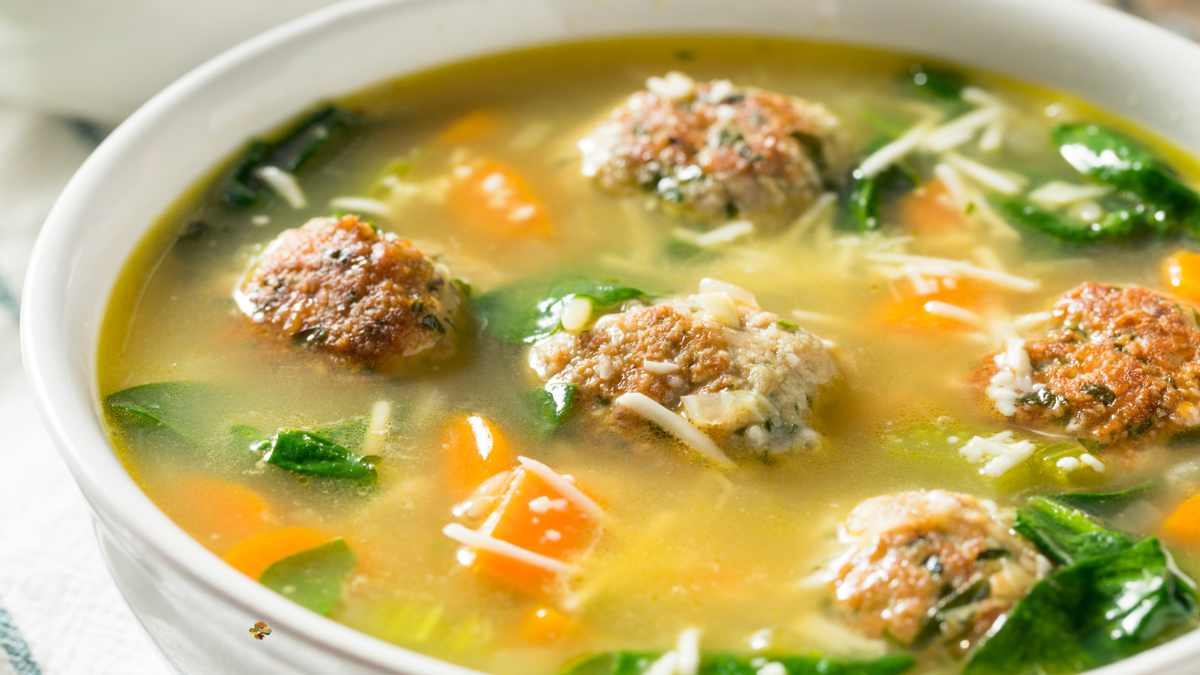
Golumpki soup brings the cozy flavors of cabbage rolls to the table without the work of filling and rolling individual leaves. Cabbage, seasoned meat, rice, and tomato simmer into a hearty, spoonable meal, also known as stuffed cabbage soup or stuffed cabbage stoup.
You’ll find clear steps for making it, simple ways to adjust the seasoning, and practical tips for storing and reheating leftovers safely. First, let’s get the soup simmering.
How to Make Golumpki Soup with Cabbage, Meat, Rice, and Tomato
This golumpki soup brings cabbage-roll flavor to the table with no leaves to fill or roll. Savoy cabbage softens readily, while tomato, rice, and a beef, pork, and veal blend build a hearty, savory broth. Rachael Ray’s stuffed cabbage stoup recipe follows a similar soup-style approach.
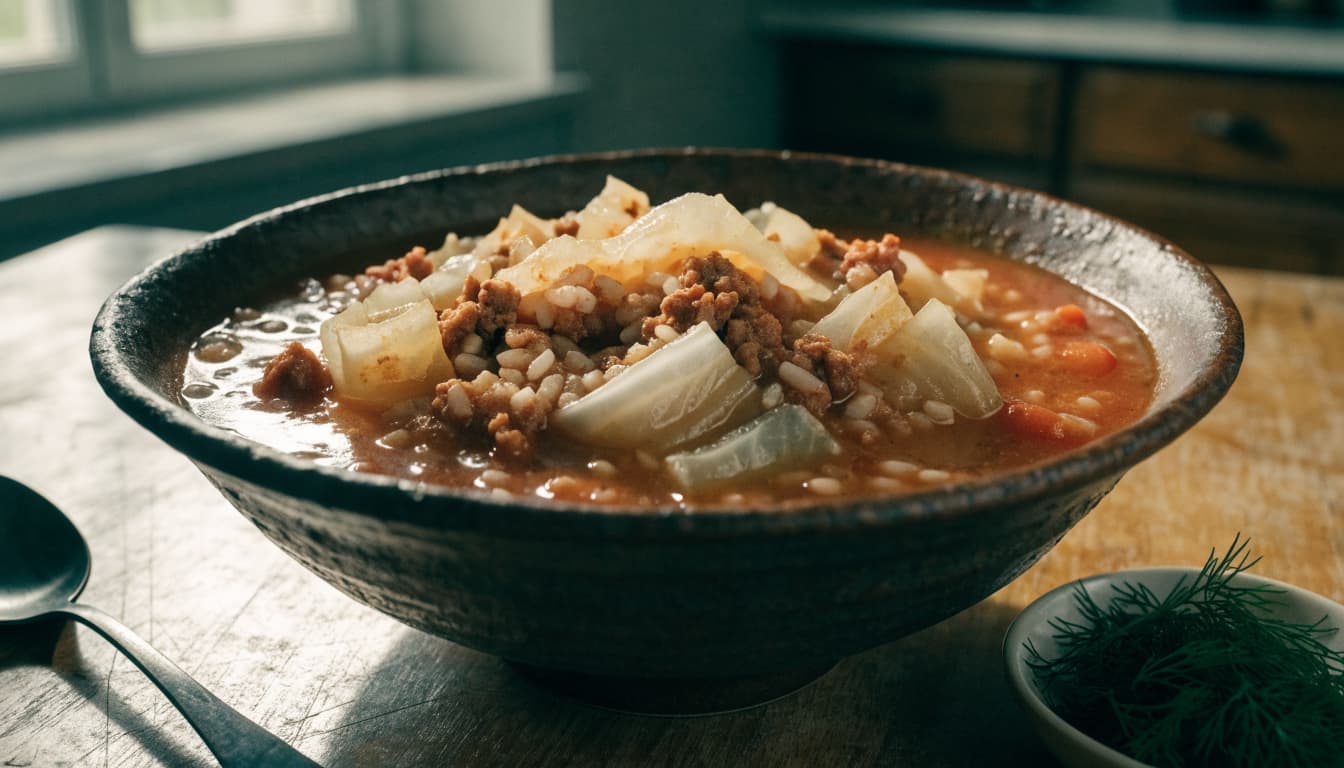
Gather the ingredients and prep the cabbage
Cabbage and tomato give the soup its familiar tangy, savory character. Rice makes each bowl filling, and meatloaf mix adds depth from its blend of beef, pork, and veal. Savoy cabbage is especially good here because its leaves soften readily; regular green cabbage works, too. For more cabbage-cutting tips, see this guide to preparing cabbage for a skillet.
Ingredients
- 4 tablespoons extra-virgin olive oil, divided
- 1 cup raw white rice
- 1 quart plus 2 cups chicken stock, divided
- 1½ pounds ground meatloaf mix (beef, pork, and veal)
- ½ teaspoon allspice
- 1½ teaspoons coriander
- 2 teaspoons smoked paprika
- 1 bay leaf
- 1 onion, chopped
- 2 garlic cloves, minced
- 1 carrot, thinly sliced, then chopped
- ½ to ¾ head Savoy cabbage, thinly sliced
- 1 (28-ounce) can diced tomatoes
- 1 cup tomato sauce
- 3 tablespoons chopped dill
- Chopped flat-leaf parsley, to taste
- Salt and pepper, to taste
Slice the cabbage into spoon-friendly strips, then chop the onion and carrot. Measure the spices before you start cooking so they’re ready to add.
Cook the rice, then brown the meat and aromatics
- Add the rice and about 2 tablespoons of olive oil to a covered saucepan. Pour in 2 cups of chicken stock, bring to a simmer, then cover and cook for 16 to 18 minutes. Check that the grains are tender and the liquid has been absorbed; set aside.
- Meanwhile, heat the remaining oil in a large soup pot over medium heat. Add the ground meat and break it into small pieces as it browns for 2 to 3 minutes. Stir in the allspice, coriander, smoked paprika, salt, and pepper.
- Add the bay leaf, onion, garlic, and carrot. Cook for a few minutes, stirring, until the onion begins to soften and the garlic smells fragrant.
Simmer the cabbage and tomato broth, then finish the soup
- Stir in the sliced cabbage and cook until it starts to wilt. Add the diced tomatoes, tomato sauce, and remaining chicken stock. Cover and simmer for about 10 minutes, checking that the cabbage is tender but still holds its shape.
- Stir in the cooked rice and simmer for another 2 to 3 minutes. Finish with dill and parsley, then taste and adjust the salt and pepper.
Cooking the rice separately helps it stay tender without soaking up too much broth. If the soup thickens as it sits, loosen each serving with a splash of warm stock.
What Gives Stuffed Cabbage Soup Its Golumpki Flavor?
Golumpki soup takes its cues from Polish-style stuffed cabbage rolls, often called gołąbki. It brings the familiar cabbage, meat, rice, and tomato combination into a bowl, with each family free to season it in its own way.
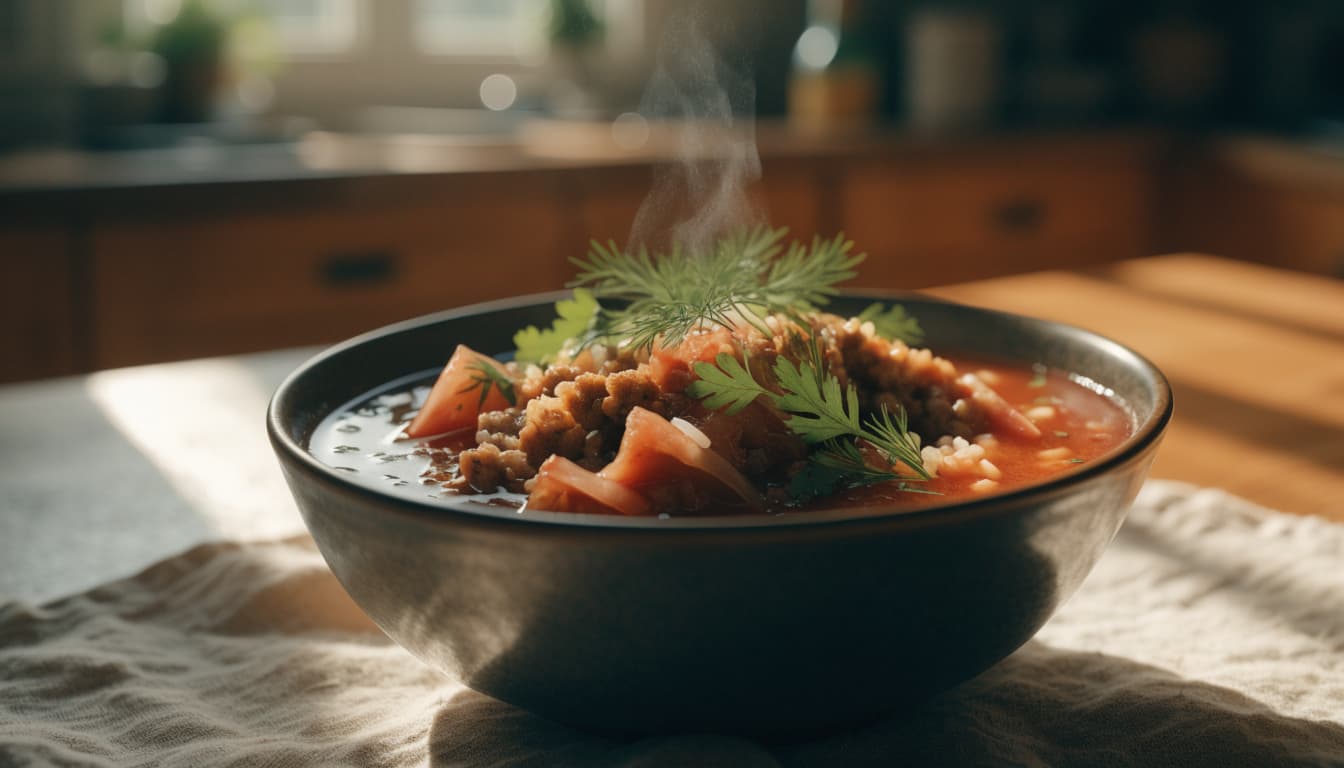
The classic balance of cabbage, meat, rice, and tomato
Tender cabbage gives the soup its soft, sweet-green flavor, while browned meat adds savory depth. A blend of beef, pork, and veal brings more layers than one meat alone: beef gives the broth a hearty base, pork adds richness, and veal rounds out the mix. These proportions can vary, and no single family recipe has to define the dish.
Rice makes the bowl filling and soaks up some of the tomato broth without taking over. Tomatoes supply the bright, slightly tangy flavor that ties the ingredients together. As they simmer, their acidity balances the richness of the meat, while stock helps the soup stay savory rather than taste like thinned tomato sauce.
Seasonings also shape the final flavor. Allspice, coriander, and smoked paprika lend warmth and gentle spice; dill and parsley bring a fresh, green finish. The result should taste full and comforting, with enough brightness from tomato and herbs to keep each spoonful from feeling heavy. For a look at the familiar filling behind the soup, see this Polish stuffed cabbage roll recipe.
Why this soup skips the rolling and stuffing
Traditional cabbage rolls wrap meat and rice inside softened cabbage leaves, then cook in sauce. Golumpki soup keeps those same broad flavor cues, but makes them easier to bring to the table. The cabbage is sliced into spoon-friendly pieces, so there’s no need to separate, soften, fill, or roll whole leaves.
The meat cooks directly in the pot, where it can brown and season the broth. Rice goes in near the end, which helps it stay tender instead of turning overly soft during a long simmer. Meanwhile, the tomato, cabbage, and meat share the same pot, so their flavors mingle as the soup cooks.
That simple change makes serving easier, too. There’s no roll to cut apart, and each bowl gets a little of everything. Families may use different meats, herbs, or seasonings, but the heart of the dish remains recognizable: cabbage-roll flavors in a warm, spoonable soup.
Simple Ways to Adjust the Soup to Your Taste
A few small changes can make golumpki soup suit your kitchen and your preferences. Keep the rice and liquid amounts as written, though, since changing either can affect how thick the soup becomes and how the rice cooks.
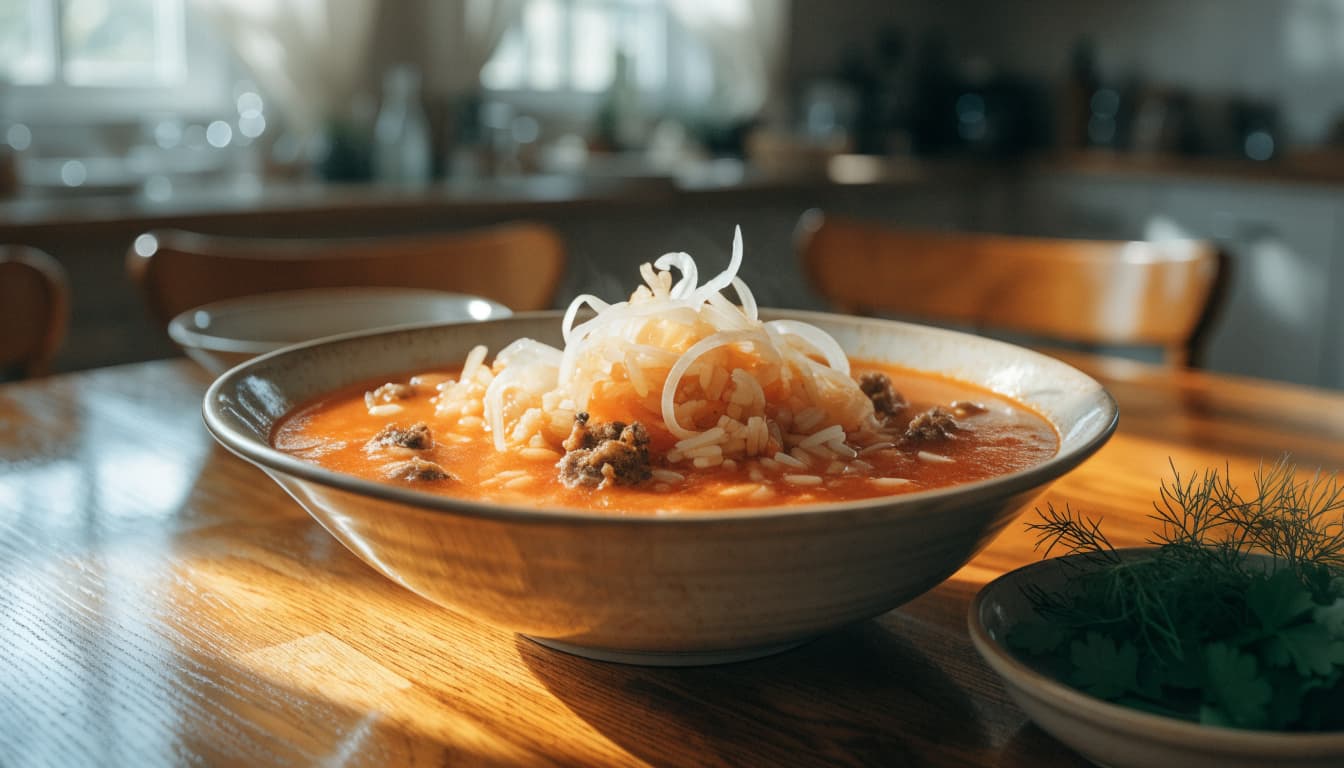
Choose a meat blend and cabbage that suit your kitchen
The recipe’s beef, pork, and veal blend gives the soup a rich, rounded flavor. If you have only ground beef or ground pork, either works. Just expect a slightly different flavor and fat level; drain excess fat if the soup seems greasy after browning.
Savoy cabbage is the recipe’s choice because it softens nicely in the broth. Green cabbage is a reasonable substitute. Slice it into thin strips and simmer until tender, checking a piece before you add the rice.
These are straightforward ingredient swaps, not tested changes to the recipe’s proportions. For a related dinner that uses ground beef and broth, try our easy ground beef stroganoff recipe.
Adjust the spices, herbs, and broth carefully
Chicken stock and canned tomatoes vary in saltiness, so taste the soup before adding more salt. If you want to check packaged ingredients, read their labels; USDA FoodData Central also offers sodium information for many foods.
Add black pepper or smoked paprika a little at a time, tasting between additions. Dill and parsley can also be adjusted to taste. Stir fresh herbs in near the end so their flavor stays lively.
If the soup gets thicker than you like, stir in a small splash of stock and check the consistency before adding more. A longer uncovered simmer can reduce a broth that seems thin, but stir occasionally so the ingredients don’t catch on the bottom. This gradual approach also works when loosening the sauce in ground beef stroganoff.
Keep the rice quantity steady unless you’re following a tested variation with adjusted liquid and cooking directions. Extra rice absorbs broth, while less rice leaves the soup looser; either change can affect texture and doneness.
Make-Ahead, Storage, and Reheating That Preserve the Texture
A little planning makes golumpki soup easier to serve later without sacrificing tender cabbage or flavorful broth. Prep vegetables ahead, chill leftovers promptly, and warm only what you plan to eat.
Prep components ahead and chill leftovers promptly
Chop the onion, carrot, and cabbage in advance, then refrigerate them in covered containers. You can also cook the rice separately before assembling the soup. Keeping it apart until near the end helps prevent the grains from soaking up too much broth.
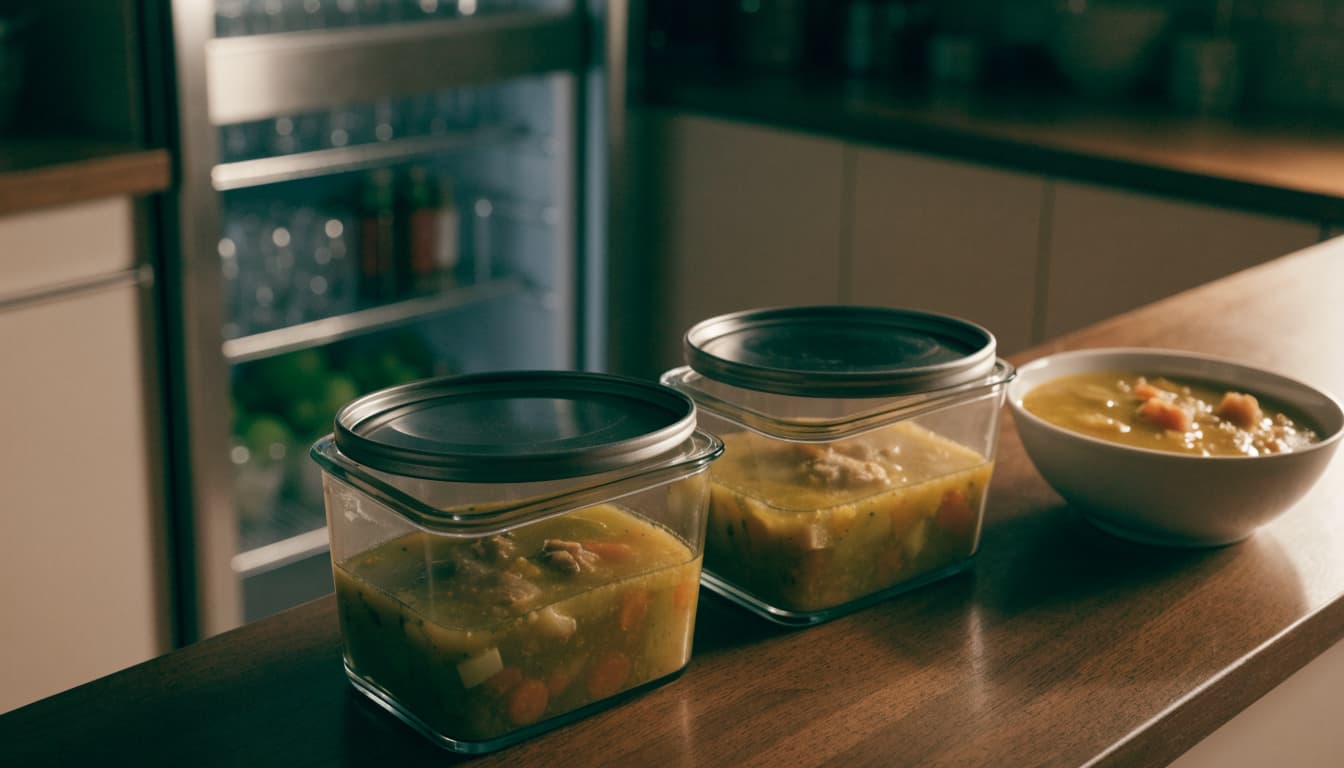
After serving, divide a large batch into shallow, covered containers instead of leaving it to cool in a deep pot. Refrigerate the soup within two hours, or within one hour if the room is above 90°F. Discard portions left out longer, even if they look and smell fine. For more practical tips, see our guide to meal prep recipes for busy weeks.
Use refrigerated leftovers within 3 to 4 days. Freeze portions you won’t eat in that time, and label each container with the date. For best quality, use frozen soup within 2 to 3 months. Rice may keep absorbing broth as the soup sits, so leftovers can become thicker. That change is normal; add a little stock or water when reheating to bring back a soup-like consistency. The USDA’s leftover food safety guidance covers safe chilling and storage.
Warm gently and restore a soup-like consistency
Reheat only the amount you need. On the stovetop, warm the soup while stirring, then bring it to a rolling boil. Check the center with a food thermometer and serve once the entire portion reaches 165°F.
For the microwave, transfer soup to a covered, microwave-safe dish. Stir halfway through heating so the middle warms evenly, then check the center with a thermometer. If the rice has made the broth too thick, stir in a small splash of stock or water and heat until the soup reaches 165°F throughout.
Serve Golumpki Soup as a Filling, Easy Dinner
Golumpki soup has rice and meat in every bowl, so it’s hearty enough to serve on its own. If you’d like to round out dinner, keep the sides simple and let the cabbage, tomato, and herbs stay at the center of the meal.
Add a simple side and finish each bowl with herbs
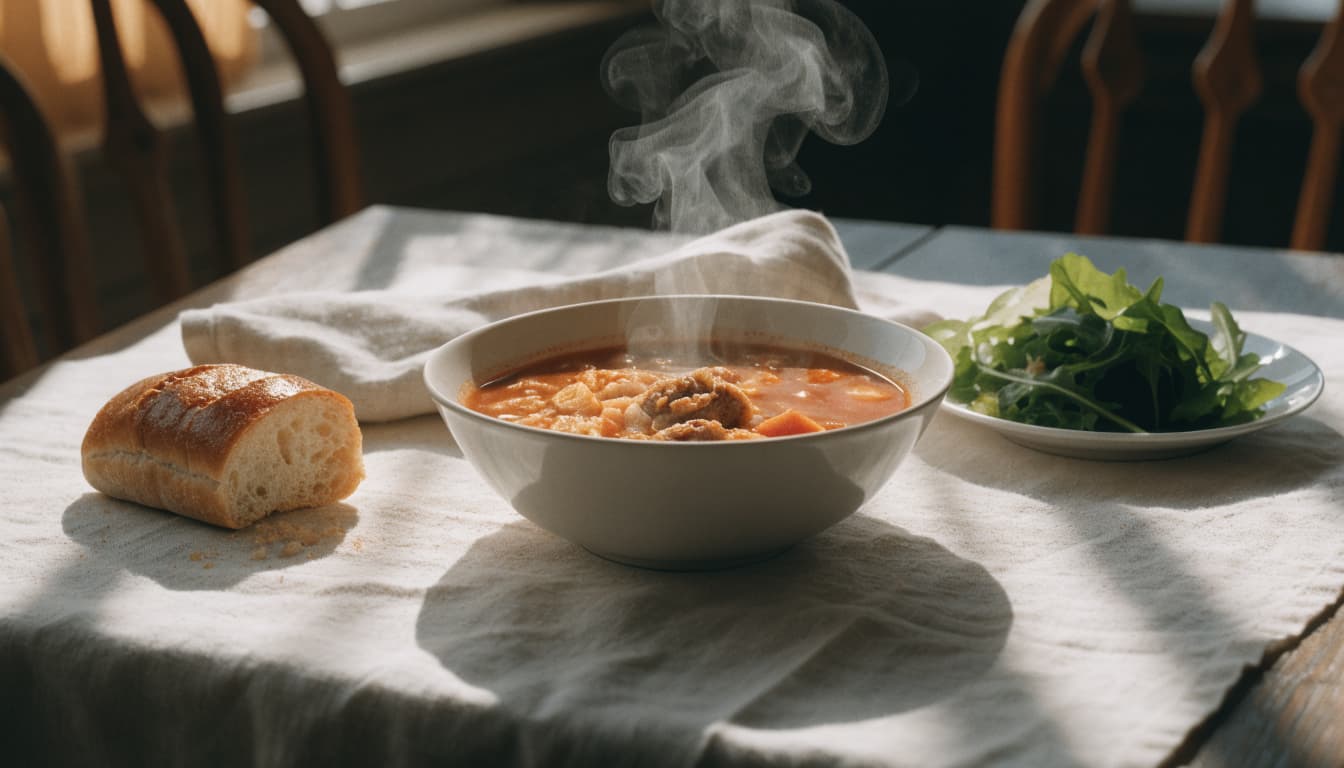
A piece of crusty bread or a plain dinner roll is just right for catching the savory tomato broth. For a fresher contrast, serve a small green salad dressed lightly with vinaigrette. These green leafy salad ideas offer inspiration without calling for a complicated spread. We also share more simple pairings in our guide to one-pot pasta with spring vegetables.
Just before serving, scatter chopped parsley or dill over each bowl. Both herbs bring a fresh note that suits the soup’s warm, savory flavors. Keep other toppings restrained, since a heavy layer of cheese or bold seasoning can compete with the cabbage, meat, and tomato. A warm roll, a crisp salad, and a little fresh herb are plenty to make dinner feel complete.
Conclusion
Golumpki soup brings the familiar taste of cabbage rolls to dinner with less shaping and a straightforward simmer. Cook the rice separately and stir it in near the end, then taste the broth before adding more salt.
For safe, easy leftovers, divide the soup into shallow containers and refrigerate promptly. When you make it again, adjust the seasonings a little at a time until each bowl suits your table.
Save the pin for later
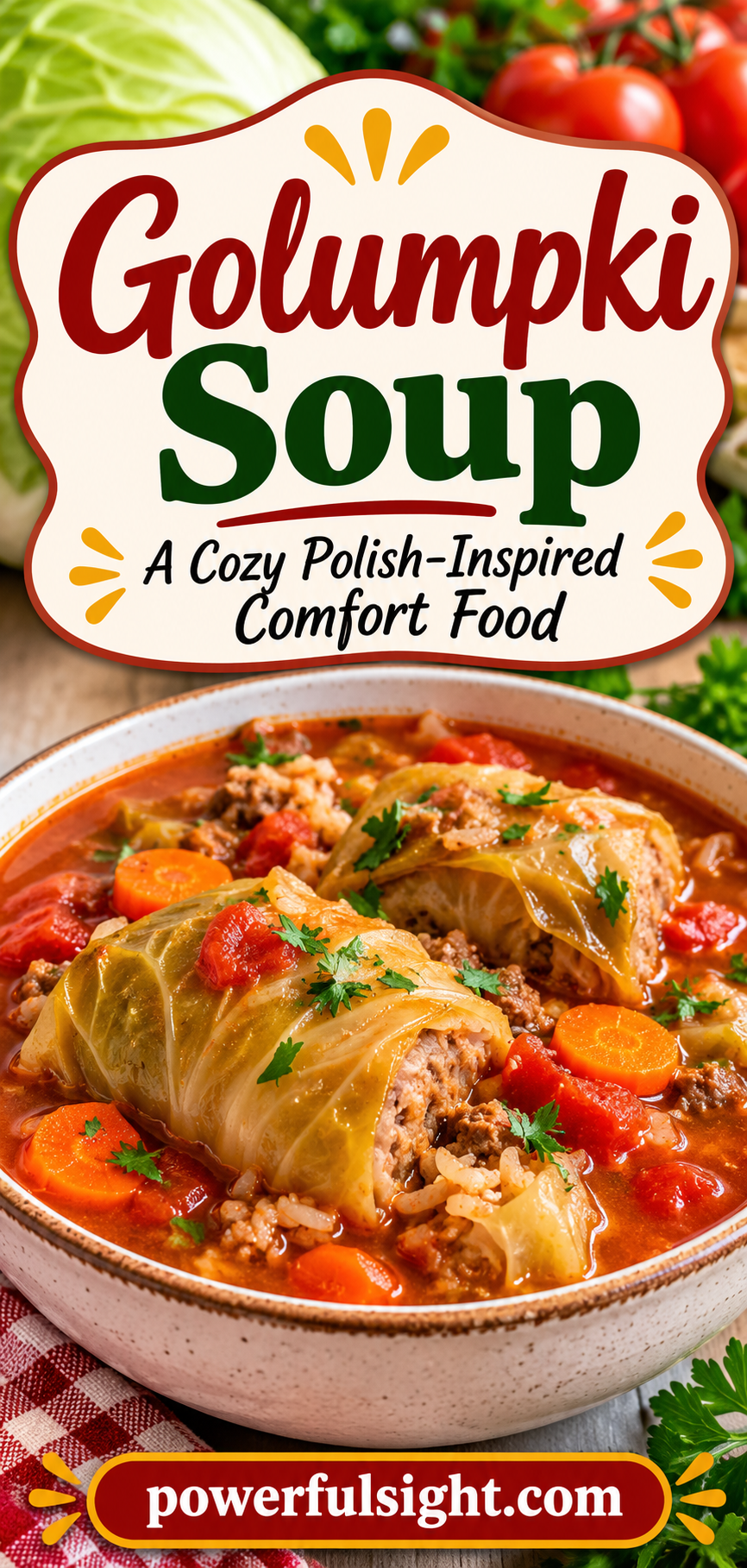

- Golumpki Soup - 14/11/2026
- 180 Blessed Family Quotes to Share With the People You Love - 13/11/2026
- Healthy Low Sugar Dessert Recipes - 13/11/2026
About the Author