A great carrot cake recipe is worth baking at home because it gives you everything you want in one slice, a moist crumb, warm spice, rich cream cheese frosting, and easy prep that doesn’t turn into an all-day project. Right now, that kind of bake feels especially timely, because carrot cake is having a strong comfort food moment in 2026 for its cozy flavor, nostalgic appeal, and crowd-pleasing finish.
If you’ve had carrot cake that’s dry, too dense, or buried under frosting, you know how easy it is to miss the mark. This from-scratch version keeps things simple and reliable, so you can make it with confidence for birthdays, Easter, holiday tables, or a laid-back weekend bake. Next, you’ll see exactly what makes this recipe work so well from the first bowl to the final swirl of frosting.
What makes the best carrot cake recipe actually work
A truly great carrot cake gets the basics right. It should be very moist, gently spiced, sweet but not heavy, and rich with real carrot flavor. Then the cream cheese frosting should bring a tangy finish, not just a blast of sugar.
For a standard two-layer cake, the ratios matter more than fancy extras. A reliable range is about 3 to 4 cups finely grated carrots, 2 cups flour, 3 to 4 eggs, 1 to 1.5 cups oil, and 1.5 to 2 cups sugar. That balance gives you a cake that stays soft, slices cleanly, and still tastes like carrot cake, not spice cake with orange flecks.
The ingredient balance that gives carrot cake a soft, moist crumb
Carrot cake works best when oil leads the fat. Butter tastes great, but oil stays liquid at room temperature, so the crumb stays softer for longer. That’s a big reason classic carrot cake feels plush on day one and still tastes good the next day. If you want the science behind that texture, this guide on oil in carrot cake explains the difference well.
Fresh carrots matter just as much. They add moisture, mild sweetness, and a little body to the batter. However, the way you grate them changes the whole cake. Fine grating is the sweet spot because the carrots soften into the crumb as the cake bakes. Coarse shreds stay stringy, and pre-shredded carrots are usually too dry and too thick. For a closer look at texture, this piece on the best way to grate carrots lines up with what bakers see at home.
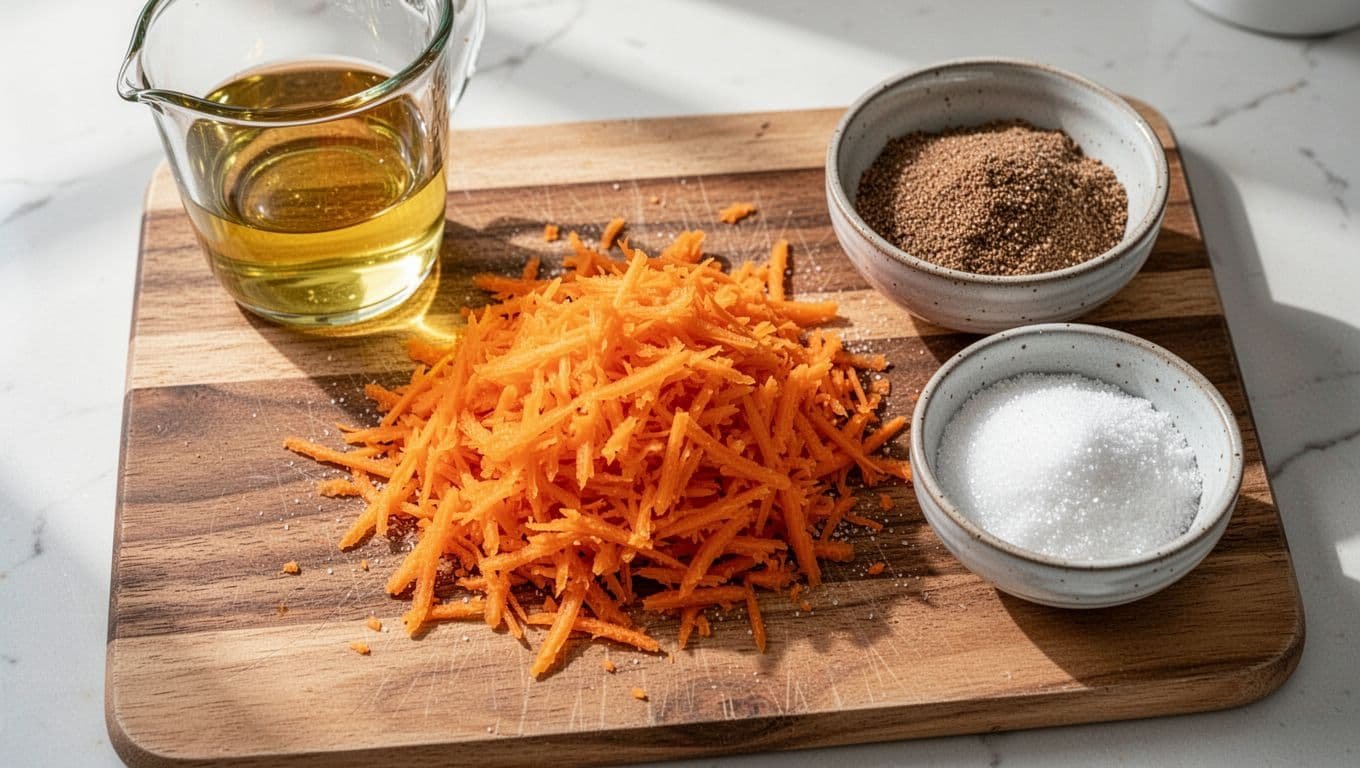
Sugar balance matters, too. A mix of brown sugar and white sugar gives you the best of both. White sugar keeps the crumb light enough, while brown sugar adds moisture and a deeper flavor that fits the warm spice. That mix helps the cake taste rounded instead of flat.
Fine, freshly grated carrots do more for carrot cake than any trendy add-in ever will.
How much spice, sweetness, and texture is just right
The best carrot cake doesn’t bury the carrots under spice. Cinnamon should lead, because it gives warmth without taking over. Then, if you want a little more depth, add small amounts of ginger or nutmeg. Keep those in the background. Too much nutmeg can turn sharp, and too much ginger can make the cake taste more like a holiday loaf than a classic carrot cake. For a useful take on spice balance, this carrot cake spice guide makes the same point: restraint usually wins.
Sweetness needs the same control. Carrot cake should taste rich, but it shouldn’t feel sticky or cloying. Since cream cheese frosting already brings sweetness, the cake itself should stay a little more measured. That’s why the best recipes aim for warmth and depth, not candy-like flavor.
Texture is where many recipes go off track. Nuts and raisins can add contrast, but too many make every bite busy. A good rule is to keep add-ins modest, so they support the crumb instead of hijacking it. In most cakes, that means one add-in, or a light mix of two, folded in with a gentle hand.
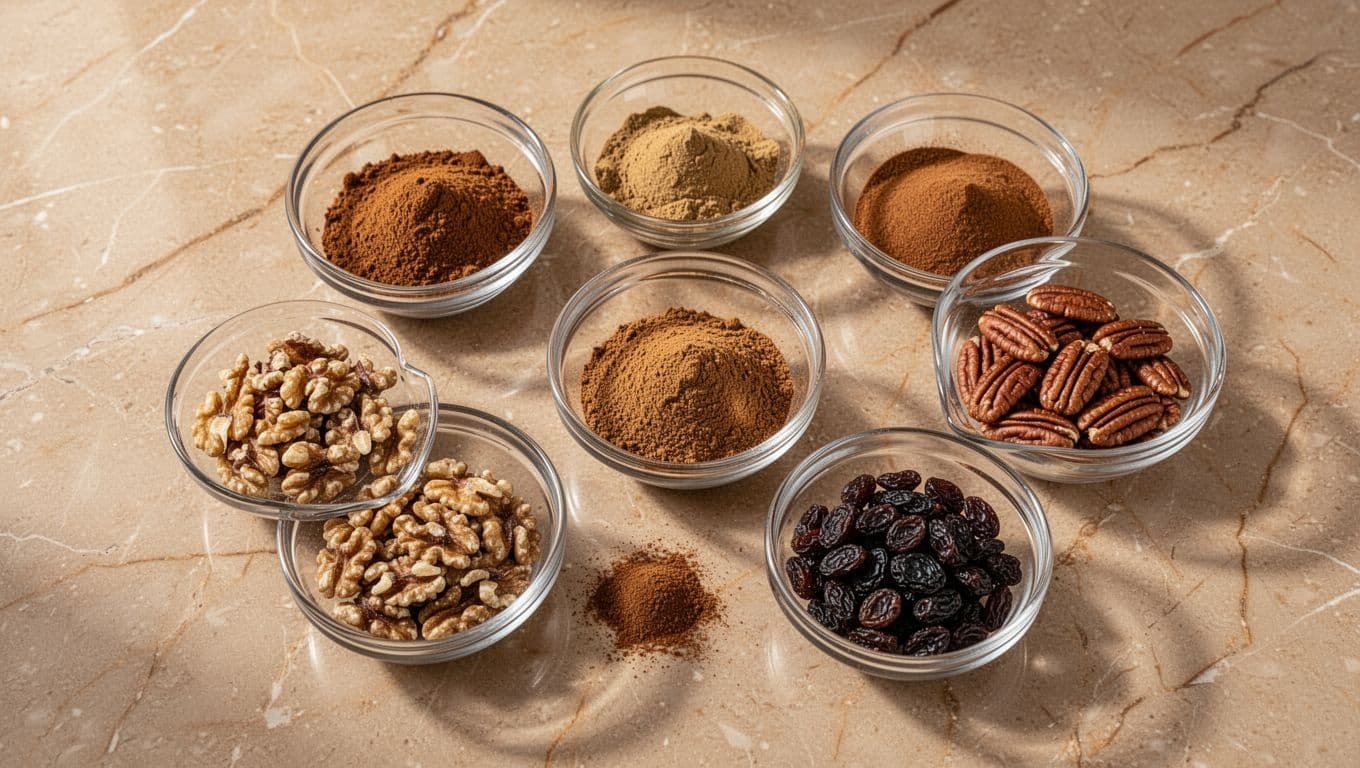
A balanced carrot cake usually gets these details right:
- It has enough cinnamon to smell warm and familiar.
- It uses ginger or nutmeg as support, not the main event.
- It includes nuts or raisins for texture, but not in every forkful.
- It leaves room for the tang of cream cheese frosting to stand out.
That balance is why the cake feels comforting instead of crowded. Every part has a job, and none of it shouts over the rest.
The ingredients you need for the cake and cream cheese frosting
Before you mix a single bowl, it helps to know which ingredients are essential and which ones are just nice extras. A great carrot cake doesn’t need a long shopping list, but each ingredient has a clear job. Get the basics right, and the cake bakes up moist, tender, and full of warm flavor.
Best ingredients for a classic homemade carrot cake
For the cake itself, stick with the classic base first. That means all-purpose flour, baking powder, baking soda, and salt for structure and lift. Then you need eggs, oil, granulated sugar, brown sugar, freshly grated carrots, and warm spices, usually cinnamon with a little nutmeg or ginger.
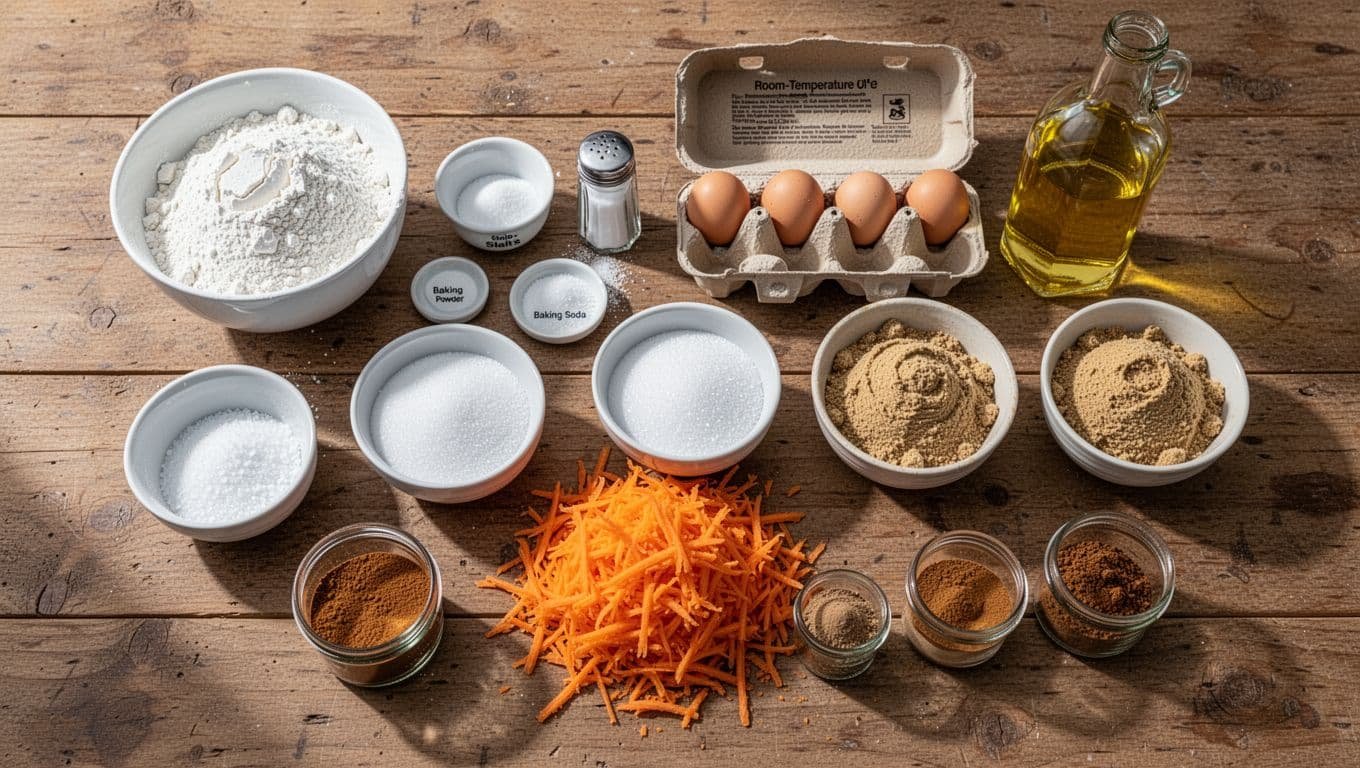
This quick guide makes the roles clear before you move on to the recipe:
| Ingredient | Why it matters | Essential or optional |
|---|---|---|
| All-purpose flour | Gives the cake body and a soft crumb | Essential |
| Baking powder | Adds lift | Essential |
| Baking soda | Helps the cake rise and brown well | Essential |
| Salt | Balances sweetness and sharpens flavor | Essential |
| Eggs | Bind the batter and add richness | Essential |
| Neutral oil | Keeps the cake moist for days | Essential |
| Granulated sugar | Adds sweetness and supports texture | Essential |
| Brown sugar | Adds moisture and a deeper flavor | Essential |
| Freshly grated carrots | Bring moisture, sweetness, and carrot flavor | Essential |
| Cinnamon | Gives classic warmth | Essential |
| Nutmeg or ginger | Add extra spice depth | Optional, but recommended |
| Plain yogurt | Adds a little more tenderness | Optional |
| Crushed pumpkin puree | Gives a small moisture boost | Optional |
A few details make a big difference. Use room temperature eggs so they blend into the batter smoothly. Cold eggs can make the mixture look curdled and mix less evenly. Also, grate your own carrots right before baking. Pre-shredded carrots are too dry and too thick, so they don’t melt into the crumb the same way. Many trusted home bakers, including Inspired Taste’s carrot cake recipe, follow that same fresh-carrot approach for better texture.
Freshly grated carrots are one of the easiest ways to make carrot cake taste homemade.
When shopping, choose a neutral oil like vegetable or canola, fresh spices that still smell warm and strong, and firm carrots with good color. Those small choices shape the final cake more than most add-ins ever will.
What to use for the best cream cheese frosting
The best cream cheese frosting for carrot cake starts with four basics: cream cheese, butter, powdered sugar, and vanilla extract. That’s the classic combo because it gives you the right mix of tang, sweetness, and a soft, spreadable texture.
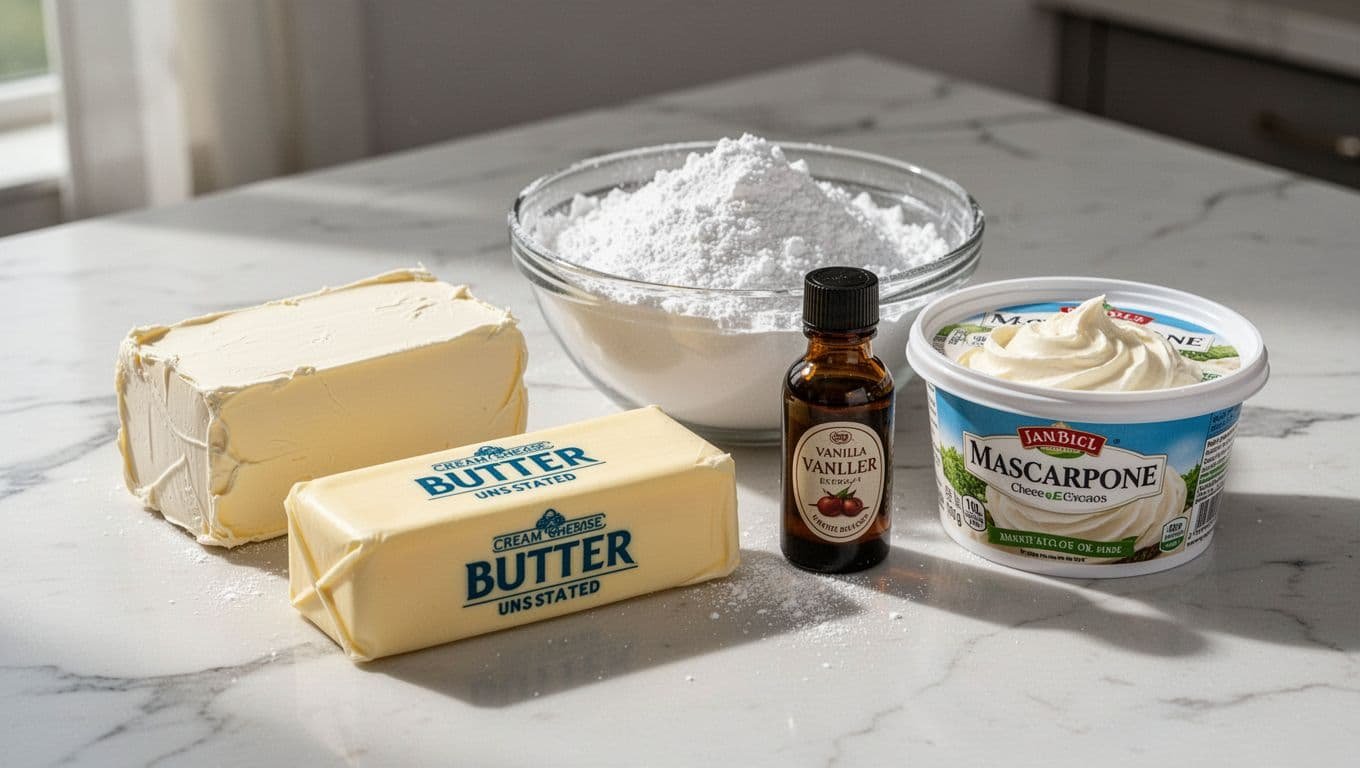
For the best result, use full-fat block cream cheese, not the whipped kind in a tub. Pair it with softened unsalted butter so the frosting beats up smooth. Then add powdered sugar a little at a time, plus vanilla for a clean, classic finish. If you want a slightly richer frosting with a silkier feel, you can mix in a little mascarpone. It softens the tang just enough without taking away that familiar cream cheese flavor.
Here is the simple breakdown:
- Cream cheese is the base and gives the frosting its tang.
- Butter adds richness and helps the texture hold.
- Powdered sugar sweetens and thickens the frosting.
- Vanilla rounds out the flavor.
- Mascarpone is optional for a richer, softer finish.
If you need a dairy-free option, you can still make a good frosting with plant-based cream cheese and butter. The flavor will change a bit, but it still works well on carrot cake. The main thing is to use softened ingredients and frost only when the cake is fully cool, because warm layers will make the frosting slide.
How to make carrot cake step by step without drying it out
This is the part that makes or breaks a carrot cake. The goal is simple: keep the batter gentle, bake just until done, and cool the layers with a little patience. If you do those three things well, you’ll get a soft, moist cake that stays tender under cream cheese frosting.
How to prep the pans, grate the carrots, and mix the batter
Start by heating your oven to 350 degrees F. Then grease two 8-inch round cake pans, line the bottoms with parchment, and lightly grease the parchment too. That extra minute saves you from stuck layers and torn edges later.
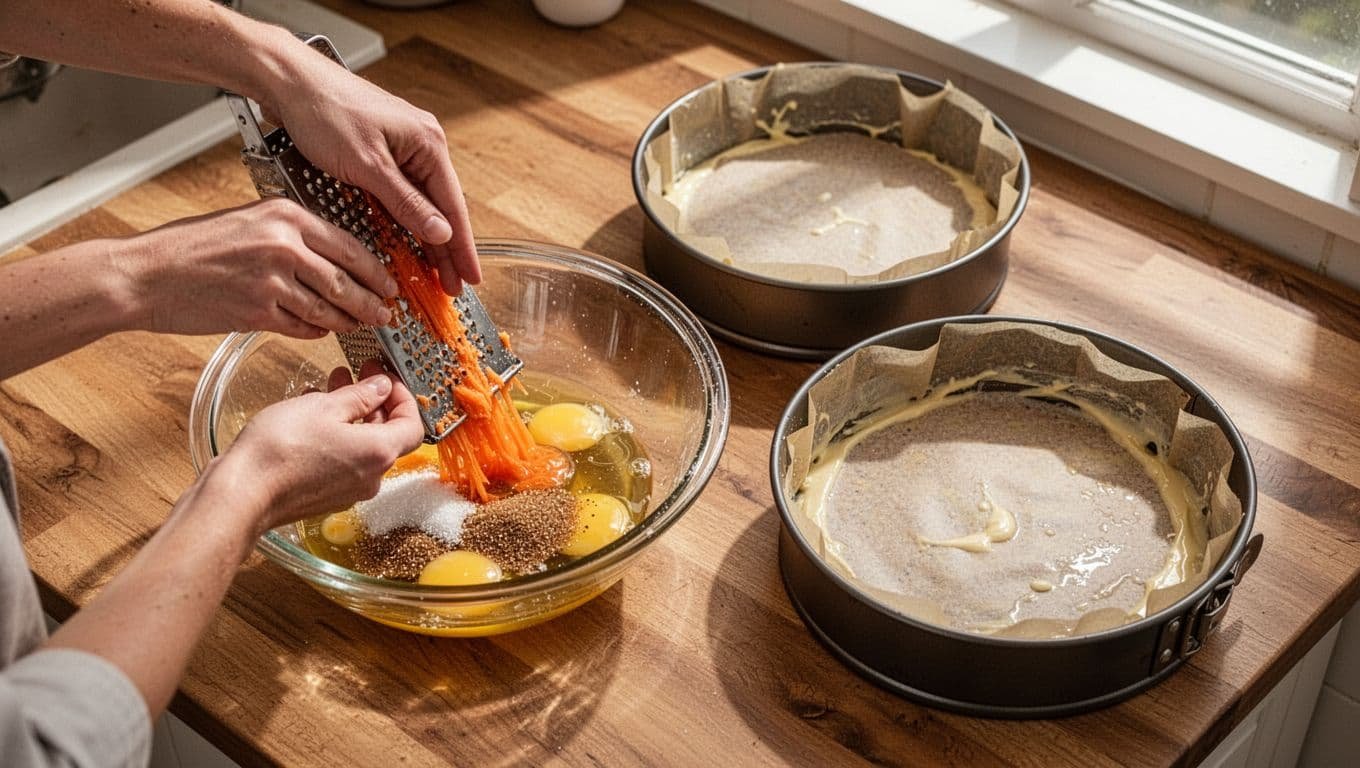
Next, grate the carrots by hand on the small holes of a box grater. Freshly hand-grated carrots are best because they stay moist and fine enough to melt into the crumb. Pre-shredded carrots are thicker and drier, so they don’t soften the same way. If you want a quick refresher on common texture issues, this guide on carrot cake mistakes and fixes covers the big ones well.
For the batter, mix the wet ingredients first. Whisk the eggs, oil, sugars, and vanilla until smooth. Then stir in the grated carrots. In a separate bowl, whisk the flour, baking powder, baking soda, salt, and spices.
Add the dry mix to the wet mix in two or three additions. Fold gently with a spatula just until you no longer see dry streaks. That’s the key. Overmixing builds too much gluten, and that pushes carrot cake toward tough and dry instead of soft and plush.
A slightly lumpy batter is safer than an overmixed one.
Bake time, doneness signs, and cooling the layers the right way
Divide the batter evenly between the pans and smooth the tops. Bake the layers for about 25 to 35 minutes, depending on your pans and oven. Dark pans often bake a little faster, while thicker batter in deeper pans may need more time.
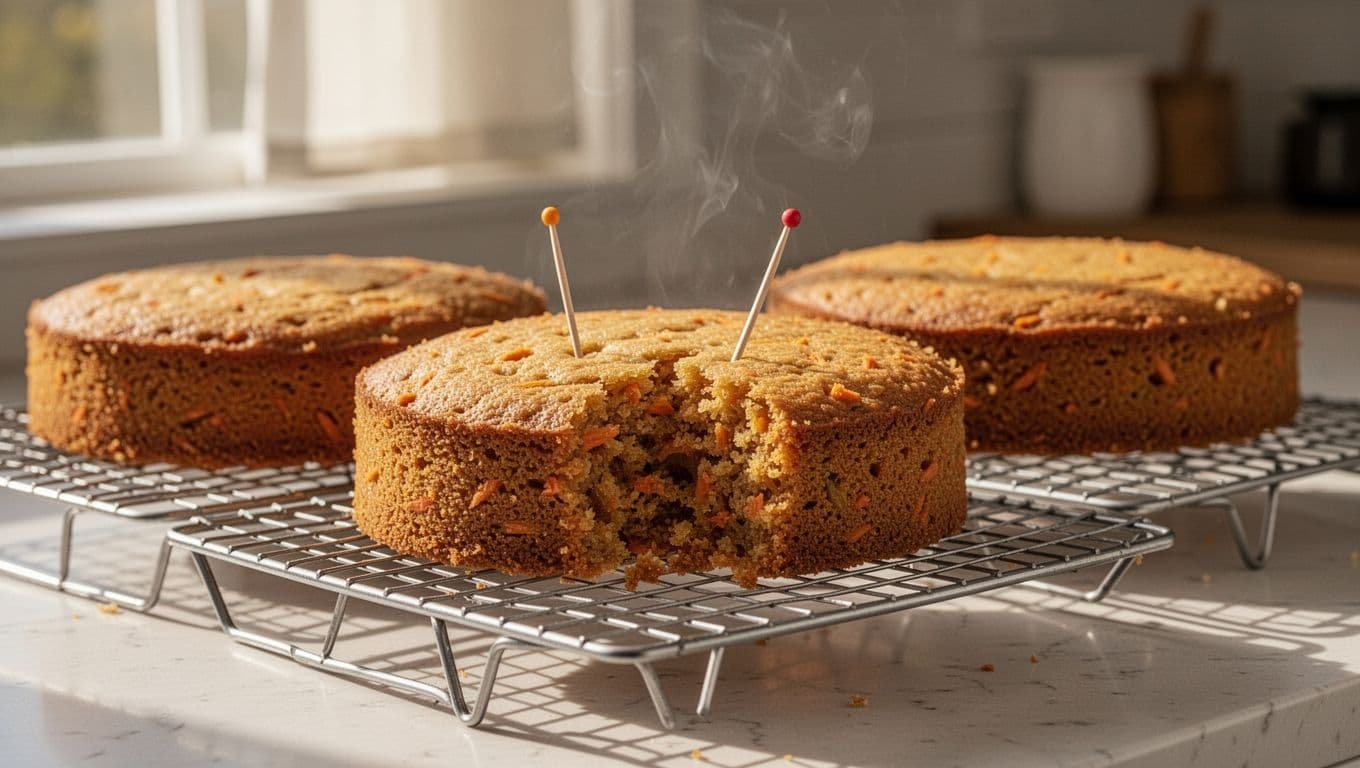
Start checking near the lower end of the range. Insert a toothpick into the center. If it comes out with a few moist crumbs, the cake is ready. You do not want wet batter, but you also don’t need a bone-dry toothpick. A dry toothpick can mean the cake has already gone a bit too far.
The tops should spring back lightly when touched, and the edges may start to pull from the pan. For more step-by-step baking cues, this easy moist carrot cake guide lines up with the same timing and texture signs.
Let the cakes cool in the pans for about 10 to 15 minutes. Then run a knife around the edges, turn them out, and cool them completely on wire racks. Full cooling matters because warm layers trap steam, and that can make the crumb gummy. Warm cake also melts frosting, so all your careful work starts sliding around.
How to frost and assemble the cake so it looks bakery worthy
If the layers have a dome, level them with a serrated knife once they’re fully cool. You only need to trim a little. A flat top makes stacking easier and keeps the cake from leaning.
Set the first layer on a cake stand or plate, then spread on an even layer of cream cheese frosting. Add the second layer and cover the top and sides. An offset spatula helps, but a regular spatula works fine too. Keep the pressure light so you don’t pull up crumbs.
If you want a cleaner finish, spread on a thin crumb coat first and chill the cake for 15 to 20 minutes. Then add the final layer of frosting. It doesn’t need to be perfect. Soft swirls look homemade in the best way.
For the final touch, keep it simple:
- Sprinkle chopped walnuts or pecans around the top edge.
- Add a light dusting of cinnamon if you like a warmer finish.
- Leave the sides a little rustic for an easy bakery-style look.
Once frosted, chill the cake briefly if the kitchen is warm. That helps the frosting set and gives you cleaner slices.
Simple tips that make carrot cake taste even better
Once the recipe is solid, a few small choices can push carrot cake from good to memorable. These are the practical tweaks that help the crumb stay soft, the frosting behave, and the flavor improve after the cake rests.
Easy ways to keep carrot cake moist for days
Moist carrot cake starts before it ever cools. First, don’t overbake it. Pull the layers when a toothpick shows a few moist crumbs, because extra oven time dries the cake faster than most people expect.
Next, measure flour the right way. Spoon it into the measuring cup and level it off, or use a scale if you have one. Packed flour makes the batter heavier, and that can leave you with a drier crumb. You also need enough oil, since oil is what helps carrot cake stay tender in the fridge instead of turning firm and stale.
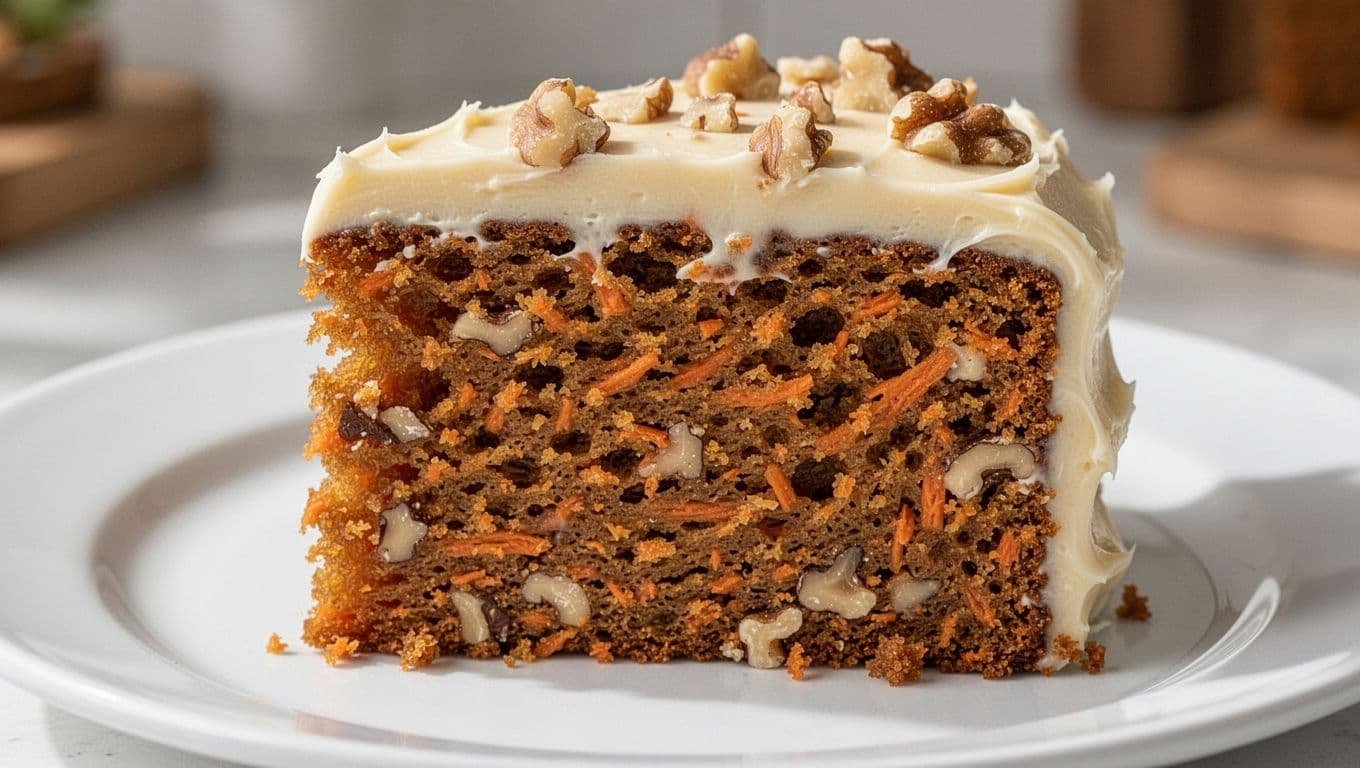
After frosting, store the cake covered in the fridge. Cream cheese frosting needs the chill, and a covered cake holds onto moisture much better than one left exposed. If you want extra insurance, brush the layers with a light simple syrup before frosting. Keep it subtle, though, because the goal is a soft cake, not a wet one. For more general storage tips, this cake moisture guide covers the basics well.
Common carrot cake mistakes and how to avoid them
Most carrot cake problems are easy to fix once you know what to watch. Overmixing is a big one, so stir just until the flour disappears. A smooth batter sounds nice, but too much mixing can make the cake tight instead of tender.
Carrot texture matters too. Use fine shreds, not coarse ones, because thick pieces stay stringy and bake unevenly. Also, go easy on mix-ins. A handful of nuts or raisins adds contrast, but too many can weigh down the batter and make each slice feel crowded.
Then there’s frosting. Never spread it on a warm cake, or it will slide and melt. If your cream cheese frosting feels too loose, chill it for a bit before using it, or mix in a little more powdered sugar. If you’ve hit one of these snags before, these carrot cake fixes can help you correct them fast.
Does carrot cake taste better the next day
Yes, carrot cake often tastes better the next day. After a night in the fridge, the spice, carrot, and brown sugar flavors blend more fully, and the crumb settles into that soft, rich texture people want from a classic slice.
That rest also helps the frosting and cake come together, so each bite tastes more balanced. Some bakers even prefer it slightly chilled. For the best texture, take the cake out of the fridge about 20 to 30 minutes before serving. That short rest softens the crumb and frosting just enough, while still keeping the cake neat and easy to slice. If you’re curious why rested cakes can taste better, this look at aging cake for a day or two explains the idea well.
Tasty variations, storage tips, and make ahead options
One of the best things about this carrot cake recipe is how easy it is to tweak without losing its classic feel. You can keep it traditional, make it a little richer, or adjust it for guests with dietary needs. That kind of flexibility is a big reason carrot cake still feels current in 2026, especially as more bakers want familiar desserts with a few smart options built in.
Easy recipe variations if you want to change it up
A classic version with nuts and raisins is always a safe choice, but you can also skip either one without hurting the cake. If you want crunch, fold in chopped walnuts or pecans. If you prefer a smoother slice, leave them out. The same goes for raisins. Some people love the chewy sweetness, while others want the carrot and spice to stay front and center.
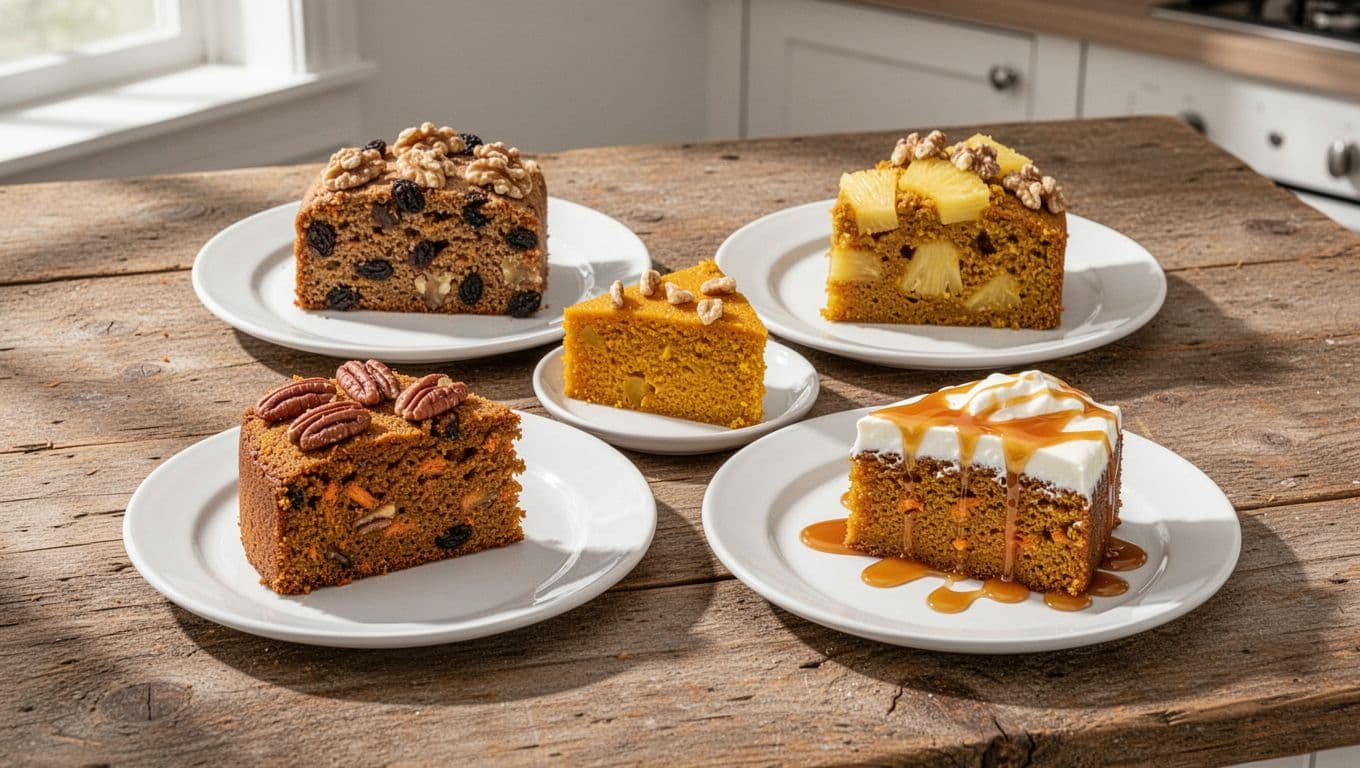
If you want a softer, extra-moist crumb, a few add-ins work especially well:
- A little crushed pineapple adds sweetness and moisture. Just drain it well so the batter doesn’t get too wet.
- A scoop of plain yogurt makes the cake more tender and gives the crumb a gentler texture.
- A small amount of pumpkin puree adds moisture and a cozy fall note without taking over.
- A thin caramel layer between the cake and frosting adds a richer finish for parties or holiday tables.
These updates fit current baking trends, but they still feel approachable. Pineapple and pumpkin, in particular, keep showing up in modern carrot cake spins because they add moisture without making the cake fussy.
If you need a swap for dietary reasons, keep it simple. A gluten-free 1:1 baking flour usually works better than making several flour swaps at once, and recipes like this gluten-free carrot cake with pineapple show how well that style can hold moisture. For dairy-free baking, use a reliable plant-based butter and cream cheese for the frosting. The flavor changes a bit, but the cake still feels familiar.
How to store, freeze, and make carrot cake ahead
Because of the cream cheese frosting, this cake keeps best in the fridge. Store it in an airtight container, or cover it well, for up to 7 days. The flavor often gets even better after a day in the fridge, since the spice and carrot have more time to settle together.
If your kitchen is cool, the cake can sit at room temperature briefly, such as during serving or for a few hours before an event. Still, don’t leave it out all day. Cream cheese frosting is happiest chilled, and the cake stays fresher that way too. For a general refresher, this guide on how to store carrot cake matches the same basic approach.
For longer storage, freeze the unfrosted cake layers for up to 3 months. Wrap each cooled layer tightly in plastic wrap, then again in foil or a freezer-safe bag. When you’re ready to use them, thaw the layers in the fridge overnight, then bring them closer to room temperature before frosting.
Make-ahead prep is easy, which makes this recipe great for holidays and parties:
- Bake the cake layers 1 to 2 days ahead and keep them wrapped in the fridge.
- Make the frosting 1 day ahead and store it in the fridge.
- Let the frosting soften slightly before spreading, then give it a quick stir.
- Assemble the cake the day before serving if you want the flavors to meld.
If you want the cleanest slices, chill the finished cake for a bit after frosting. Then let it sit out for 20 to 30 minutes before serving so the crumb and frosting soften just enough.
Conclusion
This is the kind of carrot cake recipe that earns a spot in your regular rotation because it gets the big things right. The crumb stays moist, the spice feels balanced, and the method stays easy enough for a weekend bake or a holiday table.
Just as importantly, the cream cheese frosting brings the right tang and richness without taking over. After a short rest, the whole cake tastes even better, which makes it a dependable choice when you want a dessert that feels homemade and special.
Bake it for Easter, a birthday, or any gathering that needs a cake people will actually talk about. It’s simple, classic, and always a good reason to share a slice.
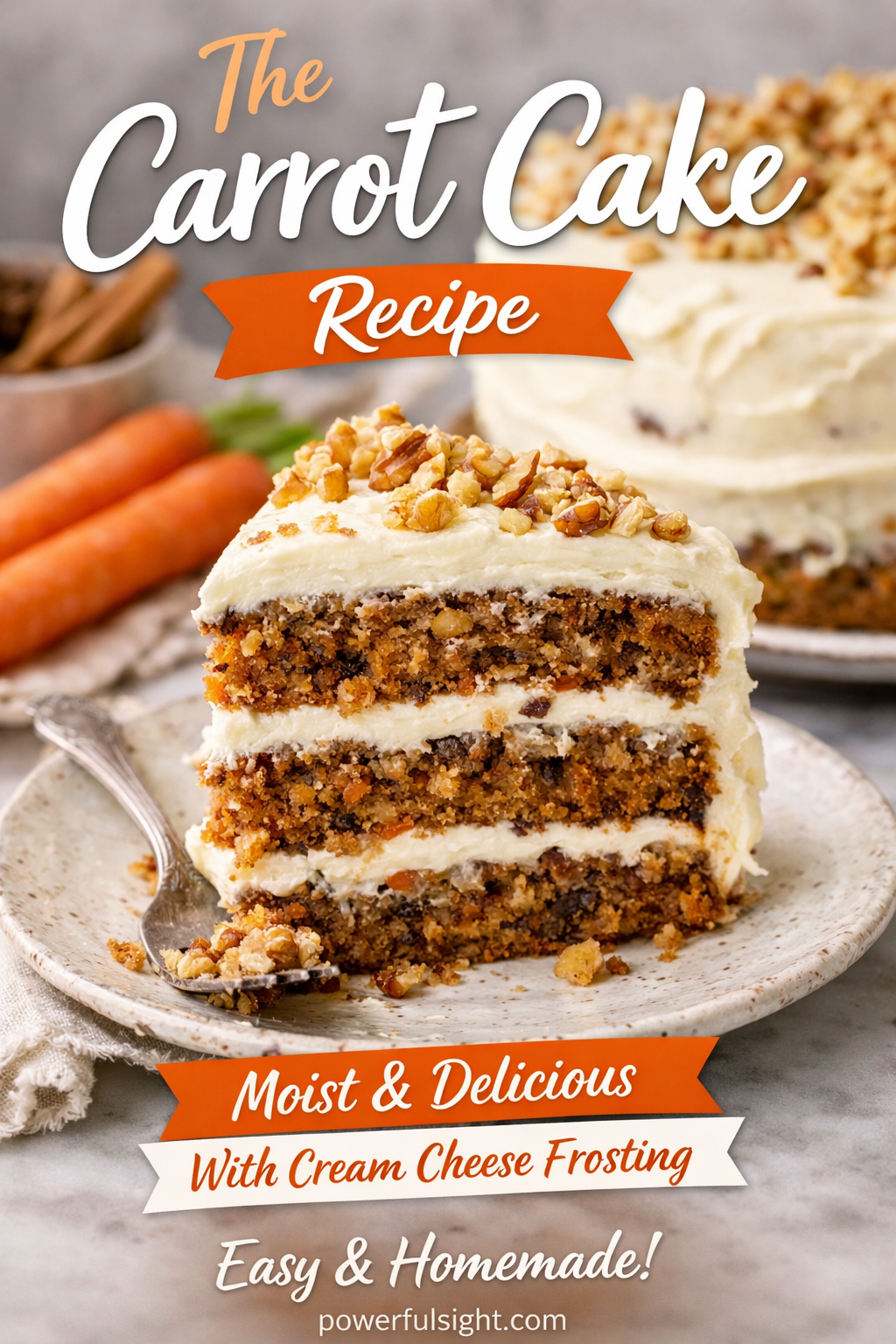
Save the pin for later

- Healthy Air Fryer Recipes for Beginners - 21/09/2026
- Healthy Snacks for Late Night Cravings - 21/09/2026
- High Protein Meal Prep Ideas for Easy Weekly Meals - 21/09/2026

