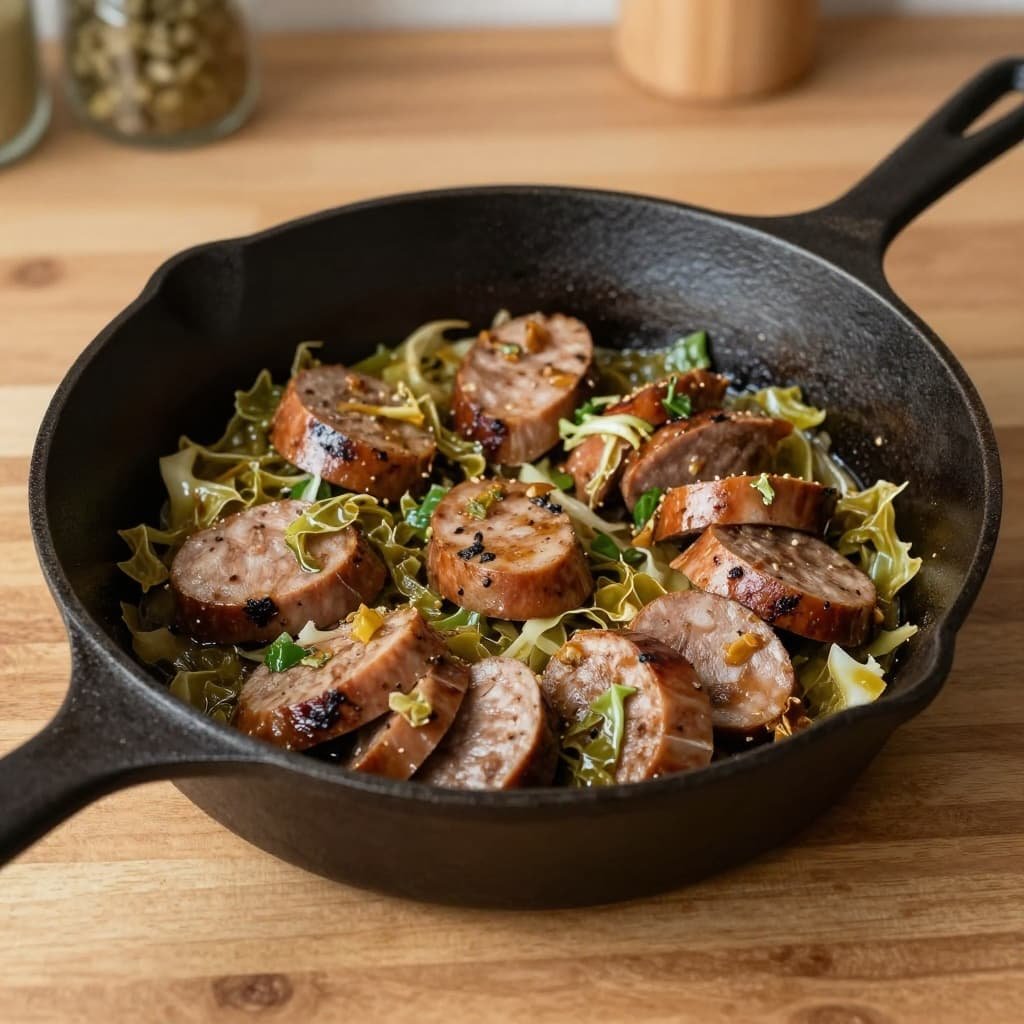
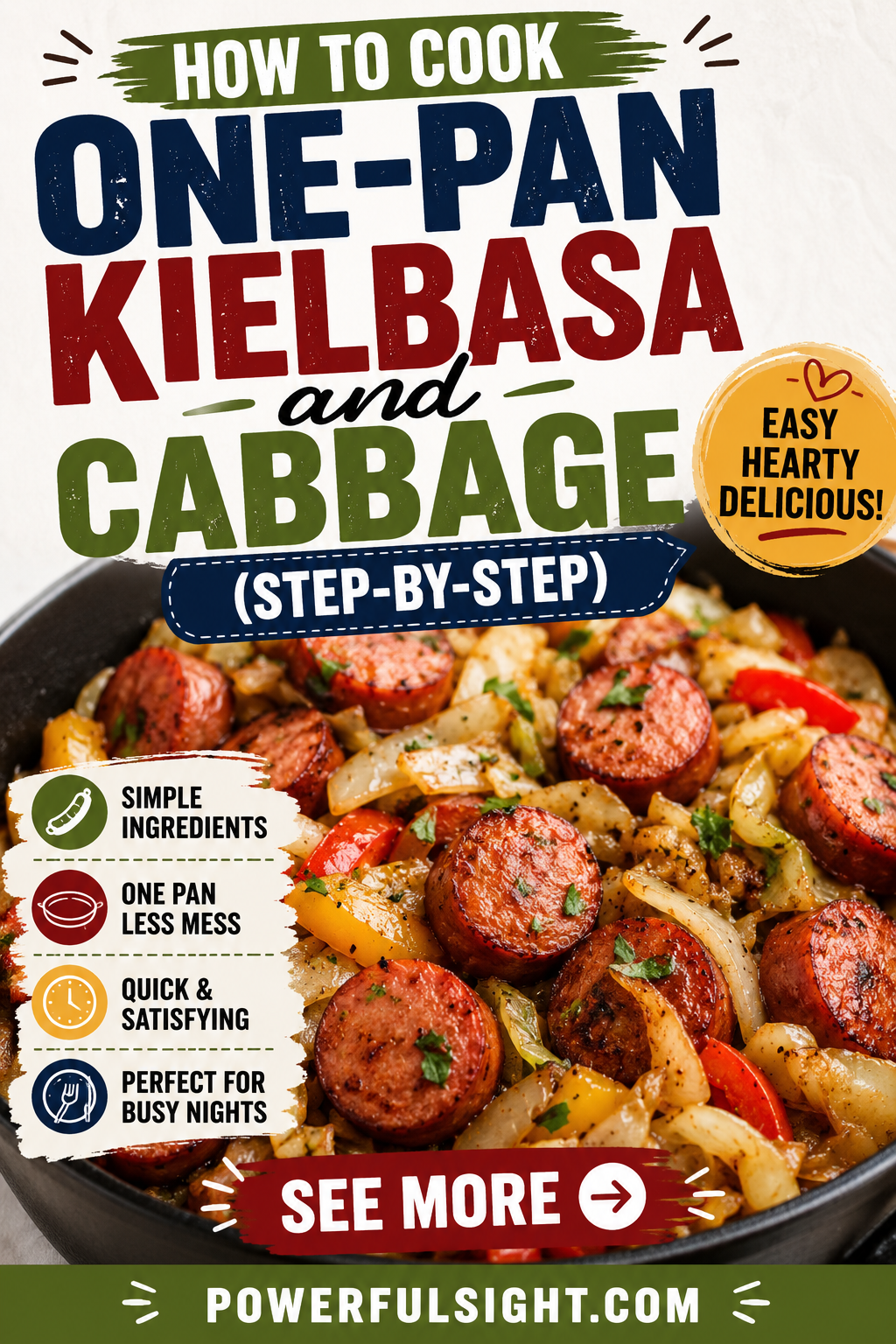
When you need a meal that is both hearty and budget-friendly, there is nothing quite like a one-pan kielbasa and cabbage skillet. This Eastern European classic offers a comforting combination of savory sausage and tender, caramelized cabbage that satisfies every time.
You will appreciate this dish for its simplicity, as it requires minimal cleanup and comes together in less than 40 minutes. Beyond the convenience, it is a great way to incorporate nutritional benefits of eating cabbage into your weekly routine. If you prefer to cook along with a guide, you can watch this helpful demonstration to see how it comes together.
Preparing this meal is a practical skill that makes weeknight cooking feel much less like a chore. Keep reading to master the steps for creating this filling dinner.
Why This Simple Dish Is a Kitchen Staple
When you face a hectic evening with little time to spare, this one-pan combination becomes a lifesaver. It is a humble, reliable meal that requires almost zero effort to prepare, yet it delivers a level of satisfaction that feels far more indulgent than its short cooking time suggests. By relying on two core ingredients, you cut down on shopping stress and keep your grocery budget in check.
Unmatched Convenience for Busy Nights
You rarely find a meal that balances speed and flavor as well as this skillet classic. Because both the sausage and the cabbage cook quickly, you spend less time hovering over the stove and more time relaxing. Cleanup is equally straightforward since you only need to wash one pan, leaving your kitchen tidy after the meal. This is the definition of a low-stress dinner for anyone juggling a full schedule. If you enjoy exploring other quick cabbage and protein dinner ideas, this method proves that simple pantry staples offer endless variety.
Nutritional Value Without the Heavy Feel
Beyond the ease of preparation, this dish provides a surprisingly well-rounded nutritional profile. Kielbasa offers a rich source of protein to keep you satiated, while cabbage brings substantial fiber to the plate. This combination fills you up effectively without leaving you feeling sluggish or weighed down, which is often a welcome relief after a long day. You can find healthy cabbage recipes for busy evenings that leverage these same benefits to fuel your body properly.
Keep in mind that the nutritional impact can vary based on your choice of sausage. While cabbage is a nutrient-dense vegetable loaded with vitamin C and vitamin K, kielbasa is higher in sodium. Opting for a lean sausage or adjusting your seasoning levels allows you to tailor the dish to your specific dietary needs while keeping the classic, savory profile intact. Many cooks find that adding a splash of vinegar or a touch of mustard brightens the flavors without requiring extra salt.
Selecting the Best Ingredients for Flavor
Great cooking starts with the quality of your ingredients. Since this dish relies on a simple list of components, each one matters immensely to the final taste. Picking fresh produce and high-quality proteins sets the stage for a meal that hits every note of comfort.
Picking the Perfect Sausage
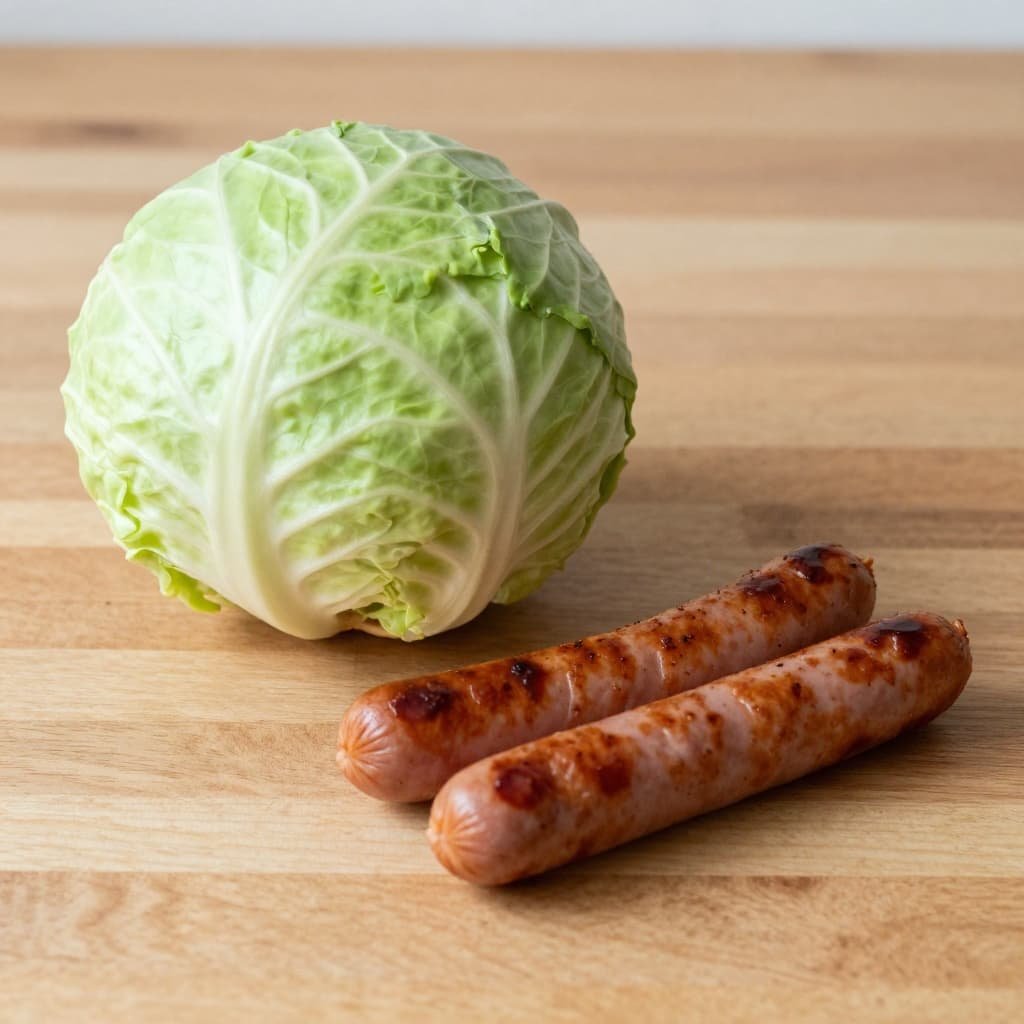
Your choice of sausage acts as the foundation for the entire skillet. Traditional Polish kielbasa is the gold standard for this dish because it is a fully cooked, smoked sausage that holds its shape well under high heat. Look for varieties labeled “Polska Kielbasa” at the grocery store. These often feature a classic blend of pork or a pork-and-beef mix, seasoned with distinct garlic and marjoram notes.
The quality of the smoke is vital here. You want a sausage that offers a deep, savory aroma, which will eventually render into the pan to flavor the cabbage. Avoid cheap, mass-produced versions that might feel overly processed or lack that essential snap when sliced. As experts on smoked sausage suggest, the flavor released into the pan determines how the rest of the meal tastes. If you prefer a leaner option, chicken or turkey smoked sausages are reliable alternatives, though they may lack the fat content that makes traditional pork varieties so rich.
Preparing Your Cabbage
Fresh green cabbage is the best companion for your sausage. It is sturdy, affordable, and provides a pleasant crunch that softens just enough when sautéed. When you are shopping, pick a head that feels heavy for its size and has tight, crisp outer leaves. Avoid heads with brown edges or soft spots, as these won’t hold up well during the cooking process.
Once you are ready to cook, proper preparation ensures every bite is uniform. Follow these steps to get the right texture:
- Cut the head in half right through the stem or core.
- Place each half flat on your cutting board for stability.
- Remove the tough core by slicing around it at a slight angle.
- Slice the remaining leaves into even ribbons about 1/4 to 1/2 inch thick.
Keeping the slices uniform is the secret to even cooking. If you cut the pieces too thin, they might turn mushy before the sausage browns; too thick, and they remain raw in the middle. After slicing, rinse the cabbage in a colander and drain it thoroughly. Dry cabbage hits the hot oil better, which encourages that desirable browning instead of just steaming in the pan. If you find yourself with extra, you can always incorporate it into nutritious cabbage salad ideas for another quick meal later in the week.
Mastering the One-Pan Cooking Method
Cooking everything in a single skillet is a skill that transforms basic ingredients into a cohesive, flavorful meal. The secret lies in managing your heat and layering components in the right order. By using the rendered fat from the sausage to cook your vegetables, you create a foundation of flavor that is hard to replicate with separate cooking methods.

Building Flavor with Aromatics
Aromatics act as the base layer of your dish. Onions and garlic provide a savory pungency that cuts through the richness of the smoked sausage. When you sauté these in the leftover rendered fat from the kielbasa, they absorb that smokiness, which deepens the entire profile of the meal.
Spices are your final tool for character. A generous sprinkle of smoked paprika adds a subtle warmth and a beautiful red hue to the cabbage. If you enjoy a traditional touch, add a teaspoon of caraway seeds; their earthy, slightly bitter notes pair perfectly with the sweetness of sautéed cabbage. These additions turn simple components into a layered experience.
You want to add these seasonings toward the middle of the process. This ensures the garlic doesn’t burn, while still giving the spices enough time to release their essential oils into the pan. It is a simple strategy for flavoring vegetables that creates a much more satisfying result than plain salt and pepper alone.
Achieving the Perfect Cabbage Texture
Nobody wants a plate of soggy, mushy cabbage. The goal is to achieve a tender consistency while maintaining a slight bite. This is a balance of high-heat searing and controlled steaming. To get there, you must avoid the temptation to pile too much cabbage into the pan at once, as crowding the skillet releases too much moisture and effectively boils the vegetable.
Start by sautéing the cabbage over medium-high heat. Let it sit undisturbed for a minute or two to develop golden-brown edges. This initial browning gives the cabbage a richer, nuttier flavor compared to steaming it until limp. Once you have some color, toss the mixture and add a small splash of water or broth to finish the cooking process.
Covering the pan for the last two minutes helps the cabbage soften uniformly, but keep a close eye on it. If you keep the lid on too long, the steam will overtake the texture. High-quality cooking techniques rely on this blend of direct contact with the pan and gentle steam to ensure every bite is tender but still firm.
Creative Variations to Customize Your Meal
This dish is a blank canvas for your personal taste. While the classic pairing of sausage and cabbage is excellent on its own, you can easily turn it into a more substantial meal by adding a few pantry staples. These simple tweaks allow you to adapt the recipe based on what you have in your kitchen.
Hearty Additions for a Filling Dinner
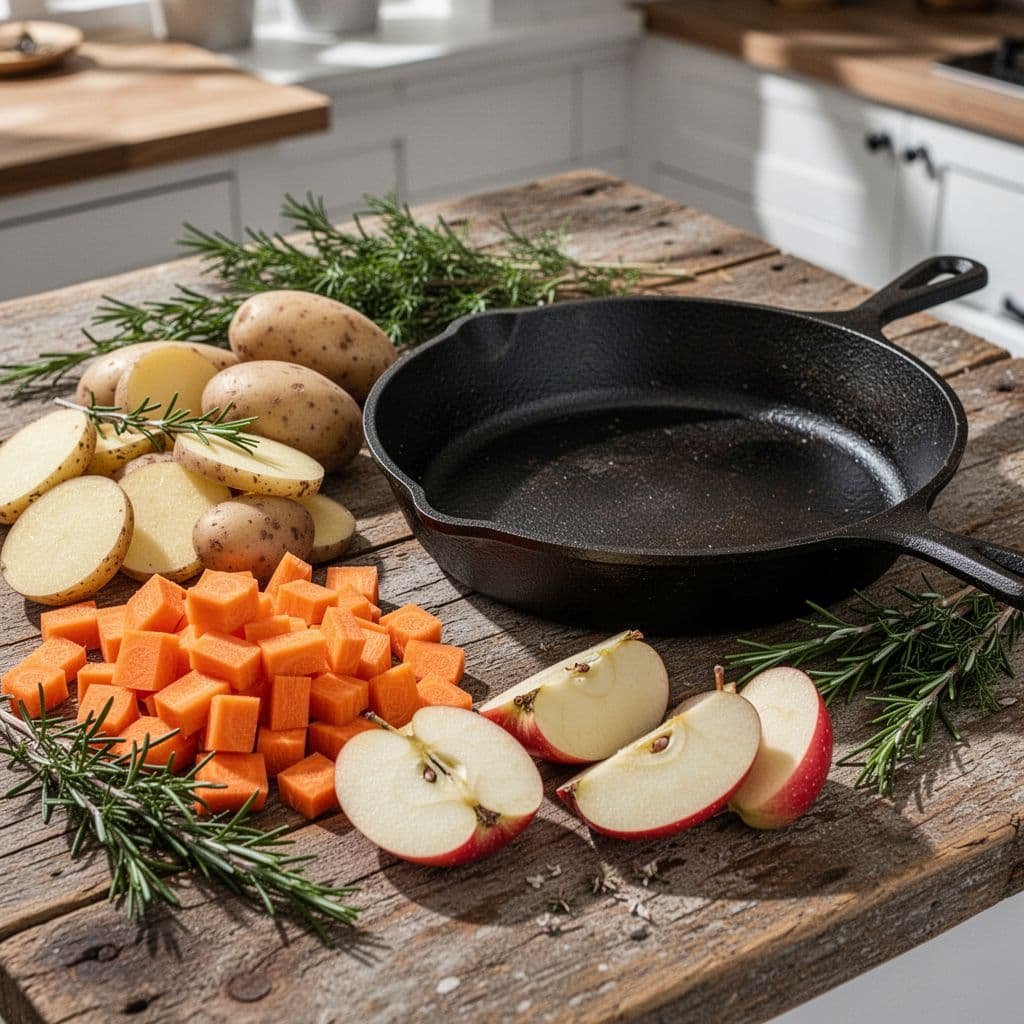
If you want to stretch the recipe for a larger group or simply crave more substance, consider adding starchy vegetables. Potatoes are a popular choice because they soak up the savory drippings from the sausage. To keep the cooking time manageable, I recommend dicing your potatoes small or precooking them slightly in the microwave before they hit the pan. For a 20-minute kielbasa cabbage potato skillet, this shortcut ensures your potatoes are tender while the sausage stays perfectly browned.
Carrots also bring a welcome sweetness and color to the mix. Slice them into thin coins so they cook at the same rate as the cabbage. If you enjoy a touch of fruitiness, try tossing in chopped apples during the last few minutes of cooking. The acidity and crunch of the apple contrast well with the salty, smoked notes of the kielbasa. Using seasonal vegetable pasta ideas as a source of inspiration can also help you find other vegetables that might pair well with your specific variety of sausage.
Simple Finishing Touches to Brighten Flavors
Sometimes a dish needs a final adjustment to make the flavors pop. Because sausage and cabbage can be heavy or salty, adding a bright, acidic finish often balances the plate. A tablespoon of apple cider vinegar or a squeeze of fresh lemon juice stirred in just before serving cuts through the richness and cleanses the palate.
Fresh herbs make a big difference in the final aroma of the meal. Try these pairings to customize your bowl:
- Dill: This provides a classic, refreshing flavor that is perfect with cabbage.
- Parsley: A handful of chopped flat-leaf parsley adds a clean, bright note.
- Thyme: Use this if you prefer an earthy, subtle depth that doesn’t overpower the other ingredients.
- Dijon Mustard: Stirring in a dollop at the end adds a sharp, tangy kick that bridges the gap between the savory meat and the mild vegetable.
Ultimately, these small additions take the meal from a standard weeknight standby to something you look forward to eating. Don’t be afraid to experiment with your own favorite seasonings until you find the exact balance that makes your kitchen smell like a professional deli.
Storage and Reheating Tips
One of the best things about this meal is that it often tastes even better the next day. As the dish rests, the savory notes from the sausage and the subtle sweetness of the cabbage have more time to mingle. The seasonings soak into the fibers of the vegetable, while the fat from the meat creates a deeper, more cohesive profile. Because of this, many people intentionally cook extra to enjoy for lunch or dinner later in the week. Mastering smart food storage tips for meal prep ensures that your efforts stay fresh and safe for those future meals.
Proper Storage Techniques
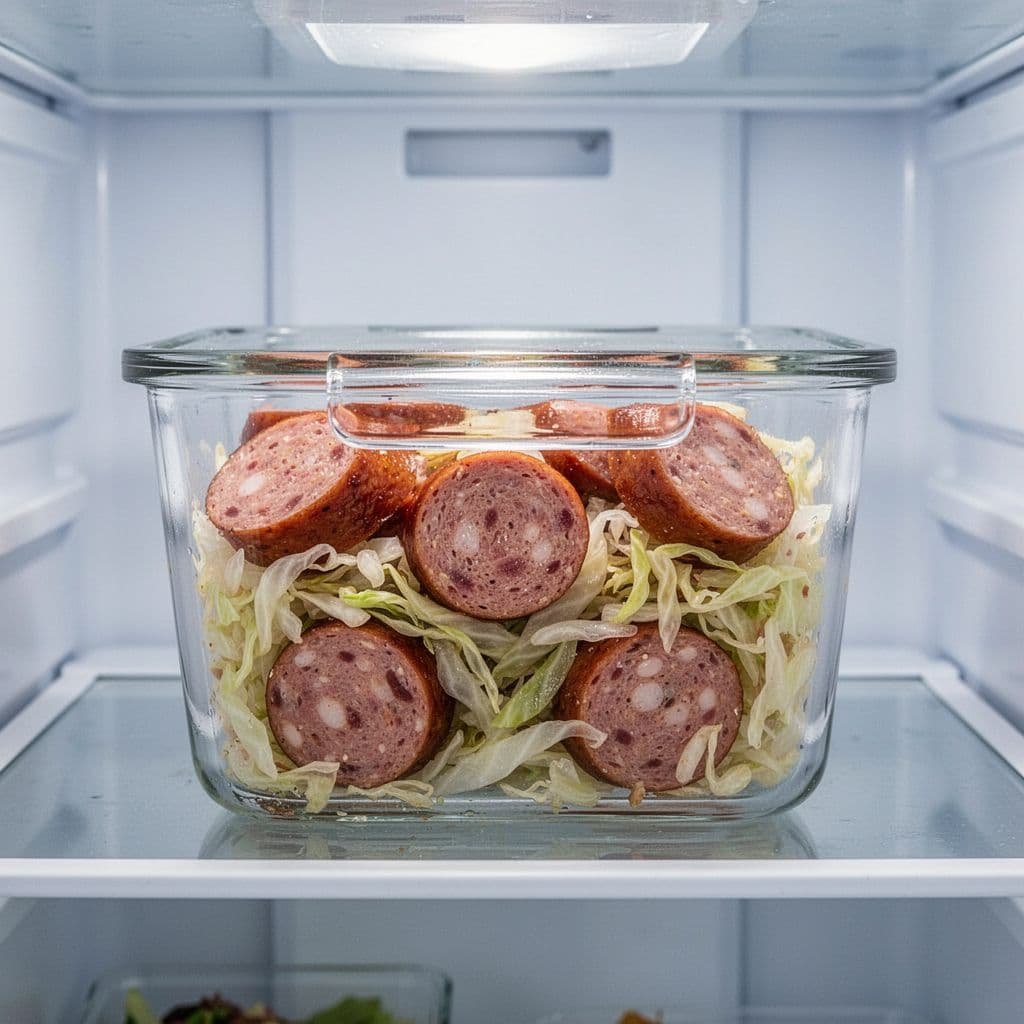
Safety is the priority when handling leftovers. You should move any remaining food into airtight containers once it has cooled to room temperature, but avoid leaving it out for more than two hours. Placing the food in the refrigerator promptly prevents bacteria growth, which is essential for maintaining safe food handling practices.
Glass containers are generally better than plastic for this dish, as they don’t absorb the strong garlic or smoke odors from the sausage. Once sealed, your leftovers will remain delicious and safe to eat for three to four days. While you might be tempted to put the dish in the freezer for long-term storage, the cabbage will likely become watery and mushy once it thaws. It is best to stick with refrigerated storage for the highest quality results.
Reheating for Best Quality
When you are ready to eat, you want to warm the food without turning it into a soggy mess. The stovetop method usually provides the best results because it allows you to control the heat and restore a bit of the original texture.
- Place your desired portion into a small skillet.
- Add a tiny splash of water or broth to the pan.
- Warm the mixture over medium-low heat while stirring occasionally.
- Remove from heat as soon as it is steaming and the sausage is hot through.
If you are short on time, the microwave is a perfectly fine alternative. Place your serving in a microwave-safe dish and cover it loosely with a lid or a paper towel to trap a little moisture. Heat it in one-minute intervals, giving it a good stir in between. This helps distribute the warmth evenly, preventing some parts from drying out while others stay cold. Whether you use the stove or the microwave, adding a tiny sprinkle of fresh herbs just before serving can help wake up the flavors and make your leftover meal feel fresh again.
Conclusion
Mastering this one-pan meal provides a reliable way to get a nutritious dinner on the table without the stress of a long cleanup. You gain efficiency in the kitchen while ensuring every bite is packed with savory, satisfying flavor.
Don’t feel tied to the base recipe as you gain confidence with the method. Experiment with different spices, herbs, or seasonal vegetables to make the dish your own. Simple, home-cooked food is often the most rewarding way to eat well on a busy schedule.
Save pin for later

- Healthy Air Fryer Recipes for Beginners - 21/09/2026
- Healthy Snacks for Late Night Cravings - 21/09/2026
- High Protein Meal Prep Ideas for Easy Weekly Meals - 21/09/2026

