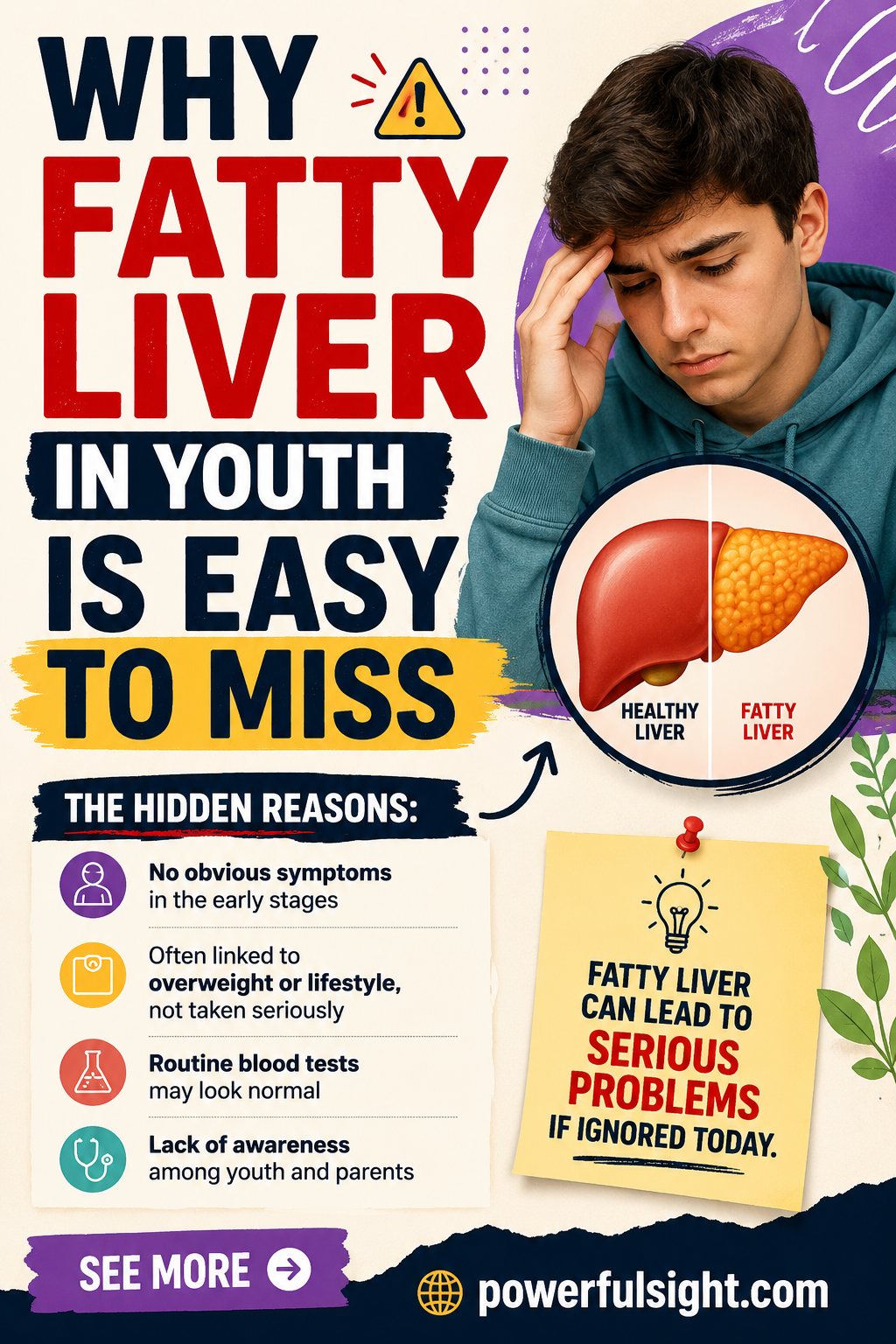
Fatty liver in teens and young adults often slips under the radar because early disease usually feels mild, or it feels like nothing at all. A person can look healthy, stay active, and still have fat building up in the liver.
That silence is the problem. When symptoms do show up, they often blend in with normal teen life, school stress, poor sleep, or a busy schedule.
Common signs people ignore
The most common clues are easy to dismiss. Fatigue, brain fog, and a dull ache or pressure under the right ribs can come and go, so many people do not connect them to the liver.
Some young people also notice:
- Feeling tired even after a full night of sleep
- A heavy or uncomfortable feeling in the upper right belly
- Low energy during workouts or daily routines
- Mild nausea or feeling “off” without a clear reason
These signs are not specific to fatty liver. They can come from many other issues, which is why they are easy to brush aside. The NIDDK symptom guide notes that children may have few or no symptoms at all, even when liver damage is already starting.

Many young people feel fine until a routine blood test or scan finds the problem.
That is why fatty liver can progress quietly, sometimes all the way to fibrosis before anyone notices.
Why screening matters for high-risk teens and young adults
Screening matters most when risk is already high. Teens and young adults with obesity, diabetes, prediabetes, or a strong family history may need earlier attention, even if they feel healthy. The Mayo Clinic also notes that fatty liver often has no symptoms at first, which is why risk-based checks matter.
Early testing can catch liver stress before it turns into scar tissue. Blood tests and, in some cases, imaging can spot problems long before a person feels sick, which gives families a chance to act on diet, movement, and medical follow-up sooner.
Conclusion
Young people are developing fatty liver because the same pressures keep stacking up earlier in life, especially weight gain, sugary and processed foods, less movement, and rising insulin resistance. That mix can load the liver for years before any clear symptoms appear.
The main takeaway is simple, fatty liver is common, silent, and still preventable in many cases. When it’s found early, it can often improve with better food choices, regular activity, more sleep, and steady weight control.
Small changes matter when they happen early and they happen often. If you want a practical way to stay consistent, simple daily habits to build and track can make healthy routines easier to keep, and early medical care can help catch liver problems before they progress.
Save in for later

- Healthy Air Fryer Recipes for Beginners - 21/09/2026
- Healthy Snacks for Late Night Cravings - 21/09/2026
- High Protein Meal Prep Ideas for Easy Weekly Meals - 21/09/2026

