Some of the most damaging parenting mistakes don’t look harsh at all. They look like help, protection, high standards, or harmless comments that happen every day.
Over time, those habits can create quiet damage that shows up as low confidence, anxiety, weak independence, poor emotional skills, or people-pleasing. A child can look fine on the outside and still be learning that mistakes are unsafe, feelings are inconvenient, or approval depends on getting things right.
If you’ve ever wondered whether a small habit is sending the wrong message, you’re not alone. It can help to compare your instincts with common signs of bad parenting, because the same pattern can look different from one family to another.
The mistakes that matter most here are often the ones that feel normal in the moment, like overprotecting, shaming, comparing, or praising the wrong thing. If the goal is a healthier home, the fix usually starts with one pattern at a time, and the next section breaks down what to watch for first.
Related video: Parenting Mistakes that Destroy a Childs Self Esteem
Why the most harmful parenting mistakes are often the hardest to notice
Many parenting habits look normal in the moment. A sharp comment, a quick correction, or a missed chance to listen can feel small, yet kids remember patterns more than single events.
That is why the most harmful mistakes often hide in plain sight. They can show up as criticism, constant comparison, emotional distance, or overcontrol that feels like care. Over time, those habits can shape how a child sees themselves, especially when they start to expect judgment instead of support.
A child does not need a dramatic incident to feel hurt. Repeated pressure and inconsistent responses can train them to doubt their own feelings, second-guess their choices, and stay on guard around the people they trust most. That is one reason overparenting habits can be so hard to spot, they often look like concern before they start to feel like control.
Kids build their self-story from repetition, not from one hard day.
How repeated messages shape a child’s inner voice
Children listen closely to what they hear every day, even when they seem distracted. If a parent often says, “You never try hard enough,” that message can start to sound like truth in the child’s head. The same thing happens with comments like, “Why can’t you be more like your sister?” or “You’re too sensitive.”
Small remarks can become a child’s inner voice. A child who hears criticism often may begin to expect failure before they even start. A child who is compared to others may start to believe love depends on performance. A child who is ignored when upset may learn that their feelings do not matter.
That inner voice can shape behavior fast. Some kids become quiet and self-protective. Others work harder for praise, then panic when they fall short. Research backs this pattern up, including a 2024 longitudinal study on self-esteem, which found that parental psychological control was tied to lower self-esteem later on.
A few common messages often leave the biggest mark:
- Criticism teaches a child to scan for mistakes first.
- Comparison teaches them that worth depends on ranking.
- Emotional dismissal teaches them to hide feelings instead of naming them.
Once these messages repeat, they stop sounding like outside comments. They become part of how a child talks to themselves when no one else is around.
Why small habits can become long-term patterns
Kids adapt to what happens over and over. Even when parents mean well, repeated habits teach children what to expect from stress, conflict, and affection. If a parent always steps in too fast, the child may stop trying on their own. If rules change every day, the child may start watching for the mood instead of the rule.
That is how small habits turn into bigger patterns. A child who grows up with constant correction may become anxious and careful. A child who gets rescued too often may struggle with dependence. A child who learns that feelings are brushed aside may act out later, or hide everything until it spills over.
The pattern matters because it shapes trust. When care feels unpredictable, kids often stay on alert. When approval feels tied to perfect behavior, they may become tense, people-pleasing, or afraid to take normal risks. In contrast, steady warmth and clear limits help a child feel safe enough to learn.
You can see this in everyday life. A parent who always says “I’m fine” while shutting down emotion teaches a child to do the same. A parent who praises achievement but ignores effort teaches a child that only results count. A parent who fixes every problem sends the message that the child cannot handle life alone.
Those lessons stick because children live inside repetition. The same small habit, repeated enough times, becomes a family rule in the child’s mind. That is why subtle mistakes matter so much, they do their work slowly, then show up later in confidence, behavior, and relationships.
Comparing kids to others can quietly crush confidence
Kids notice comparison fast. A comment like “Why can’t you be more like your sibling?” can land as a message that love depends on winning, pleasing, or keeping up. Over time, that turns family life into a scorecard.
When comparison shows up again and again, children may start to see themselves as the one who is always behind. That feeling can grow into shame, perfectionism, jealousy, and fear of failure. Recent research on parents’ social comparisons and adolescent self-esteem shows that kids often absorb this habit and then judge themselves the same way.
A child who is measured against others often starts to measure their own worth the same way.
The damage is not only emotional in the moment. It teaches kids that being a good person is less important than being a better one.
What comparison teaches kids about their value
Comparison sends a painful lesson: “Who you are is not enough unless you outperform someone else.” A child who hears that often may stop trusting their own value and start chasing approval instead.
That shift can show up in small ways first. A child may become unusually hard on themselves after a bad grade, a missed goal, or a slower pace than a classmate. They may also begin to hide mistakes, because mistakes now feel like proof that they fall short.
Comparison also changes how kids see other people. A sibling becomes a rival, a cousin becomes a standard, and a classmate becomes a threat. That can feed jealousy, because another child’s success starts to feel like a loss.
If this pattern feels familiar, building self-esteem without comparisons can help shift the focus back to a child’s own growth. The goal is simple, kids need to hear that their worth is not on trial every time someone else does well.
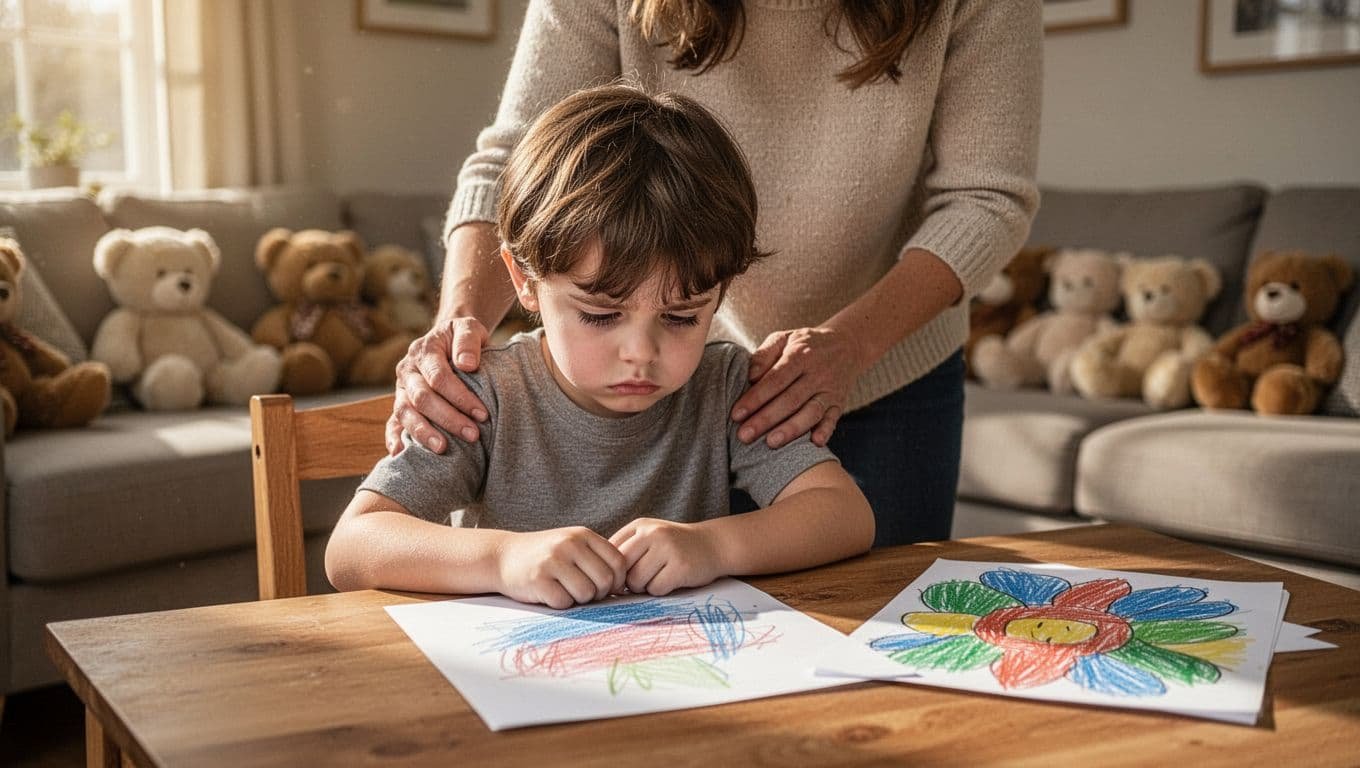
When that lesson takes hold, confidence becomes fragile. One setback can feel like a verdict, not a normal part of learning.
Better ways to encourage effort without ranking children
You can motivate kids without turning them into competitors. Start by noticing effort, strategy, and progress, because those are the things they can control. Praise the action, not the ranking.
A few simple shifts make a real difference:
- “You kept working until it made sense” tells a child that persistence matters.
- “You handled that problem well” points to a specific skill.
- “You improved because you practiced” connects growth to effort.
- “That was hard, and you kept going” shows them struggle is part of learning.
Siblings should also be treated as separate people with different strengths. One child may be quick with numbers, while another is thoughtful, creative, or patient with younger kids. Comparing them blurs those strengths and makes each child feel like a copy that fell short.
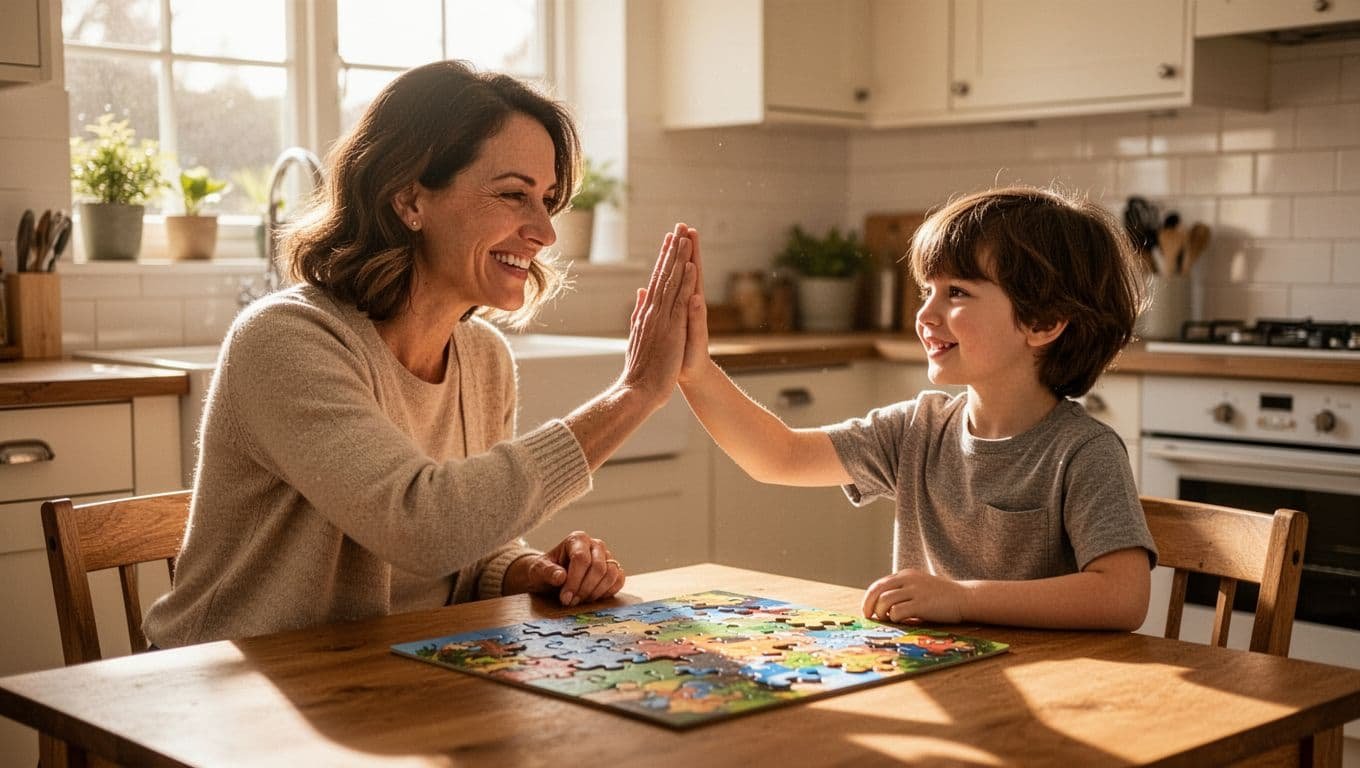
When you want to encourage growth, keep the message simple and clear. Talk about what the child did, what they learned, and how they handled the challenge. That kind of feedback builds steady confidence, because it tells kids they are valued for who they are, not for where they rank.
Inconsistent consequences confuse kids and weaken trust
When consequences change from one day to the next, kids notice fast. They may not say it out loud, but they learn that a rule only matters if a parent feels like following through.
That creates a simple problem. Empty threats, broken promises, and shifting rules teach children that boundaries are negotiable. Over time, that can lead to more testing, more arguments, and less respect for the rule itself.
Research on parental inconsistent discipline links this pattern with more behavior problems and weaker self-control later on, which fits what many parents see at home. When the limit feels blurry, kids push harder to find out where it really is.
Why kids stop taking rules seriously when consequences change
Children watch for patterns. If bedtime gets enforced on Monday but ignored on Tuesday, they learn to wait for the easier answer. If a timeout is threatened three times and never happens, the threat loses weight.
That is why inconsistency invites more pushing. A child thinks, “Maybe this time will be different,” so they test again. Soon, the rule is no longer a rule, it’s a guess.
This also affects trust. Kids do better when they know what happens next, because predictability feels safe. When a parent says one thing and does another, the child starts paying attention to mood, not meaning.
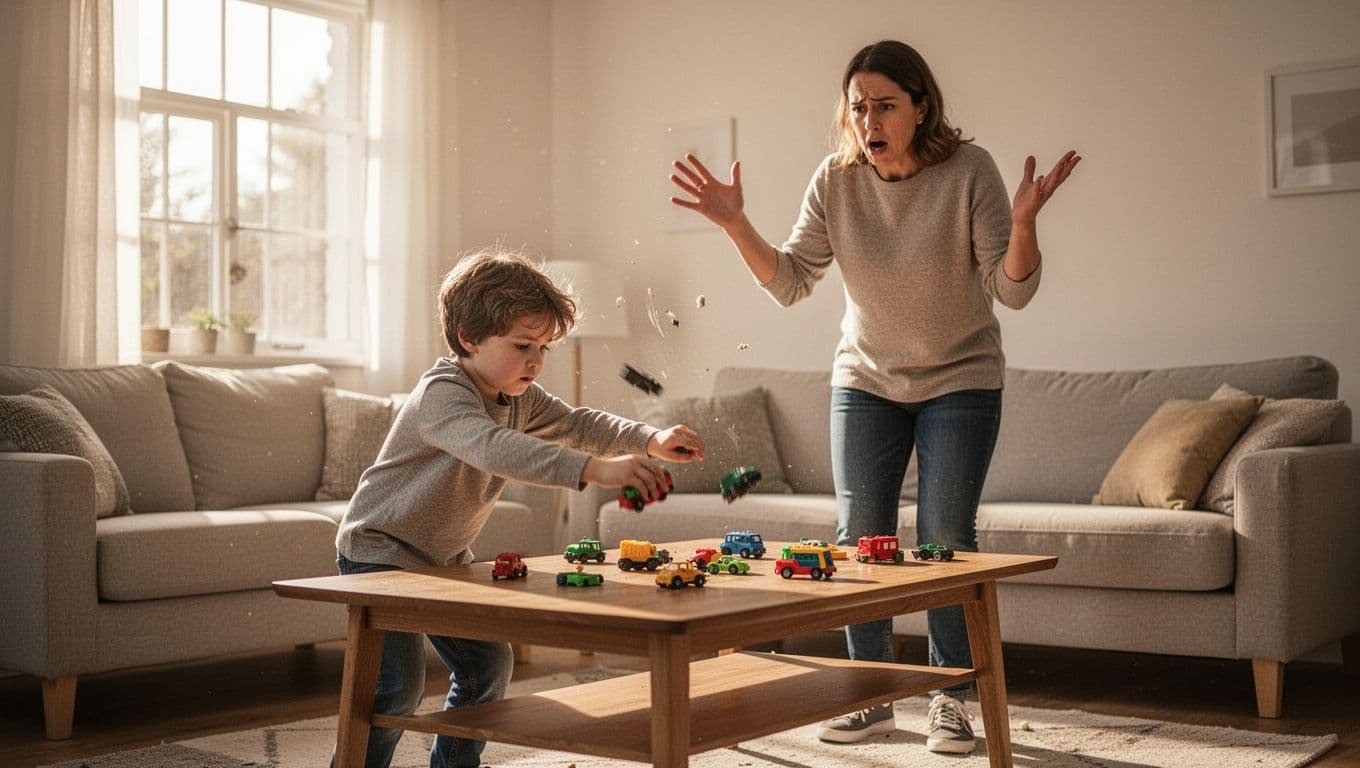
The pattern can snowball quickly at home:
- A child hears a warning, then nothing happens.
- Next time, they push a little further.
- Arguments grow because the limit feels optional.
- Respect drops because follow-through feels random.
That is how small lapses turn into bigger battles. The child is not only learning the rule, they are learning whether the adult means it.
A boundary that changes every day stops feeling like a boundary.
How to set limits that feel firm but fair
Clear limits work best when they are easy to understand and easy to repeat. You do not need harsh punishments to make that happen. You need simple rules, calm follow-through, and consequences that match the behavior.
Start by saying the rule in plain language. If the limit is “No screens before homework,” say it once and stick to it. If the consequence is losing screen time for the night, keep it small, immediate, and predictable.
A few habits help a lot:
- State the rule before the problem starts. Kids handle expectations better when they know them ahead of time.
- Use calm follow-through. The less drama you add, the clearer the message stays.
- Keep consequences short and connected. A natural result teaches more than a long punishment.
- Follow through every time. Consistency builds trust because kids know the rule is real.
If you want a simple guide, clear rules and consequences work best when they stay steady from day to day. A child who sees that pattern stops spending energy on bargaining and starts learning self-control instead.
That matters later, too. Kids who grow up with reliable limits get more practice with waiting, stopping, and recovering after mistakes. Those are the same skills they need for school, friendships, and follow-through as they get older.
The goal is not control for its own sake. The goal is to make the home predictable enough that kids can trust the rules, trust the parent, and trust their own growing ability to handle limits.
Doing too much for children can hold back independence
Helping kids is part of parenting, but stepping in too fast can steal the very practice they need. When you pack the bag, solve the argument, or finish the task for them, your child misses a chance to build confidence.
That matters because independence grows through small reps, not lectures. A thoughtful balance, like the kind found in balancing supervision and autonomy, gives kids room to try while still knowing an adult is nearby.
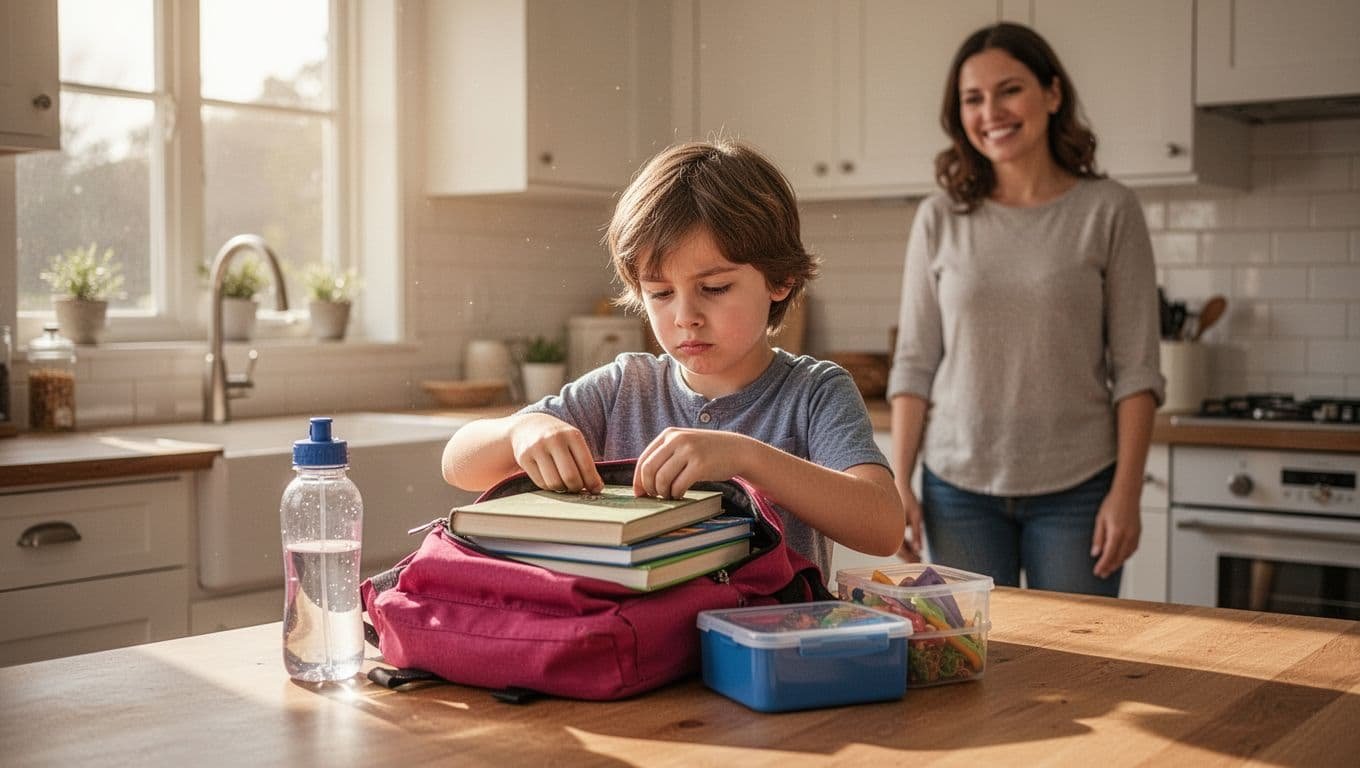
Why struggling a little helps kids grow
Age-appropriate struggle builds skill. A child who has to pack a backpack, settle a small conflict, or finish homework with support learns how effort works in real life.
Those moments teach more than success alone. They show kids how to pause, think, and recover when something feels hard. That is how confidence grows, because the child starts to trust their own ability to handle problems.
A few ordinary struggles matter a lot:
- Packing a backpack teaches planning and memory.
- Solving a small friendship issue teaches repair and patience.
- Finishing homework with support teaches focus without rescue.
When parents rush in, kids lose that practice. They may look helped in the moment, but they also learn, “Someone else will handle it.” Over time, that can turn into self-doubt and a fear of trying things alone.
Small struggles are safe places to learn. If a child never gets to try, they never get to improve.
This pattern also shows up in research on helicopter parenting. A recent review found links between overprotective parenting and higher anxiety and depression in young people, partly because kids get fewer chances to build autonomy. You can see that pattern in research on helicopter parenting and anxiety.
How to support without taking over
Support works best when it gives kids a chance to act first. You can guide, model, and stay calm without taking the task out of their hands.
Start with help that leaves room for effort. Show the first step, then let them continue. If they get stuck, give a hint instead of a full solution. If they fail safely, let them try again.
That slow handoff matters. A child who learns to retry a hard task builds resilience. A child who is rescued every time learns that discomfort means someone else should step in.
You can make that easier by using simple habits:
- Offer one clear instruction, then pause.
- Let the child make a safe mistake.
- Ask what they want to try next.
- Step in only when the problem is truly too big or unsafe.
For example, if your child forgets a homework page, resist the urge to solve it for them. Help them think through the fix instead. If they tie one shoe badly, let them notice and try again.
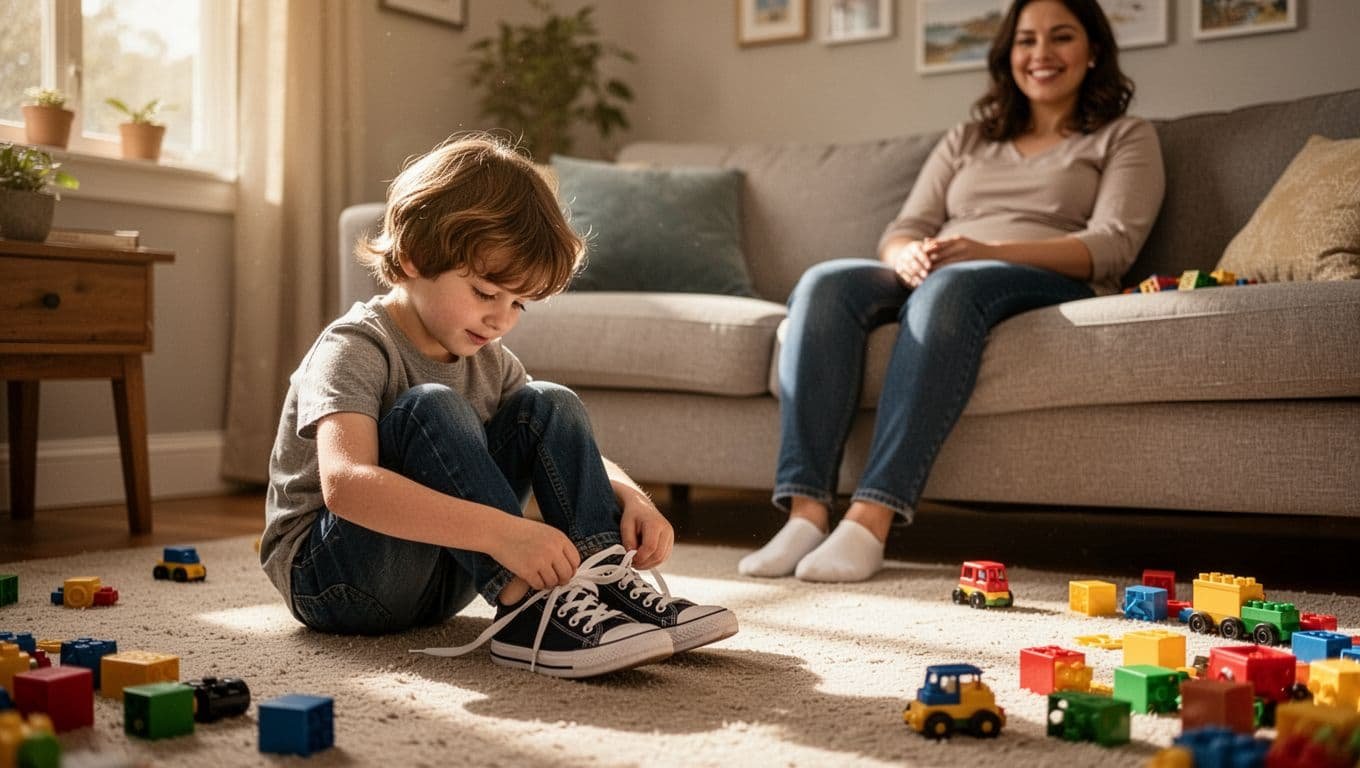
That approach keeps the lesson where it belongs, with the child. Over time, they learn that mistakes are workable, effort pays off, and hard things do not always need a rescue.
Too many activities and too much screen time can overload a child’s brain
A child can only handle so much input at once. When every hour is booked and every quiet moment gets filled with a screen, their mind never gets a break.
That kind of overload shows up in small ways first. Kids get cranky faster, focus slips, sleep gets shorter, and simple tasks start to feel hard. Over time, the brain has less room for imagination, self-control, and real rest.
Why kids need unstructured time
Unstructured time gives a child space to think, choose, and create on their own. Free play does not look productive from the outside, but it helps kids practice problem-solving without someone stepping in right away.
Boredom matters too. A child who has nothing scheduled for a while has to make something happen, and that is where imagination starts. They build a fort, make up a game, sort through feelings, or just sit still long enough to recharge.
If your child’s schedule feels packed, balancing school-age kids’ schedules can help you protect the open time they need most. Even a short stretch of unscheduled time each day gives the brain room to reset.
A little downtime helps kids in simple ways:
- Free play gives them practice making choices.
- Rest helps them settle their nervous system.
- Boredom pushes them to solve their own problem.
Kids do not need every minute managed. They need room to breathe, wander, and figure things out.
That open space also helps with sleep. Busy kids often carry the day’s pace right into bedtime, which makes it harder to wind down. A calmer schedule gives the brain a chance to slow down before the day ends.
What happens when screens become the default calm-down tool
Screens can be useful, but they become a problem when they are the first answer to every fuss, tantrum, or long wait. A tablet may stop the noise, yet it does not teach a child how to settle themselves.
When kids rely on devices to calm down, they miss practice with frustration, patience, and boredom. Attention can get shorter, because fast-moving content trains the brain to expect quick rewards. That makes quiet tasks, like reading, drawing, or listening, feel harder than they should.
A recent study on screen time and child mental health linked heavier screen use with worse mental health in U.S. children and teens, with sleep and physical activity playing a role. That fits what many parents see at home, especially when screens creep into bedtime and every free minute.
The risk gets bigger when screens replace connection. A child who always calms down alone with a device misses the steadying effect of a parent’s voice, eye contact, or calm presence. That kind of connection helps kids borrow your regulation until they can build their own.
Clear limits make a big difference here. Keep screen use in a routine, not as a rescue plan. Set boundaries around meals, car rides, and bedtime, then protect at least one part of the day for face-to-face time with no devices nearby.
A few simple habits help:
- Use screens after routines, not before them.
- Keep one daily screen-free stretch for talking or play.
- Put devices away well before bed.
- Offer a non-screen reset first, like a snack, a walk, or a hug.
If your child gets most of their calm from a screen, the habit can be hard to break. Still, small changes add up fast when you replace some screen time with rest, movement, and real conversation. That balance gives the brain what it needs most, less noise, more room to grow.
Ignoring feelings can teach kids to hide them
Kids do not learn emotional control by being told to “calm down” or “stop crying.” They learn it when an adult helps them name what is happening inside. When feelings get brushed aside, children often stop bringing them up at all.
That can look like a child who seems fine, until they are not. Some kids shut down. Others explode over small things. Many carry the habit into later life and struggle to talk about stress, hurt, or fear in a clear way.
What happens when a child’s feelings are not named
When a child hears “you’re fine” every time they are upset, they miss a chance to build emotional language. They may not learn the words for frustration, sadness, worry, or anger, so the feeling stays vague and heavy. A child who cannot name an emotion often cannot manage it well either.
Over time, that gap turns into a pattern. Unnamed feelings tend to get stored, then leak out as tears, tantrums, anger, stomachaches, or total shutdown. Research on parental invalidation and emotion regulation shows that brushing off emotions can affect how children handle feelings later on.
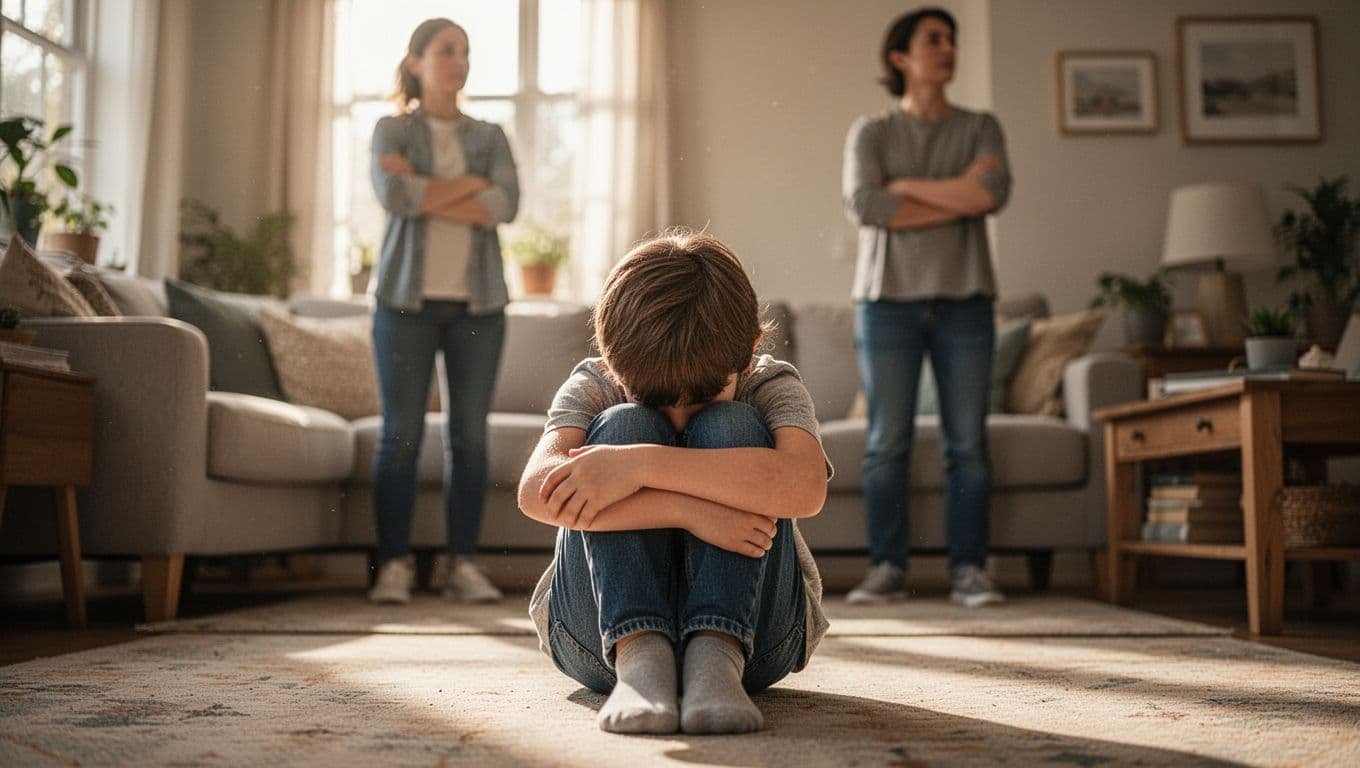
Children also start to hide the parts of themselves that feel “too much.” They may cry in private, hold in anger until it bursts, or stop telling parents what is wrong. That makes trust harder, because the child learns that honesty brings dismissal instead of help.
Children need words for feelings before they can learn what to do with them.
The long-term cost is simple but serious. Bottled-up emotions often show up later as shutdowns, outbursts, or a deep habit of staying guarded. A child who never got help naming feelings may grow into an adult who says “I’m fine” when they are anything but.
Simple ways to build emotional language at home
You do not need a long lesson to help kids talk about feelings. Small, steady moments work best. Start by reflecting what you see, then give the feeling a name.
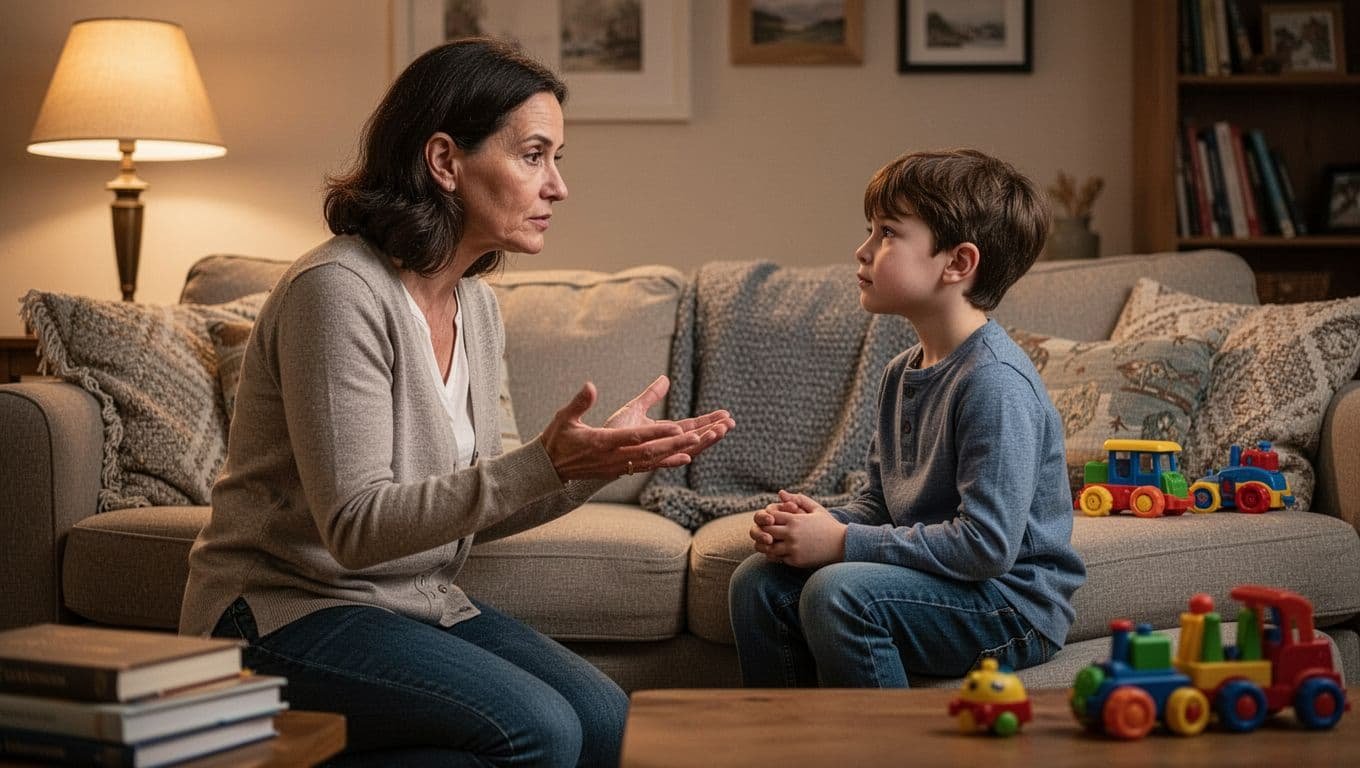
For example, say, “You look frustrated because the puzzle is hard,” or “That sounded disappointing.” This tells your child that emotions make sense and can be talked about. It also teaches them that feelings are information, not bad behavior.
A calm question can do a lot, too. Try, “What felt hardest?” or “Are you upset, embarrassed, or mad?” Keep your voice steady. Children open up more when they don’t feel rushed or judged.
You can also model the language yourself. Say, “I’m stressed, so I’m going to take a break,” or “I felt proud when we finished that together.” Kids copy the words they hear most often, and that includes the words you use about your own mood. If you want to build that skill in a broader way, teaching your child empathy helps children notice feelings in themselves and in other people.
A few phrases can help in everyday moments:
- “I can see you’re upset.”
- “That was disappointing.”
- “Your body looks tense. What happened?”
- “It’s okay to feel angry. Let’s talk about it.”
If your child often gets brushed off, this shift matters even more. A home that names emotions gives kids a safer way to speak up, and it fits well with authoritative parenting styles, where warmth and clear limits work together. Over time, that kind of talk makes feelings less scary and much easier to manage.
Chasing perfection can damage connection more than help performance
Perfection pressure often sounds harmless at first. Parents want good grades, respectful behavior, neat manners, and strong results. The problem is that kids can start to feel loved only when they get it right.
That kind of pressure changes the home fast. Instead of learning, children start managing fear. They watch every mistake, hide weak spots, and spend more energy avoiding disapproval than building skills.
The hidden cost of perfection pressure
When a child feels that mistakes are unacceptable, even normal tasks can feel loaded. A bad quiz grade, a messy tone, or a forgotten chore can seem like proof that they are failing. Over time, that fear makes kids more rigid, more anxious, and less willing to try new things.
You may see it in small ways before it becomes obvious. Some children freeze when they do not know the answer. Others become exacting about rules, routines, or appearance because control feels safer than risk. Some stop trying at all, because if they cannot do it perfectly, they would rather not do it in front of anyone.
Research on parental perfectionism and overcontrol links this pattern to child anxiety. That fits what many parents see at home, perfection does not make kids stronger, it makes them afraid to be seen struggling.
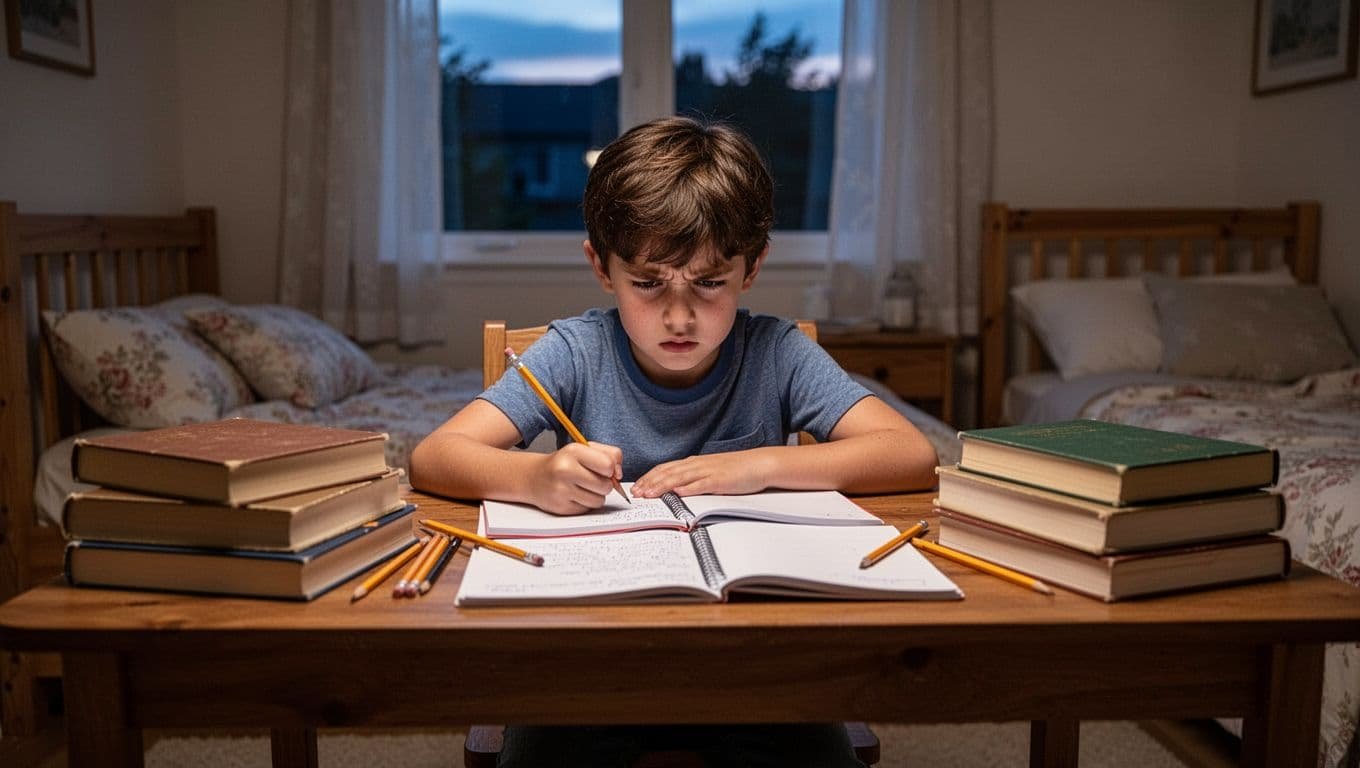
When mistakes feel unsafe, children hide more than they learn.
Perfection pressure also changes behavior outside school. A child may tell the truth less often, not because they are bad, but because they are scared. They may lie about a missing assignment, a broken item, or a rough day at school just to avoid the reaction at home.
That fear takes a toll on the body too. Kids under constant pressure can burn out, look tense, sleep poorly, and lose the easy confidence that comes from feeling accepted. A recent Ohio State study on parental burnout found that pressure to be perfect affects parents too, which matters because burned-out adults are more likely to become harsh, critical, or controlling.
What children need more than perfection
Kids do better when they feel safe enough to be imperfect. They need connection before correction, encouragement before judgment, and realistic expectations that fit their age and stage. When a child knows they are loved during mistakes, motivation grows in a healthier way.
That is why warmth matters so much. A child who feels supported is more willing to hear feedback, try again, and take responsibility. A child who feels judged is more likely to shut down, defend themselves, or hide the truth.
If this feels familiar, adjusting expectations for child growth can help you reset the tone at home. The goal is not lower standards. The goal is a home where effort matters more than flawlessness.
A few simple shifts make a big difference:
- Praise effort and repair, not just clean results.
- Correct the behavior without attacking the child.
- Let mistakes be part of learning, not proof of failure.
- Stay connected after a hard moment, so the child does not feel abandoned.
A child who spills paint, forgets homework, or talks back still needs the same message, “You belong here, and we can fix this.” That message builds stronger confidence than pressure ever will. It also builds honesty, because kids are less likely to hide when they know mistakes won’t cost them connection.
Conclusion
The biggest takeaway is simple, small parenting habits add up. A child does best with consistency, emotional safety, and room to try things on their own. When those pieces are steady, kids feel less pressure to perform and more freedom to grow.
These mistakes are common, and they are not fixed traits. If comparison, overcontrol, or emotional dismissal has crept into daily life, one clear change can start to shift the tone at home. Kids also do better when parents stay present and predictable, like the habits behind being fully present for your kids.
Pick one habit to change first, then keep it steady. That is often where trust, confidence, and calmer behavior begin to return.
Save pin for later

- 60 Color Tattoos That Healed Beautifully - 25/09/2026
- 40 Most Painful Tattoo Spots - 24/09/2026
- 20 Tattoo Aftercare Mistakes That Ruin Fresh Ink - 23/09/2026

