Stopping added sugar for 30 days can change more than you expect, but the first week is usually the roughest. Cravings can hit hard, your mood may feel off, and energy can dip before it starts to settle.
This article focuses on added sugar, not the natural sugar in whole fruits or plain dairy. That difference matters, because cutting soda, candy, sweet snacks, and hidden sugars in packaged foods is a much more realistic reset than avoiding every trace of sugar in your diet. If you’ve tried to quit before and felt stuck, that doesn’t mean the plan failed, it usually means your body was still adjusting.
Most people notice the earliest changes in appetite, energy, and cravings, while bigger shifts, like steadier blood sugar and less bloating, tend to show up later. If you want a simple way to make the first week easier, starting healthy eating habits can help you stay on track. Next, we’ll look at what usually happens day by day, and what’s realistic versus exaggerated.
What counts as sugar, and what to cut first
When you cut sugar for 30 days, the biggest win comes from focusing on added sugar first. That means the sugar mixed into foods and drinks during processing or preparation, not the sugar that comes naturally with whole foods.
That difference matters because fruit, plain milk, and plain yogurt still contain sugar, but they also bring fiber, protein, vitamins, and minerals. Soda, candy, and sweet snacks do not give you the same package of nutrients, so they hit much harder and leave you less satisfied. The goal here is simple, remove the added sugar that sneaks in everywhere, while keeping most whole foods on the table.
Added sugar versus natural sugar
Added sugar is sugar put into food. Natural sugar is the sugar that already exists in foods like fruit and milk. One shows up with extra calories and little else, while the other comes bundled with things your body can actually use.
That is why an apple is not the same as a can of soda. The apple has fiber, which slows digestion and helps you feel full. Soda gives you a fast sugar hit without that support. The same goes for candy versus berries, or flavored yogurt versus plain yogurt with fruit added at home.
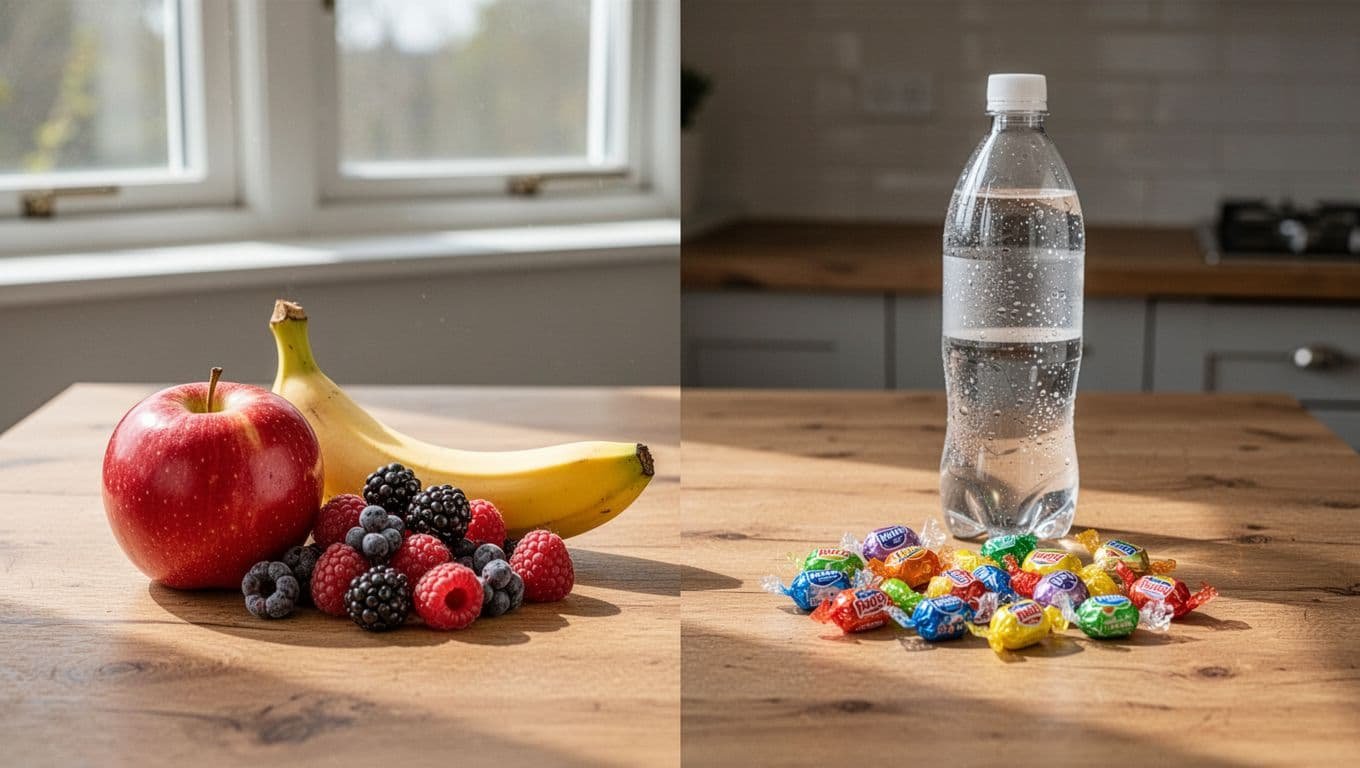
For this challenge, you do not need to cut all carbs or all sweet foods. You need to cut added sugar as much as you reasonably can.
If you want a simple benchmark, the FDA explains that added sugars are the sugars put into foods, while the sugars in fruit, milk, and vegetables count as naturally occurring sugars on the Nutrition Facts label. That is the line to watch.
Common places sugar sneaks into your day
Most people think of dessert first, but sugar hides in everyday foods too. Once you start looking, it shows up in places that seem harmless at a glance.
Some of the most common sources are easy to miss:
- Coffee drinks with syrups, flavored creamers, or whipped toppings
- Granola and breakfast cereal, especially the sweetened kind
- Flavored yogurt, which can contain a lot more sugar than plain yogurt
- Sauces and condiments, including ketchup, barbecue sauce, and teriyaki sauce
- Salad dressings, especially creamy or sweet varieties
- Packaged snacks, such as granola bars, protein bars, and snack crackers
- Baked goods, like muffins, pastries, and sweet breads
- Sweet drinks, including soda, energy drinks, sports drinks, and bottled tea
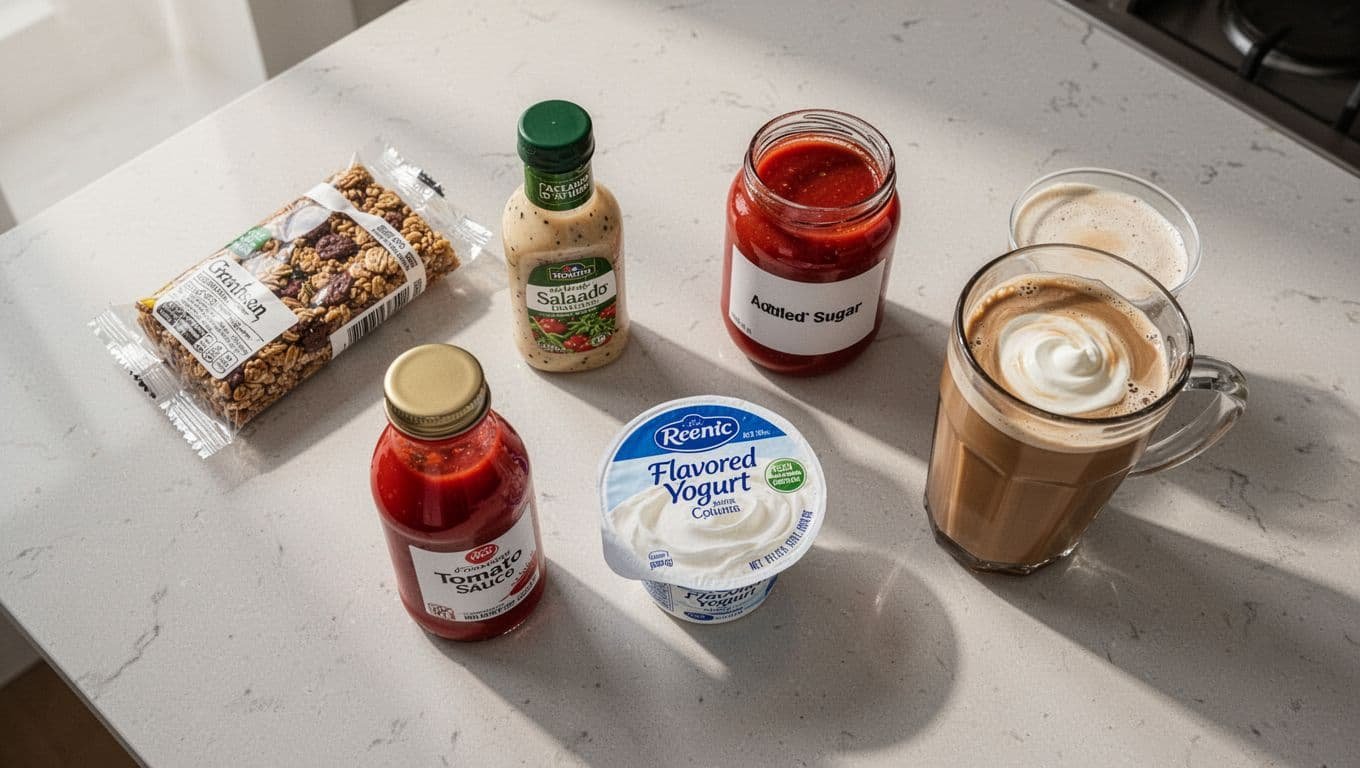
A lot of people cut candy and dessert, then miss the sugar in their morning coffee or lunch sauce. That is where progress gets stuck. If you remove just the obvious sweets, but keep sweet drinks and packaged foods, the total adds up fast.
The CDC also points out that hidden sugar is common in everyday foods, so looking beyond the dessert aisle helps you make better choices with less guesswork.
How to read labels without getting overwhelmed
The quickest way to spot added sugar is to check the Added Sugars line under Total Sugars on the Nutrition Facts panel. That tells you how much sugar was added during processing, which is more useful than the total number alone.
Then scan the ingredient list. Sugar can hide under names like:
- sucrose
- dextrose
- maltose
- corn syrup
- high-fructose corn syrup
- cane sugar
- honey
- agave nectar
- fruit juice concentrate
- molasses
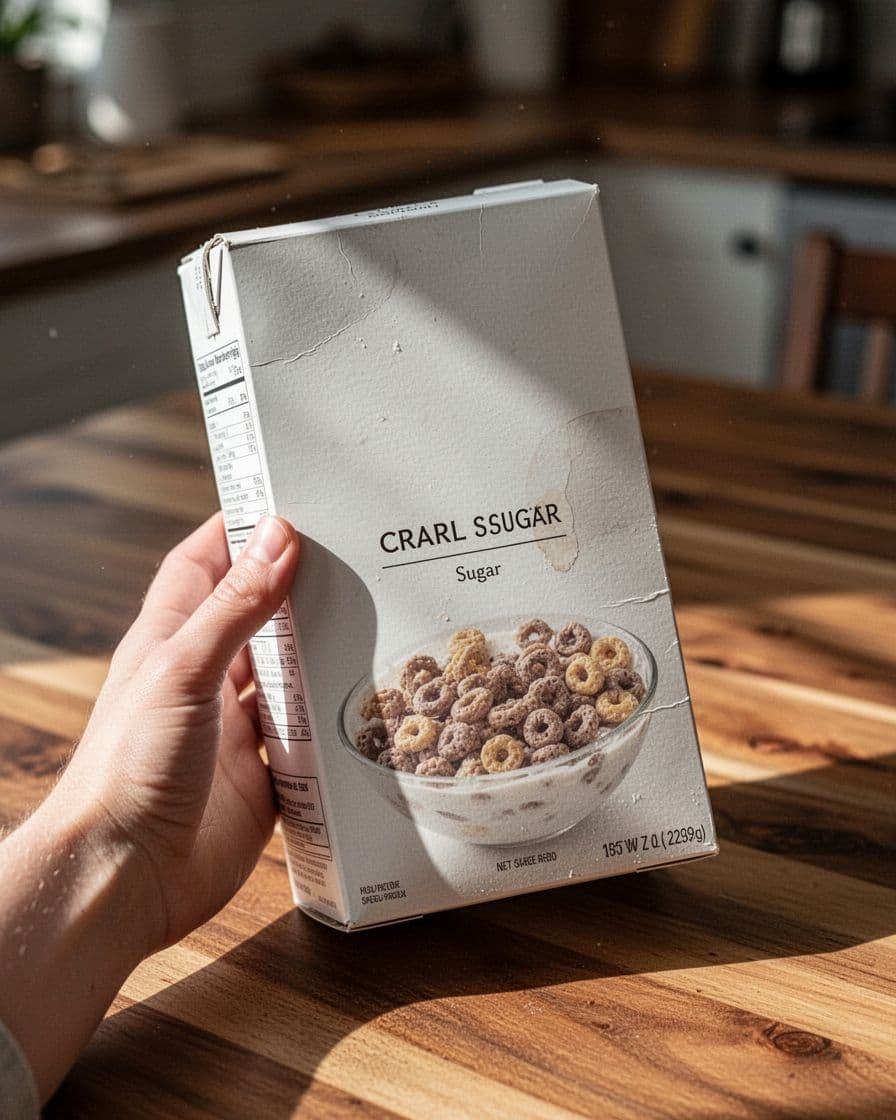
You do not need to memorize every name. A simple rule works well: if sugar shows up early in the ingredient list, or if a food has a high amount of added sugars per serving, pick a lower-sugar option. For packaged foods, 5% Daily Value or less is a good low-sugar choice, while 20% Daily Value or more is a high one.
That small habit keeps the challenge practical. You can still eat normal meals, just with fewer sweet add-ons and fewer label tricks.
The first week without sugar can feel rough
The first few days without sugar can feel louder than you expect. Cravings may pop up at the same times you used to snack, and your energy can dip before it starts to settle.
That reaction makes sense. Sugar gives the brain quick reward signals, so when you cut it off suddenly, your body notices the change fast. The good news is that this uncomfortable stretch usually passes, and it does not mean your plan is failing.

Why cravings hit so hard at the start
Sugar can train your brain to expect a quick burst of pleasure. After enough repetition, your mind starts looking for that fast payoff, especially at the same times each day.
That is why cravings often feel strongest in the first few days. Your usual pattern is gone, but your brain still remembers it. In other words, the craving is often a habit signal, not a sign that you truly need sugar.
Strong cravings at the start are common, and they usually ease as your routine changes.
This is also why the first week can feel harder than later weeks. You are changing a reward loop, not just skipping dessert. The body often needs a short adjustment period before it settles into a new normal.
Common withdrawal symptoms people notice
The first week can bring a mix of body and mood changes. Some people only notice mild discomfort, while others feel it more clearly.
Common symptoms include:
- Headaches
- Tiredness
- Irritability
- Brain fog
- Low mood
- Stronger hunger cues
Some people also feel bloated or notice sleep changes. Patient.info explains that sugar withdrawal symptoms can include headaches, lower energy, trouble concentrating, and mood changes, and those symptoms are usually temporary in the early adjustment period.

These symptoms can feel annoying, but they are usually short-lived. The body is adjusting to steadier fuel, and that shift takes a little time. If you feel off for several days, that can still be part of the process.
What helps you get through days one through seven
Simple habits make the first week easier. The goal is not perfect eating, it’s keeping your body steady enough that cravings do not run the show.
A few basics help more than most people expect:
- Drink water often, since thirst can feel like hunger and dehydration can make headaches worse.
- Eat enough protein and fiber, because both help you stay full longer.
- Plan meals ahead, so you are not making rushed food choices when cravings hit.
- Do not skip breakfast if that usually leads to overeating later.
- Keep meals regular, because long gaps often make sugar cravings stronger.
Regular meals matter most when you are just starting. If you want a broader plan for steadier eating, these blood sugar management tips can help you keep hunger and cravings under control.
Protein at breakfast, a balanced lunch, and a simple dinner can make a big difference. A meal with eggs and toast, chicken and rice, or yogurt with nuts and berries is often enough to calm the urge for something sweet. When your meals are solid, the first week feels less like a test and more like a reset.
The early days are usually the hardest part, so keep them simple. Drink water, eat real meals, and give your body a few days to catch up.
What usually changes by the end of the second week
By the end of the second week, many people move past the rough adjustment phase. The first wave of cravings and low energy starts to ease, and daily life feels more predictable again.
That does not mean every symptom disappears at once. However, the constant tug for sugar usually gets quieter, and meals start to feel more satisfying on their own. For a lot of people, this is the point where the change stops feeling like a struggle and starts feeling normal.
Energy starts to feel more steady
The afternoon crash often gets less dramatic by this point. Instead of feeling fine after lunch and wiped out an hour later, many people notice a smoother stretch of energy through work, school, and exercise.
That happens because balanced meals do a better job of keeping blood sugar steady. When you pair protein, fiber, and healthy fats, your body gets a slower release of fuel. A sandwich with turkey and vegetables, yogurt with nuts, or eggs with toast can carry you much farther than a sweet snack or soda.
Balanced meals prevent crashes because they keep hunger and energy on a more even track. In real life, that can mean:
- fewer mid-afternoon yawns at your desk
- less need to raid the snack drawer before dinner
- steadier focus during class or meetings
- better stamina during workouts, without the quick spike and drop

A steady day often feels boring in the best way. You are not chasing energy every few hours, and that makes everything easier to plan.
Cravings begin to fade for many people
Sweet foods usually do not call to you as loudly by week two. You may still want dessert, but the urge is often less sharp and easier to ride out. The thought of candy or soda can feel more like a habit than a need.
Taste buds can shift too. Foods that once seemed only mildly sweet may taste much stronger now, so a plain apple, berries, or even a little dark chocolate can feel satisfying in a way it did not before. That change helps many people notice how sweet some packaged foods really are.
Cravings can still show up, especially during stress, tiredness, or old routines. The difference is that they often pass faster. A glass of water, a meal with protein, or a short walk is usually enough to take the edge off.
By the second week, cravings often lose their grip, but triggers can still bring them back for a moment.
For a closer look at the usual sugar withdrawal pattern, this sugar withdrawal timeline explains why the hardest days tend to come first and why symptoms often ease after that.
Sleep and mood may start to improve
Once blood sugar swings settle down, sleep can get a little deeper for some people. They may wake up less often, fall asleep more easily, or feel less restless at night. That is especially true if late-night snacking used to keep the body working overtime.
Mood can improve too. Fewer spikes and drops often mean fewer irritability swings, so the day feels less choppy. You may still have stress, of course, but it can feel more manageable when your energy is not jumping around.
The results are not identical for everyone. Sleep, stress, and overall diet all play a part. Still, many people notice that by the end of week two, the body feels calmer and the mind feels less foggy. If night-time hunger or poor sleep has been a pattern, eating to sleep better can make the next stretch easier to handle.

By this stage, the shift is usually clear enough to notice in ordinary moments. You feel steadier at work, less pulled toward sweets, and a little more settled at night.
The biggest benefits people notice by days 15 to 30
By the second half of a 30-day sugar break, the changes often feel more visible. Clothes may fit a little looser, skin can look calmer, and meals usually feel more satisfying.
A few of those changes come from eating fewer calories overall, since sugar-heavy snacks and drinks add up fast. Others come from steadier blood sugar, fewer crashes, and less constant snacking. Results still depend on your starting point, activity level, and the rest of your diet, so the shift is real, but it’s not identical for everyone.
Weight loss is often the first visible payoff

Weight loss is one of the first things many people notice around days 15 to 30. That often happens because cutting added sugar removes easy calories from soda, desserts, coffee drinks, and snack foods.
Less sugar can also mean fewer random bites between meals. If you are eating more protein and fiber instead, you may stay full longer and naturally eat less. For a simple way to build meals that keep you satisfied, high-fiber meals for weight loss can help.
Even so, scale changes are only part of the story. Some people lose a few pounds, while others mostly notice less puffiness or looser clothes. Your starting habits matter a lot here.
Skin may look calmer and less inflamed

Skin often looks a bit calmer by the third or fourth week. People commonly report fewer breakouts, less puffiness, and a more even look overall.
That does not mean sugar is the only cause of acne, because skin is affected by hormones, stress, sleep, and skincare too. Still, cutting back on sugary foods may help reduce the kind of inflammation that makes some breakouts look worse. If you want more food ideas that support clearer skin, these skin-friendly foods are a good place to start.
A steadier routine helps here as well. When your meals are less sugary, your face may look less puffy and tired, even before any big weight change shows up.
Brain fog and focus can get better
By days 15 to 30, some people notice clearer thinking and better focus. The day feels less choppy because there are fewer sugar spikes and crashes pulling energy up and down.
That can make it easier to sit through work, finish chores, or stay on task without reaching for a snack every hour. A review in the National Library of Medicine also discusses how high free-sugar intake can affect cognition, which lines up with the mental fog many people describe when they cut back on free sugar.
The change is usually subtle at first. However, steadier energy often makes your brain feel less tired by midafternoon.
Hunger cues may become easier to trust
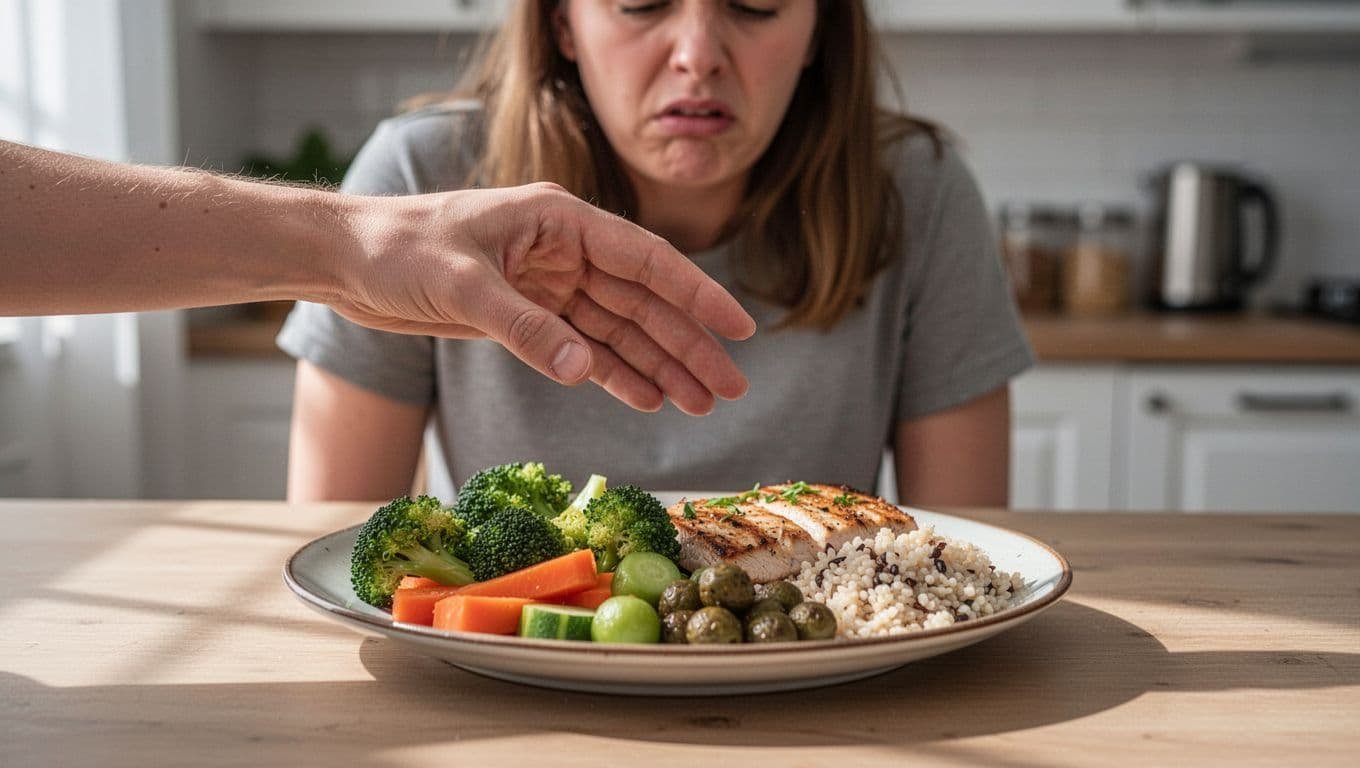
Once added sugar is out of the picture, hunger can start to feel more honest. You may notice the difference between real hunger and the urge to snack out of habit, boredom, or stress.
Meals can feel more satisfying too. Protein, fiber, and healthy fats tend to stick with you longer, so you are less likely to finish lunch and start hunting for something sweet an hour later.
That steadier appetite is one of the biggest wins of days 15 to 30. When cravings quiet down, it gets easier to eat because you are hungry, not because sugar is calling the shots.
Health changes that can happen behind the scenes
Some of the most useful changes are the ones you do not notice right away. Better blood sugar control, a calmer insulin response, and less strain on your heart and liver often happen before the mirror shows much difference.
That is why 30 days without added sugar matters as a starting point. It gives your body a break from constant spikes, but it is not a full reset. The real payoff comes when those steadier habits keep going. Harvard Health notes that cutting back on added sugar can help lower the risk of long-term problems tied to weight, heart disease, and diabetes, which is why the small daily choices add up over time.

More stable blood sugar and insulin response
When you cut added sugar, you usually cut the sharp spikes that come with soda, candy, and sweet snacks. That matters because quick rises in blood sugar often lead to quick drops, and those drops can leave you tired, shaky, hungry, or looking for another snack.
Over time, fewer spikes can support a steadier insulin response too. Your body does not have to work as hard to move sugar out of the bloodstream after every sweet drink or dessert, which is one reason people often feel more even energy during the day. That steadier rhythm also helps with appetite, since you are less likely to mistake a crash for real hunger.
In plain terms, stable blood sugar makes daily life easier. Meals feel more filling, focus is less jumpy, and your body gets a break from the roller coaster.
Less inflammation and bloating for some people
Many people say they feel less puffy after they cut back on ultra-sweet, highly processed foods. That is a common report, not a guarantee, but it makes sense because sugary packaged foods often crowd out fiber, protein, and other foods that support normal digestion.
Less bloating can show up as a flatter stomach, a looser waistband, or just less of that heavy after-meal feeling. Inflammation can also feel less obvious when your food choices are steadier, especially if sugar used to ride along with salty snacks, fried foods, and late-night treats.
A simple shift toward more whole foods can help here. If you want practical meal ideas that fit this pattern, anti-inflammation meals are a good place to start.

A flatter, calmer-feeling stomach often comes down to less processed food, less sugar, and better meal balance. If bloating was a daily annoyance, this is one of the first background changes you may notice.
A better path for heart and liver health
Added sugar does not just affect your sweet tooth. Over time, too much can push up triglycerides, add stress to blood sugar control, and make it easier for fat to build up in the liver. That is one reason sugar cuts matter for broader metabolic health, not just weight or cravings.
Your heart also benefits when sweet drinks and sugary snacks get replaced with more filling foods. Better meal balance can support healthier cholesterol patterns, steadier blood pressure, and less strain overall. The National Heart, Lung, and Blood Institute explains that cutting back on added sugar helps people maintain a healthier weight, which is closely tied to heart health.
The liver side matters too. When your body gets less sugar, it has less excess fuel to store, which can support better long-term liver health. For more food ideas that fit that goal, liver-friendly whole foods can help you build smarter meals without making things complicated.
If you have diabetes, prediabetes, or another medical condition, talk with a doctor before making major diet changes. A 30-day break from added sugar can be a strong first step, but the best results come from making it safe, steady, and sustainable.
How to make 30 days without sugar actually stick
A 30-day sugar break works best when you treat it like a plan, not a test of perfect willpower. The goal is to make your days easier to repeat, so your routine does most of the work.
A 30-day no sugar challenge guide can give you a starting point, but the real win comes from simple habits you can keep on a busy weeknight. That means fewer rules that feel harsh, more food that keeps you full, and a few backup moves for the moments when cravings show up.
Simple swaps that make the challenge easier
The easiest way to stick with this challenge is to replace, not just remove. If you remove soda, sweets, and snack cakes, but don’t change what fills the gap, cravings usually come back fast.
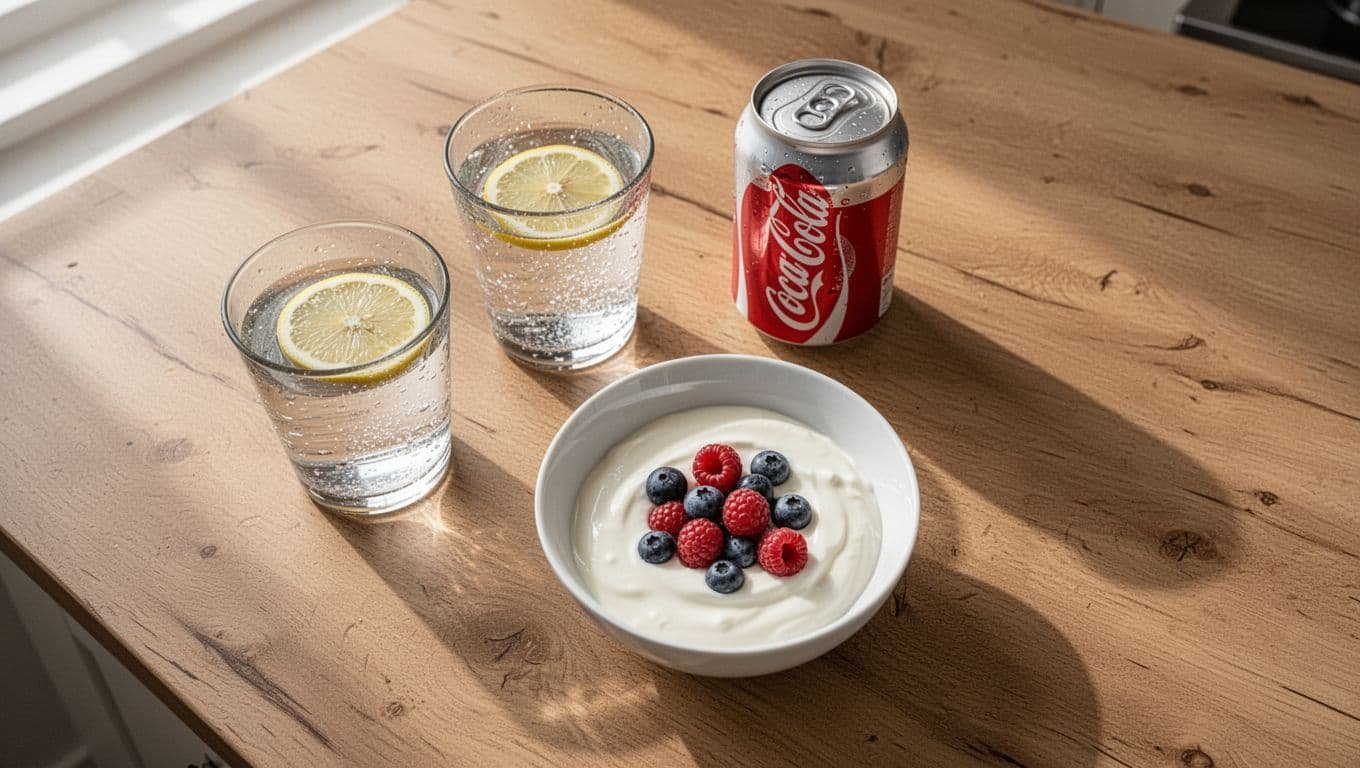
A few swaps go a long way:
- Water or unsweetened tea instead of soda keeps the habit of sipping something cold, without the sugar hit.
- Plain yogurt with berries or sliced fruit instead of flavored yogurt gives you sweetness with more control.
- Whole foods instead of packaged snacks helps you stay full longer, since nuts, eggs, fruit, veggies, and cheese usually satisfy better than a bar or cracker pack.
- Sparkling water with lemon or lime instead of sweet drinks can scratch the itch for something fizzy.
- Simple meals built around protein like eggs, chicken, tuna, tofu, or beans make the day feel less like a snack hunt.
For a lower-sugar drink that still feels fresh, healthy vegetable-heavy juices for better digestion can be a better choice than bottled juice. That said, a plain meal usually works better than a drink when you are trying to stay full.
A simple plate also helps. Think eggs and toast for breakfast, chicken with rice and vegetables for lunch, and salmon with potatoes and broccoli for dinner. When meals are steady, sugar stops feeling like the thing that holds your day together.
How to handle cravings without giving up
Cravings usually pass faster than they feel in the moment. The trick is to give yourself a short pause before you react.

Try a few simple moves before you reach for sweets:
- Wait 10 minutes and do something else first. Cravings often lose steam when you interrupt the pattern.
- Eat protein if you are truly hungry. A hard-boiled egg, a handful of nuts, or plain Greek yogurt can help.
- Drink water because thirst can feel a lot like a snack urge.
- Brush your teeth to signal that eating time is done.
- Take a short walk to break the loop and clear your head.
Social events need a little planning too. Eat before you go, keep a drink in your hand, and decide ahead of time how you’ll handle dessert. At night, set a simple cutoff for the kitchen, then switch to tea or water if you still want something sweet.
Cravings are easier to manage when you slow them down instead of arguing with them.
Mistakes that make people quit too soon
A lot of people quit because they make the challenge too strict on day one. Cutting every sweet, every snack, and every favorite food at once can leave you hungry, tired, and frustrated.
These are the mistakes that trip people up most often:
- Cutting too many foods at once, which makes the plan feel punishing.
- Not eating enough protein, which leaves you hungry and more likely to raid the pantry.
- Relying on willpower alone, which breaks down when stress or fatigue hits.
- Keeping trigger foods in the house, which turns a craving into an easy yes.
- Treating one slip like failure, when it usually just means you need a better next meal.
Planning beats perfection every time. If you eat a little sugar by accident or have a rough day, restart at the next meal, not next Monday. Progress matters more than a perfect streak, and a steady routine is what makes 30 days feel doable in real life.
Conclusion
The first week without added sugar is usually the hardest, but that rough patch does pass. By day 30, many people notice steadier energy, fewer cravings, and a calmer, more predictable relationship with food.
Results still depend on the person, because sleep, stress, activity, and what you eat instead all matter. Even so, the biggest win is often the clearest one, seeing how much added sugar was shaping your daily habits. If you want a healthier pattern that feels sustainable, balanced eating without guilt is a smarter goal than perfection.
A smart 30-day challenge does not need to be extreme. Start small, stay consistent, and pay attention to how your body responds.
Save pin for later

- Healthy Air Fryer Recipes for Beginners - 21/09/2026
- Healthy Snacks for Late Night Cravings - 21/09/2026
- High Protein Meal Prep Ideas for Easy Weekly Meals - 21/09/2026

