Your baby’s first Halloween deserves soft pajamas, tiny smiles, and a family photo you’ll treasure long after the candy is gone. The best baby’s first Halloween costume doesn’t need elaborate details or a high price tag; it needs to feel comfortable, fit safely, and stay easy to wear during naps, feeds, and diaper changes.
A cozy animal onesie, pumpkin sleeper, or simple themed outfit can look adorable without itchy fabric, tight headpieces, masks, small detachable parts, or trailing material. You’ll also want to plan for the weather, check flame-resistant labels, leave room for gentle layers, and test the costume at home before Halloween night. If you’re dressing more than one child, these family-friendly Halloween costume ideas can help you coordinate without making your baby’s outfit bulky.
The ideas and tips ahead will help you choose your baby’s first Halloween costumes, shop with confidence, create an easy DIY option, handle cool or warm weather, complete practical safety checks, and enjoy the celebration at your baby’s pace.
Key Takeaways
- Choose baby’s first Halloween costume for comfort and fit, with soft, breathable fabric and enough room for gentle layers.
- Skip masks, loose cords, long capes, small decorations, and anything that could block breathing or sight.
- Check for a flame-resistant label, then test the complete outfit, shoes, and accessories at home.
- Keep babies visible outdoors with light-colored clothing, reflective details, or a small glow accessory.
- For more family coordination, browse these matching outfit ideas for parents and babies and dress your baby after removing bulky layers from the car seat.
Baby’s First Halloween Costumes: What Makes a Great Choice?
The best baby’s first Halloween costumes fit your baby’s age, movement, daily routine, and the October weather. A newborn may spend the evening sleeping in your arms, while an older baby could crawl across the living room or take a few wobbly steps toward the candy bowl. Choose a wearable outfit that keeps your baby comfortable before you worry about elaborate details.
Choose a Costume That Matches Your Baby’s Age and Mobility
Newborns need very little structure in a costume. A soft pumpkin bodysuit, animal sleeper, or Halloween-themed swaddle can create an adorable look without restricting tiny arms and legs. Photo-friendly layers, such as a cotton hat-free bodysuit under a cozy wrap, work well for short pictures at home. Avoid anything that covers the baby’s face or requires a stiff headpiece.
Young infants who are not yet rolling or sitting can wear simple rompers, one-piece pajamas, or lightweight bunting for supervised outings. Look for soft seams, breathable fabric, and closures that stay flat against the skin. A costume with snaps underneath makes dressing easier and keeps the outfit in place while you carry your baby.
Once your baby crawls, free leg movement becomes more important. Choose flexible fabric around the knees and hips, along with a short or fitted design that won’t drag across the floor. New walkers need the same freedom, plus sturdy footwear or comfortable socks with non-slip grips when appropriate. Loose capes, long tails, oversized sleeves, and trailing ties can bunch under the feet or cover the face.
Sizing up can help when you need room for a cotton bodysuit or warm leggings underneath. However, don’t buy a costume so large that fabric gathers around the neck, hands, or ankles. The Consumer Product Safety Commission’s Halloween costume guidance also warns against overly long or baggy costumes that can cause trips and falls.
### Plan Around Temperature, Naps, and Diaper Changes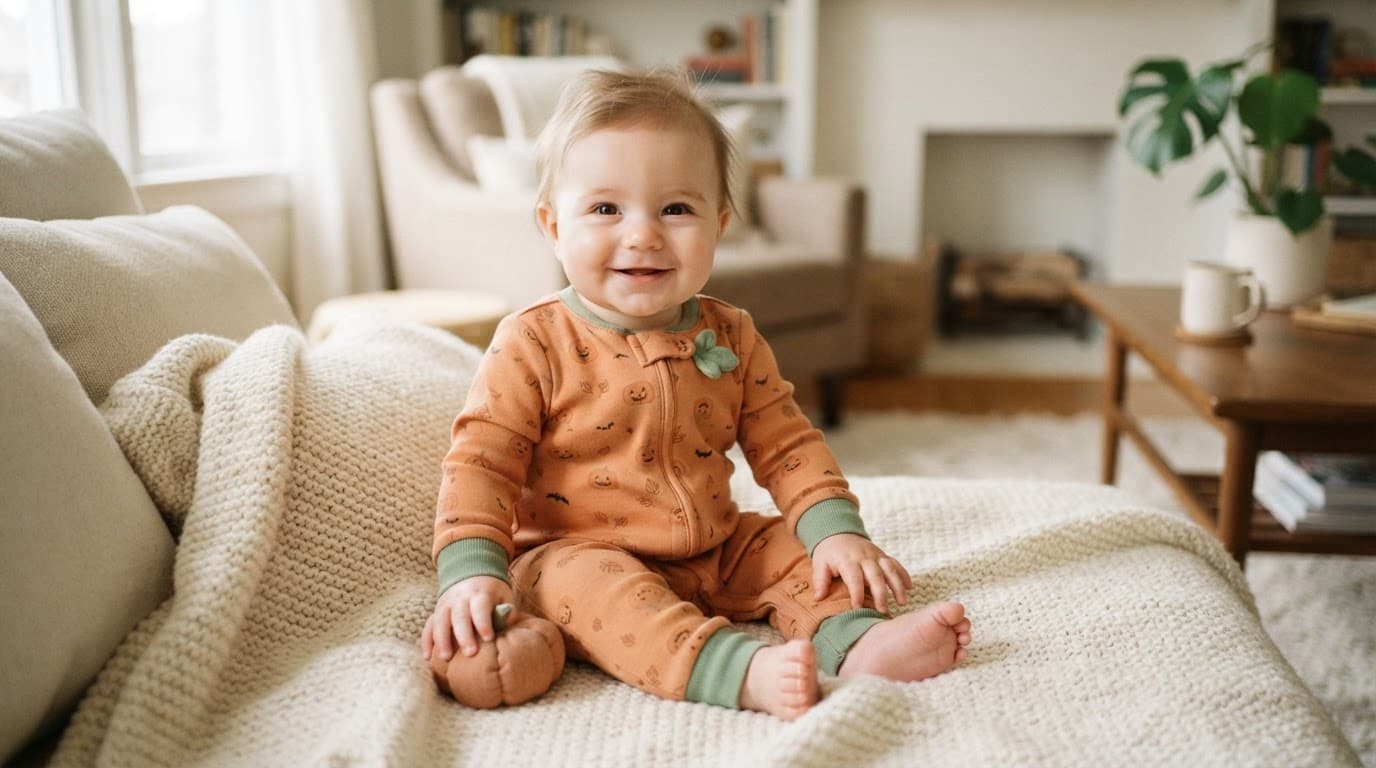
October evenings can feel mild indoors and chilly outside, so dress your baby in flexible layers. Start with a breathable cotton bodysuit, then add leggings, socks, or a light fleece layer when needed. A removable sweater, bunting, or blanket can provide extra warmth in a stroller, but take it off if your baby feels sweaty or flushed.
Choose a costume with snaps, a wide neck opening, or a full-length zipper that allows quick diaper changes. Easy access matters during feeds, car rides, and unexpected messes. Before buying online, check the sizing chart, care label, return policy, and delivery time.
Bulky costume pieces should come off during naps and car travel. Dress your baby after removing thick layers from the car seat, and keep the outfit simple enough to remove when sleepiness takes over. For more inspiration, browse these Halloween costume ideas for kids and adapt the softest, simplest option for your baby’s routine.
The Cutest Baby Halloween Costume Ideas for a First Celebration
The best baby’s first Halloween costumes are soft, simple, and easy to remove when your baby gets sleepy. Classic themes photograph well, while one-piece outfits keep dressing, feeding, and diaper changes manageable.
Classic Pumpkin, Ghost, and Fall-Themed Looks
A pumpkin romper creates an instantly recognizable Halloween look with almost no extra accessories. An orange onesie paired with a soft green hat gives your baby the shape of a tiny pumpkin, while pumpkin bunting adds warmth for stroller rides without restricting the legs. Choose smooth seams, easy snaps, and a roomy fit for a bodysuit underneath.
For a gentler spooky style, try a soft ghost onesie, white bunting, or simple ghost pajamas. These options create the same Halloween mood without a cape that could twist, snag, or cover your baby’s face. A small embroidered expression or printed detail is enough, so skip masks and face paint.
Families who prefer a seasonal look can choose a sunflower dress or romper, an acorn outfit with a brown cap, or a onesie decorated with autumn leaves. These ideas feel festive without looking scary, and their warm colors make beautiful first-Halloween photos.
Soft Animal Costumes Babies Can Wear Comfortably
Animal costumes remain popular because they turn everyday baby clothes into an adorable little character. A lamb, bear, fox, cat, bat, shark, wolf, or dinosaur can work well as a soft one-piece suit with printed details and flexible fabric.
Look for soft ears, printed whiskers, felt spots, or a small tail sewn securely to the suit. Avoid hard horns, stiff wings, heavy faux fur, and accessories that make carrying uncomfortable. An optional hood is useful because the outfit still works as warm clothing when your baby refuses to wear anything on their head.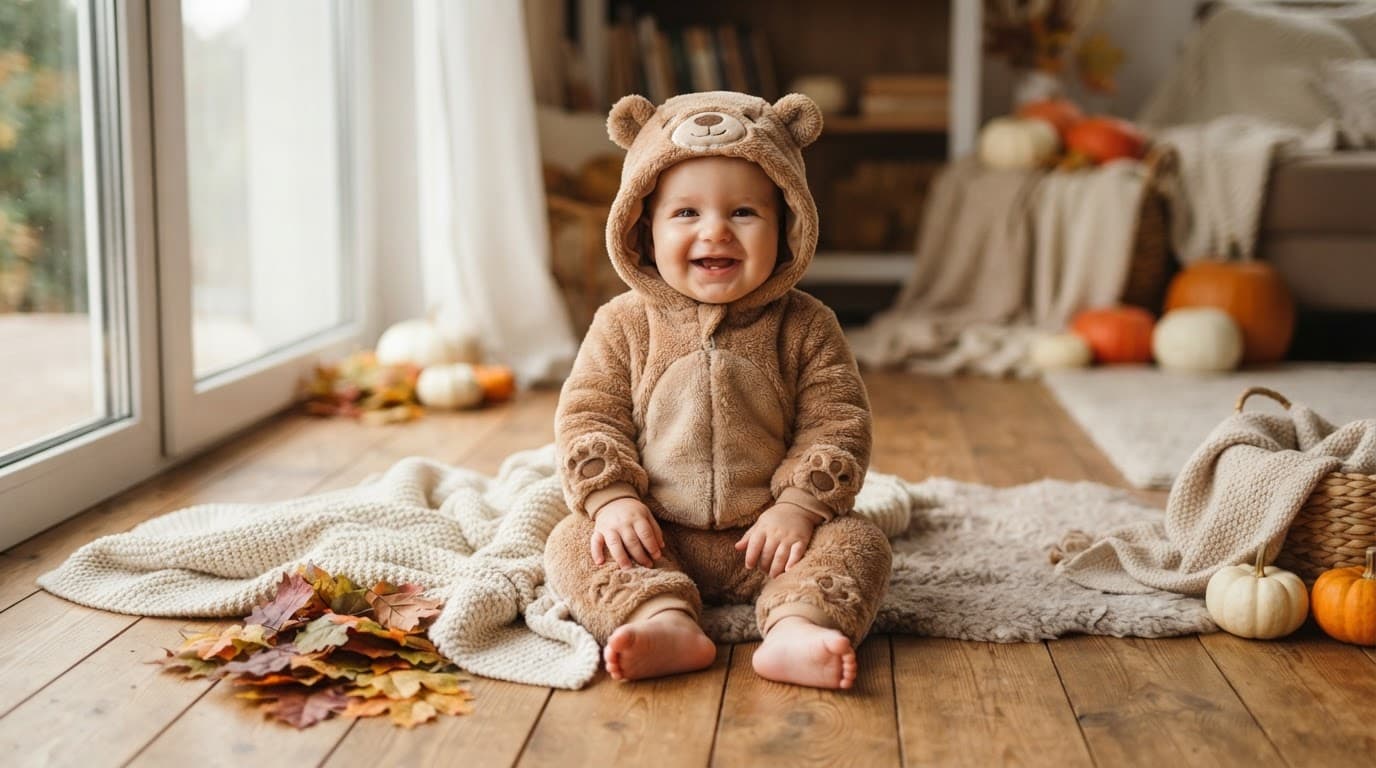
Check the hood before Halloween night. It shouldn’t block vision, muffle hearing, press against the neck, or interfere with breathing. For more safety reminders, these baby Halloween costume safety tips cover common concerns such as masks and small parts.
Funny Food, Flower, and Everyday Object Costumes
A plain onesie can become a memorable costume with lightweight felt shapes or sewn details. Try a cupcake with a colorful wrapper pattern, a strawberry with green leaves, or a popcorn outfit with soft yellow and white accents. A sunflower, tiny farmer, garden gnome, or cowboy also works well with a simple shirt, romper, hat, or bandana.
Keep every added piece flat, washable, and firmly attached. Small buttons, beads, bells, and loose decorations can detach, so use printed designs or securely sewn felt instead. Pun-based costumes are especially fun for first-Halloween photos because the idea is clear even when your baby spends the evening in your arms.
Parent-and-Baby Costume Pairings That Stay Simple
Coordinated costumes don’t require a complicated baby outfit. Pair a farmer with a pumpkin, a beekeeper with a bee, a chef with a cupcake, a gardener with a sunflower, or a shark with an ocean explorer.
Match colors, add a simple adult hat, or share one theme across both outfits. The adult costume should never interfere with carrying, feeding, watching, or safely buckling the baby into a car seat. A soft pumpkin onesie and a farmer’s flannel shirt often create a stronger photo than bulky matching costumes.
How to Pick a Safe and Comfortable Infant Halloween Costume
When choosing baby’s first Halloween costume, safety should come before the photo-worthy details. Look for breathable materials, a secure fit, simple closures, and decorations that cannot block breathing, vision, or movement. Adult supervision should continue while your baby gets dressed, takes pictures, rides in the car, and celebrates.
Look for Breathable Fabric and a Secure Fit
Cotton and cotton blends feel soft against sensitive skin and allow air to circulate. Lightweight layers also make it easier to adjust your baby’s clothing when the temperature changes. A cotton bodysuit under a thin costume may be enough indoors, while socks or a light layer can add warmth outside.
Thick faux fur, padded suits, plastic-backed fabrics, and poorly ventilated hoods can trap heat. Check your baby’s neck and back during the celebration. Sweating, flushed skin, damp hair, or unusual fussiness may mean the costume is too warm.
The fit should feel snug without pressing into the body. Check the neck, wrists, ankles, and waist for tight elastic, pinching seams, or fabric that leaves deep marks. Your baby should move both arms and legs freely, whether they’re kicking, crawling, or being carried.
Avoid oversized outfits with sleeves or legs that drag on the floor. Long capes, loose tails, and extra fabric can catch under a crawling baby’s knees or cover the face. The CPSC’s costume safety guidance also recommends avoiding costumes that drag or fit too loosely.
### Skip Masks, Tiny Parts, and Loose Decorations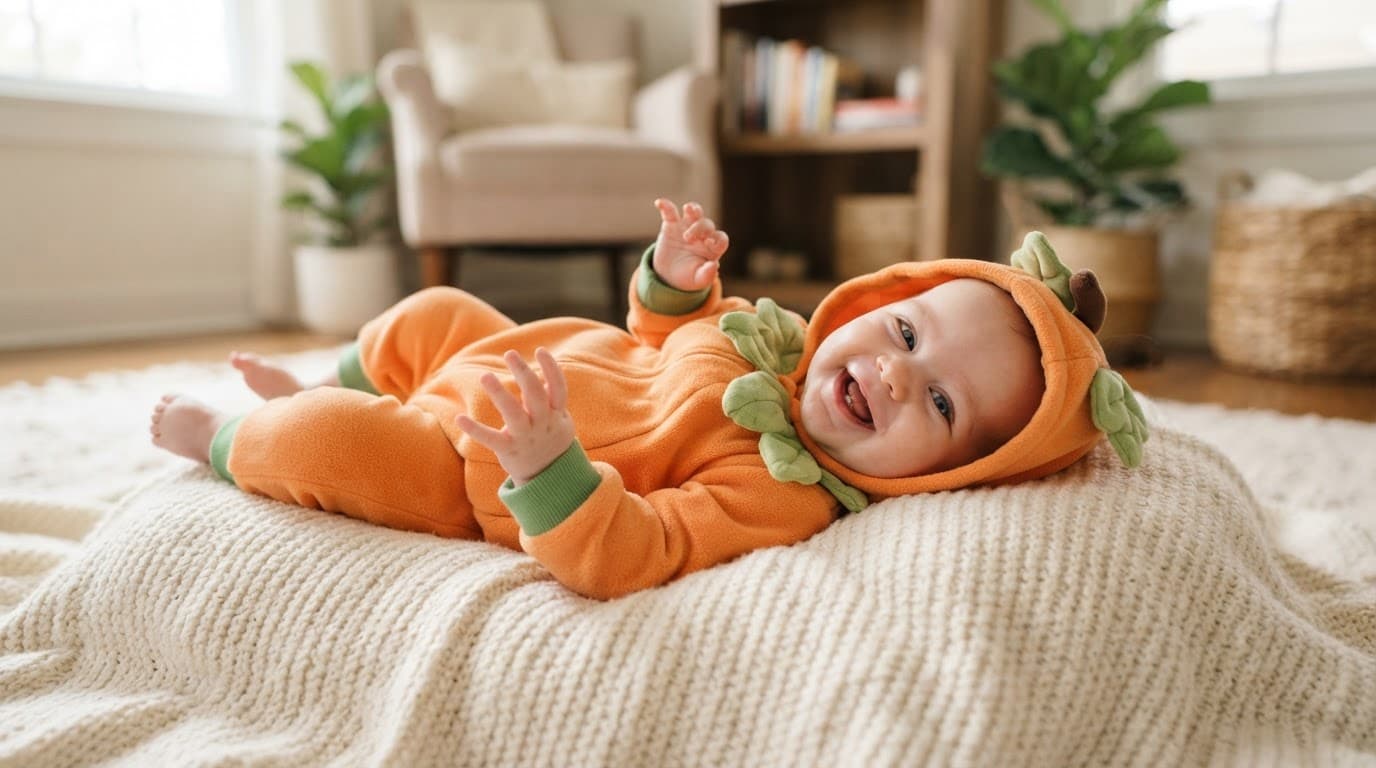
Babies shouldn’t wear masks. Even a soft mask can shift over the nose or mouth, limit vision, or make it harder for you to see signs of discomfort. Face paint can also irritate sensitive skin, then spread into the eyes or mouth when your baby rubs their face.
Inspect every seam, closure, hood, tie, button, bead, and decorative piece before use. Beads, small buttons, detachable ears, bells, ribbons, drawstrings, and loose appliques can become choking hazards. Remove anything your baby can pull off or place in their mouth.
Printed designs and embroidered details create plenty of personality without adding loose parts. Large felt shapes can work when you sew them firmly to the costume, but inspect them before each use. If you’re making an outfit at home, these DIY costume ideas can inspire simple designs with fewer accessories.
Use a Simple Costume Safety Check Before Leaving Home
Test the complete outfit while your baby is awake and supervised. Run through this quick check:
- Watch your baby’s breathing, skin color, and comfort after dressing.
- Confirm that diapers can be changed without removing the entire costume.
- Make sure hands and feet aren’t trapped inside sleeves, mittens, or foot coverings.
- Remove hats, props, and accessories before placing your baby in a car seat.
- Pack a backup outfit in case the costume gets wet, dirty, or too warm.
Never put a bulky costume under a car-seat harness. Extra padding can prevent the straps from fitting closely against your baby’s body. Follow the car-seat manufacturer’s instructions, remove thick layers before buckling, and add a blanket over the secured harness if your baby needs more warmth.
DIY Baby Halloween Costumes You Can Make With Baby Basics
You can create memorable baby’s first Halloween costumes with pajamas, a bodysuit, a romper, or a stroller blanket as the starting point. Add one or two soft details, and your baby can look festive without wearing a bulky store-bought outfit.
For more inspiration, browse these homemade Halloween outfit ideas, then keep the baby version simple, washable, and easy to remove.
Easy No-Sew Ideas for Busy Parents
Start with solid-color clothing and coordinate the look with a hat, bib, socks, or stroller blanket. For a pumpkin, pair an orange sleeper with a green bib or green socks. A white pajama set can become a ghost with a large, simple black fabric design placed flat on the outer layer.
Try these simple combinations: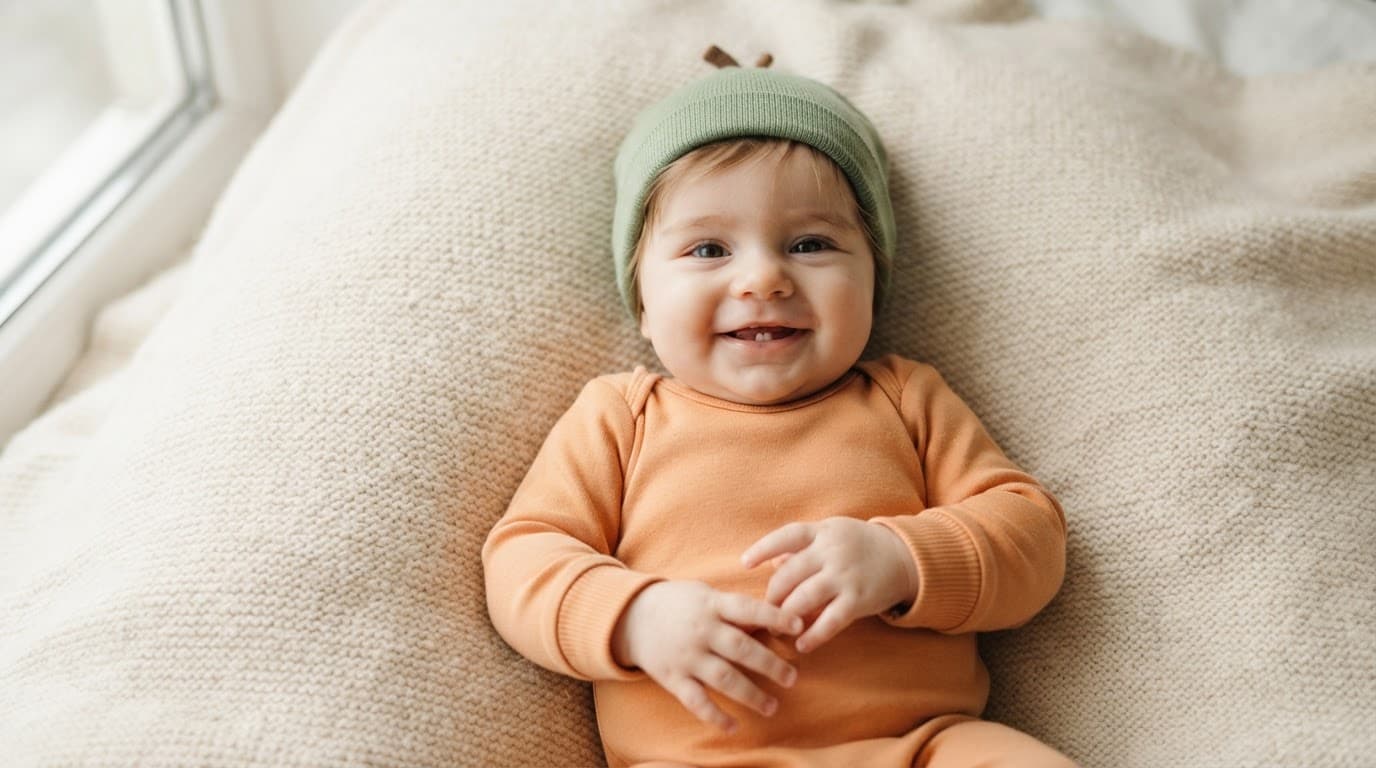
- Dress your baby in brown clothing and attach a soft felt tail securely to the outer layer for a bear or puppy.
- Use a yellow romper with a large felt flower sewn to the front for a sunflower.
- Pair white pajamas with a smooth black fabric shape for a gentle ghost costume.
- Add a green hat to a brown outfit, then use a wide red or blue fabric panel for a garden gnome look.
- Layer a cream sleeper with a soft white bib or blanket for a lamb-inspired outfit.
A large fabric panel can suggest a cape, robe, or animal belly without adding dangling ties. Use clothing-safe stitching or a temporary fabric adhesive labeled for clothing, but don’t rely on loose glue that can peel into your baby’s hands or mouth. Today’s Parent’s easy baby costume ideas offer additional inspiration for outfits made from everyday supplies.
Remove every add-on before sleep, car-seat use, or unsupervised play. A hat, tail, bib, or fabric panel is suitable only while an adult watches closely.
How to Make DIY Details Baby-Safe
Keep decorations large, smooth, firmly attached, and unable to shed fibers. Sew felt shapes to the outer layer when they need to stay in place. Avoid safety pins, exposed wire, peeling hot glue, elastic near the neck, and anything that can wrap around fingers or toes.
Launder new fabric before using it. Then check the edges for scratchy corners, loose threads, or rough seams. Try the finished costume for a few minutes while your baby is awake. Watch for sweating, rubbing, restricted movement, or an attachment that starts to loosen.
If the costume passes that test, inspect it again before photos or an event. Comfort matters more than a perfect detail, especially when your baby needs a nap, feed, diaper change, or quiet cuddle.
What to Wear for Photos, Trick-or-Treating, and Halloween Events
The right outfit depends on the plan. A photo session can handle a quick costume change, while a stroller walk or neighborhood visit calls for warmth, visibility, and easy access to your baby. Keep a familiar base layer underneath whenever possible, then add the costume as a removable outer layer.
Make First-Halloween Photos Sweet and Comfortable
Plan photos after a feeding or nap, when your baby is rested, alert, and calm. Waiting for a perfect pose often leads to fussiness, so follow your baby’s mood instead. A relaxed smile, sleepy eyes, or curious expression will feel more special than a forced picture.
Use a window or shaded outdoor spot for soft natural light. A familiar blanket can help your baby feel secure, while a plain wall, rug, or uncluttered porch keeps attention on the costume. Keep the session brief, especially if the outfit feels warm.
Remove hats, hoods, headbands, or extra accessories as soon as your baby seems hot or upset. You can still capture the Halloween theme with a pumpkin sleeper, printed bodysuit, or cozy base layer. Photograph small details, such as tiny feet, curled fingers, chubby cheeks, and natural smiles, without insisting that your baby wear every costume piece.
### Keep Stroller Walks and Trick-or-Treating Baby-Friendly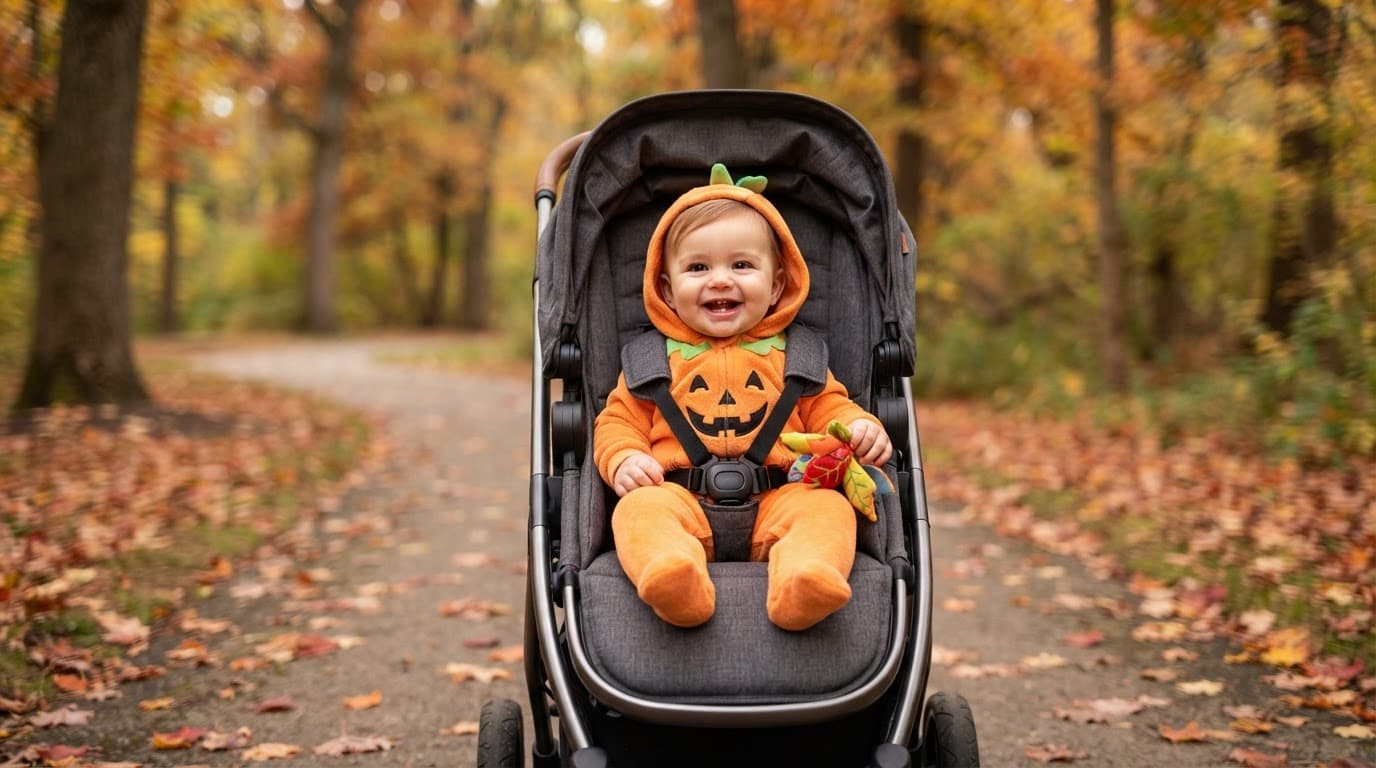
Babies don’t need to visit every house or stay outside all evening. A short stroller walk, an early neighborhood event, a family gathering, or a porch photo can give you the Halloween memory without exhausting your baby. Indoor parties and daycare events may only require a festive sleeper over the clothes your baby already knows.
Keep your baby’s face uncovered and visible throughout the outing. Check the neck and back often for sweat, dampness, flushed skin, or cool skin. Tiredness, shivering, unusual fussiness, and changes in breathing mean it’s time to remove the costume or head home. The American Academy of Pediatrics Halloween safety tips also recommend costumes that fit well and don’t create tripping risks.
Pack a small outing bag with:
- Spare diapers and wipes.
- A backup outfit and extra socks.
- A light blanket for the stroller.
- Bottles, nursing supplies, or feeding items.
- A plastic bag for wet or dirty clothing.
Babies shouldn’t eat Halloween candy. Keep candy, wrappers, glow sticks, and porch decorations out of reach, especially when older siblings or neighbors offer treats. For a low-key gathering, choose an activity from these Halloween ideas for friends and adapt it for a baby-friendly setting.
Use Car Seats and Carriers Safely With Costumes
Thick bunting, puffy costumes, and bulky layers can create extra space beneath a car-seat harness. Remove those outer pieces before buckling your baby, then fasten the harness snugly against the regular clothing. If your baby needs warmth, place a blanket over the secured harness, provided the car-seat manufacturer allows it.
For baby carriers, keep the baby’s airway clear and the face uncovered. Costume ears, tails, hoods, and other details should stay away from straps, buckles, and your baby’s mouth. Check the fit during the walk, and remove the costume if it presses against the neck or causes sweating. Safety comes first, even when the outfit is one of your favorite baby’s first Halloween costumes.
How to Shop for Baby’s First Halloween Costumes Without Overspending
A baby may wear a Halloween costume for only a few minutes before needing a nap, feed, or diaper change. Set a clear budget first, then choose an outfit based on your plans, the weather, and how often your baby can use it afterward. Shopping early also gives you time to compare prices, wait for seasonal sales, and avoid paying extra for rushed delivery.
### Compare Rompers, Bunting, Separates, and DIY Options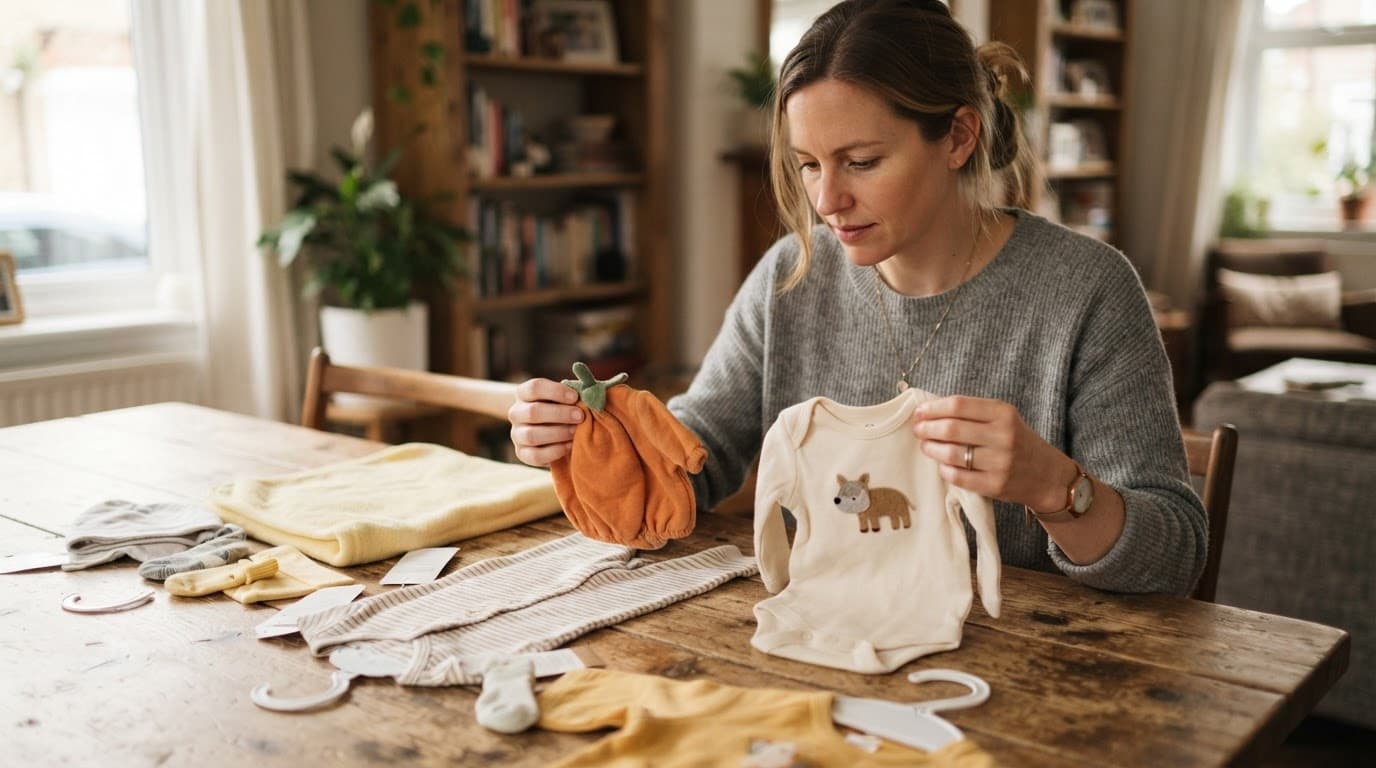
Each costume format fits a different Halloween plan. Use this quick comparison before choosing the cutest option online.
| Costume type | Best use | Main benefit | Watch for |
|---|---|---|---|
| One-piece romper | Photos, indoor parties, frequent diaper changes | Easy to dress and remove | Limited warmth and quick outgrowing |
| Bunting | Short outdoor walks or stroller rides | Adds warmth and creates a complete look | Bulky layers can be unsafe in a car seat |
| Separates | Changing temperatures and longer events | Allows flexible layering and repeated use | More pieces can shift, bunch, or get dirty |
| DIY outfit | Tight budgets and personal themes | Uses clothes you already own | Attachments must stay secure and washable |
A romper is often the best value for a photo session because it keeps the outfit simple and makes diaper changes manageable. Bunting works well for a brief porch photo or stroller walk, but remove thick outer layers before buckling your baby into a car seat. Separates, such as a festive shirt with leggings and a soft hat, give you more control when indoor and outdoor temperatures differ.
DIY costumes can cost very little when you start with pajamas, a bodysuit, or an everyday romper. A few large, firmly sewn felt shapes may suggest a pumpkin, flower, or animal without adding uncomfortable accessories. For more budget-friendly ideas, see these money-saving costume tips.
Check Size, Quality, and Delivery Details Before Buying
Measure your baby’s height, chest, waist, and inseam, then compare those numbers with the seller’s size chart. Age labels vary widely, and a costume that runs small may leave no room for a cotton layer underneath. Also check whether snaps and zippers close securely, lie flat, and open easily for diaper changes.
Read reviews for details about scratchy fabric, overheating, loose decorations, weak closures, and inaccurate sizing. Check the washing instructions before ordering, since a costume that requires special cleaning may cost more time and money.
Order early enough to wash the outfit, inspect every seam, and try it on while your baby is supervised. Leave time for an exchange if the costume arrives late, fits poorly, or looks different from the photos. Confirm the delivery deadline and return policy before purchasing.
Choose a Costume That Can Be Used Beyond One Night
A pumpkin sleeper, animal romper, warm one-piece, or soft hat may work throughout fall as pajamas, outerwear, dress-up clothing, or a photo prop. Elaborate wings, stiff headpieces, and novelty accessories often have little value after Halloween.
When your baby outgrows the costume, wash it according to the care label and store it in a sealed, dry container. You can pass it to a younger child, donate it, or resell it through a local parenting group or resale marketplace. A versatile outfit keeps giving after the candy bowl is packed away.
First Halloween Mistakes to Avoid and a Simple Celebration Plan
Your baby’s first Halloween can be sweet without becoming an all-night production. A few practical choices will prevent rushed shopping, uncomfortable clothing, and a tired baby from taking over the evening.
Avoid Common Comfort and Planning Problems
Waiting until the last minute often leaves you choosing between poor sizing and costumes that look cute online but feel rough in person. Scratchy fabric, tight elastic, long accessories, and complicated closures can turn a quick diaper change into a wrestling match. A costume that runs warm may also leave your baby sweaty and fussy before the first photo.
Try the complete outfit a few days before Halloween. Let your baby wear it for a few minutes while you check breathing, movement, temperature, and skin comfort. Watch for rubbing around the neck, wrists, ankles, and diaper area. Remove long tails, loose cords, dangling ribbons, and decorations your baby can pull away. The CPSC recommends costumes that fit well and don’t drag, since excess fabric can contribute to trips and falls. See its Halloween costume safety guidance before finalizing the outfit.
Keep a short checklist on the refrigerator or in your phone:
- Check the weather and plan breathable layers.
- Confirm that the costume allows easy diaper access.
- Pack backup clothes, diapers, wipes, and extra socks.
- Remove bulky pieces before car-seat use.
- Inspect closures, seams, and decorations before leaving.
- Bring a familiar blanket or feeding supplies.
Wash the costume according to its care label before Halloween. Washing removes manufacturing residue and gives you a chance to check whether the fabric changes shape or becomes rough. After washing, look for loose threads, weakened seams, peeling details, or decorations that have started to detach. Fix or remove questionable pieces before your baby wears the costume.
### A Calm, Flexible Plan for Baby’s First Halloween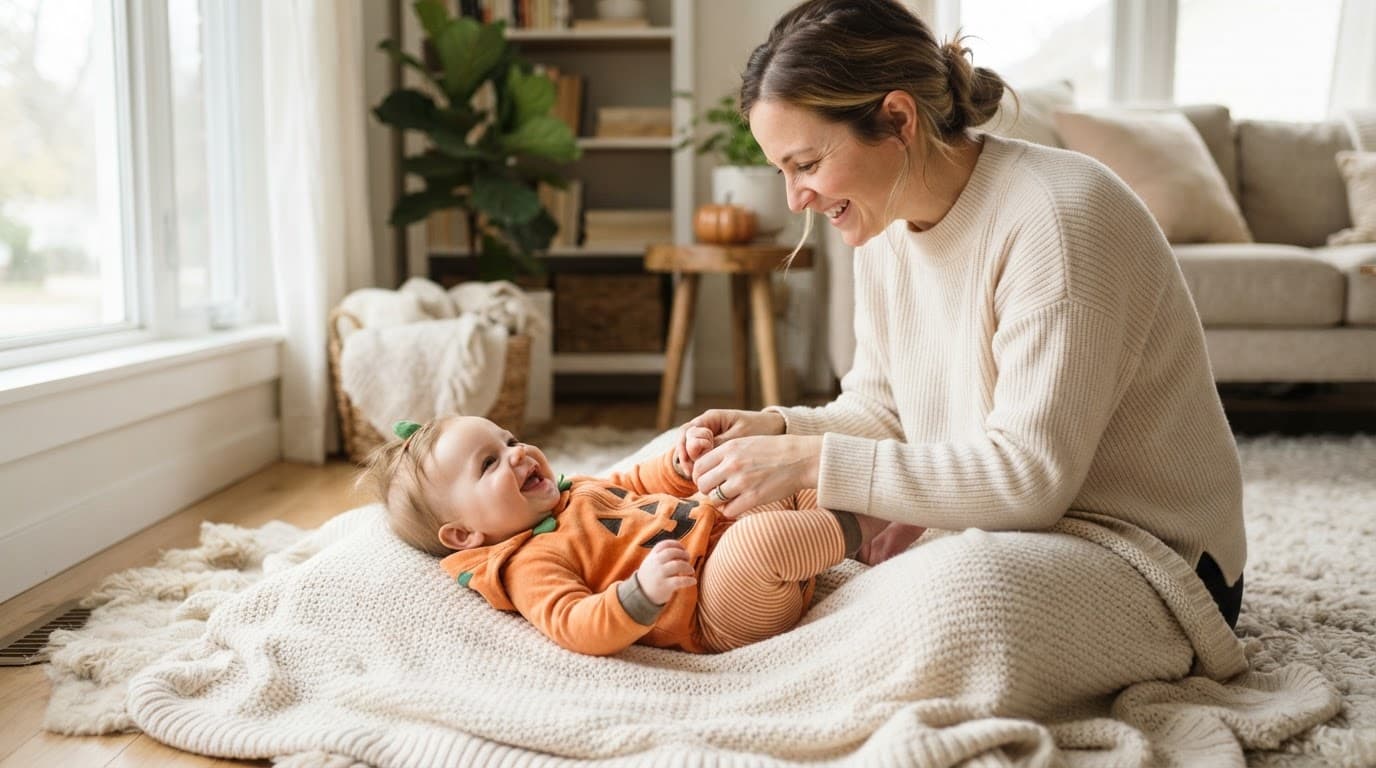
Keep your baby’s normal rhythm at the center of the day. Feed and nap as usual, then dress your baby in a comfortable base layer once they’re rested. Take a few photos before sunset, when natural light is better and your baby is less likely to be overtired.
If your baby seems content, attend one short activity, such as a porch visit, family gathering, or neighborhood walk. You don’t need to stay for the entire event. When your baby yawns, fusses, sweats, shivers, or turns away, head home and change them into warm, familiar clothes.
A cozy sleeper, a small pumpkin prop held by an adult, and one family photo can create a complete first-Halloween memory. Treat the costume as an invitation to celebrate, not a requirement your baby must endure. Your baby’s comfort matters more than a perfect costume, and the calm moments usually become the pictures you treasure most.
Conclusion
Choosing baby’s first Halloween costumes becomes much easier when comfort leads the decision. Soft animal outfits, pumpkin sleepers, gentle ghost designs, and simple DIY looks can all create an adorable theme without masks, loose decorations, stiff pieces, or fabric that limits movement. Flexible layers also help your baby stay comfortable when the evening shifts from a warm living room to a cool stroller walk.
Before Halloween, try the complete outfit at home and check the fit, closures, temperature, diaper access, and freedom of movement. Remove bulky layers before car-seat use, keep your baby’s face uncovered, and let familiar clothes replace the costume as soon as your baby seems tired, hot, or uncomfortable. These small checks protect the fun while keeping the celebration calm.
Your baby may remember none of the pumpkins, photos, or neighborhood lights, but your family will treasure those shared moments for years. The best baby’s first Halloween costume is safe, cozy, easy to remove, and comfortable enough for cuddles, naps, and curious little movements. Choose comfort over complexity, follow your baby’s pace, and let the sweetest memories come from enjoying the evening together.
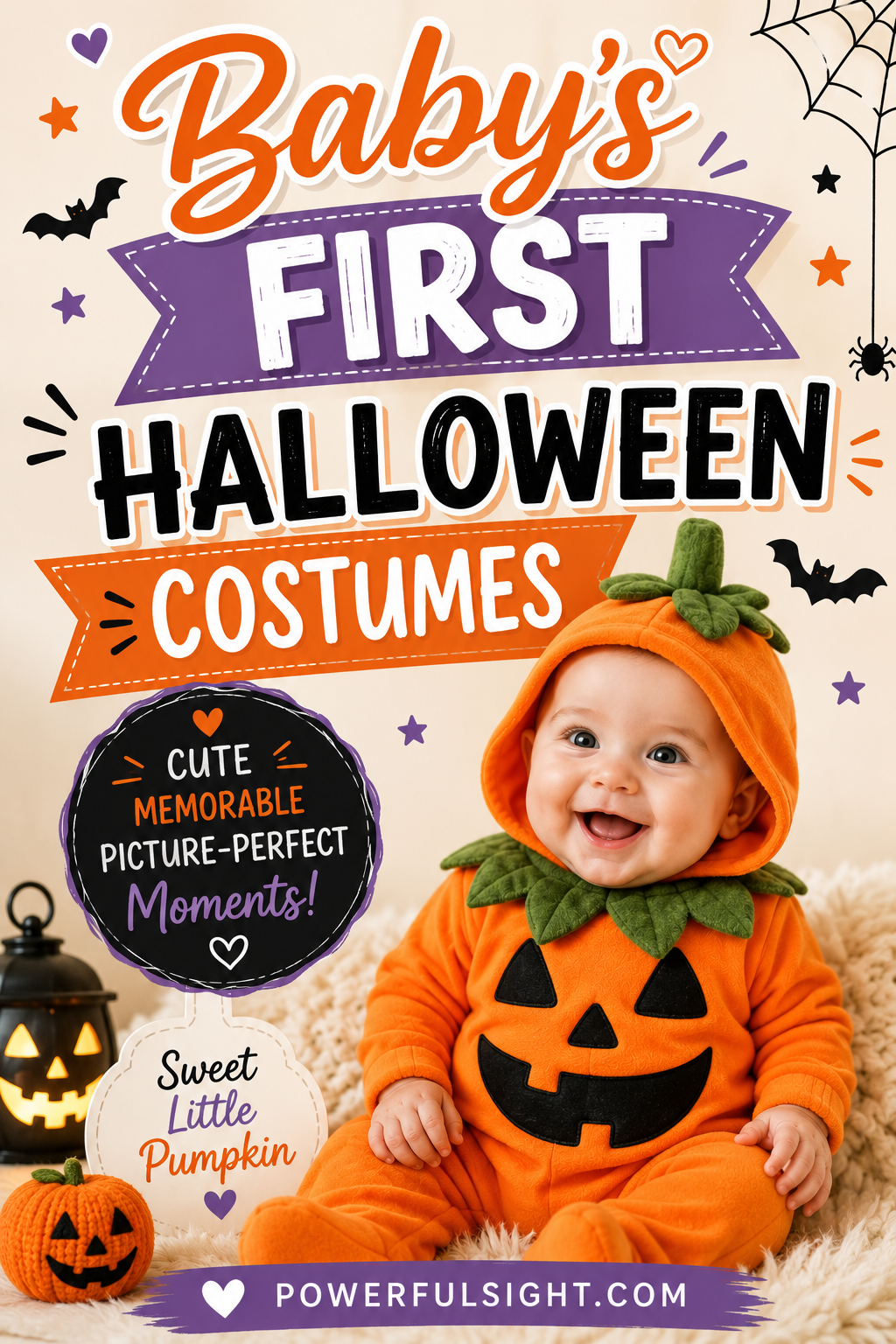
Save the pin for later

- 60 Color Tattoos That Healed Beautifully - 25/09/2026
- 40 Most Painful Tattoo Spots - 24/09/2026
- 20 Tattoo Aftercare Mistakes That Ruin Fresh Ink - 23/09/2026

