Eating healthy while trying to lose weight can feel like a losing bet at the grocery store.
Fresh produce, lean proteins, and anything labeled “light” seem to carry a premium, while the cheapest foods on the shelf are usually the ones that work against your goals.
But here’s the good news: cheap healthy meals for weight loss aren’t just possible, they’re actually easier than you might think. Staples like eggs, beans, oats, and frozen vegetables cost pennies per serving and happen to be some of the most filling foods you can buy.
In this post, you’ll find ten filling meal ideas that come in under $2 per serving, plus a sample weekly plan, smart grocery strategies, and the common mistakes that quietly blow both your budget and your calorie goals.
Let’s start with the meals.
Why Cheap Meals Can Still Help You Lose Weight
Weight loss comes down to one thing: a calorie deficit. You burn more energy than you take in, and the scale moves. Nothing in that equation says the food has to be expensive. In fact, some of the cheapest ingredients in the store are the ones that make a deficit easiest to stick to.
Beans, eggs, oats, and frozen vegetables cost little but deliver plenty of protein and fiber, the two nutrients that keep you full between meals. A cup of cooked lentils has about 18 grams of protein and 15 grams of fiber for roughly 75 cents in dried form. Three eggs run about a dollar and pack 18 grams of protein. Compare that with a takeout burrito bowl at $12 or more, which often carries 700 to 1,000 calories before you’ve added a thing.
Processed “diet” products work against you here too. A $5 protein bar or low-calorie frozen meal leaves most people hungry an hour later, which leads to snacking and blown budgets. A bowl of oatmeal with a banana costs about 60 cents and actually satisfies.
Cheap whole foods aren’t a compromise on your goals. They’re often the better tool.
Cheap Healthy Meals for Weight Loss You Can Make This Week
Every meal below costs under $2 per serving and pulls its weight on protein or fiber, the two things that keep hunger quiet in a calorie deficit. You can cook most of them in under 30 minutes, and several make enough for days of leftovers. Grab a large pot and a skillet, and you’re set for the week.
Hearty Lentil Soup (About $1.50 Per Serving)
One bag of dried lentils, three carrots, two onions, and a few garlic cloves turn into six generous bowls of soup for around $9 total. Sauté the onions and carrots first, add a cup of dried lentils, six cups of water, and a couple of bouillon cubes. Simmer for 35 minutes and it’s done. A serving lands near 300 calories with 18 grams of protein and 15 grams of fiber, which is why a bowl keeps you full for hours. Freeze half the batch so weeknights stay easy.
Veggie Egg Scramble (About $1.25 Per Serving)
Three eggs cost roughly a dollar, and a handful of frozen spinach or peppers from a sale bag adds bulk for pennies. Scramble everything in a nonstick pan with a little olive oil and serve it on a slice of toast or on its own. You’re looking at about 250 to 300 calories and 20 grams of protein per plate. Starting the day with that much protein matters: research on high-protein breakfasts shows it curbs the mid-morning snacking that quietly adds 200 or 300 calories. Want more cheap ideas beyond eggs? Check out this budget meal planning guide for stretching a weekly grocery run further.
Chicken and Rice Bowls and Black Bean Tacos (Under $2 Per Serving)
Chicken thighs run about half the price of breasts, usually $1.50 per pound on sale, and they taste better in a bowl anyway. Roast a family pack, cook a pot of rice, and steam frozen broccoli. Assemble bowls that come in near 450 calories and about $1.80 per serving, with 35 grams of protein each. Cook once, eat four times.
Black bean tacos are the plant-based counterpart. A can of beans is under $1, corn tortillas cost about $2 for a dozen, and shredded cabbage stretches everything further. Two tacos hit roughly 300 calories with 12 grams of fiber. Cabbage costs a fraction of lettuce and keeps for weeks in the fridge.
Tuna Salad and Turkey Chili (Batch-Friendly and Freezer-Safe)
Skip the mayo and mix canned tuna with plain Greek yogurt, diced celery, and black pepper. Two cans feed two lunches at about $1.60 per serving and 240 calories, with 30 grams of protein. Serve it on toast or over greens.
Turkey chili is the one-pot workhorse. Brown a pound of ground turkey, add two cans of diced tomatoes, a cup of dried beans (cooked ahead), and chili powder. One pot yields six servings at roughly $1.75 each and 350 calories apiece, and it freezes beautifully for up to three months. If you want a bigger rotation of healthy batch cooking recipes that fit a deficit, chili belongs at the top of the list.
How to Grocery Shop on a Budget Without Sabotaging Your Goals
The meals are only half the equation. The other half happens in the store, where a few habits decide whether your weekly bill lands at $35 or $75. The good news is that budget shopping is mostly a skill, and it takes about two trips to build. Here’s how to shop in a way that keeps your bill low and your meals on plan.
Smart Shopping Habits That Lower Your Grocery Bill
Start with a list, and treat it like a contract. Decide your meals before you leave the house, then buy only what those meals require. Shoppers who wander the aisles without a plan almost always leave with impulse items that neither fill them up nor fit their calorie goals.
Store brands deserve a permanent spot in your cart. In most cases they come off the same production lines as name brands, and the price gap is often 20 to 40 percent. Oats, canned tomatoes, spices, and frozen vegetables all taste nearly identical in the finished meal.
Frozen and canned produce are undervalued tools. Frozen vegetables are picked and frozen at peak ripeness, they cost a third of what fresh broccoli runs, and they keep for months. Canned beans, tomatoes, and fish are just as nutritious as their fresh counterparts.
A few other habits pay off fast:
- Buy dried beans, rice, and oats in bulk, since dried forms cost about half as much per serving as canned.
- Check the unit price on the shelf tag, not the sticker price, because the bigger box is not always the better deal.
- Never shop hungry. An empty stomach makes snack aisles irresistible and inflates the cart by $10 or more without adding a single real meal.
If you want a fuller walkthrough of these tactics, this grocery budget guide covers the basics in more depth.
A Simple Starter Grocery List for a Week of Cheap Healthy Meals
You don’t need a cart full of specialty items to eat well for a week. Five ingredients cover breakfast, lunches, and dinners for one or two people.
| Item | Approx. Cost |
|---|---|
| Dozen eggs | $3.00 |
| Container of oats | $3.00 |
| Two cups dried beans | $3.00 |
| Bag of frozen vegetables | $2.50 |
| Family pack chicken thighs | $7.50 |
That’s roughly $19 for a week’s foundation. Oats and eggs handle breakfast, beans and frozen vegetables stretch into soups, tacos, and sides, and the chicken thighs anchor your dinner bowls. Add rice, basic spices, and whatever produce is on sale, and you’re still under $30.
The meals in this post were built around exactly this list, so nothing you buy sits unused in the pantry. Start here, adjust as you learn what your household actually eats, and let the savings compound week after week.
Easy Meal Prep Tips to Stay Full and Spend Less
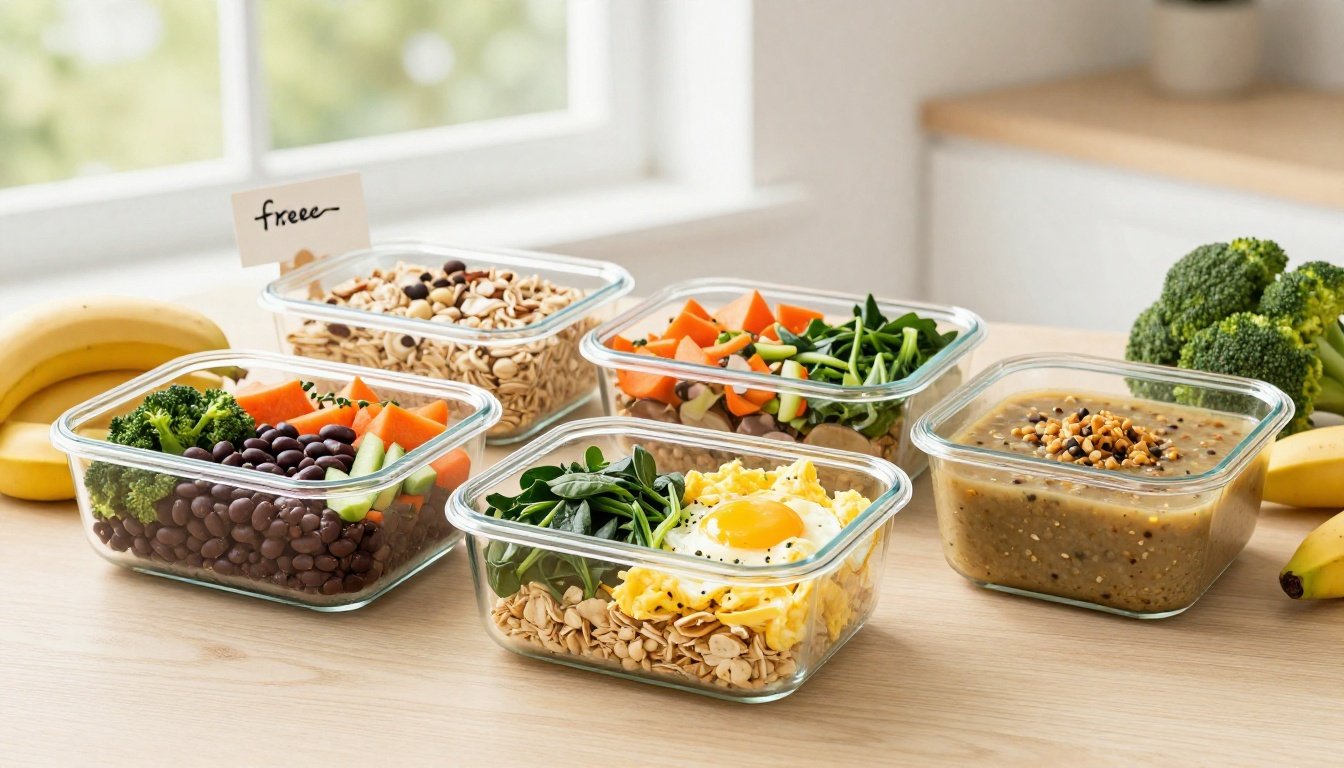
Prepping ahead is what turns cheap ingredients into actual meals you’ll eat. Without a plan, that bag of dried beans sits in the pantry and takeout wins by default. A single prep session on Sunday takes about two hours and feeds you for most of the week.
A Sample Day of Eating for Under $6
Here’s what a full day looks like using the meals from this post, all prepped in advance:
| Meal | Food | Calories | Cost |
|---|---|---|---|
| Breakfast | Oatmeal with banana and peanut butter | 400 | $0.70 |
| Lunch | Lentil soup with toast | 450 | $1.60 |
| Snack | Greek yogurt with frozen berries | 200 | $1.00 |
| Dinner | Chicken and rice bowl with broccoli | 450 | $1.80 |
That’s about 1,500 calories for roughly $5.10, with more than 90 grams of protein spread across the day. If your target is higher, add a second snack or increase the rice portion; both cost almost nothing. The point is that hitting a calorie goal and a budget goal can happen in the same bowl.
Do Your Prep on Sunday in Two Hours
Sunday works because you’re not rushed, and the fridge is empty enough to make room. A simple sequence keeps it efficient:
- Start the lentil soup simmering first, since it needs the least attention.
- While it cooks, roast the chicken thighs and boil a pot of rice.
- Hard-boil half a dozen eggs and portion snacks into containers last.
Cook the longest-running items first and everything overlaps. By the time the soup needs stirring, the chicken is already in the oven.
Cook Grains in Bulk and Store Them Right
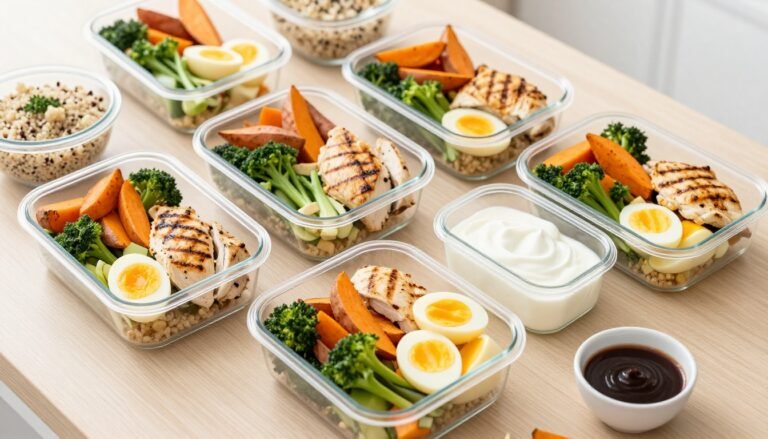
Rice, oats, and dried beans cost the least in bulk and hold well. Cook a full pot of rice on Sunday and it keeps for four days in the fridge, or portion it into freezer bags for longer storage. A rice cooker makes this nearly hands-off, but a regular pot works fine too. Reheat grains with a splash of water so they steam back to life instead of drying out.
Reuse Ingredients Across Meals to Avoid Boredom
The trick to eating the same base foods all week without getting tired of them is changing the context, not the ingredient. Roasted chicken becomes a rice bowl on Monday, tacos on Wednesday, and a soup addition on Friday. Beans shift from chili to taco filling to a soup stretcher. Different spices and sauces do most of the work: one batch of chicken seasoned with chili powder tastes nothing like the same batch tossed in garlic and soy sauce.
Buy two or three cheap sauces each week, and your five core ingredients feel like fifteen different meals. If you’re building out your routine, this meal planning for beginners guide walks through the full weekly process.
Mistakes That Make Budget Eating Harder Than It Needs to Be
Even a solid plan can get quietly undermined by a few habits that feel harmless in the moment. The good news is that every one of these is fixable, and most people make at least two of them in their first month. Here’s what to watch for.
Skipping Meals and Paying for It Later
Cutting breakfast or lunch to “save calories” usually backfires by dinner. Hunger builds all day, and by 6 p.m. willpower loses to whatever is fastest, which is rarely cheap or light. One skipped meal often turns into a 900-calorie takeout order that costs more than two days of home cooking. Eat on schedule, even if the meal is small.
Buying “Diet” Packaged Foods
Those $5 protein bars and portioned frozen dinners carry a premium price and leave you hungry an hour later. Whole foods like oats, beans, and eggs cost a third as much and actually keep you full. If the package markets itself as diet food, check the price per gram of protein before it goes in the cart.
Drinking Your Calories
Soda, juice, fancy coffee drinks, and alcohol add hundreds of calories a day with zero fullness in return. Water, black coffee, and unsweetened tea cost almost nothing. Switching your drinks alone can be the difference between losing and maintaining.
Cutting Protein Too Low
Protein is what keeps a calorie deficit from feeling like starvation. It costs more per calorie than rice or pasta, so many budget eaters trim it first and then wonder why they’re snacking at midnight. Protect eggs, beans, and chicken thighs in your budget; they’re the cheapest satiety you can buy.
Giving Up After One Pricey Trip
One $80 grocery run doesn’t mean the system failed. Prices vary week to week, and sale cycles reward shoppers who stick around. Treat an expensive trip as data, adjust next week’s list, and keep going. Consistency, not perfection, is where the savings and the results come from.
Conclusion
Cheap healthy meals for weight loss come down to a short list of reliable ingredients: beans, eggs, oats, frozen vegetables, and inexpensive proteins like chicken thighs. Batch cooking turns those staples into a week of filling meals, and a little planning saves both money and calories at the same time. The cheapest foods in the store happen to be the ones that keep you full.
None of this requires special products or a complicated system. A pot of lentil soup, a dozen eggs, and a Sunday prep session cover most of the week for less than the cost of two takeout orders.
Pick two meals from the list above and make them this week. Start small, see how the portions and costs work out for you, and build from there.

- Cheap Healthy Meals for Weight Loss - 10/11/2026
- 10 Reasons You Feel Irritable Around Your Family (and How to Cope) - 10/11/2026
- 60 Color Tattoos That Healed Beautifully - 25/09/2026
About the Author