Every scar carries a story most people never asked to be part of. Surgery, injury, burns, or self-harm: the marks stay long after the moment passes, and some of them ache in ways that have nothing to do with physical pain.
A tattoo can change that. By working ink over or around scarred skin, a skilled artist can transform something you once tried to hide into something you’re proud to show. It’s a form of reclaiming your body, and it’s become one of the most meaningful corners of tattoo art today.
Below you’ll find 45 scar tattoo ideas organized by scar type, from mastectomy and C-section scars to burn and self-harm cover-ups. We’ll also walk through how long you should wait before tattooing a scar, which designs work best over scar tissue, and what aftercare looks like so your healing goes smoothly.
Whether you’re ready to book an appointment or just gathering courage and inspiration, these examples show what’s possible when pain becomes art.
Why Scar Tattoos Turn Pain Into Beauty
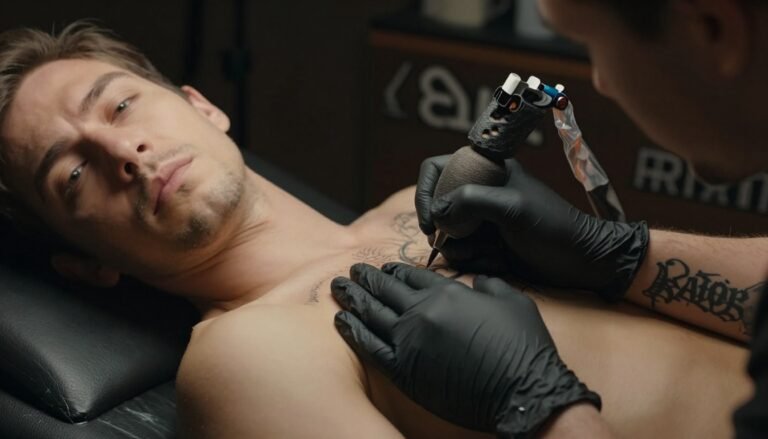
There’s a reason people cry in the tattoo chair when the needle finally touches scarred skin. For years, the scar may have been the thing you angled away from mirrors, the question you dreaded from strangers, the proof of the worst day of your life. Covering it with ink flips that script. The mark stops being something that happened to you and becomes something you chose.
Psychologists sometimes call this body reclamation, but most people describe it in simpler terms: taking back ownership of their own skin. After a mastectomy, a car accident, a burn, or a period of self-harm, the body can feel like a record of loss. A tattoo introduces a new entry in that record, one written by you. The artist works with the scar rather than pretending it doesn’t exist, and many designs actually incorporate the texture of the tissue into florals, waves, or geometric patterns so the old mark becomes part of the image itself.
For a lot of people, the process also brings closure. Sitting with the scar long enough to transform it requires looking at it honestly, often for the first time. That act alone can be healing.
The Rise of Scar Cover-Up and Reclamation Tattoos
Demand for this work has grown fast, and the industry has responded. Paramedical tattooing is now a recognized specialty, with artists trained to camouflage scars and recreate lost detail, including 3D nipple tattooing after breast reconstruction. Social media has amplified the reach of this work, letting people see scars like theirs turned into art and giving them the confidence to book their own appointment.
45 Scar Tattoos That Turned Pain Into Beauty
Now for the fun part: the designs themselves. Each idea below matches a specific scar type, because scar tissue behaves differently depending on how it formed. A flat surgical scar takes fine lines beautifully, while raised burn tissue needs softer shading. Find your situation below and use these concepts as a starting point for a conversation with your artist.
Tattoos for Surgery Scars and C-Section Marks
Surgical scars are usually straight, flat, and predictable, which makes them ideal canvases for designs that follow the line. Some strong options:
- Floral vines along C-section scars, with blooms spaced along the hip crease so the scar becomes the stem.
- Hummingbirds hovering over appendectomy scars, the small mark reading as a flower the bird approaches.
- Ornamental mandala work tracing open-heart surgery lines down the sternum, turning a vertical scar into a centerpiece.
- Snake or serpent designs that use a spinal or abdominal incision as the body.
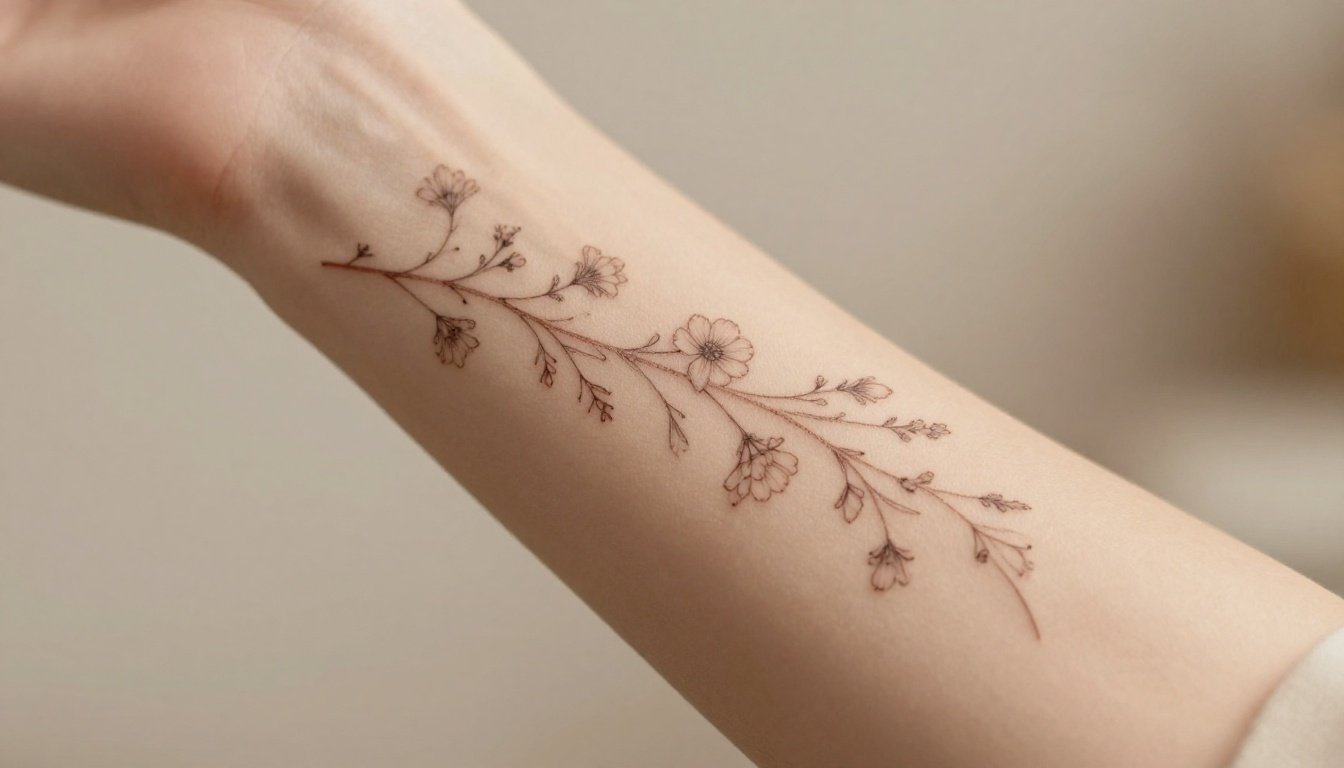
- Fine-line botanical sprigs placed at each end of a scar so the line reads as a branch.
- Arrow designs over knee replacement scars, the scar forming the arrow’s shaft.
- Waves wrapping around hip incisions, motion softening a straight edge.
- Lace-style ornamental bands across a hysterectomy or gallbladder scar.
- Script lettering following the curve of a C-section, a word or date chosen by you.
- Moon phases trailing a vertical abdominal scar, each phase a little larger.
Floral and Vine Designs for Burn and Injury Scars
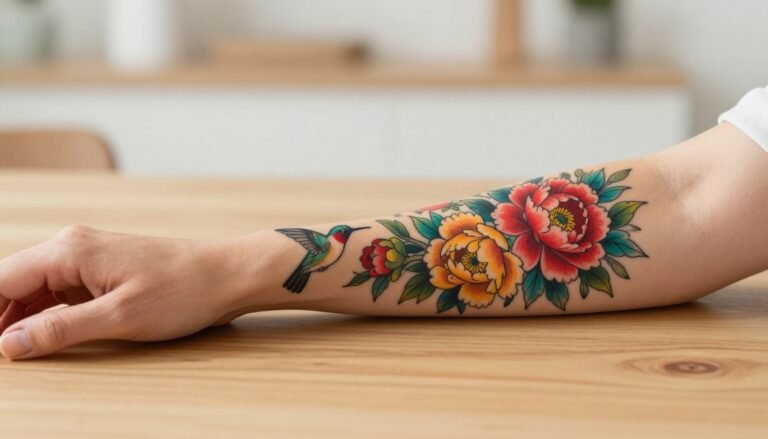
Burn and accident scars often have irregular texture and discoloration, so soft, organic shapes work better than rigid lines. Peonies are a favorite because their layered petals break up uneven pigment across a wide area. Lavender stems suit long, narrow grafted or road-rash scars, since the thin stalk hides linear marks. Cherry blossom branches scatter small blooms across patchy texture, and leafy vines flex with the body, which matters on joints where scars pull. Watercolor backgrounds in muted washes also blur discoloration without demanding sharp detail the tissue can’t hold.
Meaningful Tattoos for Self-Harm Scars
This is the most sensitive category, and many artists approach it with extra care and training. The goal is usually not a heavy cover-up but a design that honors survival. Popular choices include semicolons, drawn from Project Semicolon’s message that the story continues; lotus flowers, which grow through mud toward light; and birds in flight, often a small flock moving upward along the forearm. Others choose inspirational script, mountains, or sunrise line work. Many people keep some scars visible and let the tattoo frame them rather than hide them. There’s no wrong way, and healing comes first, always.
Empowering Designs for Mastectomy and Breast Surgery Scars
Post-mastectomy tattooing ranges from decorative to medical. Ornamental under-boob pieces, built like jewelry with linework and dots, trace gracefully along surgical curves. Phoenix designs across the chest are a bold statement of rebirth. Others choose realistic 3D nipple tattoos, a paramedical specialty where artists recreate lost detail after reconstruction. Some well-known names in this space include artists trained through programs associated with the Personal Ink (P.INK) project, which connects breast cancer survivors with vetted tattooers. Floral chest pieces, geometric sternum work, and watercolor ribbons are all common requests.
Creative Cover-Ups for Stretch Marks and Small Scars
Stretch marks and little scars respond well to designs that use them instead of burying them:
- Constellations, where stretch marks become the connecting lines between stars.
- Tiny wildflowers placed directly over small childhood scars.
- Watercolor splashes that flow over the mark and let its edges show through.
- Lightning bolts that claim a stretch mark as the flash itself.
- Feather barbs drawn so the mark forms part of the shaft.
- Small animals, like bees or ladybugs, that make a knee or elbow scar charming.
- Mountain range line work where ridges follow natural skin texture.
- Fireworks bursting over scattered stretch marks.
- Minimalist stars, one per mark, turning a pattern into a sky.
How to Choose the Right Scar Tattoo Design
Falling in love with a design on Pinterest is easy. Making it work on your scar takes a little more thought. Scar tissue is not normal skin: it holds ink differently, it moves differently, and it rarely behaves the way a flat illustration promises. The best designs start with the scar itself, then build outward from there.
Working With Your Scar’s Shape, Texture, and Location
Start by studying your scar honestly. Flat, thin scars accept fine-line work and small script without trouble. Raised or keloid-prone tissue struggles with crisp detail, so soft shading, dotwork, and watercolor-style washes hold up better than crisp geometric lines. Wide scars need designs that spread across them, like vines or branches, while narrow scars do better as part of a longer element, a stem, an arrow shaft, a mountain ridge.
Location matters just as much. Skin over joints bends constantly, and rigid patterns tend to warp as the body moves. Flowing, organic designs flex with you; a perfectly straight mandala may look warped the moment you reach overhead. One rule of thumb covers most cases: follow the scar instead of fighting it. A design that treats the mark as part of the composition ages far better than one that tries to bury it under heavy blackwork.
Finding an Artist Experienced in Scar Work
Not every tattooer will work over scar tissue, and that’s worth knowing before you fall for someone’s portfolio. Scarred skin can reject ink, heal unevenly, or take extra passes, so experience matters more here than in almost any other style.
When you vet candidates, a few things separate the specialists from the generalists:
- Look for healed scar work in their portfolio, not just fresh photos. Healed results show how the ink actually settled in the tissue.
- Ask directly how many scar cover-ups they’ve done and how they adjust for texture.
- Book a consultation and bring photos of your scar so they can assess it in person.
A good artist will tell you honestly if your scar needs more healing time or a different approach. If someone rushes to take your deposit without examining the skin, treat that as a red flag.
How Long to Wait Before Tattooing Over a Scar
Patience is the part nobody wants to hear, but it protects the final result. A scar should be fully healed and matured before a needle touches it, which usually means waiting 12 to 18 months, sometimes longer for deep surgical or burn scars. Fresh scar tissue is still remodeling underneath, and it accepts ink unpredictably; pigment can blur, fade, or heal patchy.
For surgical scars, check with your doctor or surgeon first. They can confirm the tissue has finished settling and flag any complications, like keloid tendency, that would change the plan. Waiting an extra few months is a small price for a tattoo that lasts.
Aftercare and What to Expect When Tattooing Scar Tissue
The day of your appointment is only half the story. What happens in the weeks after the needle lifts matters just as much, especially when the skin under your design is scar tissue rather than normal skin.
Pain Levels: What Scar Tissue Actually Feels Like
Expect sensations to be different, and often sharper. Scar tissue can be more sensitive than surrounding skin because nerves regrow unevenly after an injury or incision, so some spots may sting while others feel oddly numb. Numbness is common too; damaged tissue sometimes can’t register pain well, which makes certain areas easier rather than harder to tattoo. Neither reaction is wrong, and both vary person to person. Tell your artist the moment anything feels off. A good one will slow down, take breaks, or adjust pressure without making it awkward.
Why Touch-Ups Are Normal
Ink behaves unpredictably in scarred skin. Dense fibrous tissue can push pigment out or absorb it unevenly, so a design may heal lighter in some areas or slightly blurred in others. That’s normal, not a failure. Many scar cover-ups need one touch-up session, sometimes two, before the piece settles into its final look. Build that into your budget and expectations from the start. Most artists offer or recommend a touch-up after full healing, usually three to six months later.
Gentle Aftercare Tips for Healing
Aftercare follows the same basics as any tattoo, with a little extra tenderness. Keep it simple:
- Keep it clean and lightly moisturized with unscented soap and a thin layer of fragrance-free balm, two or three times daily.
- Don’t pick or scratch. Scarred tissue often itches intensely while healing, and scratching can pull ink out or raise the scar itself.
- Avoid sun, soaking, and friction. No pools, baths, or tight waistbands over the area for at least three weeks.
- Watch for irritation. Raised, red, or overly puffy spots deserve a call to your artist or doctor.
Once fully healed, sunscreen is the best friend your tattoo will ever have. Scar tissue already fades pigment faster than normal skin, and UV exposure accelerates that. A daily SPF on the tattooed area keeps both the ink and the scar underneath from darkening or blurring. It’s a small habit that protects something meaningful, and you’ve waited this long for it, so it’s worth the thirty seconds a day.
Final Thoughts on Turning Your Scar Into a Story Worth Wearing
Your scar has been with you through every version of yourself since the day it arrived. It watched you heal, adapt, and keep going, even on the days you didn’t want to. Covering it with ink doesn’t erase any of that history; it simply adds a chapter you get to write yourself. That’s what makes a scar tattoo different from most body art. Every flower, bird, or line of script sits on top of proof that you survived something, and now you’ve decided how that proof looks.
This is one of the most personal forms of self-love you can practice. Choosing to look at the scar, sit with it, and turn it into art takes honesty and courage in equal measure. Plenty of people wait years before booking the appointment, and that’s okay. The tattoo will be there when you’re ready.
If one design from this list stayed with you, save it. Bring it, along with photos of your scar, to a consultation with an artist who has real scar cover-up experience. Ask questions, hear their honest take on timing and texture, and let them guide the next step. Whether it’s a small fine-line piece or a full reclamation of a large area, the first consultation costs nothing but your time.
Your story is already written. The tattoo just makes it beautiful enough to wear in the open.

- 45 Scar Tattoos That Turned Pain Into Beauty - 11/11/2026
- Cheap Healthy Meals for Weight Loss - 10/11/2026
- 10 Reasons You Feel Irritable Around Your Family (and How to Cope) - 10/11/2026
About the Author