Anti-inflammatory dinners can be fast, filling, and made with simple ingredients you probably already have. In plain terms, inflammation is your body’s response to stress or injury, but when it sticks around too long, it can affect how you feel day to day.
That’s why so many people turn to this style of eating, it can support heart health, ease joint pain, steady energy, and help digestion. If you want a practical place to start, these easy anti-inflammation meal ideas show how simple the approach can be.
What makes a dinner anti-inflammatory?
An anti-inflammatory dinner follows a simple pattern: it centers on whole foods, adds healthy fats, builds in fiber, and uses lean protein plus colorful produce. That mix helps meals feel satisfying without leaning on heavy sauces or ultra-processed shortcuts.
The easiest way to think about it is balance. Salmon, chicken, beans, leafy greens, tomatoes, olive oil, nuts, seeds, turmeric, ginger, and citrus all fit the pattern well. On the other hand, refined grains, sugary drinks, processed meats, and heavily packaged foods can push meals in the opposite direction.
The best ingredients to keep on hand
Keep your kitchen stocked with a few flexible basics, and weeknight dinner gets much easier. You can mix and match these ingredients in bowls, skillets, soups, and sheet-pan meals without starting from scratch.
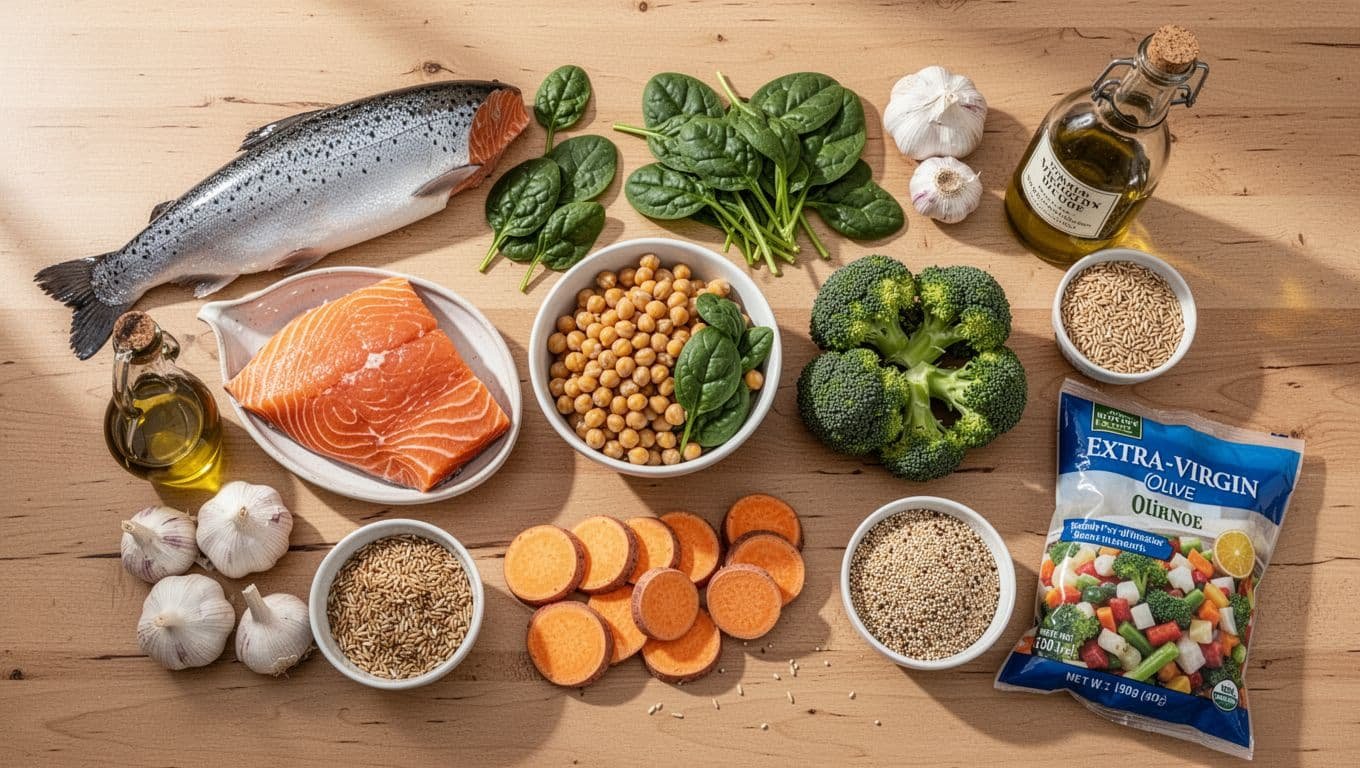
A smart anti-inflammatory kitchen usually includes:
- Fridge staples like salmon, chicken, tofu, spinach, broccoli, and sweet potatoes.
- Freezer staples like frozen vegetables and extra portions of cooked grains.
- Pantry staples like lentils, chickpeas, garlic, olive oil, brown rice, quinoa, nuts, seeds, turmeric, ginger, and citrus.
These foods make cooking easier because they work in almost any combo. Salmon or chicken can anchor a meal, while lentils and chickpeas add fiber and protein fast. Frozen vegetables save time, and grains like brown rice or quinoa give you a base that feels filling without much effort.
If you want more meal ideas built around these kinds of ingredients, these anti-inflammatory meal ideas are a helpful place to start. For a deeper look at omega-3-rich choices, omega-3 rich foods for hormone health is a useful follow-up.
Easy swaps that make meals more inflammation-friendly
Small swaps can change a dinner fast, and they usually don’t require a new recipe. The goal is to make the plate more whole-food focused and less dependent on packaged extras.
A few simple swaps go a long way:
- Choose olive oil instead of butter or margarine for cooking and dressing.
- Pick brown rice, quinoa, or whole-wheat pasta instead of white pasta or refined grains.
- Use herbs, garlic, ginger, turmeric, lemon, and vinegar instead of heavy cream sauces.
- Build meals around beans, lentils, chicken, tofu, or salmon instead of processed meats.
- Add leafy greens, tomatoes, broccoli, and other colorful vegetables to almost any dinner.
- Reach for water, sparkling water, or unsweetened tea instead of sugary drinks.
The best anti-inflammatory dinner is usually the one that feels realistic enough to repeat on a busy Tuesday.
These swaps work because they raise the fiber, fat quality, and nutrient value of the meal without making dinner complicated. If you can keep the flavor high and the prep simple, the habit sticks.
Fast dinners with salmon and other seafood
Seafood makes weeknight dinner easier because it cooks fast and brings a lot of flavor with very little work. Salmon, tuna, and mackerel also give you omega-3 fats, which help calm inflammation and fit this anti-inflammatory dinner plan well.
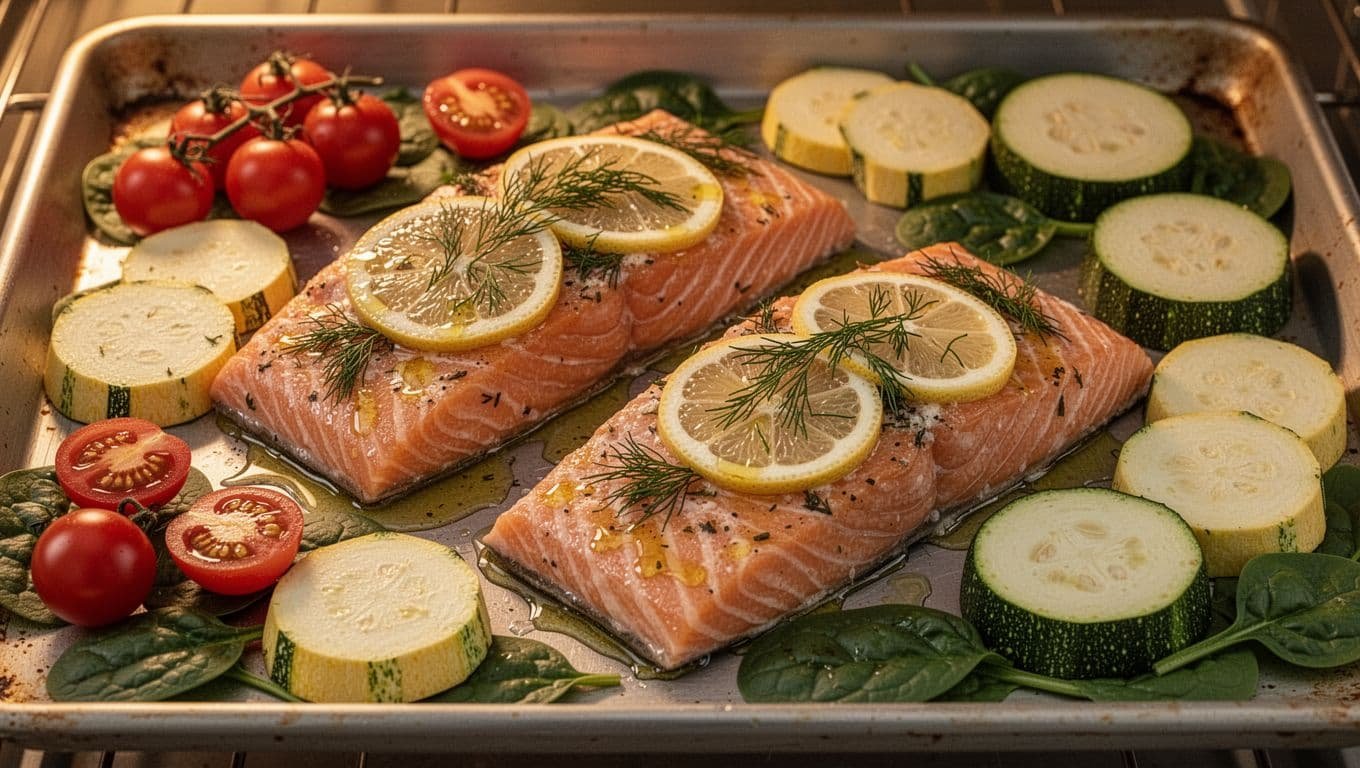
One-pan salmon dinners that save time
Salmon is one of the easiest proteins to work into a fast dinner. A sheet pan with salmon, cherry tomatoes, herbs, and squash gives you color, texture, and a full meal in one go. A skillet works just as well when you want more browning and even faster cleanup.
Keep the seasoning simple and the method direct. Olive oil, garlic, lemon, dill, parsley, or a light spice rub are enough to make salmon taste fresh. Most fillets cook in about 10 to 15 minutes, so you can have dinner on the table before you lose patience.
For a fuller plate, pair salmon with:
- Rice or quinoa for a filling base
- A simple salad for a lighter meal
- Roasted greens like spinach, kale, or broccoli
If you want a dependable template, anti-inflammatory salmon recipes make it easy to build a dinner around omega-3-rich fish. A side of grains or greens turns one pan into something that feels complete, not like a small main dish.
Seafood meals with bold flavor and little cleanup
Foil packets are great when you want dinner to feel fresh without leaving a sink full of pans behind. Salmon, white fish, or tuna steaks all work well with lemon, garlic, herbs, and sliced vegetables. The packet traps steam, so the fish stays tender and the vegetables cook in the same space.
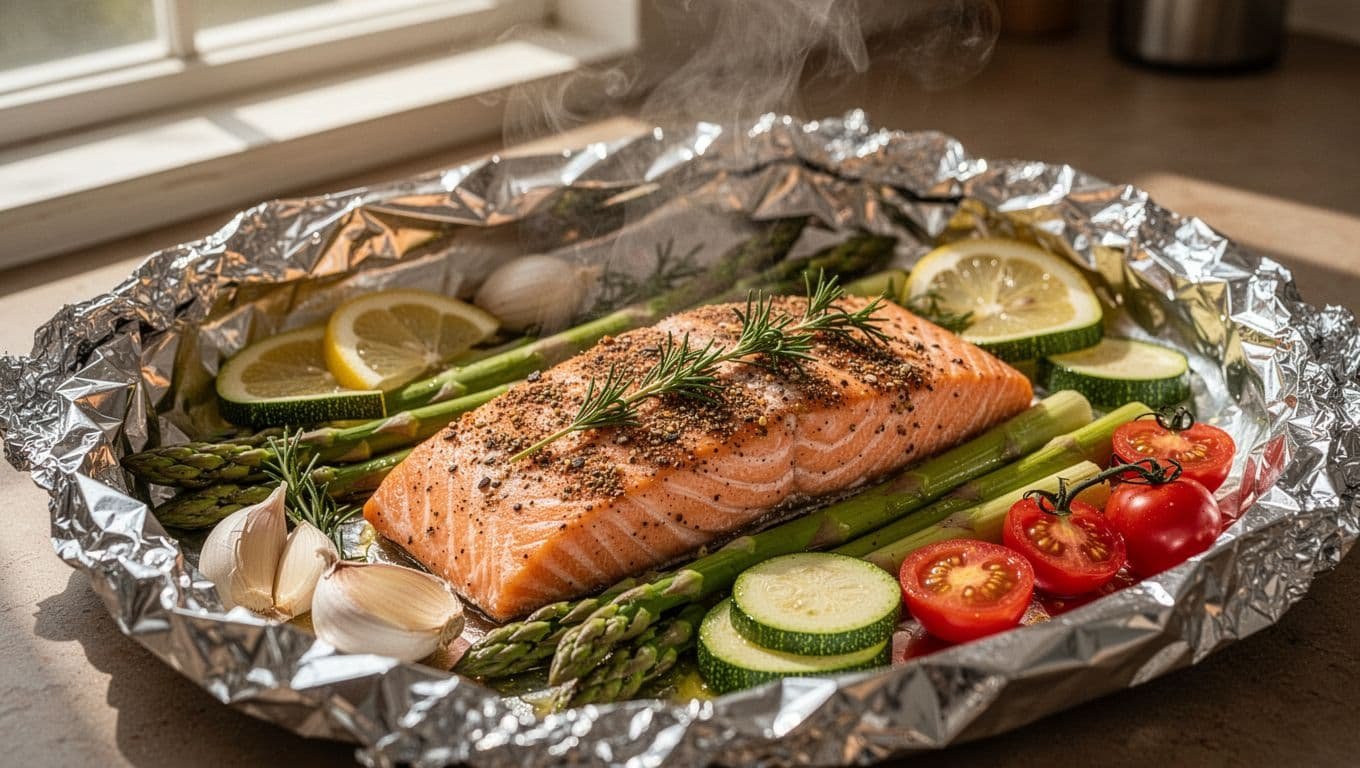
A pan-seared salmon dinner with greens is another strong option when you want bold flavor fast. You can also bake fish with a spice rub, then serve it with simple vegetables like green beans, asparagus, or zucchini. That keeps the meal bright, colorful, and easy enough for any night of the week.
For a heart-healthy spin, the American Heart Association recommends eating fish regularly, especially fatty fish like salmon and mackerel. That makes these dinners a smart choice when you want speed, cleanup, and real nourishment in the same meal.
Chicken and turkey dinners that feel light but filling
Chicken and turkey are a strong fit when you want dinner to feel satisfying without sitting too heavy. They cook fast, pair well with vegetables, and take on bright flavors like lemon, garlic, ginger, and turmeric with little effort.
For busy weeknights, lean poultry works best in simple meals with whole grains and plenty of color. That balance keeps the plate comforting, steady, and easy to repeat.
Skillet chicken meals for busy nights
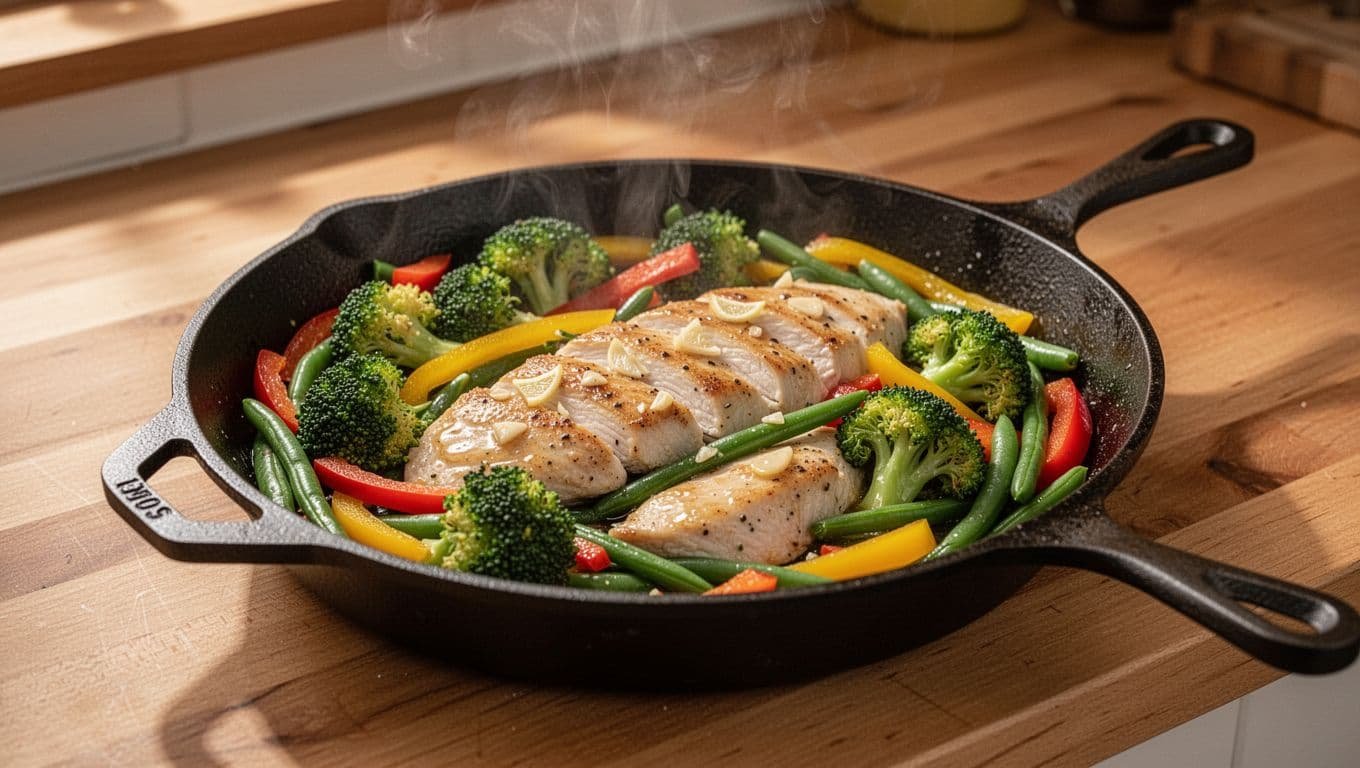
A hot skillet is one of the fastest ways to get dinner on the table. Slice chicken thin, sauté it with broccoli, bell peppers, or green beans, then finish with a simple sauce made from garlic, lemon, olive oil, and a splash of broth.
That kind of meal feels light, but it still has real staying power. Add brown rice or quinoa on the side, and you get fiber plus protein in one easy plate.
A few good skillet combinations include:
- Chicken and broccoli with garlic and lemon
- Chicken, peppers, and onions with turmeric and black pepper
- Chicken and green beans with ginger and a touch of olive oil
If you want a similar bowl-style dinner idea, this peanut butter chicken rice bowl is a good example of how chicken can stay hearty without feeling heavy.
Cozy soups and lemony chicken dinners
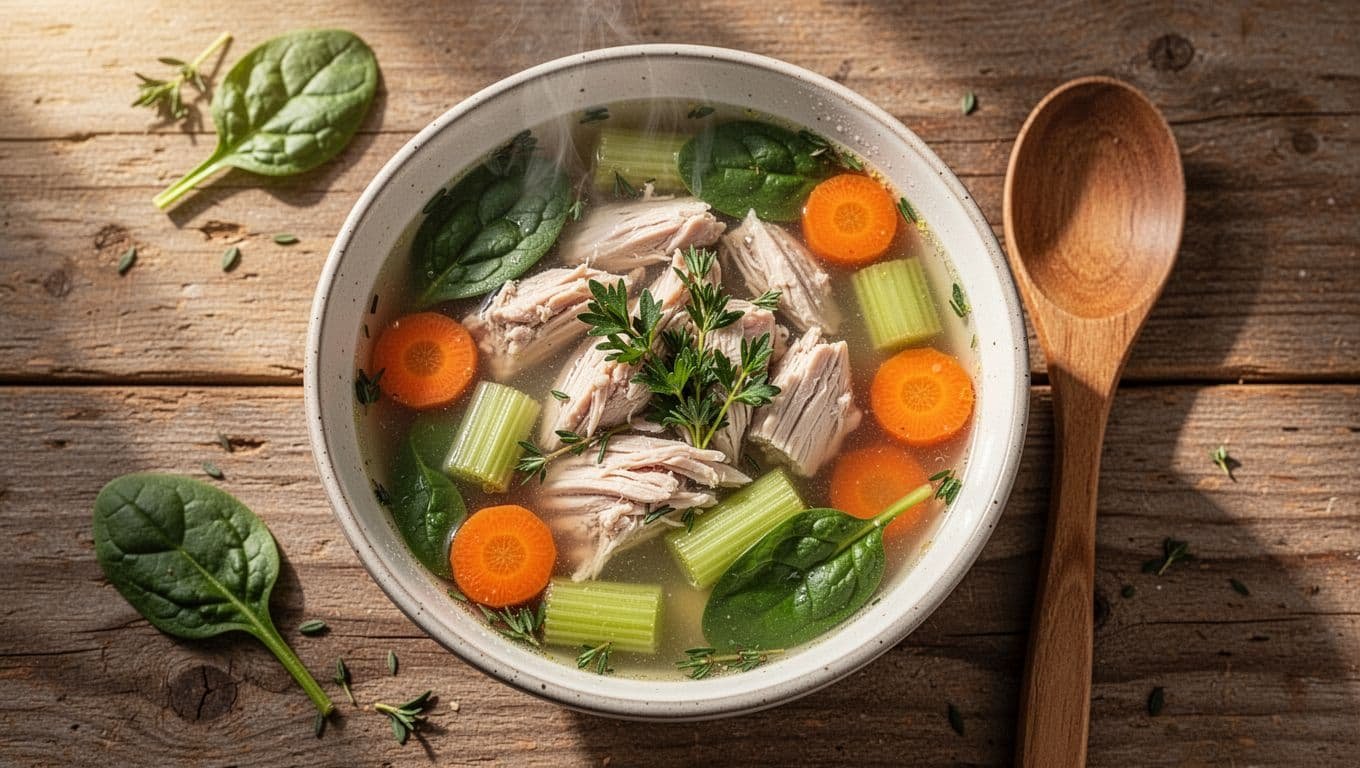
When the night calls for something warm and soothing, a chicken soup or broth-based dinner works beautifully. A one-pot soup with chicken, carrots, celery, spinach, and herbs is gentle, filling, and easy to eat when you want comfort more than fuss.
Lemon chicken is another smart choice. The citrus keeps the flavor bright, while garlic and olive oil give it depth without a heavy sauce. A simple version with roasted zucchini or sautéed greens feels fresh, calm, and complete.
These dinners work well because they warm you up, use simple ingredients, and leave you full without the weighed-down feeling.
For another cozy option, this creamy one-pot chicken meatball soup shows how soup can stay rich in flavor and still fit a lighter dinner pattern.
Plant-based dinners that are full of fiber and color
Plant-based dinners work especially well on busy nights because they can be built from pantry staples, frozen vegetables, and a few fresh ingredients. Beans, lentils, tofu, sweet potatoes, and whole grains bring fiber, protein, and steady energy to the plate.
Fiber matters here for more than fullness. It helps feed healthy gut bacteria, which play a role in inflammation. When your dinner has plenty of beans, vegetables, and whole grains, it supports digestion and still feels satisfying enough for a real meal.
Bean and lentil meals that are hearty enough for dinner

Chickpeas, lentils, and black beans are easy dinner anchors because they cook fast, stretch well, and don’t cost much. Toss them with tomatoes, garlic, onions, greens, cumin, turmeric, or smoked paprika, then serve over brown rice, quinoa, or farro for a meal that feels complete.
A few simple ideas work especially well:
- Chickpea tomato stew with spinach and warm spices
- Lentil chili with onions, peppers, and black beans
- Black bean grain bowls with corn, greens, salsa, and avocado
These meals are easy to make ahead, which helps on nights when cooking feels like too much. A pot of lentils or beans can turn into dinner twice, once as a bowl and again as soup or stuffed peppers the next day. For more high-fiber ideas like these, high-fiber vegetarian dinners offer a helpful mix of flavors and formats.
Tofu, sweet potato, and veggie bowls that stay interesting
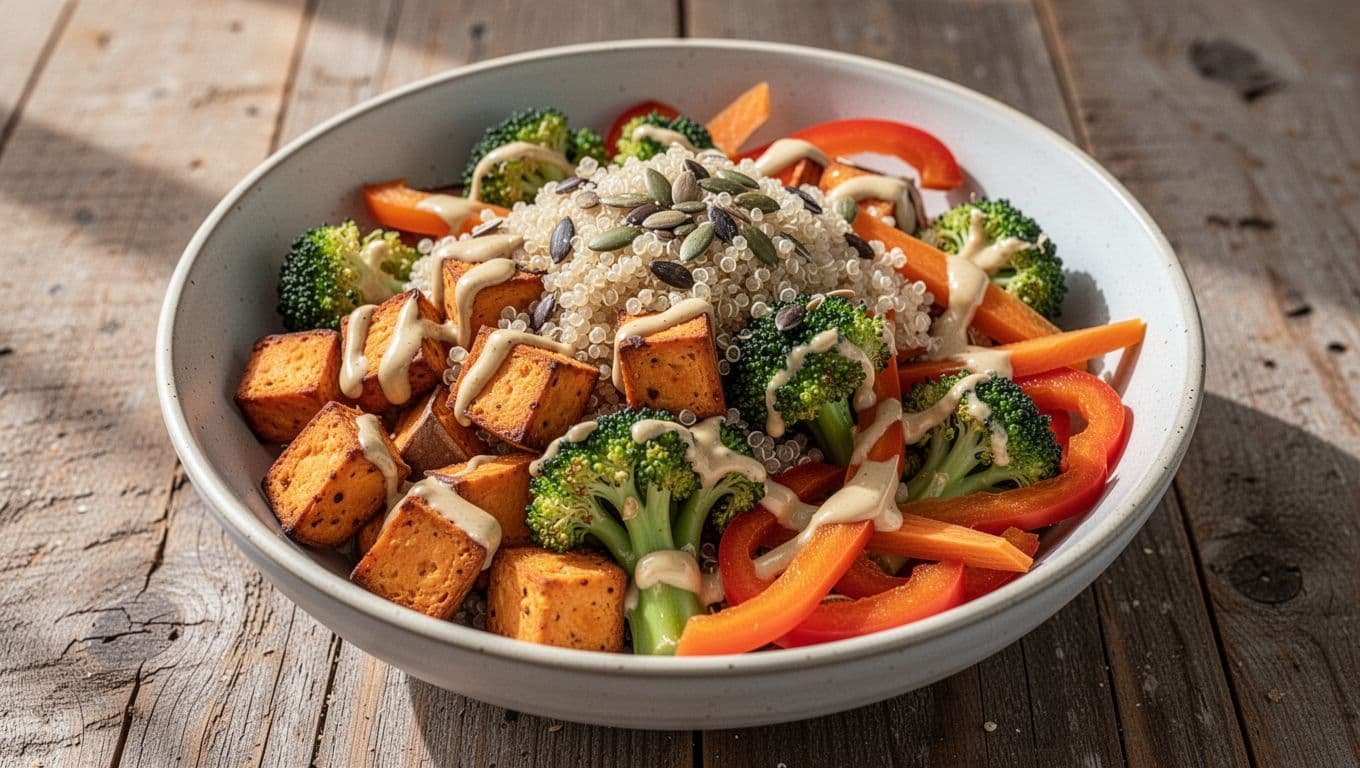
Bowls are one of the easiest ways to keep meatless dinners fresh. Roast sweet potatoes, broccoli, carrots, or cauliflower, add tofu or tempeh, then layer everything over quinoa or brown rice. A simple tahini, lemon, or ginger dressing ties it together without much effort.
Texture keeps these bowls from feeling flat. Soft sweet potatoes, crisp vegetables, chewy grains, and crunchy seeds make each bite more interesting, especially when you use leftovers from earlier meals. You can swap in whatever’s in the fridge and still end up with a dinner that looks colorful and tastes balanced.
A few easy add-ons make bowls even better:
- Pumpkin seeds or sesame seeds for crunch
- Cabbage or greens for extra color
- Pickled onions or salsa for a bright finish
These bowls are flexible enough for meal prep, but they never have to feel repetitive. Change the grain, switch the sauce, and use different vegetables, and the whole dinner feels new again.
Simple flavor boosters that make healthy dinners taste better
Healthy dinners stay easy to repeat when they taste good enough to look forward to. That usually comes down to a few small add-ons, not a long ingredient list. A little garlic, citrus, olive oil, or crunch can turn a plain plate into something you actually want to eat again tomorrow.
The spices and herbs worth using often
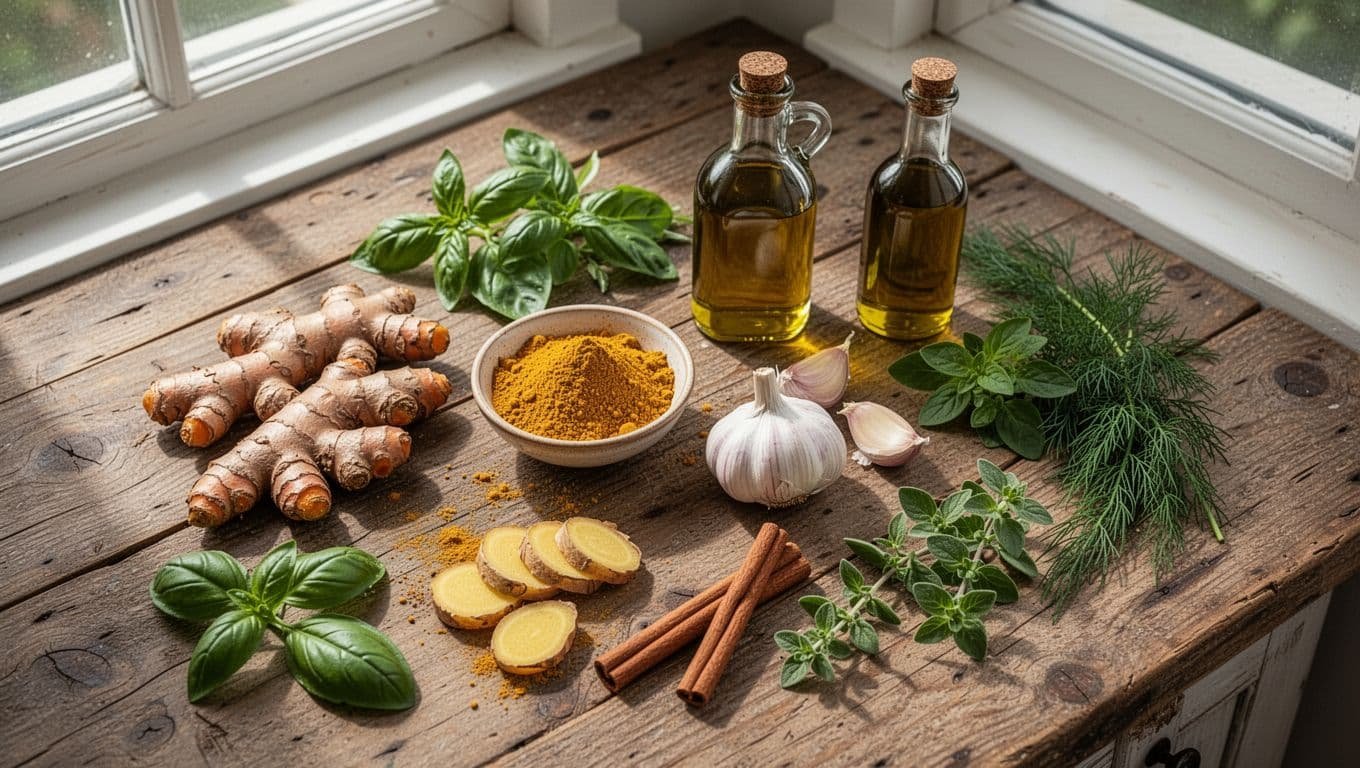
Some seasonings earn a permanent spot in the kitchen because they do more than add heat. Turmeric brings warmth and earthiness, which works well in soups, roasted vegetables, and chicken marinades. Ginger adds a sharp, fresh kick that wakes up stir-fries, broths, and dressings.
Garlic is the base note in many good dinners. It gives vegetables, beans, fish, and chicken a deeper savory flavor. Cinnamon is useful too, especially in sweet potato dishes, lentils, and spice rubs, where it adds a soft sweetness without making the meal taste like dessert.
Fresh herbs matter just as much. Basil gives tomato-based meals a bright finish, oregano works well in Mediterranean-style dinners, and dill pairs beautifully with salmon, yogurt sauces, and cucumbers. A small pinch of cumin, paprika, or black pepper can also pull the whole meal together. In fact, simple anti-inflammatory dinner ideas often rely on exactly these kinds of basic flavor moves.
Easy sauces and toppings that add taste fast
A finishing touch can make dinner feel special without extra work. A quick lemon vinaigrette, spoonful of yogurt sauce, or drizzle of olive oil gives vegetables and protein more life. Add avocado for creaminess, or finish with chopped nuts and sesame seeds for crunch.
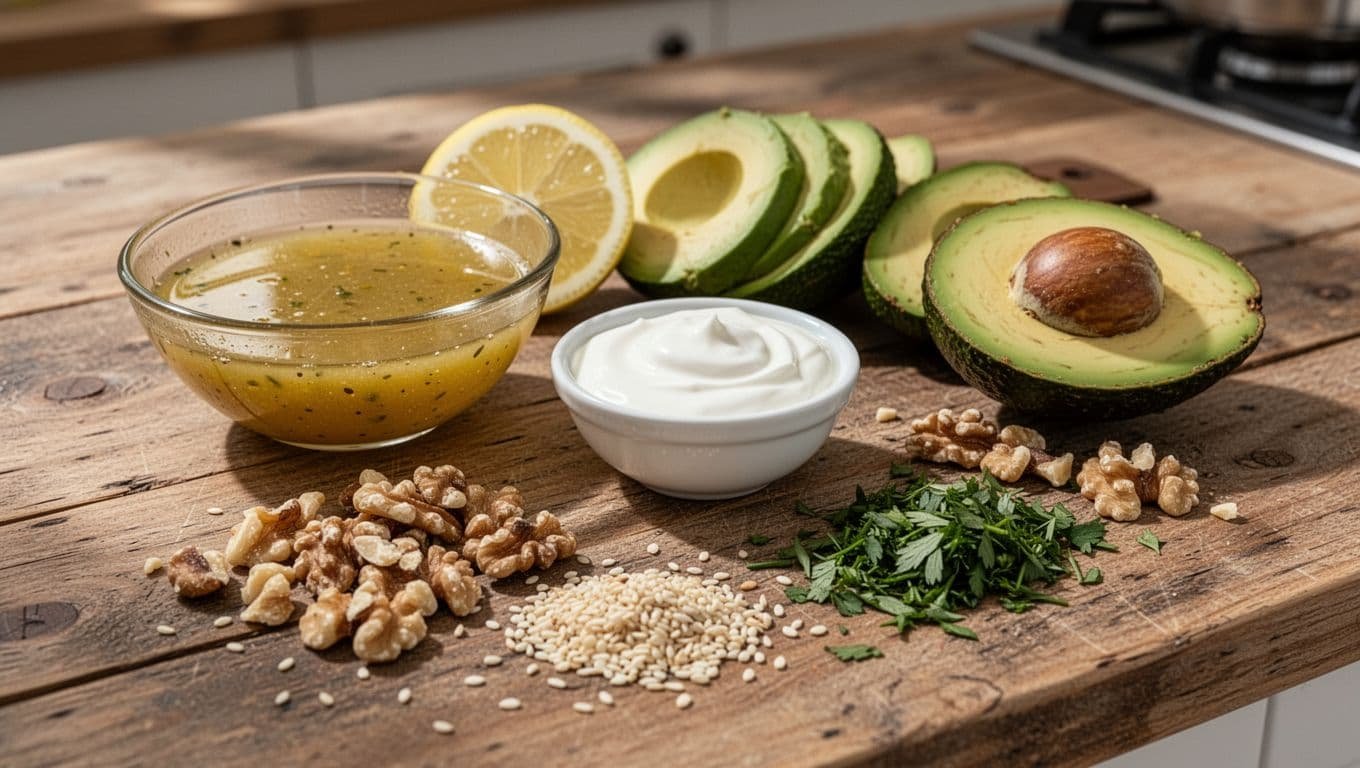
Fresh herbs work the same way. Parsley, dill, and basil make a meal taste brighter right before serving, while toasted seeds add texture that keeps each bite interesting. That little contrast matters, because people are more likely to stick with healthy eating when the food tastes satisfying.
A few easy toppers can change the whole plate:
- Lemon juice or zest for a clean, bright finish
- Tahini or yogurt sauce for creaminess
- Pumpkin seeds, walnuts, or sesame seeds for crunch
- Chopped parsley or dill for freshness
A plain grain bowl or roasted veggie dinner can feel complete with just one of these. Keep the flavors simple, and healthy dinners start to feel less like a rule and more like a meal you want again.
How to build your own anti-inflammatory dinner plan for the week
A good weeknight plan does not need seven different recipes. It needs a few smart building blocks that you can rotate without thinking too hard. Start with a short list of proteins, vegetables, grains, and sauces, then mix them into meals that feel different enough to stay interesting.
This works because dinner gets easier when the decisions are already made. You shop once, prep a few basics, and then assemble meals instead of starting from zero every night.
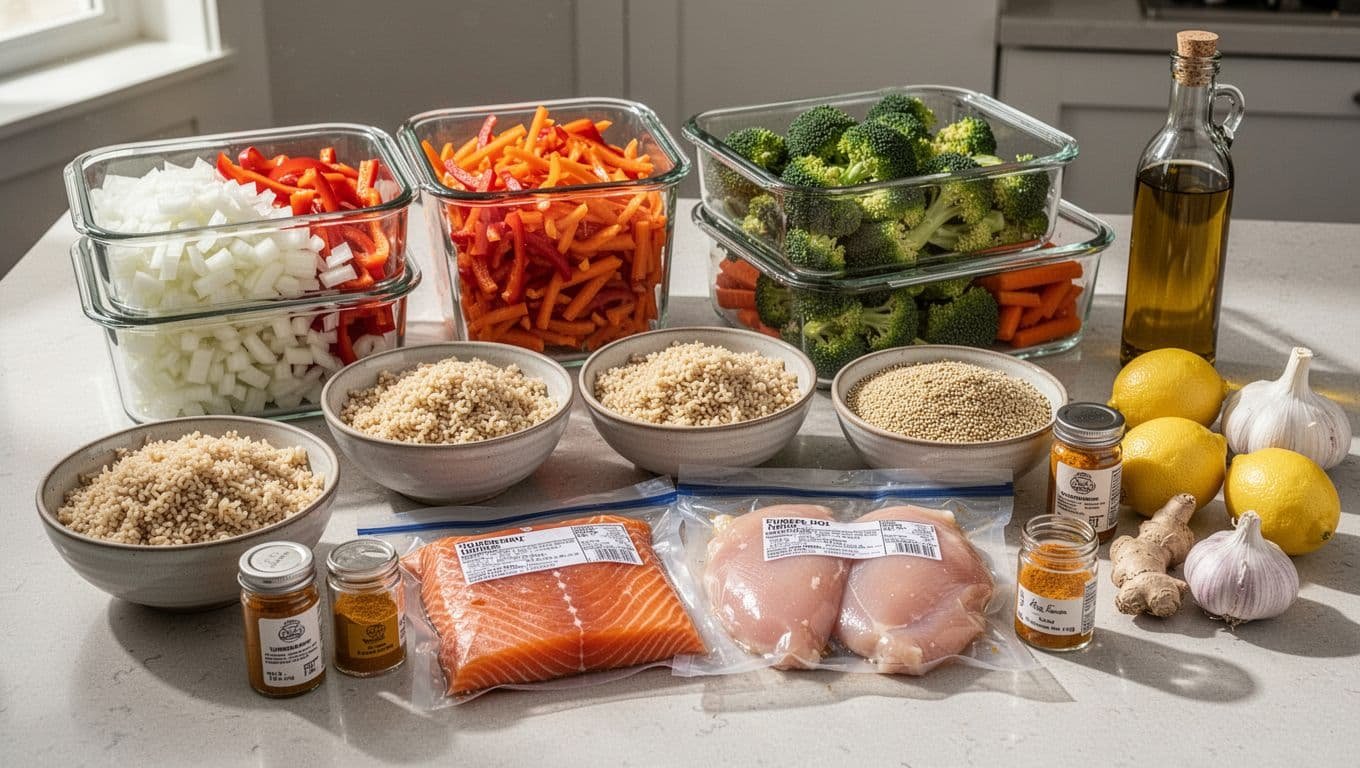
A simple prep plan for faster weeknights
A little prep on Sunday or Monday can cut weeknight cooking time in half. Wash your greens, chop onions, and roast a tray of vegetables before the week gets busy. Cook a pot of rice or quinoa, then store it in the fridge so it is ready for bowls, skillets, or side dishes.
Protein gets easier too when you marinate it ahead of time. Salmon, chicken, or tofu can sit in a simple mix of olive oil, lemon, garlic, and herbs until you are ready to cook. That small step gives you more flavor with less effort.
If you want a simple weekly rhythm, use a prep session like this:
- Wash and dry greens.
- Cook one grain for the week.
- Roast extra vegetables.
- Marinate 2 proteins.
- Mix 1 or 2 sauces for quick finishing.
That kind of prep keeps dinner realistic for busy families and solo cooks alike. You are not cooking the whole week in one day, you are just setting up a few shortcuts that make dinner feel doable. A helpful anti-inflammatory meal prep system can follow the same idea, with batch-cooked basics that you reuse in different ways.
How to mix and match the 18 dinners without getting bored
The easiest way to keep this plan fresh is to rotate your ingredients instead of chasing brand-new meals every night. Pick 2 proteins, 2 vegetable sides, 1 grain, and 2 sauces or seasonings for the week. That gives you enough variety to stay interested without creating a giant grocery list.
A simple mix might look like this:
- Proteins: salmon and chicken, or chicken and chickpeas
- Vegetables: broccoli and green beans, or sweet potatoes and spinach
- Grain: brown rice, quinoa, or farro
- Sauces or seasonings: lemon-garlic and tahini, or turmeric-ginger and salsa verde
Now the same ingredients can turn into very different dinners. Salmon with quinoa and roasted broccoli feels light. Chicken over rice with green beans feels comforting. Chickpeas with sweet potatoes and tahini taste rich and filling, even though the base ingredients may overlap.
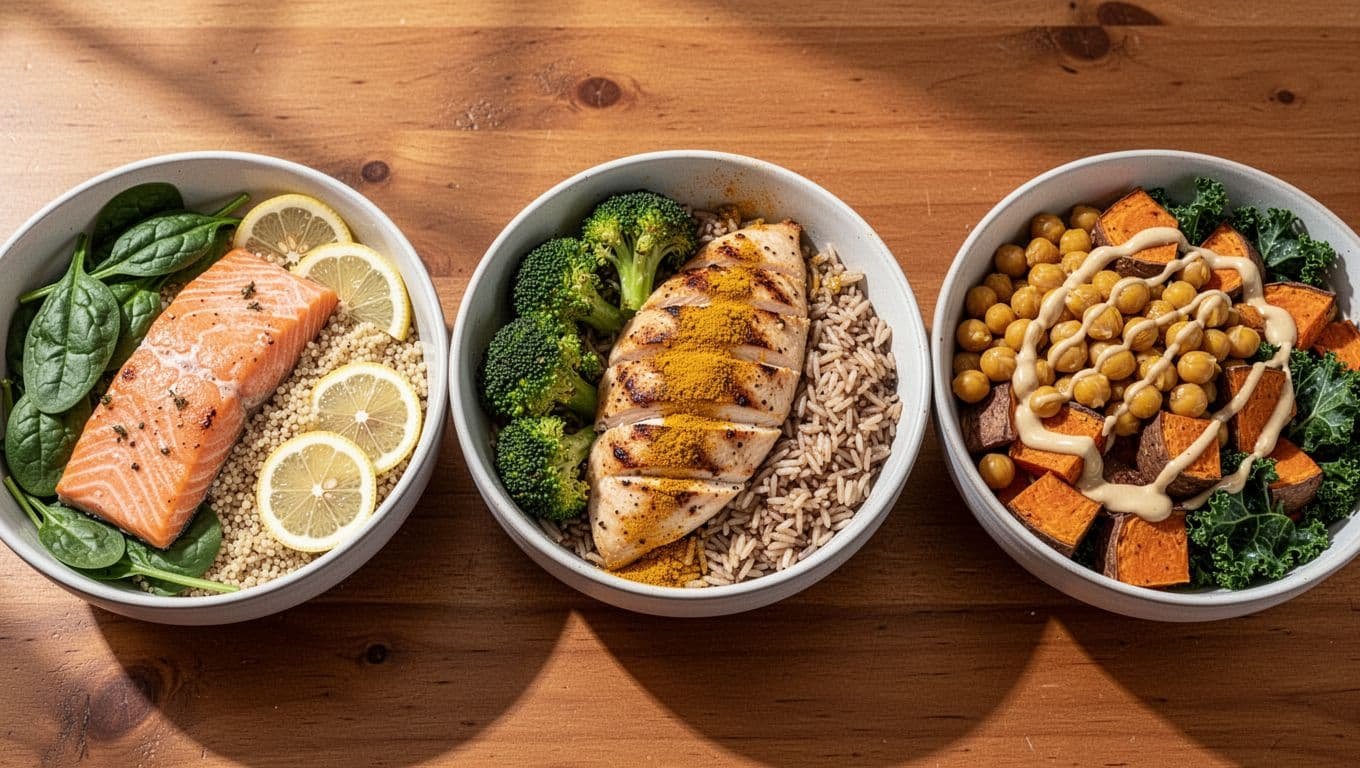
Switch the sauce, and the whole meal changes. Switch the side, and the same protein feels new again. That is how you use the 18 dinners as a system instead of a one-time list, which makes the plan easier to stick with all week.
Conclusion
These 18 easy anti-inflammatory dinners show that weeknight cooking can be simple, flavorful, and still support better health. When you build meals around fish, chicken, beans, vegetables, whole grains, and olive oil, dinner gets easier to repeat and easier to enjoy.
The best part is that anti-inflammatory eating does not have to be strict, expensive, or time-consuming. Small swaps and repeatable meals are often the easiest way to turn busy nights into a routine that actually lasts.
If your week already feels full, start with one or two dinners that fit your schedule, then keep using them until they feel natural. That is usually what makes healthy eating stick.
Save the pin for later

- Healthy Air Fryer Recipes for Beginners - 21/09/2026
- Healthy Snacks for Late Night Cravings - 21/09/2026
- High Protein Meal Prep Ideas for Easy Weekly Meals - 21/09/2026

