In 2026, high cholesterol affects 91.2 million US adults. That’s 36% of grown-ups, and it boosts heart attack risk by clogging arteries with plaque. You could be among them, even if you feel okay now.
High cholesterol means too much LDL (the bad kind) floating in your blood. It sticks to artery walls because saturated fats and trans fats from food push levels up fast. Diet controls up to 30% of it, so what you eat matters a lot.
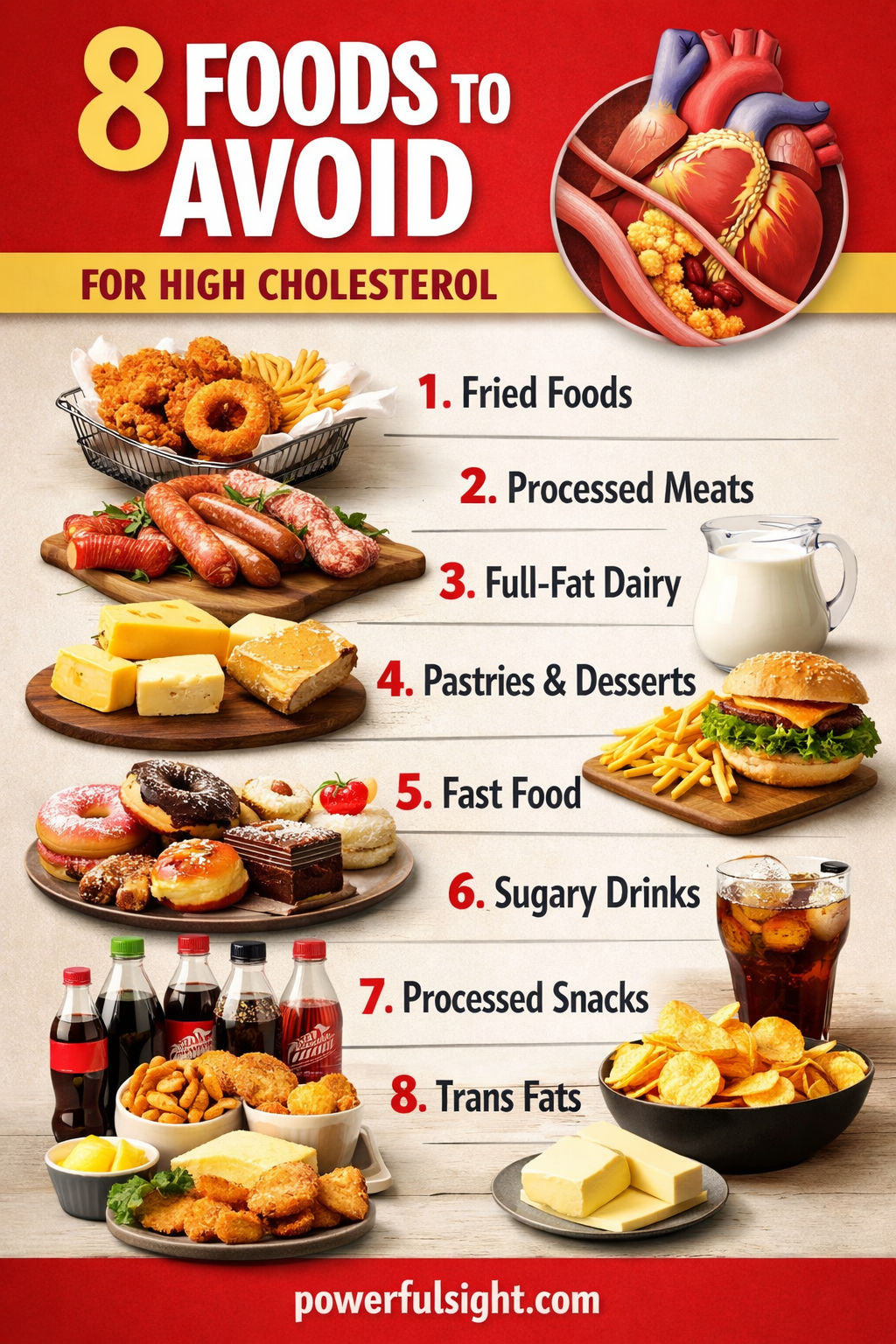
Skip these foods to avoid for high cholesterol: fried chicken, donuts and pastries, fatty red meats, processed sausages, full-fat cheese, butter, coconut oil, and shrimp. They load you with the worst fats.
Luckily, simple swaps exist, like grilled fish or oats instead. Stick around for tips to lower your numbers and protect your heart.
Check this quick video for extra advice: What foods should you avoid if you have high cholesterol?
What High Cholesterol Does to Your Body and Why Diet Matters Most
High cholesterol sneaks up on you. It builds plaque in your arteries, narrowing blood flow and raising risks for heart attacks or strokes. LDL cholesterol, the bad type, sticks to artery walls like glue. HDL cholesterol, the good type, acts as a cleanup crew, sweeping excess away. When LDL wins, trouble starts.
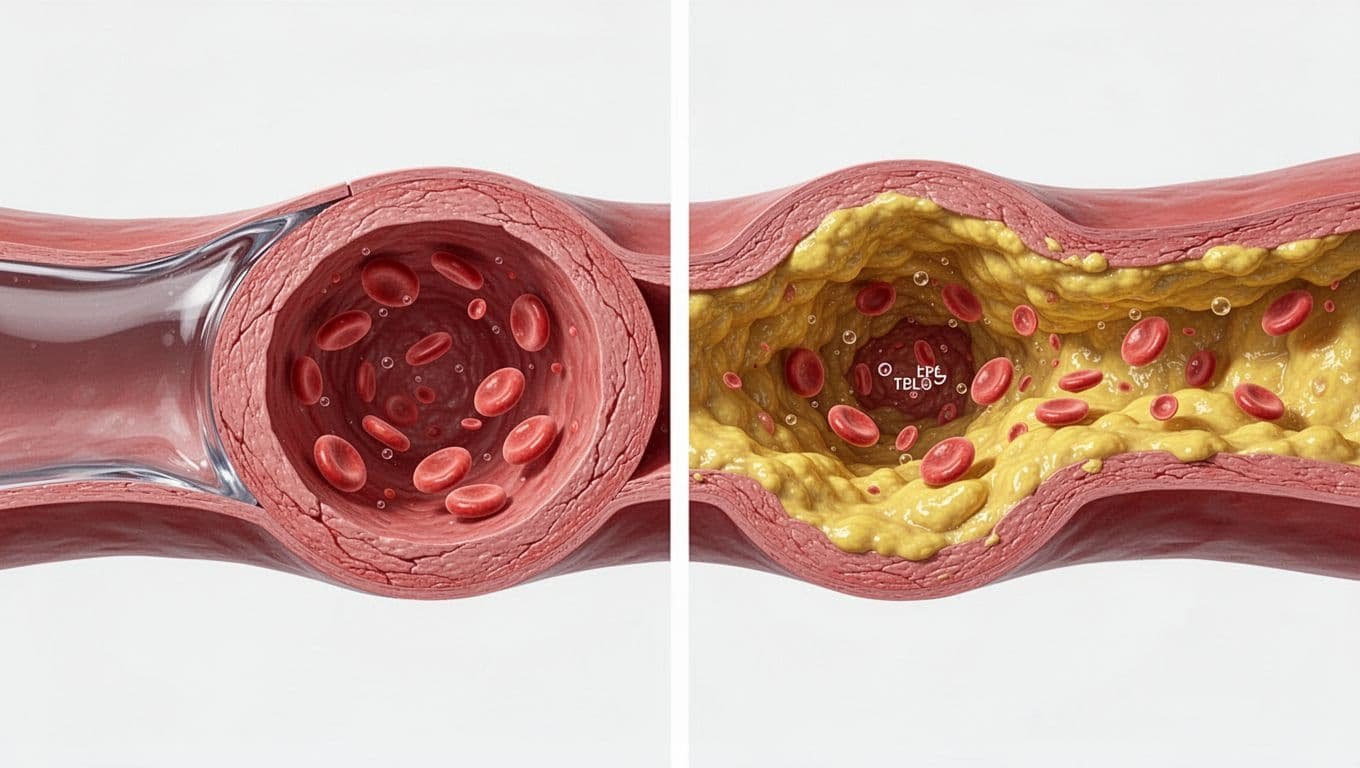
LDL Builds Plaque, HDL Clears It
LDL particles carry cholesterol into your arteries. They oxidize and form plaque, which hardens over time. This process, called atherosclerosis, stiffens vessels and blocks oxygen-rich blood. HDL grabs stray cholesterol and hauls it back to your liver for removal. Low HDL leaves more LDL behind, so balance matters.
Saturated and Trans Fats Raise LDL Fast
Saturated fats from red meat or butter bump up LDL levels. Trans fats, often in fried or baked goods, do worse; they hike LDL and drop HDL. Recent studies show swapping saturated fats for polyunsaturated ones cuts LDL and heart risks over five years. For example, the American Heart Association’s 2026 dietary guidance stresses this shift. Guidelines recommend keeping saturated fats under 10% of daily calories. Processed meats add risk too; they link to higher cardiovascular issues because of their fat content.
Why Avoiding These Foods Works Quickly
Cut foods to avoid for high cholesterol like fatty meats or pastries, and LDL drops in weeks. Your body processes new fats fast, so swaps show up in blood tests soon. Diet controls about 30% of cholesterol, making it your quickest fix.
Quick Self-Check: Spot Your Risks
Ready to spot the culprits? Answer yes or no:
- Do you eat fried foods most days?
- Grab full-fat dairy often?
- Rely on butter or processed meats?
Three yeses? Time for changes. Your heart will thank you.
8 Everyday Foods That Secretly Raise Your Cholesterol Levels
The American Heart Association’s 2026 dietary guidance urges you to limit saturated fats to less than 6% of daily calories, about 13 grams on a 2,000-calorie diet, and avoid trans fats entirely. These fats spike LDL cholesterol, which clogs arteries and raises heart disease risk. Many common foods sneak them in, often without you noticing. People grab them for quick meals or snacks, but studies link regular intake to higher cardiovascular issues. Here are eight foods to avoid for high cholesterol, with swaps to protect your heart.
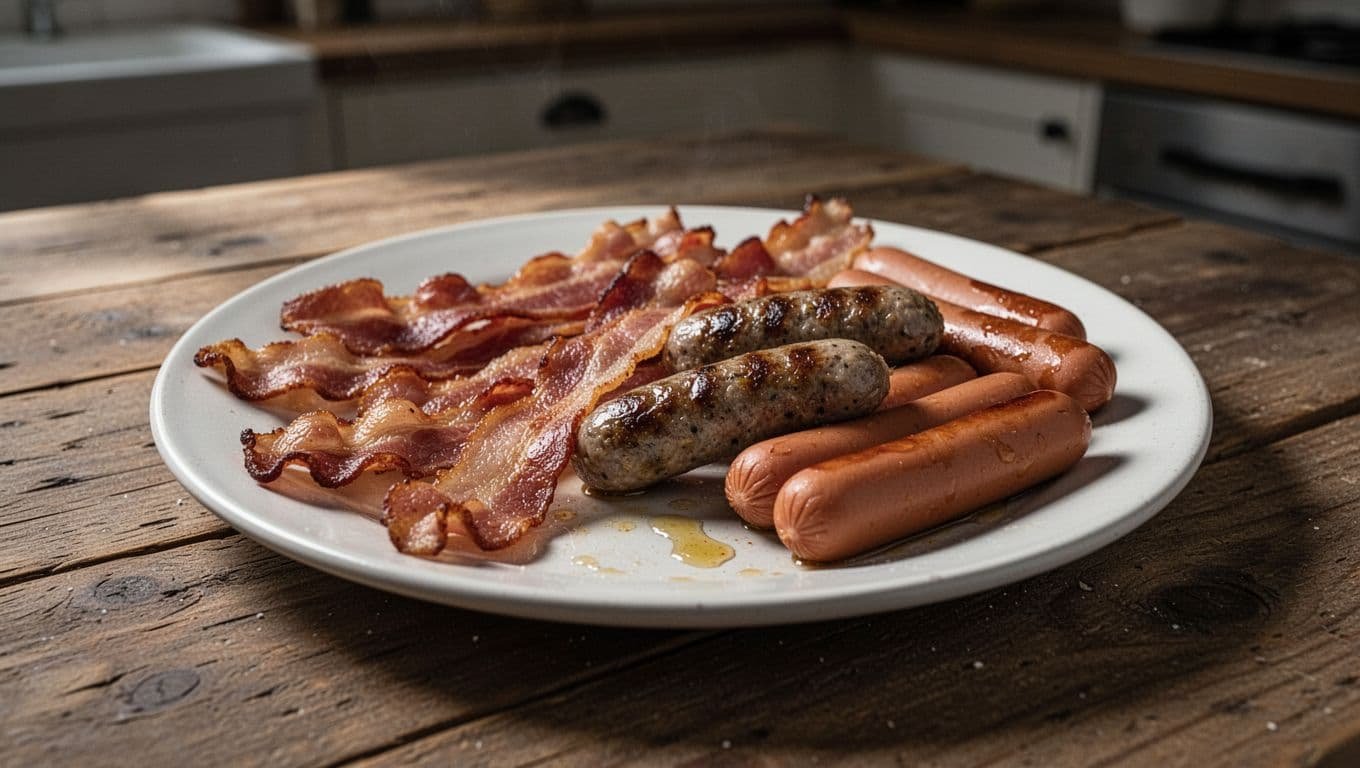
Processed Meats Like Bacon, Sausage, and Hot Dogs
Bacon, sausage, hot dogs, and deli meats pack high saturated fats and sodium. A daily 2-ounce serving, like two bacon slices, raises heart disease risk by 26%, per reviews of 43 studies. Sodium spikes blood pressure, while saturated fats boost LDL fast. These meats cure, smoke, or salt-preserve, forming compounds that inflame arteries and clog them with plaque.
You eat them unknowingly in sandwiches, breakfast plates, or pizza toppings several times weekly. Total avoidance works best, but limit to once weekly if needed.
Healthier swaps include skinless chicken, turkey, salmon, or beans. They offer protein without the fats.
Try a simple turkey wrap: Spread mustard on a whole-grain tortilla, add sliced turkey, lettuce, tomato, and avocado. Roll it up for lunch. It fills you without harm.
Don’t fall for the myth that “lean” processed meats are safe. They still carry sodium and preservatives that harm your heart.
Red Meats Such as Beef Steaks and Pork Ribs
Red meats like beef steaks, pork ribs, and lamb hold 5-10 grams of saturated fat per 100 grams. That hits your daily limit quickly and spikes LDL, as guidelines warn. Fattier cuts like prime rib reach 14 grams per 100 grams, far over safe levels.
Fatty steaks or ribs appear in barbecues or dinners often, sometimes daily for meat lovers. They oxidize in arteries, building plaque.
Stick to 3-ounce lean sirloin portions rarely, or avoid altogether. Opt for fish like trout or plant-based mince instead.
Grill thin lean cuts occasionally with veggies. Pair trout with herbs for omega-3s that lower LDL. See the American Heart Association’s 2026 dietary guidance for more on limits.
In short, swap often to keep cholesterol in check.
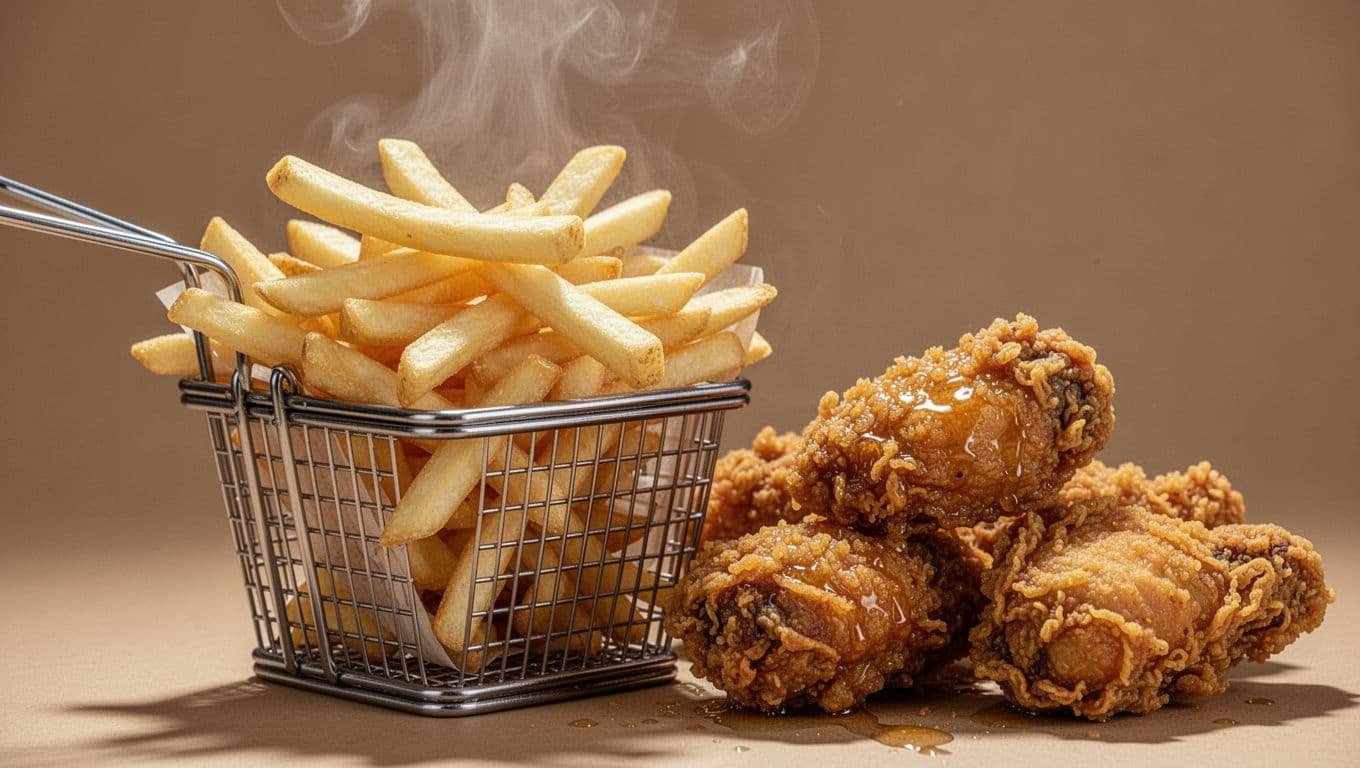
Fried Foods Including French Fries and Fried Chicken
Fried foods like french fries, fried chicken, and onion rings use oils that form trans fats at high heat. These raise LDL and drop HDL, jumping heart risk up to 68% if eaten seven times weekly, per studies.
Reusable oils worsen it, adding calories and inflammation. Fast food baskets hide the damage, but you munch them at meals or movies without thinking.
Avoid completely, or air-fry rarely.
Swaps: Air-fry or oven-bake potato wedges with olive oil. Toss chunks in a bowl, spray lightly, bake at 425°F for 25 minutes. Crispy results beat deep-frying.
This cuts trans fats while keeping flavor. Studies confirm less fried intake lowers risks fast.
Full-Fat Dairy Products Like Butter, Whole Milk, and Cheese
One tablespoon of butter delivers 7 grams of saturated fat, 25% or more of your daily cap for many. Full-fat cheese and whole milk add up quick, spiking LDL as AHA notes.
You stir butter into coffee, pour whole milk on cereal, or snack on cheese daily, unaware of the toll.
Limit severely or switch to low-fat options.
Choose skim milk, almond milk, or low-fat cheese. Greek yogurt, low-fat, works for creamy texture.
Mix it with berries for breakfast. Less fat means steady cholesterol.
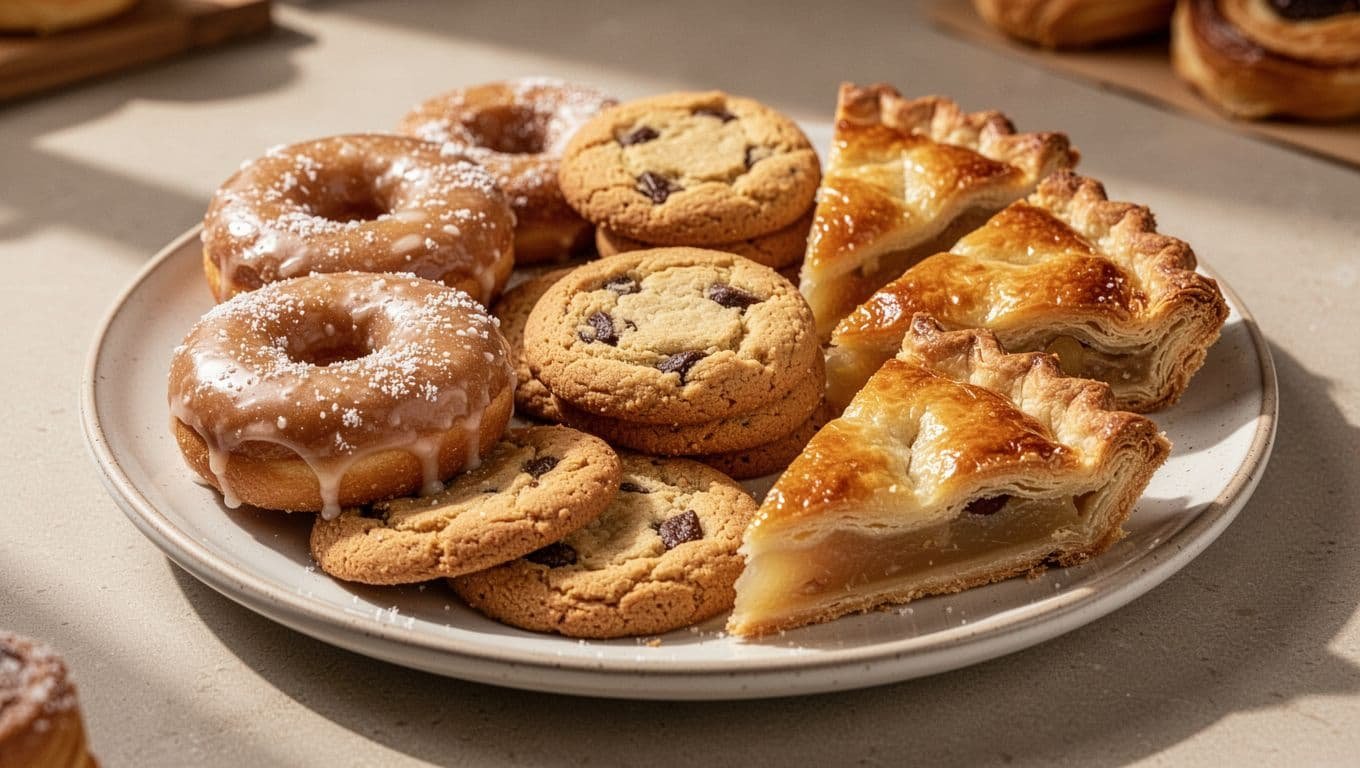
Baked Goods and Pastries Such as Donuts, Cookies, and Pies
Donuts, cookies, pies use shortening, hydrogenated oils, and palm oil. These trans fats disrupt cholesterol balance, raising LDL and heart risks despite FDA bans.
Morning pastries or afternoon treats sneak in unnoticed, often multiple times weekly.
Skip them fully.
Go for whole-grain low-fat treats or fresh fruit with fiber that binds cholesterol.
Bake apple oatmeal cookies: Mash one apple, mix with oats, cinnamon, egg white; drop spoonfuls and bake. Sweet, chewy, heart-friendly.
Fast Food Favorites Like Burgers, Fries, and Nuggets
Burgers, fries, and nuggets blend trans and saturated fats, sodium, and refined carbs. They drive weight gain and LDL rises; studies show frequent eaters face 28% higher heart event risks.
Drive-thrus tempt you weekly, masking the artery damage.
Avoid drive-thrus.
Make home-grilled burgers with lean turkey, load veggies and whole-grain buns. Salads with olive oil dressing satisfy cravings.
Pack lunches ahead to dodge temptations.
Tropical Oils Including Coconut and Palm Oil
Coconut and palm oils, 90% saturated fat, raise LDL more than other oils, per meta-analyses. They hide in processed bars or spreads.
You cook or bake with them thinking they’re healthy, but they spike cholesterol.
Switch fully.
Use olive oil or avocado. Saute veggies in canola for neutral taste.
Less LDL follows quick.
Packaged Snacks Such as Chips, Crackers, and Microwave Popcorn
Chips, crackers, and microwave popcorn carry trans fats, bad oils, and salt. They boost LDL; nine daily servings hike heart risks 67%.
Movie nights or desks hide handfuls turning habitual.
Portion air-popped popcorn rarely.
Nuts, berries, or homemade popcorn work. Measure nuts to one ounce.
Control keeps risks low.
Smarter Food Swaps That Actually Lower Your Cholesterol
You just learned the foods to avoid for high cholesterol. Now swap them out. These changes cut saturated fats and add fiber. As a result, LDL drops naturally, often in weeks. Studies show oats alone lower LDL by 10% after two days, with effects lasting six weeks. The American Heart Association’s healthy swaps guide backs this approach.
Fiber from oats, veggies, and fruits binds cholesterol in your gut. It blocks absorption, so less LDL enters your blood. Group swaps by type for easy wins.
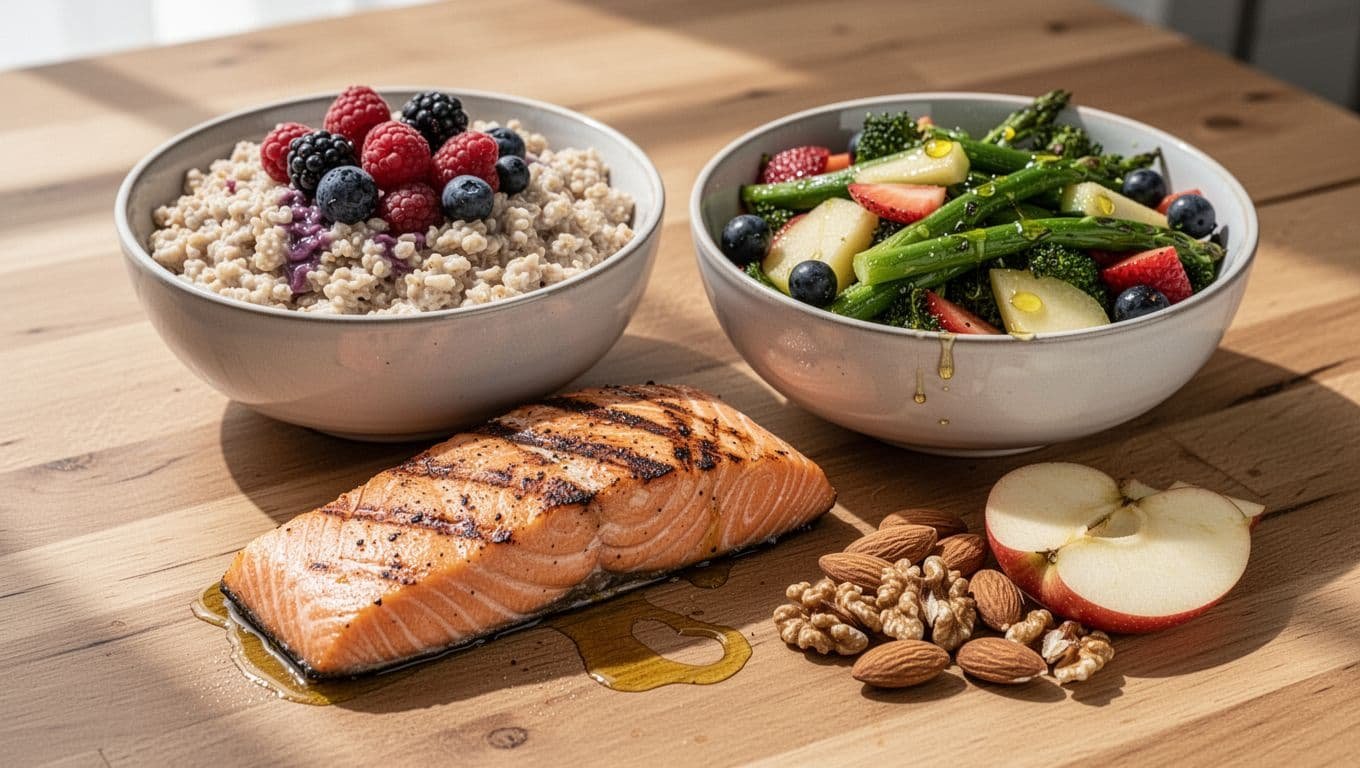
Swap Proteins: Choose Fish or Beans
Ditch processed meats and red meats. Pick salmon or trout for omega-3s that lower LDL. Beans and lentils add plant protein plus fiber. Both fill you up without the fats.
Pick Better Fats: Go for Olive Oil
Skip butter, coconut oil, and tropical oils. Olive oil offers healthy fats that replace saturated ones. Drizzle it on veggies; it supports heart health better.
Use Plant-Based Dairy
Full-fat cheese and butter raise LDL fast. Almond or oat milk gives creaminess with less fat. Low-fat Greek yogurt works too, paired with berries.
Smarten Snacks: Nuts and Fruit
Chips and pastries add trans fats. Almonds, walnuts, apples, or berries provide crunch and sweetness. Fiber here traps cholesterol before it absorbs.
Sample 2,000-Calorie Day Low in Saturated Fats
Start with oatmeal, berries, and nuts (400 cal). Lunch: Grilled salmon salad with olive oil dressing, veggies (500 cal). Snack: Apple with almonds (200 cal). Dinner: Bean stir-fry, quinoa, greens (600 cal). Evening: Plant yogurt (300 cal). Total saturated fat stays under 13 grams.
These swaps follow AHA 2026 guidelines. Diet changes drop LDL quickly because your body processes fats fast. See oats and olive oil picks for heart health for more ideas.
What swap will you try first?
Daily Habits to Pair with Your New Diet for Even Better Results
Your new diet cuts foods to avoid for high cholesterol, but habits amplify results. Pair them with daily routines, and LDL drops faster. Consistency turns changes into lasting wins. People who add these see numbers improve in months, like one guy who shed 12 pounds and boosted HDL by walking daily.
Add a 30-Minute Walk Each Day
Start with brisk walks five days a week. That’s 150 minutes total, per 2026 guidelines. It burns fat and raises HDL. Lace up sneakers after dinner; fresh air clears your mind too.

Anchor it to routines for sticking power, as in how to make new habits stick.
Manage Weight with Small Goals
Aim for 5-7% loss if overweight. For a 200-pound person, drop 10-14 pounds. Track portions; it eases artery strain. Results show in blood tests soon.
Quit Smoking to Protect Arteries
Smoking damages vessels and spikes LDL. Stop now; lungs heal, cholesterol stabilizes. Use patches or apps. Your heart rebounds quickly.
Monitor with Your Doctor Regularly
Get 2026 lipid panels every 4-12 weeks. Track LDL under 100 mg/dL. Adjust habits based on results.
Simple Tracker Template
Use this weekly chart:
| Day | Walk (min) | Weight (lbs) | Notes |
|---|---|---|---|
| Mon | |||
| Tue | |||
| Wed | |||
| Thu | |||
| Fri | |||
| Sat | |||
| Sun |
Check off daily. Consistency builds momentum. You got this; better numbers await.
Conclusion
You now know the eight foods to avoid for high cholesterol: processed meats, red meats, fried foods, full-fat dairy, baked goods, fast food, tropical oils, and packaged snacks.
Swap them for fish, beans, olive oil, plant-based dairy, and nuts with fruit. These choices cut saturated and trans fats fast.
As a result, LDL drops, arteries clear, and heart risks fall. Studies back it; your body responds in weeks.
Pick two foods to cut this week. Track how you feel and get a lipid panel soon.
Talk to your doctor before big changes. They guide you best.
Your heart will thank you.
Save the pin for later

- Healthy Air Fryer Recipes for Beginners - 21/09/2026
- Healthy Snacks for Late Night Cravings - 21/09/2026
- High Protein Meal Prep Ideas for Easy Weekly Meals - 21/09/2026

