A full-back tattoo gives you a large, personal canvas for art, identity, and self-expression. With space for fine details and balanced layouts, your design can flow across the shoulders, spine, and lower back while staying easy to cover under clothing when you want privacy.
These full-back tattoo ideas for women include floral, animal, ornamental, geometric, celestial, spiritual, minimalist, and realistic styles. You can also draw inspiration from these meaningful tattoo ideas for women when choosing symbols connected to your story, values, or favorite memories.
Because a full-back piece is a major commitment, plan for multiple sessions, several weeks of surface healing, deeper skin recovery over the following months, and a meaningful budget. Start with these 80 designs, then save the ideas that match your style and speak to you most.
Key Takeaways
- Choose a full-back tattoo that follows your body’s natural shape, especially across the shoulders, spine, and lower back.
- Floral, celestial, animal, ornamental, geometric, and spiritual designs offer distinct ways to express your personality.
- Use women’s spine tattoo designs for ideas that create balance, movement, and a strong vertical center.
- Plan for multiple appointments, extended healing, clothing coverage, and a budget that matches the tattoo’s size and detail.
- Before booking, ask about sterile practices and ink details, then review the FDA’s tattoo safety guidance.
80 Full Back Tattoos for Women: Designs That Make the Whole Canvas Shine
A full-back tattoo can follow your natural shape instead of sitting like a sticker on the skin. Spine-centered designs create balance, while sweeping artwork guides the eye across the shoulders and hips.
Floral and botanical designs that flow naturally across the back
Botanical tattoos can suggest growth, remembrance, softness, strength, or renewal without forcing one meaning. Your artist can adjust line weight, color saturation, and shading for your skin tone and body shape.
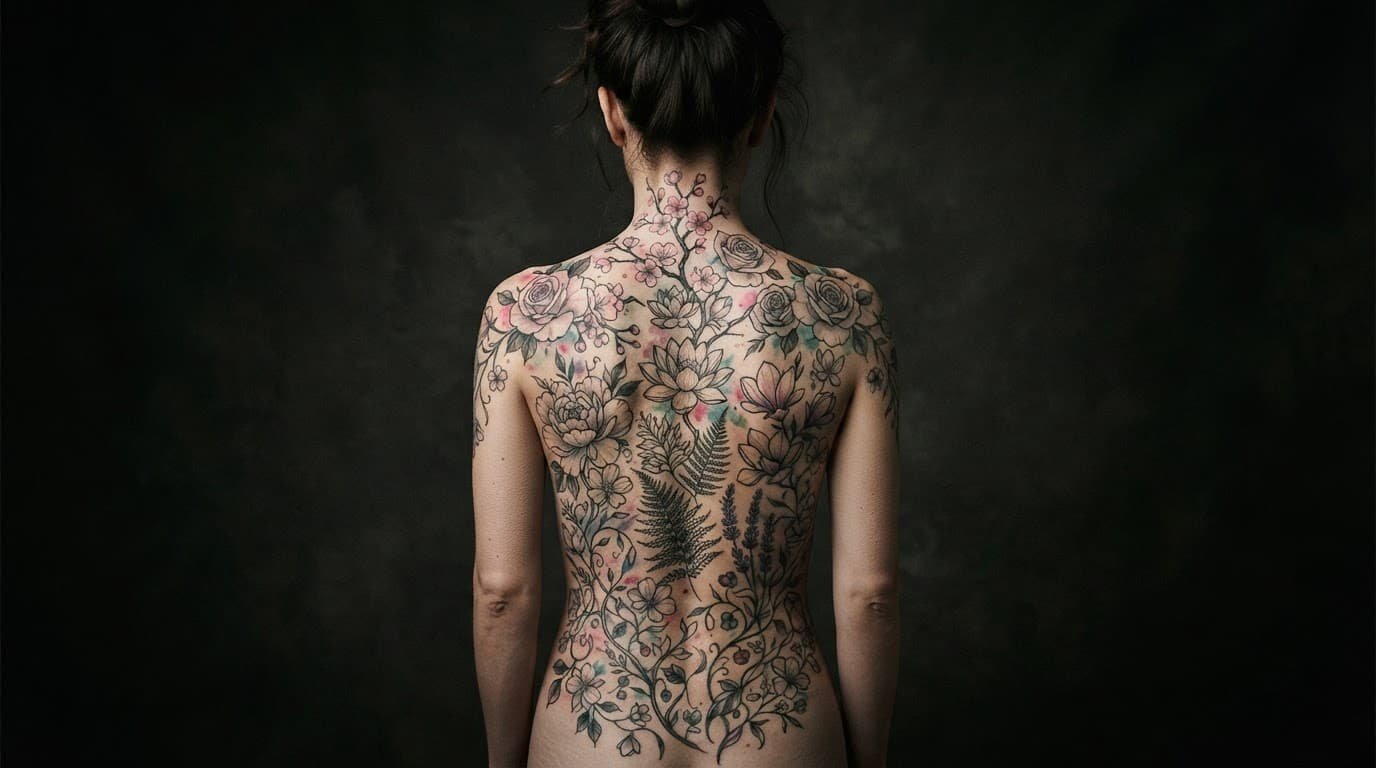
- Rose garden. Layer roses across the shoulders and lower back for a romantic sweeping layout.
- Wildflower meadow. Mix varied stems and blooms for a loose, natural composition.
- Cherry blossom branches. Let curved branches travel from one shoulder toward the opposite hip.
- Peonies with leaves. Large petals create softness, while broad leaves add strength and contrast.
- Shoulder-to-spine lotus. Place one lotus at the lower back, with petals reaching toward the shoulders.
- Sunflower arrangement. Bright yellow blooms can form a cheerful, open symmetrical design.
- Botanical fern frame. Ferns surrounding the spine create an elegant border with gentle movement.
- Poisonous flower collection. Foxglove, datura, and belladonna offer a darker, mysterious mood.
- Spinal vine. A narrow vine following the spine creates a graceful vertical center.
- Magnolia branches. Oversized blossoms suit wide shoulder blades and pale, controlled shading.
- Lavender stems. Fine stems can stretch vertically for a delicate design with calming associations.
- Moonlit garden. Flowers beneath a crescent moon create a dreamy black-and-gray scene.
- Floral skeleton. Pair skeletal flowers with dark stems for a striking reminder of change.
- Pressed-flower collage. Arrange separate blooms with open skin between them for an airy finish.
- Blooming shoulder-to-hip piece. One large stem can sweep diagonally across the entire back.
- Hummingbird among flowers. The bird’s flight path directs attention toward the shoulder or waist.
- Birth-flower map. Combine meaningful flowers into a personalized botanical arrangement.
- Blackwork bouquet. Dense petals and rich shadows create bold contrast without color.
- Watercolor garden. Soft color washes bring brightness while preserving visible linework.
- Abstract leaf design. Geometric leaves can frame curves and leave generous negative space.
Animal and nature scenes with bold personal meaning
An animal’s pose changes the tattoo’s rhythm. A creature facing upward draws attention along the spine, while a diagonal body carries the eye across the shoulders.
- Wolf beneath the stars. A howling wolf and night sky create a strong, solitary back piece.
- Soaring eagle. Extended wings naturally fill both shoulder blades in a bold symmetrical layout.
- Butterfly transformation. Show one wing as a caterpillar stage and the other as a butterfly.
- Snake wrapped around flowers. A winding body leads the eye vertically through the composition.
- Lioness portrait. Center her face between the shoulder blades for a confident focal point.
- Koi moving up the spine. Two fish can curve upward, creating balance and flowing motion.
- Fox in a forest. Layer trees behind the fox for warmth, mystery, and depth.
- Moth with botanical wings. Detailed wings can spread wide while leaves soften the edges.
- Raven and moon. Place the raven on one shoulder, looking toward a bright crescent.
- Tiger surrounded by vines. A forward-facing tiger gives the tattoo a powerful central anchor.
- Deer with flower-filled antlers. Antlers can spread across the shoulders and frame the neck.
- Whale with waves. A breaching whale creates a horizontal design across the lower back.
- Phoenix across the shoulders. Rising flames and open wings make renewal the central mood.
- Pair of swallows. Two birds flying in opposite directions create graceful shoulder symmetry.
- Leopard in jungle leaves. Dense foliage can conceal or reveal the face for dramatic contrast.
- Dragon. A long, curved dragon can travel from one shoulder to the opposite hip.
- Bear and mountain landscape. Combine a bear silhouette with layered peaks for grounded strength.
- Horse with flowing mane. The mane can sweep along the spine and create motion.
- Sea turtle with ocean details. Waves, coral, and bubbles form a peaceful full-back scene.
- Cat with celestial symbols. A centered cat beneath stars and planets offers a personal, mystical mood.
Mandalas, ornamental patterns, and geometric full-back art
Precise symmetry matters in large ornamental work because small spacing errors become visible across the back. Ask about dotwork, skin breaks, shading density, and negative space before choosing a packed design. For more style inspiration, browse the site’s Fashion and Beauty Archives.
- Large spine mandala. Center the design on the vertebrae and let its rings widen toward the hips.
- Layered mandala petals. Overlapping petals create depth without relying on heavy shading.
- Lace-inspired ornament. Fine patterns can mimic delicate fabric across the shoulders.
- Sacred geometry. Interlocking shapes create a balanced design with a measured visual rhythm.
- Sunburst symmetry. Radiating lines from the spine make the shoulders appear wider.
- Geometric butterfly. Angular wings offer a modern alternative to realistic insect art.
- Dotwork arches. Repeating arches can frame the spine while leaving open skin around them.
- Ornamental corset layout. Vertical lines and decorative bands create a fitted, structured effect.
- Filigree frame. Curved filigree can surround a central symbol without filling every inch.
- Blackwork fan. A dark fan spreading from the lower spine creates a dramatic base.
- Temple-inspired pattern. Layered borders and pointed shapes create an architectural composition.
- Mandala with gemstones. Jewel shapes add focal points, even in an all-black design.
- Geometric mountain scene. Triangles and clean horizons turn nature into structured artwork.
- Symmetrical abstract maze. Repeating paths create visual tension around a central spine line.
- Floral mandala. Petals and leaves soften geometric edges while keeping a circular shape.
- Spine-to-shoulder pattern. Repeated ornaments can branch outward like decorative wings.
- Ornamental wings. Feather-like patterns create symmetry without depicting literal feathers.
- Circular piece with negative space. Open skin inside the circle keeps a large tattoo lighter.
- Repeating art-deco design. Fan shapes, arches, and clean borders suit a polished blackwork style.
- Mandala fading into fine lines. Dense center work can gradually disappear near the hips.
Celestial, spiritual, realistic, and minimalist concepts
Realism needs strong contrast, accurate anatomy, and a skilled specialist who understands large-scale shading. Minimalist work uses clean lines and open skin, but even a simple-looking full-back tattoo needs careful scaling.
- Sun and moon composition. Place each symbol over a shoulder for balanced contrast.
- Phases of the moon. A vertical lunar sequence naturally follows the spine.
- Goddess portrait. A centered face can anchor flowing hair, stars, or ornamental borders.
- Angel wings. Layered feathers fill the shoulder blades with a protective mood.
- Celestial map. Constellations and orbit lines create an expansive, fine-line design.
- Galaxy through mountains. Dark peaks can frame colorful stars and a glowing sky.
- Sacred heart. Add rays, flowers, or subtle flames around a central heart.
- Meditating figure. A seated figure suits a centered composition with open space around it.
- Third-eye design. Position the eye along the upper spine with radiating ornaments.
- Realistic ocean scene. Waves, horizon light, and distant birds create depth across the back.
- Realistic portrait. Choose a loved one, artist, or historical figure for a detailed focal point.
- Black-and-gray statue. Marble textures and shadowed folds create a classical, dramatic piece.
- Minimalist single-line figure. One continuous line can trace a body from shoulder to hip.
- Fine-line stars. Scattered stars create a delicate design with plenty of open skin.
- Spine constellation. Connect small stars with barely visible lines for an understated composition.
- Large abstract face. Curved features can stretch across the back without realistic detail.
- Stained-glass design. Bold sections of color create jewel-like contrast and clear structure.
- Surreal doorway. A doorway opening onto stars or clouds creates a sense of mystery.
- Realistic snake and moon. Wrap the snake around a crescent for a high-contrast vertical piece.
- Quote in botanical linework. A short personal phrase can weave through stems, if readable lettering suits your plan.
How to Choose a Full-Back Tattoo Layout That Fits Your Body and Style
Your back is a broad canvas, but it doesn’t move as one flat surface. The spine, shoulder blades, waist, ribs, and lower back each shift differently when you stand, sit, bend, or twist. Before choosing a design, decide whether you want full-back coverage or a partial placement that leaves some skin open.
A full-coverage tattoo may begin at the neck or shoulders and continue toward the lower back, creating one complete scene. A partial design might focus on the spine, one shoulder blade, or a diagonal path across the back. The same idea can work in several layouts. For example, a floral tattoo could become a centered bouquet, a narrow spinal vine, or a sweeping branch that crosses the waist.
Visibility matters, too. Consider how the tattoo will look with a tank top, swimsuit, work blouse, or formal dress. If your workplace requires covered tattoos, a lower-back or shoulder-blade placement may offer more control than ink reaching the neck. You should also think about comfort during long sessions, especially when the design covers areas that press against a chair or bed.
Spine-centered, symmetrical, and full-coverage layouts
Spine-centered designs create a calm, polished appearance because the eye naturally follows the body’s vertical center. Mandalas, vines, celestial phases, and ornamental patterns can begin below the neck, widen across the shoulder blades, and taper toward the lower back.
Symmetry works well when you want both sides of the tattoo to feel balanced. A mandala can anchor the upper or middle back, while matching vines, wings, or decorative lines extend toward each hip. Full coverage gives the artist room to build a complete scene, such as a moonlit garden that moves from the shoulders to the lower back.
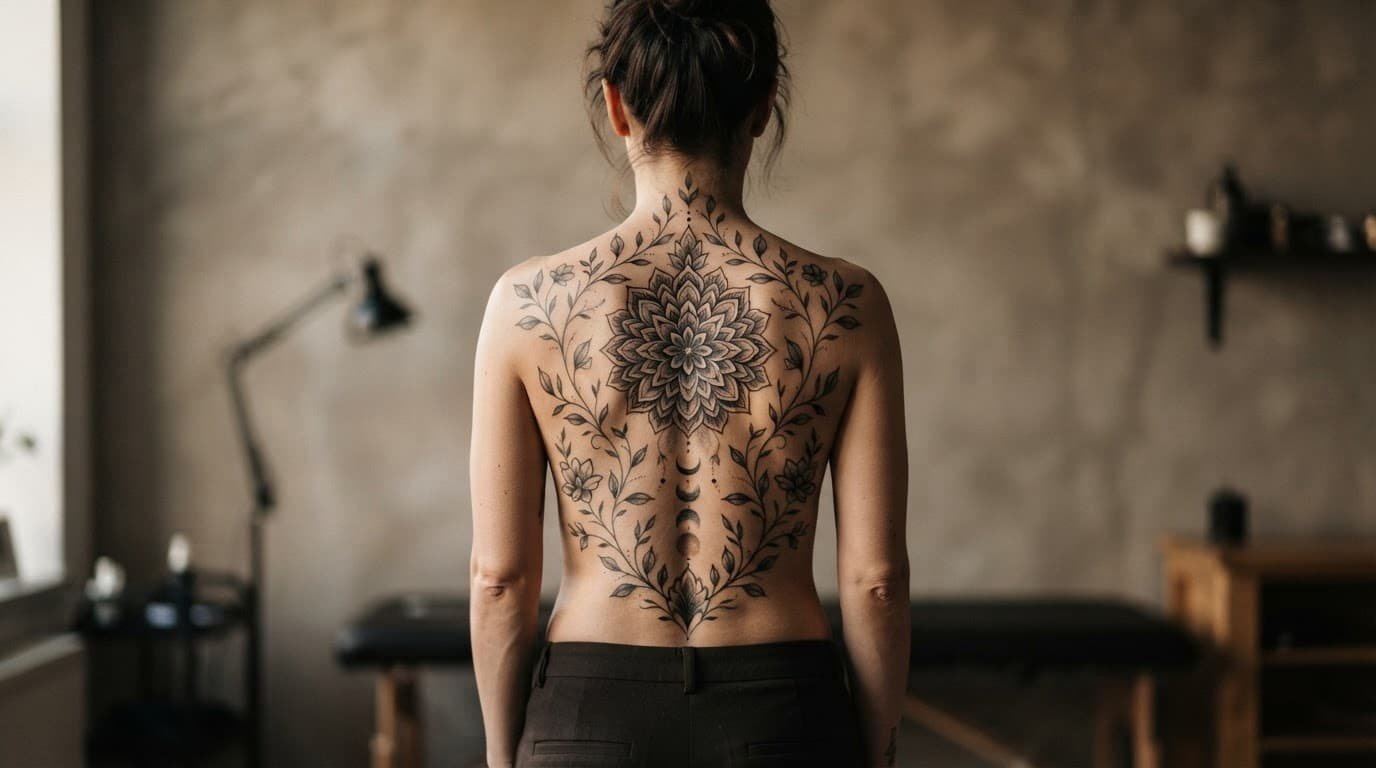
Still, a symmetrical tattoo shouldn’t crowd every inch of skin. Ask your artist to leave breathing room around the spine and between major details. Open areas help the central design remain clear, especially when fine lines soften with age.
Asymmetrical, side-sweeping, and negative-space compositions
Asymmetrical layouts often feel more natural because they follow the body’s curves instead of mirroring them. Flowers, animals, waves, smoke, and branches can travel diagonally from one shoulder toward the opposite hip, giving the tattoo a sense of movement.
A large peony might sit near one shoulder while its leaves guide the eye across the waist. A snake can curve beside the spine, or ocean waves can rise from one hip toward a whale near the opposite shoulder. These arrangements feel organic and leave space for the design to breathe.
Negative space also keeps a large tattoo readable over time. Empty skin separates dark shading, fine lines, and focal details, so the back doesn’t become one crowded block. If you prefer an organic style, compare several women’s spine tattoo designs before deciding how much of the back you want to cover.
Test the scale before you commit
Ask your artist for a real-size digital mockup or printed stencil. View it while standing, sitting, bending slightly, and wearing clothing you commonly wear. A design that looks balanced in a phone image may feel too high, too wide, or too dense when it covers your actual back.
Temporary transfers can help you test placement for a few days. Henna may also show how a diagonal or centered idea feels on your body, but neither option recreates the final tattoo’s texture, shading, or healed appearance. The FDA warns that some black henna products can cause serious skin reactions, so review its temporary tattoo safety guidance before using one.
Bring clear references for subject, mood, linework, and color. Then give your artist room to create an original composition that suits your proportions. Avoid placing ink over existing moles, since tattoos can make future skin changes harder to monitor.
What to Consider Before Booking a Large Back Tattoo
A full-back tattoo deserves more planning than saving a few beautiful reference images. Before booking, consider the artist’s strengths, the design’s detail level, your daily clothing, future skin changes, and the personal meaning behind such a permanent choice. Trends can offer inspiration, but your finished tattoo should feel right on your body long after the trend has passed.
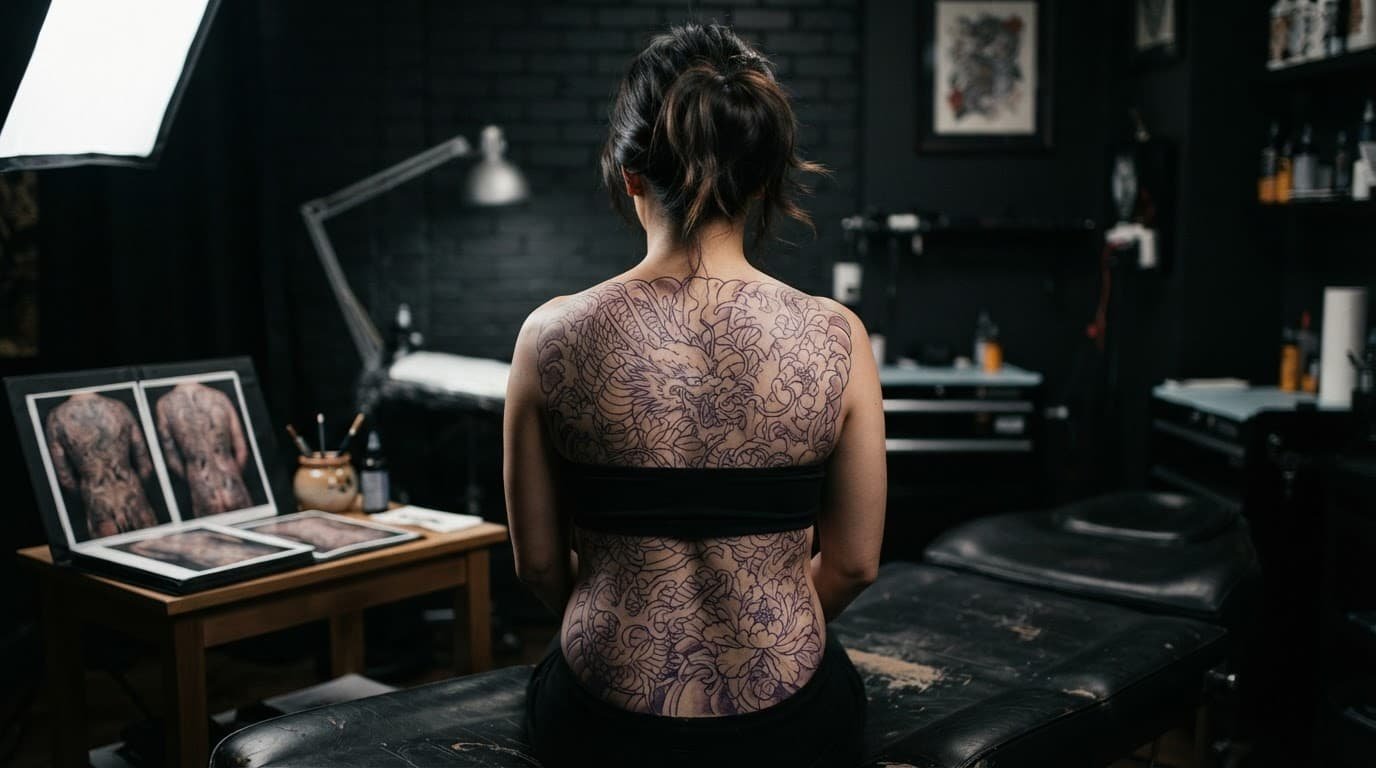
Match the idea to an artist’s strongest style
A realistic portrait, fine-line botanical piece, bold traditional tattoo, and delicate ornamental design require different skills. Choose an artist whose portfolio shows the type of work you want, rather than asking a generalist to copy a style they rarely tattoo.
Review healed work, not only fresh tattoos photographed under bright studio lighting. Look for consistent line quality, smooth shading, solid color saturation, clean edges, and balanced symmetry across large projects. A full-back tattoo magnifies small inconsistencies, so examine how the artist handles shoulder blades, the spine, curves, and wide areas of skin.
During your consultation, ask how the design will follow your body flow. Discuss scale, placement, session planning, clothing coverage, and how the tattoo may age. A skilled artist should explain what needs to remain bold and what can carry finer detail. Also confirm that the studio follows local regulations and uses sterile, single-use needles, sterile ink, and sterile water. The FDA’s tattoo safety guidance is useful background before your appointment.
Choose color, linework, and detail with longevity in mind
Black-and-gray tattoos rely on contrast, soft gradients, and controlled negative space. Full-color work can feel vibrant, while muted color creates a softer, weathered palette. Bold color usually needs strong shapes and sufficient saturation, whereas fine-line, dotwork, and blackwork create very different textures across the back.
Tiny details may blur or fade as the tattoo ages, especially when many lines sit tightly together. Clear spacing, readable silhouettes, and strong primary shapes usually remain easier to recognize. Still, no style lasts forever without change. Sun exposure, skin type, placement, friction, natural aging, and aftercare all affect the result.
Once the tattoo heals, protect it with broad-spectrum, water-resistant sunscreen rated SPF 30 or higher, as recommended by the American Academy of Dermatology. Ask your artist whether a detailed design needs more open skin or fewer small elements.
Make the design personal without making it feel forced
Personal meaning can come through birth flowers, meaningful animals, favorite places, family symbols, stars, seasons, cultural references, or private memories. You don’t need to explain every symbol to other people. Decide which parts should be obvious and which can remain yours alone.
Before choosing a religious or cultural symbol, research its origin, meaning, and respectful use. Ask someone connected to that culture when appropriate, especially if the image has ceremonial or sacred significance. A large tattoo carries emotional weight, so give yourself time to sit with the idea before paying a deposit.
Your back piece should reflect your taste and story, not pressure from friends, social media, or a passing trend. Save several concepts, remove anything that feels performative, and book the design that still feels personal when nobody else is watching.
Pain, Sessions, Healing Time, and the Real Cost of a Full-Back Piece
A full-back tattoo is a long-term commitment to your body, calendar, and budget. Large projects may take 20 to 40 hours, usually spread across several appointments, with costs around $2,000 to $8,000 or more. Your final total depends on the artist, city, design complexity, color, session length, and reputation.
Pain also varies from person to person. The spine, shoulder blades, ribs, and lower back can each feel different, so no single pain rating applies to everyone. Plan for discomfort, but remember that you can ask for breaks and speak up if you need to adjust your position.
What a typical appointment plan may look like
Your first appointment may include a consultation, final design review, stencil placement, and the beginning of the outline. The artist might then complete large sections of linework before moving to shading or color during later visits. A final session may focus on filling small gaps, strengthening contrast, and checking whether any healed areas need a touch-up.
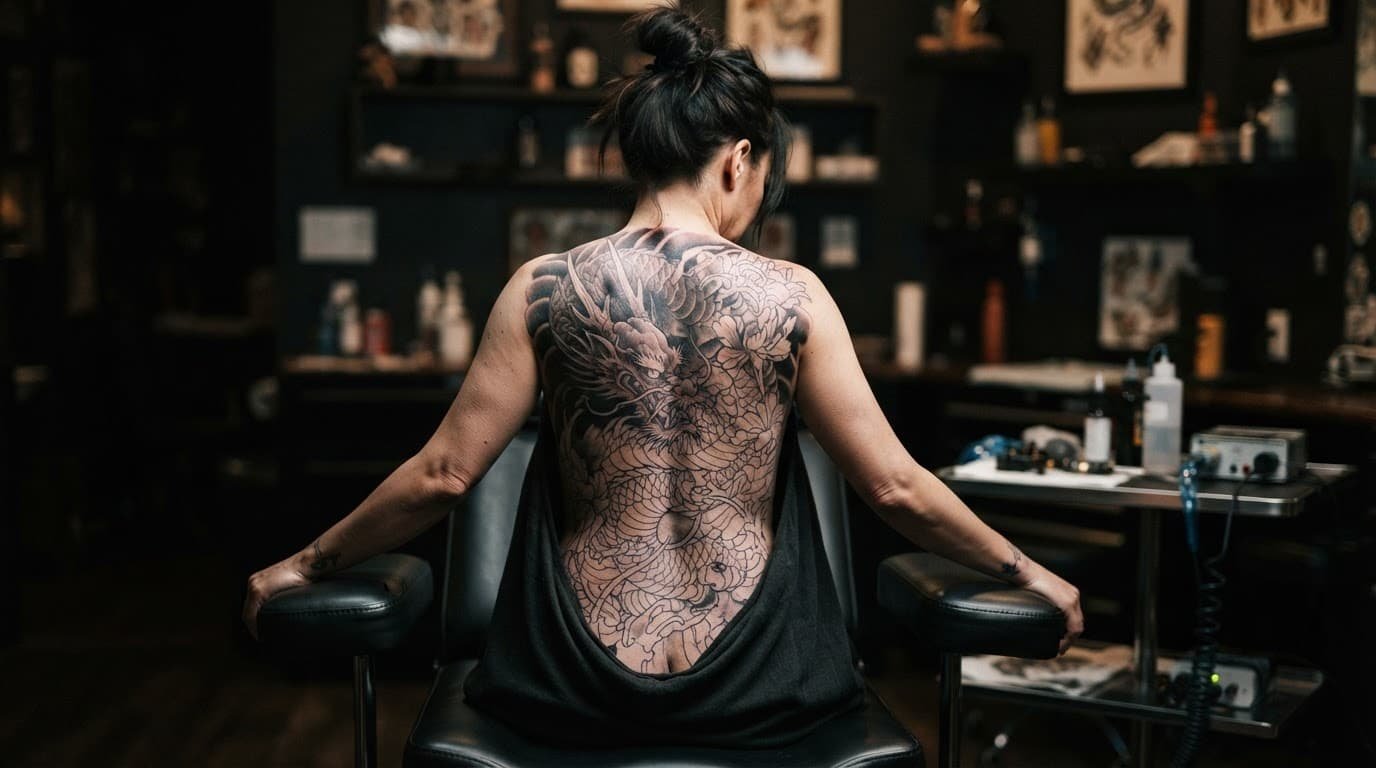
Artists divide full-back tattoos into sessions because skin can become swollen, tender, and harder to work on after hours of repeated tattooing. Spacing appointments gives the skin time to calm down and helps the artist protect line quality, color saturation, and overall balance. One appointment might last several hours, so arrange transportation if you expect to feel sore or tired afterward.
Eat a proper meal beforehand, bring water and a small snack, and wear loose clothing that allows easy access to your back. Also leave enough time for recovery instead of scheduling strenuous exercise, swimming, or a physically demanding shift immediately afterward.
How to budget without choosing an unsafe bargain
Many tattoo artists charge by the hour, while others quote a flat price for the entire piece. Current US estimates often place established artists around $150 to $300 per hour, with highly sought-after artists charging more. Shop minimums, deposits, consultation fees, travel, and aftercare products can increase the final amount.
Before you pay a deposit, request a written estimate that explains:
- The expected number of sessions and hours.
- The deposit amount and whether it applies to the final balance.
- Consultation, drawing, travel, or rescheduling fees.
- What the artist charges for touch-ups after healing.
- Which aftercare products or services are included.
Tipping isn’t a universal rule, but many US clients tip around 15% to 25%, with 20% often used as a general benchmark. Ask the studio if you aren’t sure, especially when the project spans several payments.
A price that seems unusually low may indicate rushed work, weak hygiene practices, or limited experience with large tattoos. A full-back tattoo covers a highly visible area and leaves little room to hide poor composition or uneven shading. Check the artist’s healed work, confirm sterile procedures, and choose skill and safety over the cheapest quote.
Prepare your body and schedule for the tattoo process
Arrive rested, hydrated, fed, and sober. Clean skin helps the artist work efficiently, while loose clothing prevents fresh ink from rubbing against tight fabric. Tell the artist about allergies, skin conditions, unusual scarring, pregnancy, or other health concerns. If you take prescribed medication, don’t stop it without medical advice.
Healing continues between sessions, even when the surface looks better. Mayo Clinic advises gentle washing, moisturizer, sun protection, and avoiding swimming while a tattoo heals. For additional guidance about possible skin reactions, review the American Academy of Dermatology’s tattoo safety advice and contact a healthcare professional if symptoms worsen.
Safe Studio Selection and Simple Aftercare for a Healthy Result
A beautiful full-back tattoo starts with a safe studio and continues with consistent aftercare. Before booking, inspect the workspace, ask direct questions, and pay attention to how the artist responds to your concerns. Your comfort and consent should guide every part of the appointment.
Red flags to avoid before the needle touches your skin
Leave if the studio looks dirty, cluttered, or poorly maintained. Needles should come from sealed, sterile packages and go straight into an approved sharps container after one use. Ink belongs in fresh, disposable cups, while reusable equipment needs proper sterilization. Clean work surfaces, fresh gloves, covered machines, and safe waste disposal should be visible parts of the process.
Be cautious when an artist:
- Refuses to show healed tattoos or only displays heavily edited fresh work.
- Gives unclear pricing, avoids written estimates, or adds unexpected fees.
- Pressures you to book quickly or pay before answering basic questions.
- Communicates poorly or becomes defensive when you ask about hygiene.
- Dismisses your pain, privacy, placement concerns, or personal boundaries.
- Touches equipment, phones, or other surfaces without changing gloves.
- Works in an unlicensed setting where local licensing or health requirements apply.
A reputable artist should explain the design, placement, risks, expected sessions, covering method, and aftercare routine. They should also tell you when to seek medical help. If the space feels wrong or the artist ignores your consent, you can leave. No deposit or appointment is more important than your safety.
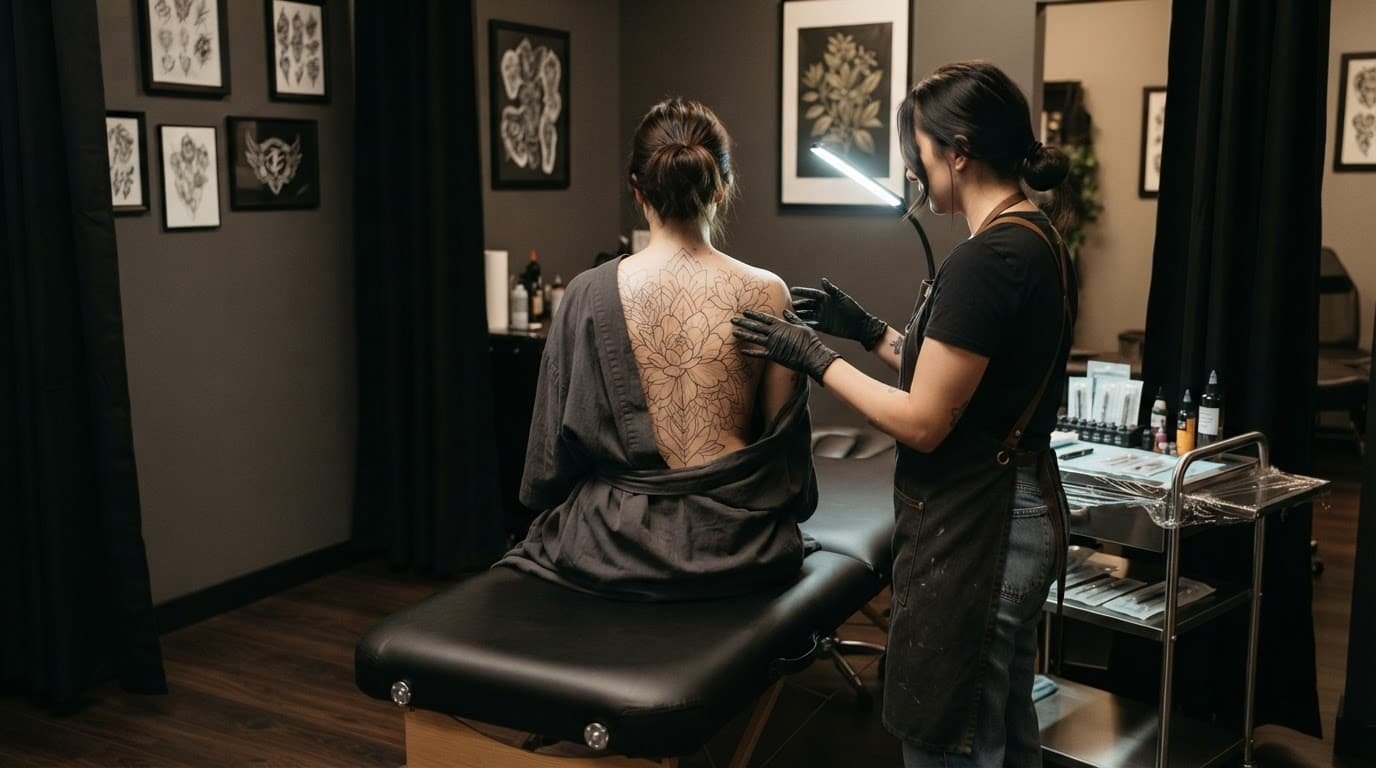
The first weeks of cleaning and moisturizing
Follow your artist’s instructions for removing or changing the covering because methods vary. Some medical guidance recommends keeping a fresh tattoo covered for at least 24 hours, while certain bandages require a different schedule. The material and application method determine what you should do next.
Before touching the tattoo, wash your hands. Then clean the area gently with warm water and mild, fragrance-free soap. Avoid strong shower spray directly on the skin. Pat the tattoo dry with a clean paper towel or towel, then apply only a thin layer of the recommended ointment or a fragrance-free moisturizer. Cleveland Clinic’s tattoo aftercare guidance also recommends gentle cleaning, moisture, and sun protection.
During healing, don’t scrub, pick, scratch, or peel flaking skin. Let loose skin fall away naturally. For broader skin-care habits that support a healthy barrier, see these simple healthy skin tips.
Clothing, water, sun, and warning signs during healing
Choose loose, breathable clothing that won’t stick to your back. Soft shirts can reduce friction from bras, straps, sweat, and tight waistbands. Until the tattoo fully heals, often around three to four weeks, avoid swimming, hot tubs, baths, saunas, and other soaking. Showers are generally fine, but keep the healing skin away from pools, lakes, and shared water.
Keep the tattoo out of direct sun and away from tanning beds while it heals. Once the skin has closed, use broad-spectrum SPF 30 or higher to help protect the design.
Mild soreness, warmth, redness, and peeling can occur early on. However, spreading redness, worsening pain, unusual swelling, pus, fever, or a spreading rash needs prompt medical advice. Stop new aftercare products if you develop a suspected allergic reaction, and contact a healthcare professional rather than treating a serious problem at home.
Conclusion
These 80 full-back tattoo ideas for women show how much personality can fit across one canvas. Floral branches, animals, mandalas, celestial symbols, realistic scenes, and minimalist linework can all follow the shoulders, spine, waist, and lower back in different ways. The strongest design is meaningful and balanced, with enough open space for each detail to remain clear.
Save a few favorite concepts, then compare their layouts, scale, linework, and color before choosing one. Combine details thoughtfully, test the design at full size, and research an artist who specializes in the style you want. A consultation gives you time to discuss body flow, session length, cost, healing, clothing, and aftercare without rushing into a permanent decision.
Once you book, follow the artist’s written aftercare instructions, keep the healing tattoo clean, and protect it from soaking, scratching, heat, and direct sun. Your full-back tattoo doesn’t need to follow a trend or satisfy anyone else’s expectations. Choose body art that brings you joy, strengthens your confidence, and feels true to the person wearing it.
Save the pin for later


- 25 Gothic Tattoo Ideas for a Bold, Dark Look - 21/09/2026
- 34 Black Fine Line Tattoo Ideas for a Delicate Look - 21/09/2026
- 23 Micro Tattoo Ideas for Women With Meaning - 21/09/2026

