A newborn can change the shape of a father’s heart overnight, and a tattoo can give that feeling a lasting form. The best newborn tattoo ideas for fathers can hold a name, tiny footprint, birth date, initials, or a quiet symbol of the bond between dad and child. Even a simple design can bring back the weight of your baby’s hand, the first night home, or the moment you heard that first cry.
Choosing the right tattoo takes more than picking a beautiful image. It should feel right for you now and still look thoughtful years from now, while fitting your lifestyle, work, and comfort with visibility. Along with meaningful tattoo concepts, you’ll find practical guidance on placement, personalization, artist selection, cost factors, privacy, safety, and aftercare. You may also appreciate this advice for building a bond with your newborn as you settle into fatherhood.
Start with heartfelt design ideas that turn your child’s first chapter into something you can carry every day.
Key Takeaways
- Choose a newborn tattoo that reflects your child’s story, such as a name, footprint, birth date, initials, or birth flower.
- Personal details make simple designs feel special, while clean lines and timeless symbols age well.
- Consider placement, size, workplace visibility, pain level, and whether the design can grow with your family.
- Review meaningful family tattoo ideas before finalizing your concept.
- Select a reputable, hygienic studio, since tattooing carries infection risks outlined by New York health guidance.
Newborn Tattoo Ideas for Fathers That Feel Personal and Timeless
The strongest newborn tattoo ideas for fathers connect a lasting symbol with a detail only your family shares. Before choosing a design, decide whether you want something private and subtle or a piece that tells your child’s story at a glance.
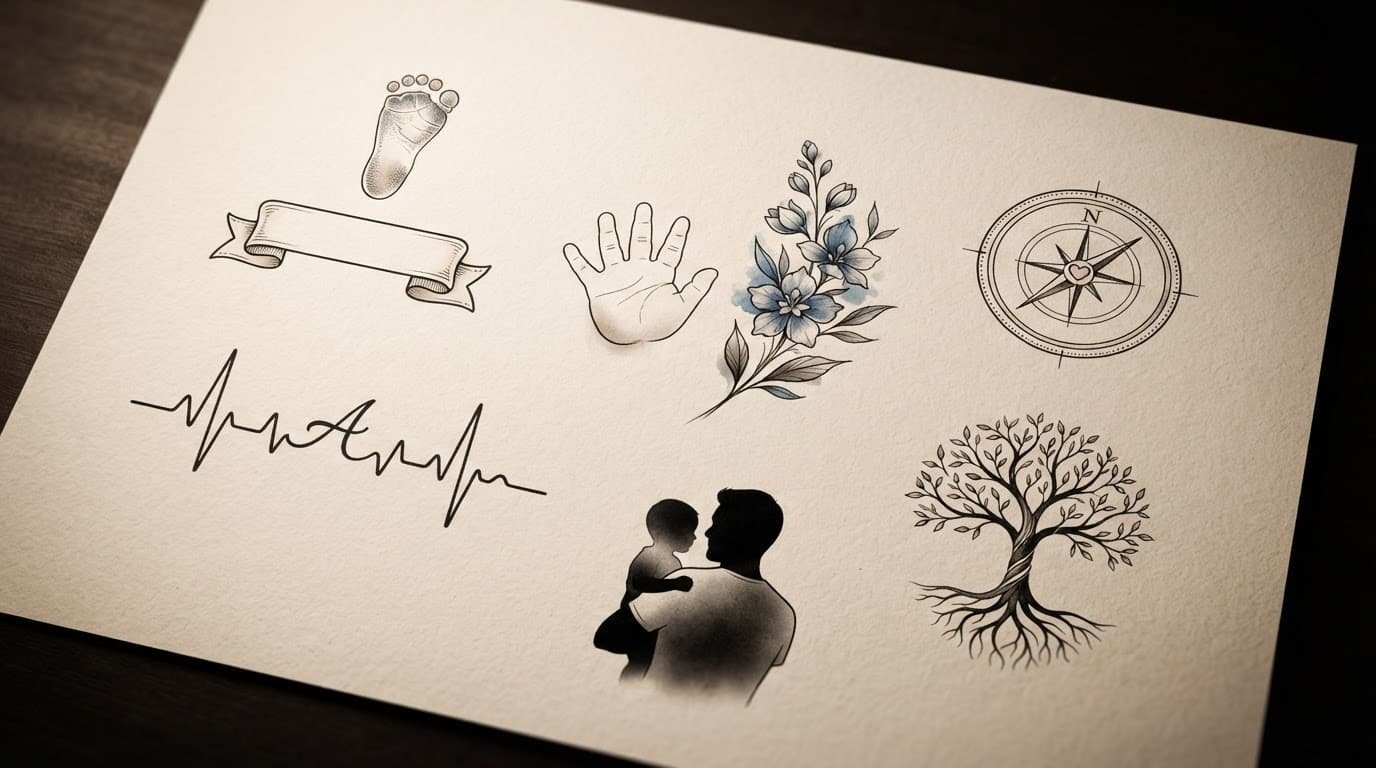
Classic name, date, and birth detail tattoos
A full name with a birth date is one of the clearest choices. You can use standard numbers, a written date, Roman numerals, block lettering, or fine script. Initials with the birth year create a smaller minimalist tattoo, while the birth time, weight, length, or place of birth can add a private detail.
For example, place a baby’s nickname inside a heart, or arrange the name and birth facts within a circle. A name plus footprint plus date feels personal without needing extra decoration. If you plan to honor more children later, leave space for matching names, dates, or symbols.
Fewer details often create a cleaner design that remains readable as your tattoo ages. Before your appointment, check every spelling, number, capitalization, and date with the artist. The FDA’s tattoo safety guidance also supports taking time to choose a reputable studio and ask about the ink being used.
Footprints, handprints, and fingerprint designs
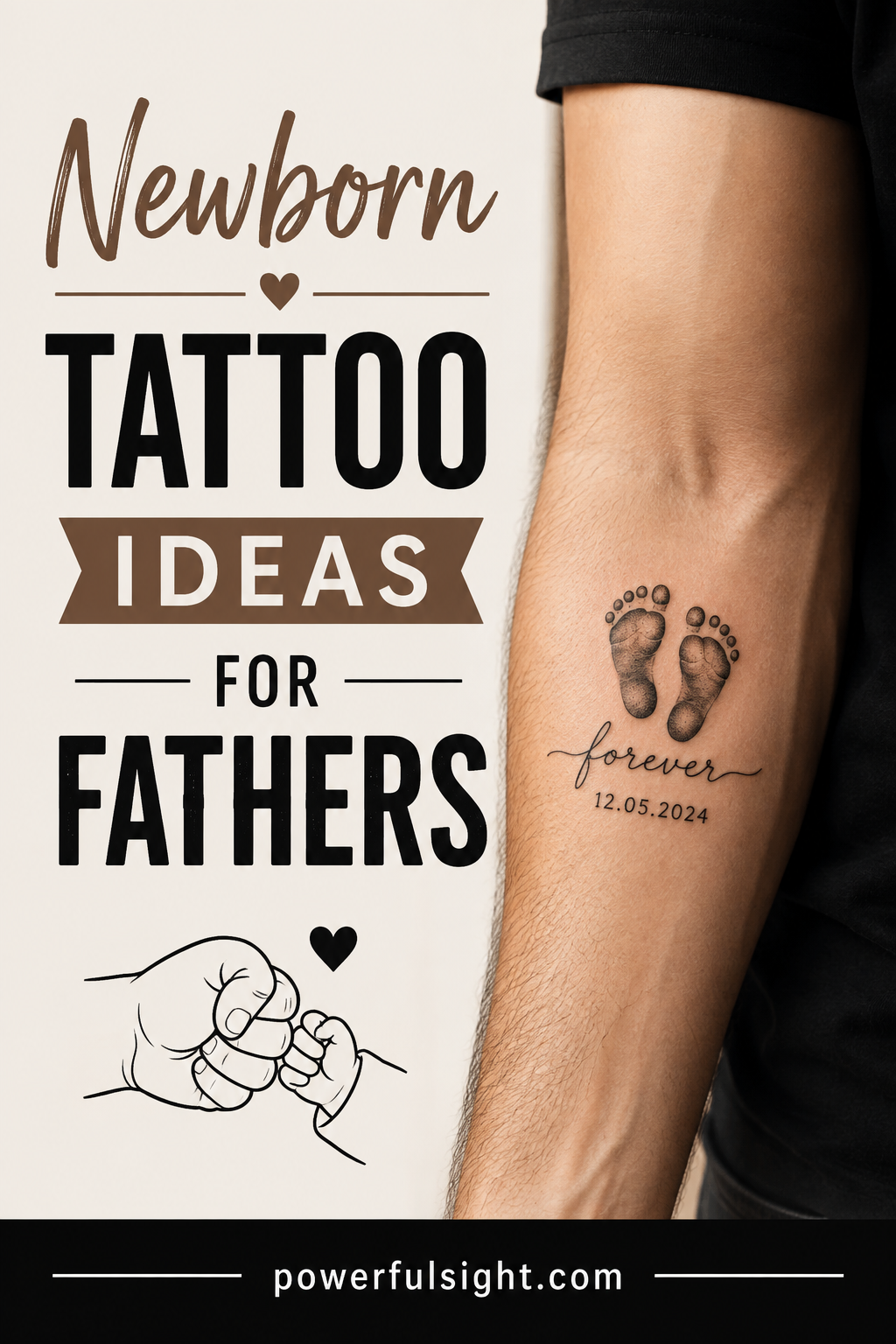
A real baby footprint or handprint carries the shape of a moment you can never repeat. Use it at actual size, turn it into a clean outline, place it inside a heart, or combine two prints to show the bond between father and child. A fingerprint heart offers a more discreet option, especially when you want a small design with personal meaning.
Artists usually work from paper prints or digital scans. They don’t tattoo directly from a baby’s skin. If the original print has faint or crowded lines, ask the artist to simplify it into a clean stencil or vector-style design. Tiny details can blur as the tattoo ages, so a strong outline often looks better than a perfectly exact copy.
Heartbeat lines, portraits, and small storytelling symbols
A heartbeat line paired with initials or a birth date creates a subtle father-child tattoo. Realistic baby portraits can be emotional, but they require more space and shading. A profile, silhouette, line-art face, or holding-hands outline gives you a simpler design with a lighter visual feel.
You might add a lion for protection, a compass for guidance, a tree for family roots, or a shield for safety. Stars, an angel, birth flower, constellation, birth coordinates, a heart, or your child’s own drawing can make the tattoo feel unmistakably yours. Simple shapes usually age better than highly detailed tiny images, so choose the level of detail that suits your placement and future plans. For more heartfelt inspiration, browse these meaningful quotes about parenthood before settling on a symbol or short phrase.
Where Should a Dad Get a Baby Tattoo? Match Placement to the Design
Placement affects more than appearance. Think about the tattoo’s size, how often you want to see it, your workplace, and how the area fits daily life with a baby. A new dad should also consider contact during carrying, bathing, feeding, and skin-to-skin time.
Best placements for small and minimalist designs
The wrist and inner forearm suit initials, birth years, heartbeat lines, and tiny footprint outlines. These areas make the tattoo easy to glance at during a busy day, which works well for a visible reminder. However, short sleeves may expose it at work, so choose the inner arm if you want slightly more privacy.
The inner upper arm is a good middle ground. Your baby’s initial, a tiny star, or a small heartbeat can stay close to you without appearing in every handshake or photo. The upper arm also faces less daily exposure than the wrist, which may help you protect the tattoo from sunlight once it heals.
For a more personal design, consider the ankle or collarbone. Ankle tattoos can stay hidden beneath socks and pants, while the collarbone keeps a small footprint or birth symbol visible with an open shirt. Review these meaningful ankle tattoo ideas if you want a compact design with a private feel.
The outer upper arm offers more visibility and a little more room for a clean outline. Still, ask your artist to examine your skin and the actual design rather than relying on a generic size chart. Fine details may need more space than you expect.
Placements for portraits, multiple children, and larger artwork
The chest gives a name, hand outline, or protective symbol a natural connection to the heart. It also offers room for a meaningful composition without forcing every detail into a tiny shape. The shoulder and full upper arm work well for portraits, holding-hands scenes, family crests, or several children’s names, and clothing can cover them easily.
Choose the upper back or side and rib area when privacy matters most. These locations can hold larger artwork, although frequent holding, babywearing, or skin-to-skin contact may create friction while the tattoo heals. Follow professional aftercare guidance, including keeping a fresh tattoo away from swimming and direct sun, as outlined by WebMD’s tattoo aftercare advice.
Leave breathing room around the first tattoo if you may add another child later. A portrait needs enough scale to preserve facial features, while names need clear spacing to remain readable. Hand and finger tattoos require extra thought because washing, sunlight, movement, and friction can cause faster fading. When in doubt, choose a placement that gives the artwork room to grow with your family.

How to Personalize a Father and Newborn Tattoo Without Overcrowding It
A popular newborn tattoo idea becomes personal when you build it around details only your family understands. Start with one clear reference, then add one or two supporting elements. A tattoo doesn’t need every birth statistic to tell a complete story.
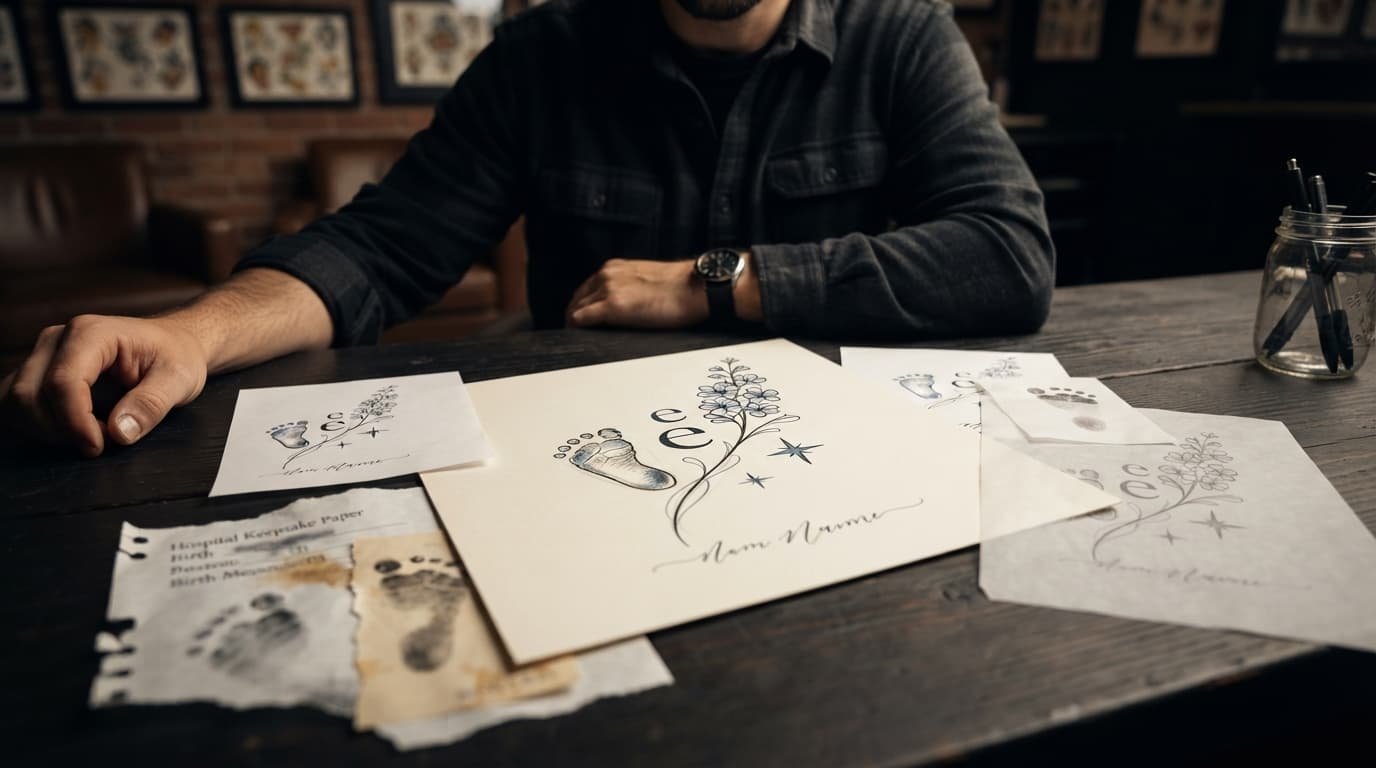
Build a meaningful design around one strong memory
Choose an anchor detail before collecting symbols. It could be your baby’s first photo, a tiny hand outline, a birth flower, a star sign, a favorite lullaby symbol, or the hospital where your child was born. One clear image often feels more personal than a crowded collection of unrelated icons.
Use the anchor as the visual center, then add details that support it. For example, you might pair a footprint with a birth flower and the child’s initial. A small star beside birth coordinates can create a private reminder of the delivery room, while a handwritten name beneath a simple father-and-child silhouette can keep the design warm and uncluttered.
Begin with an exact reference whenever possible. Bring the hospital keepsake, birth announcement, favorite photo, or a family drawing to your consultation. Your artist can simplify those details without removing what makes them yours. For families with more than one child, consider separate flowers, matching dates, connected stars, or a family tree with room for future additions. Family birth-flower tattoo inspiration can help you compare ways to include several people without filling every inch of skin.
Choose lettering, size, and ink that will stay readable
Lettering should match your personality and the design’s mood. Clean print feels steady and modern, soft script feels intimate, and typewriter lettering suits a father who prefers a vintage touch. You could also save a sample of your child’s handwriting for a future addition when they are old enough to write their name.
Very small lettering and extremely fine lines can lose clarity as tattoos age. Ask the artist to print the name and date at the intended size, then view the test from arm’s length and in normal lighting. Check the stencil from several angles before the needle touches your skin. A specialist guide from Work of Art Tattoo can also help you understand the limits of fine-line work.
Black-and-gray usually offers the clearest contrast. A muted color accent can highlight one flower or star, but color should support the design, not make the lettering harder to read. Before committing, review the final layout with your artist and wear a printed or temporary version for a day or two. That simple test shows whether the size, placement, and spacing still feel right in real life.
Choosing a Tattoo Artist, Budget, and Design You Will Still Love Later
Take your time before booking a newborn tattoo. The emotion after a baby’s birth can feel enormous, but a cooling-off period gives you space to decide whether the design, placement, and size still feel right.
Look for an artist whose portfolio matches the work you want. Fine-line tattoos, realism, lettering, portraits, and minimal black ink each require different skills. Recent reviews can reveal how well the artist communicates, follows appointments, handles revisions, and supports clients during healing.
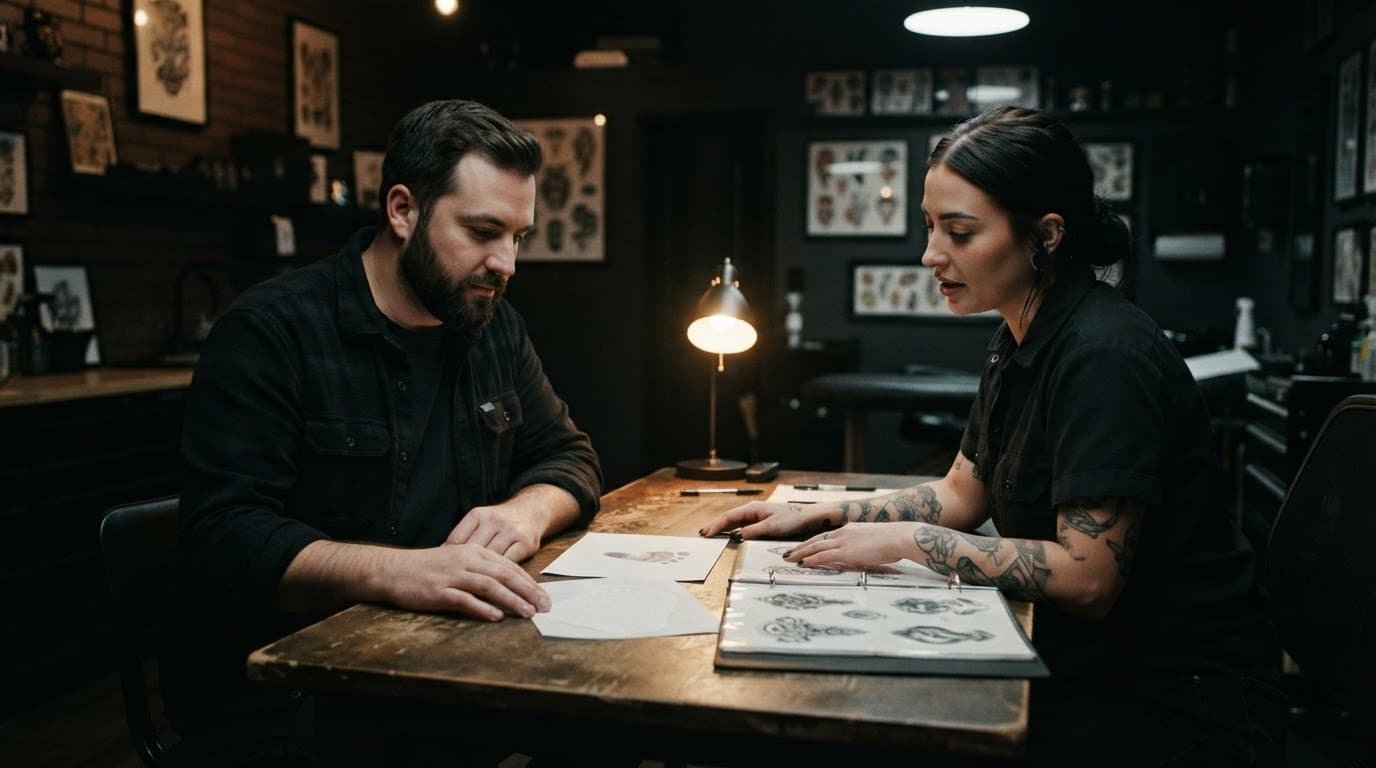
Questions to settle during the consultation
Bring your baby’s footprint, handprint, photo, or handwritten details to the meeting. Ask how the artist will simplify the print without losing its recognizable shape. A clean outline often works better than forcing every tiny crease into a small tattoo.
Discuss the artist’s experience with your chosen style, the studio’s sterilization process, single-use needles, reusable equipment, surface barriers, and glove changes. Ask which ink brands and colors they use, and request the ink color, brand, and lot information for your records. The Mayo Clinic’s tattoo safety guidance explains why contaminated ink or poorly sterilized equipment can cause infection.
Before the appointment, confirm these details:
- The spelling, capitalization, initials, and every number are correct.
- The date format, birth time, weight, or other facts match your records.
- The final stencil shows the approved size, placement, spacing, and orientation.
- You understand the revision policy, deposit rules, cancellation window, and touch-up policy.
- The artist gives you a healing timeline, written aftercare instructions, and warning signs that need medical attention.
Ask to see the final stencil on your skin before work begins. Approve every letter and number after checking it in a mirror and under normal lighting. If the design may grow with future children’s names or symbols, discuss expansion before the first line is tattooed.
Plan for the cost before you book
Tattoo prices depend on the artist’s minimum charge, hourly rate, size, detail, location, color, and number of sessions. A tiny name or date usually requires less time than a portrait, realistic baby face, or highly detailed footprint, but only the artist can estimate your specific design.
Request a clear written estimate instead of relying on a universal price. Confirm whether the deposit applies to the final balance and what happens if you reschedule. Then compare the quote with the artist’s portfolio, hygiene standards, communication, and ability to create the design you actually want. A lower price rarely helps if the result needs major correction later.
Tattoo Safety, Newborn Privacy, and Aftercare Every Dad Should Know
A fresh tattoo is an open wound, so safety matters more than a beautiful reference photo. Choose a qualified artist in a clean, properly regulated studio, then plan healing around your newborn’s needs. The CDC’s hepatitis C prevention guidance also warns against tattoos in unregulated settings.
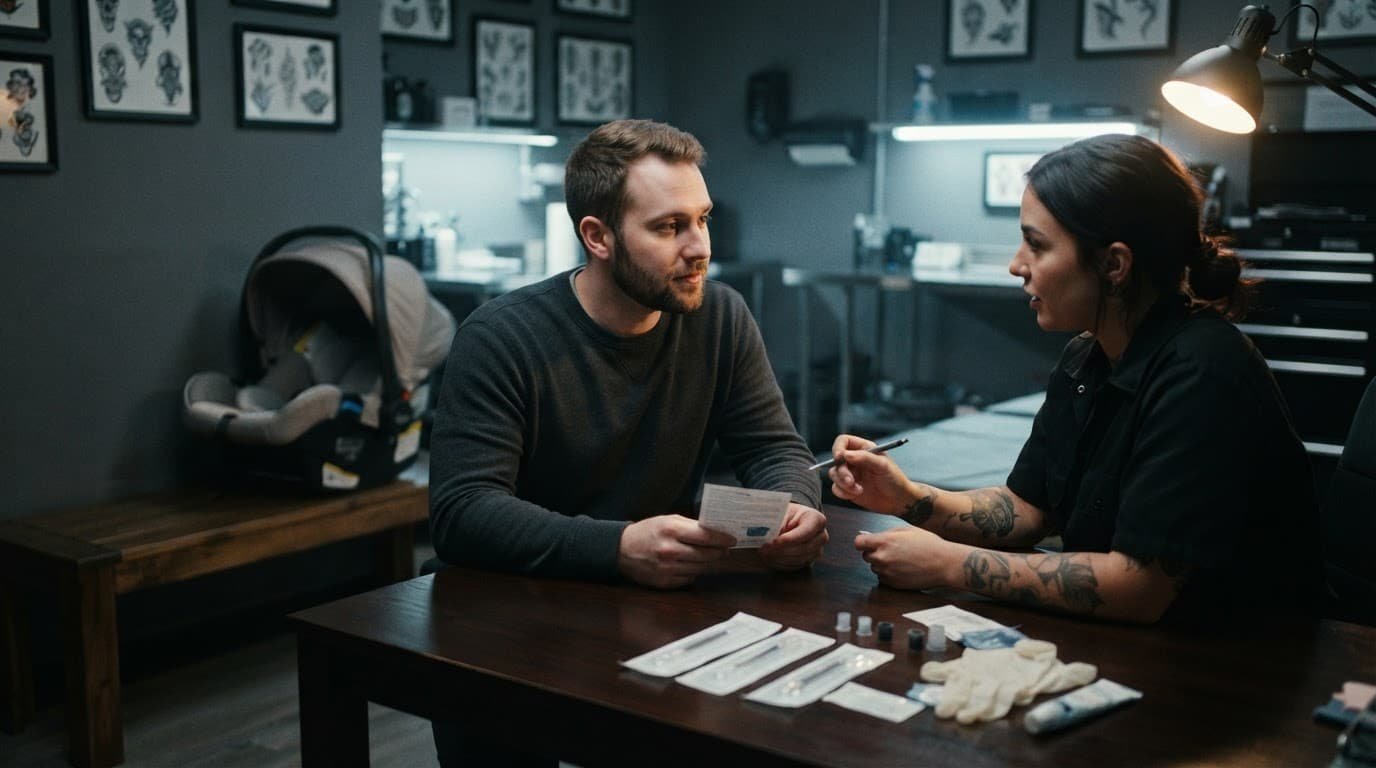
Safe studio habits matter more than a beautiful reference photo
Before booking, check your area’s health rules and licensing requirements. A professional studio should have clean work surfaces, sealed supplies, and sterile, single-use needles opened near the appointment. The artist should wash their hands, wear fresh gloves, change gloves when needed, and disinfect equipment and surfaces between clients.
Ask how the studio handles reusable tools, sharps disposal, tattoo ink, and aftercare. A responsible artist will answer without defensiveness and provide clear written healing instructions. The FDA recommends recording the ink brand, color, and lot information in case an allergic reaction or infection develops.
A talented artist can’t make unsafe practices acceptable. Leave if the space looks dirty, the licensing is unclear, or the artist avoids direct questions. Also postpone your appointment if you or your baby is sick, you are severely exhausted, or you can’t manage several days of careful healing.
Keep a healing tattoo away from newborn skin and daily friction
Follow your artist’s exact instructions for removing the bandage. Afterward, wash the tattoo gently, pat it dry, and apply only the recommended thin layer of ointment or moisturizer. Don’t pick, scratch, or peel flaking skin. Wear loose clothing, limit sun exposure, and avoid pools, hot tubs, and saunas until the skin heals.
Newborn care makes this harder. Carrying, bathing, feeding, and cuddling can press clothing or a baby’s hands against the tattoo. Keep the area away from your baby’s face and skin, and never let the baby touch or lick it. Arrange help during the first few days if the placement rubs against a carrier strap, waistband, or feeding position.
Mild redness and swelling can occur early, but worsening redness, swelling, heat, pus, fever, severe pain, or spreading irritation needs medical attention. Tell your artist about allergies, skin conditions, medicines, or healing concerns, and ask a healthcare professional for advice when needed.
Protect your child’s personal details as the design grows
A full name paired with an exact birth date, time, location, or medical birth detail creates a very public record. Some fathers prefer initials, a birth year, a birth-month flower, a constellation, a meaningful symbol, coordinates, or a hidden placement. Your choice can change as your child grows, so display only details you feel comfortable showing at work, online, or in public. These privacy boundary ideas can help you think through what belongs in public view.
A baby should never be tattooed or used to create a direct skin impression. Use a paper print, photograph, or digital outline instead. Finally, let the tattoo heal fully before judging its final color, texture, or clarity.
Conclusion
The best newborn tattoo ideas for fathers don’t need to be large or highly detailed. A footprint or handprint, name and date, heartbeat line, handwritten detail, birth flower, portrait, or protective symbol can hold the same love when it connects to a real family memory.
Before choosing, save the original keepsake and give your artist a clear reference. Review the stencil carefully, check every letter and number, and consider whether the design will stay readable at its planned size. Placement, privacy, artist skill, and your daily routine with a newborn should guide the final choice just as much as the image itself.
Choose a clean, reputable studio and follow the aftercare instructions while the tattoo heals. A thoughtful design leaves room for your child’s story to grow, without crowding the skin or exposing more personal information than you intend. Years from now, a small mark can still bring you back to the first days when your child arrived and changed your everyday life.
Save the pin for later

- 25 Gothic Tattoo Ideas for a Bold, Dark Look - 21/09/2026
- 34 Black Fine Line Tattoo Ideas for a Delicate Look - 21/09/2026
- 23 Micro Tattoo Ideas for Women With Meaning - 21/09/2026

