When your digestion runs smoothly, your body can absorb nutrients better, keep blood sugar steadier, and avoid those midafternoon energy crashes that leave you dragging. That’s why gut-friendly meal ideas can make such a difference, especially when you want steady energy that lasts.
Recent research also points to a strong link between the gut microbiome and energy, including how it helps break down food and support metabolism. The good news is that you don’t need a strict diet to feel better, because small meal choices can go a long way. Meals built with fiber, protein, and simple whole foods can support both your gut and your energy, and foods that help with steady blood sugar and energy fit naturally here.
This post keeps things practical with easy meal ideas you can use at breakfast, lunch, or dinner. If you want meals that feel good, digest well, and help you stay focused through the day, you’re in the right place.
What makes a meal truly gut-friendly and energy-supporting?
A gut-friendly meal does more than fill you up. It gives your digestion a smoother job, helps steady blood sugar, and keeps energy from dropping too fast. The best meals usually include a mix of fiber, protein, healthy fats, and fermented foods, plus a good variety of plants.
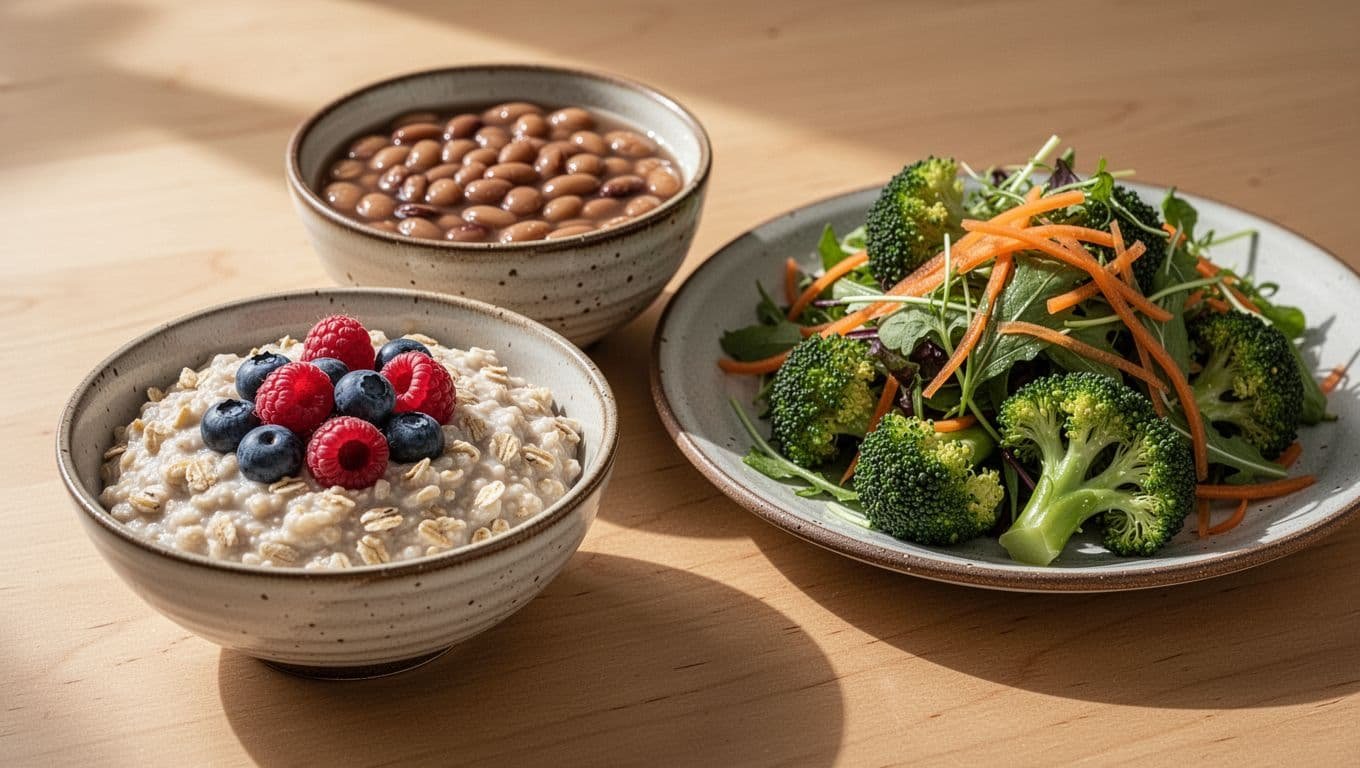
That variety matters more than many people realize. Different plants feed different gut bacteria, so a plate with beans, greens, berries, and grains gives your gut more to work with than the same food every day. Fiber-rich meals also digest more slowly, which helps your body release energy at a steadier pace.
Fiber helps keep digestion and energy steady
Fiber comes in two main forms. Soluble fiber dissolves in water and forms a soft gel, which slows digestion a bit. You’ll find it in oats, beans, berries, and some fruits. Insoluble fiber adds bulk and helps food move through your system, which you get from vegetables, greens, and many whole grains.
Both types matter. Soluble fiber can help reduce blood sugar spikes, while insoluble fiber keeps things moving. Together, they help your meal feel more even and less likely to leave you hungry again an hour later.
A breakfast with oats and berries or a lunch with beans and greens is a simple way to get both. The result is slower digestion, fewer energy swings, and better staying power through the day.
Protein and healthy fats help you stay full longer
Protein and fat make a meal last. Eggs, yogurt, fish, chicken, and tofu give your body steady fuel, while avocado, nuts, and olive oil help slow down digestion even more.
That matters when you want to avoid the mid-morning or mid-afternoon crash. A meal with protein and fat tends to keep hunger quieter, so you are less likely to reach for a quick sugar fix.
For example, eggs with avocado, yogurt with nuts, or chicken with olive oil and vegetables can all help you feel full longer.
Fermented foods and prebiotic foods support your gut bacteria
Fermented foods are foods that have been naturally changed by helpful microbes. Yogurt, kefir, sauerkraut, kimchi, and miso all fit here. They bring live cultures or a history of fermentation that can support a healthy gut routine.
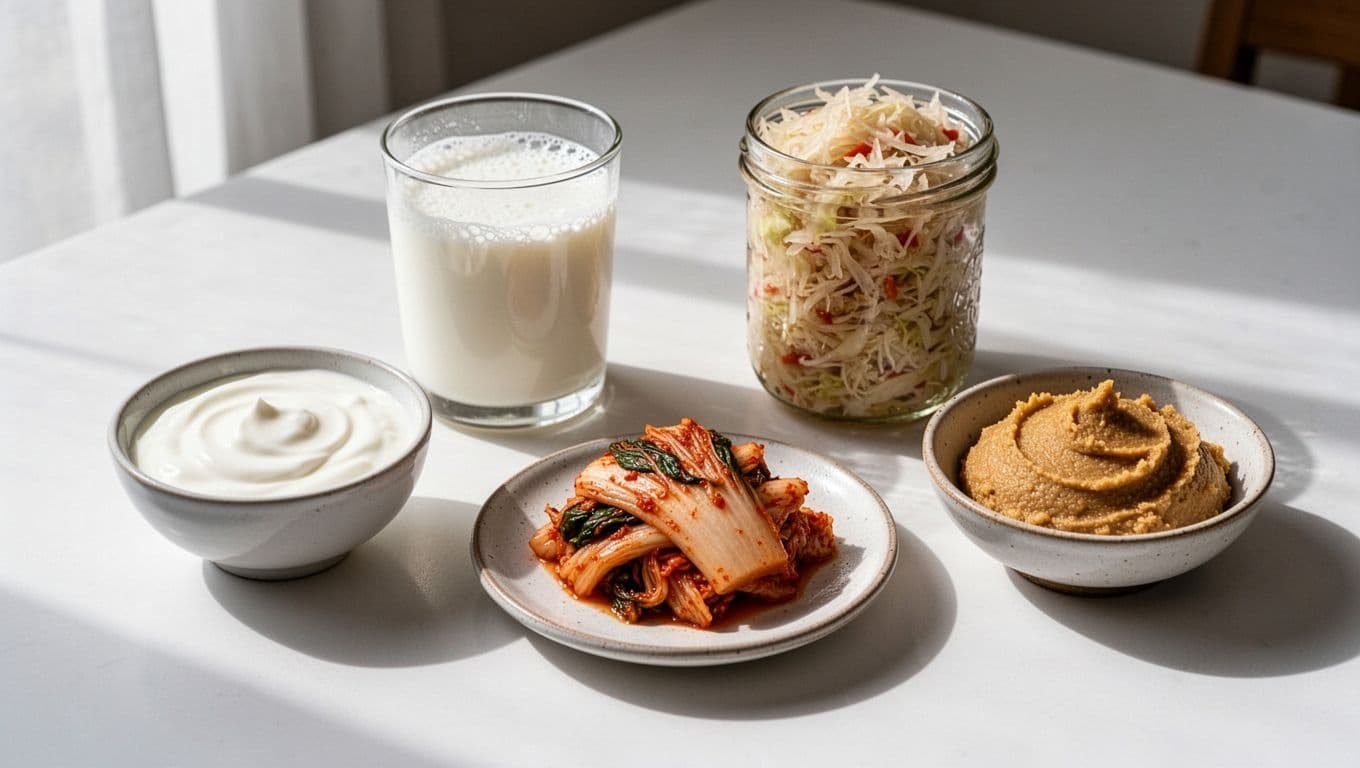
Prebiotic foods are different. They feed the good bacteria already in your gut. Garlic, onions, leeks, asparagus, and oats are easy examples. If these foods feel new, start small. Even a spoonful of sauerkraut or a little garlic in dinner can be enough at first.
That mix of fermented and prebiotic foods helps build a meal that supports your gut and your energy at the same time.
Easy gut-friendly breakfast ideas that set up your whole day
Breakfast works best when it gives you protein, fiber, and healthy fat in one sitting. That mix helps you feel satisfied, keeps digestion smoother, and supports steadier energy before the day gets busy.
The best part is that gut-friendly breakfasts do not have to be complicated. A few smart staples, such as yogurt, oats, eggs, avocado, fruit, and seeds, can give you meals that are quick, gentle, and filling. If mornings are rushed, balanced breakfast ideas for busy mornings can help you keep things simple without settling for a sugar spike.
Creamy yogurt bowls with berries, seeds, and nuts
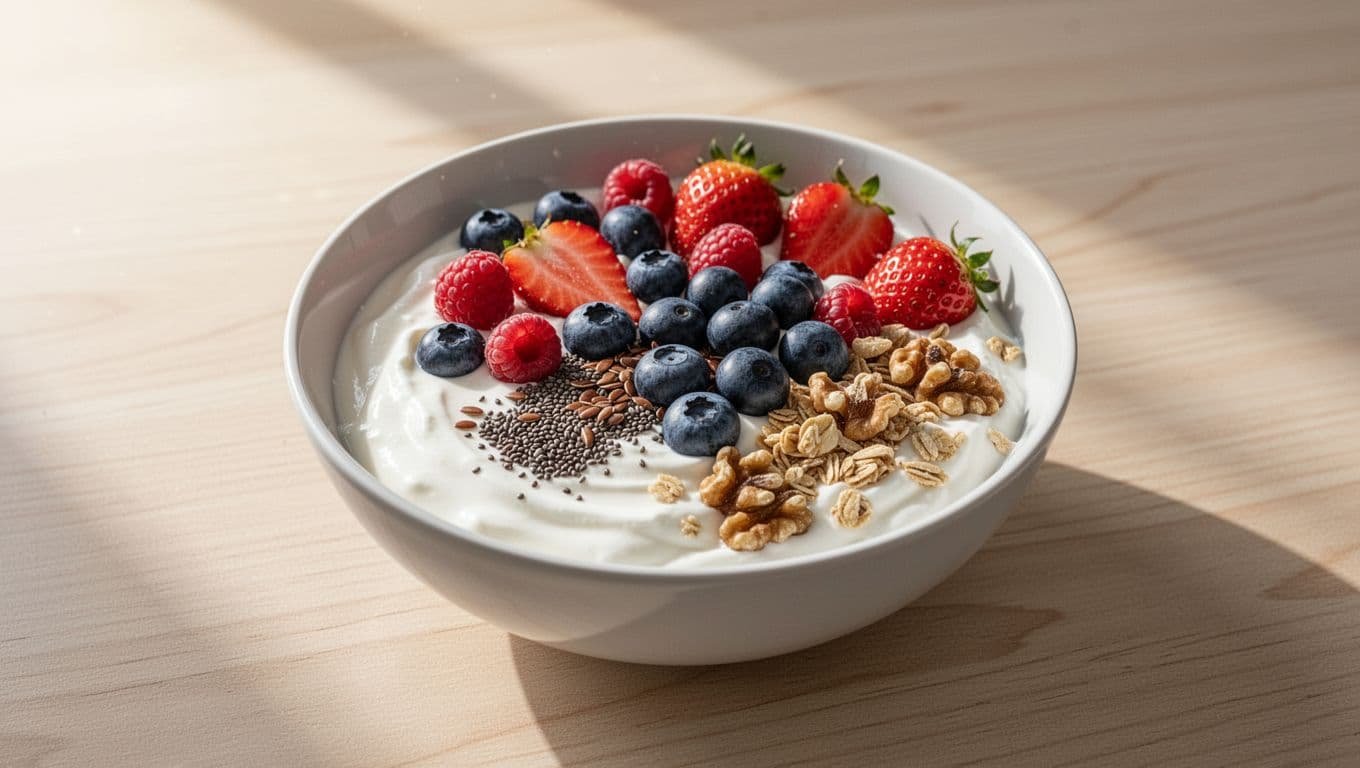
Greek yogurt or kefir makes a strong base for a gut-friendly breakfast because both bring protein, and kefir adds extra probiotic support. Top either one with berries, chia, flax, walnuts, and a small sprinkle of granola for crunch. You get fiber, healthy fats, and natural sweetness in one bowl, which helps morning energy last longer.
This combo works well because the protein helps with fullness, while the berries and seeds give your gut bacteria more to work with. The nuts and chia also slow digestion a bit, so you avoid that quick rise and fall that happens with a carb-heavy breakfast. For flavor, try a pinch of cinnamon or a light drizzle of honey.
For a simple example, probiotic breakfast bowls show how easily yogurt, fruit, and savory add-ins can come together. If you like a softer, less sweet start, kefir with berries and walnuts is an easy swap.
Overnight oats that are easy on digestion
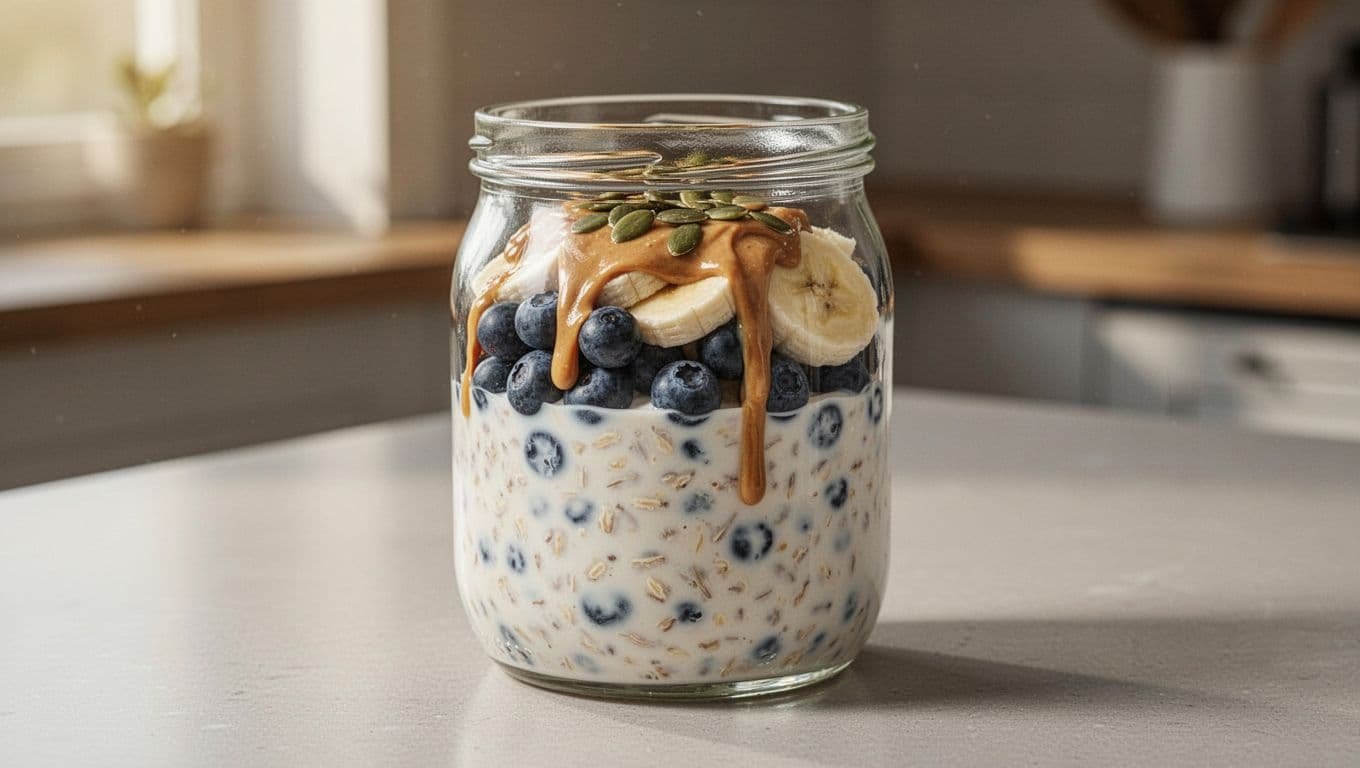
Overnight oats are a smart choice when you want breakfast ready before you even wake up fully. Mix rolled oats or steel-cut oats with milk or yogurt, then add fruit and seeds the night before. By morning, the oats are soft, creamy, and easier on digestion.
Blueberries, bananas, peanut butter, and pumpkin seeds all work well on top. The oats bring fiber, the milk or yogurt adds protein, and the seeds or nut butter add healthy fat. Together, they create a breakfast that feels steady rather than heavy.
This is also one of the easiest breakfasts to prep in batches. A few jars can cover several mornings at once, which makes busy weekdays much smoother. If you want more make-ahead ideas, overnight oats for busy mornings fits right into a simple routine.
Eggs with avocado on whole-grain toast
Eggs with avocado on whole-grain toast is a savory breakfast that checks all the boxes. You get protein from the eggs, healthy fat from the avocado, and fiber from the toast, so the meal feels complete without sitting too heavy.
This is a great choice when you want something warm and fast. Scrambled, fried, or boiled eggs all work, and the whole plate can come together in just a few minutes. Add salt, pepper, chili flakes, or a squeeze of lemon if you want a little more flavor.
Because it is filling without being dense, this meal is easy to digest for many people. It also keeps you satisfied long enough to make it through the morning without constant snacking.
Lunch ideas that help you avoid the afternoon slump
A balanced lunch can make the difference between a sharp afternoon and a foggy one. The goal is simple, build a plate that gives you fiber-rich carbs, protein, and colorful vegetables so your body gets steady fuel instead of a quick spike and crash.
Packable lunches work best when they are easy to assemble ahead of time. Bowls, salads, and wraps are all strong choices because they travel well and hold up in the fridge. If you want more lunch structure, balanced healthy lunch suggestions can help you keep meals practical without making them boring.
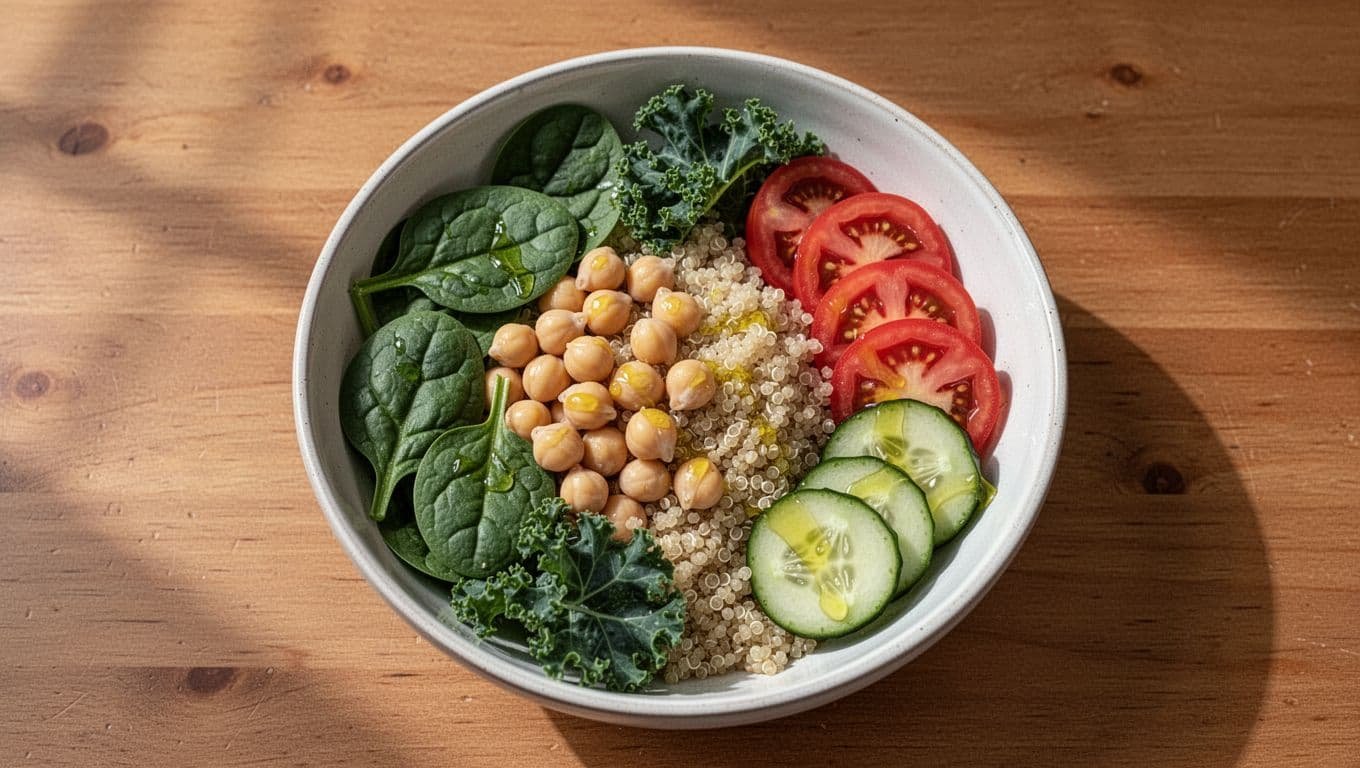
Chickpea bowls with greens, grains, and a simple dressing
Chickpea bowls are one of the easiest gut-friendly lunches to make ahead. Chickpeas bring fiber and plant protein, while quinoa or brown rice adds slow-digesting carbs that keep energy steady through the afternoon. Add leafy greens like spinach, arugula, or kale, and you get a meal that feels light but still keeps you full.
A simple dressing made with olive oil, lemon, and a pinch of salt brings everything together. The fat in the olive oil helps slow digestion a bit, so the meal lasts longer in your system. That mix is especially helpful when you want to avoid the 3 p.m. snack hunt.
You can also change the flavor fast with herbs, cucumbers, tomatoes, or roasted vegetables. That makes this bowl easy to repeat without getting tired of it.
Salads that actually keep you satisfied
A good salad needs more than lettuce and dressing. To keep you full, it should include protein, fiber, and fat, plus plenty of crunch and color. Beans, salmon, chicken, avocado, nuts, seeds, and crunchy vegetables all help turn a salad into a real lunch.
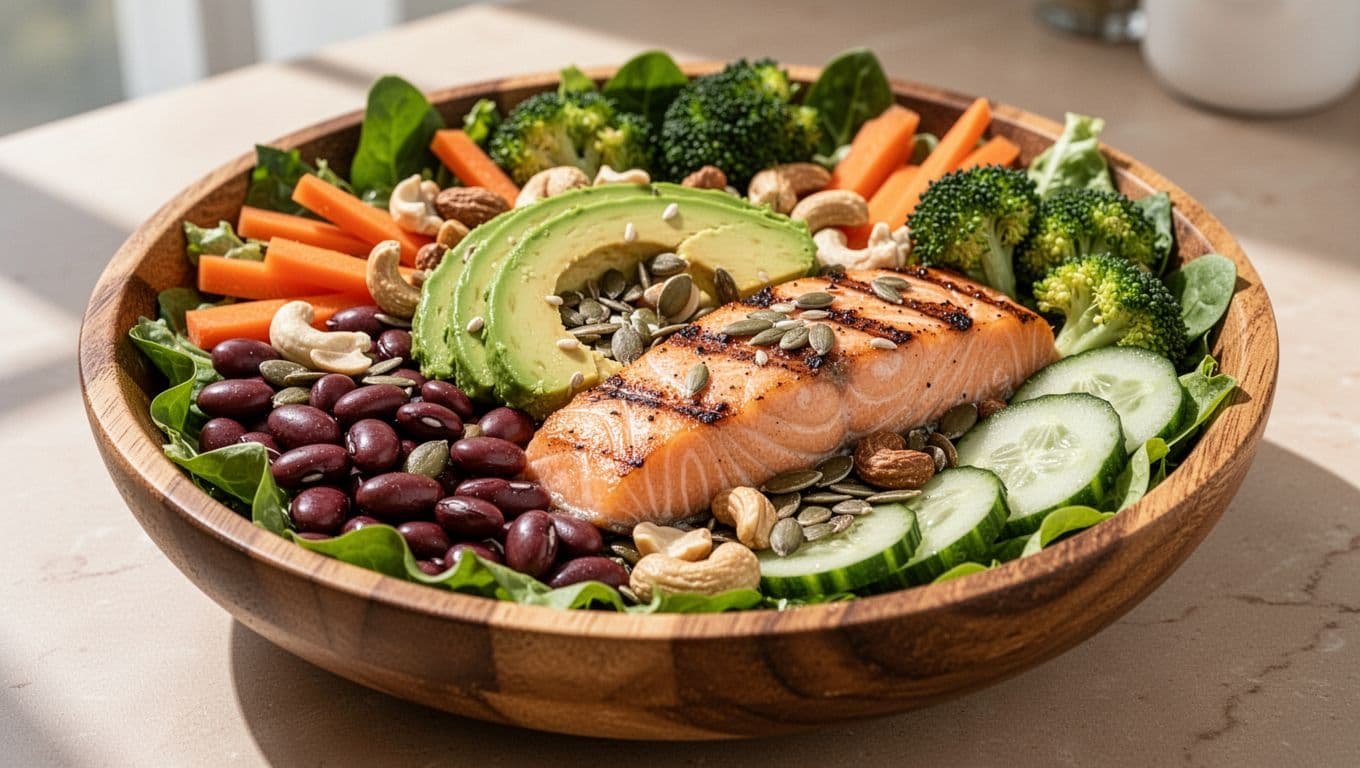
That balance matters because a plain salad often leaves you hungry an hour later. In contrast, a salad with protein and healthy fat can hold you over and support smoother digestion. For a quick reference on why this combo works, high-fiber lunch ideas line up well with this approach.
Wraps and tacos with fermented toppings
Wraps are ideal when you need lunch to be portable. Fill a whole-grain wrap with eggs, chicken, or beans, then add sauerkraut, kimchi, cabbage slaw, or a yogurt sauce for extra flavor and gut support. Fermented toppings bring a tangy bite and can make a simple lunch feel fresher.
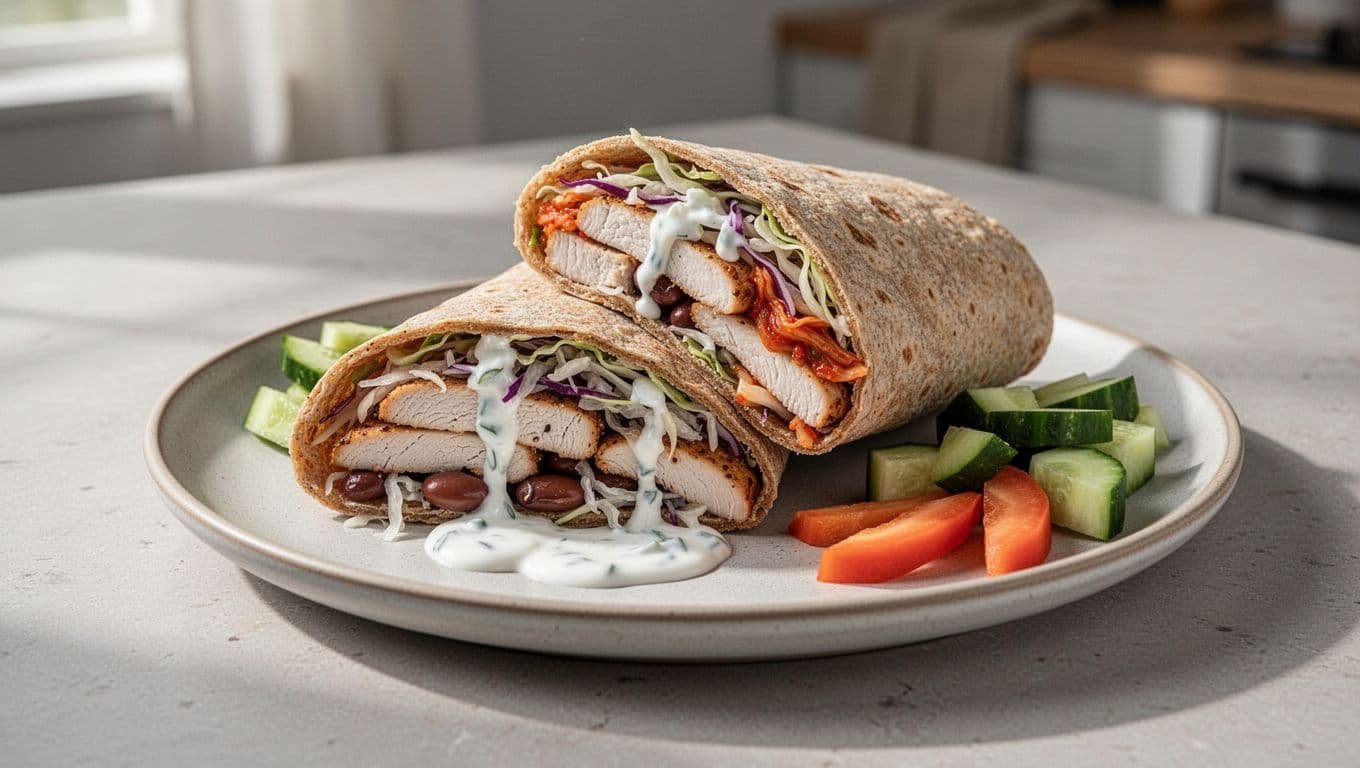
This kind of lunch is easy to prep in batches, which makes weekday mornings easier. Use one protein, one grain or wrap, and one fermented topping, then rotate the vegetables so the meal stays interesting. If you want more quick options, easy work lunch recipes fit this same make-ahead style well.
The best anti-slump lunch is balanced, not heavy. Keep it simple, and your afternoon usually feels a lot easier.
Simple dinner ideas that support digestion before bed
Dinner can feel comforting without being heavy. The best evening meals give you enough protein and fiber to stay satisfied, while still digesting well before sleep. That balance matters, because a lighter dinner can help you rest better and wake up with more steady energy.
These meals also keep things practical. You do not need a perfect menu, just simple plates that are easy on your stomach and easy to repeat. That often means one-pan meals, soups, and fish or plant-based dinners with gentle flavors and whole ingredients.
One-pan salmon with roasted vegetables
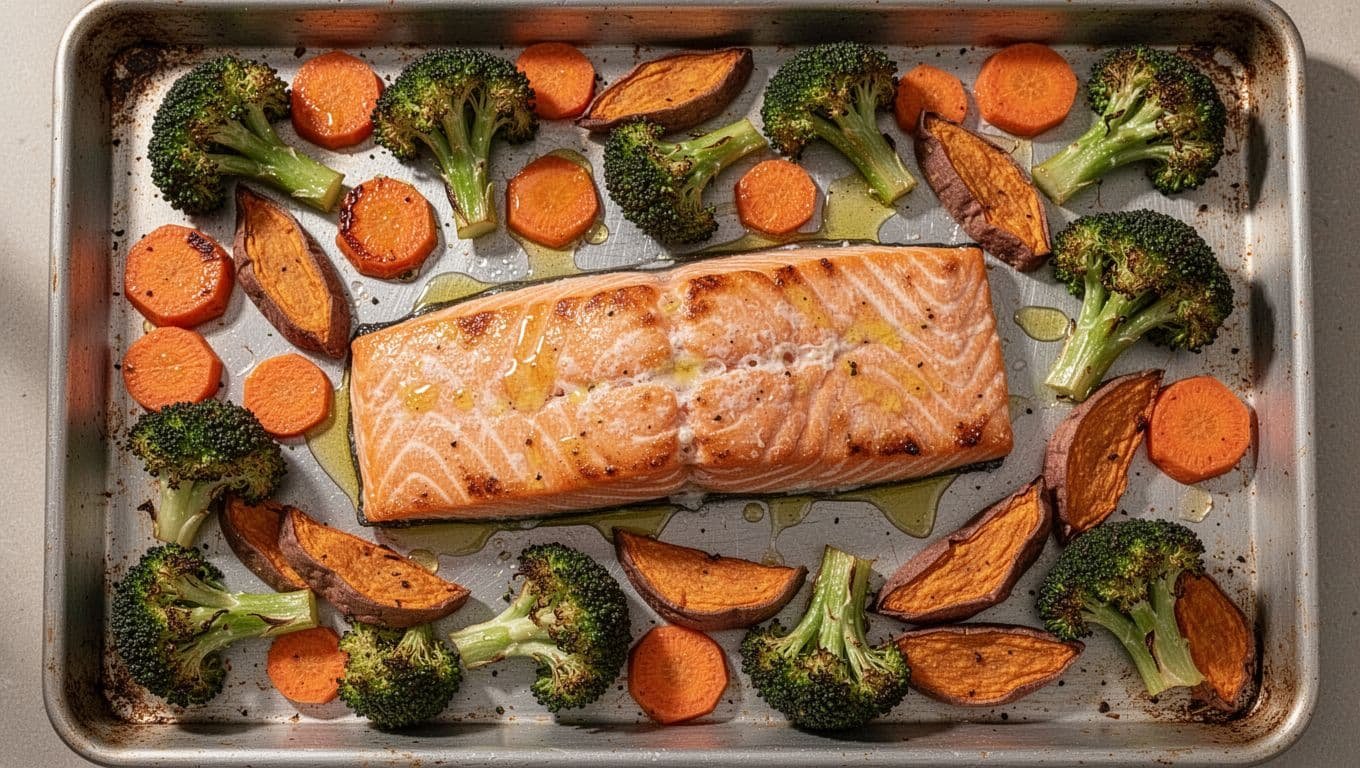
One-pan salmon with roasted broccoli, carrots, sweet potatoes, and olive oil is a smart dinner when you want food that feels complete but not too rich. Salmon adds omega-3 fats, which support overall health, while the vegetables bring fiber and key nutrients that help digestion keep moving.
Sweet potatoes add slow-burning carbs, so the meal can help you feel calm and steady instead of wired or sluggish. Olive oil rounds out the dish with healthy fat, and it also helps the vegetables roast well and taste satisfying. If you want more ideas in this same style, anti-inflammatory dinner recipes can give you more gut-friendly options.
Miso soups and brothy bowls for easy digestion
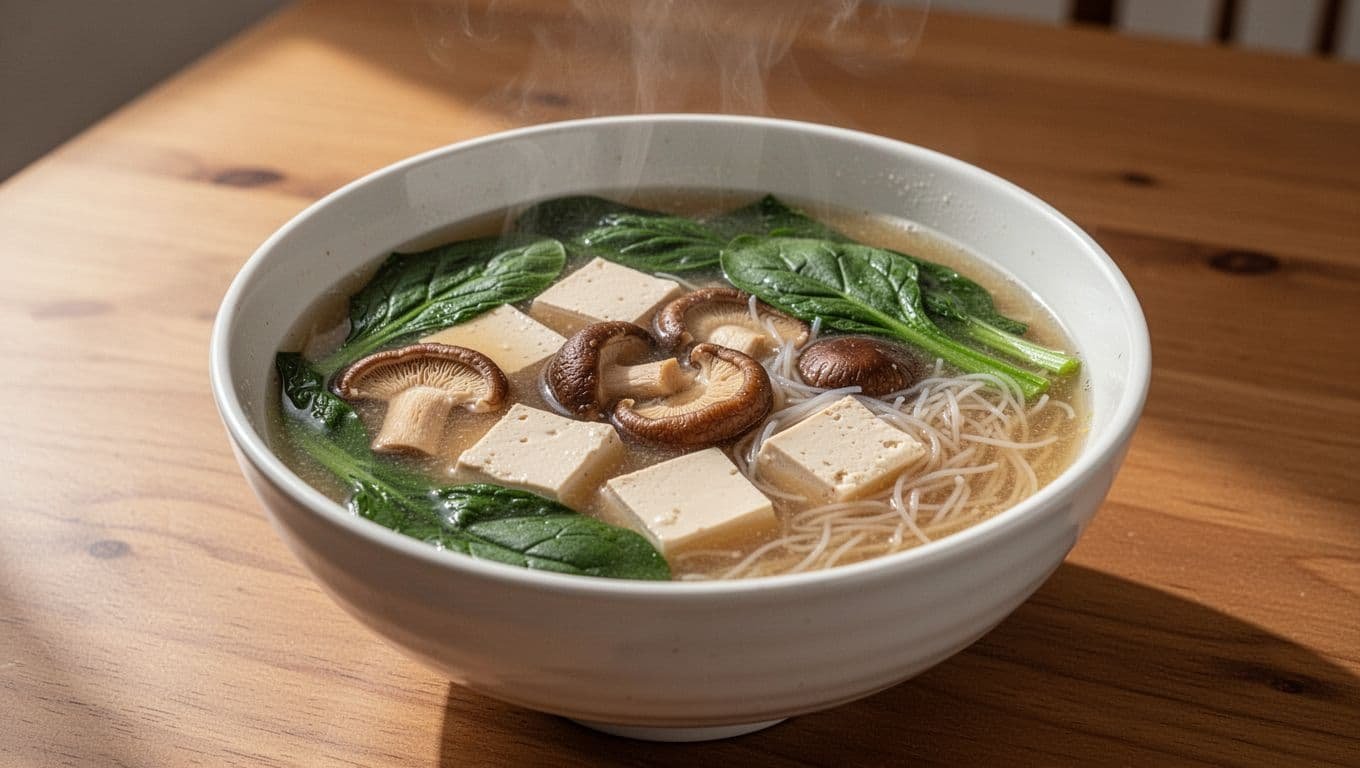
Miso soup is warm, light, and soothing, which makes it a strong choice when you want dinner to sit gently at night. You can build it out with tofu, mushrooms, greens, and a small serving of noodles or rice, so it still feels like a real meal.
Broth-based dinners often feel easier on the stomach because they are less dense than heavy casseroles or creamy sauces. That can matter when bedtime is close. A simple bowl of broth, vegetables, and protein can leave you satisfied without feeling weighed down. For another easy evening habit, simple night routine ideas pair well with a light dinner.
Lentil and vegetable stews for steady fuel
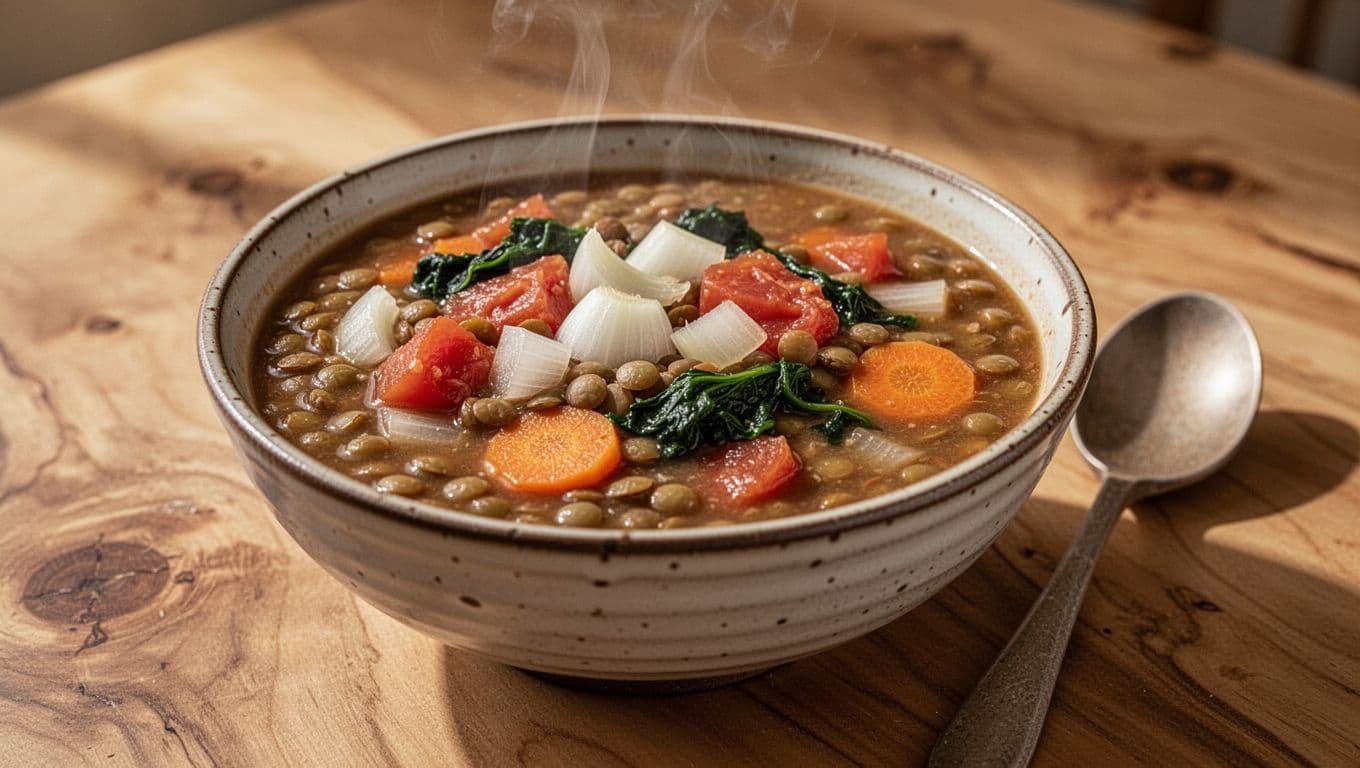
Lentil stew is a solid plant-based dinner because it gives you fiber and plant protein in one bowl. Onions, garlic, tomatoes, carrots, and leafy greens add more flavor, more nutrients, and more support for digestion.
This kind of meal feels filling, but it still stays balanced if you keep the seasoning simple and the portion reasonable. It also reheats well, so leftovers make an easy lunch the next day. If you like dinners that help you feel calmer before bed, balanced dinners for better sleep fit this approach well.
A good bedtime dinner should leave you satisfied, not stuffed. When you keep it light, your body can rest instead of working overtime.
Smart snacks for when your energy drops
When your energy dips between meals, the best fix is usually a snack that slows things down a little. That means fiber, protein, and healthy fat, not a sugar hit that fades fast. Simple, portable snacks can keep you focused without leaving your stomach heavy or your blood sugar all over the place.
Fruit and nuts for quick but steady energy
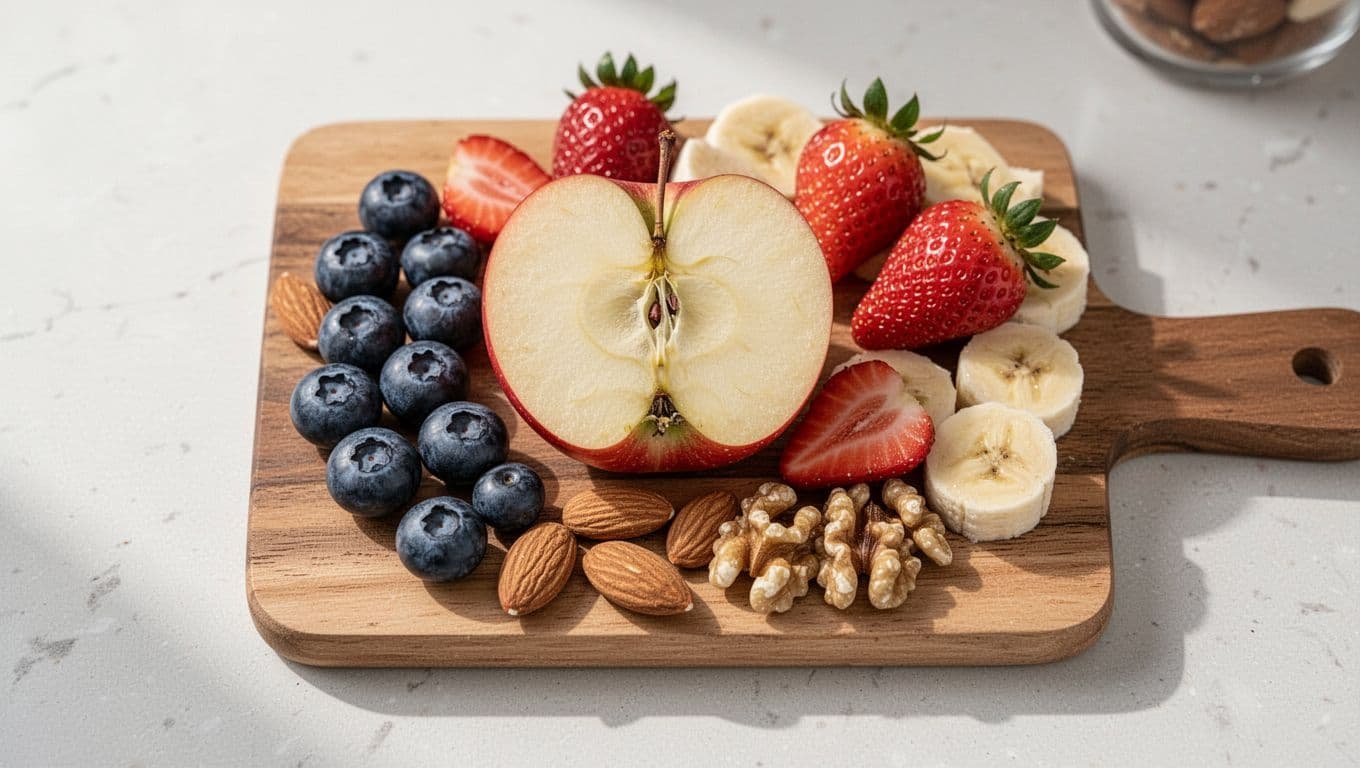
Fruit and nuts are one of the easiest grab-and-go combos for a slump. Apples, berries, and bananas give you quick carbs and fluid, while almonds and walnuts add fat, protein, and a little crunch that helps the snack last longer. Pairing fruit with nuts can also keep blood sugar more stable than fruit alone, which matters when you want energy without a crash.
This mix works especially well when you need something light before a meeting, after a workout, or on the road. Apples and berries bring fiber, bananas add easy-to-digest carbs, and walnuts offer a softer, richer fat profile. If you want a simple snack that feels satisfying, this is hard to beat.
Yogurt, kefir, and simple probiotic snacks
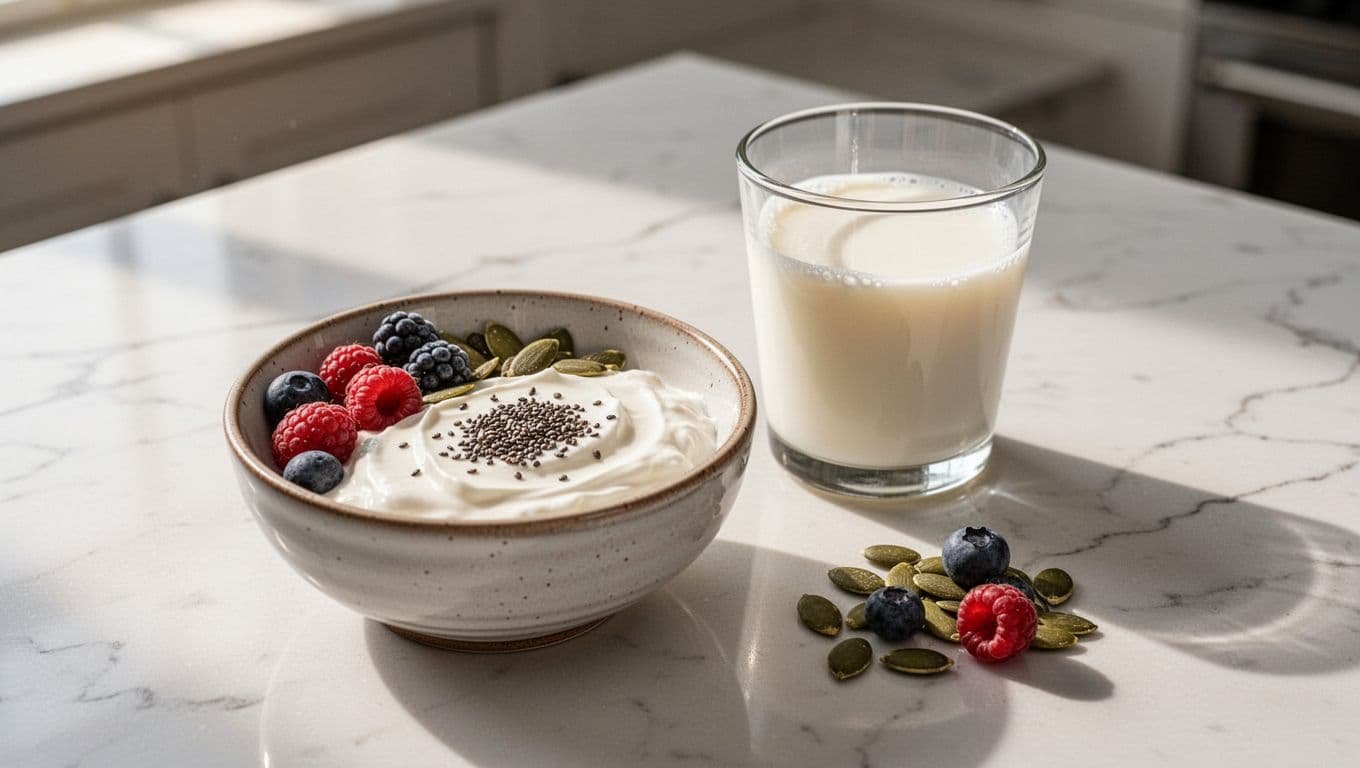
A small bowl of yogurt or a glass of kefir can be a smart choice when your energy drops. Add berries, chia seeds, or pumpkin seeds, and you get a snack that feels cool, creamy, and more filling than a sweet bar. Look for live cultures when you can, since plain yogurt and kefir with active cultures fit a gut-friendly routine better than heavily sweetened versions.
If you need more ideas in this style, gut-friendly snack ideas offer more simple options built around gentle, steady fuel.
Crunchy veggie snacks with hummus or bean dip
Crunchy vegetables are great when you want volume without a sugar spike. Carrots, cucumbers, bell peppers, and snap peas pair well with hummus or mashed chickpeas, and that combination gives you fiber, protein, and a satisfying crunch in every bite.
These snacks are easy to pack ahead, and they hold up well in the fridge. The dip adds staying power, while the vegetables keep things fresh and light. If you often reach for sweets when you feel tired, this is the kind of swap that helps you stay steady without feeling deprived.
How to build better meals without overcomplicating it
Better meals usually come from a few repeatable habits, not a long list of rules. If you want steady energy and easier digestion, keep the focus on balance, simple prep, and small changes you can stick with. That way, eating well feels normal instead of like a full-time job.
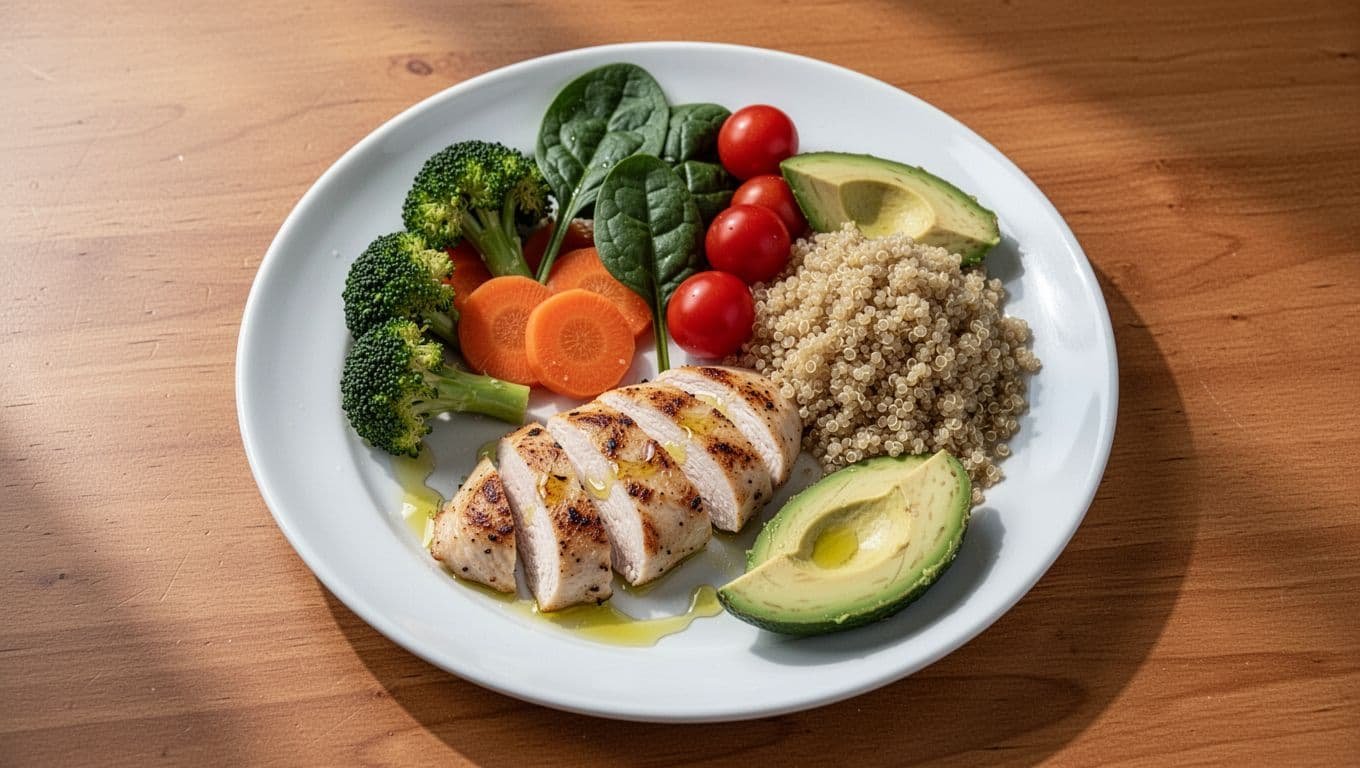
Use the plate method to balance your meals
A simple plate formula makes healthy eating easier to repeat. Fill half your plate with vegetables or fruit, one quarter with protein, one quarter with smart carbs, then add a little healthy fat.
That picture is easy to follow at breakfast, lunch, or dinner. For example, you might build a plate with roasted broccoli and carrots, grilled chicken, quinoa, and avocado. Or you could use berries, yogurt, oats, and nuts for a quick morning meal. The method works because it keeps the meal balanced without making you count every bite. The Healthy Eating Plate guide gives a clear visual if you want a second reference.
Add gut-friendly foods one at a time
Big changes can upset digestion for some people, so start small. Add berries to breakfast, sauerkraut to lunch, or lentils to dinner, then see how your body responds. A slow approach gives your gut time to adjust.
Consistency matters more than perfection. Small daily wins add up faster than an all-or-nothing reset.
If fermented foods are new to you, begin with a few spoonfuls or a small side portion. Stanford Medicine recommends starting with small amounts and building up gradually, which helps reduce bloating and discomfort.
Prep a few staples once and mix them all week
Meal prep gets easier when you only prep the parts that mix well. Keep cooked grains, washed greens, roasted vegetables, boiled eggs, yogurt, beans, and a simple dressing ready to go.
With those basics on hand, lunch and dinner come together fast. You can build bowls, wraps, salads, or snack plates in minutes, which makes healthy meals much easier on busy days. If you want more ideas for quick lunches, healthy work lunch ideas can help you keep the routine simple.
Conclusion
Gut-friendly meal ideas do not need to be fancy, strict, or hard to repeat. The real win is building meals with more fiber, steady protein, healthy fats, and a few probiotic foods, so your digestion has an easier job and your energy stays more even.
Small changes matter here. Add berries to breakfast, choose yogurt or kefir for a snack, or build lunch around beans, greens, and whole grains. Those simple swaps can make meals feel lighter, more filling, and easier to recover from later.
Start with one meal today, and keep it simple. A better gut often begins with one balanced plate.
Save the pin for later

- Healthy Air Fryer Recipes for Beginners - 21/09/2026
- Healthy Snacks for Late Night Cravings - 21/09/2026
- High Protein Meal Prep Ideas for Easy Weekly Meals - 21/09/2026

