Perimenopause can make your week feel unpredictable, with hot flashes, mood swings, sleep trouble, bloating, and changes in weight or energy showing up without warning. Food won’t fix every symptom, but the right choices can support hormones, blood sugar, bones, and mood in a steady, practical way.
That starts with adding more of the foods your body can use well. Think salmon, soy foods, leafy greens, berries, nuts, seeds, and calcium-rich options that fit into normal meals instead of a strict plan. If you want a broader look at foods that balance hormones naturally for women, that’s a helpful place to start too.
This post focuses on perimenopause foods to add to your week, so you can build better meals without obsessing over what to cut. Small shifts can add up fast, especially when they’re easy enough to repeat. The first step is knowing which foods deserve a regular spot on your plate.
Why food matters so much during perimenopause
Food matters more during perimenopause because your body is working with shifting hormone levels, not a steady pattern. That can affect how hungry you feel, how well you sleep, how stable your mood is, and how much energy you have by midafternoon.
The right foods won’t erase every symptom, but they can make the ride smoother. They help steady blood sugar, calm inflammation, support bones, and keep digestion moving. That is why the foods in this guide focus on support, not restriction. A helpful perimenopause diet overview shows the same basic idea, protein, fiber, calcium, and healthy fats matter more now because your body needs more from each meal.
How hormone shifts affect appetite, energy, and mood
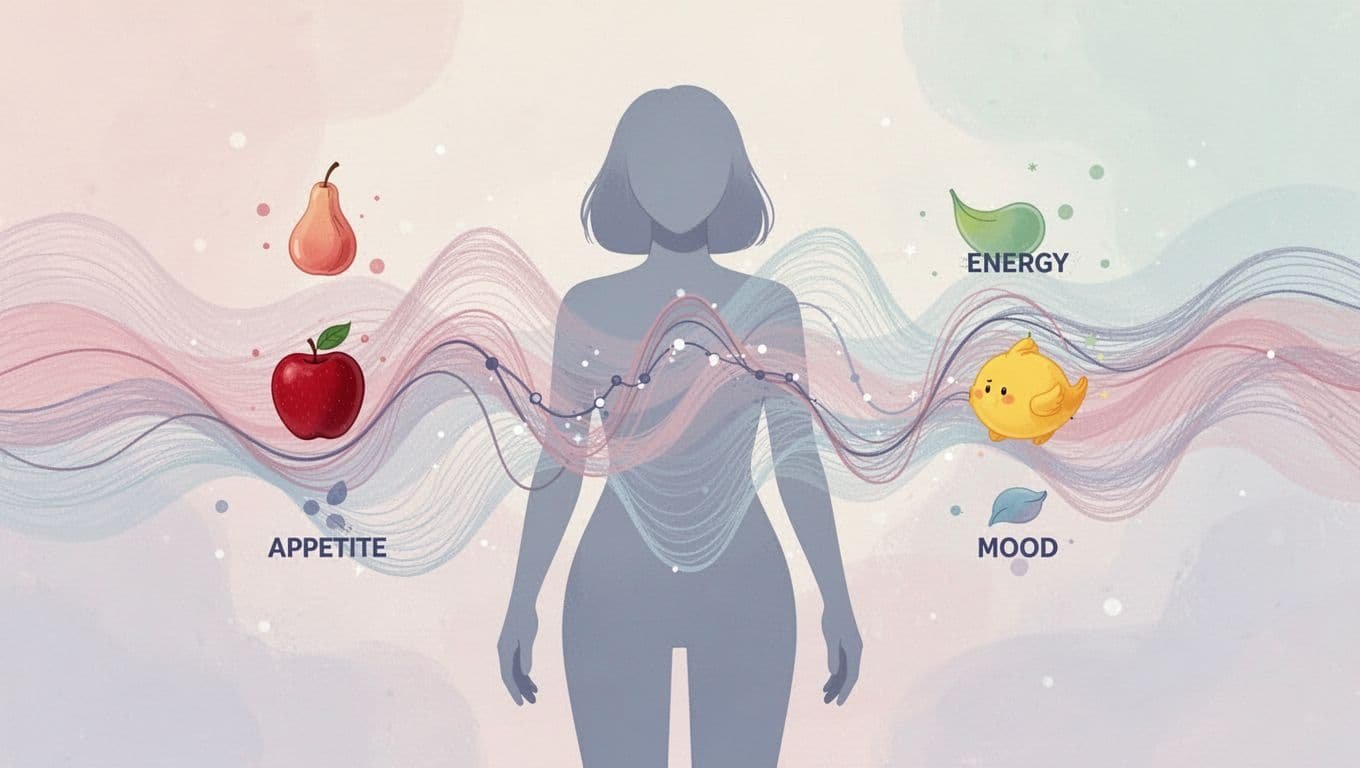
Estrogen and progesterone do more than affect your cycle. They also influence cravings, sleep quality, stress response, and how full you feel after eating. When those hormones rise and fall, your appetite can feel less predictable, and that can lead to snacking, stronger sugar cravings, or feeling hungry soon after a meal.
Sleep also takes a hit for many women. Poor sleep can make you reach for quick carbs the next day, while stress can push cravings even higher. That cycle is common in perimenopause, and it helps explain why your usual eating pattern may suddenly stop working the way it used to. The changes are real, and they are normal.
When hormones are swinging, food choices can feel louder too. A steady meal pattern often helps quiet that noise.
Mood is part of the picture as well. Lower estrogen can affect brain chemicals tied to calm and focus, so food that steadies energy can also help you feel more even. Research summaries on mood changes in perimenopause point out that irritability, low energy, and tearfulness are common during this stage.
The nutrients your body leans on now
Certain nutrients matter more because they help with the problems that show up most often now. Calcium and vitamin D support bones, which matters more as estrogen drops and bone loss risk rises. Magnesium helps with muscle function, relaxation, and sleep, while also supporting a calmer stress response.
Fiber and protein are just as important. Fiber helps digestion stay regular and supports steadier blood sugar, while protein helps you stay full longer and protects muscle mass. That matters when energy dips make it easy to skip balanced meals or grab something that leaves you hungry again an hour later.
Omega-3 fats also deserve a place on your plate. They help with inflammation, which can affect joint comfort, mood, and overall recovery. Phytoestrogens, found in soy and flax foods, may also help some women feel better by gently interacting with estrogen pathways.
If you want the short version, the body leans on these nutrients in different ways:
- Calcium and vitamin D support bone strength and help protect against bone loss.
- Magnesium helps with sleep, relaxation, and muscle function.
- Fiber supports digestion and helps keep blood sugar steady.
- Protein improves fullness and helps preserve muscle.
- Omega-3 fats support brain health and help ease inflammation.
- Phytoestrogens may help with hot flashes and hormone-related shifts for some women.
That is why this post focuses on foods that do more than fill you up. They help cover the places perimenopause tends to stress most, and they make everyday meals work harder for you.
The top perimenopause foods to add to your week
The best perimenopause foods are the ones you can keep buying, cooking, and eating without stress. That means simple staples that help with hot flashes, bone support, steady energy, and mood, while still fitting real life.
Recent nutrition guidance keeps circling back to the same pattern: soy foods, leafy greens, fatty fish, fruit, nuts, seeds, legumes, and whole grains. You do not need a perfect menu. You need a few reliable foods that show up often enough to matter.
Soy foods for hot flash support
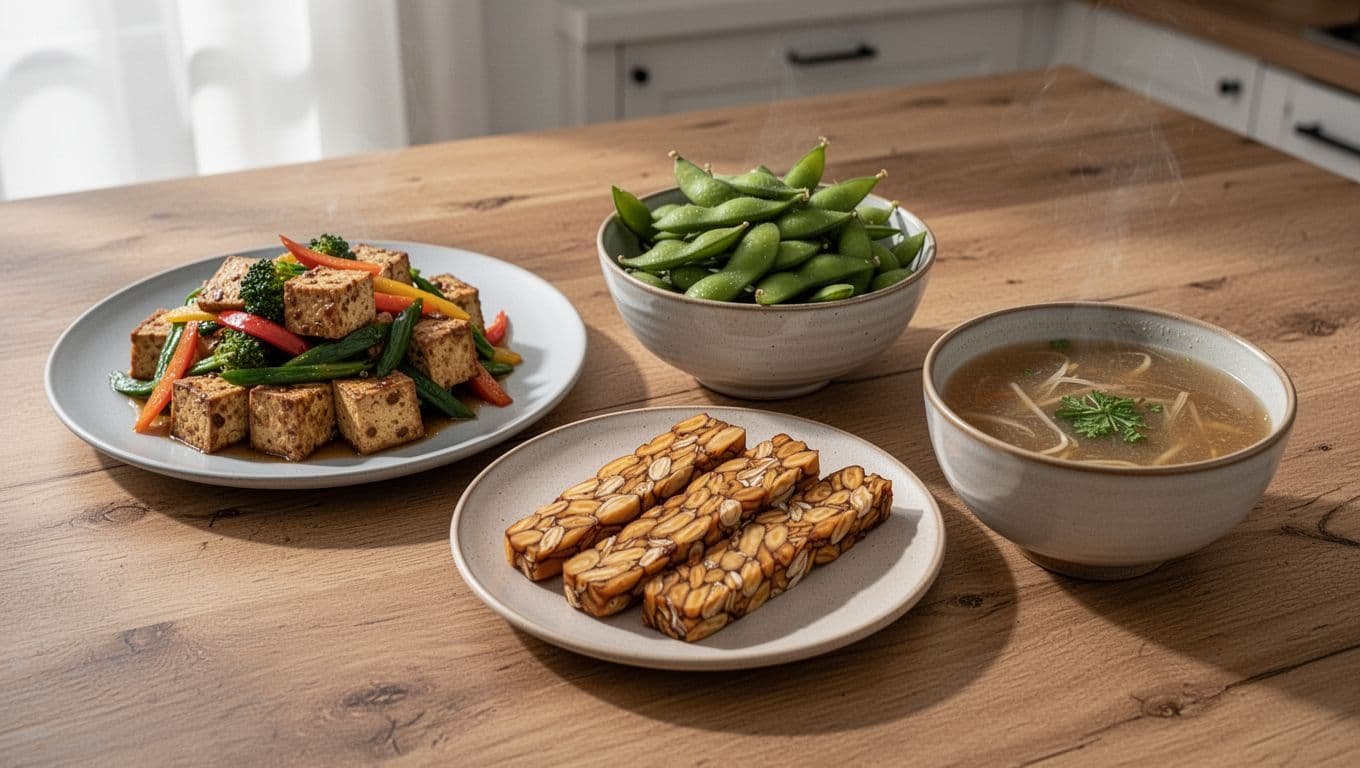
Tofu, edamame, tempeh, soy milk, and miso are some of the easiest foods to work into a perimenopause week. Soy contains plant compounds called isoflavones, and these may help some people with hot flashes. The effect is not the same for everyone, but soy is a practical food choice with a lot of upside.
You can use tofu in stir-fries, edamame in grain bowls, tempeh in sandwiches, soy milk in smoothies, and miso in soups. A warm bowl of miso soup can feel calming on a busy night, while a soy smoothie gives you protein without much effort. For a broader look at menopause diet basics, soy is one of the foods that comes up again and again.
A simple weekly rhythm works well:
- Add tofu or tempeh to one dinner.
- Keep edamame in the freezer for fast sides.
- Use soy milk in coffee or smoothies.
- Stir miso into broth, noodles, or soup.
Soy works best as part of a steady pattern, not as a quick fix.
Leafy greens and cruciferous vegetables for bone and hormone support
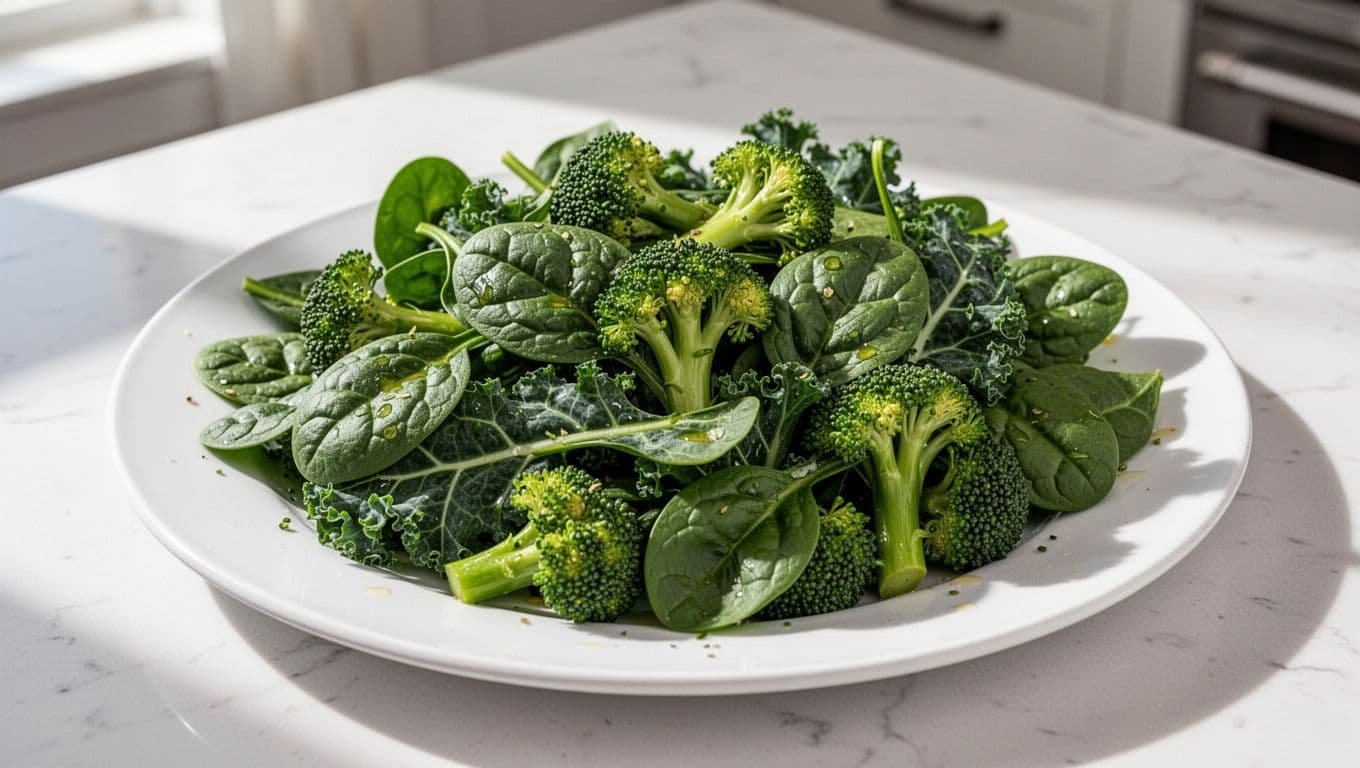
Spinach, kale, broccoli, collards, and similar vegetables bring calcium, magnesium, fiber, and a lot of general nutrition in a small package. That matters in perimenopause because bone health becomes more important as estrogen shifts. These greens also support digestion, which can help if bloating or irregularity has become part of your week.
They are easy to use, too. Add spinach to eggs, toss kale into salads, mix broccoli into pasta, or simmer collards in soup. If a meal already has protein, pairing it with leafy greens gives you a more complete plate. Vitamin D also matters here, so meals with greens and protein foods can fit into the bigger picture of bone support.
If greens feel boring, rotate textures and cooking methods. Raw spinach works in salads, sautéed kale softens into eggs, and roasted broccoli gets crisp and sweet. That small change keeps the habit going.
Fatty fish for brain health and inflammation
Salmon, sardines, mackerel, and trout are strong choices because they deliver omega-3 fats. These fats may help with inflammation, which can affect joint comfort and overall recovery. They also support brain health, and that matters when mood feels more fragile or focus feels harder to hold.
Fatty fish is easy to build into weeknight meals. Sheet pan salmon with vegetables takes little effort. Fish tacos work well for a fast dinner, and sardines or salmon can also be added to salads for lunch. If you want a deeper look at fish and calm meals, omega-3 rich foods for mental clarity fits well with this same idea.
A few simple ways to eat more fish:
- Bake salmon with lemon and herbs.
- Add sardines to toast or salad.
- Use trout in a simple grain bowl.
- Make mackerel part of a quick dinner plate.
For many women, fish is one of the easiest foods to feel the benefit of because it replaces less balanced meals without much cooking time.
Berries, citrus, and other fruit for fiber and vitamin C
Berries, oranges, kiwi, melon, and other colorful fruit bring fiber, antioxidants, and a natural sweet taste that can make meals feel more satisfying. That matters in perimenopause because steady energy often depends on keeping blood sugar from swinging too hard. Fruit can help with that, especially when you pair it with protein or fat.
Fruit also makes it easier to cut back on sweets without feeling deprived. A bowl of berries can satisfy a sweet craving, and orange slices or kiwi can add brightness to a snack plate. For more on how fruit fits with steadier energy, low-sugar berries for steady energy is a helpful angle.
Try fruit in a few different spots during the week:
- Add berries to oatmeal or yogurt at breakfast.
- Pack kiwi, melon, or oranges for a snack.
- Freeze berries for a cool dessert swap.
- Top cottage cheese or Greek yogurt with fruit instead of reaching for cookies.
The goal is simple. Make fruit the easy option, and it often becomes the one you actually want.
Nuts, seeds, legumes, and whole grains for steady energy
Almonds, walnuts, flaxseeds, pumpkin seeds, lentils, chickpeas, oats, and brown rice all earn a place in a perimenopause kitchen. They give you protein, fiber, and healthy fats, which help with fullness, blood sugar control, and digestion. That mix can smooth out the hunger spikes that make some weeks feel messy.
These foods also fit into meals with very little planning. Sprinkle nuts or seeds over yogurt, toss chickpeas into salads, or build a bowl with brown rice, lentils, and vegetables. Oats work well at breakfast, and flaxseed is easy to stir into smoothies or overnight oats. If you like simple, filling meal ideas, high-protein bowls for perimenopause shows how easy bowls can keep meals balanced.
A few good habits make this group work harder:
- Keep walnuts or almonds in a snack container.
- Add pumpkin seeds to soups or salads.
- Stir ground flaxseed into yogurt or oatmeal.
- Use lentils and chickpeas in soups, bowls, and wraps.
These foods are not flashy, but they do steady work. That is exactly what a lot of perimenopause weeks need.
When you build your week around these foods, meals start doing more than filling space on the plate. They support your body in practical ways, and they do it without forcing you into a strict plan.
How to build a week of perimenopause-friendly meals
A good week of perimenopause-friendly meals does not need a strict plan or a perfect grocery list. It just needs a repeatable structure that keeps protein, fiber, color, and healthy fats in the mix most days.
That approach helps because it takes the pressure off meal decisions. When your meals are balanced, you’re less likely to feel ravenous, chase sugar, or crash by midafternoon. It also makes it easier to keep steady habits on busy weeks, which matters more than trying to eat “perfectly.”
A simple plate formula that works most days
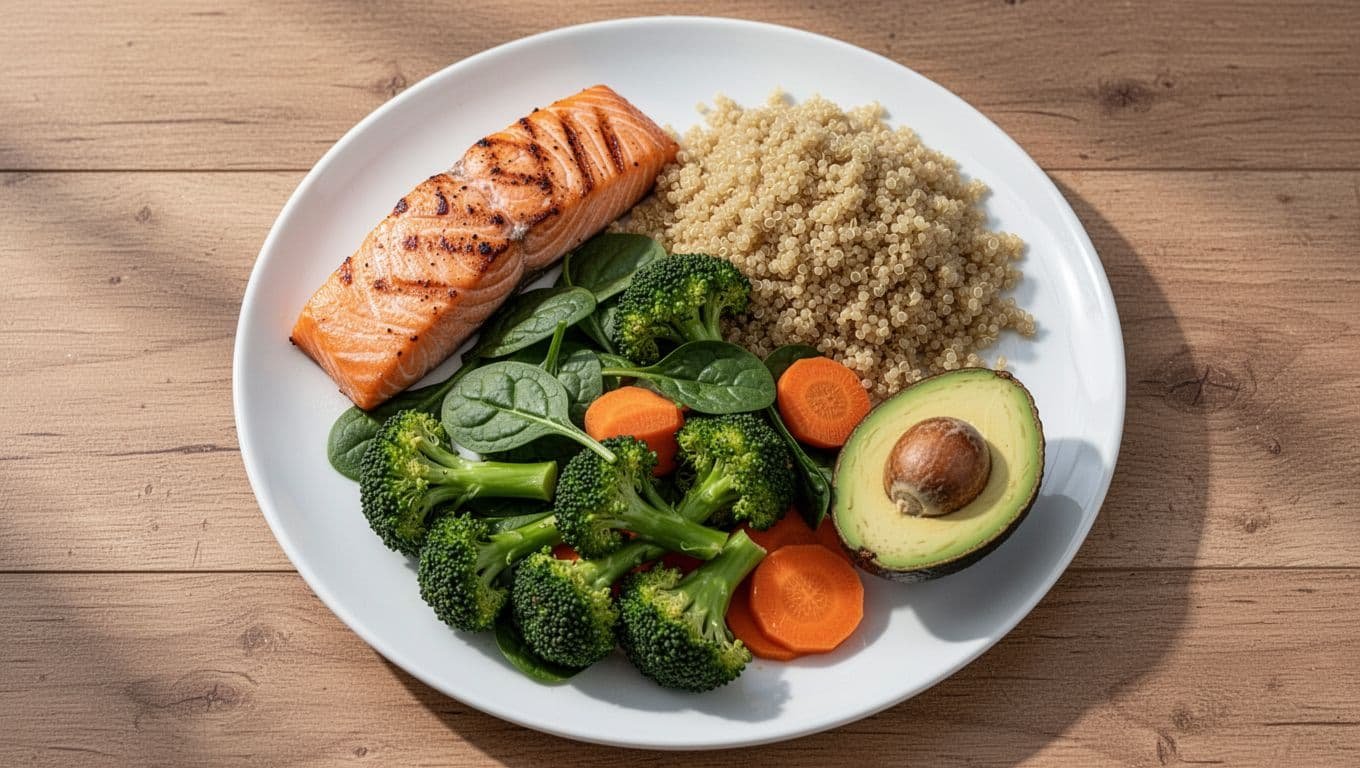
Start with a plate that is easy to remember: protein, colorful produce, fiber-rich carbs, and healthy fats. That can look like salmon, broccoli, quinoa, and avocado, or tofu, roasted peppers, brown rice, and olive oil. The exact foods can change, but the pattern stays the same.
This kind of plate works because each part does a job. Protein helps you feel full, fiber slows digestion, produce adds volume and nutrients, and healthy fats help meals feel satisfying. Together, they can soften cravings and cut down on the energy roller coaster that hits when a meal is too light or too carb-heavy.
A simple way to build it is to ask four questions:
- Did I include a protein?
- Is there at least one colorful vegetable or fruit?
- Did I add a fiber-rich carb like oats, brown rice, quinoa, beans, or sweet potato?
- Is there a healthy fat from avocado, olive oil, nuts, seeds, or fatty fish?
You do not need every meal to look identical. You just want enough balance across the week so your body gets steady fuel. That is the real win, because consistency does more for energy and cravings than a short burst of food rules ever will.
Easy meal and snack ideas for busy weeks
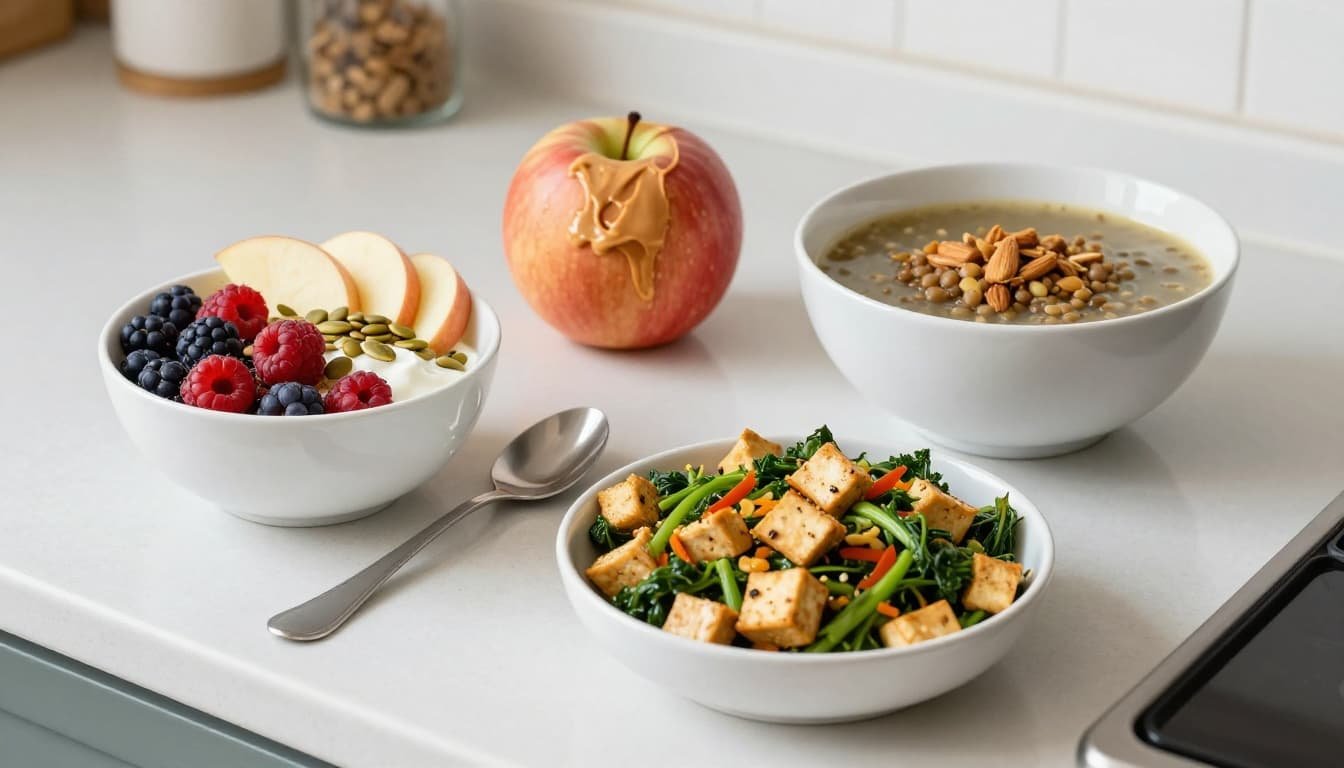
When life gets busy, keep a short list of meals you can repeat without thinking too hard. That might mean yogurt with berries and seeds for breakfast, salmon with greens for dinner, or an apple with nut butter between meetings. A simple 7-day perimenopause meal plan can help with ideas, but you do not need to follow one exactly.
Try building your week around a few easy repeats:
- Breakfasts: Greek yogurt with berries and chia, oats with flax and walnuts, eggs with spinach and whole-grain toast.
- Lunches: Lentil soup with whole-grain bread, a salad with salmon and avocado, a chickpea bowl with brown rice.
- Dinners: Tofu stir-fry, baked fish with broccoli, chicken or tempeh with quinoa and greens.
- Snacks: Apple with nut butter, nuts and fruit, cottage cheese with berries, hummus with carrots.
These meals work because they use the same building blocks in different ways. You save time, reduce decision fatigue, and still get enough protein and fiber to stay steady. If you want even more meal inspiration, anti-inflammatory meals that support hormone health fit this same style of eating.
Smart swaps that do not feel like a diet
Small swaps are easier to keep than big cutbacks. If you usually reach for a sugary snack, pair fruit with nuts or yogurt instead. If white rice or white bread shows up often, switch some of those meals to oats, brown rice, quinoa, or whole grain bread.
You can also change sauces and toppings without making dinner feel restricted. A creamy dressing made with Greek yogurt, lemon, and herbs can replace heavier sauces. Olive oil, tahini, salsa, and avocado all add flavor while keeping the meal satisfying.
A few practical swaps make a real difference over the week:
- Swap candy or pastries for berries, pears, or an apple with nut butter.
- Swap refined grains for oats, brown rice, quinoa, or whole grain toast.
- Swap creamy sauces for yogurt-based dressings or hummus.
- Swap chips at snack time for nuts, seeds, or roasted chickpeas.
The goal is not to remove every treat or food you enjoy. It is to add more foods that help you feel stable, then let those foods crowd out the meals that leave you drained. That way, your week feels more balanced without feeling like a diet.
Foods and habits that can make symptoms worse
Some foods can make perimenopause symptoms feel louder, especially when your body is already juggling hot flashes, sleep changes, and mood shifts. The goal here is not to create a long list of forbidden foods. It is to notice the few habits that may be making your week harder than it needs to be.
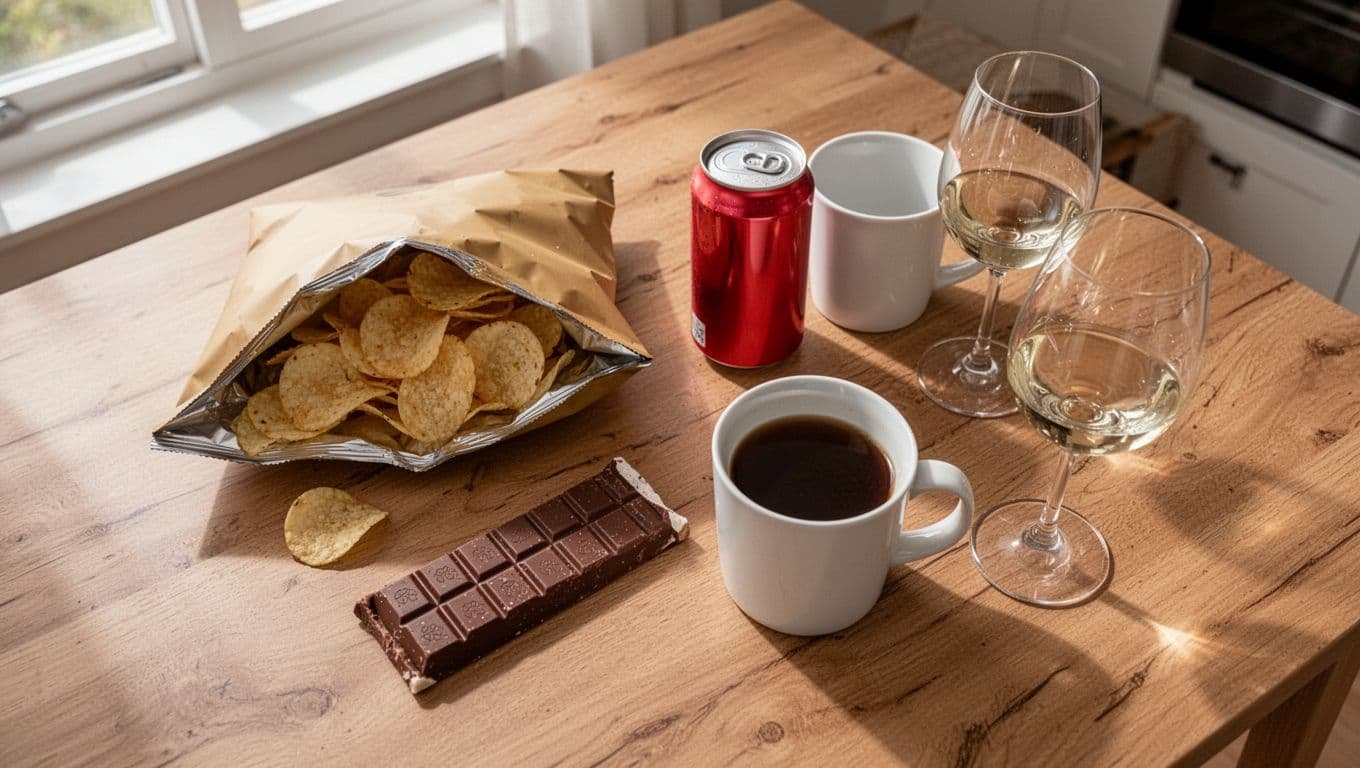
Many women find that the biggest triggers are highly processed foods, too much sugar, alcohol, and too much caffeine. Still, triggers are personal. What sets off one person may not bother someone else at all, so a gentle check-in usually works better than strict rules.
Why processed snacks and sugary foods can backfire
Processed snacks and sugary foods can give you a quick lift, then leave you flat. That fast rise and fall in blood sugar can lead to energy crashes, stronger cravings, and that shaky, “I need something now” feeling an hour later.
When you reach for chips, candy, pastries, or sweet drinks often, your meals may start feeling less steady too. That can show up as irritability, low focus, or a bigger urge to snack again soon after eating. It’s one reason balanced meals matter so much, especially if you want healthy breakfasts that prevent crashes.
The body also tends to work harder with highly processed foods because they usually bring more salt, sugar, and refined flour, but less fiber and protein. That mix can leave you hungry again before you’re ready. If your goal is to feel better through the day, fewer blood sugar swings can make a real difference.
Menopause nutrition guidance also points out that processed foods and sugars can make symptoms harder to manage. A simple swap, like fruit with yogurt or nuts instead of a pastry, often feels better without making meals feel strict.
How to notice your own triggers without overthinking it
The easiest way to spot triggers is to watch for patterns, not perfection. Pay attention to how you sleep, how your mood feels, how your digestion behaves, and whether hot flashes seem worse after certain foods or drinks.
A simple check-in is often enough. Jot down what you ate, how you felt later, and whether anything stood out the next morning. You do not need a strict food diary unless you want one.
A few questions can help you notice patterns:
- Did I sleep worse after coffee, wine, or a heavy late meal?
- Did my mood feel more uneven after sugary snacks or skipped meals?
- Did bloating show up more after fried foods or lots of processed food?
- Did hot flashes feel stronger after alcohol or a second cup of caffeine?
Your triggers may be different from someone else’s. That is normal, and it does not mean you are doing anything wrong.
If you notice a pattern, try a small change for a week, then see what happens. Maybe you cut back on afternoon coffee, or skip alcohol on nights before an early morning. Small tests are easier to trust than sweeping food rules.
Alcohol and caffeine deserve a closer look
Alcohol can make sleep lighter and hot flashes feel more intense. Even one drink can leave some women waking more often at night, and poor sleep can spill into the next day as cravings or low patience. The same is true for caffeine when you’re sensitive to it, especially if it pushes anxiety, jitteriness, or a racing heart.
These effects are not the same for everyone, which is why a personal check matters. Some women do fine with one morning coffee, while others notice that even a small amount affects sleep or hot flashes. If you want a practical starting point, try cutting back for a few days and watch what changes.
A lot of women also find that caffeine on an empty stomach feels harsher than caffeine with food. If that sounds familiar, pairing coffee with breakfast can help. You can also try half-caff, decaf, or herbal tea on days when your body feels more sensitive.
For a broader look at how food choices affect stress and sleep, cortisol-reducing foods can help balance out the parts of the day that feel shaky. Small changes around drinks often improve the whole rhythm of the week.
Keep the focus on patterns, not restriction
The goal is to notice what makes you feel worse, then make the next meal or drink a little easier on your body. If one food leaves you tired, bloated, or hot and restless, that matters. If it does nothing, you can leave it alone.
That simple, calm approach gives you more information without turning food into a source of stress. Over time, you’ll see which habits help you feel steadier, and that makes it easier to build a week that works with your body instead of against it.

Conclusion
Perimenopause is a transition, and the best food choices are the ones you can keep repeating through a normal week. A steady mix of soy, leafy greens, fatty fish, fruit, nuts, seeds, legumes, and whole grains gives your body the support it needs without adding stress.
That kind of eating helps with energy, mood, blood sugar, and bone health in a practical way. Consistency matters more than perfection, and small meals built well can make this stage feel easier to manage.
Save the pin for later

- Healthy Air Fryer Recipes for Beginners - 21/09/2026
- Healthy Snacks for Late Night Cravings - 21/09/2026
- High Protein Meal Prep Ideas for Easy Weekly Meals - 21/09/2026

