On a busy school morning, you’re tying shoelaces, searching for a missing homework folder, and trying to pack a lunch your child won’t bring home untouched. Finding healthy school lunch ideas that fit a packed schedule can feel like one more daily challenge.
The good news is that a nutritious lunch doesn’t need to be fancy, expensive, or time-consuming. Start with a whole-grain food, add protein, fruit, vegetables, and water, then make the meal more inviting with familiar flavors, bite-sized portions, or a fun presentation. A wrap with hummus and chicken, sliced cucumbers, berries, and water can be just as appealing as a complicated recipe.
These ideas can be adjusted for your child’s age, allergies, school rules, and picky eating habits, so you can build lunches that work in real life. Let’s start with simple combinations that balance nutrition, convenience, and foods your child already enjoys.
Key Takeaways
- Build healthy school lunch ideas around whole grains, protein, fruits or vegetables, and water or milk.
- Keep familiar foods appealing with wraps, bite-sized produce, colorful combinations, and dips such as hummus.
- Let your child choose between two nutritious options, which gives them ownership without turning lunch into a negotiation.
- Prepare ingredients ahead, follow school allergy rules, and pack perishable foods with an ice pack.
- Rotate simple combinations, including easy nutritious lunch recipes, so healthy meals stay interesting.
Healthy School Lunch Ideas Kids Will Be Excited to Eat
The best healthy school lunch ideas combine familiar flavors with small touches of variety. Use whole grains, protein, fruit, vegetables, and water or milk, then keep the textures and portions comfortable for your child.
Simple Sandwiches, Wraps, and Roll-Ups
Whole-grain bread and tortillas make a reliable base for portable lunches. Try turkey with cheese and spinach, hummus with cucumber and shredded carrots, or chicken with lettuce and thin bell pepper strips. Egg salad works well with whole-grain crackers or bread, while peanut butter with banana is a quick option when your school allows peanuts.
Presentation can change how a familiar lunch feels. Cut sandwiches into triangles, small squares, or fun shapes with a cookie cutter. You can also roll a wrap tightly, slice it into pinwheels, and secure the pieces with a toothpick made for lunchboxes.
Soggy bread can ruin an otherwise appealing meal. Spread hummus, cream cheese, or sliced cheese edge to edge before adding vegetables. For juicy ingredients, such as tomatoes or salsa, pack them separately and let your child add them at lunchtime. A lettuce leaf between the bread and wetter fillings can also help protect the texture.
For more ideas that combine whole grains, vegetables, and protein, browse these healthy children’s lunch ideas.
Bento Box Lunches With Protein, Produce, and Crunch
A bento box turns lunch into a collection of small choices instead of one large meal. Fill separate compartments with cheese cubes, a hard-boiled egg, roasted chickpeas, whole-grain crackers, apple slices, berries, grapes, cucumbers, carrots, and bell peppers.
Pair a hard-boiled egg with crackers and berries, or serve cheese cubes with cucumber rounds and apple slices. Roasted chickpeas add a crispy, plant-based protein, while hummus gives carrots and bell peppers a familiar dip. Separate compartments can make unfamiliar foods feel less intimidating because each item stays visible and distinct.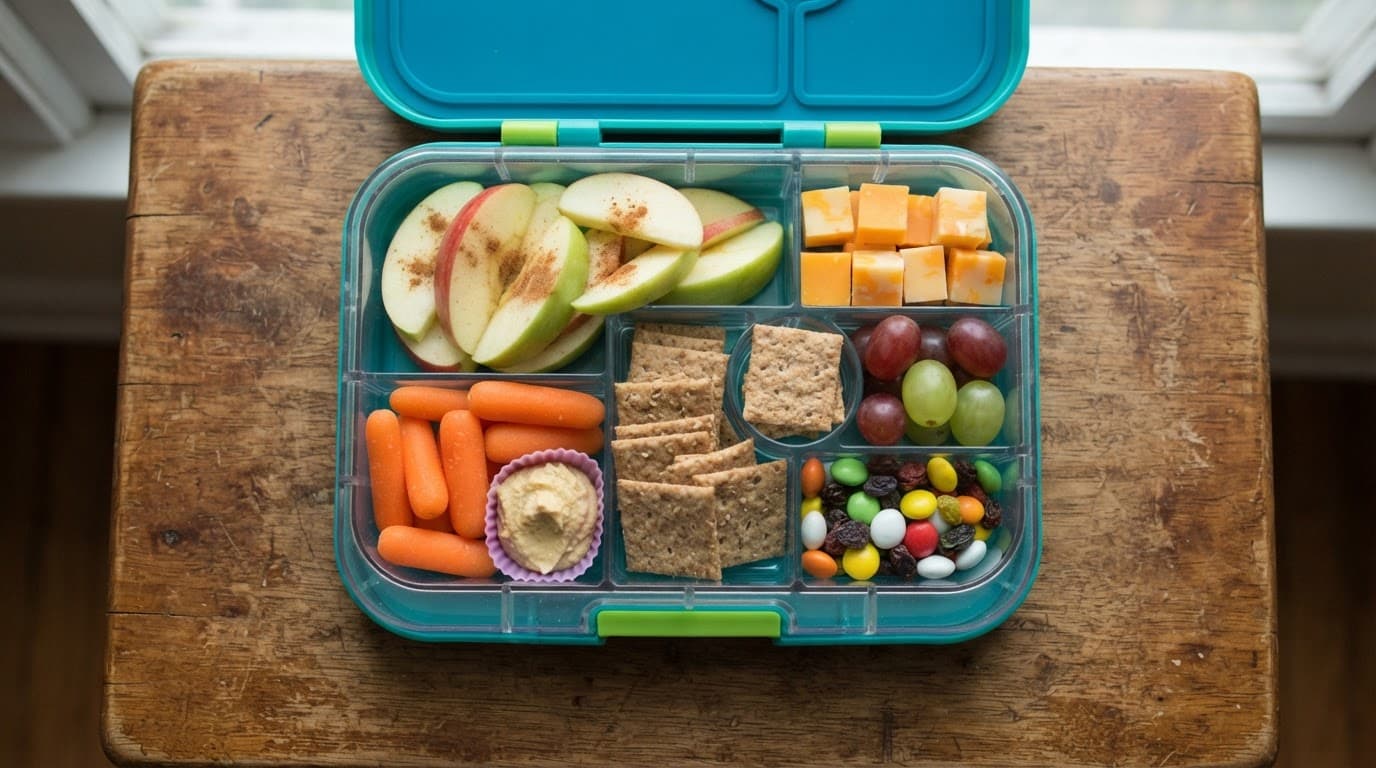
Cut round foods safely for younger children. Halve grapes and cherry tomatoes lengthwise, and adjust other foods to suit your child’s age and chewing skills. Also check school allergy policies before packing nuts, peanut butter, or products made in facilities that process nuts.
Fresh Salads, Pasta Bowls, and Leftover Makeovers
Cold meals can feel fresh and filling when you combine a hearty base with colorful produce. Try whole-wheat pasta salad with cucumber, bell pepper, beans, and a light dressing. Chicken or tuna salad with whole-grain crackers is another easy choice, especially when your child enjoys dip-style foods.
Quinoa with corn, edamame, and shredded carrots creates a colorful grain bowl. Rice with edamame, cucumber, and a boiled egg offers familiar flavors without reheating. For a vegetarian lunch, use beans, lentils, eggs, yogurt, tofu, or cheese to add filling protein.
Leftovers can take on a new shape the next day. Spoon roasted chicken and vegetables into a wrap, or turn leftover rice and beans into a grain bowl. Pack dressing, salsa, yogurt sauce, and other wet toppings in a small container so the food stays crisp. These healthy pasta salad recipes can also provide make-ahead inspiration for busy school mornings.
How to Build a Balanced Lunchbox Without Overthinking It
A balanced lunchbox needs a simple rhythm, not perfect nutrition at every meal. Use a repeatable formula, then adjust portions and ingredients around your child’s appetite, age, allergies, and school schedule. USDA’s MyPlate guidance groups lunch around fruits, vegetables, grains, protein, and dairy or fortified alternatives, which gives families a practical starting point.
Use the Five-Part Lunchbox Formula
Build most lunches with five parts:
- One whole-grain food: Choose whole-wheat bread, a tortilla, brown rice, oatmeal bites, or whole-grain crackers.
- One protein-rich food: Try chicken, turkey, eggs, beans, hummus, tofu, yogurt, cheese, or sunflower seed butter.
- One fruit: Pack berries, an apple, orange segments, melon, or a banana.
- One vegetable: Offer cucumbers, carrots, snap peas, bell peppers, broccoli, or cherry tomatoes cut safely for your child’s age.
- Water or an unsweetened drink: Water works well for everyday hydration. Milk or an unsweetened fortified alternative can also fit.
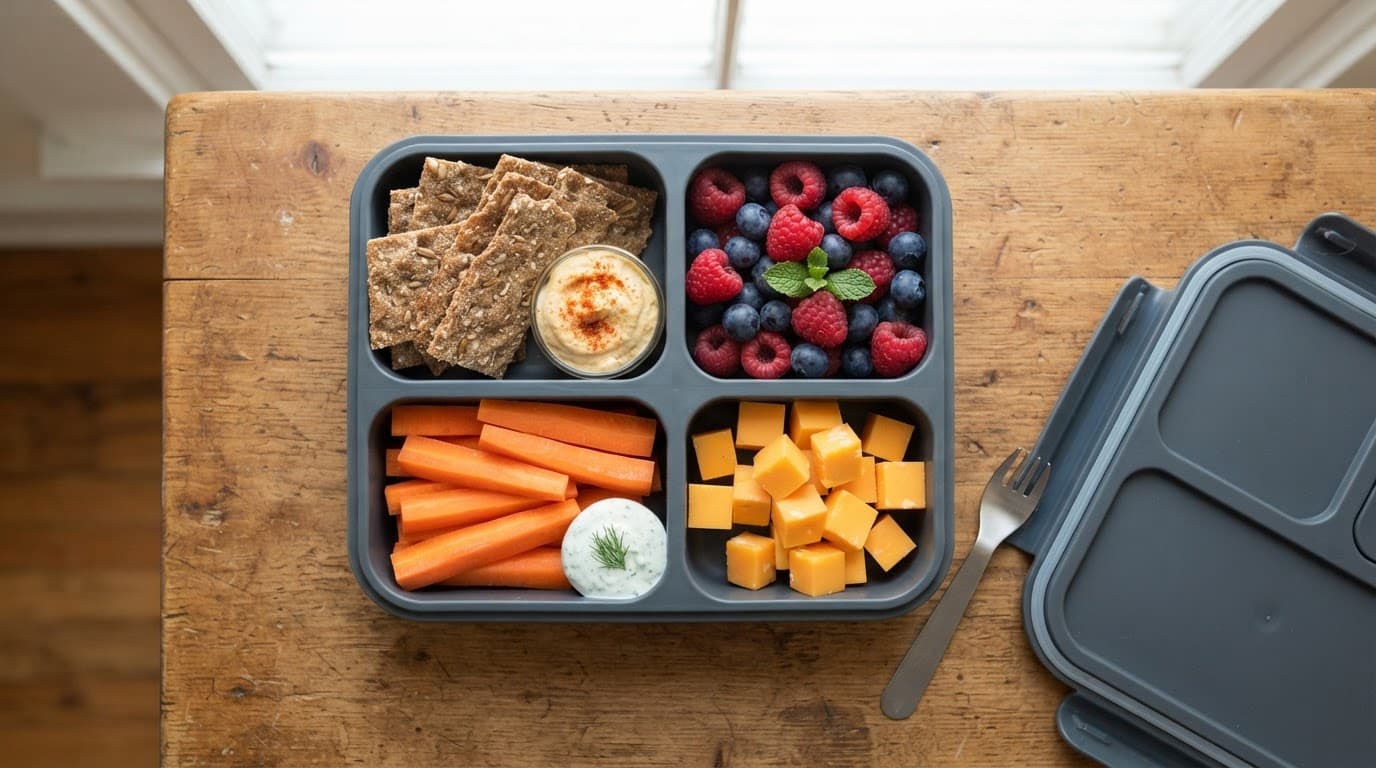
This formula is a guide, not a test. A child may eat only two or three parts on a difficult day, and that can still fit into a balanced week. For more guidance, review the USDA’s MyPlate school lunch guide.
Choose Better Drinks, Snacks, and Packaged Foods
Make water the everyday drink. Sugary drinks can add a lot of sweetness without the fiber or fullness found in whole fruit, while frequent sweet snacks can crowd out more nourishing foods. Plain yogurt, lightly sweetened yogurt, fruit, air-popped popcorn, whole-grain crackers, cheese, and homemade trail mix are useful choices when school rules allow them.
Packaged foods can still belong in healthy school lunch ideas. Compare labels for added sugar, sodium, fiber, and protein, then pair convenience foods with fresh produce. For example, serve a packaged cheese-and-cracker kit with grapes and cucumber slices, or add berries and carrots beside a frozen whole-grain entrée.
Match Portions and Textures to Your Child
Younger children often need smaller portions and bite-size pieces. Older children with larger appetites or active schedules may need a fuller sandwich, extra fruit, or more protein. Pack foods your child can open and eat independently, because a difficult container can turn a good lunch into an untouched one.
Texture matters too. Keep foods separate, offer a familiar dip, and change only one item at a time. A sensory-friendly lunch might include crunchy crackers, soft cheese, cold berries, and cucumber slices with hummus. Let your child explore without pressure to finish everything. The lunchbox should offer food, not feel like a test.
Quick School Lunch Prep for Busy Families
Healthy school lunch ideas become much easier when you stop making every lunch from scratch. A short weekend prep session, followed by a five-minute evening routine, can turn a crowded morning into a simple grab-and-go process.
Prep Ingredients Once and Mix Them All Week
Choose a convenient prep day, such as Sunday, and prepare ingredients while you already have the kitchen in motion. Wash produce, slice sturdy vegetables, boil eggs, cook rice or quinoa, and portion hummus into small containers. You can also cook chicken, rinse beans, or shred leftover meat for quick lunches.
Keep each ingredient separate so you can change the combination without creating food waste. Chicken, cucumbers, carrots, and hummus might become a wrap on Monday, a snack box with crackers on Tuesday, a salad topping on Wednesday, or a grain bowl later in the week. Beans can fill a tortilla, mix into pasta salad, or pair with rice and cheese.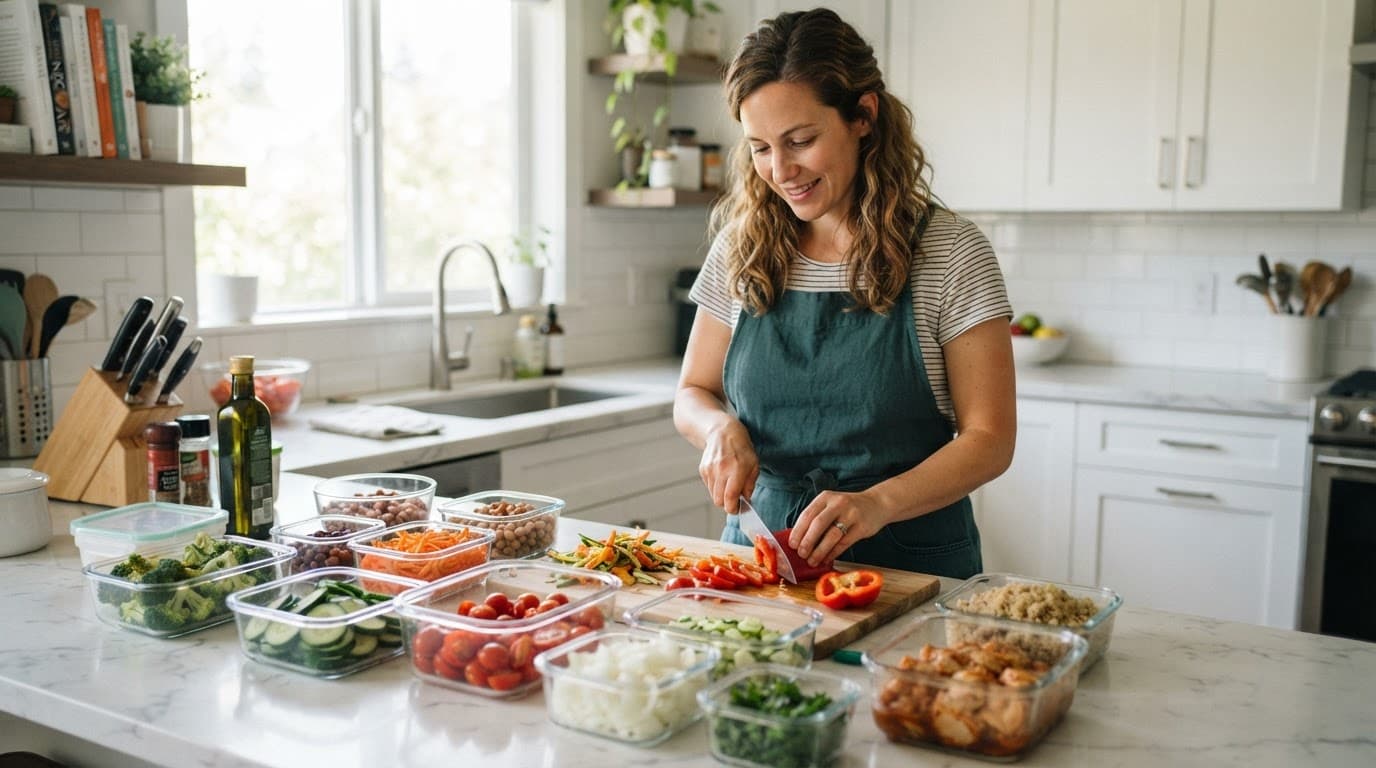
Clear containers make the refrigerator feel like a small lunch station. Store ready-to-eat ingredients at eye level, and use containers with secure lids to protect textures and flavors. For more make-ahead inspiration, browse these quick lunch meal ideas, then adjust the ingredients for your child’s age and school rules.
Create a Five-Minute Lunch Packing Routine
Pack lunches at night, when the next day’s schedule is easier to check. Look at sports, field trips, or shorter school days, then choose one item from each main food group. Add a whole grain, protein, fruit, vegetable, and water or milk. Fill the water bottle, pack utensils and a napkin, and place the finished lunch in the refrigerator.
Give your child two parent-approved choices, such as a chicken wrap or a hummus snack box. Children can help select fruit, add crackers, close containers, or place the napkin inside the bag. These small jobs build independence without handing them the entire menu.
Keep useful supplies together in one drawer or cabinet:
- Leakproof containers in a few sizes make portions easier to pack.
- Reusable silicone cups separate small snacks inside a larger box.
- An insulated lunch bag helps protect temperature-sensitive foods.
- A reusable ice pack keeps cold items chilled until lunchtime.
Keep Packed Food Fresh and Safe
Meat, eggs, dairy, cooked grains, hummus, and cut produce may need cold storage, especially when a lunch sits in a backpack for several hours. Wash your hands before preparing food, clean lunch containers daily, and place an ice pack beside cold items inside an insulated bag.
Hot foods belong in a suitable food thermos that can maintain heat. Preheat the thermos according to its instructions, then add properly heated food. Follow your school’s allergy rules and current public health guidance, since classroom policies can differ.
After school, check the lunch bag right away. Refrigerate or discard leftovers as appropriate, and don’t leave used food or containers sitting overnight. A clean, dry lunch bag is ready for the next morning.
Make Healthy Lunches Work for Picky Eaters, Allergies, and Budgets
Healthy school lunch ideas need to fit your child’s preferences, your school’s rules, and your grocery budget. A flexible lunch can still include whole grains, protein, fruit, vegetables, and water without requiring specialty products or a separate recipe every day.
Help Picky Eaters Try New Foods Gradually
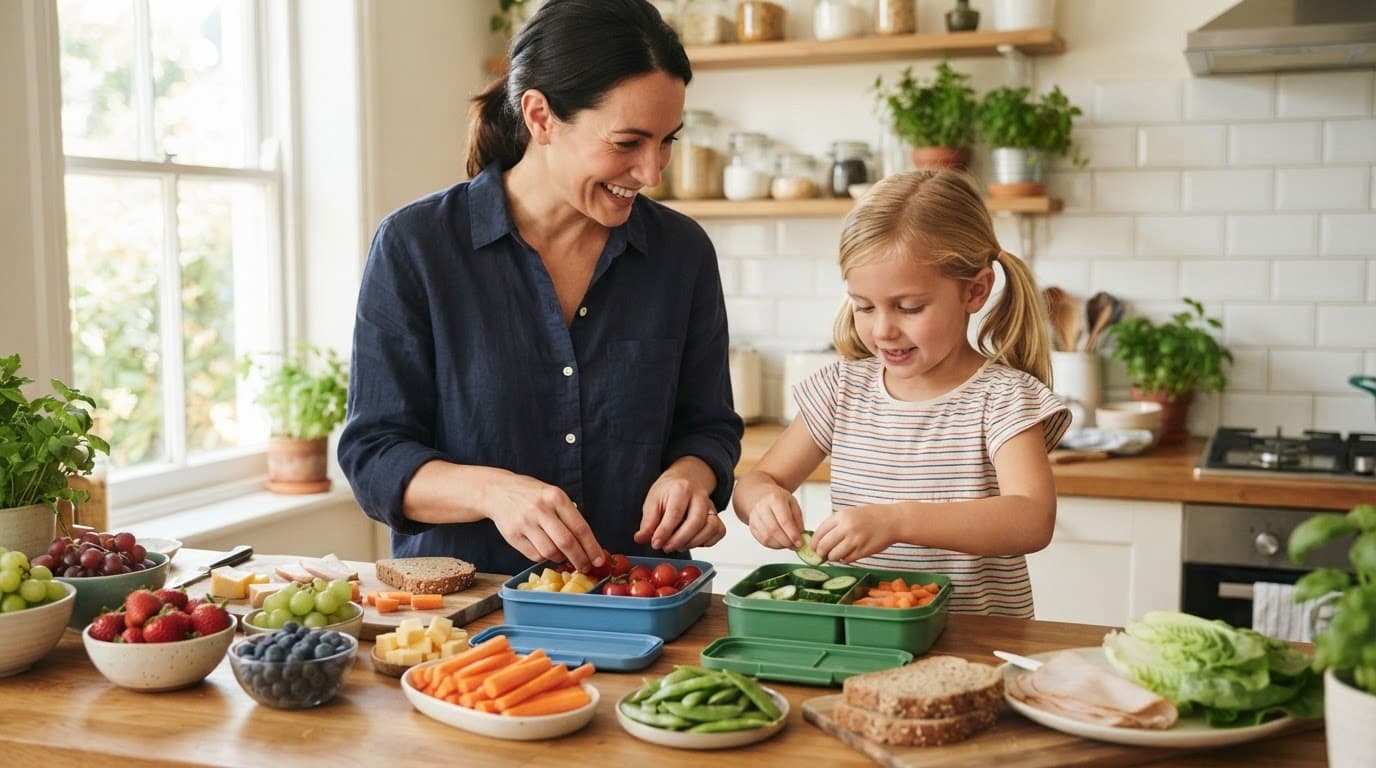
Start with one familiar food your child usually eats, then add a small sample of something new. A few berries beside accepted apple slices can feel manageable. The same approach works with crackers and whole-grain bread, or hummus and cheese.
Offer choices within the same food group instead of asking your child to accept a completely unfamiliar meal. Your child might choose apples or berries, crackers or bread, and cheese or hummus. That small amount of control can make lunch feel less like a demand.
Acceptance often takes repeated exposure. A child may need to see, touch, smell, or taste a food several times before deciding to eat it. Keep portions small, and remove the pressure to finish. Bribes, threats, and demands to clean the lunchbox can make new foods feel more stressful.
Presentation can help. Serve vegetables with hummus, yogurt dip, or another approved sauce. Cut sandwiches into stars or small squares, arrange fruit on a skewer made for lunchboxes, or pack a deconstructed lunch with bread, cheese, and turkey in separate sections.
Plan Around Allergies and Dietary Needs
Follow the school’s allergy policy before packing peanut butter, tree nuts, or products made in facilities that process nuts. When needed, speak with the teacher, nurse, cafeteria staff, or school administrator so everyone understands the child’s restrictions. Families managing a medically restricted diet should also get guidance from a qualified health professional.
Nut-free protein choices include sunflower seed butter, beans, lentils, eggs, yogurt, cheese, chicken, and tofu. Read ingredient lists every time, since recipes and manufacturing practices can change. Look for allergen statements and warnings about shared equipment or possible cross-contact.
Vegetarian lunches can use hummus, lentils, beans, eggs, tofu, or cheese. For dairy-free meals, choose fortified plant-based yogurt and calcium-fortified milk alternatives, if they suit your child’s needs. The USDA’s school meal nutrition standards offer a useful framework for balancing food groups, but individual medical needs require personalized advice.
Pack Nutritious Lunches on a Realistic Grocery Budget
A healthy lunch does not need a specialty snack pack or an expensive protein bar. Store-brand whole grains, eggs, oats, dried or canned beans, seasonal produce, and leftovers can cover the basics for less.
Choose two or three fruits and vegetables for the week, then buy only what your family will use. Freeze suitable foods, such as bread, berries, or extra cooked beans, before they spoil. Bulk whole grains can become rice bowls, pasta salads, or simple sides. Leftover chicken, roasted vegetables, rice, and beans can fill wraps or reusable containers the next day.
Reusable containers also reduce waste over time. Pack edible leftovers in child-sized portions, and keep ingredients separate when texture matters. For more affordable combinations, browse these budget-friendly lunch ideas, then adjust them to your child’s preferences and school rules.
Conclusion
Healthy school lunch ideas work best when they fit your child’s appetite, preferences, and daily routine. A simple formula of whole grains, protein, produce, and water gives you a reliable starting point, while preparation makes busy mornings easier. Variety matters too, but it can come from small changes, such as switching the fruit, changing a wrap into pinwheels, or serving familiar foods in separate compartments.
Start with two or three lunch combinations your child already enjoys. Ask for their input, then adjust the portions, textures, or ingredients based on what comes home uneaten. That feedback can guide your next lunch without turning mealtime into a struggle.
The best lunch is one your child can eat, enjoy, and manage independently. Keep building on simple choices, pack foods they recognize, and remember that consistency matters more than perfection. A practical lunchbox prepared with care can support your child’s day without adding stress to yours.
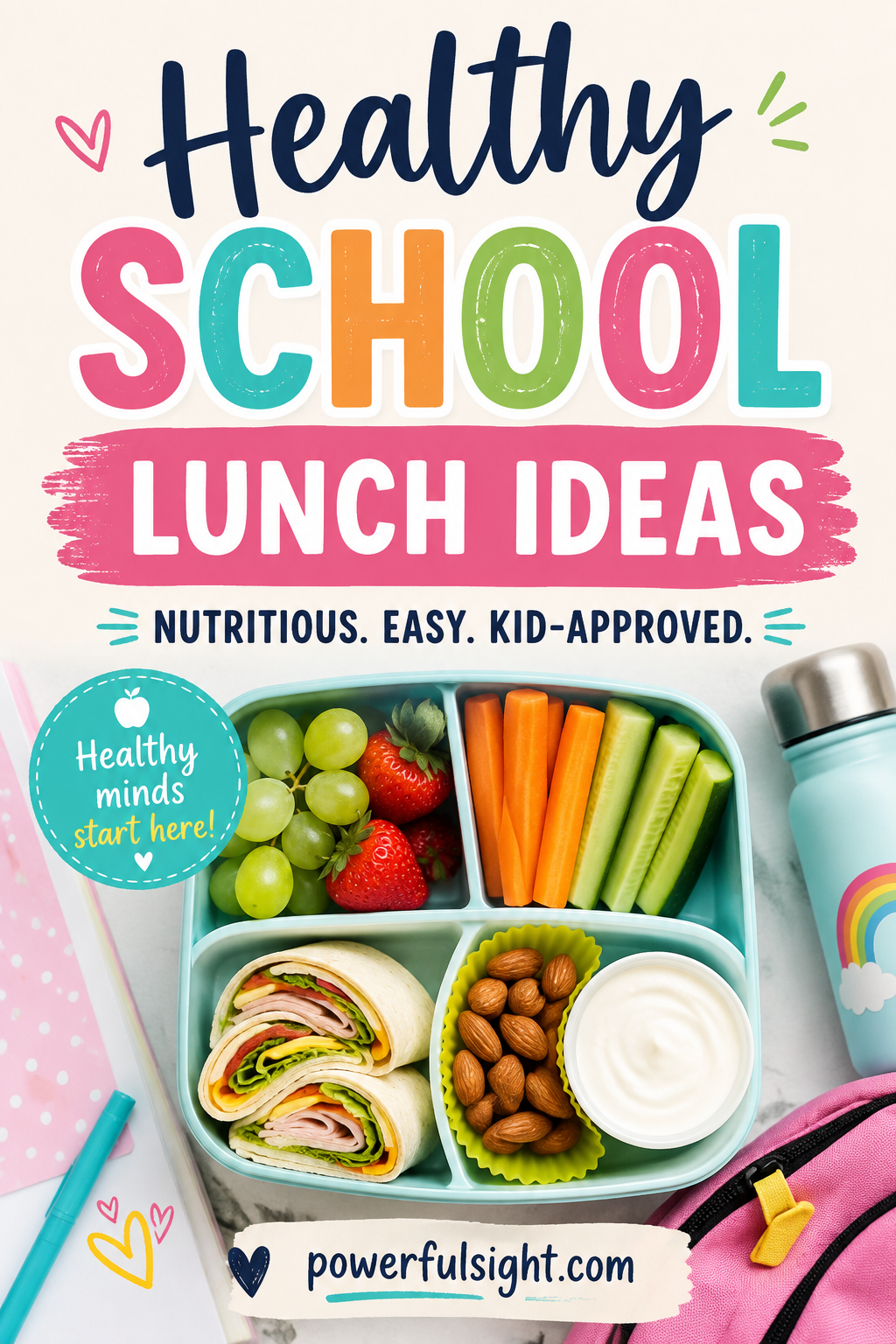
Save the pin for later

- Healthy Air Fryer Recipes for Beginners - 21/09/2026
- Healthy Snacks for Late Night Cravings - 21/09/2026
- High Protein Meal Prep Ideas for Easy Weekly Meals - 21/09/2026

