Better daily habits don’t come from willpower alone; they come from making small actions easier to repeat. If you’ve ever started strong, then lost momentum a few days later, you already know how quickly good intentions can fade.
That’s why knowing how to build better daily habits works best when you start tiny, attach new behaviors to cues you already have, and make the next step feel simple. A practical system matters more than trying to change everything at once, and that’s the approach you’ll see here, along with a few science-backed tactics that help habits stick.
You’ll also see how to recover when you miss a day, because one slip doesn’t erase progress. If you want a deeper look at the sticking part, these habit-building strategies are a useful place to start.
What makes a daily habit stick in the first place?
A habit sticks when the brain can predict it. The cue shows up, the action feels familiar, and the reward gives the brain a reason to keep it around. That repeated pattern matters more than one big burst of effort, because consistency teaches the brain to save energy and expect the next step.
Habits also need time. Most daily habits do not feel natural right away, and many take weeks or months before they run on autopilot. The more often you repeat the same action in the same context, the less resistance you feel the next time.
The cue, routine, reward loop in plain English
A habit usually starts with a cue, which is the trigger that tells your brain, “Now is the time.” That cue might be the smell of coffee, the sound of your alarm, or putting your toothbrush back in the cup. Once the cue appears, you do the routine, which is the habit itself, then you get a reward that makes the loop feel worth repeating.
For example, coffee can lead to five minutes of journaling. Brushing your teeth can lead to a quick stretch. Turning on your laptop can mean opening your to-do list before email. The key is to make the cue specific and reliable, because vague triggers are easy to miss.

When the reward feels good, even in a small way, the brain starts to want the loop again. Charles Duhigg popularized this habit loop in The Power of Habit, and the basic idea is simple: the brain remembers what got rewarded and repeats it when the cue returns.
The stronger the cue, the easier the habit feels to repeat.
Why tiny actions beat big promises
Big goals look impressive, but they often ask for too much too soon. A tiny version of the habit lowers resistance, so you can start without bargaining with yourself. That is why a one-minute version or five-minute version works so well.
A few examples make this clear:
- One minute of reading is easier to repeat than a full chapter.
- Five minutes of walking is easier to keep than a full workout plan.
- One page of journaling feels lighter than a long reflection session.
Small wins build confidence fast. Each time you show up, you prove that the habit fits your day, and that matters more than intensity. BJ Fogg’s work on tiny habits makes the same point, habits stick when they feel easy enough to do without much friction.
A tiny habit also makes missed days less discouraging. If the action is small, restarting feels manageable instead of overwhelming. Over time, that steady repetition creates the kind of routine your brain can recognize, remember, and repeat without much effort.
Build the habit around your real day, not your best intentions
Motivation helps on a good morning. It disappears when your calendar fills up, your energy drops, or life gets messy. That is why the strongest habits are built around routines you already repeat, a clear trigger, and a setup that makes the right action hard to skip.
The goal is simple: choose one habit, make it obvious, and remove as much decision-making as possible. When the habit fits your actual day, it has a chance to survive busy weeks, not just ideal ones.
Pick one habit that matters right now
Start with the habit that would make the biggest difference if you did it every day. Maybe that means better sleep, a short walk, ten minutes of focused work, or a calmer start to the morning. Choose the one with a clear payoff, because vague goals fade fast.
Trying to fix everything at once usually backfires. You end up splitting attention, and each habit gets less energy, less consistency, and less follow-through. Research on behavior change points in the same direction: people do better when they focus on fewer habits at a time, because the brain has limited room for new routines.
A good test is this: would you still do this on a stressful Tuesday? If the answer is yes, you probably have the right habit. If the answer depends on perfect conditions, shrink it until it feels realistic.
For example:
- Sleep: Put your phone away 30 minutes before bed.
- Movement: Walk for 10 minutes after lunch.
- Focus: Write your top task before opening email.
- Stress relief: Sit quietly and breathe for two minutes after work.
Pick one, define it in plain language, and keep it small enough to repeat often. If you want a deeper structure for this step, how to maintain habit consistency can help you shape the routine around everyday life.

Attach the habit to something you already do
Habit stacking works because it borrows stability from an existing routine. Instead of waiting for motivation, you attach the new habit to a cue that already happens every day. After coffee, after a shower, or before bed are all strong starting points.
The best trigger is one that happens at the same time and in the same place whenever possible. That makes the habit easier to remember, because your brain connects the action with a familiar moment.
Use a simple formula:
- After I pour my coffee, I will review my top task.
- After I brush my teeth at night, I will stretch for two minutes.
- After I sit down at my desk, I will close extra tabs and start my first focus block.
James Clear explains this idea well in his guide to habit stacking, and the logic is easy to use in daily life. You are not starting from zero, you are attaching one small action to a routine that already exists.
A strong stack feels almost automatic. A weak stack depends on mood, so it breaks as soon as the day gets crowded.
If the trigger changes every day, the habit becomes harder to remember.
Make the good habit easier and the bad habit harder
Your environment can help or hurt you before you even think about it. If the healthy choice is visible and ready, you are far more likely to use it. If the tempting choice takes more effort, you are more likely to skip it.
That means reducing friction for the habit you want and adding friction to the habit you do not. Small setup changes do a lot of heavy lifting here.
A few practical examples make this work:
- Put a book on your pillow so you read before sleep.
- Keep workout clothes where you can see them in the morning.
- Move distracting apps off your home screen.
- Set a water bottle on your nightstand before bed.
For focus, clear your desk before you start. For better hydration, keep water in the room you use most. For less mindless scrolling, log out of the most distracting apps or bury them in a folder. The easier the right choice feels, the less you need to argue with yourself.
This is where motivation usually gets overrated. A good setup does the job even when your energy is low, because the environment nudges you in the right direction before willpower gets involved.
How to stay consistent when life gets messy
Life rarely stays neat for long. Work piles up, sleep gets off track, and one missed morning can turn into a week of skipped habits if you let it. The answer is to build a system that bends without breaking, so you can keep moving even when your routine gets disrupted.
That means making your habits visible, planning for low-energy days, and treating slip-ups as part of the process. Consistency gets easier when you stop expecting perfect weeks and start expecting real ones.
Track the habit in a simple way you will actually use
Use the simplest tracker you’ll keep opening. A paper calendar, a notes app, or a habit tracker all work if they fit your day. The point is visibility, because seeing the pattern helps you stay honest without turning the habit into another chore.
A basic checkmark system is enough. Mark the day when you do the habit, leave it blank when you don’t, and look for patterns after a week or two. If you notice that you always skip on late nights or packed workdays, you can adjust before the habit falls apart.
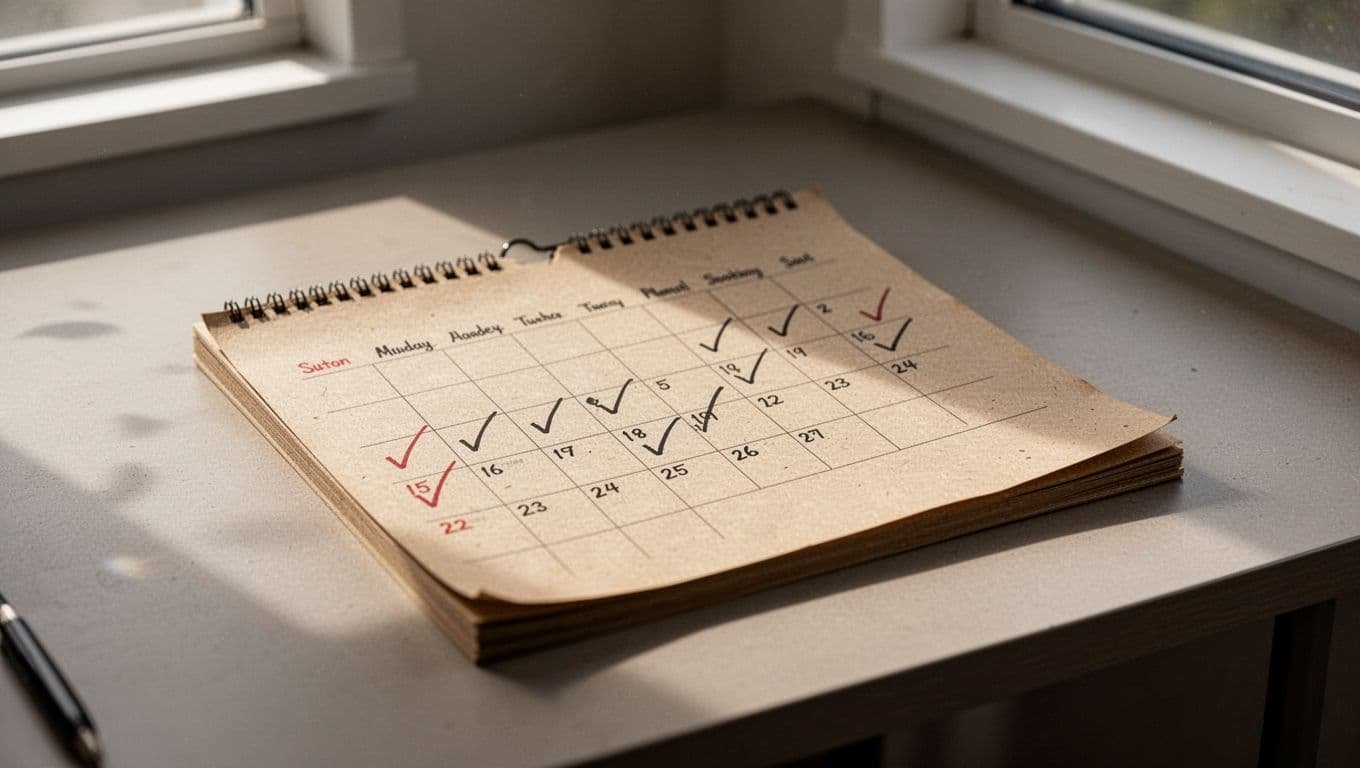
If you want a digital option, a simple app can help too. Tools like the best habit tracker apps can make tracking faster, but the best system is the one you’ll use on a bad day, not just a good one.
Plan for bad days before they happen
Every habit needs a fallback version. When you’re tired, busy, or stressed, shrink the goal instead of skipping it altogether. That keeps the habit alive and removes the pressure to do everything perfectly.
For example:
- Do five pushups instead of a full workout.
- Read one page instead of a chapter.
- Meditate for two minutes instead of ten.
- Write one sentence in your journal instead of a full entry.
A smaller version still counts. On rough days, the win is showing up in some form, because that keeps the routine familiar and easier to restart tomorrow. Even a short walk or a few stretches can keep the habit thread from snapping.
A reduced habit is still a habit. Keep the chain alive in the smallest way possible.
Use a restart rule instead of an all-or-nothing mindset
Missing one day does not mean the habit is broken. It just means you missed one day. The real danger is waiting too long to restart, because a small gap can grow fast when you tell yourself you need a perfect Monday, a new month, or a fresh start.
Use a simple restart rule: never miss twice when possible. If you skip today, return at the next cue, even if the next version is tiny. That one rule keeps a slip from turning into a full stop.
This mindset matters because interruptions are normal. Travel, illness, family needs, deadlines, and plain exhaustion will show up. When they do, restart as soon as you can, then keep going without making the missed day into a story about failure.
Consistency gets built in the messy middle, where real life keeps interrupting your plans. If you can track the habit simply, scale it down on hard days, and restart quickly after a miss, you give yourself a system that can actually last.
Build your daily habits around energy, not just intention
Good habits stick faster when they match your natural energy pattern. If you try to do hard work when your brain is foggy, the habit feels heavier than it should. When you place the same habit in a smarter part of the day, it gets easier to repeat.
That means your daily rhythm matters as much as your motivation. Some people think best early, while others hit their stride later in the day. Sleep, stress, and decision fatigue all shift that window, so the goal is to put important habits where they fit best, not where they sound most impressive.
Put your hardest habit at your best time of day
Save your strongest hour for the habit that matters most. That might be deep work before email, a workout before the day gets crowded, or planning before everyone starts asking for your attention. Protect that time block like you would a meeting you cannot miss.
The best time is not always “morning” or “evening” in a generic sense. It is the time you can protect most often. If your mornings get hijacked, your best block may be late morning or after lunch. If evenings are packed with family needs, then an early start may be the only realistic window.

A simple way to test this is to notice when you feel sharpest and least interrupted. Then match the hardest habit to that block, whether it’s writing, exercise, studying, or meal prep. If you want more structure, how to create a daily routine can help you shape the day around those energy peaks.
Reduce decision fatigue with a repeatable routine
A repeatable routine saves mental energy. When you use the same order each day, you don’t have to decide what comes next, and that makes it easier to stay on track. Wake up, get dressed, start work, eat, and wind down in a predictable order, and the day feels lighter.
This works because small decisions add up fast. By the time you have chosen breakfast, checked messages, and picked a task, some of your focus is already gone. A routine cuts that drain before it starts.
Try keeping a few anchors the same:
- Wake up at a similar time.
- Start work with the same first task.
- Eat meals in a regular order when possible.
- Follow the same bedtime steps each night.
Even a basic evening pattern helps. You might put your phone away, prep tomorrow’s clothes, and read for a few minutes before bed. The fewer choices you make, the easier it is to keep the habit going, especially on busy days.
Use sleep and recovery to support habit follow-through
Sleep changes how well you keep habits. When you’re rested, focus feels steadier, mood is easier to manage, and self-control holds up longer. When you’re tired, even a simple habit can feel like too much work.
Exhaustion also pushes you toward the easiest option. You skip the walk, open the app instead of the notebook, or tell yourself you’ll start tomorrow. Stress does the same thing, because a busy mind looks for quick comfort, not extra effort. Sleep Foundation’s guide to circadian rhythm explains how body clocks and sleep timing affect daily alertness.
A better rest routine makes follow-through more realistic. Turn down screens before bed, keep a steady sleep window, and give yourself a short wind-down routine. When your energy is steadier, your habits stop fighting for scraps and start fitting into the day more naturally.
If a habit keeps failing, look at your sleep before you blame your discipline.
Common habit mistakes that slow progress
Most habit problems don’t come from a lack of interest. They come from small choices that make the habit harder to repeat than it needs to be. A habit can feel exciting at first, then stall fast when the plan asks too much, depends on motivation, or leaves no room for real life.
The good news is that these mistakes are easy to spot early. Once you know what to watch for, you can build habits that feel lighter, steadier, and much easier to keep.
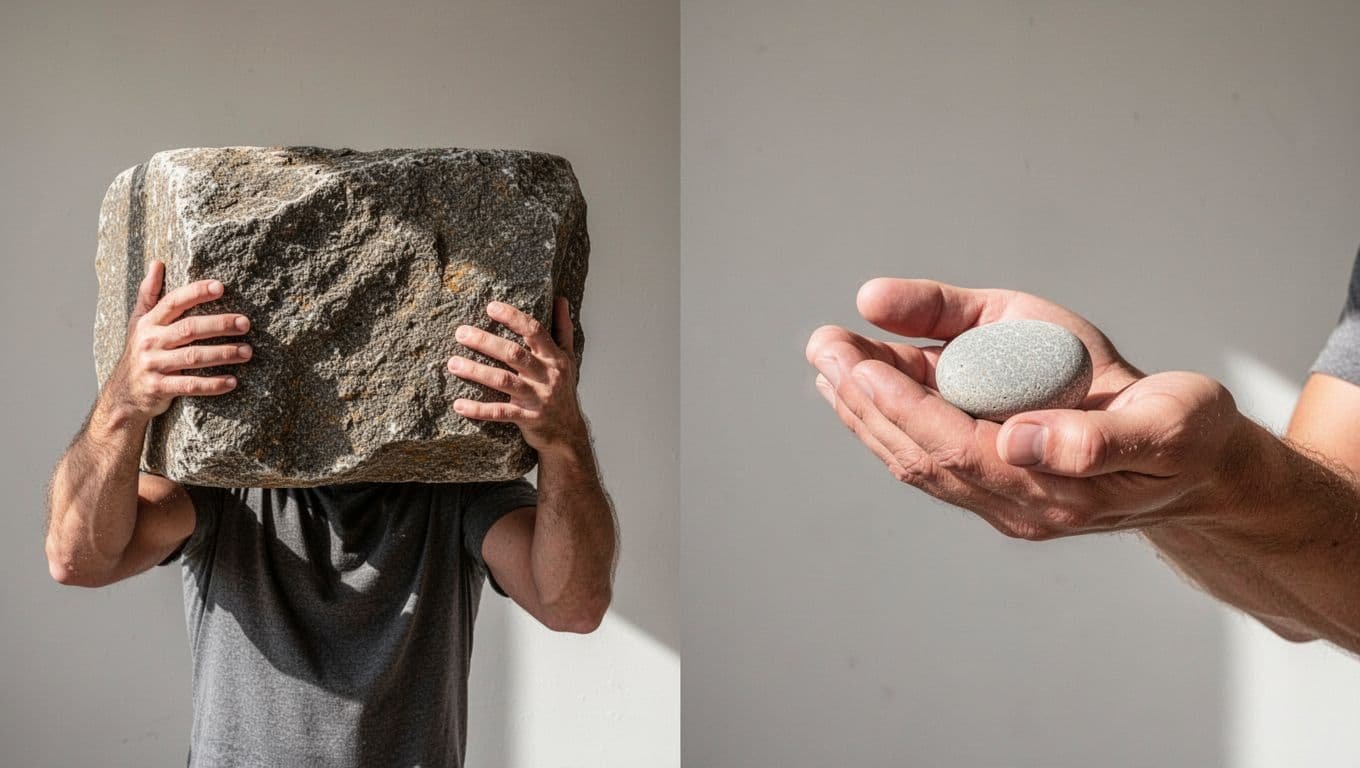
Starting too big and burning out fast
Big goals feel exciting because they promise a clean break from old patterns. You picture the finished result, and the plan looks simple in your head. Then the first hard day shows up, the habit feels heavy, and the gap between intention and action gets too wide.
That is why the first step should feel almost too easy. If you want to read more, start with one page. If you want to exercise, do five minutes. If you want to journal, write one sentence. Easy to repeat beats impressive but unrealistic every time, because repetition is what builds the habit.
A smaller start also lowers the mental friction that kills follow-through. When the task feels manageable, you stop negotiating with yourself before you begin. That matters more than intensity in the early days.
Trying to fix everything at the same time
Stacking too many habits in one week is a fast way to scatter your attention. You may feel productive at first, but each new habit competes for the same energy, the same time, and the same willpower. After a few days, one or two slip, and the whole plan starts to wobble.
One strong habit is better than five weak ones. Build one routine until it feels stable in your day, then add the next. That way, each habit gets a fair chance to take root instead of fighting for scraps.
A simple rule helps here:
- Choose one habit.
- Repeat it in the same cue or time slot.
- Keep going until it feels normal.
- Add the next habit only after the first one holds steady.
This keeps progress clean and visible. It also gives you a better read on what actually works, instead of guessing which habit caused the problem when things fall apart.
Letting a missed day turn into a lost week
One skipped day often turns into a skipped week because people treat a miss like a failure. The logic is harsh but common: if today is gone, the streak is broken, so the habit can wait until next Monday. That mindset makes the gap bigger than it needs to be.
A better recovery rule is simple, treat each day as a fresh reset. Miss today, then return at the next cue without making a big story out of it. Consistency grows through repeated returns, not by never slipping.
If you want extra support, burnout and stress can make these slip-ups more likely, so it helps to spot the signs early. HelpGuide’s burnout recovery tips are useful if your habits keep collapsing under pressure. The point is not perfection. The point is to keep showing up often enough that the habit has time to stick.
Conclusion
Better daily habits come from small actions repeated often in the right environment. When you choose one habit, make it tiny, tie it to a clear cue, and track it in a simple way, the habit has a real chance to stick.
Missed days will happen, so the important move is to restart quickly and keep the habit easy to return to. That steady rhythm matters more than perfect effort, because progress is built on ordinary days that you repeat without overcomplicating the process.
If you stay focused on consistency instead of intensity, the habit becomes part of your day instead of another thing you have to fight for.
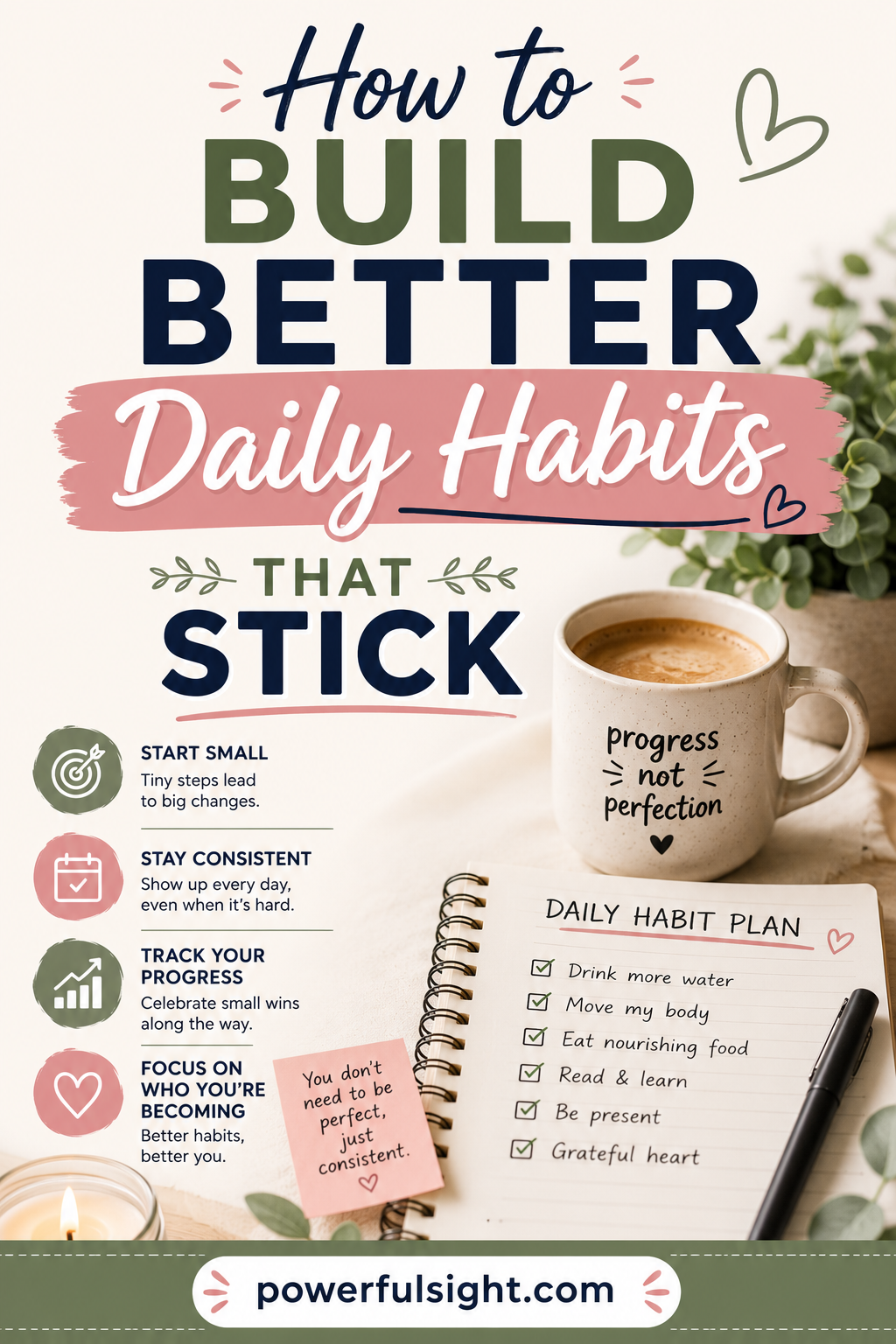
Save the pin for later

- 60 Color Tattoos That Healed Beautifully - 25/09/2026
- 40 Most Painful Tattoo Spots - 24/09/2026
- 20 Tattoo Aftercare Mistakes That Ruin Fresh Ink - 23/09/2026

