You sit down with your notes open, but your phone keeps lighting up, your body feels tired, and random thoughts pull your attention in every direction. After a few minutes, studying feels harder than it should, and you may blame yourself for lacking discipline.
Better focus comes from giving your brain the right conditions, not forcing it to work for hours without a break. A clear study plan, active learning, timed breaks, and a low-distraction environment can help you make steady progress, while poor sleep, stress, or ongoing concentration problems may point to a need for extra support. Start with these focused study techniques you can use today, beginning with a study plan that makes your next step clear.
Key Takeaways
- Create a realistic study plan with one clear task for each session, so you always know what to do next.
- Study in focused blocks of 25 to 50 minutes, then take a short break before fatigue takes over.
- Put your phone away, silence notifications, close unrelated tabs, and focus on one subject at a time.
- Use active methods such as practice questions, flashcards, teach-back explanations, and reviewing mistakes.
- Protect your sleep and build effective study routines that support steady progress without burnout.
How to Focus on Studying Better by Starting With the Right Method
Focus improves when studying feels active and purposeful. Staring at pages for longer can create the feeling of progress without giving your brain enough practice using the information.
Three evidence-based ideas make study time more effective: retrieval practice, active recall, and spaced practice. Instead of rereading, highlighting everything, or cramming the night before, you repeatedly bring information back to mind across several days. Recent review evidence available in 2026, along with earlier research, supports these methods for stronger long-term retention and better transfer of knowledge.
Use active recall instead of rereading your notes
Active recall means closing your book and trying to remember what you just studied. You can answer practice questions, create flashcards, draw a concept map, or explain the topic aloud as if you’re teaching someone else.
For example, after studying photosynthesis, close your science textbook and explain how plants use light energy to make glucose. If you forget the role of chlorophyll, check your notes, correct the gap, and test yourself again. That moment of struggle is useful because your brain is practicing retrieval, not simply recognizing familiar words on a page.
Use focused flashcards rather than copying entire paragraphs. One card might ask, “What role does chlorophyll play in photosynthesis?” The answer should be short enough to recall quickly. You can also turn history dates, vocabulary, formulas, and key definitions into direct questions.

For more practical ways to apply these techniques, try these effective note-review strategies. Research reviews consistently find that retrieval usually strengthens later memory more than repeated restudy, although understanding the material still comes first.
Space your study sessions across several days
Distributed practice means spreading study sessions over time instead of completing everything in one sitting. A 2026 systematic review of distributed and retrieval practice research found benefits across many studies, while earlier research also connects spacing with stronger retention and transfer. The broader evidence is summarized in this review of spacing and retrieval practice.
Try studying one chapter for 25 minutes today. Review the main ideas tomorrow, then test yourself again later in the week. Each session can be short, but you should actively retrieve information rather than only skim the chapter.
Cramming may feel productive because you cover so much material at once. However, spacing gives your memory repeated chances to rebuild the information. Mark short review sessions on your calendar or add them to a study checklist before the exam. A few planned reviews can do more for retention than one exhausted night with your notes open.
Build a Study Space That Makes Concentration Easier
Your study space should remove small obstacles before the timer starts. Choose one clear task, gather what you need, keep water nearby, and place your phone out of reach. The goal isn’t to create a perfect room. It is to reduce the number of decisions and interruptions competing for your attention.
Choose one small, specific goal for each session
“Study biology” sounds simple, but it gives your brain no clear finish line. The task could include reading a chapter, reviewing vocabulary, completing practice questions, or preparing for an exam. Because the goal is vague, the entire subject can feel too large to begin.
Replace it with a result you can see:
- Complete ten practice problems and check every answer.
- Make eight flashcards about cell structure.
- Explain one process without looking at your notes.
- Read four pages and write down the main idea.
Decide what “finished” means before you sit down. Then break large assignments into visible next steps, such as opening the correct chapter, outlining one page, or solving the first problem. Each step gives you a clear action instead of another reason to delay.
When your energy is highest, start with the hardest or most important task. If you focus best in the morning, schedule difficult problem-solving before easy review. During a low-energy evening session, organize notes or complete familiar flashcards. A realistic focused study routine matches the work to your attention instead of expecting equal energy all day.

Control phone alerts, websites, and mental distractions
Before starting, silence notifications and put your phone in another room. If you need it nearby for an emergency, turn on Focus or Do Not Disturb and allow only essential contacts. Close unrelated browser tabs, log out of social media, and use a website blocker when certain sites repeatedly pull you away. Research on technology-related study distractions has found that interruptions can affect attention even when you don’t actively use the phone.
Study away from the television, and tell family members or roommates when your block will end. Keep your textbook, charger, pens, calculator, and water within reach so you don’t keep inventing reasons to stand up. These simple steps support ways to study without distractions without demanding perfect discipline.
When an unrelated thought appears, use capture and continue. Write the errand, question, or reminder on paper, then return to your task. You haven’t ignored it forever; you’ve given it a place to wait until your break.
Use Focus Blocks and Breaks Without Losing Momentum
Focus blocks give your study session a clear rhythm. The familiar Pomodoro technique uses 25 minutes of focused work followed by a 5-minute break, then adds a longer 15- to 30-minute rest after four cycles. It is an execution tool, not a learning method, so pair it with active recall, practice questions, or problem-solving.
Before the timer begins, decide exactly what you will complete. You might answer ten questions, review one lecture, or explain a single concept from memory. When possible, stop at a natural checkpoint instead of interrupting a sentence or half-finished calculation.
Make short breaks refresh your brain instead of stealing attention
A useful break lowers mental demand without pulling you into a new activity. Walk around the room, stretch your shoulders, drink water, eat a light snack, look outside, or take a few slow breaths. Leave the study area briefly when possible, then set a clear time to return.
Social media, gaming, and demanding videos can make returning to your assignment harder. They fill your attention with new information, emotional reactions, and quick rewards. After five minutes online, your textbook may feel unusually dull, even though your brain has not truly rested.
Research on micro-breaks supports planned pauses for reducing fatigue and increasing energy, although the evidence for improving performance is less consistent. A student-focused comparison also found that self-regulated breaks were linked with more fatigue and distractedness than systematic breaks in some conditions. You can read the findings in this study on Pomodoro breaks.

Know when to pause, adjust the timer, or stop for the day
A timer should support your attention, not create another test you feel forced to pass. If 25 minutes feels too long, begin with 10 or 15 minutes. You could also use 24 minutes of work and 6 minutes of rest. For demanding work, try 40- or 50-minute blocks, followed by a longer pause after several cycles.
Pause early when you notice warning signs:
- You keep rereading the same sentence.
- Careless mistakes appear in work you understand.
- You feel unusually irritable or restless.
- You lose track of what the task requires.
After each session, write down what you completed and choose the next starting point. That small review clears the mental clutter before you leave your desk. When you return, you can begin with a named action instead of spending ten minutes deciding what to do. For more ideas, see these ways to stay focused during study sessions.
Protect the Sleep, Energy, and Health That Support Focus
Concentration depends on more than willpower. When you’re tired, hungry, dehydrated, or stuck in a dim room, passive studying can feel almost impossible. Protecting your basic health won’t solve every attention problem, but it can make focused work less of a struggle.
Plan demanding tasks for the time of day when you feel most alert. If your mind works best in the morning, use that window for difficult problems or new material. Save flashcards, organizing notes, or lighter review for the afternoon or evening.
Use movement, food, and light to reset your attention
Small physical resets can help you return to your work with less mental friction. Between study blocks, take a short walk around the building, stretch your back and shoulders, or stand by an open window. Even a few minutes away from the chair can feel different from scrolling through another app.
Keep water nearby and sip regularly instead of waiting until you feel drained. When hunger distracts you, choose an affordable snack with lasting energy, such as yogurt and fruit, peanut butter on toast, cheese and crackers, or nuts with a banana. Regular balanced meals can also help you avoid the sharp rise and crash that often follows sugary foods. If you drink coffee or energy drinks, use them thoughtfully rather than replacing meals, water, or sleep with constant caffeine.
During daytime study, sit near natural light when possible or use a brighter workspace. A window, library table, or well-lit kitchen counter may work better than a dark bedroom. Your living situation, schedule, budget, and health needs all matter, so choose the version that fits your circumstances. These hydration tips for better focus can help if tiredness keeps interrupting your sessions.

Avoid the all-nighter trap before an important exam
Late-night cramming often creates a difficult cycle. You study while exhausted, remember less, sleep poorly, and arrive the next day with weaker concentration. Sleep, nutrition, exercise, and movement all connect with mental health and daily functioning, as described in this guide to lifestyle factors.
Use spaced reviews and practice questions during the days before an exam. On the final evening, stop at a realistic time and:
- Review your most common errors and key formulas.
- Pack your calculator, pencils, student ID, and other supplies.
- Set an alarm and prepare your clothes.
- Give yourself enough time to sleep and arrive without rushing.
A rested brain may not know every answer, but it can read carefully, retrieve information, and reason through unfamiliar questions.
Fix the Most Common Focus Problems With a Simple Plan
When you understand study techniques but still cannot begin, the problem may be friction rather than laziness. Procrastination, anxiety, boredom, noise, unclear instructions, and phone checking can each interrupt your attention in a different way. Test one adjustment at a time for several study sessions, so you can tell what actually helps.
When you cannot start, make the first step almost too easy
Use a five-minute starting ritual to lower the pressure:
- Clear only enough desk space for your current materials.
- Write one question you need to answer.
- Open the correct textbook page, assignment, or lecture file.
- Complete the easiest problem or write the first sentence.
Action can come before motivation. Once you begin, the task often feels less threatening because your brain has something concrete to do. If procrastination keeps winning, try these study strategies for overcoming procrastination.
A simple 30-minute starter routine might look like this:
- Spend five minutes preparing your space and opening the right materials.
- Study for ten minutes by answering one question or solving two easy problems.
- Take a two-minute stretch or water break.
- Work for ten more minutes using active recall.
- Spend the final three minutes writing what you finished and where to begin next time.
Use an if-then plan for predictable distractions. If you feel like scrolling, write down the urge and study for two more minutes first. After that, you can choose whether to continue during your planned break.

When the material feels boring or confusing, change the task
Rereading the same page rarely fixes boredom or confusion. Change the activity while keeping the learning goal. Turn a paragraph into a question, draw a diagram, complete a practice problem, summarize the idea from memory, or explain it aloud in simple language. These engaging ways to make studying less boring can make the session feel more active.
When a topic remains confusing, mark the exact sentence, term, or calculation causing trouble. Then ask a teacher, tutor, classmate, or librarian for help. Staring at the same paragraph longer won’t necessarily make it clearer. Write down what you understand and the precise point where your understanding stops.
Know when ongoing attention problems deserve extra support
Occasional distraction is normal. However, persistent trouble focusing, severe fatigue, low motivation, or distress despite structured habits deserves attention, especially when it affects school, home, sleep, or relationships. If the change began suddenly, speak with a doctor.
A trusted teacher, school counselor, family doctor, or mental health professional can help you decide what support fits. You don’t need to diagnose yourself, and asking for help isn’t a personal failure. The National Institute of Mental Health’s depression guidance recommends seeking help when symptoms last and interfere with everyday functioning.
Conclusion
Better studying starts with a clear goal, not a longer to-do list. Choose one specific task, remove obvious distractions, and use active recall instead of reading the same notes again. Then spread your reviews across several days and take planned breaks before your attention runs out. These memorization strategies for studying can help you remember more without relying on last-minute cramming.
Try one 25-minute study block today. Test yourself with practice questions or closed-book recall, take a screen-free break, and schedule a short review for tomorrow. With repetition, focus becomes a skill you practice, not a personality trait you either have or lack.
If concentration problems continue to affect school, sleep, or daily life, asking a teacher, counselor, doctor, or mental health professional for support is part of studying wisely. You deserve the tools and support that help your effort lead to progress.
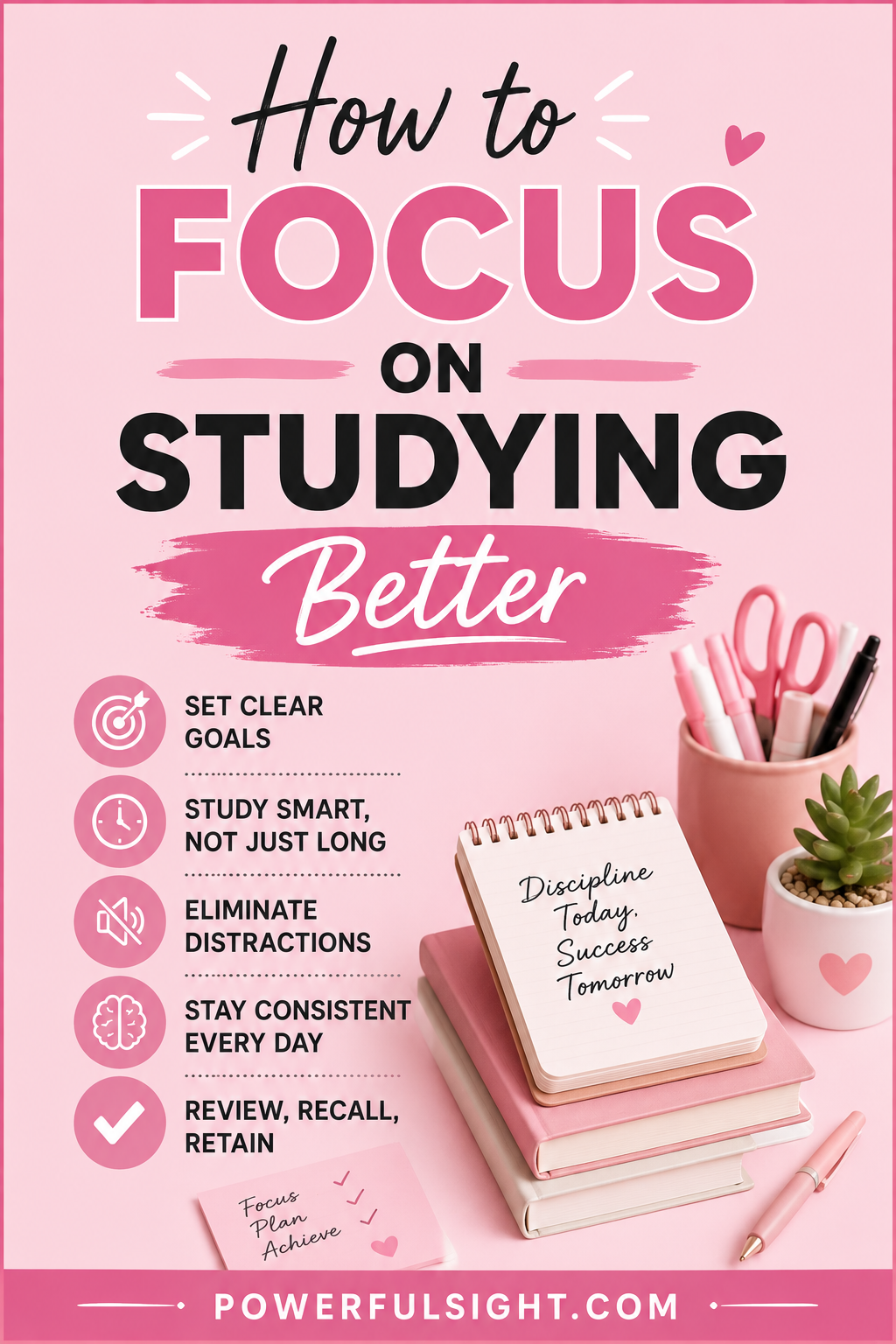
Save the pin for later

- 60 Color Tattoos That Healed Beautifully - 25/09/2026
- 40 Most Painful Tattoo Spots - 24/09/2026
- 20 Tattoo Aftercare Mistakes That Ruin Fresh Ink - 23/09/2026

