Studying in a hostel, shared home, café, library, or busy neighborhood can make every page feel harder to read. Traffic, conversations, generators, music, and constant movement compete for your attention, but you don’t need perfect silence to learn effectively.
The practical solution is to reduce the noise you can control, cover the rest with suitable background sound or headphones, and protect your attention with active study methods. You’ll also learn how to match difficult tasks with quieter periods, use timed study blocks, and keep listening levels safe.
The World Health Organization recommends keeping device volume at no more than 60% of maximum, so louder headphones aren’t the answer. These ideas work whether you need a low-cost setup or prefer higher-tech tools, and they build on other ways to improve study concentration.
Start by identifying the noise that disrupts you most, then choose the simplest way to reduce or mask it.
Key Takeaways
- Reduce controllable distractions first by choosing a quieter location, facing away from movement, and silencing phone notifications.
- Use steady background sound, earplugs, or noise-canceling headphones to mask sudden interruptions without raising the volume too high.
- Schedule demanding reading or problem-solving during quieter hours, then use timed study blocks for lighter review.
- Active recall, handwritten notes, and short summaries keep your attention anchored when noise continues.
- For more ways to study with better focus, take regular breaks and keep headphone volume below 60% of maximum, as recommended by the World Health Organization’s safe listening guidance.
How to Focus on Studying in a Noisy Environment
Focus improves when you manage both the sound around you and your attention. Start with a quick self-check instead of trying to ignore every noise. Notice whether your main problem is a steady hum, sudden sounds, nearby speech, music, or interruptions from your phone and other people.
Find the Type of Noise That Breaks Your Concentration
Constant sounds, such as traffic, an air conditioner, or a generator, may become easier to work with because they stay predictable. Sudden shouting, slamming doors, passing conversations, and changing machine sounds pull your attention back each time they occur.
Human speech often causes more trouble than a steady hum because your brain automatically looks for meaning in words. This effect is especially noticeable when you’re reading, memorizing definitions, or working with written instructions. Research on the irrelevant speech effect connects background speech with poorer performance on verbal memory tasks.
Music with lyrics can create a similar problem. Your attention may follow the words, especially when you know the song or hear a memorable chorus. Still, no single sound works for everyone. Some students focus well with instrumental music, while others need earplugs, silence, or soft background noise.
Test your response before choosing a solution. Study for 10 minutes with the sound that usually surrounds you, then note how often you reread sentences or lose your place. If speech causes the problem, move away from the speakers or use sound that masks voices. If a generator or traffic creates a steady hum, you may need less intervention than you expect.

Make Your Study Space Harder to Interrupt
Small changes can protect your attention without costing money. In a café, sit away from the counter and speakers. In a hostel or shared apartment, choose the quietest time of day, face a wall, and sit farther from doors, windows, and busy walkways. At a library, use a quiet corner rather than a table near the entrance. If traffic is loud, close the window when practical.
Tell people the exact time block when you don’t want interruptions. Saying, “I need the next 30 minutes to study,” gives others a clear boundary. Place water, books, chargers, and stationery within reach before starting, so you don’t keep leaving your seat.
Put your phone in another room or inside a bag away from your chair. If you need more help controlling notifications and checking habits, use these ways to study without distractions. Fewer interruptions mean fewer decisions, and that makes it easier to return to your work after unavoidable noise.
Build a Noise-Control Setup That Fits Your Space and Budget
The best noise-control setup usually combines several modest changes. Start with your location, then add passive isolation, active noise cancellation, or sound masking based on the noise and study task.
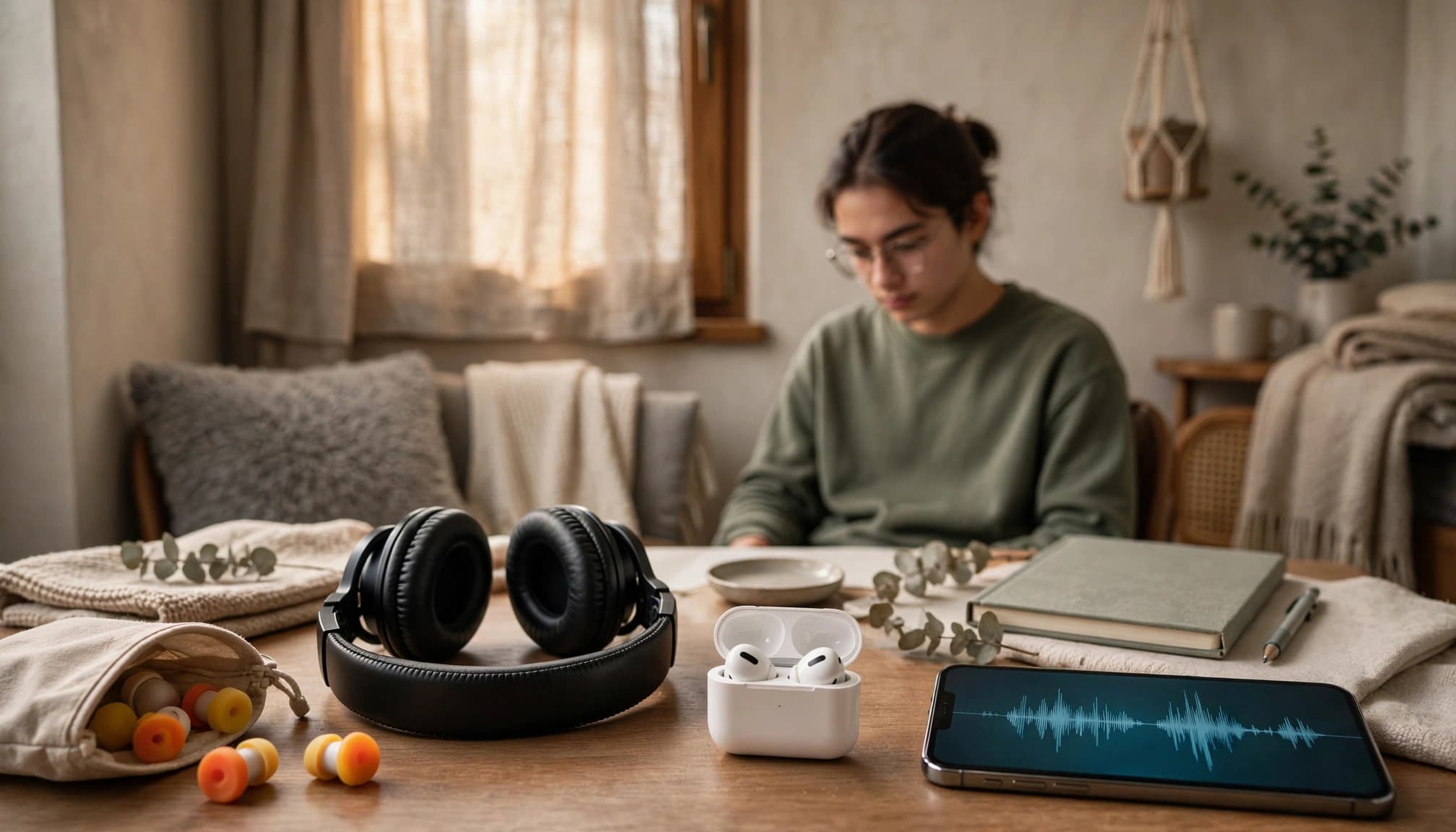
Choose Between Earplugs, ANC, and Passive Headphones
A location change costs nothing, yet it can make every other solution work better. Move away from doors, speakers, windows, and busy walkways. Face a wall and choose quieter hours when you need to read, memorize, or solve problems.
Next, consider passive isolation. Earplugs are affordable, portable, and reduce outside sound without playing anything. Over-ear passive headphones can block some noise through their padded seal, even when you don’t play audio. However, both options may make speech, alarms, or important announcements harder to hear.
Active noise cancellation (ANC) works best with steady, low-frequency sounds, such as traffic, fans, buses, and HVAC systems. It may reduce the urge to raise your listening volume, which supports the World Health Organization’s safe-listening guidance. However, ANC is less effective against nearby speech, sudden bangs, and constantly changing sounds.
Fit and comfort matter more than brand names. Test earplugs, over-ear headphones, and noise-canceling earbuds during a short study block before wearing one for several hours. If your ears hurt, the seal feels irritating, or the device makes you more aware of itself, you won’t use it consistently.
Use Sound Masking for Voices and Sudden Changes
Sound masking adds a steady background layer to make distracting changes less noticeable. White noise can cover conversations and irregular sounds, while brown noise has a deeper tone that some students find calming. Waterfall or rain sounds may work when you want something softer.
Instrumental audio is often easier to ignore than music with lyrics, especially during reading and writing. Try myNoise, Brain.fm, Focus@Will, or a simple timer and sound app, but treat them as options rather than requirements. Start at a low volume and choose audio that fades into the background within 60 to 90 seconds.
Use only enough masking sound to cover the distraction. Louder audio can become another distraction and may encourage unsafe listening.
Your setup can stay simple:
- A low-cost setup uses a better study location, basic earplugs, and free white noise or instrumental audio.
- A mid-range setup combines comfortable passive over-ear headphones with a phone sound app.
- A higher-comfort setup pairs well-fitting ANC headphones or earbuds with low-volume masking when voices remain distracting.
Choose based on your comfort, study task, and how long you can wear the device. For more ideas on reducing background noise while studying, combine two modest solutions before paying for one expensive product.
Use Study Blocks and Distraction Controls to Protect Your Attention
Noise becomes easier to manage when your study session has a clear target and a fixed stopping point. Instead of trying to concentrate indefinitely, decide what you will finish before the timer starts. A specific outcome gives your mind somewhere to return when a door slams or people begin talking.
Match the Study Method to the Noise Level
Different tasks need different levels of quiet. Use noisy periods for lighter review, such as checking flashcards, rereading notes, watching a video lesson, or organizing study materials. Save the quietest parts of your day for demanding reading, essay writing, memorization, and multi-step problem-solving.
Active methods also help because they give your attention a clear target. You could complete 15 practice questions, recall definitions without looking at your notes, summarize six pages from memory, or explain a concept aloud in a quiet room. These tasks keep you involved instead of asking you to passively absorb information while distractions compete for your attention.

Write one outcome before each block, then choose a realistic duration. The familiar Pomodoro pattern uses 25 minutes of study followed by a 5-minute break. Research on systematic study breaks has also compared shorter 12-minute blocks with 3-minute breaks, while longer 50-minute blocks and 10-minute breaks may suit tasks that need extended concentration.
Run a Simple Test to Find What Actually Works
Your best setup depends on the noise, the task, and your response to audio. Compare three or four similar study blocks under different conditions:
- ANC only.
- Brown noise at a low volume.
- Instrumental music without lyrics.
- No audio, with earplugs or ordinary silence.
Keep the subject, task difficulty, and block length similar so the comparison stays fair. During each block, record pages read, problems completed, flashcards recalled, mistakes made, comfort, and how often your attention drifted.
Choose the setup that improves useful output without causing ear fatigue. If brown noise helps you finish more questions but leaves you tense, it may not be your best choice. Likewise, a silent phone can still tempt you, so use Do Not Disturb, block distracting websites and apps, and place the device out of reach. Tools such as Forest can support these boundaries, alongside other time management habits for focused studying.
After four 25-minute blocks, take a 15 to 30-minute break. Stretch, drink water, and check important messages briefly, but avoid social media scrolling because it can make restarting harder. On tiring days, 15/3 may feel more manageable; when you have steady energy, 50/10 can provide more room for deep work. Adjust the rhythm based on completed work, not the timer alone. For research on timed breaks, see this study of Pomodoro methods.
Protect Your Hearing While Studying With Headphones
Headphones can make a noisy study space more manageable, but comfort and hearing safety must come first. Noise-canceling headphones reduce distractions for concentration. They are not automatically hearing protection for hazardous noise.
Know When Noise Cancellation Is Not Enough
ANC headphones may reduce steady background sounds, such as traffic or an air conditioner. They can also help you keep playback quieter because less outside noise competes with your audio. However, consumer headphones usually aren’t designed to protect your ears around construction equipment, lawnmowers, power tools, or very loud machinery.
If the surrounding sound feels painful, makes conversation difficult, or forces you to raise your volume, leave the area whenever possible. Moving to a safer location protects your hearing better than turning up music or white noise. The CDC also advises people to walk away from loud noise and use suitable hearing protection when loud sound can’t be avoided.
Proper earplugs or earmuffs are a better choice around dangerous noise, especially products labeled with a Noise Reduction Rating (NRR). ANC can improve listening comfort, but it doesn’t replace certified hearing protection unless the product is specifically designed and rated for that purpose.

Safe listening also depends on volume, exposure time, and the sound around you. Start at the lowest volume that lets you hear clearly. Don’t use louder audio to overpower nearby speech, engines, or machinery. Take regular breaks, and remove the headphones if your ears feel sore, pressured, hot, or irritated.
Stop listening if you notice ringing, muffled hearing, pain, dizziness, or unusual sensitivity to sound. These symptoms can appear after excessive exposure, even when the session seemed comfortable. If they continue after you stop, seek advice from a hearing professional or doctor.
Comfort problems can also affect your study session. Tight headbands may cause clamping pressure, earbuds may fit poorly, and over-ear cushions can trap heat. Battery failure can leave you without your masking sound, so keep earplugs available and never treat a dead battery as a reason to increase the volume. A comfortable, low-volume setup supports ways to study longer without distractions, but a safer location remains the best solution when the environment itself is dangerously loud.
Fix the Most Common Problems With a Noisy Study Routine
Even a good noise-control setup can fail on difficult days. The goal isn’t to create perfect silence every time. Instead, make one practical adjustment when a specific problem appears, then return to your work.
Create a Personal Backup Plan for Busy or Shared Spaces
Keep a small study kit ready so noise doesn’t force you to abandon your session. Pack earplugs, charged headphones, downloaded instrumental audio or steady noise, printed notes, a charger, and a simple timer. Download your audio before studying because unreliable Wi-Fi can create another interruption.

Use the following adjustments when your routine starts breaking down:
- If headphones make your ears tired, lower the volume, switch to a lighter headset, or remove them for a short quiet break. The World Health Organization’s safe-listening guidance recommends keeping personal audio at no more than 60% of maximum volume.
- If music keeps pulling your attention away, switch to steady brown noise, white noise, or quiet instrumental audio. Lower the sound until it fades behind your thoughts.
- If nearby speech still breaks your concentration, change seats first. Then try earplugs with very soft masking audio, which can reduce both words and sudden changes.
- If roommates keep interrupting you, set a visible signal, such as headphones on the table or a note that says when you’ll be available. Tell them the exact time your study block ends.
- If your phone keeps winning your attention, put it in another room, inside a bag, or with a friend. Use a basic timer instead of checking your phone between tasks.
- If home remains too distracting, move to a library, study carrel, or quiet café. A different setting can remove interruptions that you can’t control at home.
When no ideal space is available, choose one small task, set a 15-minute timer, put your phone away, and use the lowest comfortable sound level. Afterward, take a short reset break before deciding whether to continue. Change only one variable at a time, so you learn what helps rather than constantly rebuilding your setup. Consistency matters more than perfect conditions.
Conclusion
Studying in a noisy environment becomes easier when you identify the sound that disrupts you most. Improve your space where possible, then choose one low-volume option, such as earplugs, noise-canceling headphones, or steady background sound. Put your phone out of reach, silence notifications, and set one realistic study block with a clear task.
Focus is a skill you build through testing, not a talent that some students naturally have. Notice what helps you read, recall, or solve problems with fewer interruptions, then keep the setup that supports useful work. Keep audio at a safe level, and remember that noise-canceling headphones don’t make loud listening harmless.
Start with one 25-minute study block today. Before you begin, identify the main distraction, prepare your space, select your sound or blocking method, and remove your phone from reach. Afterward, record what helped and adjust one part of the setup tomorrow.
Save the pin for later


- 60 Color Tattoos That Healed Beautifully - 25/09/2026
- 40 Most Painful Tattoo Spots - 24/09/2026
- 20 Tattoo Aftercare Mistakes That Ruin Fresh Ink - 23/09/2026

