You know the scene: it’s late, the house is quiet, and you’re standing in the kitchen reaching for snacks even though you weren’t hungry an hour ago. That kind of nighttime eating is common, and it usually has more to do with daytime habits, stress, tiredness, or routine than weak willpower.
If you’ve been trying to figure out how to stop overeating at night, the answer starts with the patterns that build up long before bedtime. Skipped meals, tight food rules, poor sleep, and emotional strain can all push hunger and cravings into the evening. Sometimes the problem is physical, and sometimes it’s a habit your body has learned well.
The good news is that calmer nights are possible without harsh rules or guilt. Small changes during the day can make a big difference after dinner, and the right evening habits can help you feel more in control.
Below, you’ll find simple, practical ways to spot what’s driving the urge and make nights feel lighter, steadier, and easier to manage.
Why nighttime overeating happens in the first place
Nighttime overeating usually starts long before the kitchen gets quiet. By evening, your body, mood, and habits have all been pulling on the same rope for hours, so the urge to keep eating can feel strong and almost automatic.
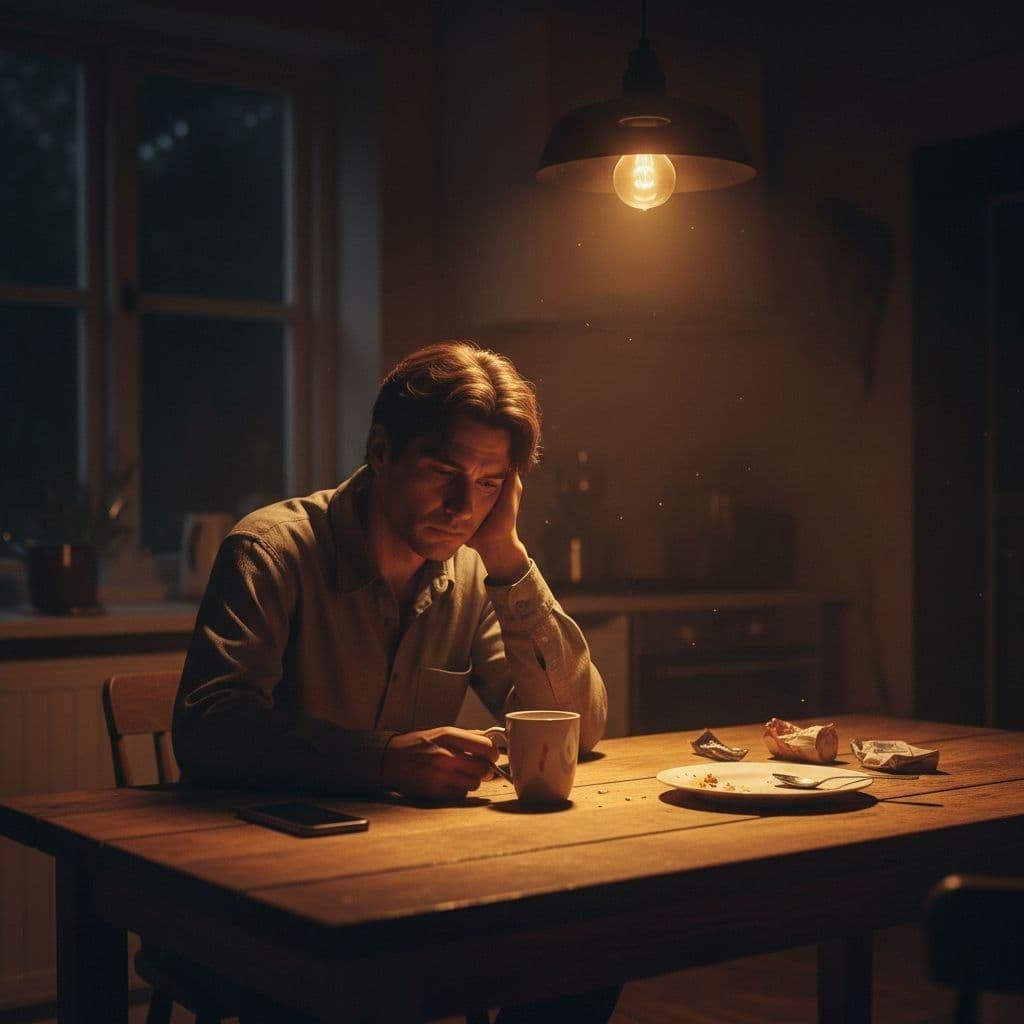
The good news is that this pattern makes sense. Once you see what is driving it, how to stop overeating at night becomes much easier to approach with patience instead of guilt.
Skipping meals or eating too little during the day
When you eat too little earlier, your body does not stay polite about it. It sends stronger hunger signals later, often right when you want to relax and slow down.
Saving calories can backfire because the body treats under-eating like a shortfall it needs to recover from. By night, that can show up as loud cravings, bigger portions, and a hard-to-ignore pull toward quick energy foods like chips, sweets, or takeout. You may tell yourself you will “be good” all day, but your body often has other plans after dinner.
A skipped breakfast, a light lunch, or a rushed afternoon snack can all set up the same result. The evening turns into catch-up time, and your appetite comes calling with interest.
Stress, boredom, sadness, and loneliness can all look like hunger
At night, the day gets quieter, and feelings can get louder. Stress may sit in your chest, boredom can feel like restlessness, and loneliness can make the kitchen feel like a place to seek comfort.
Emotional hunger usually shows up fast and feels specific. You may want a certain snack, and you want it now. Physical hunger grows more slowly, and it can be satisfied by a regular meal.
A simple check helps:
- Physical hunger builds gradually, and almost any filling food sounds fine.
- Emotional hunger feels urgent, narrow, and tied to a mood.
- Physical hunger eases after eating.
- Emotional hunger often stays even after you feel full.
Once you can spot the difference, you can respond with more accuracy.
Tired brains make impulsive choices
Night is often when self-control is at its lowest. After a long day of decisions, work, family demands, and problem-solving, your brain gets worn out.
That makes comfort food harder to resist. A tired mind reaches for whatever feels easy, familiar, and rewarding in the moment. Poor sleep can make this even worse, since fatigue tends to increase cravings and lower patience.
This is why a late-night snack can feel less like a choice and more like a reflex. Your brain is tired, your body wants relief, and the easiest reward wins.
Build a day that keeps nighttime hunger under control
Nighttime hunger rarely starts at night. More often, it grows out of a day that ran on empty, with meals spaced too far apart and food choices that never really satisfied you. If you want calmer evenings, the work starts much earlier.
A steadier day gives your body a better rhythm. It also keeps you from arriving at dinner already worn down, shaky, and ready to overdo it. That is the heart of how to stop overeating at night, build enough fullness into the day so your body does not demand payback after dark.
Eat regular meals instead of waiting until you are starving
Breakfast, lunch, and dinner all matter, even when the portions are small. A simple meal early in the day can keep your hunger from snowballing later.
When you go too long without eating, your body pushes back. Hunger gets louder, cravings get sharper, and self-control gets thinner. By evening, that long gap often turns into grabbing whatever is closest, fastest, and most comforting.
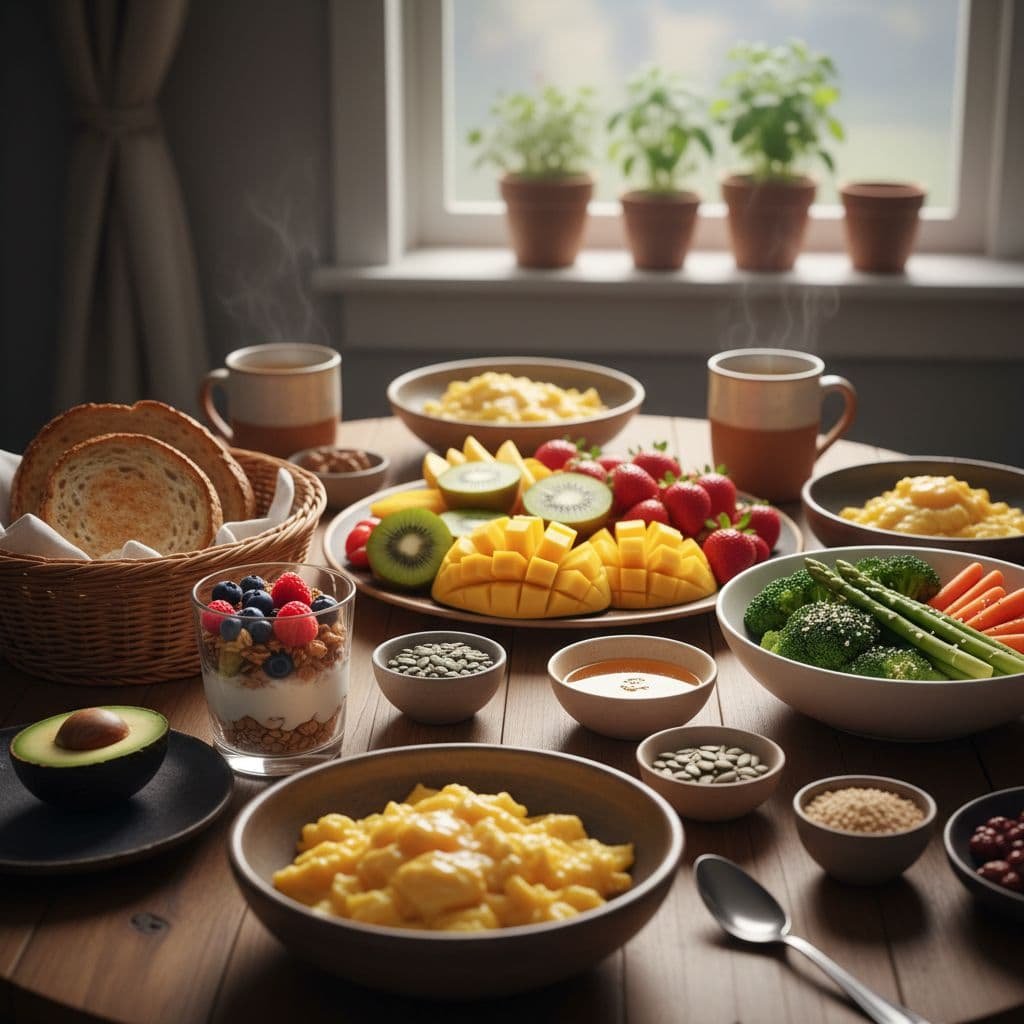
Regular meals also keep your energy more even. You do not need a huge plate each time, just enough food to keep your body from running on fumes. If a full meal feels hard, start with something light that still counts, like yogurt and fruit, toast with eggs, or a small bowl of oatmeal.
Choose meals that actually keep you full
The best daytime meals do more than fill space. They slow hunger down. Protein, fiber, and healthy fats do most of that work, and they make a meal feel satisfying instead of flimsy.
A balanced lunch with chicken, beans, or eggs will usually hold you longer than a snack built on refined carbs alone. Add vegetables, fruit, whole grains, nuts, or avocado, and you give your body more staying power. Ohio State Health & Discovery also points to the value of balanced meals for keeping late-night eating in check.
A few simple pairings work well:
- Eggs with whole-grain toast and fruit
- Yogurt with nuts and berries
- Chicken with vegetables and brown rice
- Beans with a grain bowl and avocado
- Apple slices with peanut butter
These foods are ordinary, and that is the point. You do not need a perfect menu, just meals that hold you steady.
Don’t try to be perfect or overly restrictive
Strict dieting often backfires by nightfall. If you spend the day cutting food too hard, your body notices, and it usually collects the missing calories later.
That can lead to the classic rebound pattern, light eating all day, then a heavy hand at night. It helps to aim for enough food, not the least food possible. Balance leaves less room for urgency.
A calmer approach works better:
- Eat earlier, before hunger gets intense.
- Include foods that actually satisfy you.
- Leave room for planned snacks if your day is long.
- Stop treating hunger like a problem to outsmart.
A more flexible day usually leads to a more manageable night. When your body feels fed, your evening choices feel less desperate and much easier to control.
Make your evenings less tempting before cravings hit
The easiest way to handle nighttime overeating is to make the evening feel less inviting to snack in the first place. By the time cravings show up, your energy is lower and your defenses are softer, so small habits earlier in the night matter more than a last-minute burst of willpower.
A calm evening setup gives your brain a clear signal that eating is winding down. That signal can be simple, but it needs to happen the same way often enough to stick.
Create a kitchen cutoff routine
A kitchen cutoff routine works because it gives your night a finish line. When you repeat the same few steps, your brain starts linking them with “food is done for today.”
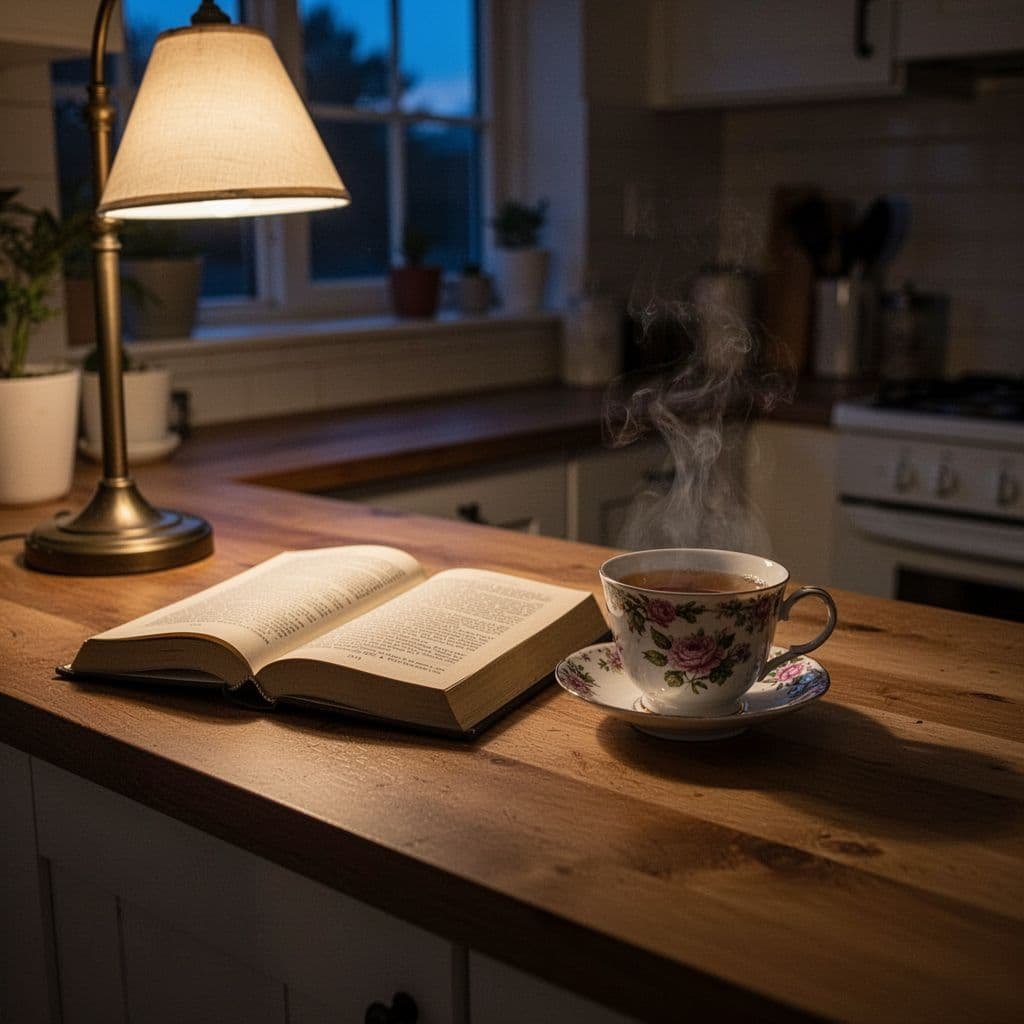
Keep it plain and easy. For example, wash the dishes, put leftovers away, brush your teeth, and make a cup of tea. Once that rhythm becomes familiar, it feels less like restriction and more like closing a door.
You can also pair the routine with one clear rule, such as no eating after the kitchen is cleaned. That kind of structure helps when cravings are more about habit than hunger. Psychology Today notes that cravings often connect to emotions and routines, which is why a repeatable cutoff can help break the loop.
Keep trigger foods harder to grab
If chips, cookies, or candy sit in plain sight, they will keep calling your name. Easy access turns eating into a reflex, especially when you are tired and not thinking clearly.
Move tempting foods out of reach. Put them on a high shelf, in a closed bin, or in the back of a cabinet. Better yet, buy smaller amounts so there is less to mindlessly finish.
A little friction goes a long way:
- Store snacks in opaque containers.
- Keep fruit, yogurt, or nuts where you can see them.
- Avoid bringing home large bags when smaller portions will do.
The goal is not to ban foods. It is to make impulse eating less automatic.
Build a relaxing wind-down habit that does not involve food
Night cravings often show up when your mind wants comfort, not calories. If you only try to resist, the urge can feel louder. If you replace the habit, the evening has somewhere else to go.
Choose one calming action and repeat it after dinner. You might read a few pages, stretch for ten minutes, journal, take a shower, or listen to music. A simple swap can matter more than a long list of self-control rules.
The best replacement habit is one you can do tired, distracted, and a little restless.
If your usual trigger is stress, try a quiet activity that lowers the volume in your head. If it is boredom, pick something that gives your hands or mind a small job. A short walk or a warm drink can help too, as long as it becomes part of the same evening pattern.
When you make the night feel settled, cravings have less room to take over.
What to do when a late-night craving shows up
When the urge hits, the goal is not to win a battle with willpower. The goal is to slow the moment down just enough to make a clear choice. A craving can feel huge in the dark, but it usually shrinks when you pause, check what is driving it, and respond on purpose.

A simple plan helps more than a long list of rules. Start by asking what you need, then give the feeling a few minutes to settle. If you are still hungry after that, eat something sensible and stop there.
Pause and ask what you really need
Before you open the cabinet, stop for a quick check-in. Late-night eating often starts with a feeling that needs attention, not a stomach that needs a meal.
Ask yourself:
- Am I hungry?
- Am I tired?
- Am I stressed?
- Am I bored?
- Am I thirsty?
That one pause can break the autopilot loop. If you are thirsty, water may be enough. If you are tired, sleep may be the real fix. If you are stressed or bored, food may only cover the feeling for a few minutes.
This check also helps you separate physical hunger from habit. Physical hunger builds slowly and feels open-ended. Habit cravings show up fast and usually point to a specific snack or routine.
Use a 10-minute delay to break the urge
If the craving still feels strong, give it 10 minutes before you eat. Cravings rise and fall like a wave, and a short delay can take away some of the power. Ohio State Health & Discovery notes that waiting a few minutes and distracting yourself can help the urge pass.
Use those 10 minutes well. Drink a glass of water. Step outside for fresh air. Stretch your shoulders. Breathe slowly. You can also put on a timer and do something that keeps your hands busy, such as folding laundry or tidying one counter.
A few good delay habits include:
- sipping cold water
- walking around the block
- making herbal tea
- reading a few pages
- taking five slow breaths
A craving that feels urgent now may feel smaller in 10 minutes.
That short gap gives your body time to settle and your brain time to catch up.
If you are truly hungry, choose a smart snack
Sometimes the craving is real hunger, and that is fine. Eating makes sense when your body needs fuel, especially if you ate light earlier in the day.
Keep the snack simple and satisfying. Good choices include Greek yogurt, an apple with peanut butter, nuts, cheese with whole-grain crackers, or plain popcorn. These foods give you more staying power than a handful of random sweets.
A few things help here:
- Keep the portion modest.
- Eat at the table if you can.
- Put the package away after serving yourself.
- Stop once the hunger eases.
That approach keeps late-night eating calm instead of messy. If you want more support for the bigger pattern, these night routine ideas can help make cravings less likely in the first place.
Know when nighttime eating may be a deeper issue
Sometimes late-night eating is just a pattern. Other times, it points to something heavier, especially when it keeps showing up no matter how often you try to change it. If the behavior feels automatic, upsetting, or tied to sleep and mood, it deserves a closer look.

Signs it may be more than a bad habit
A simple habit usually feels manageable. You may snack too late once in a while, then move on. A deeper issue feels harder to control and often leaves you feeling drained, ashamed, or stuck in the same loop.
Watch for signs like these:
- Loss of control while eating at night, even when you meant to stop.
- Eating in secret because you feel embarrassed or want to hide it.
- Waking up to eat often, sometimes more than once a night.
- Feeling upset afterward, especially if guilt or shame shows up every time.
- Needing food to fall back asleep, which can turn into a nightly rule.
If nighttime eating keeps happening for months, it may also affect your sleep, mood, and energy the next day. That is a strong clue that it is more than boredom or a loose routine. The Northwestern Medicine night eating guide describes this pattern as one that can include waking to eat, poor sleep, and evening mood changes.
When to talk to a doctor or therapist
Reach out for help if night eating feels intense, frequent, or tied to anxiety, depression, binge eating, or night eating syndrome. That support can matter even if you have tried to handle it on your own.
A doctor or therapist can help you figure out whether the pattern is linked to stress, sleep trouble, or an eating disorder. They can also help you build a plan that feels steady instead of punishing. If the behavior is wearing on you, speaking up is a strong next step, not a failure.
Conclusion
Stopping nighttime overeating usually starts with one simple truth, your evenings are shaped by the whole day before them. When meals are steady, stress is handled earlier, and the kitchen has a clear ending, late-night eating loses some of its pull.
That makes how to stop overeating at night less about force and more about patterns. Small changes, like eating enough during the day, winding down without food, and pausing before a craving turns into a habit, can change the way nights feel.
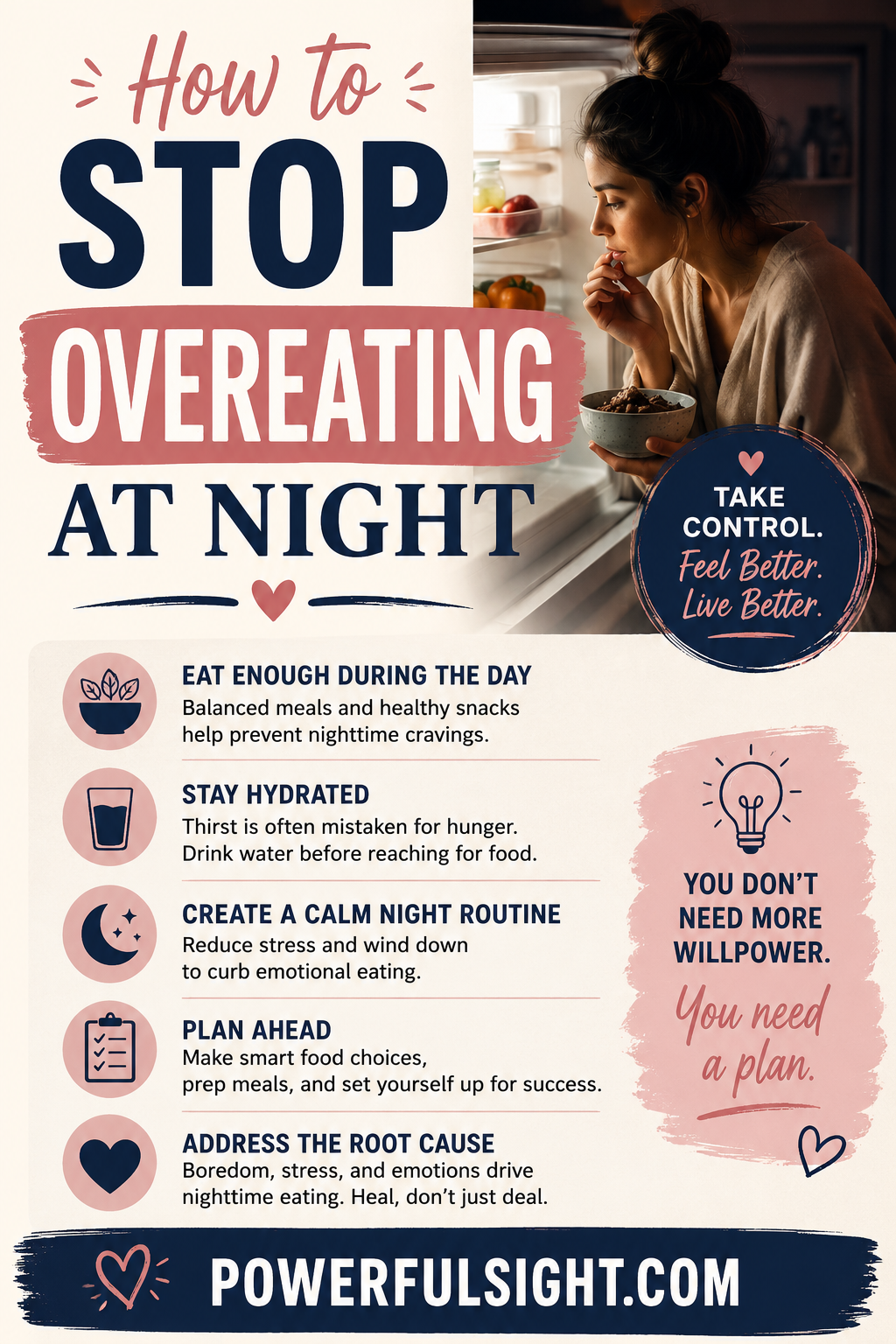
Keep it gentle and consistent. Start with one change tonight, and give it time to work. If you want more practical tips like this, follow us on Pinterest.
Save the pin for later

- 60 Color Tattoos That Healed Beautifully - 25/09/2026
- 40 Most Painful Tattoo Spots - 24/09/2026
- 20 Tattoo Aftercare Mistakes That Ruin Fresh Ink - 23/09/2026

