When your wife seems distant, secretive, or different, fear can fill the quiet hours and leave you replaying every conversation in your head. You may suspect she’s cheating, but suspicion isn’t proof, and acting on fear can damage your marriage before you know what’s true.
Resist the urge to accuse her in anger, search her phone, track her movements, or confront her in a way that could put either of you at risk. Those actions can break trust, violate privacy, and make an already painful situation harder to repair. Instead, give yourself room to slow down, separate facts from assumptions, and consider healthy communication habits for couples before you begin a difficult conversation.
The goal isn’t to force a confession. It’s to respond with self-respect, honesty, and care while protecting your emotional, physical, and personal safety. The next five steps will help you check what you know, talk calmly, protect your sexual health, consider counseling, and put safety first. Start by slowing down and checking the facts before making a decision you may regret.
Key Takeaways
- Slow down and separate observable facts from fears before accusing your wife or invading her privacy.
- Choose a calm, private conversation focused on concerns, honesty, and practical next steps.
- If cheating may have involved sexual contact, arrange STI testing and protect your health.
- Consider setting healthy boundaries after cheating and seek individual or couples counseling when appropriate.
- If threats, intimidation, stalking, or violence are present, prioritize safety planning and contact relationship safety resources instead of confronting her alone.
I suspect my wife is cheating but I have no proof: start with facts, not fear
Pausing is the first step because fear can turn small details into a frightening story. Before you accuse your wife or search for proof, give yourself time to calm your body and clear your thinking. A slower response protects your judgment and leaves room for an honest conversation.

Separate what you know from what you fear
Write down what happened, when it happened, and what you assumed afterward. A simple two-column exercise can help:
| What I directly observed | The story my mind is telling |
|---|---|
| She came home two hours later than usual on Tuesday. | She must have been with someone else. |
| She turned her phone away during dinner. | She is hiding an affair. |
| She seemed withdrawn after work. | She no longer loves me. |
The same behavior can have several explanations. A late night might involve work pressure, family conflict, traffic, or time with another person. Emotional distance may come from depression, a health problem, exhaustion, or an unresolved relationship issue. None of these observations proves infidelity on its own.
Social media activity, a guarded mood, or an unexplained schedule change can raise questions, but they aren’t a verdict. Read through your notes after you feel calmer and ask, “What else could explain this?” You can also review healthy relationship foundations before deciding how to raise your concerns.
Do not turn suspicion into surveillance
Repeatedly checking her phone, hunting for passwords, creating fake accounts, following her, or monitoring her location usually increases anxiety. Each check may bring a short burst of relief, but it often creates another question and pushes trust further away.
Avoid installing spyware, tracking her without consent, impersonating someone online, or secretly recording conversations. Privacy rules differ by state, and intrusive actions may create legal risks. Before recording or monitoring anyone, review recording consent guidance and speak with a qualified attorney licensed in your area. Internet claims cannot replace legal advice.
A private journal, trusted friend, therapist, or counselor gives your thoughts somewhere safe to go. Collecting evidence obsessively keeps you trapped in fear, while calm reflection helps you decide what conversation or boundary should come next.
Have one calm, honest conversation instead of launching an accusation
A direct conversation gives both of you a chance to address what has changed without turning suspicion into a courtroom. Choose a private time when neither of you is rushing, intoxicated, exhausted, or already angry. If either person feels unsafe, don’t have the conversation alone.

Use words that protect honesty and dignity
Blame closes doors quickly. Saying, “You are cheating, and I know you are lying,” invites denial and turns the conversation into a fight. Instead, describe what you have noticed without exaggerating:
“I have noticed we feel more distant lately. I feel worried and disconnected. Can we talk honestly about what is going on and what we both need?”
Specific “I” statements keep the focus on your experience. Mention observable patterns, such as less affection, unexplained schedule changes, or reduced communication. Avoid adding assumptions such as “You always hide things” or “You must be seeing someone.”
Then ask open-ended questions, including:
- “How have you been feeling about us?”
- “Is there something affecting our closeness?”
- “Have you noticed the distance between us, too?”
Your fear may be about more than infidelity. You may need reassurance, transparency, affection, or a clear agreement about boundaries. Name that need instead of demanding a confession.
Her reaction matters, but a defensive response alone isn’t proof that she’s cheating. People may become defensive because they feel accused, ashamed, stressed, or misunderstood. Pay attention to whether both of you can return to the subject, answer honestly, and discuss what happens next. For more prompts, use these couples’ questions for honest conversations.
Set a boundary if the conversation goes nowhere
A boundary explains what you will do to protect your well-being. A threat tries to control what your wife must do. For example, “Tell me your password or I’m leaving” is a demand. “I need honest communication, and I will take space if we start shouting” is a boundary.
You might say, “I’m willing to continue this conversation when we can both listen,” or, “If we can’t discuss this openly, I want us to consider couples counseling.” If possible sexual exposure concerns you, pausing unprotected sex until you both address testing and safer-sex plans is also reasonable. The CDC recommends open discussions about sexual partners, testing, and protection before sex, as outlined in its conversation tips for sexual health.
Listen without interrupting, reflect back what you heard, and ask for the same courtesy. One conversation may not solve everything. Agree on one concrete next step, such as a weekly check-in, counseling appointment, or written agreement about honesty and boundaries. When conflict rises, taking a short break can protect the conversation from becoming another injury.
Protect your sexual health while the relationship feels uncertain
If there has been unprotected sex, a broken condom, a new sexual partner, symptoms, or uncertainty about exclusivity, contact a doctor or sexual-health clinic about STI testing. Testing protects your health and helps you make informed choices. It doesn’t prove that your wife had an affair.
Many STIs cause no obvious symptoms, so feeling fine doesn’t always mean there is no infection. Until you receive clear results and medical advice, use condoms or pause sexual contact. You can also discuss testing with your wife, but don’t demand access to her private medical records.

Choose a testing route that fits your needs
Your best testing option depends on your location, symptoms, risk factors, cost, and how soon you need care.
- A GP can assess symptoms, recommend the right tests, arrange treatment, and provide follow-up care. GP care is confidential, but it isn’t anonymous. Fees and insurance arrangements vary, so ask the office what your visit and testing may cost.
- A public sexual-health clinic, such as the GGD in the Netherlands, may provide free testing for eligible groups. Eligibility rules vary by region and can depend on age, symptoms, partner notification, sexual activity, or other risk factors. GGD services aren’t open to everyone, so check local requirements before booking.
- A reputable home-testing service may offer convenience and privacy where available. Choose a provider that uses appropriate laboratory testing and gives clear instructions for results, treatment, and follow-up. Avoid services that promise instant certainty or provide no medical support after a positive result.
Testing too soon can produce an inaccurate result for some infections. GGD Amsterdam advises waiting at least one week after sexual contact before testing for certain infections, although the window period differs by infection. Follow the timing advice from your clinician or testing service, and mention any symptoms before waiting.
If appropriate, both partners can test. That approach supports shared health without turning medical care into evidence in an argument. Review relationship boundaries around intimacy and communication as you decide what protection and honesty you need.
Seek urgent medical care for severe pain, fever, unusual bleeding, serious symptoms, a suspected sexual assault, or any immediate health concern.
Use couples counseling to find the truth beneath the conflict
Couples counseling can slow the emotional spiral and create a safer place to discuss what changed. A therapist won’t act as a judge who decides whether your wife is guilty. Instead, they can help both of you examine trust, intimacy, secrecy, emotional distance, recurring conflict, and unmet needs without turning every session into an interrogation.

Know when rebuilding trust is possible
Therapy can support reconciliation, but it can also help you make a thoughtful decision about the marriage. Some couples begin with a joint intake, followed by individual sessions. Others choose online appointments because meeting in person feels difficult or unsafe. If one partner wants to stay and the other is unsure, discernment counseling may help clarify whether you both want to work toward repair.
Look for a licensed professional with experience in infidelity, betrayal trauma, couples therapy, or discernment counseling. Ask how they handle suspected affairs, individual privacy, sexual-health concerns, and sessions where one partner feels overwhelmed. You can also learn more about couples counseling after betrayal before choosing a provider.
Realistic counseling goals may include:
- Understanding what changed in the relationship and how each person experienced it.
- Deciding what honesty requires, including truthful answers and clear relationship boundaries.
- Rebuilding trust when both partners accept responsibility and follow through.
- Creating a respectful plan for separation if the relationship cannot continue.
Trust returns through steady actions over time, not one emotional promise made during a tense conversation. Repair may be possible when your wife speaks honestly, accepts accountability, shows empathy for your pain, changes harmful behavior, and agrees to boundaries that protect the relationship. Consistency matters more than a tearful apology.
Repeated deception, contempt, intimidation, refusal to discuss basic relationship needs, or broken agreements point to a more serious barrier. Individual therapy may suit you better if your wife refuses counseling, you feel unable to cope, or the relationship includes manipulation or fear. Couples counseling cannot guarantee reconciliation, and no therapist should pressure you to remain in an unsafe marriage.
Put emotional and physical safety first before confronting anything
Before you confront your wife, decide whether the situation is emotionally safe and physically safe. Suspected infidelity is painful, but it is different from a relationship involving threats, coercive control, stalking, intimidation, forced sex, or violence. Those behaviors require a safety plan, not a private confrontation.
Protect children and keep your next decision measured
Never question your children for evidence, ask them to watch your wife, or make them carry messages between you. Avoid sharing adult details they cannot process. Children need reassurance that the conflict isn’t their fault and that both parents are responsible for solving adult problems.
If you fear retaliation or violence, don’t confront your wife alone. Don’t block a doorway, threaten to expose her, announce that you’re leaving during a heated moment, or meet somewhere where you could become trapped. Choose a public or supported setting, or postpone the conversation until a trusted person knows where you are.
Tell one or two reliable people what you’re facing. A therapist, trusted friend, family member, or domestic-violence advocate can help you think clearly and plan your next move. The National Domestic Violence Hotline offers confidential support by phone, chat, or text, including help for people who are still living with a partner. You can also review these safety planning steps before leaving.
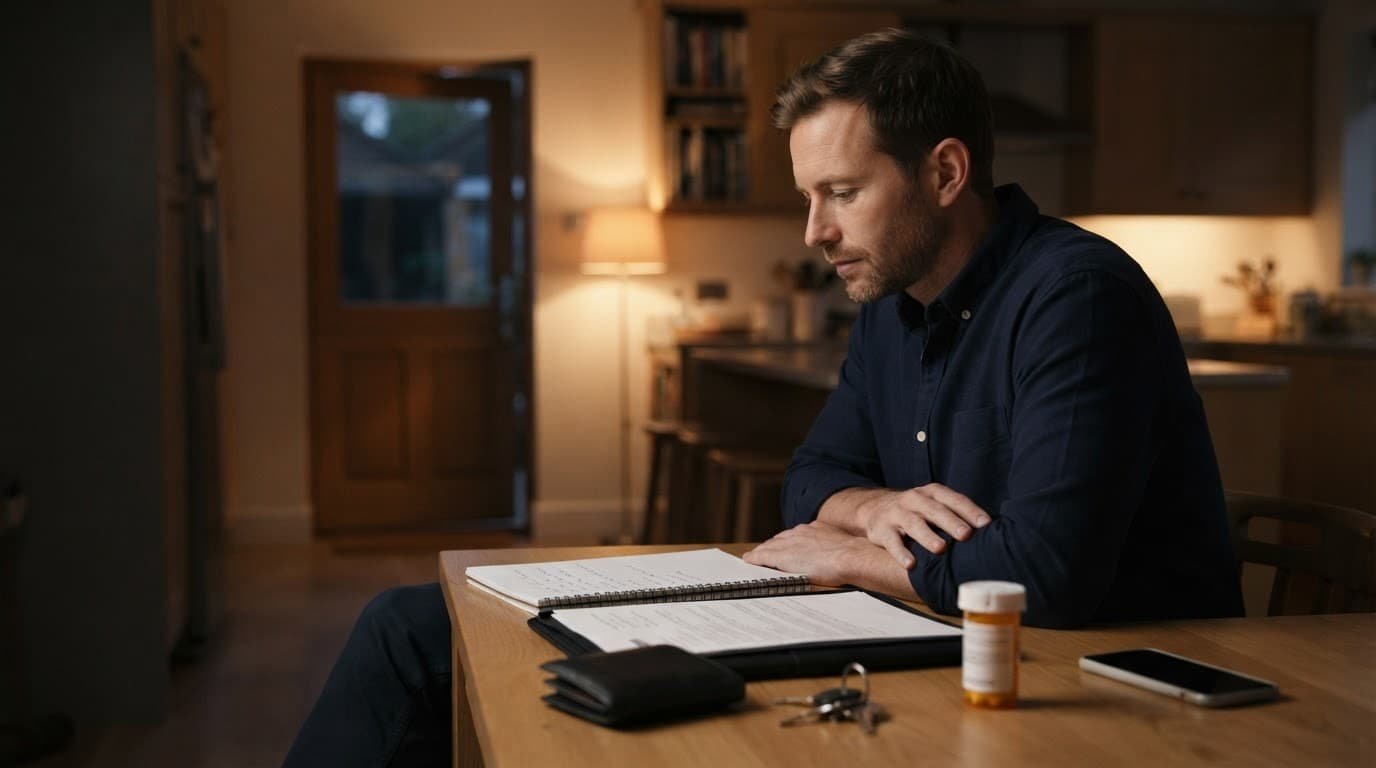
Keep essential documents, medication, keys, cash, and important phone numbers accessible. If stalking or digital monitoring is involved, use a safer device when contacting support and change passwords only when doing so won’t increase your risk. In immediate danger, call 911 or your local emergency service.
Abuse can affect any gender, and emotional abuse deserves attention even when no physical violence occurs. Repeated humiliation, threats, isolation, controlling money, or frightening behavior can wear down your judgment and sense of safety.
Your mental health also needs care while you wait for answers. Eat something, sleep when you can, take a walk, journal the facts, and avoid alcohol-fueled arguments. Revenge affairs, public accusations, and involving children may feel satisfying for a moment, but they create more damage.
You don’t have to decide tonight whether to stay, separate, or divorce. When emotions are at their highest, focus on safety, support, and one measured next step.
Conclusion
A strong suspicion deserves attention, but it doesn’t justify punishment, surveillance, or a rushed verdict. Start by checking the facts instead of treating fear as evidence. Then speak calmly, protect your sexual health if there may have been sexual exposure, consider professional help, and put your emotional and physical safety first.
Focus on what you can control: your words, your boundaries, your health care, your support system, and your next safe step. If both partners choose honesty and consistent effort, rebuilding trust after emotional cheating may be possible, but you don’t have to decide the future of your marriage during one painful conversation.
Clarity may lead to repair, a period of separation, or an ending. Whatever the truth reveals, a careful response can help you move forward with dignity, self-respect, and a clearer sense of what you need.
Save the pin for later


- 60 Color Tattoos That Healed Beautifully - 25/09/2026
- 40 Most Painful Tattoo Spots - 24/09/2026
- 20 Tattoo Aftercare Mistakes That Ruin Fresh Ink - 23/09/2026

