Good manners help children show respect, empathy, and consideration, rather than simply follow a list of rules. When your child says “please,” waits for a turn, or listens without interrupting, they’re learning how their behavior affects the people around them.
Children learn at different speeds, so expect to repeat reminders, model the behavior, and celebrate progress. If you’re learning how to teach your child good manners, focus on everyday moments instead of long lectures: use polite language yourself, teach simple phrases, practice during real situations, and set expectations that match your child’s age. You can also teach your kids respect by explaining why courteous behavior matters, not only correcting the words they use.
Mistakes are part of learning, so respond calmly with brief guidance such as, “Try asking with please,” or “Let’s say thank you.” Start with the small habits your child needs most, then build on them through daily practice.
How to Teach Your Child Good Manners Through Everyday Modeling
Children copy what they see more than what they hear in a lecture. Your tone, word choice, and response to everyday problems become a quiet lesson your child absorbs over time. When you use courtesy with family members, service workers, relatives, and your child, manners become part of normal communication.
Start With a Few Polite Words and Actions
Choose two or three manners at a time so your child can practice without feeling overwhelmed. Start with habits that fit naturally into your daily routine, such as:
- Greeting people with “hello” or “good morning.”
- Saying “please” when asking for something and “thank you” after receiving it.
- Asking permission before taking or using something.
- Using gentle hands with people, pets, and belongings.
- Waiting briefly for a turn instead of grabbing or interrupting.
Use these words yourself throughout the day. Say “please” when asking your child to put away a toy, and respond with “you’re welcome” when they thank you. Also, let your child hear you say “excuse me” when moving past someone or joining a conversation.
Toddlers usually need short prompts and redirection, not long explanations. Try, “Please ask gently,” or “Let’s wait until Grandma finishes speaking.” If your child grabs a toy, guide their hand away and say, “We use gentle hands. You can ask for a turn.” Consistent repetition teaches more effectively than a frustrated lecture.
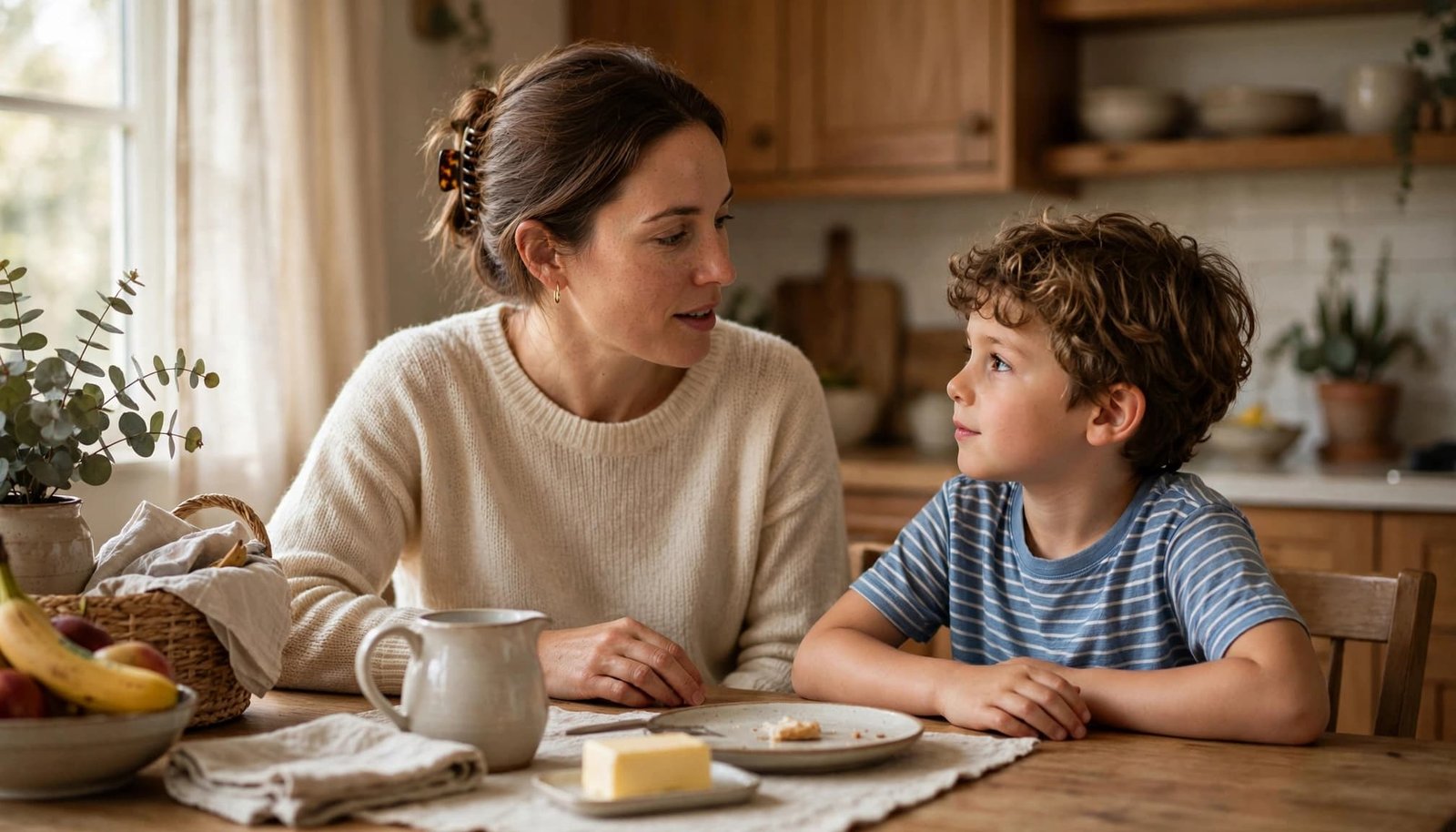
Let Children See You Handle Mistakes Respectfully
Your child also watches how you behave when conversations go wrong. If you interrupt, say, “I interrupted you, and I’m sorry. Please finish what you were saying.” Then listen without cutting in again. That final step shows that an apology includes changed behavior, not only polite words.
You can model the same lesson when your child helps you. Say, “Thank you for picking that up. Your help made the job easier.” When you make a mistake with a partner, relative, or cashier, keep your voice calm and apologize without blaming someone else.
A sincere apology should be specific, brief, and followed by better behavior. Children learn that manners apply to everyone, including adults. Guidance on teaching good manners to young children also emphasizes modeling polite language consistently.
Manners can look different across cultures and families. One household may emphasize formal greetings, while another values warm eye contact, helping guests, or waiting patiently. Teach the customs and values that matter in your home, while explaining that respect should guide every interaction. For more support with this foundation, see how to raise a respectful child.
Build Age-Appropriate Manners From Toddler Years to the Teen Years
Manners develop gradually, so your expectations should grow with your child’s maturity. You can introduce polite words and simple social habits during the toddler years, while consistent use often takes shape during preschool and early elementary school. Even then, reminders remain normal. Children may know the right behavior and still forget it when they’re tired, excited, or frustrated.
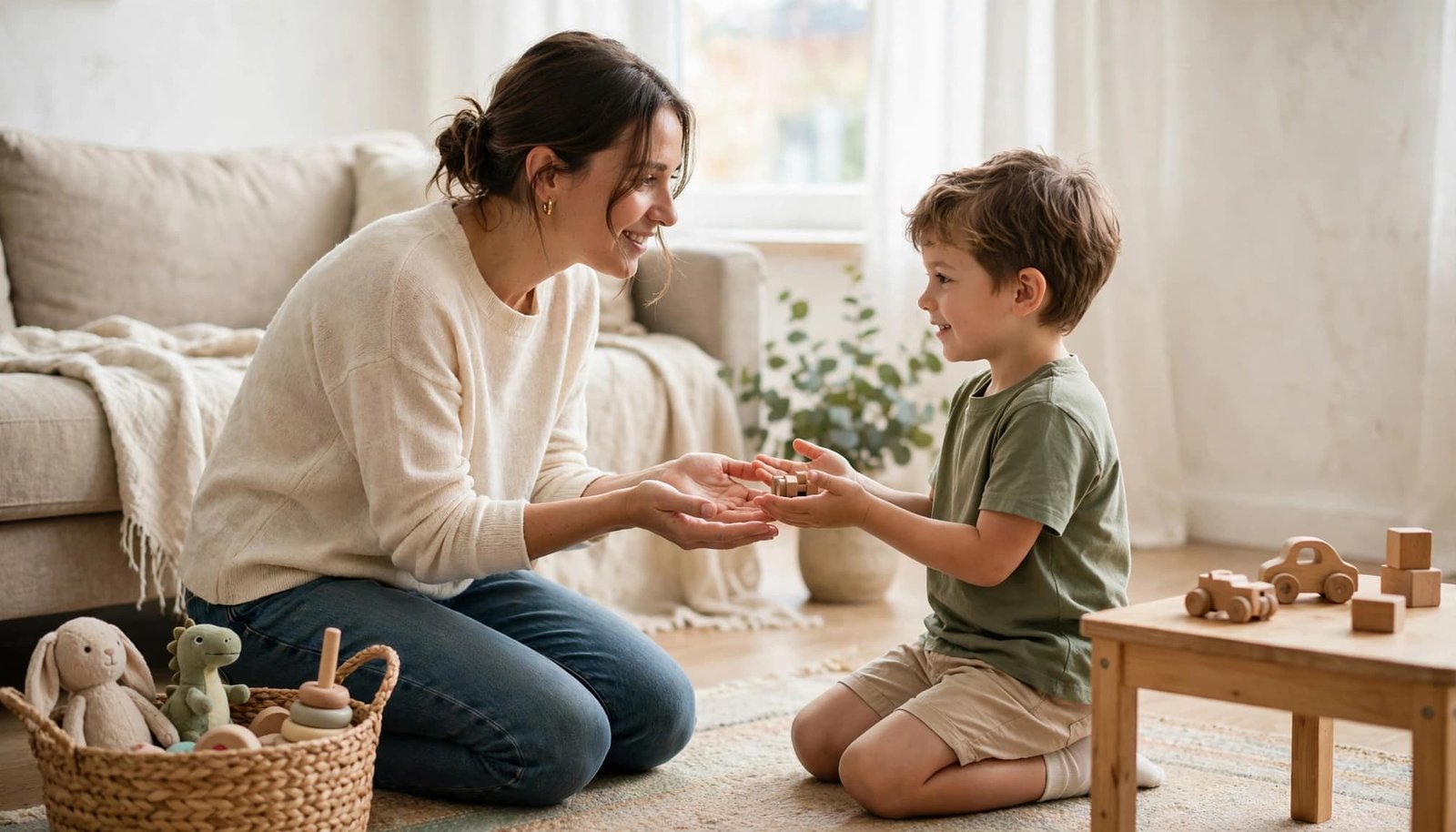
Toddlers and Preschoolers Need Simple Scripts
Young children learn manners through short phrases and visible actions. Practice greetings such as “hello” and “goodbye,” then add “please,” “thank you,” and “excuse me.” Show what gentle hands, inside voices, taking turns, and basic table manners look like in real situations.
Role-play makes these lessons easier to remember. Pretend a stuffed animal wants a turn, act out meeting a neighbor, or sing a song about cleaning up. Picture books and pretend games also give children a safe way to repeat new behavior without pressure.
Praise small attempts instead of demanding perfect performance. You might say, “You remembered to say thank you,” or, “You waited while your sister finished.” If your child grabs, shouts, or forgets a greeting, offer a brief prompt and let them try again. The CDC’s age-based milestone checklists can help you understand general development, but they aren’t a strict schedule for every child.
School-Age Children Can Learn the Reason Behind Manners
As children grow, explain that manners help people feel respected, included, and safe. A child who listens without interrupting gives others room to speak. Someone who shares, cleans up, greets adults, and uses words during disagreements helps make group settings more comfortable.
When disappointment causes rude behavior, acknowledge the feeling while holding the boundary: “I know you wanted the first turn. You can say, ‘I’m disappointed,’ and wait.” Limited choices can also reduce power struggles: “Would you like to clean up the blocks first or the crayons?” For more support with age-appropriate guidance for school-age children, connect manners with responsibility rather than punishment.
Older Children Can Practice Social and Digital Etiquette
Older children can learn to introduce people, write thoughtful thank-you messages, respect personal space, and act as gracious hosts or guests. Encourage them to respond with attention instead of giving automatic replies. Ask, “How might that sound to the other person?” before correcting every detail.
The same judgment applies to texts, group chats, and social media. Teach your child to pause before posting, avoid embarrassing someone, respect privacy, and use language they would say face-to-face. Common Sense Media’s digital citizenship resources support lessons about online choices and healthy communication.
By the teen years, empathy matters more than memorizing rigid rules. Discuss real situations, listen to your teen’s perspective, and let them practice making respectful decisions with increasing independence.
Use Practice, Praise, and Empathy to Make Manners Stick
Polite behavior takes repeated practice before it becomes automatic. Short reminders during meals, playdates, family visits, and daily routines help children turn manners into habits. Keep the focus on empathy, too, so your child understands how words and actions affect other people.
Role-Play Real Situations Before They Happen
Brief role-play gives children a safe place to practice before they face a busy restaurant or family gathering. Keep it upbeat and switch roles when possible. You might pretend to sit at a restaurant, greet a guest, wait in line, ask for a turn, or join a conversation.
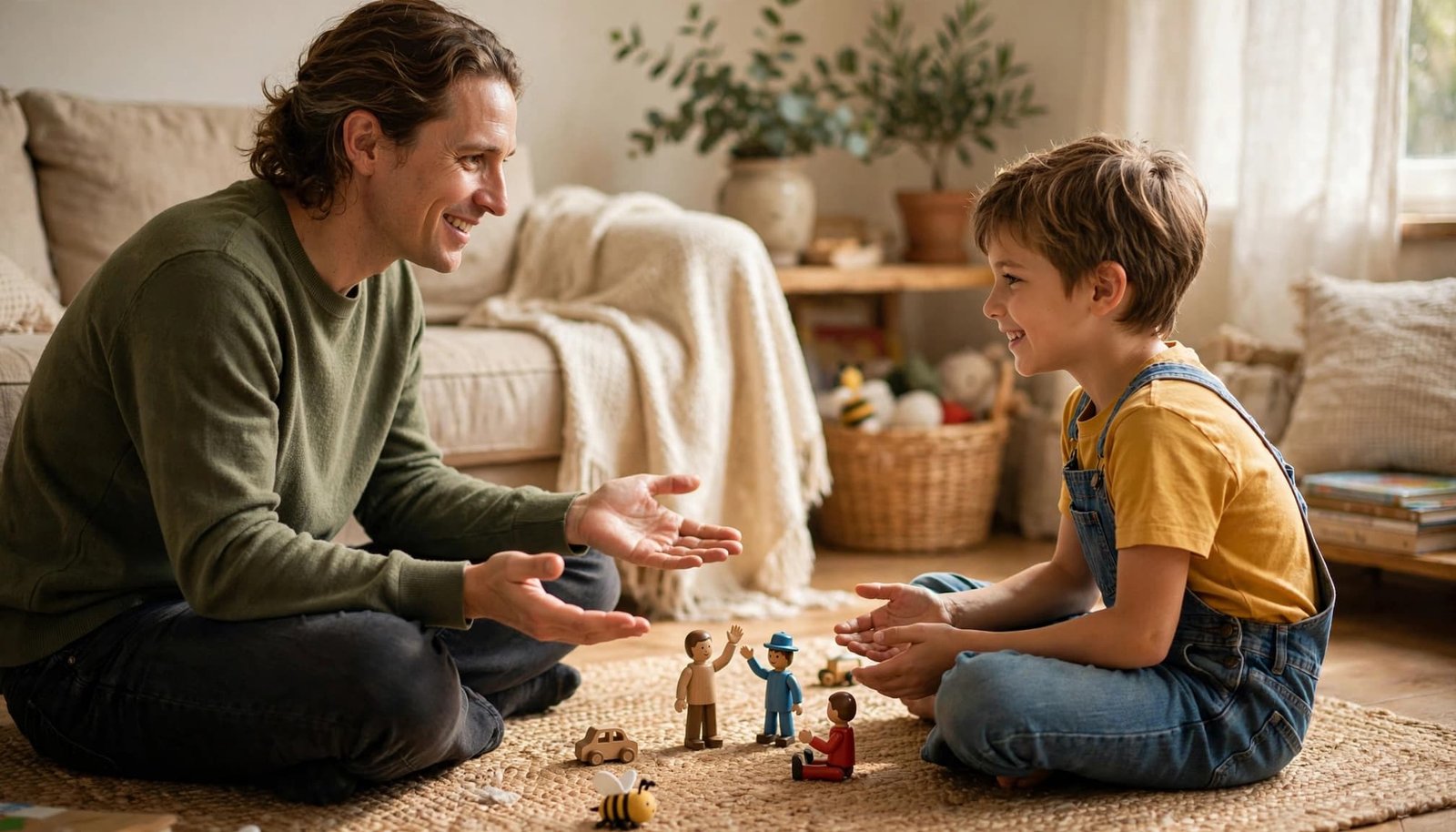
Use simple prompts that invite your child to think:
- “What could you say if you need to get past someone?”
- “How can you ask for a turn with the toy?”
- “What could you say when someone gives you a gift?”
- “How might you join the conversation without interrupting?”
- “What could you say after hurting your friend’s feelings?”
Practice restaurant behavior by pretending to order, use a napkin, remain seated, and wait while someone else speaks. For a family visit, rehearse greeting a relative, answering a question, and saying goodbye. Two or three minutes is enough. Stop while the activity still feels fun.
Praise the Behavior You Want to See Again
Specific praise teaches your child which action worked better than a general “good job.” Name what you noticed and explain its effect. For example, say, “You waited while your sister finished speaking. That helped her feel heard,” or, “You remembered to say thank you when Grandma gave you the book.”
A smile, hug, or encouraging tone can reinforce the moment immediately. You can also offer an occasional small reward after a child practices consistently, such as choosing the bedtime story or picking the family game. Still, don’t make every polite act depend on a prize. Children need to learn that kindness and consideration matter even when no reward follows.
Teach the Feeling Behind the Rule
Rules become easier to use in unfamiliar situations when children understand the feeling behind them. Ask, “How do you think he felt when you interrupted?” or, “What could help her feel included?” Then listen to your child’s answer before suggesting a response. Practical ways to teach children empathy can support these conversations at home.
When your child hurts someone, stay calm and describe what happened without shaming or labeling. Say, “You pushed the blocks away, and your friend looked upset. What could help repair the problem?” The answer might involve returning an item, rebuilding something, making space in a game, or offering an apology.
Don’t force a child to say “sorry” before they understand the harm. Research on children’s understanding of apologies shows that meaningful apologies help repair feelings, but children benefit most when the words connect to genuine understanding and changed behavior.
Prepare Your Child for Good Manners at Home and in Public
Good manners become easier when children know what to expect before they enter a busy setting. Review one or two behaviors before leaving, give brief reminders during the outing, and praise progress afterward. This simple routine helps your child practice without turning every public moment into a correction.
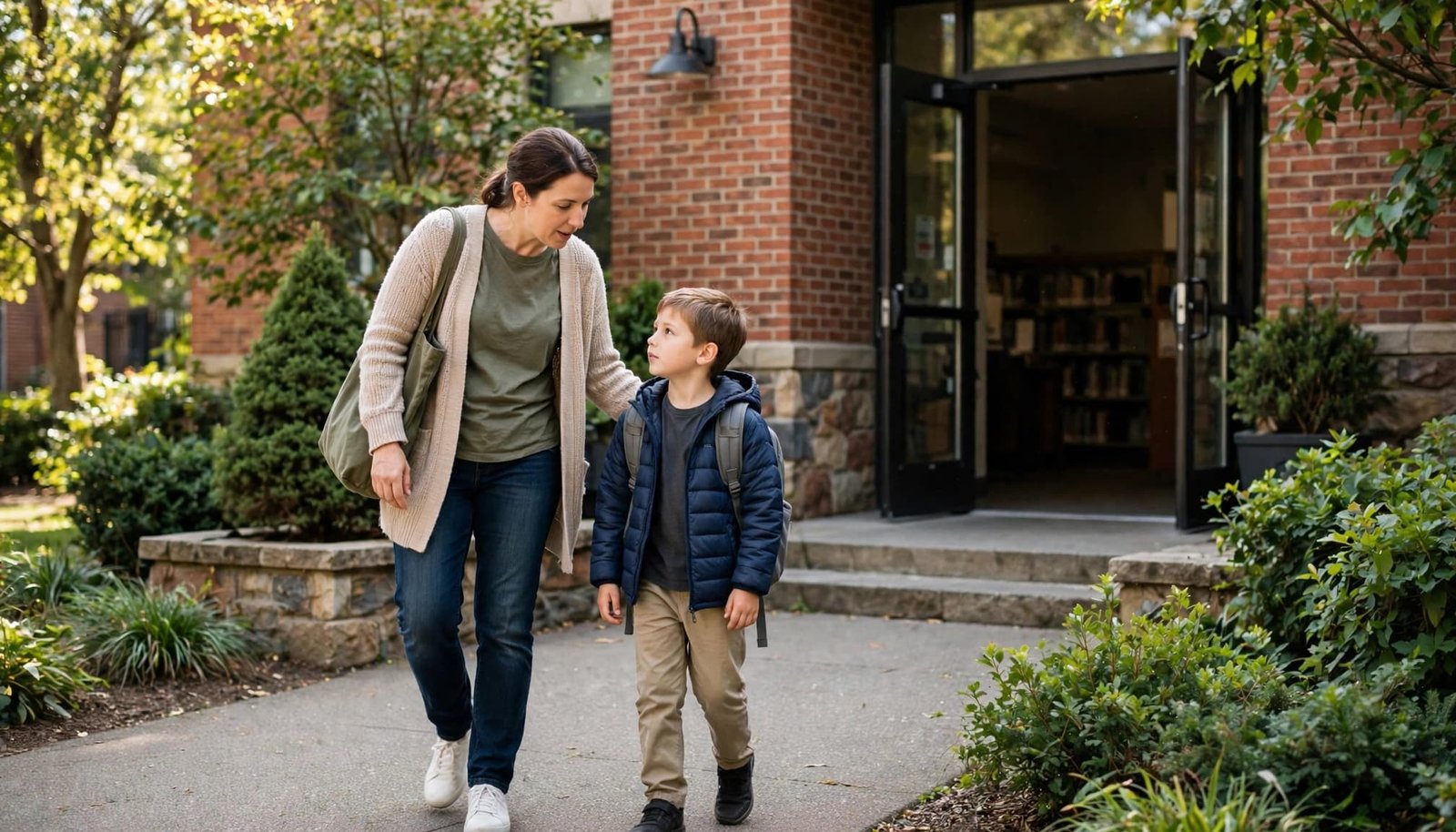
Set Clear Rules Before Leaving the House
Choose rules that match the place you plan to visit. A store may require walking feet and keeping hands to oneself, while a library calls for an inside voice. Waiting in line and staying near a parent can apply in either setting.
Keep the list short enough for your child to remember. Before leaving, ask them to repeat the expectations or act them out with you. For example, say, “Show me how you will walk in the store,” or, “What voice will you use in the library?”
Restaurants may call for remaining seated, using a napkin, and waiting while others speak. At school, your child may need to greet the teacher, follow directions, and respect classmates’ space. For a family gathering, practice saying hello, asking before taking food, and thanking the host.
Expectations should fit your child’s age and ability. The CDC recommends setting realistic, clear expectations as part of positive discipline, while the American Academy of Pediatrics’ discipline guidance supports clear rules, calm words, and redirection.
Respond Calmly When Public Behavior Goes Wrong
When behavior slips, move close and speak quietly. Name what happened, restate the rule, and offer a realistic choice: “You grabbed the toy. We keep our hands to ourselves. You can ask for a turn or stand beside me.”
For younger children, redirect them toward an acceptable action. A child who shouts in a library might whisper with you, look at a book, or step outside for a short break. If the behavior continues, use a fair consequence connected to the problem. You might leave an activity briefly or end the outing if your child cannot stay safe or respectful.
Follow through without yelling, threats, or public humiliation. Children learn more from a calm boundary than from a parent trying to win an argument in front of strangers. Afterward, return to normal conversation and notice the next successful choice.
Practice Table Manners and Family Respect at Home
Family meals are practice, not a test. Teach your child to ask before taking food, chew with their mouth closed, wait for others, offer to share, and help clean up. At home, they can also practice greeting guests and thanking people for meals, gifts, or help.
When your child forgets, give a brief reminder and model patience. Say, “Please wait until your brother has some,” or, “Try that again with a thank-you.” Consistent family routines make these habits easier to use during restaurant meals, visits, and celebrations.
You can reinforce this foundation with practical parenting strategies for raising kids well, especially when teaching respect across different families and customs. Explain that guests may greet people, eat, or show respect in different ways, and your child should watch, ask politely, and avoid making fun of unfamiliar practices.
Correct Rude Behavior Without Shame, Yelling, or Power Struggles
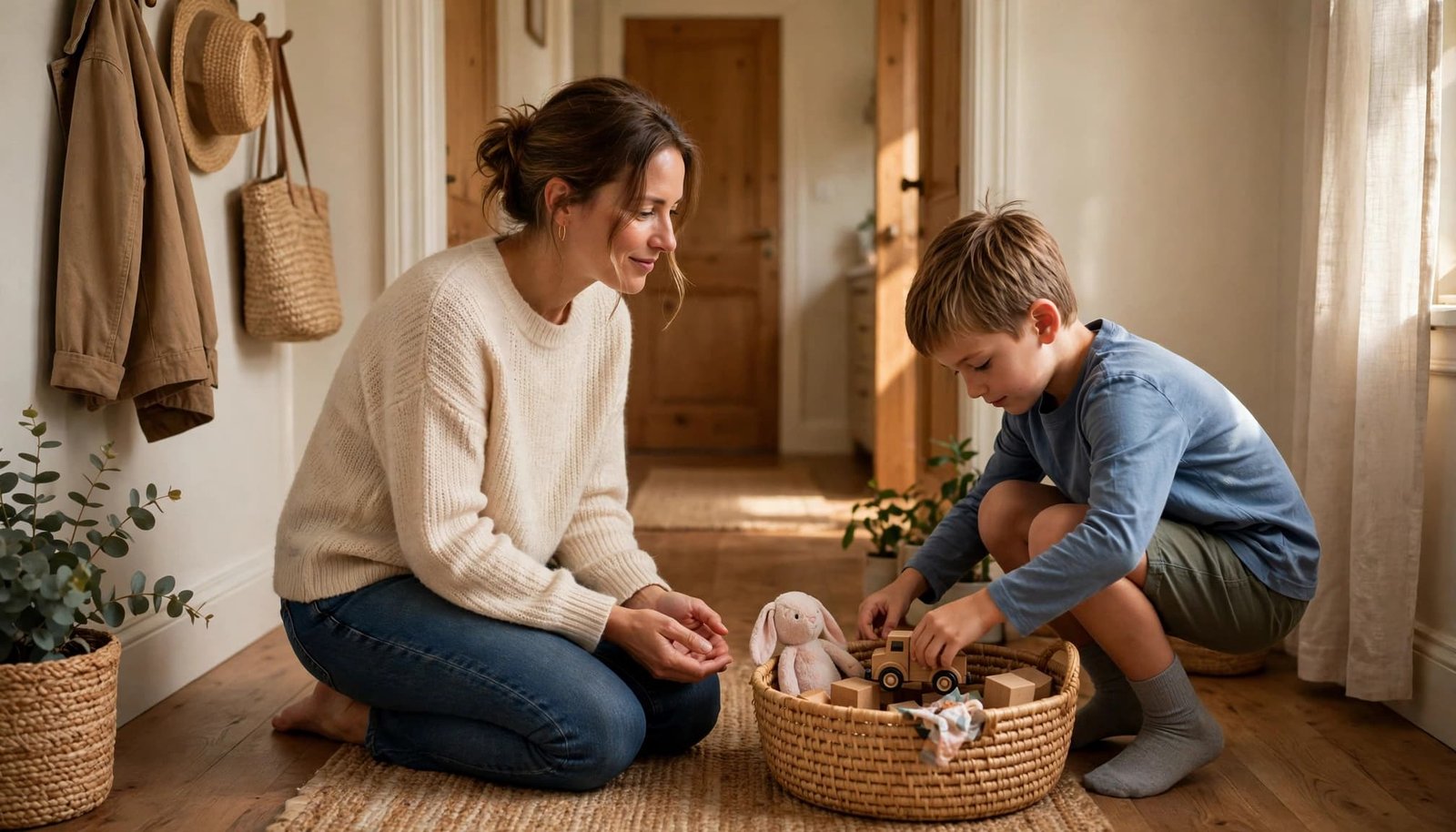
Calm, consistent correction teaches more than harsh punishment. Your goal is to show your child what happened, what to do next, and how to repair the situation without turning a mistake into a character judgment.
Use a Simple Correction Formula
Keep corrections brief enough for your child to remember. First, describe the action without labels. Next, state the expected behavior, invite your child to try again, and follow with a related consequence if needed.
For example, say, “You grabbed the toy. Ask for a turn, then we can decide what happens next.” If your child refuses, the toy can remain with the other child until they are ready to ask appropriately. That consequence connects directly to the problem, so it teaches instead of intimidating.
A child who is still learning needs practice and reminders. A child who knowingly repeats harmful behavior may need a firmer limit, such as leaving the game, returning an item, or taking a short break before trying again. Either way, avoid long lectures. The American Academy of Pediatrics recommends clear limits, calm consequences, redirection, and positive attention for appropriate behavior in its positive discipline guidance.
Teach Children How to Repair the Harm
Correction should lead to responsibility, not humiliation. Ask your child what could improve the situation, then guide them toward one specific action. Repair might involve returning an item, helping clean up, checking on someone who was hurt, or repeating the interaction with respectful words.
A sincere apology can be part of repair, but forced words aren’t the goal. Your child should understand what happened and take a meaningful step afterward. You might say, “Your words hurt your sister. You can tell her you regret it, ask if she’s okay, and try that request again.”
Once the repair is complete, reconnect and notice the better choice. Say, “You gave the toy back and asked for a turn. That was respectful.” Positive reinforcement helps your child practice the behavior you want to see again.
Avoid the Most Common Manners Mistakes
Parents often make correction harder by changing rules from one day to the next, expecting adult-level self-control, or correcting every small error. Shame, instant forced apologies, and praise reserved only for perfect behavior can also create resistance.
Coordinate basic expectations with other caregivers, especially around hitting, grabbing, greetings, and respectful language. Stay patient when your child is tired, hungry, overwhelmed, or overstimulated, because self-control drops under those conditions.
If yelling has become part of your response, review these calm communication strategies and practice pausing before you speak.
Seek extra support when aggression, defiance, or emotional outbursts remain extreme, persistent, or disruptive despite consistent guidance. Talk with your child’s pediatrician if behavior affects school, relationships, safety, or daily routines, or if communication or developmental concerns may be involved. Immediate help is appropriate for threats of self-harm or harm to others.
Conclusion
Good manners grow through daily modeling, clear expectations, practice, empathy, specific praise, and calm follow-through. Your child will forget, test limits, and need repeated chances to try again. Each reminder is part of learning, not proof that your teaching has failed.
Keep corrections brief and focus on the behavior rather than your child’s character. When frustration or defiance makes manners harder, calm strategies for strong-willed kids can help you hold firm boundaries while staying respectful.
Today, choose one or two manners to focus on. Model them during a routine, such as mealtime, play, or getting ready to leave the house. Then notice your child’s effort and name the behavior you want to see again. Small, consistent moments teach children that respect belongs in everyday interactions.
Save the pin for later

- 60 Color Tattoos That Healed Beautifully - 25/09/2026
- 40 Most Painful Tattoo Spots - 24/09/2026
- 20 Tattoo Aftercare Mistakes That Ruin Fresh Ink - 23/09/2026

