Puberty is a normal part of growing up, but it can feel confusing or embarrassing when a preteen girl doesn’t know what to expect. Preparation works best through a series of calm, age-appropriate conversations, rather than one serious talk that may feel overwhelming.
Start by giving her clear information about breast development, body hair, growth, sweating, skin changes, emotions, and periods. Explain that bodies develop on different schedules, and remind her that questions are welcome. Talking openly about common concerns for early adolescents can also help her feel less alone when body image or social worries arise.
As she becomes more independent, include her in practical planning without invading her privacy. Discuss hygiene, menstrual products, handling a period at school, body safety, personal boundaries, and the symptoms that should prompt a call to her doctor. The following steps will help you begin these conversations with confidence while respecting her growing maturity.
How to Help Prepare a Preteen Girl for Puberty
Start preparing your daughter before she notices physical changes. Puberty commonly begins between ages 8 and 13, but every child develops at a different pace. A few short, honest conversations can help her feel informed instead of surprised.
Choose calm, age-appropriate words and examples
Use correct body terms, including breasts, vagina, vulva, uterus, pubic hair, and underarm hair. Clear language helps your daughter describe what she notices and ask for medical help if something concerns her.
Explain that breast growth is often the first sign of puberty. Pubic and underarm hair may appear next, followed by a growth spurt, stronger body odor, acne, mood changes, and eventually menstruation. These changes don’t always happen in the same order, and one side of the body may develop before the other. Some girls grow quickly, while others change more gradually.

Describe vaginal discharge as a normal fluid that helps keep the vagina clean. Let her know that it may appear in her underwear before her first period. Body odor happens when sweat mixes with bacteria on the skin, so bathing, clean clothes, and deodorant can help. Acne is also common because hormonal changes can increase oil production.
Emotions may feel stronger or change more quickly during puberty. Still, avoid blaming every feeling on hormones. Listen to what is happening in her life, then talk about sleep, stress, friendships, and other possible influences.
Answer the question she asked before adding more information. Then check whether she wants additional detail. This approach respects her attention and gives her more control over the conversation.
Make ongoing conversations feel normal
Begin before her first period, then return to the topic as new changes appear. A talk about deodorant while shopping, or a question about body changes during a drive, may feel easier than a formal family meeting.
Books, simple diagrams, and trusted pediatric resources can provide useful starting points. Review them first to confirm that the information is accurate, respectful, and suitable for her age. Invite questions without demanding a long conversation, and give her private time if she prefers to think before responding.
Children with learning disabilities or developmental differences may need repeated explanations, visual examples, and extra time. Use short sentences, check her understanding, and revisit the same information without making her feel tested. Above all, protect her privacy and never turn puberty, periods, body hair, or emotional changes into a joke. A calm response today makes it easier for her to seek help later.
Explain Periods Before the First One Happens
A first period often arrives about two to three years after breast development begins, although timing varies for every child. Explain that menstruation is the monthly release of blood and tissue from the uterus through the vagina. It is a normal body process, not an illness or something she needs to hide.
Bleeding may begin as a few brown, pink, or red spots in her underwear. It may become heavier for a few days, then gradually lighten. A period commonly lasts about two to seven days, but early cycles may not follow a predictable schedule. Some girls have a light first period, while others notice a more noticeable flow.
Build a simple period kit for home and school
Before her first period, let your daughter examine pads and period underwear so the products feel familiar. Show her how a pad attaches to underwear and how period underwear fits. Pads and period underwear are often comfortable starting choices because they don’t require insertion. Follow the product directions, and change the item when it feels wet, uncomfortable, or full.
Keep supplies in two easy-to-reach places:
- Store extra products, spare underwear, and tissues or wipes in the bathroom.
- Place a few supplies, a clean pair of underwear, and a sealable bag inside her backpack.
- Use a discreet pouch or small bag so she can carry everything without drawing attention.
- Add a bag for used underwear or clothing until she can wash or dispose of it properly.
A small kit can help her respond to a surprise period with confidence. You can also review menstrual products for a school emergency kit when preparing her backpack.
Tell her which trusted adult at school can help, such as the school nurse, counselor, teacher, or office staff member. She can use a simple phrase, such as, “I need a menstrual product,” without explaining personal details in front of classmates. Preparation gives her options, and options reduce embarrassment.
Teach what is typical and what may need medical help
Early periods may come close together, arrive weeks or months apart, or occasionally skip a month. Instead of presenting one schedule as a rule, help her notice her own pattern. A calendar or period-tracking app can record the first day of bleeding, how long it lasts, flow, cramps, headaches, tiredness, mood changes, and missed activities.
Mild cramps and fatigue can happen, but symptoms shouldn’t regularly keep her from school, sports, sleep, or normal routines. Contact a clinician if she soaks through a pad unusually quickly, needs to change products every one to two hours, feels faint, or has severe or worsening pain. Medical advice is also appropriate when bleeding lasts more than seven days, repeatedly disrupts daily life, or raises concerns about anemia. Encourage her to report symptoms early so you can seek help without treating serious discomfort as something she must simply endure.
Create a Comfortable Puberty Hygiene Routine
A puberty hygiene routine should help your daughter feel comfortable, not suggest that normal body changes are dirty. Keep the routine practical and flexible, then let her take more responsibility as she gains confidence.
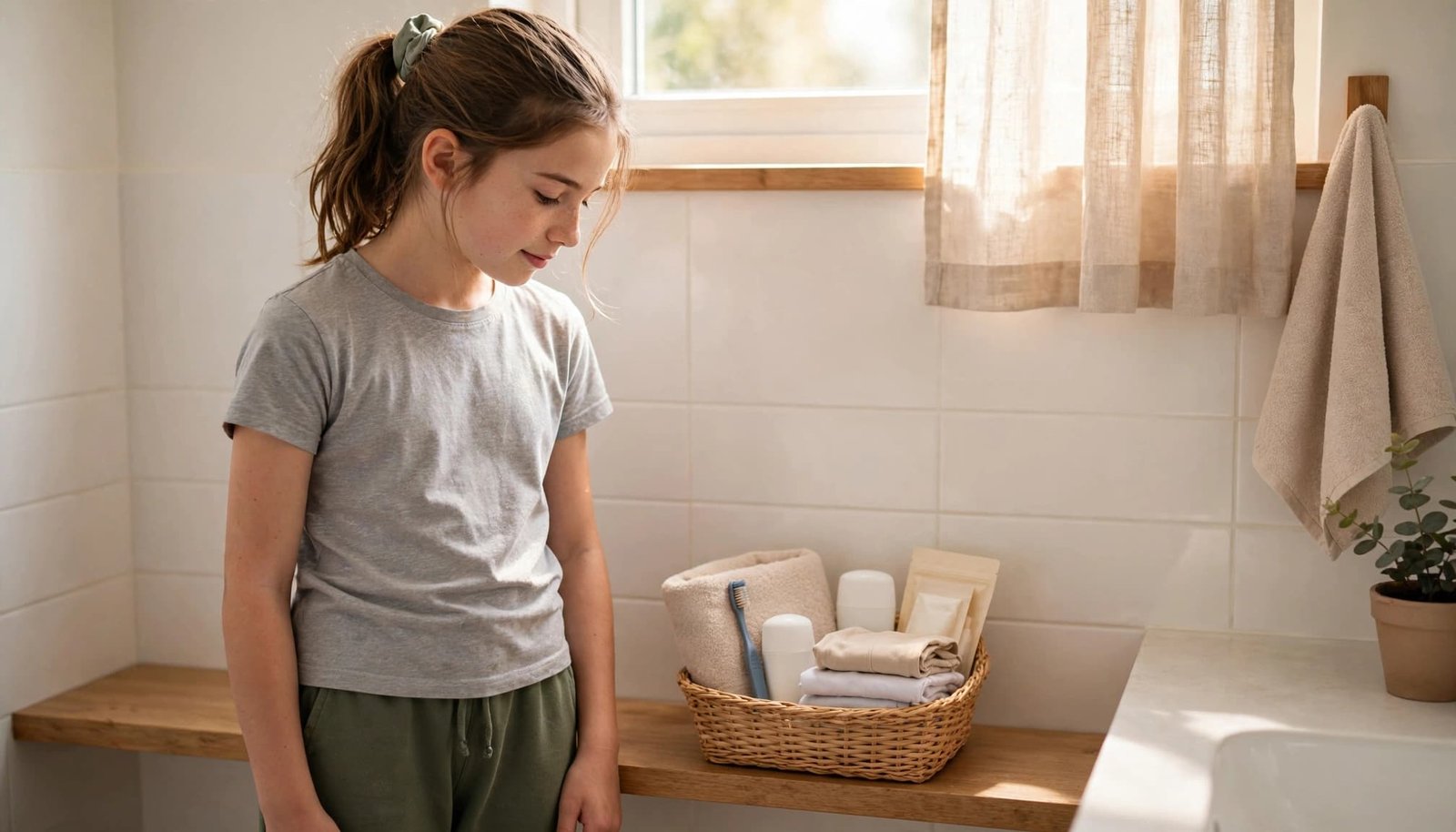
Let her practice the routine and choose useful products
Keep everyday supplies where she can reach them without asking for help. Before body odor or her first period becomes urgent, let her practice applying deodorant, using menstrual products, packing spare underwear, and placing worn clothing in a hamper.
A simple routine may include:
- Showering or bathing daily, or after sports and heavy sweating.
- Washing the underarms, feet, and other sweaty areas with a gentle cleanser.
- Using deodorant or antiperspirant when body odor begins.
- Brushing teeth twice a day and changing underwear and sweaty clothing regularly.
- Washing pajamas and bedding often enough to keep them fresh and comfortable.
Shop together when possible. She may prefer an unscented deodorant, a particular pad shape, period underwear, soft cotton underwear, or a cleanser that doesn’t sting. Respect sensory preferences, cultural practices, skin sensitivity, and her need for privacy. Healthy skin habits for tweens and teens should focus on comfort and health, not achieving a certain appearance.
The external genital area, called the vulva, can be washed gently with plain water or a mild, fragrance-free product. The vagina cleans itself, so she shouldn’t douche or use scented sprays, bubble baths, perfumed wipes, harsh soaps, or deodorant products there. If she has ongoing itching, burning, pain, rash, or irritation, contact her pediatrician rather than adding more products.
Shaving is optional. Body hair doesn’t need removal for cleanliness, and she should never feel pressured to shave. If she wants to try, show her how to use a clean razor with warm water and shaving gel, move slowly, avoid sharing razors, and rinse and dry the razor afterward.
Talk about body changes without body shame
Sweat, body hair, acne, discharge, and a changing body shape are normal parts of development. Help her solve practical problems without calling her body unattractive, unhealthy, or embarrassing. Natural odor is a hygiene concern to manage, not a personal failure.
For acne or sweaty skin, encourage gentle cleansing once or twice daily and after exercise. Aggressive scrubbing, picking, and squeezing can worsen irritation and lead to marks. Comfortable clothing, breathable fabrics, and a supportive bra or camisole can help if she wants extra coverage or support.
Most importantly, avoid criticizing her weight, skin texture, hair, or shape. If acne becomes painful or persistent, or if skin irritation continues despite gentle care, ask a health professional for advice. A calm response teaches her that caring for her body is routine, while shame has no place in the process.
Support Her Emotions, Privacy, and Growing Independence
Puberty can make a preteen feel self-conscious, irritable, anxious, or unusually sensitive. Hormones and social pressure may affect her feelings, but they don’t excuse cruelty, unsafe behavior, or hurtful treatment of others. Listen before offering advice, validate what she feels, and check in without hovering. Ongoing conversations about helping kids express their feelings can make it easier for her to speak up when something feels wrong.
Help her handle school, friends, and awkward moments
Create a discreet plan before she needs it. Ask which teacher, school nurse, counselor, or other trusted adult she would feel comfortable approaching if she gets her period, notices body odor, stains her clothes, or feels unwell. Practice a short phrase such as, “I need to visit the nurse,” or “Can I speak with you privately?” She doesn’t need to explain personal details in front of classmates.
Friends may develop at different times, and comparison can make normal changes feel embarrassing. Remind her that early or later development doesn’t determine her value, maturity, or attractiveness. If she feels different, listen first instead of quickly saying that everything is fine. A response such as, “That sounds uncomfortable, and I’m glad you told me,” shows that you take her experience seriously.
Protect her privacy at home and outside it. Don’t share stories about her period, body, clothing, or emotions with relatives or friends without permission, even when you think the story is harmless. If another adult needs information for her safety or care, explain what you plan to share and why.
Build confidence through choices and respectful boundaries
Give her reasonable control over clothing, deodorant, menstrual products, and when she wants to discuss body changes. You can offer guidance while allowing her to choose between suitable options. She may also want a private place to change clothes, bathe, manage her period, or calm down after a difficult day. Respect that need while reminding her that a trusted adult remains available.
Model consent in ordinary moments. Knock before entering her room or bathroom, ask before checking her body or belongings, and don’t discuss her development where others can hear. These habits teach her that privacy applies to everyone.
Explain the difference between private care and frightening secrecy. She can keep period management private, but no adult or peer should ask her to hide unwanted touch, threats, sexual behavior, or messages. Tell her clearly that she can say no, move away, and report anything that feels wrong. She should know several trusted adults she can contact, and she should hear, “You can tell me, and you won’t be in trouble.”
Include digital safety in the same conversation. She should never share private images or respond to inappropriate requests. If someone pressures or contacts her, she can stop replying, block the account, save evidence, and tell a trusted adult. She can also ask questions, change her mind, and seek help at any point.
Know When Puberty Timing or Symptoms Need a Doctor’s Advice
Most puberty changes are normal, but parents should know when to ask for medical guidance. A doctor’s visit can provide reassurance, identify health concerns early, and help your daughter understand her body without fear.
Use regular checkups as a safe place for questions
Bring puberty concerns to routine pediatric visits, even when your daughter seems healthy. Before the appointment, write down questions and track changes such as breast development, body hair, discharge, periods, cramps, bleeding patterns, appetite, sleep, mood, and energy.

The doctor may ask about her growth pattern, family history, nutrition, medications, activity level, and emotional well-being. These details help the clinician understand the full picture rather than judge one symptom in isolation. An evaluation doesn’t mean something is seriously wrong. Often, it confirms that development is following a healthy pattern.
Ask whether your daughter can spend part of the appointment alone with the clinician. Private time is a normal part of adolescent healthcare and gives her a chance to mention pain, period concerns, body changes, bullying, anxiety, or other topics she may not discuss in front of you. Tell her beforehand that the doctor will protect her privacy while involving you when safety concerns require adult support.
Pay attention to the whole child, not just the calendar
Timing guidelines can help you know when to call, but age alone doesn’t explain every child’s development. Signs of puberty before age 8, including breast development or pubic hair, should be discussed with a pediatrician. Medical advice is also appropriate when breast development hasn’t started by age 13, menstruation hasn’t begun by about age 15, or more than three years have passed since breast development began without a first period.
Contact the doctor sooner for severe or worsening menstrual pain, very heavy bleeding, bleeding that lasts longer than seven days, faintness, unusual tiredness, or other possible signs of anemia. Persistent vaginal itching, burning, rash, pain, or irritation also deserves medical review. You can learn more about when period pain needs medical attention.
Emotional health matters just as much as physical growth. Seek help when anxiety, sadness, irritability, withdrawal, or mood changes interfere with school, sleep, friendships, family relationships, or daily activities. Sudden changes deserve prompt attention, even when they don’t match a specific age cutoff.
Avoid comparing siblings or classmates, since healthy development varies widely. Don’t start supplements, hormones, acne treatments, or other remedies without professional guidance. A pediatrician can recommend the right next step based on your daughter’s growth, symptoms, and overall health.
Conclusion
Preparing a preteen girl for puberty starts with early, honest conversations. Explain physical changes in clear language, prepare a period kit before she needs it, and teach gentle hygiene without making her feel ashamed of her body. Also discuss privacy, consent, body safety, and the trusted adults she can approach when something feels wrong.
Keep watching her overall well-being, and seek medical guidance when puberty timing, bleeding, pain, or other symptoms seem unusual. Creating emotional safety for girls makes it easier for her to share concerns and ask for help.
Your goal isn’t to predict every change or deliver a perfect puberty talk. A warm, ongoing relationship matters more. When your daughter feels informed, respected, and supported, she can approach puberty with greater confidence and know she never has to manage concerns alone.
Save the pin for later


- 60 Color Tattoos That Healed Beautifully - 25/09/2026
- 40 Most Painful Tattoo Spots - 24/09/2026
- 20 Tattoo Aftercare Mistakes That Ruin Fresh Ink - 23/09/2026

