Knee pain can make walking, climbing stairs, and even getting out of a chair feel harder than it should. The good news is that the right knee strengthening exercises can help support the joint by building the quads, hamstrings, glutes, and hips, which often improves comfort and mobility over time.
If your knees feel stiff, weak, or sore, this guide will help you start with simple knee exercises that don’t feel overwhelming. You’ll also learn who these knee pain relief exercises can help, how to warm up, how to do each move with good form, and how to build a routine that helps strengthen knees safely. Mild muscle work is normal, but sharp pain isn’t, so stop and get medical advice if that happens.
A helpful demo to pair with this guide is this knee strengthening video.
Why stronger muscles can take pressure off painful knees
Your knee does not work alone. It relies on the muscles above and below it to guide motion, absorb force, and keep the joint from taking more stress than it should. That is why knee strengthening exercises often help with both knee pain relief and better mobility.
When those support muscles are weak, the knee can wobble, twist, or carry more load with every step. Over time, that can make walking, standing up, and stairs feel harder. Stronger muscles help spread that load out, which is one reason quadriceps strengthening can improve knee pain and function in many people.
The key muscle groups that support the knee
The main goal is not just to strengthen the knee itself. You want to build the whole support system around it.
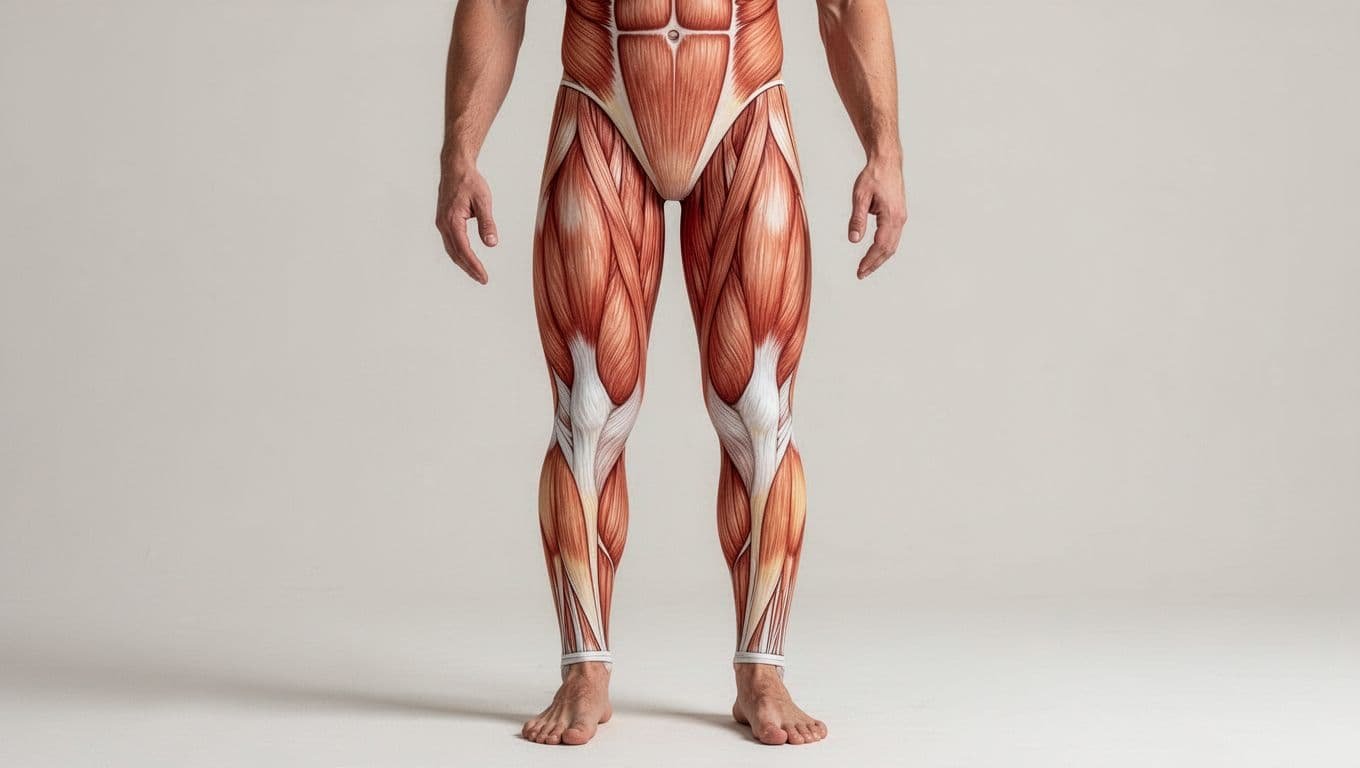
Your quadriceps, on the front of the thigh, help straighten the knee. They work hard when you stand up from a chair, climb stairs, or control your body as you walk downhill. If they are weak, the knee often takes more strain during daily movement, which can make knee pain more noticeable.
The hamstrings, on the back of the thigh, help bend the knee and support it from behind. They also slow the leg down during walking, which helps the joint move with more control. Along with the quads, they create balance around the knee instead of leaving one side to do all the work.
Your glutes are just as important. They help control the hip and keep the thigh aligned as you walk, rise from a chair, or go up stairs. Strong glutes can reduce extra pressure through the knee, which is why many knee pain exercises include bridges, sit-to-stands, and other hip-focused moves. If you want a broader plan later, these beginner leg workouts for stronger knees can help you build a routine that sticks.
Then there are the calves, which support the ankle and help push you forward when walking. They also help with balance and shock control. If the calves are weak or tight, the knee may have to compensate during simple knee exercises.
Finally, the side hip muscles, often called the hip abductors, help keep the knee from caving inward. That inward collapse is common when stepping down, climbing stairs, or doing squats. Good side hip strength keeps the leg tracking better, which can make knee strengthening work safer and more effective.
If the hips and thighs are doing their job, the knee usually has to do less.
When exercise helps, and when to slow down
Gentle knee pain relief exercises often help when the problem is stiffness, mild weakness, or everyday aches from sitting too much, doing too little, or returning to activity too fast. In those cases, light strength work, walking, and even simple knee streching can improve comfort over time. Some recent research also suggests that home-based strengthening and stretching can reduce pain and improve function for many people with ongoing knee issues, as seen in this report on home exercise for knee pain.
Still, some signs mean you should pause and get checked first. Slow down and seek medical care if your knee is swollen, locks, gives way, or became painful after a recent fall, twist, or direct hit. The same goes for severe pain, a sudden loss of motion, or pain that keeps getting worse instead of easing with lighter activity.
A little muscle burn is normal. Sharp joint pain is not. If an exercise makes your symptoms spike and stay worse, back off and get guidance before you try to strengthen knees further.
Start safely with a short warm up and a few basic rules
Before you jump into knee strengthening exercises, give your joints and muscles a minute to wake up. A short warm up can ease stiffness, improve mobility, and help your knees move more smoothly. It also makes the exercises feel less abrupt, which matters if you’ve had knee pain for a while or you’re just getting back into movement.
Good form matters, but so does good judgment. During knee exercises, you want to notice the difference between normal muscle work and pain that signals trouble. That simple habit can help you strengthen knees more safely and make your routine easier to stick with.
A quick warm up for better knee mobility
You don’t need a long routine. A few gentle moves are enough to get blood flowing and loosen up the knees before you start your knee pain relief exercises.
Start with this easy sequence:
- March in place for 1 to 2 minutes. Lift each knee only as high as feels comfortable. Let your arms swing naturally.
- Do slow heel digs for 30 to 60 seconds. Tap one heel forward, then switch sides. Keep your posture tall.
- Try seated or standing knee lifts for 30 seconds. Move with control, not speed.
- Rock your weight from heel to toe for 30 seconds. This helps wake up the ankles and calves, which also support the knee.
- Do a few gentle mini bends for 30 seconds. Hold a chair or counter if needed, then bend the knees slightly and stand back up.
- Finish with easy leg swings or knee straightening for 30 seconds each side. Keep the range small and comfortable.
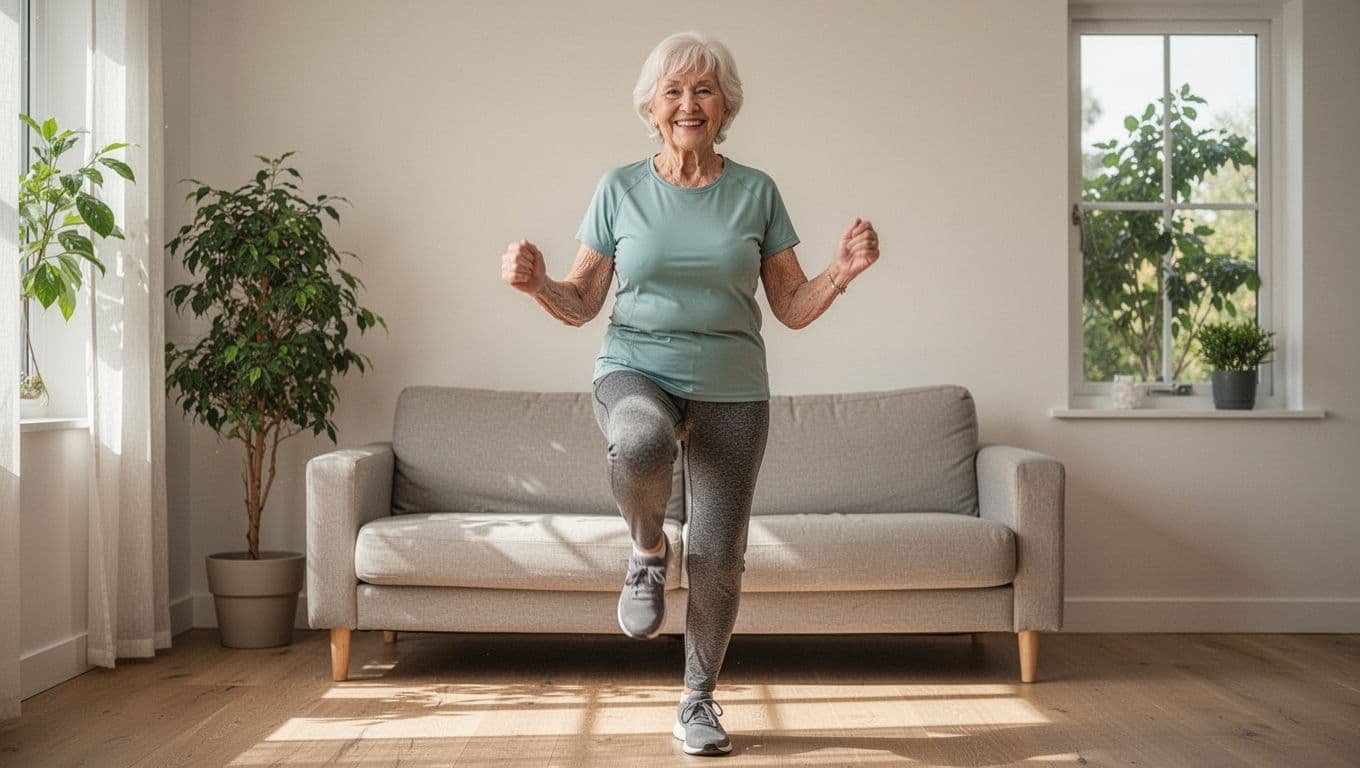
If your knees feel cold or stiff, take a little longer. A warm up should feel gentle, not tiring. The goal is to prepare your body, not turn the warm up into the workout. For more simple ideas, these safe knee stretches and exercises can help.
How to judge pain during knee exercises
Some discomfort during knee strengthening is normal. The key is knowing what kind of discomfort you’re feeling.
Effort usually feels like muscle work or a mild burn in the thighs, hips, or calves. That’s common during knee pain exercises, especially if your muscles are weak. Stretch feels like mild pulling or tightness, such as in the hamstrings or calves during knee streching. Both can be okay if they stay light and settle soon after the set ends.
Sharp pain is different. It may feel sudden, stabbing, pinchy, or deep inside the joint. If your knee catches, swells, gives way, or the pain rises as you keep going, stop and scale back.
A simple guide can help:
- Mild muscle effort is usually okay.
- Gentle stretching is usually okay.
- Sharp joint pain is a warning sign.
- Pain that changes your form is too much.
A little soreness later on can be normal, especially when you’re starting knee exercises or adding more reps.
What matters most is what happens next. If the soreness fades within a day or so and your knee returns to its usual baseline, you’re likely in a safe range. If pain gets worse and stays worse, the routine may be too much for now. In that case, reduce the range of motion, do fewer reps, or take more rest between sessions. The AAOS knee conditioning guidance also supports starting gently and building up over time.
The best knee strengthening exercises for pain relief and better mobility
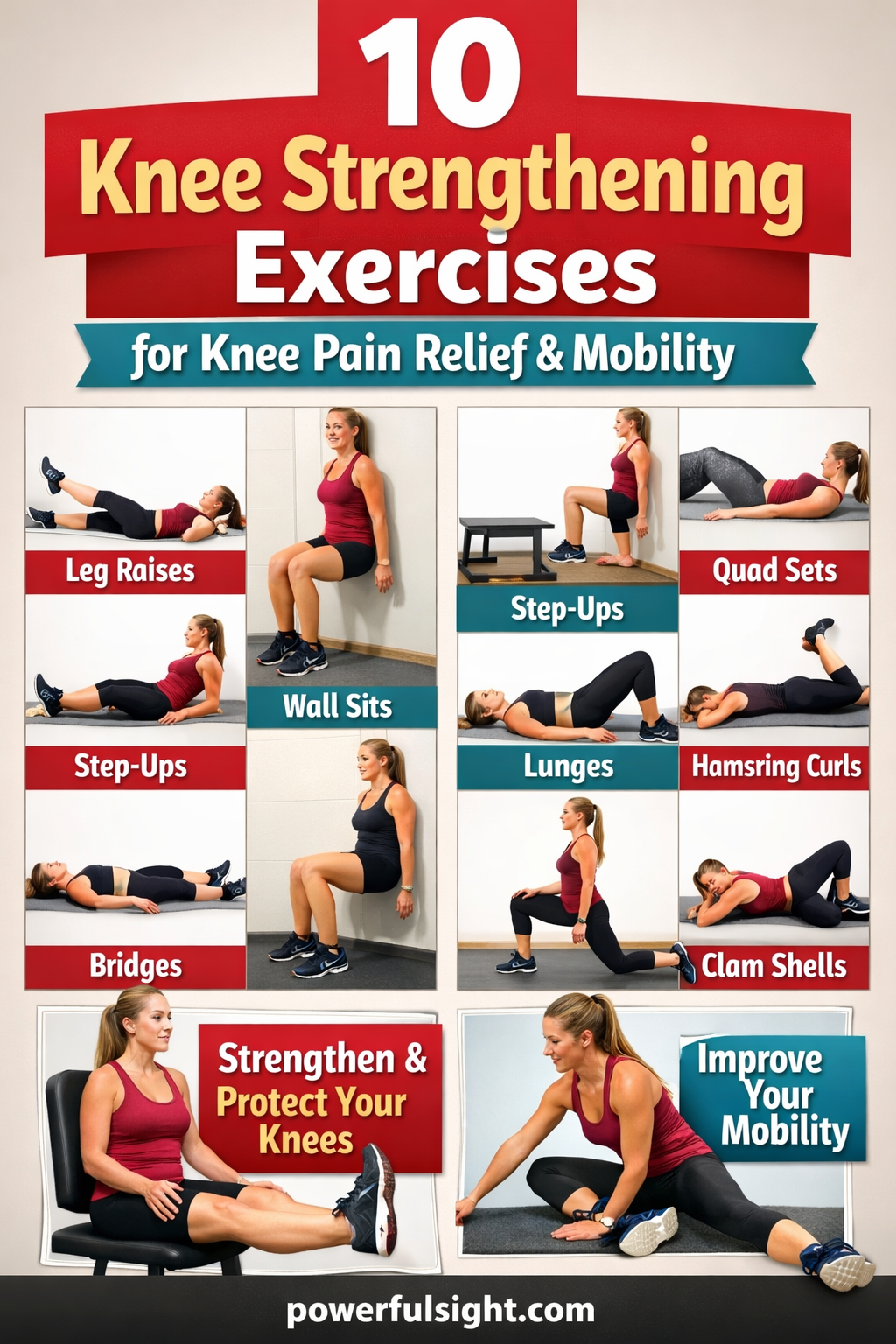
Once your warm up is done, the next step is picking knee strengthening exercises that match your current pain level and control. Start with moves that feel smooth and manageable, then build toward standing work and balance drills. That approach helps you strengthen knees without asking too much from a sore joint on day one.
Recent guidance from orthopedic and rehab sources continues to support simple strength work for the quads, hamstrings, glutes, and hips because those muscles help reduce knee load and improve mobility. If you want another visual guide for home practice, Healthline’s exercise examples for knee pain are a useful reference.
Start with low impact moves that wake up the muscles
If your knee feels stiff or cranky, begin on the floor or a mat. These beginner-friendly knee pain relief exercises build support without much joint stress, which makes them a smart starting point for many people.
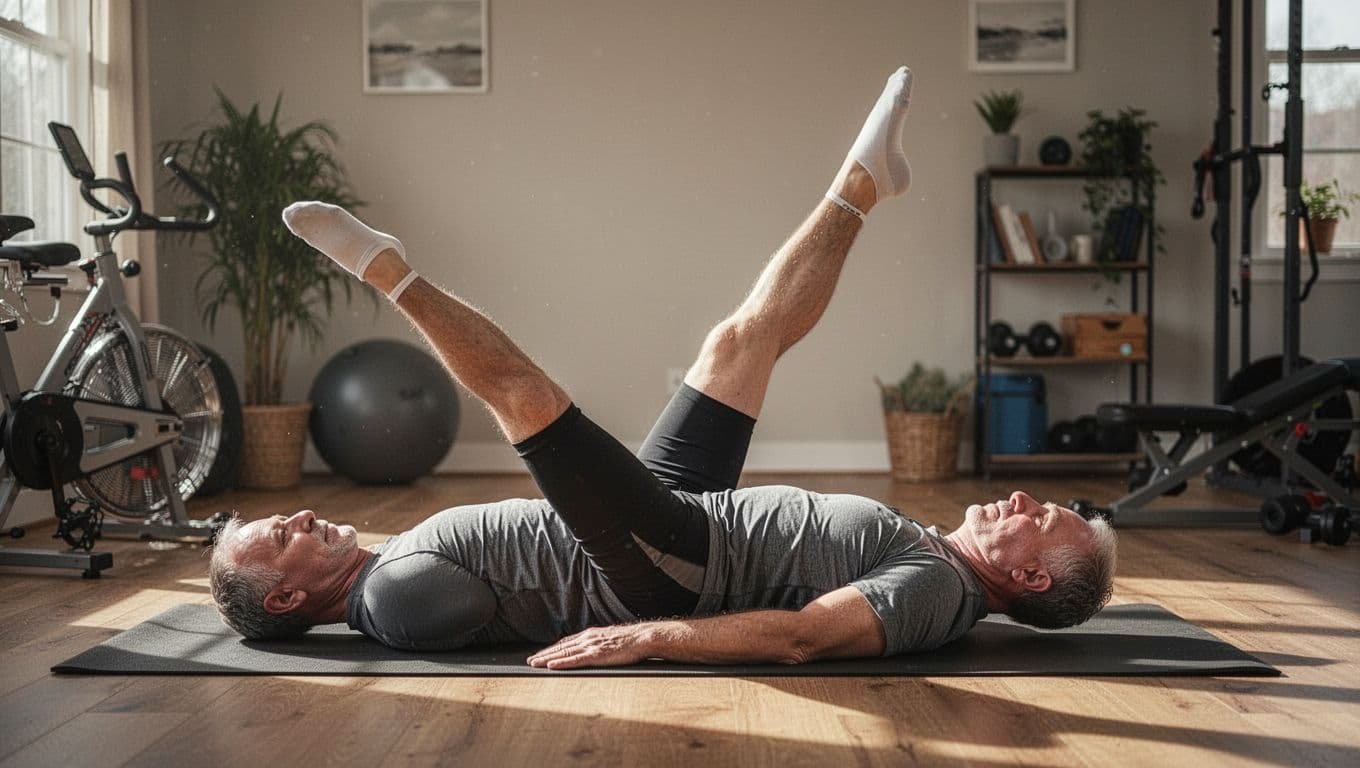
The straight leg raise is one of the best places to begin because it trains the front of the thigh while the knee stays mostly still. Lie on your back, bend one knee, and keep the other leg fully straight. Tighten the thigh, then lift the straight leg a few inches with control. The big cue is simple: don’t let the knee bend as the leg comes up. Lower it slowly, because the lowering phase builds control too.
Next, add the hamstring curl. Stand tall and hold a chair or counter if needed. Bend one knee so your heel moves toward your glutes, then lower it slowly. Keep the motion steady rather than snapping the foot up and down. Slow curls help the back of the thigh support the knee better during walking and stair work.
Then use the glute bridge to wake up the hips and backside. Lie on your back with both knees bent and feet flat. Press through your feet, squeeze your glutes, and lift your hips until your body forms a gentle line from shoulders to knees. Try not to arch your low back or push mostly from the hamstrings. Lift with the glutes, pause, then lower with control. The AAOS knee conditioning program includes similar low-stress strength work for building joint support.
Build knee stability with hip and side leg work
A knee rarely tracks well if the hip is weak. That’s why some of the best knee exercises don’t look like knee exercises at all. They train the side hip muscles that help keep the thigh from rolling inward, which can reduce knee cave-in during squats, steps, and stairs.
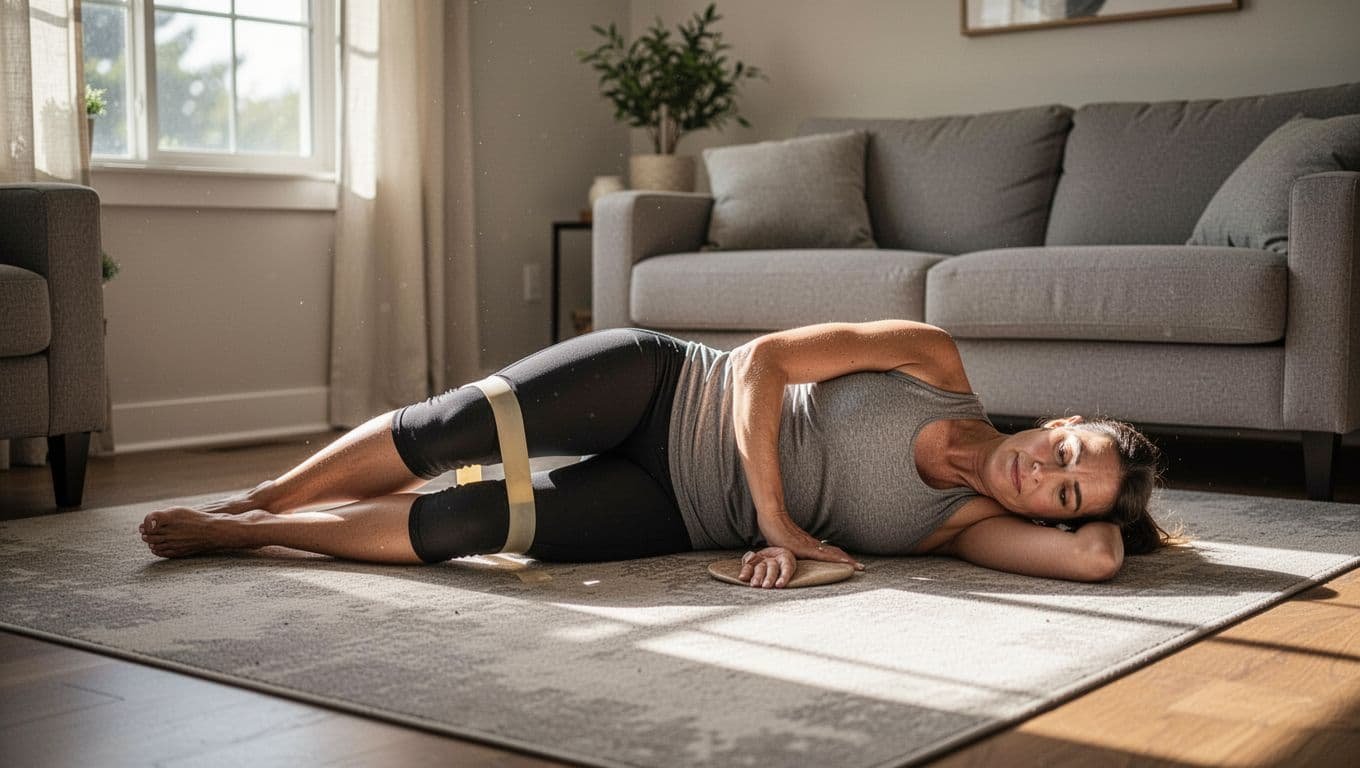
Start with the clamshell. Lie on your side with knees bent and feet together. Keeping your feet touching, lift the top knee without rolling your pelvis backward. The target is the side of the hip, not your lower back. If you feel your body rocking, the range is too big. Small, clean reps work better than wide, sloppy ones.
You can follow that with standing hip abduction or side steps. For standing hip abduction, hold a support and move one leg out to the side without leaning your torso. For side steps, keep a slight bend in the knees and step sideways with control. Many people make the steps too tiny or rush through them. Give each rep enough space to challenge the hips, but don’t let the knees collapse inward.
The last move here is toe taps. Stand on one leg and lightly tap the other foot forward, to the side, or behind you. This teaches your standing leg to stay steady while the rest of your body moves. Done well, toe taps are simple but effective knee pain exercises for alignment. If your knee dives inward, slow down and make the taps smaller. For a broader look at why hip strength matters, Cleveland Clinic’s knee arthritis exercise guide highlights bridges, mini squats, and balance work as helpful options.
Stronger hips often make the knee track better, especially during steps, squats, and stairs.
Use standing strength exercises to improve daily movement
Once the basics feel solid, move into standing patterns that carry over to real life. These knee strengthening exercises help with everyday tasks like sitting down, standing up, and climbing stairs.
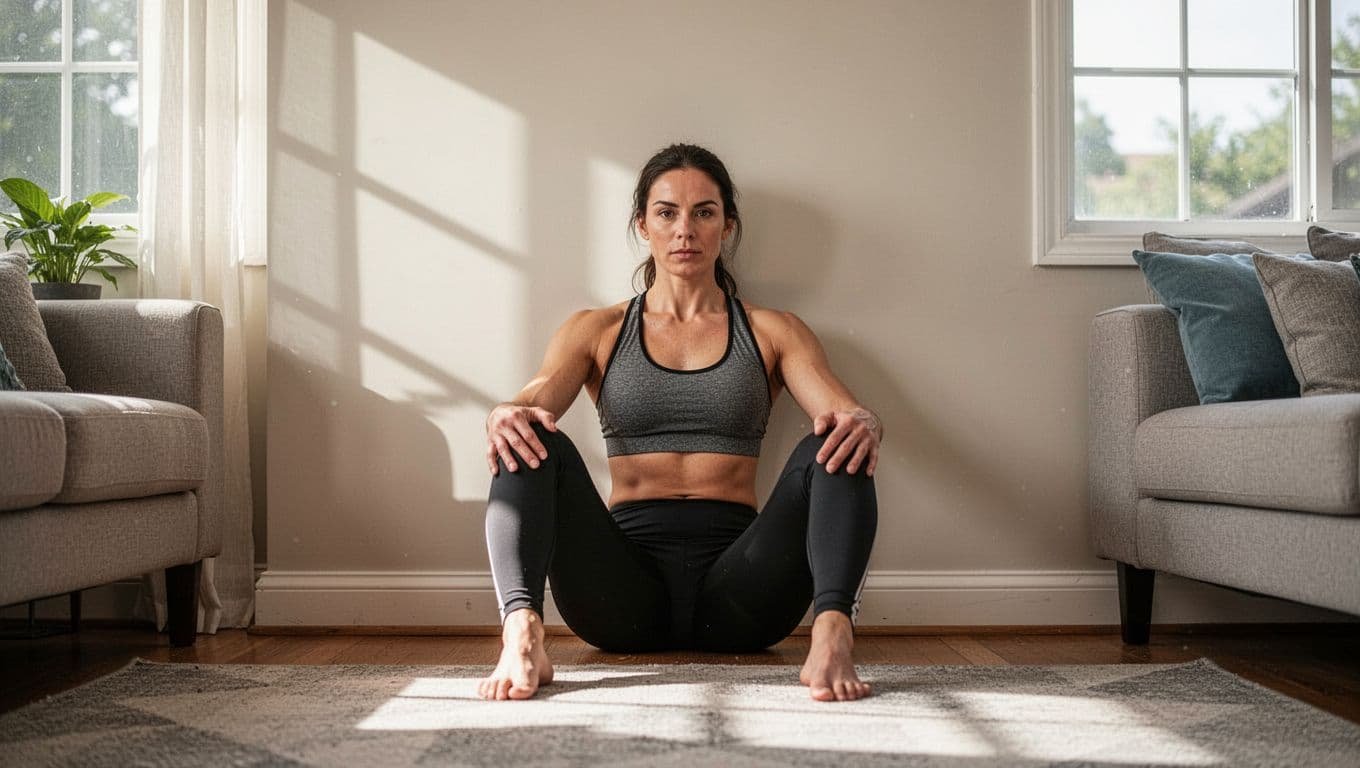
The wall sit builds quad strength without repeated knee motion. Stand with your back against a wall, slide down into a shallow or moderate bend, and hold. You don’t have to drop into a deep 90-degree position if that bothers your knee. A shorter hold with a smaller bend still counts. This move can make chair rises feel easier because your quads learn to handle load for longer.
Then come step-ups, one of the most practical knee pain relief moves in the group. Step onto a low platform or stair, press through the whole foot, and stand tall before stepping back down slowly. Keep the knee lined up over the foot rather than drifting inward. If pain shows up, lower the step height or hold a rail or counter for support. Health’s guide to knee-strengthening exercises also includes wall sits, hamstring curls, and clamshells for this reason, they build usable strength without a lot of equipment.
Finally, try the split squat. Take a short staggered stance, then bend both knees slightly as you lower straight down. This move trains each leg more directly, which helps if one side is weaker. Still, it doesn’t need to be deep to be useful. Use a chair, wall, or countertop for balance, and keep the range shallow if your knee pain flares. Over time, this exercise can make getting up from the floor, lowering into a chair, and climbing stairs feel less awkward and less demanding.
Challenge balance to help the knee feel more stable
Strength matters, but control matters too. Balance work teaches the leg to react and stay steady, which can improve confidence as much as strength.
The main drill here is the single-leg balance with reach. Stand on one leg, keep a soft knee, and reach the opposite hand forward or slightly to the side. Your goal is to stay level through the hips while the standing knee stays quiet and centered. If needed, keep one finger on a wall at first. This is a natural next step after toe taps, which build the same kind of control with less challenge.
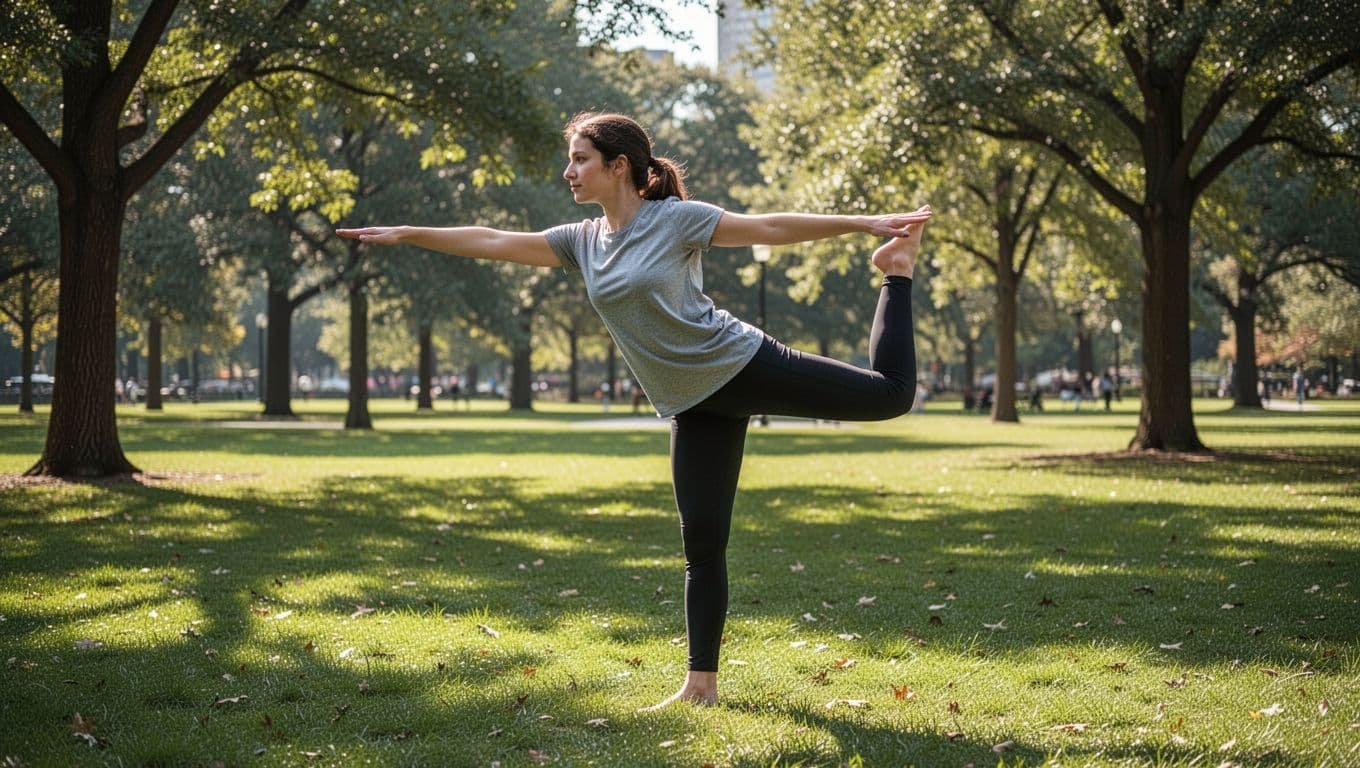
Used consistently, balance drills can make walking, turning, and uneven ground feel less shaky. That extra control can support mobility, reduce fear of movement, and make your other knee strengthening work pay off more.
Common mistakes that can make knee pain exercises less effective
Even the best knee strengthening exercises can fall flat if your form slips or your volume climbs too fast. Small errors change where the work goes, and then your hips, back, or stronger leg start taking over. If your goal is knee pain relief and better mobility, clean reps matter more than grinding through a long set.
Form issues to watch for during knee strengthening
A few form mistakes show up again and again in knee exercises, especially when you’re tired or trying to do too much too soon. The tricky part is that they can make a move feel easier in the moment while making it less useful over time.
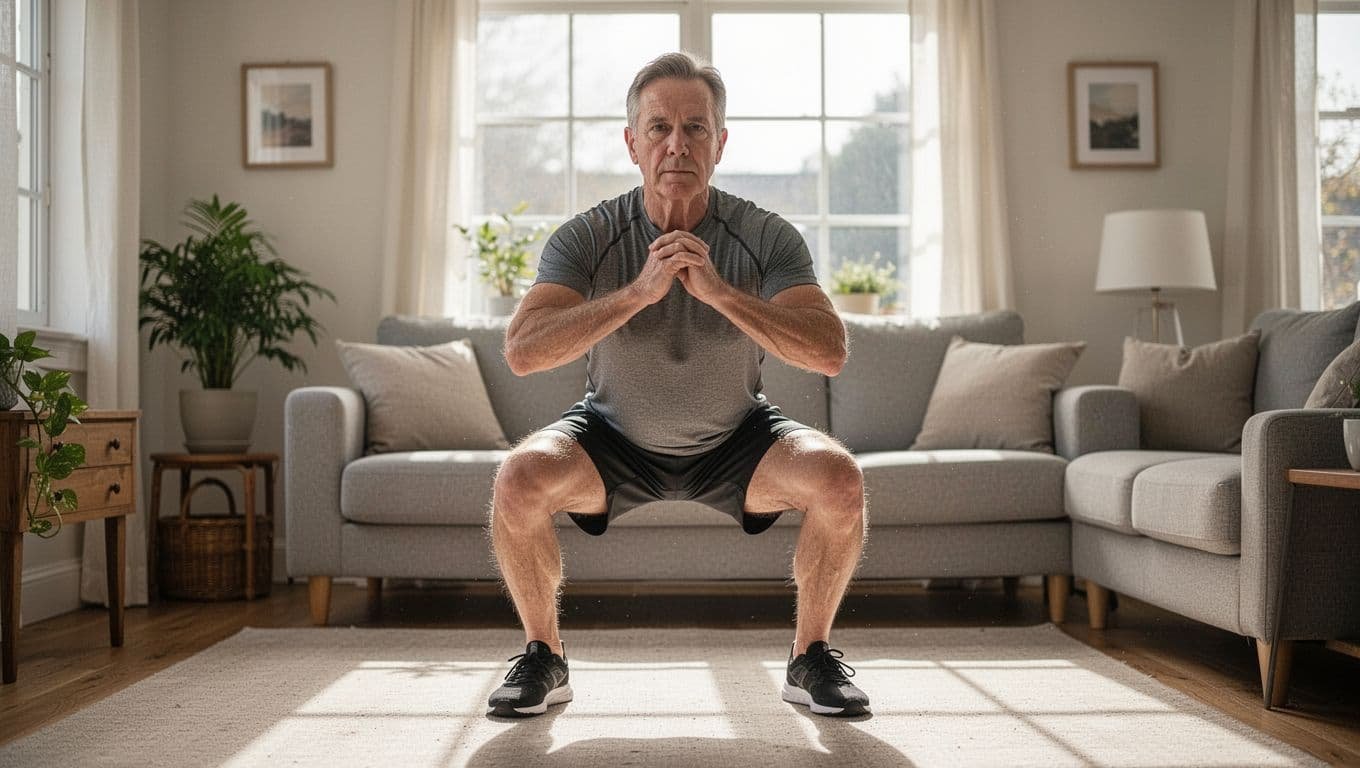
One of the biggest problems is knees caving inward during squats, sit-to-stands, step-ups, or split squats. When that happens, the hip usually loses control and the knee tracks poorly. A good fix is to slow the rep down, keep your foot planted, and watch that the knee stays lined up with the middle of the foot.
Step-ups cause another common issue. Instead of pressing through the working leg on the step, many people push off the floor with the trailing leg. That turns a strength move into a shortcut. If you barely feel the front leg working, lower the step height and rise more slowly so the top leg does the job.
Your lower back can also sneak into the movement. This happens a lot in bridges, straight leg raises, and standing work when you arch the lower back to get extra range. It may look like more motion, but it often shifts effort away from the hips and thighs. Keep your ribs down, brace your stomach lightly, and stop the rep before your back takes over.
Another mistake is letting momentum do the work. Fast reps, bouncing, or swinging may help you finish the set, but they reduce muscle control. For knee pain exercises, control is the point. A slow lift and an even slower lowering phase usually clean up the movement right away.
If your form breaks, the set is already too hard for now.
Slowing down fixes more than most people expect. It gives you time to feel where the load is going, catch knee drift, and stop compensating with your back or stronger leg. If needed, count a simple rhythm in your head: up for two seconds, down for three.
For more examples of common setup and control errors, this physical therapist guide to knee pain strengthening exercises is a useful reference.
Why more reps is not always better
When your knee hurts, it’s easy to assume that more work means faster progress. In reality, rushing usually backfires. Knee strengthening works best when you build it like a staircase, one steady step at a time.
For most people, 2 to 3 sets of 8 to 15 reps is enough, depending on the move. A wall sit may use time instead of reps, while a bridge or straight leg raise fits that rep range well. You don’t need to chase exhaustion to strengthen knees. You need reps that stay smooth from start to finish.
More reps often lead to sloppy form, and sloppy form makes knee pain relief exercises less effective. Once your knee starts caving, your back starts arching, or you begin rushing, the quality drops. At that point, extra reps are just extra fatigue.
Rest matters too. Muscles get stronger between sessions, not only during them. If your legs feel heavy or your knee pain lingers into the next day, take a rest day or cut back. Many people do well with knee strengthening every other day, especially at the start.
A simple progression works well:
- Start with a range that feels controlled.
- Keep the same reps for a week or two.
- Add a few reps, a bit more hold time, or a small increase in range.
- Progress only if your knee feels stable afterward.
That slower approach often brings better mobility and more lasting knee pain relief than doing too much too soon. If you also tend to overdo stretches, this piece on knee pain exercises to avoid offers a helpful reminder that more effort is not always better, especially when knee streching or strength work already irritates the joint.
How to turn these 10 exercises into a simple weekly routine
A good routine should feel doable, not like a second job. The easiest way to use these knee strengthening exercises is to group them by effort level. Start with low-impact floor or standing support moves, then add one strength move and one balance drill so your knees build control without getting overloaded.
You also don’t need to do all 10 exercises in one session. For most people, 3 days per week is enough at the start, with a rest day between sessions. Keep pain mild, around 3 out of 10 or less, and make sure your knee settles back to normal by the next day before you do more.
A beginner friendly plan for the first two weeks
For the first two weeks, keep the plan simple and repeatable. Your goal is to practice the movements, wake up the right muscles, and build trust in your knee again. That means starting with low-impact knee pain relief exercises first, then finishing with one standing strength move and one balance move.
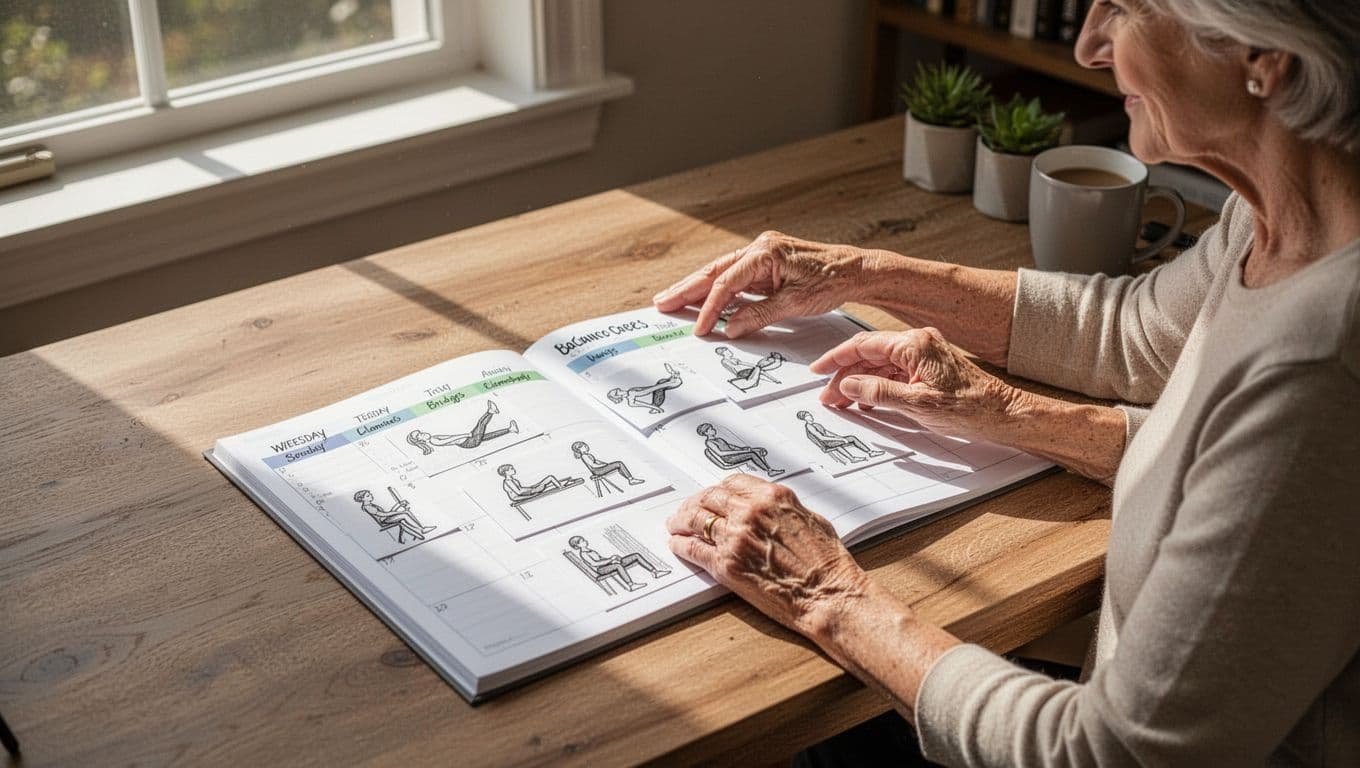
A simple week can look like this:
- Day 1
- Straight leg raises
- Glute bridges
- Clamshells
- Wall sit
- Single-leg balance with support
- Day 2
- Rest, walking, or easy knee streching
- Day 3
- Straight leg raises
- Hamstring curls
- Standing hip abduction
- Step-ups on a low step
- Toe taps
- Day 4
- Rest or light mobility work
- Day 5
- Repeat Day 1 or Day 3, based on which felt better
For each exercise, start with 2 sets of 8 to 10 reps. For wall sits, hold 10 to 20 seconds. For balance work, aim for 15 to 20 seconds per side while lightly holding a chair or wall if needed. That is enough to strengthen knees without turning a good plan into a flare-up.
If your knee feels stiff, do the warm-up from earlier first. Then move slowly and keep the range small. A short session done well beats a long one done with poor form every time. If you want another visual example of a gradual plan, this simple 4-week knee exercise guide gives a helpful overview.
In the first two weeks, consistency matters more than intensity.
How to progress without flaring up knee pain
Once the routine feels smooth, progress in small steps. That part matters. Many people feel good for one session, add too much, and then wonder why the knee feels angry the next day.
The safest way to build knee strengthening is to change one thing at a time. For example, you can:
- Add 2 to 3 reps per set
- Hold a wall sit or balance drill 5 seconds longer
- Add a light resistance band to clamshells or side steps
- Move to a slightly harder version, such as a deeper mini squat or a taller step-up
Keep the rest of the workout the same when you make that change. If you raise reps, don’t also add a band and longer holds in the same week. Small jumps are easier on the joint and easier to track.
The next-day check is your best filter. If your knee pain stays low, there is no swelling, and you feel back to your usual baseline within 24 hours, you can progress again. If pain lingers, your knee feels more stiff, or stairs suddenly feel worse, scale back. That usually means fewer reps, a shorter hold, or a smaller range of motion.
This slow-build approach is backed by common rehab advice, including Healthline’s guide to exercises for knee pain, which also stresses controlled movement and gradual progression. In other words, don’t chase hard workouts. Chase steady, repeatable progress that your knee can handle.
Conclusion
Better knees usually come from simple, steady work. When you do knee strengthening exercises with good form, they can improve support around the joint, ease knee pain, and help mobility feel more natural over time.
The biggest takeaway is consistency. A few well-done knee exercises, practiced each week, often help more than hard workouts that leave your knee irritated. The same goes for knee pain relief exercises and gentle knee stretching, progress tends to build when the work stays manageable.
So start slow, keep your reps controlled, and give your body time to adapt. If knee pain is severe, sudden, or not improving, get medical advice before you keep trying to strengthen knees on your own.

- Healthy Air Fryer Recipes for Beginners - 21/09/2026
- Healthy Snacks for Late Night Cravings - 21/09/2026
- High Protein Meal Prep Ideas for Easy Weekly Meals - 21/09/2026

