The first time you hold your newborn, you may want to keep that tiny face, sleepy yawn, and life-changing moment close forever. Newborn tattoos for mom can honor your baby’s name, birth date, birth flower, a meaningful symbol, or the bond between mother and child in a design you’ll carry every day.
Choosing the right tattoo involves more than finding a beautiful idea. You’ll want to consider meaningful design details, placement, timing after childbirth, breastfeeding safety, artist hygiene, cost, and aftercare. For inspiration, explore these personal tattoos that tell a story before settling on a style that feels personal and lasting.
Because a new tattoo creates an open wound, many health sources recommend waiting until your body has recovered, and preferably until breastfeeding has ended. This post offers inspiration and practical safety guidance, not personal medical advice, so speak with your healthcare provider about your situation before booking an appointment. First, let’s look at heartfelt newborn tattoo ideas that can turn your baby’s story into lasting art.
Key Takeaways
- Choose a newborn tattoo with personal meaning, such as your baby’s name, birth date, birth flower, or tiny footprint.
- Wait until your body has recovered after childbirth, and consider postponing your appointment until breastfeeding ends.
- Tattooing during breastfeeding has limited safety research, so discuss your timing with your healthcare provider using current breastfeeding guidance.
- Select a licensed studio that uses single-use needles, fresh ink, and strict sanitation practices.
- Follow aftercare instructions carefully, and seek medical help if redness, swelling, drainage, fever, or worsening pain develops.
Meaningful Newborn Tattoos for Mom That Tell Your Baby’s Story
A meaningful newborn tattoo can hold a memory instead of chasing a trend. Your baby’s name, birth date, tiny footprint, or a symbol tied to their story can turn one unforgettable day into personal artwork.
Before choosing a design, ask yourself what will still matter years from now. You might include your baby’s initials, birth time, weight, birthplace, or a small heart connected to a special memory. A tattoo can honor your bond, but you never need body art to prove how much you love your child.
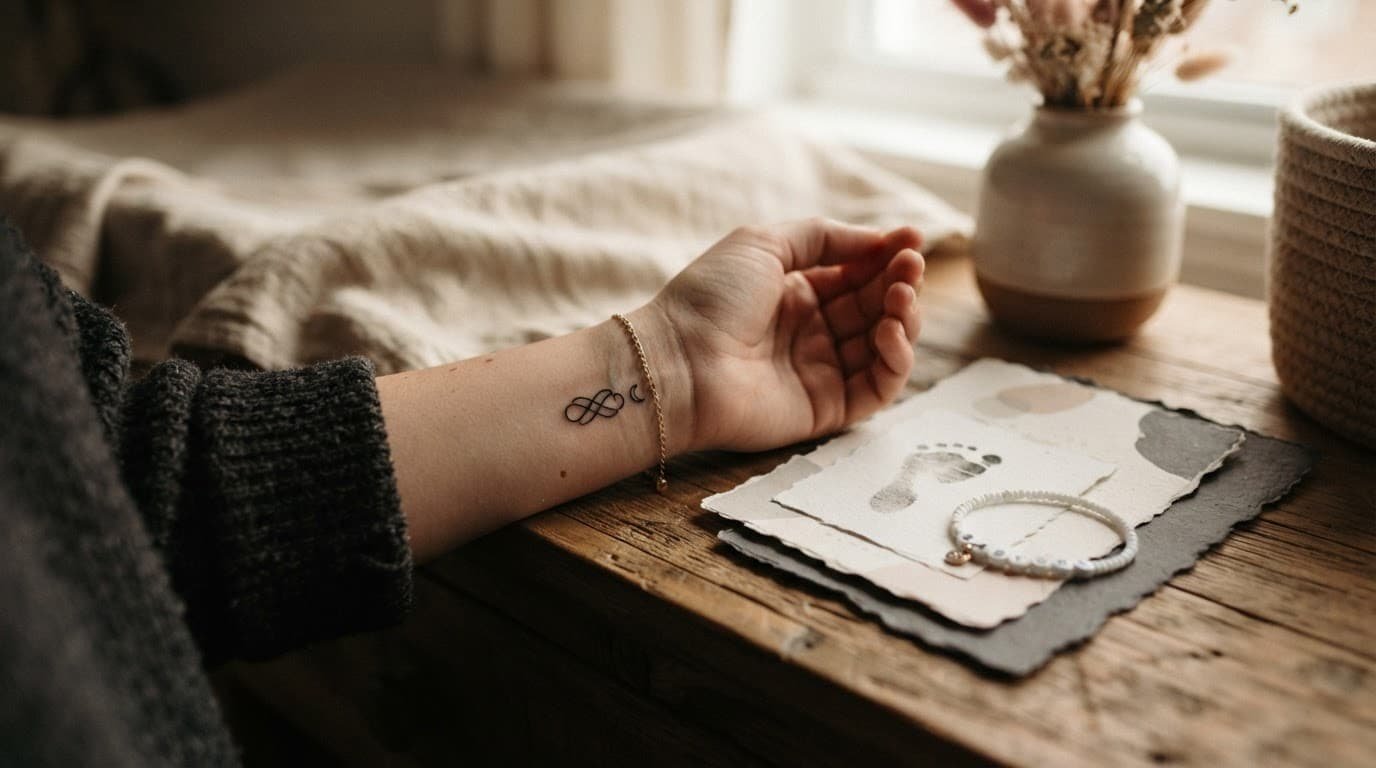
Baby Name, Initial, and Birth Date Tattoo Ideas
Your baby’s name can look personal in several lettering styles. Handwritten script feels soft and intimate, while a serif font gives the tattoo a classic, polished appearance. Typewriter lettering can create a vintage keepsake feel, and a clean minimalist font works well for a small, modern design.
Pair the name with a birth date, birth time, birth weight, or tiny heart. You could place the details beneath the name, arrange them along a fine line, or use only your baby’s initials beside a small symbol. A birthplace coordinate or a short date format can also preserve the story without crowding the design.
Before the tattoo begins, check every letter and number carefully. Confirm the spelling, decide whether you prefer 06/14/2026 or June 14, 2026, and ask the artist to place the stencil on your skin first. Very small text can blur as it ages, so readability matters more than squeezing in every detail.
Footprint, Handprint, and Heartbeat Designs
A real hospital footprint or handprint can become the foundation for a custom tattoo. Ask the artist to create a simple outline, or place one tiny footprint beside your baby’s name and birth date. A single print often feels understated while still carrying a clear connection to those first hours together.
Ultrasound-inspired shapes and heartbeat line designs offer another personal option. A heartbeat line can include a small heart, initial, or date without making the tattoo feel crowded. You might also use a simplified outline of your baby’s hand inside a larger heart.
Hospital prints often contain fine lines and uneven edges. Your tattoo artist may need to simplify those details so the design heals well and remains recognizable. Review the adjusted stencil before approving it, since the final tattoo should look intentional rather than like a photocopy transferred to skin.
Symbols That Represent Your Mother and Baby Bond
Personal symbols can tell your story without using words. Consider your baby’s birth flower, a moon with stars, a sun, butterfly, infinity symbol, lock and key, or minimalist mother-and-baby line art. A small angel motif may hold memorial meaning for a baby you lost.
Color changes the mood. Black ink feels simple and timeless, while muted color can make a flower, star, or butterfly feel warmer. Scale and placement matter too. A tiny symbol may suit your wrist or rib, while a larger design gives line art more room to remain clear.
Write down what each symbol means before choosing one. That short note can help you separate a lasting memory from a design you simply like today. Mothers interested in emotional balance may also appreciate these ways to be a calm mom.
How to Choose the Right Size, Style, and Placement
The best newborn tattoo balances meaning with how the design will heal, age, and fit your daily life. Fine-line and minimalist tattoos suit tiny names or symbols, while black ink gives small details stronger contrast. Watercolor looks soft and expressive, but it may need more room and careful sun protection. Detailed designs also require enough skin to keep each element readable.
Size affects more than visibility. A very small tattoo may lose delicate lines over time, while a larger design gives your artist space to preserve detail and add future birth dates, flowers, or sibling symbols. Before choosing, ask whether you want the tattoo to stay private, remain easy to see, or leave room for additions later.

Best Placements for Small Baby Name Tattoos
The wrist and inner forearm keep a small baby name visible throughout the day. They also give the artist a fairly straightforward surface for script, initials, dates, or a tiny symbol. If you prefer a more private reminder, consider the ankle, shoulder blade, or rib area.
Placement should match your routine. Areas exposed to frequent friction, stretching, or sunlight may feel less comfortable during healing and can affect the tattoo’s long-term appearance. Tight socks can rub an ankle tattoo, while waistbands may irritate rib designs. After the tattoo heals, broad-spectrum SPF 30 or higher helps protect exposed ink, but fresh tattoo aftercare guidance recommends avoiding direct sun while the skin heals.
Test the design first with a temporary tattoo or paper stencil. Wear it for a full day, move normally, and notice whether the size feels balanced. For ankle inspiration, browse these meaningful ankle tattoo ideas.
What to Know About Footprint and Larger Custom Tattoos
Footprints, handprints, portraits, and layered birth-story designs usually need more space than a tiny name tattoo. Extra room keeps toes, fingers, facial features, and surrounding details from blending together as the tattoo settles and ages.
A shoulder blade, upper arm, thigh, or ribs may suit these larger pieces. The collarbone can work for a wider horizontal design, while the inner forearm offers visibility without requiring a full sleeve. Your artist can also plan the shape around future additions, such as another child’s flower or birth date.
Bring a clear scan or photograph of the original hospital print. Ask how much detail the artist plans to simplify before you approve the stencil. Some uneven edges and fine marks may need adjustment, but the final version should still feel recognizable and personal.
Why Breast and Chest Placement Needs Extra Thought
Breast or chest placement deserves careful planning during breastfeeding. Infant contact, moisture, clothing friction, and frequent feeding can make it harder to keep a fresh tattoo clean and undisturbed.
A nearby location, such as the collarbone, upper chest, shoulder, or upper arm, may offer easier coverage and more comfortable healing. If you choose the breast area later, plan for loose clothing and avoid letting your baby’s skin or mouth touch the unhealed tattoo. Since a fresh tattoo is a healing wound, keep it clean, dry, and protected until the skin closes and tenderness or scabbing ends.
When Can You Get a Newborn Tattoo After Birth or While Breastfeeding?
A new tattoo creates an open wound, so timing matters after childbirth. The most conservative guidance is to wait until breastfeeding has ended and your body has recovered from birth.
Research on fresh tattoo ink during breastfeeding remains limited. Some less cautious opinions mention waiting only a few months, but that shorter timeline isn’t a proven safety standard. La Leche League International suggests waiting around 9 to 12 months after birth, especially while your baby depends heavily on breast milk. Talk with your doctor, midwife, or lactation professional before booking.

Why Waiting Until Weaning Is the Safest Choice
Waiting removes several unanswered questions at once. Ink is injected into the skin, and large ink molecules are unlikely to enter breast milk, but researchers haven’t established how tiny pigment particles or every ink ingredient behave during breastfeeding. La Leche League’s tattoo guidance also identifies infection as a more immediate concern.
A fresh tattoo can become infected if aftercare fails or the studio’s hygiene is poor. Treatment might require medication, and illness can make feeding and caring for your baby harder. Newborn care also involves frequent holding, bathing, feeding, and contact with clothing, all of which can irritate healing skin.
An old, fully healed tattoo is different from getting fresh ink. A healed tattoo generally doesn’t create the same open-wound or aftercare concerns. Laser tattoo removal is also best postponed until after breastfeeding because breaking pigment into smaller fragments creates additional uncertainty.
If You Decide to Tattoo While Nursing
No precaution guarantees that tattooing during breastfeeding is safe. First, discuss your health, medications, delivery recovery, and feeding plans with a healthcare professional.
If you proceed, choose a fully licensed, regulated studio with strong sanitation practices. Confirm that the artist uses:
- Single-use, sealed needles and fresh disposable supplies.
- Sterile equipment and fresh ink poured into individual cups.
- Gloves, clean surfaces, and clear infection-control procedures.
Avoid breast and nipple placement, where feeding, moisture, and infant contact can disturb the wound. Arrange reliable help so you can rest and keep the tattoo clean. Postpone the appointment if you’re ill, recovering from a cesarean or other complication, or struggling to manage basic wound care.
Postpartum Recovery Matters as Much as the Calendar
There is no universal date that makes tattooing safe for every new mother. Sleep loss, hormone changes, skin sensitivity, birth injuries, cesarean wounds, and current medications can all affect your decision.
Choose a time when you feel physically recovered and have dependable help with the baby. If you can’t keep the tattoo clean, avoid friction, or attend to warning signs, waiting is the wiser choice. Planning support during postpartum recovery can make that decision clearer.
How to Find a Skilled and Safe Tattoo Artist
Your tattoo artist will shape both the design and the healing experience. Choose someone who understands delicate details, follows strict hygiene practices, and listens when you explain your boundaries.
Questions to Ask Before Booking the Appointment
Before paying a deposit, ask:
- Are you licensed or registered under my state or local body-art rules?
- Do you open a new, presterilized, single-use needle in front of each client?
- How do you sterilize reusable equipment, and do you use an autoclave?
- How do you dispose of used needles and other sharps?
- Which ink brands do you use, and can you provide the ingredient or pigment information?
- May I see recent healed tattoos, not only fresh portfolio photos?
- Have you tattooed delicate script, custom tracing, memorial designs, or recreated baby footprints?
- How would you simplify my baby’s original footprint so it remains clear after healing?
- Can I request design changes before the stencil is applied?
- How long should healing take, and what aftercare instructions will you provide?
- Do you offer touch-ups, and are they included in the original price?
A clean studio should have sealed supplies, fresh gloves, disinfected work surfaces, and a rigid sharps container near the workstation. The FDA also provides guidance on safe sharps disposal, which helps you recognize responsible handling.
Pay attention to the conversation. A trustworthy artist answers plainly, welcomes questions, and never pressures you to accept a design, placement, or appointment date.

What to Review During the Consultation
Bring your baby’s footprint, handwriting sample, name spelling, preferred date format, and placement ideas. During the consultation, ask the artist to explain what they would change and why. Simplifying a footprint can protect clarity, but the final design should still feel like your child’s keepsake.
Review the stencil carefully before the tattoo begins. Check every letter, number, curve, and spacing choice. Ask to see the design at its actual size on your body, then move naturally to confirm that the placement feels comfortable.
Avoid choosing based only on the lowest price. Experience with fine-line lettering and custom tracing often matters more than a quick appointment or bargain quote. If the artist dismisses your questions, hides the sterilization process, or refuses reasonable design changes, keep looking.
How Much Do Newborn Tattoos for Mom Usually Cost?
Tattoo pricing in the US depends on the shop minimum, the artist’s experience, your location, design size, drawing time, lettering detail, color, and session length. A tiny name or date often falls near the studio’s minimum, while a custom footprint, larger composition, or detailed color piece usually costs more.
Ask for a written quote that explains the deposit, estimated session time, included revisions, and payment terms. Some artists charge for custom design work even if you later change your mind, so clarify that before approving the appointment.
Set aside extra money for a possible touch-up. Small details can heal unevenly, and a touch-up may help restore a faded line after the tattoo fully settles. A clear quote lets you compare artists fairly without treating the cheapest option as the safest one.
Fresh Tattoo Safety, Healing, and Aftercare for New Moms
A fresh tattoo is an open skin wound, so consistent care matters even when newborn duties fill every hour. Follow your artist’s instructions first, then keep the routine simple: clean hands, gentle washing, light moisturizing, and protection from friction, sun, and water.

Signs of Normal Healing and Warning Signs
Mild tenderness, slight redness around the tattoo, limited swelling, peeling, dryness, and itching can occur during normal healing. The skin may also form small scabs as it closes. Wash gently with mild, fragrance-free soap and water, pat the area dry, and apply only the fragrance-free moisturizer your artist recommends. Never pick scabs or scratch peeling skin.
Some symptoms need prompt medical attention. Spreading redness, worsening pain after the first couple of days, increasing warmth or swelling, fever, pus, foul-smelling discharge, or red streaks moving away from the tattoo can indicate an infection. Contact a healthcare professional quickly if these signs appear. The Cleveland Clinic’s tattoo infection guidance offers a useful medical reference, but don’t rely on social media advice or try harsh home remedies. Alcohol, peroxide, aggressive scrubbing, and unapproved creams can further irritate damaged skin.
How to Protect the Tattoo While Caring for Your Baby
Arrange help with meals, diaper changes, and holding the baby during the first few days if possible. Keep clean burp cloths nearby to create a barrier when you feed or cuddle your newborn, and wash your hands before touching the tattoo or applying moisturizer.
Loose, clean clothing should cover the area without sticking to it. Keep baby fingernails trimmed, and position your child so tiny nails, zippers, and rough fabric don’t scrape the skin. Never let a baby’s mouth, saliva, or diaper-area contact touch a fresh tattoo. Avoid pools, baths, hot tubs, and other soaking until the tattoo heals. Keep it out of direct sun, and don’t add sunscreen until the skin has fully closed unless your healthcare professional says otherwise.
Make the Design Personal Without Rushing the Decision
Save several sketches before choosing one. Compare them with your baby’s hospital bracelet, footprint, birth announcement, or another keepsake. If the early emotions of new parenthood feel overwhelming, wait until the design still feels right after some time has passed.
Choose artwork that tells your own story, whether it includes a name, flower, symbol, or small private detail. A tattoo can honor your child while leaving room for your identity, comfort, and changing preferences. For practical ways to protect your energy during this season, explore these self-care tips for moms.
Conclusion
The best newborn tattoo for mom begins with meaning, whether you choose your baby’s name, birth date, footprint, birth flower, or a small symbol of your bond. Keep the design readable and choose a placement that fits your comfort, routine, and plans for future additions.
Because tattoo safety during breastfeeding has limited research, the most cautious choice is to wait until breastfeeding has ended and your body has recovered from childbirth. When you’re ready, choose a licensed artist who uses sterile, single-use equipment, then follow aftercare instructions carefully. Good self-care advice for new parents also includes asking for help while your skin heals.
Motherhood is already carried in the daily acts of feeding, comforting, and showing up for your child. A tattoo is simply one beautiful way to preserve the memory of when your baby’s story became part of yours.
Save the pin for later

- Healthy Air Fryer Recipes for Beginners - 21/09/2026
- Healthy Snacks for Late Night Cravings - 21/09/2026
- High Protein Meal Prep Ideas for Easy Weekly Meals - 21/09/2026

