Feeling shut out by your wife can leave you confused, rejected, and scared, especially when you can’t tell whether this is a passing season or a sign of something deeper. When a wife becomes emotionally distant, the silence often hurts more than an argument because you’re left guessing what changed and what to do next.
Sometimes that distance grows from stress, burnout, old resentment, health changes, trust issues, or marriage problems that have been building for a while. That doesn’t always mean the love is gone, but it does mean something needs honest attention. In many marriages, emotional withdrawal also follows patterns that show up slowly, much like these common ways couples drift emotionally apart.
Know the difference between a rough season and real emotional distance
Every marriage goes through low-connection seasons. A hard week, a sick child, a work crunch, or plain exhaustion can make both of you feel off. That alone does not mean your wife is checking out.
What matters is pattern over time. A rough season bends the connection for a while. Real emotional distance starts to change the tone of the marriage itself. The goal here is to notice what is happening clearly, before fear, blame, or panic push you into the wrong reaction.
Common signs your wife is emotionally pulling away
The first clue is often small. Conversations get shorter. Her answers sound polite but thin. You still talk, but the warmth is gone, and the exchange feels more like passing notes than sharing a life.
Soon, you may notice fewer check-ins during the day. She stops texting to ask how you’re doing. She shares less about her own world too. That shift matters because emotional closeness usually shows up in little moments of interest, not only big talks.

You may also see her avoid time together, even when there is room for it. She stays busy longer, goes to bed later, or always seems to have one more thing to do. In some marriages, this kind of withdrawal looks a lot like signs of marital drift, where couples slowly stop choosing each other in daily life.
Affection often changes too. Maybe hugs feel brief, kisses become routine, or touch disappears unless you start it. Physical distance does not always mean rejection, but when it comes with less openness and less interest, it can point to a bigger disconnect. If this part of your marriage has also changed, these lack of physical intimacy effects can help you spot how distance spreads.
A guarded tone is another sign people miss. She may sound careful, flat, or easily irritated. Instead of sounding safe with you, she sounds defended. That does not always mean she wants out. However, it often means she no longer feels relaxed in the relationship.
Watch what happens around shared plans. If she has little interest in future trips, date nights, family goals, or even simple weekend plans, that can say a lot. Distance tends to shrink the sense of “us.” The marriage starts feeling like logistics instead of partnership.
Conflict can tell you even more. When couples still argue, there is often still emotional energy in the room. What raises more concern is emotional flatness after conflict. She is not angry, hurt, or eager to repair. She just seems done talking and done caring.
Apathy can be more serious than arguing, because it may show disengagement instead of frustration.
That is why indifference deserves attention. If she used to react and now barely responds, the problem may be deeper than a rough patch. You can read that pattern more clearly in this piece on indifference as resentment builds.
That said, one quiet weekend does not prove anything. Look for repeated changes in tone, effort, affection, and interest. Emotional distance usually arrives slowly, like a room getting colder one degree at a time.
For a broader outside perspective, this guide on an emotionally distant spouse explains how withdrawal often shows up in everyday behavior.
Questions to ask before assuming the worst
When your wife feels far away, your mind can jump to the darkest explanation. Many husbands go straight to cheating. Sometimes that happens, but very often the real cause is less dramatic and more painful in a different way: she may be overwhelmed, worn down, or carrying hurt she has not put into words.
Start by looking at pressure outside the marriage. Has work become intense? Is she carrying most of the parenting load? Is she mentally on duty all day, every day? Stress has a way of draining the part of a person that connects, laughs, and reaches out.
Then look at her inner world. Depression, anxiety, grief, burnout, and poor sleep can all flatten emotion. According to recent relationship trend reporting, stress, work strain, parenting demands, and mental health pressure remain major drivers of emotional disconnection in marriages in the US. That does not excuse distance, but it can explain why it happens.
Physical factors matter too. Hormonal changes, chronic pain, illness, or exhaustion can change mood, patience, and desire for closeness. If your wife seems unlike herself, it may not be a character issue at all. Her body may be under more strain than you realize.
Past conflict also matters. Ask yourself if there has been a string of unresolved arguments, broken promises, criticism, or moments that damaged trust. A wife who feels unheard may stop repeating herself. A wife who feels hurt long enough may stop expecting comfort from you. In some marriages, what looks like coldness is actually old pain covered with silence, much like what happens when unseen needs cause resentment.
Before you decide what her distance means, slow down and ask yourself:
- Has this change lasted for weeks or months, not just days?
- Did the shift start after stress, loss, conflict, or a major life change?
- Is she distant with only you, or with everyone?
- Has trust taken a hit that never got repaired?
- Am I reacting to one event, or to a steady pattern?
Those questions can keep you grounded. They also stop you from turning one bad night into a full story about your marriage.
A good rule is simple: do not build a conclusion from one isolated incident. Look for repeat patterns in how she talks, responds, connects, and shows up. A rough season usually lifts when pressure eases. Real emotional distance tends to keep showing itself, even when there is finally space to reconnect.
Start with your own response, because panic and pressure make distance worse
When your wife feels emotionally distant, your first reaction matters more than you think. Many husbands panic, chase, accuse, shut down, or try to force closeness. That reaction makes sense when you feel rejected. Still, pressure rarely creates warmth. It usually creates more space.
A better first move is to steady yourself. You do not need to take all the blame, but you do need self-control. If you bring fear into every talk, she will feel that fear before she hears your words. Connection grows better in calm, respectful moments than in emotional ambushes.
What not to do when you feel rejected
Rejection can stir up old wounds fast. You may want relief right now, so you reach for whatever gets a reaction. That is where many men make things worse.
Avoid these traps:
- Begging for attention. It puts her in the role of managing your emotions, and that often feels heavy instead of loving.
- Keeping score. Counting who texted first, who started sex, or who tried harder turns the marriage into a contest.
- Starting fights to get a reaction. Anger can feel better than silence, but forced conflict still pushes safety out of the room.
- Snooping without cause. If you have real reasons for concern, address them directly. Quiet spying breeds suspicion and breaks trust.
- Giving the silent treatment. Withdrawal to punish her only doubles the distance. If you need space, say that plainly.
- Using sex as proof of love. Physical intimacy matters, but treating it like a loyalty test creates pressure, not closeness.
These moves usually come from fear. Yet fear-driven behavior often creates the very outcome you dread: more resentment, more guarding, and less openness. If this pattern sounds familiar, it helps to look at avoiding habits that create emotional distance in marriage.
When you feel shut out, do not react like a man trying to win his wife back in one night. React like a husband trying to make the relationship safer over time.
That may mean saying less for a day and observing more. It may mean taking a walk before talking. It may also mean admitting, at least to yourself, “I’m hurt, and I don’t want that hurt to control my mouth.”
How to show up calmer, safer, and more emotionally mature
Calm is not weakness. In marriage, calm is strength under control. A steady presence tells your wife she does not need to brace herself every time a hard topic comes up.

Start with a few grounded habits. Slow down before serious talks. If you are flooded, wait until your body settles. Then speak with respect, even if you feel hurt. Recent guidance on emotionally distant spouses also points to calmer “I” statements and safety-first communication as a more effective approach to reconnection, as outlined by Focus on the Family’s advice on emotional distance.
A practical way to do that is:
- Take a pause before hard conversations.
- Say what you feel without blame, such as, “I miss feeling close to you.”
- Own your part clearly. If you have been harsh, distracted, defensive, or inconsistent, say so.
- Follow through on small promises.
- Pay attention to her emotional world, not just her words.
That last point matters. Listen for stress, burnout, sadness, disappointment, and loneliness. Some wives stop talking because they think talking no longer changes anything. Reading more about questions wives fear asking about emotional connection can help you understand what may stay unspoken.
Consistency beats one grand speech. A calm tone after work, a real apology, putting down your phone, helping without being asked, and asking about her inner world all count. In many marriages, small daily actions matter more than one big talk because they rebuild trust in plain sight.
If you need a simple standard, use this: be easier to talk to, easier to trust, and more stable to live with. That does not guarantee instant change. It does, however, give your wife something safer to respond to than panic, pressure, or blame.
Have the right conversation, not the perfect one
When your wife feels emotionally distant, one honest talk can matter more than a polished speech. You do not need perfect wording. You need a calm tone, real curiosity, and enough courage to stay present when the answer is hard to hear.
Recent relationship guidance still points to honest, frequent, emotionally aware communication as one of the best ways to stop silent drift. That means speaking up early, listening without turning every moment into a defense, and coming back to repair after tension. If silence has taken over, this is where you start.
How to bring it up without sounding attacking or desperate
Pick a calm moment. Do not start this talk in the middle of a fight, late at night, or when one of you is rushing out the door. Timing matters because even loving words can land badly when someone already feels tense.
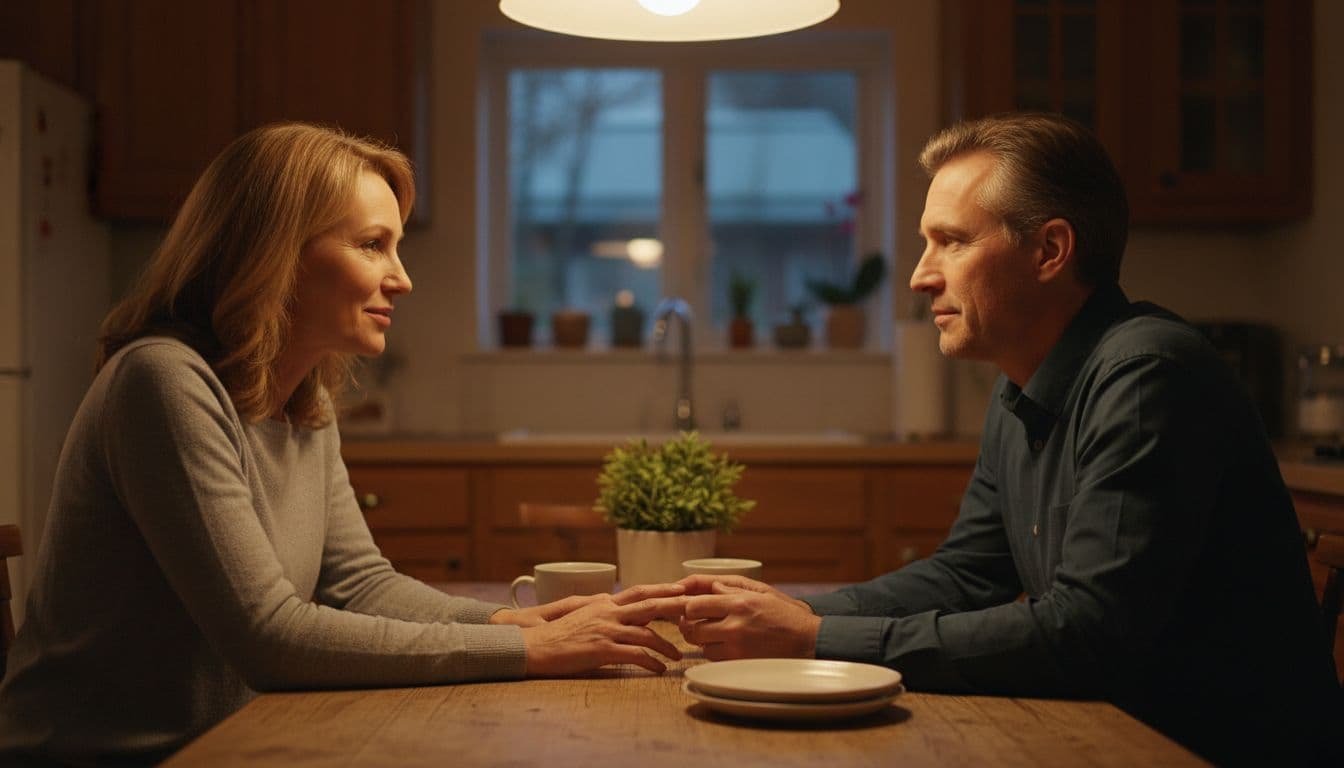
A simple framework helps:
- Start with what you feel, not what she is doing wrong.
- Describe what you have noticed, without loading it with blame.
- Ask an open question.
- Stay quiet long enough for a real answer.
That can sound like: “I feel like we have been far apart lately, and I want to understand what you are feeling.” Or, “I’ve noticed we don’t talk the way we used to, and I miss that. Is something weighing on you?” Those lines work because they open a door instead of backing her into a corner.
Keep your voice steady. Skip loaded phrases like “You never talk to me anymore” or “Why are you acting like this?” Those lines usually make people brace for impact. If you need more help with fixing silence in your partnership, the goal is the same every time: lower defensiveness, raise honesty.
Also, make room for an answer you may not like. If she says she feels tired, hurt, numb, or checked out, do not argue with the feeling. You are not there to win the first talk. You are there to make the truth safe enough to say. A helpful outside guide on blame-free communication with an emotionally distant partner echoes that same point.
A good conversation does not force closeness on the spot. It makes honesty easier the next time too.
Listen for the real issue under the surface
Emotional distance is often a symptom, not the whole problem. She may seem cold, but the deeper issue could be feeling unseen, overloaded, lonely, hurt, or resentful. In many marriages, love is still there, but it is buried under too much strain.
That is why your job in this talk is not to decode every word fast. It is to listen for the feeling under the sentence. If she says, “I’m tired,” she may mean, “I carry too much and I don’t feel helped.” If she says, “I don’t want to talk,” she may mean, “Talking has not felt safe or useful.”
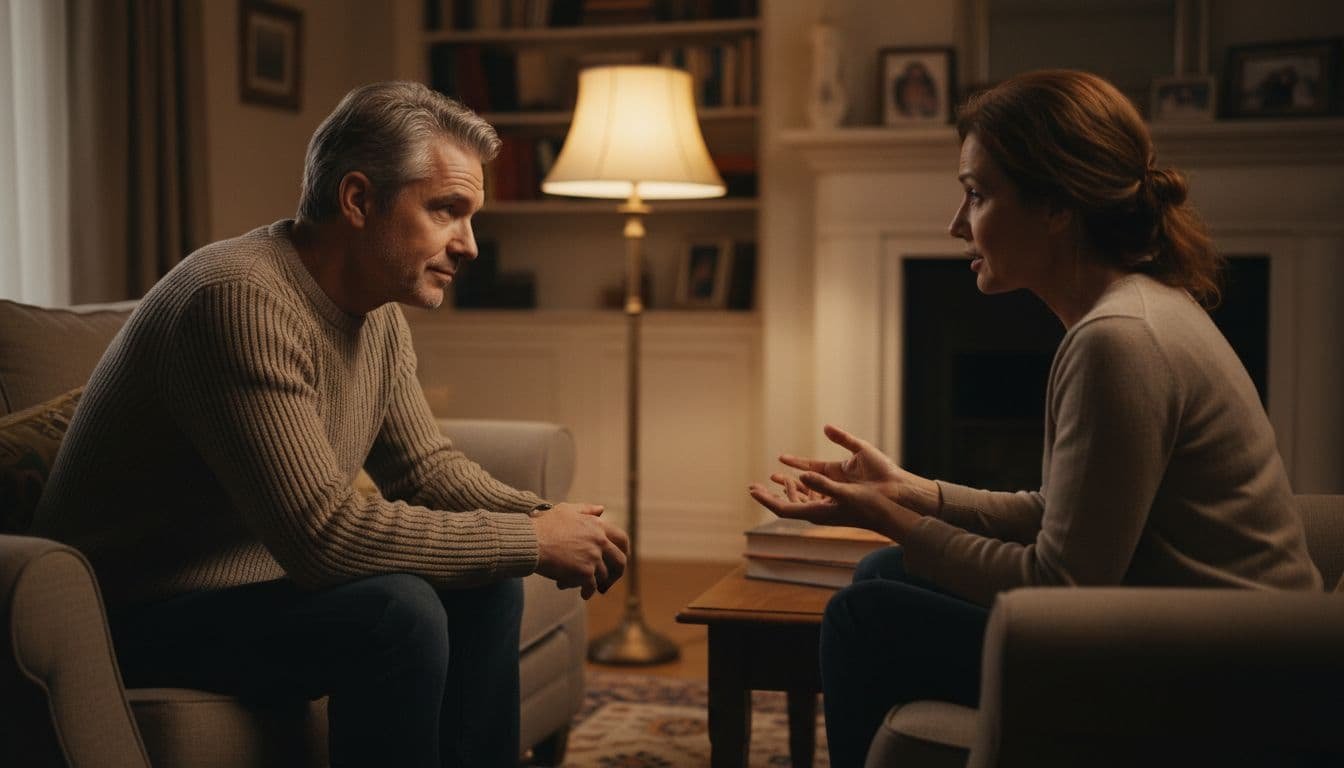
Active listening is simple, but not easy. Try these moves in the moment:
- Reflect back what you heard in plain words.
- Ask one follow-up question at a time.
- Resist correcting details that are not the main issue.
- Stay with her feeling before you explain your side.
For example, you might say, “It sounds like you’ve felt alone in this for a while,” or, “What I’m hearing is that you stopped bringing things up because you felt unheard.” That kind of response helps her feel met instead of managed.
Most importantly, do not defend yourself point by point while she is opening up. Even if some of what she says feels unfair, pushing back too fast can shut the whole thing down. Many couples get stuck here because one person shares pain and the other hears only accusation. If you want active listening to resolve marital conflicts, slow the urge to explain and work first to understand.
For a helpful outside perspective, this guide to connecting without blame reinforces the same skill: hear the pain before you answer the complaint.
Clear the emotional residue after conflict
Some couples think a fight is over once the voices drop. It often is not. The real damage can come after, when the room goes cold, the tone stays sharp, and both people act normal while carrying hurt. That leftover strain creates distance one argument at a time.
Recent relationship guidance keeps making the same point: unresolved feelings after conflict build quiet resentment. In other words, the argument may end, but the emotional residue sticks around. If you do not clear it, the next small issue lands on top of old pain.
Repair usually sounds less dramatic than people expect. It can be a short follow-up like, “I don’t like how that went earlier. I want to understand your side better.” Or, “I’m sorry for my tone. I was frustrated, but I know I hurt you.” If you need help with how to say sorry after hurting your partner, a direct apology is often the first step that softens the wall.
A simple post-conflict repair process looks like this:
- Wait until both of you are calmer.
- Name the tension instead of pretending it is gone.
- Own your part clearly.
- Ask what still feels unresolved.
- Agree on one small change for next time.
This matters because repeated conflict without repair can turn into behaviors showing unresolved marriage conflicts. Over time, one or both spouses stop expecting comfort after pain. That is when the marriage starts to feel emotionally unsafe.
Outside relationship resources on repairing a relationship after a fight and the Gottman Institute’s aftermath of a fight repair process both support the same idea: healthy couples are not conflict-free, they repair faster. If your wife feels far away, that skill can help you close the gap before another layer of hurt hardens into silence.
Rebuild connection through steady actions, not grand gestures
If your wife feels emotionally distant, don’t try to fix it with one dramatic weekend, one emotional speech, or one perfect date. Closeness usually comes back the same way it was lost, through daily moments. Safe, caring patterns rebuild trust because they show her what life with you feels like now, not what you promise it could feel like later.
That shift matters. You’re not trying to force fast results. You’re trying to make the relationship warmer, calmer, and easier to lean into again. In many marriages, progress starts when a wife feels less pressure and more peace.
Bring back small moments of friendship and warmth
A lot of emotional intimacy grows out of friendship, not intensity. When a marriage gets strained, couples often stop doing the small things that make them feel like allies. They talk about bills, kids, and chores, but stop acting like two people who actually enjoy each other.

Start with a few simple habits this week. Keep them light and steady:
- Set aside 10 to 15 minutes for a real check-in each day. Ask about her day, her stress, or what’s been on her mind.
- Create device-free time at night, even if it’s only over tea, a short walk, or while folding laundry together.
- Say one specific thing you appreciate. “Thanks for handling that call” lands better than a vague “thanks for everything.”
- Help without being asked. That can mean cleaning up the kitchen, handling bedtime, or taking something off her plate before she has to mention it.
- Bring back a shared routine, like coffee in the morning, a short evening walk, or sitting together before bed.
- Remember details. If she mentioned a meeting, her mom’s appointment, or something stressing her out, follow up later.
- Make room for fun again. Watch something silly, tell an old story, or do something that doesn’t feel like marriage homework.
Those things may sound small, but small is the point. Consistent warmth lowers tension. It also helps your wife feel seen without feeling chased. If you want more ideas, these 5-minute habits to transform your marriage fit this approach well.
Work on the real issue if resentment has built up
Sometimes distance isn’t about a lack of romance. It’s about pain that never got repaired. If there are old wounds, broken trust, repeated neglect, harsh words, or a long pattern of one-sided effort, flowers and date nights won’t fix the real problem.
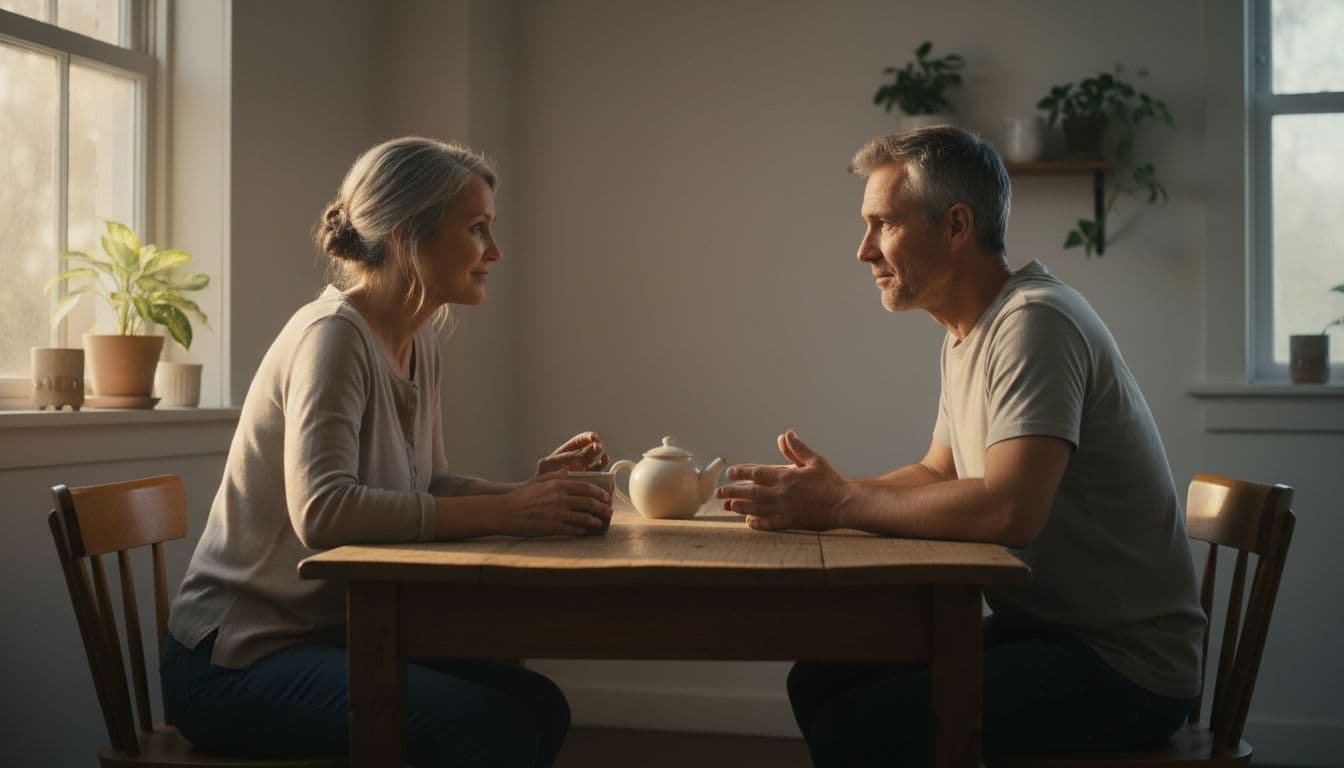
In that case, rebuilding connection means repair. Real repair sounds like honest ownership, changed behavior, and patience when trust doesn’t snap back right away. If she has brought up the same hurt for months or years, don’t focus first on convincing her to feel close. Focus on becoming safer to trust.
That may mean saying, “I understand why you’re still hurt,” and then backing that up with new habits. It may also mean dropping defensiveness when she talks about how your actions affected her. Surface warmth matters, but it can’t cover over untreated resentment. A helpful outside read on hidden resentment in marriage explains why old hurt keeps blocking new closeness.
If betrayal has happened, whether emotional, physical, financial, or repeated dishonesty, recovery usually needs deeper support and very clear boundaries. In those cases, trust grows slowly because words alone no longer feel solid. She may need counseling, more transparency, and time to see if your change is real.
Also, if the home has had a pattern of tension, criticism, or irritability, work on that directly. This guide on how to break anger cycles in marriage may help if resentment has turned into constant edge or defensiveness.
When resentment is driving the distance, the goal is not better romance first. The goal is honest repair.
Let physical intimacy grow from safety, not pressure
Physical closeness matters in marriage, but don’t treat sex as the first proof that things are getting better. That puts pressure on your wife and turns intimacy into a test. In most strained marriages, that backfires.
For many wives, emotional safety comes first. She needs to feel understood, respected, and at ease with you again. When that safety is missing, physical intimacy can feel forced, guarded, or disconnected, even if she goes along with it. Recent relationship guidance keeps pointing to the same pattern: steady check-ins, undivided attention, and emotional safety tend to support intimacy better over time than sexual pressure.
So aim lower, in the best way. Offer affection with no hidden demand behind it. Sit close. Hug her when it feels welcome. Hold her hand. Be warm without turning every moment into a push for more. That helps her relax because she doesn’t have to brace herself.
You want her to feel, “I can be close to you without being managed.” That changes the tone of the marriage. If emotional intimacy has been weak for a while, working first to restore closeness in marriage gives physical connection a healthier place to grow from.
Know when the marriage needs outside help
Some marriage problems respond to honest talks and steady effort at home. Others keep circling, no matter how careful you try to be. When that happens, getting help is not failure. It is often the clearest sign that you still care enough to stop the drift before it hardens into your normal.
Outside help also brings something you cannot create alone: a trained third view. A good therapist can spot habits, triggers, and blind spots that are hard to see when both of you are tired, hurt, or defensive. And because emotional distance tends to grow slowly, early help is usually better than waiting until apathy takes over.
Signs it is time for marriage counseling or individual therapy
If you have had the same hard talk five times and nothing changes, pay attention to that. Repeated failed conversations usually mean the issue is not just the topic itself. The pattern of how you talk, react, shut down, or defend is part of the problem now.
Months of distance matter too. A bad week is one thing. A marriage that feels cold for a long stretch is another. When you feel like roommates, live mostly separate lives, or avoid one another unless logistics force contact, the relationship is asking for more than another promise to “do better.” That kind of shutdown often overlaps with recognizing spousal emotional neglect, where one or both partners stop expecting to be heard.

A few warning signs deserve extra weight because they often mean the marriage is stuck:
- Talks end in the same fight, or in total silence.
- One or both of you avoid honest conversation because it feels unsafe.
- Contempt has entered the room, such as eye-rolling, mocking, disgust, or constant criticism.
- Trust has been damaged by lies, secrecy, betrayal, or repeated broken promises.
- There is little interest in repair after conflict.
- Relief shows up when you imagine giving up.
That last one can feel scary to admit. Still, it matters. When the idea of quitting feels more peaceful than trying again, you are no longer dealing with simple frustration. You may be running on emotional exhaustion.
If your wife fears being honest because every talk turns into blame, counseling can help create structure and safety. If you are the one who feels lost, individual therapy can help too. Sometimes a spouse withdraws because of depression, burnout, grief, old wounds, or fear they do not even know how to name yet. In other cases, trust problems or verbal signs of emotional infidelity have made the marriage too tense to fix alone.
According to Cleveland Clinic’s signs you may need marriage counseling, ongoing conflict, trust issues, and emotional disconnection are common reasons couples seek help. Recent US trend reporting also shows couples tend to do better when they get support early, not after months or years of shutdown. In short, if distance has become your pattern, stop trying to white-knuckle it alone.
Therapy can uncover the loop you both keep feeding, even when neither of you means to.
What progress usually looks like, and how to stay patient
Real progress rarely looks dramatic at first. You may not go from cold distance to deep closeness in a few weeks. More often, the first signs are smaller and easier to miss unless you slow down enough to notice them.
Look for changes like these over time: less tension in the room, fewer talks that blow up, more willingness to answer honestly, and small moments of warmth that were missing before. She may open up for ten minutes instead of two. You may catch yourself listening instead of rushing to defend. Those are not tiny things. They are early repair.

In many marriages, progress shows up before closeness fully returns. For example, you may notice:
- Hard conversations stay calmer.
- Apologies come faster and sound more sincere.
- She shares a little more of her inner world.
- Daily life feels less sharp and guarded.
- Affection starts to feel more natural again.
That is why patience matters so much. If you demand instant change, you can crush the very trust you are trying to rebuild. Hurt that took months or years to build usually heals in layers. Watch the pattern, not one perfect day or one bad night.
This is also where consistency beats intensity. One good therapy session, one emotional talk, or one nice weekend does not carry the marriage by itself. What matters is the trend line. Are you both becoming easier to talk to? Is the home feeling a little safer? Are repair attempts landing more often than before?
A useful benchmark from practical markers that couples therapy is working is that change often looks ordinary at first, such as pausing before a sharp comment or making a clearer request. That rings true in real marriages. The breakthrough usually starts in quieter ways than people expect.
Recent US reporting suggests many couples improve with therapy, especially when they seek help before the relationship is in full crisis. That does not mean every marriage heals. It does mean there is good reason to stay steady while the work is still taking root.
So if you’re getting help, keep your eyes on repeated signs of movement. Better talks, less avoidance, more honesty, and brief moments of warmth are often the first proof that the wall is starting to crack.
Conclusion
When your wife becomes emotionally distant, take it seriously, but don’t treat it like proof the marriage is over. The strongest next move is usually simple: stay calm, stop the reactions that make her pull back more, and start one honest conversation with respect and patience.
After that, focus on steady repair. Small acts of care, better listening, and real follow-through do more than one big emotional moment. If you need help getting back to the basics, these ways to build a deep emotional connection can support the work you do at home.
If the distance has lasted for months, get outside help sooner, not later. Many couples improve when they face disconnection early and with humility, especially when both people are willing to work on the pattern. Start with one calm talk this week, and let that be the first step toward a warmer, safer marriage.
Save the pin for later

- 60 Color Tattoos That Healed Beautifully - 25/09/2026
- 40 Most Painful Tattoo Spots - 24/09/2026
- 20 Tattoo Aftercare Mistakes That Ruin Fresh Ink - 23/09/2026

