By the time evening rolls around, your mind is often still holding work, messages, chores, and the stress that comes with all of it. A few steady evening habits can lower mental clutter, make falling asleep easier, and help you wake up feeling calmer.
You don’t need a perfect routine or a long checklist to feel the difference. Small choices, like putting your phone away, jotting down what is still on your mind, or following simple night rituals to unwind, can help your brain switch out of alert mode. Even five minutes of calm can make bedtime feel less like a battle.
That matters because better nights often lead to steadier days, especially when stress feels hard to shake. The habits below fit real life, so you can start small and build a routine that actually sticks.
Why your evening routine affects your mental health
Your evening routine is the handoff between stress and rest. What you do in the last hour or two before bed can either calm your mind or keep it on alert. A soothing bedtime ritual tells your brain the day is over, which makes it easier to slow down.
That matters because sleep and mood work in both directions. When sleep is short or broken, emotions feel sharper, patience gets thinner, and small problems can feel much bigger than they are. At the same time, stress can keep your body tense and your thoughts busy, which makes sleep harder to reach in the first place.
Evening is also when the brain tries to recover from the day. It sorts through memories, settles the nervous system, and prepares you for the next morning. If you fill that time with bright screens, late work, heavy conversations, or worry, the brain stays in “problem-solving” mode instead of resting mode.
How sleep and mood work together
Poor sleep does more than leave you tired. It can make anxiety louder, lower your frustration tolerance, and make low mood feel harder to shake. The next day, you may react faster, think less clearly, and feel less steady.
Stress works the same way in reverse. When your mind keeps replaying tasks, arguments, or unanswered questions, your body treats bedtime like a threat. Heart rate stays up, muscles stay tight, and sleep takes longer to arrive.

In short, better sleep helps you feel more balanced, and calmer evenings help you sleep better.
Why small night habits matter more than perfect routines
You do not need a flawless routine to protect your mental health. Consistency matters more than length, so even a few calming habits done most nights can help your nervous system settle.
Small actions add up because they give your brain a clear pattern. For example, dimming the lights, setting your phone aside, and writing down tomorrow’s tasks can reduce mental clutter before bed. Over time, those habits lower mental fatigue and make evenings feel less chaotic.
A simple routine also works better than an all-or-nothing plan. If you miss one step, the whole night is not ruined. You still get the benefit of showing your brain the same message again and again: it is safe to slow down now.
That is why the best evening habits are the ones you can repeat. They do not need to be perfect, they just need to be steady enough to help your mind recover.
Build a calm shutdown routine before bed
A calm shutdown routine gives your brain a clear signal that the day is over. It does not need to be long or complicated. A few repeatable steps, done in the same order each night, can lower mental noise and make sleep feel more natural.
The goal is simple: stop feeding your mind new stimulation and start slowing your pace. When you do that consistently, bedtime feels less abrupt, and the evening starts to feel safer and more predictable.
Set a regular bedtime and keep it steady
Going to bed at about the same time each night helps keep your body clock on track. Your sleep timing is tied to your circadian rhythm, so a steady schedule makes it easier for your body to know when to wind down and when to wake up. A consistent sleep schedule also makes bedtime feel less negotiable, which helps cut down on late-night drift.
A bedtime alarm can help with that. Use it the way you would use a reminder for anything else that matters, then treat it as the cue to start closing the day. On weekends, try to stay close to your usual time, even if you sleep a little later.
A bedtime that stays near the same hour works better than a perfect routine you cannot repeat.
Put screens away before sleep
Phones and TVs keep the brain alert longer than most people realize. Bright screens, nonstop content, and the habit of “one more scroll” can keep your mind switched on when it should be powering down. Research on evening screen use shows that late exposure can interfere with sleep timing and quality, which is why a firm cutoff helps. For a deeper look, see this review on screen light and sleep.
Try swapping screen time for something slower and quieter. A few good options are:
- Reading a paper book
- Light stretching
- Journaling a few lines
- Sitting with music at low volume
Even 15 minutes away from screens can make the night feel calmer. If writing helps you settle, bedtime journal prompts can give your thoughts a place to go.
Lower the lights and slow the pace
Dimmer lights help your mind ease out of daytime stress mode. Bright overhead lighting can keep you feeling wired, while softer lamps and a quieter room make everything feel less urgent. That change in pace matters because the brain often needs more than silence, it needs a clear shift in atmosphere.
After dinner, slow down the rest of your evening too. Move more gently, speak more softly, and avoid last-minute task bursts that push your stress back up. Small actions help, like folding laundry earlier, setting out clothes for tomorrow, or taking a few slow breaths before bed.
The simpler your night feels, the easier it is to sleep. Start with one or two habits tonight, then repeat them until they feel automatic.
Use a few simple habits to clear your mind
A busy mind doesn’t need a complicated fix. A few small habits can give your thoughts somewhere to go, slow your breathing, and make bedtime feel less crowded.
That matters when your head is full of tasks, worries, and random leftovers from the day. The goal is to stop carrying all of it into sleep.
Try brain-dump journaling
Brain-dump journaling is simple: write down whatever is on your mind without editing it. Put the worries, tasks, reminders, and stray thoughts on paper, even if they feel messy or unfinished. If you want a fuller guide, journaling for stress reduction can help you build the habit.
This works because your brain doesn’t have to keep holding every thought in place. Once the list is out of your head, it feels easier to relax. You stop replaying the same reminders over and over, and that frees up mental space for rest.
A good brain dump doesn’t need structure. You can start with:
- What’s still unfinished
- What you’re worried about
- What you need to remember tomorrow
- Anything random that keeps popping up

Keep it short if that’s all you have energy for. Five minutes is enough to make your mind feel less packed.
Use breathing to calm your nervous system
When your thoughts start racing, slow breathing can bring your body back down. The easiest place to start is with a longer exhale. Inhale gently through your nose, then breathe out a little slower than you breathed in.
That longer out-breath helps ease tension and tells your body that it’s safe to settle. For a simple, well-known version, box breathing is a useful place to begin. You can also skip the pattern and just count a slow inhale for four and an exhale for six.

Don’t push hard or force big breaths. Gentle breathing is better than dramatic breathing. The point is to soften the body’s alarm system, not to perform a perfect exercise.
Add a quiet practice that fits your style
A calm practice only helps if you’ll actually keep doing it. Some people like gentle prayer, others prefer meditation, soft music, or a few gratitude notes before bed. If you want more ideas, daily mindfulness practices can give you a few simple places to start.
Pick one practice that feels easy, then repeat it often enough that it feels familiar. That repeatability matters more than choosing the “best” method.
The best evening habit is the one you can still do on tired nights.
Try one of these:
- Write down three things that went well today
- Sit quietly and listen to calm music
- Say a short prayer or calm phrase
- Spend two minutes noticing your breath
The habit doesn’t need to be long. It just needs to give your mind a softer place to land before sleep.
Choose evening behaviors that protect your sleep
Evening choices shape how fast your mind powers down. If you want more stable mood and better rest, start by removing the habits that keep your body on alert. If you’d like a deeper look at how sleep supports mental recovery, deep sleep’s role in mental reboot is a helpful next read.
The goal is simple. Make the last part of the day feel lighter, calmer, and less demanding. That gives your brain a cleaner path into sleep.
Watch caffeine, alcohol, and late-night snacks
Caffeine can still keep your brain wired long after the cup is empty. A late coffee, energy drink, or strong tea can make it harder to fall asleep, even if you feel tired. Research on caffeine timing shows that larger amounts close to bedtime can delay sleep and increase fragmentation, which also affects mood the next day (PubMed study on caffeine timing).
Alcohol can feel relaxing at first, but it often breaks up deep sleep later in the night. That means you may wake up less restored, even if you fell asleep fast. Heavy or very late meals can do the same thing, because your body stays busy digesting when it should be slowing down.

A better choice is to keep evenings simple:
- Stop caffeine early in the afternoon
- Skip alcohol when you want solid sleep
- Keep dinner lighter if bedtime is near
That shift helps your body settle instead of staying stuck in “busy” mode.
Save intense workouts for earlier in the day
Exercise supports mental health, no question. It can lower stress, lift your mood, and make sleep better overall. Still, a very hard workout close to bedtime can leave some people too energized to relax.
Your body temperature, heart rate, and alertness may stay higher for a while after intense movement. That is fine earlier in the day, but it can work against you at night. If you like evening exercise, keep it lighter and finish with enough time to cool down.
Create a lighter plan for late evenings
Late evenings work better when they feel easy to manage. Swap high-energy plans for quieter ones that help your mind wind down. A short walk, a cup of caffeine-free tea, or a few minutes of stretching can calm your system without adding pressure.

It also helps to prep for tomorrow earlier in the evening. Lay out clothes, pack a bag, or check your calendar before the final hour of the night. Then bedtime can stay focused on rest instead of last-minute tasks.
Make your bedroom feel safe, quiet, and restful
Your bedroom affects how fast your mind slows down. When the room feels too warm, too bright, or too crowded, your body stays a little alert. A calmer space helps your nervous system ease off the gas and makes sleep feel more natural. For a fuller look at the basics, create a perfect sleep environment for quality rest.
Keep the room cool, dark, and uncluttered
Temperature, light, and clutter all send signals to your brain. A room that feels stuffy can make it harder to relax, while bright light can keep your body from fully settling. Visual clutter does the same thing in a different way, because your mind keeps noticing what needs to be put away.
A few simple changes go a long way:
- Use blackout curtains to block streetlights and early morning glare.
- Run a fan or set the thermostat so the room feels cool, not cold.
- Tidy one small area, like the nightstand or chair, so the space looks calmer right away.

The goal is not a perfect room. It’s a room that feels quiet to your senses. As Sleep Foundation explains, sleep tends to improve when temperature, light, and noise all work in your favor.
Use your bed for rest, not stress
Your brain learns by repetition. If you answer work emails, argue, or scroll endlessly in bed, the bed starts to feel active instead of restful. That makes it harder to switch into sleep mode later.
Keep the bed for sleep, reading, and calm wind-down time. If you need to handle a stressful task, do it somewhere else, even if it’s just the kitchen table. That small boundary helps your mind connect the bed with ease instead of pressure.
Add comforting cues that signal bedtime
Small sensory cues can tell your body that night has started. Soft blankets, a familiar scent, quiet music, or a warm shower all work like a gentle nudge toward rest. They create a pattern your brain starts to recognize.

Pick one or two cues and repeat them each evening. Maybe it’s a lavender scent, a warm shower, and five minutes of soft music. Over time, those signals make bedtime feel familiar, and familiar feels safe.
Keep your evenings realistic so the habit actually lasts
The best evening routine is the one you can repeat on an ordinary Tuesday. If your plan only works on calm, early nights, it will fall apart fast. Keep it simple, flexible, and close to your real life.
Start with one habit, not all of them
Pick the easiest habit first, the one that feels almost too small to count. That might be turning off screens 15 minutes earlier, writing down tomorrow’s tasks, or drinking tea while you sit still for a moment. Small wins matter because they lower the pressure and give you proof that change is possible.
A habit that fits your energy is easier to repeat, and repetition is what makes it stick. If you want a gentler starting point, evening routines to calm your nervous system can help you choose something simple.

You do not need to do everything at once. One steady habit builds more trust than ten half-finished ones. Over time, that small win becomes the base for the next change.
Make a plan for busy nights
Busy nights need a backup plan. When you are tired, late, or stressed, a five-minute reset is better than skipping the routine completely. That can be as simple as washing your face, dimming the lights, and taking a few slow breaths.
A lighter version keeps the habit alive without turning bedtime into another chore. Some nights, your full routine might look like reading and journaling. Other nights, it may only be sitting down without your phone for a minute.
If you need a simple framework, a sustainable evening routine starts with consistency, not perfection. The point is to keep the door open, even when the night feels messy.
Notice what helps you feel better in the morning
Pay attention to how you feel after each habit. Do you wake up calmer, more rested, or less foggy? Those are the signs that a routine is helping. Energy, mood, and sleep quality tell you more than a perfect checklist ever will.
Keep the habits that make mornings easier, and drop the ones that feel forced. Your routine should work like a good pair of shoes, supportive, not painful.
When you focus on what actually helps, the whole process gets simpler. You do not need a flawless evening to protect your mental health, just a routine you can keep coming back to.
Conclusion
Evening habits do not need to be big to help. A steady routine with less screen time, a calmer pace, and a few minutes to clear your head can support better sleep, lower stress, and a more stable mood.
The main takeaway is simple, your nights shape how you feel the next day. When bedtime feels predictable and peaceful, your mind gets a better chance to reset.
Start tonight with one small habit you can repeat. A calm night routine works best when it feels easy enough to keep doing.
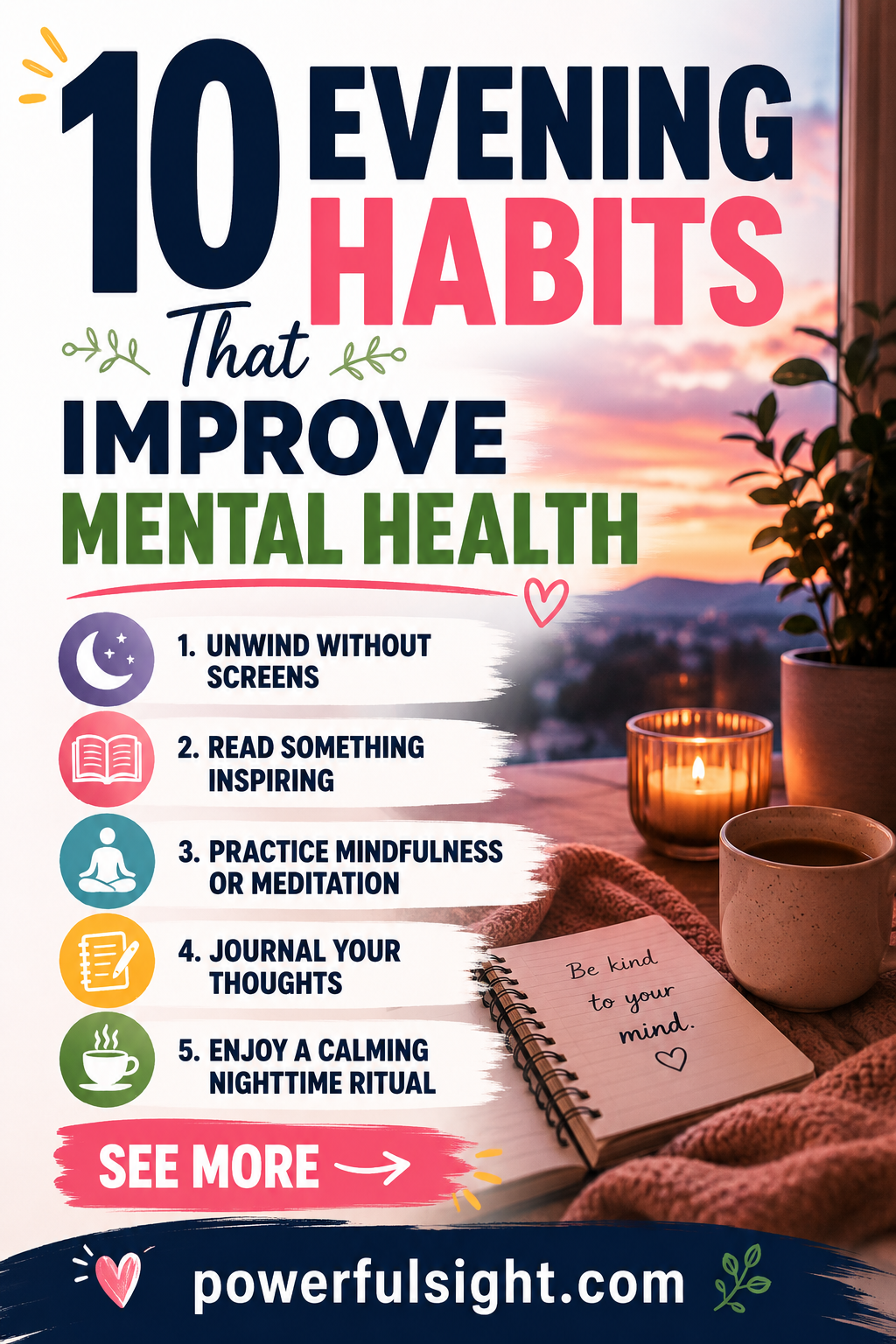
save pin for later

- Healthy Air Fryer Recipes for Beginners - 21/09/2026
- Healthy Snacks for Late Night Cravings - 21/09/2026
- High Protein Meal Prep Ideas for Easy Weekly Meals - 21/09/2026

