Small choices can change how you feel each day, and that matters more than a major life overhaul. When you build self-care habits into your routine, you can lower stress, steady your mood, and give your mind more room to recover.
Self care isn’t selfish, it’s practical. It can help you handle pressure better, sleep more soundly, and feel more in control of your day, and simple routines like the ones in these daily habits for mental wellness can make that easier to start. The 15 habits below are simple, realistic, and easy to try right away.
Start with habits that calm your mind and body
When stress hits, the fastest help often comes from small habits that settle both your thoughts and your body. These low-effort actions are easy to use on busy days, hard days, and the moments when everything feels like too much.

The goal is not to fix every problem at once. It’s to slow the stress response before it takes over, so you can think more clearly and feel more steady. Even a few minutes can help you reset.
Check in with yourself for a few minutes each day
A short daily check-in builds self-awareness before stress turns into a bigger wave. Pause and ask a few simple questions: How do I feel right now? How much energy do I have? What does my body need, water, rest, movement, or quiet?
You can write your answers in a journal, record a quick voice note, or sit in silence for a minute. Any of these habits can help you notice patterns, like tension building after a bad night of sleep or irritability after skipping lunch. That early awareness gives you a chance to respond sooner.
Small check-ins make stress easier to spot while it’s still manageable.
If you want a simple place to start, try a few daily habits for emotional strength and keep the questions brief. The point is to notice, not judge.
Use mindful breathing to reset during stressful moments
Slow breathing can calm your nervous system and interrupt spiraling thoughts. A few deep breaths before a meeting, before you walk into a tense room, or when anxiety starts rising can change the pace of your body.
Try this: breathe in slowly through your nose, then exhale longer than you inhale. If you need a quick grounding method, use a simple breathing exercise at a doorway, at your desk, or while waiting in line. The Cleveland Clinic’s grounding techniques also show how focus on the present can ease anxiety fast.
When stress spikes, short breathing breaks help you come back to the moment. That pause often makes the next choice feel less heavy.
Take short breaks before burnout builds
Small breaks protect your mental energy, especially when your day is full. Stand up, stretch, look outside, or step away from your screen for a minute or two. Those tiny resets can keep pressure from piling up.
Regular rest works better than waiting until you feel wiped out. If you notice your focus slipping or your shoulders tightening, that’s your cue to pause. A brief break now is easier than recovery later.
Build a daily routine that supports emotional balance
A steady routine gives your day a little more shape, and that can make emotions feel easier to manage. When life feels scattered, simple habits act like handrails. They do not solve everything, but they help you stay on your feet.
Predictable routines also reduce the number of choices you make all day. That matters because decision fatigue can leave you tense, impatient, and mentally drained. A few consistent habits can lower that load and make your day feel less chaotic.
Make sleep a real priority, not an afterthought
Poor sleep can make stress feel sharper, sadness feel heavier, and irritability show up faster. When you are tired, small problems can feel bigger than they are. Your patience drops, your focus slips, and even basic tasks take more effort.
A better night starts with a repeatable pattern. Try a consistent bedtime, a calm wind-down, and less screen time in the last 30 to 60 minutes before bed. Reading, light stretching, or a warm shower can help your body get the message that the day is ending.

If sleep has been off for a while, start small. Pick one bedtime and protect it most nights, then build from there. The sleep hygiene basics from the CDC are a practical place to begin.
A calmer night often leads to a steadier mood the next day.
Start the morning with something gentle
A soft morning can set the tone for everything that follows. When you jump straight into your phone, messages, and news, stress gets first place. A few quiet minutes can give your mind room to wake up before the noise starts.
You do not need a long routine. Stretch for a minute, sit in silence, breathe slowly, or jot down a few thoughts before checking notifications. Even a short pause can make the day feel less rushed.
If you want structure, choose one gentle habit and keep it simple. One cup of tea, a few stretches, or a brief journal entry is enough. Over time, that calm start can help you feel more grounded and less reactive.
Keep your space and your schedule a little more organized
A cluttered room or an overloaded calendar can drain your energy fast. Small actions like making the bed, clearing one surface, or writing a short to-do list can make the day feel more manageable. These habits are not about perfection, they are about lowering mental noise.
Order also creates a sense of progress. When you finish one small task, you get a quick reminder that you can move things forward. That feeling matters, especially on days when motivation is low.
Try this simple reset:
- Make one area of your space look finished.
- Write down the three most important tasks.
- Leave some room in your schedule for breaks.
For more support, how to build a consistent daily routine can help you turn a loose plan into something that actually sticks. Small structure is often enough to make the day feel lighter.
Move, play, and give your mind a healthy outlet
Self-care is not only about slowing down. Sometimes, your mind needs a little motion, a little joy, and a break from constant pressure. Movement and play give stress somewhere to go, and that release can leave you feeling lighter, clearer, and more like yourself.
Move your body in ways that feel manageable

You do not need a hard workout to feel better. A walk around the block, a short stretch session, a bike ride, or a few songs danced to in your kitchen can all help. Gentle yoga can also calm tight muscles and give your mind a quiet reset.
Light movement can improve mood, reduce tension, and help you sleep better at night. It also supports focus, which matters when your brain feels crowded with too many tabs open. For many people, even 10 minutes of walking or stretching makes the day feel more manageable.
If you want a simple place to begin, pick one form of movement that fits your day, then repeat it often. A little consistency goes a long way. The Mental Health Foundation’s movement advice makes the same point, regular motion can support both mood and energy.
Make time for hobbies that help you feel like yourself
Hobbies are not wasted time. They give your brain a break from stress and help you reconnect with parts of yourself that daily responsibilities can bury. Reading, cooking, music, art, gardening, puzzles, or even a simple craft project can all offer that kind of relief.
Creative outlets are useful because they pull your attention into the present moment. You stop replaying the same worry and start focusing on something concrete, like mixing ingredients, tuning a song, or shaping a sketch. That shift can feel like opening a window in a stuffy room.
If life has felt flat lately, choose one activity that used to bring you enjoyment and bring it back in a small way. Even 15 minutes counts. For more ideas on how hobbies support well-being, see why hobbies are good for mental health.
Fun is not a reward you earn after everything else is finished. It helps your mind recover so you can handle the rest.
Spend time outside when you can
Fresh air and sunlight can change your mood faster than you expect. A short walk outside, a few minutes on a porch, or a lunch break in a park can help your mind slow down and reset. Nature also gives your eyes and brain a break from screens, noise, and indoor pressure.
You do not need a long hike to get the benefit. Even sitting outside for a few minutes can feel calming when your day has been packed. A change of scenery can loosen mental tension and make problems feel a little less sharp.
When you can, pair outdoor time with another simple habit, like breathing slowly or leaving your phone in your pocket. That small boundary helps the break feel real. Over time, these moments outside can become a steady source of calm and perspective.
Protect your energy with healthy boundaries and connection
Mental health improves when you stop carrying every demand and every mood around with you. Healthy boundaries help you keep your time, attention, and energy where they belong, while connection keeps stress from turning into isolation.
The sweet spot is simple: protect what drains you, then stay close to the people who steady you. That balance can make hard days feel less heavy.
Say no when something will stretch you too thin

Boundaries are just clear limits that help you protect your peace. They can look like not overcommitting, not answering every message right away, or stepping back from people who leave you tense after every conversation.
A boundary does not need to be harsh to work. A simple “I can’t take that on right now” or “I’ll reply later” can keep your day from unraveling. If you want a deeper look at healthy relationship boundaries, the same idea applies in close relationships, too, clear limits protect trust.
When you say yes too often, resentment builds fast. That resentment can make even small requests feel irritating. Saying no early is usually kinder than saying yes and feeling bitter later.
Boundaries protect your energy before stress turns into anger.
For work pressure, family demands, and constant availability, setting work-home life boundaries can help you keep stress from following you everywhere.
Stay connected to people who make you feel supported
When life feels hard, isolation usually makes it worse. A short text, a quick call, or a shared meal with someone safe can remind you that you do not have to hold everything alone.
Keep your circle focused on people who leave you feeling calmer, not more drained. That might be a friend who listens without judging, a sibling who checks in often, or a neighbor who knows how to make you laugh.
Connection does not need to be big to matter. A 10-minute call or a walk with a trusted person can ease the pressure in your chest. If you have been pulling back lately, start small and choose one person who feels easy to talk to.
A simple check-in can sound like this:
- “I had a rough day, can we talk for a minute?”
- “Want to grab coffee this week?”
- “I don’t need advice, I just wanted to hear your voice.”
If stress has been building for a while, recovering from emotional burnout often starts with both rest and support. You don’t have to force social time, you just need real connection.
Use habits that keep stress from taking over
Stress gets louder when your mind never gets a break. Constant news checking, nonstop scrolling, and late-night phone use can fill your head with noise before you even notice it.
Set a few simple limits that give your brain room to breathe. You might check the news once in the morning, put your phone away during meals, or create a small shutdown routine at night, like charging your phone outside the bedroom, writing tomorrow’s top task, and turning off screens 30 minutes before bed.
These habits do more than save time. They reduce mental clutter, which makes it easier to stay present with the people and tasks in front of you.
For a healthy boundary with information overload, the Cleveland Clinic’s guidance on setting boundaries makes a useful point, limits are part of self-care, not a sign that you are shutting people out.
Make self-care easier to stick with over time
Self-care works best when it fits your actual life. If a habit feels heavy, complicated, or unrealistic, it usually fades fast. The goal is to make it simple enough that you can come back to it, even on busy days.
Start with a pace you can keep. Small habits are easier to repeat, and repetition is what turns effort into routine. A short walk, five quiet breaths, or a glass of water before coffee can matter more than a big plan you abandon by Friday.

Start with one or two habits that fit your real life
You do not need to try all 15 habits at once. In fact, that usually backfires because your routine gets crowded and hard to manage. Pick one or two habits that match your schedule, energy, and needs right now.
The best habit is the one you can repeat most days, even if it feels small. Maybe that means a 10-minute walk after lunch, a short breathing break before bed, or writing down one thought each morning. Those tiny wins build confidence, and confidence makes bigger changes feel possible later.
If a habit feels too hard, shrink it. A two-minute version that you actually do is better than a perfect plan you skip. Sustainable self-care grows from simple actions that fit real life, not from all-or-nothing effort, as this guide to sustainable self-care also points out.
Small habits stick better when they feel easy enough to repeat tomorrow.
Track what helps so you can keep what works
A little tracking can make self-care far more useful. Use a simple note, checklist, or habit tracker to notice what improves your mood, sleep, focus, or energy. You are not trying to grade yourself, just gather clues.
For example, jot down how you feel after a walk, a better bedtime, or a quiet morning. After a week or two, patterns start to show. Maybe stretching helps your mood, but late-night scrolling hurts your sleep.
That kind of feedback helps you adjust without overthinking it. Keep the habits that work, drop the ones that drain you, and swap in better options as your life changes. Self-care gets easier when you treat it like a process, not a performance.
Conclusion
The strongest takeaway is simple, self-care works best when you keep it small and steady. A few habits, done often, can lower stress, support better sleep, and make your mood feel more stable over time.
That is why consistency matters more than a perfect routine. Start with one habit that feels realistic, like a short walk, a calmer morning, or a brief check-in with yourself, then build from there. If mornings are the hardest part of your day, these calming morning routine ideas can help you begin with more ease.
Self-care is a practice, and practice gets stronger with repetition. Start with one habit today, keep it simple, and let it grow as your life does.
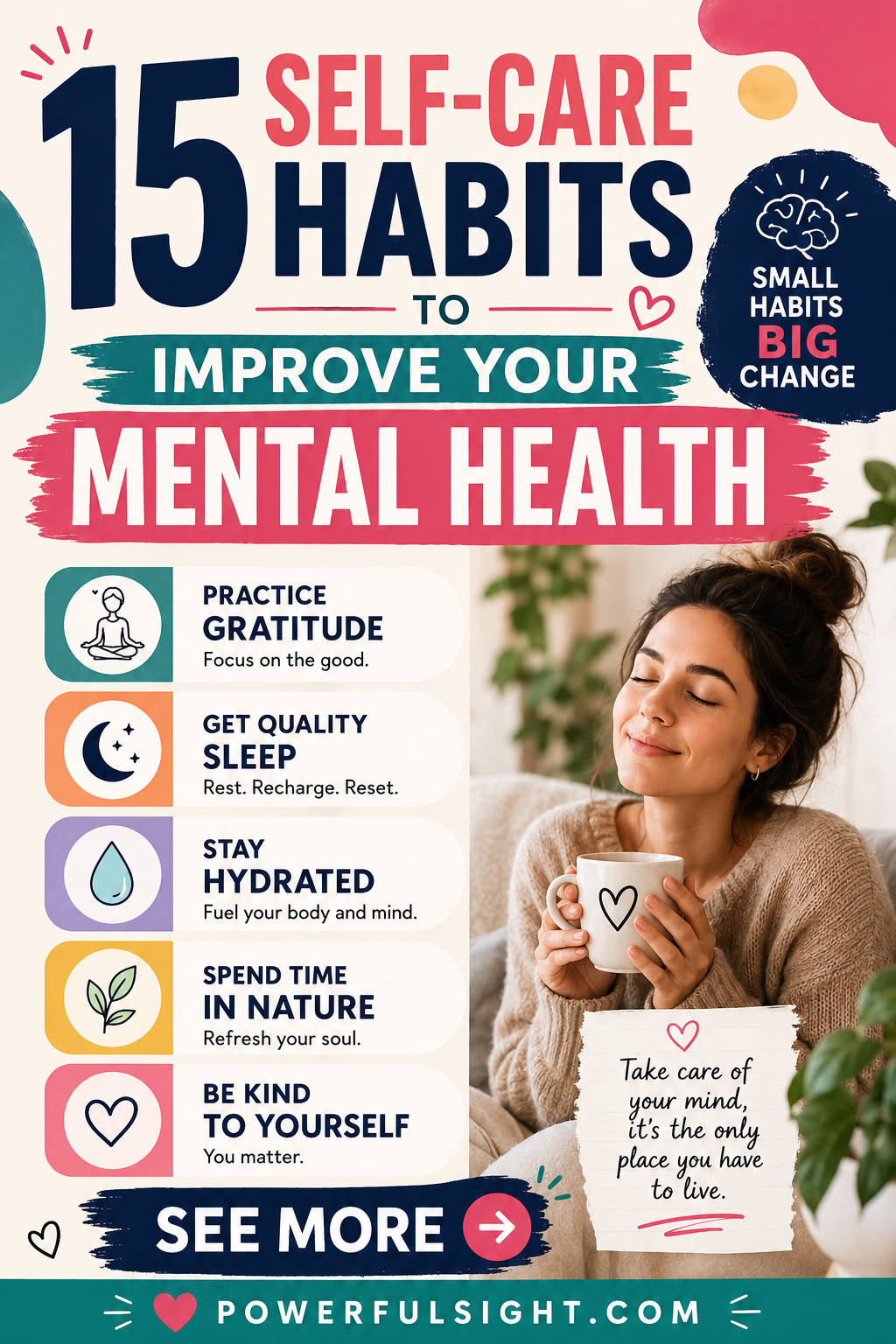
Save pin for later

- Healthy Air Fryer Recipes for Beginners - 21/09/2026
- Healthy Snacks for Late Night Cravings - 21/09/2026
- High Protein Meal Prep Ideas for Easy Weekly Meals - 21/09/2026

