Tiny finger tattoos feel personal, stylish, and easy to keep subtle, which makes them a popular choice for first tattoos or meaningful designs. The right idea can be as simple as a tiny flower, animal, ring, symbol, word, or playful detail that fits your personality without taking up much space.
Still, finger tattoos need realistic expectations. The skin has limited room, the placement can hurt more than some other areas, and frequent washing, hand sanitizer, friction, and sun exposure can cause ink to fade or need touch-ups sooner than tattoos in other spots. If you want a design with personal meaning, you may also like these strong meaningful tattoo ideas for women.
Below, you’ll find 30 cute finger tattoo ideas, plus practical tips for choosing the design, finger placement, size, healing routine, and long-term care. Start with these ideas to find a small tattoo you’ll feel comfortable wearing every day.
30 Cute Finger Tattoo Ideas for Every Personal Style
Finger tattoos work best when the design stays clear at a very small size. Choose a simple shape, check the stencil on your actual finger, and remember that hand tattoos may need touch-ups because of friction, washing, and sun exposure. For more placement inspiration, browse these ankle tattoo ideas and compare how small designs adapt to curved skin.
Tiny Flowers and Nature-Inspired Finger Tattoos
Simple petals and limited detail usually hold up better than crowded botanical artwork. Choose black ink for a clean look, add one soft color accent, or create a matching floral design with a friend.
- A single-line daisy looks sweet on the finger’s side, with its open petals creating a light, cheerful feeling.
- A tiny rose fits well on the top of the finger or near the nail; bold petals can suggest love without needing heavy shading.
- A lavender sprig works vertically along the inner finger, where its slim stem can symbolize calm, healing, or a favorite garden memory.
- A four-leaf clover suits the side or top of the finger and creates a compact reminder of luck and hope.
- A small sunflower needs slightly more room on the top of the finger, but its strong outline can bring warmth, optimism, and confidence.
- A crescent moon with one tiny star or leaf can sit near the nail or on the side, creating a personal symbol of nighttime, growth, or new beginnings.
Sweet Animals and Playful Little Creatures
Animal tattoos become cute through clear silhouettes and one strong outline, not a crowd of tiny details. They can honor a pet, express freedom, suggest good luck, or show a playful personality.
- A tiny cat face works on the top of the finger with two ears, simple eyes, and a small nose that stays readable over time.
- A bunny silhouette fits the side of the finger, using the ears and rounded back to create a gentle symbol of softness or fresh starts.
- A smiling frog looks best on the top of a slightly wider finger, with a bold outline and minimal facial features for a cheerful mood.
- A small butterfly can sit near the nail or across the upper finger, representing freedom, change, or a lighthearted spirit.
- A bee suits the side of the finger with a compact body and two clear wings, creating a hardworking yet playful impression.
- A minimal paw print fits near the base or inner finger and can honor a beloved pet without requiring fur texture or tiny claws.
Minimal Symbols With a Personal Meaning
High-contrast shapes are usually easier to read as finger tattoos. Place these designs on the side, near the nail, or centered on the finger, then choose the meaning that fits your own story.
- A tiny heart looks natural on the side of the finger and can express love, friendship, self-respect, or devotion.
- A four-point sparkle fits near the nail and creates a bright reminder of joy, ambition, or a special moment.
- A small sun works best centered on the top of the finger, where its simple rays can suggest energy, warmth, and renewal.
- A lightning bolt suits the side of the finger and gives a sharp, confident feeling linked to strength, speed, or sudden inspiration.
- An evil eye needs a clear almond shape and dark center, making the top or side of the finger a good placement for a protective symbol.
- A simple infinity symbol fits horizontally across the finger or vertically along its side, creating a reminder of lasting love, balance, or possibility.
Cute Ring Tattoos and Matching Designs
Ring tattoos can look like delicate jewelry while carrying a private meaning. Because bands wrap around curved, high-friction skin, they often need touch-ups, as finger tattoo guidance from Studio Hon also explains.
- A delicate band creates a clean jewelry effect around the finger, with a thin but slightly bold line for better longevity.
- A dotted ring feels softer than a solid band and can symbolize connection, continuity, or a minimalist personal style.
- A tiny vine ring wraps around the finger with a few simple leaves, combining a jewelry look with growth and nature.
- A bow ring works around the base or middle of the finger and gives a sweet, gift-like feeling without detailed ribbon shading.
- A sun and moon pairing places one symbol on each hand or on neighboring fingers, creating a balanced design for close friends.
- Matching heart designs can share the same heart outline while using different fingers or sizes, so couples and friends coordinate without choosing identical tattoos.
Tiny Words, Numbers, and Whimsical Details
Short lettering and simple numerals work better on fingers than long quotes because they need less space and stay easier to read. Ask your artist to show the stencil at the planned size before tattooing.
- A short word such as “love” or “breathe” fits along the side of the finger, creating a private daily reminder.
- A meaningful initial looks neat near the nail or centered on the finger, honoring a person, place, or personal chapter.
- A birth-year number works across the top of the finger when the numerals remain bold enough to avoid blurring.
- A tiny music note suits the side of the finger and can express creativity, comfort, or a song connected to a memory.
- A smiley face needs only two eyes and a curved mouth, making it a playful choice for the top or inner finger.
- A small cloud with raindrops fits on the side of the finger and can symbolize weathering hard days, imagination, or a love of whimsical art. Dots, stars, or one color accent can personalize it, but too many tiny details may reduce clarity.
How to Choose a Cute Finger Tattoo You Will Still Love
Choosing a cute finger tattoo takes more thought than picking the prettiest design on your screen. Since fingers have limited space and face constant washing, friction, movement, and sun exposure, your favorite idea must also suit your lifestyle. Start with the design’s meaning, visibility, size, and ability to stay readable over time.
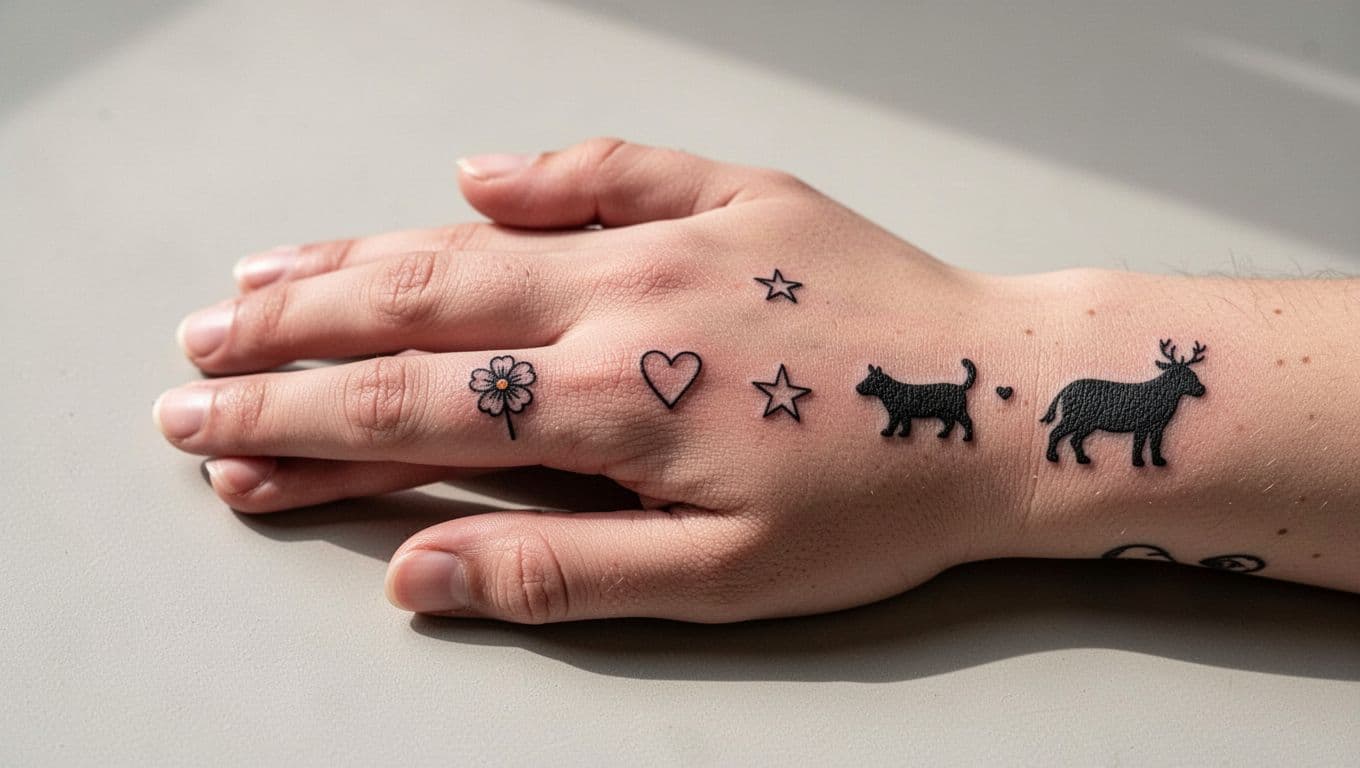
Match the Tattoo to Your Personality
A decorative tattoo is chosen mainly for its appearance. A tiny bow, sparkle, flower, or smiley face can simply match your playful, romantic, or feminine style. Personal symbolism gives the design another layer, such as a paw print for a beloved pet, a birth year for an important chapter, or a moon for personal growth.
Neither choice is better. Ask yourself whether you want a small piece of jewelry for your skin or a daily reminder of someone, somewhere, or something important. If you want more meaning-based inspiration, browse these meaningful newborn tattoo ideas for dads and notice how simple symbols can hold personal stories.
Choose Ink, Line Weight, and Placement Carefully
Black ink usually gives tiny designs the clearest contrast. Color can add charm, but pale shades and small color details may fade faster on fingers. A black outline with one restrained color accent often offers a good balance between personality and readability.
Delicate lines look graceful, especially for flowers, initials, and tiny symbols. However, slightly bolder outlines often remain easier to recognize as the tattoo softens. Ask your artist to show the design at its actual size, not enlarged on a phone screen.
Placement changes both visibility and maintenance. The top of the finger is easy to see and often holds ink better than the sides, inner finger, or areas that bend over a joint. Choose a side or inner placement if you want a more discreet tattoo, but expect those areas to experience more friction and fading.
A matching set can feel special for couples, siblings, or friends, while one design gives you more freedom later. Before committing to several tattoos, wear temporary versions for a few days and notice how they look during work, errands, and photos. Research on tattoo complications also supports taking safety and aftercare seriously, not treating a small tattoo as risk-free (research on tattoo complications).
Use References Without Copying
Collect images that show the mood, subject, line weight, and placement you prefer. Then ask your tattoo artist to redraw the concept for your finger’s shape, natural curves, and available space. Avoid requesting another artist’s exact work. Your reference should guide the conversation, not replace original design work.
Before booking, check that you can answer yes to these questions:
- Does the design have meaning or a style I genuinely want?
- Will the shape remain readable at its actual size?
- Am I comfortable with its workplace visibility?
- Has the artist shown healed finger or hand tattoos?
- Can I accept future touch-ups if the ink fades?
A cute finger tattoo lasts emotionally when it fits your daily life, not just your saved inspiration folder.
The Best Finger Placements for Small Tattoo Designs
Finger placement affects how visible your tattoo looks, how much space the artist has, and how well fine lines hold up. Since hands bend, wash, and rub against surfaces every day, choose the location with both style and maintenance in mind.
Top of the Finger
The top of the finger is the easiest placement to see and photograph. It gives small symbols, flowers, initials, and tiny animals a clear viewing angle, especially when your hand rests naturally.
This area usually offers a flatter surface than the sides or joints. However, it stays exposed to sunlight and frequent contact, so fading can happen over time. A bold outline often stays clearer than extremely delicate linework.
Side and Inner Finger
Side-of-finger tattoos feel more discreet because they face inward when your hands rest at your sides. A tiny heart, word, number, or music note can remain mostly private while still appearing when you turn your hand.
The inner finger offers a similar hidden effect, but it often experiences more rubbing against neighboring fingers and daily objects. That friction can affect healing and color retention. If you want a subtle tattoo, accept that you may need touch-ups sooner than you would with a design on the top of the finger.
Knuckles and Near the Nail
Knuckle tattoos create a bold, eye-catching look, especially for small symbols placed across the upper bends of the fingers. Yet knuckles move and crease constantly. Fine lines placed directly over a joint can look uneven when the finger bends, and repeated movement may affect how the design heals.
The area near the nail works well for tiny stars, flowers, dots, and simple shapes. It has limited space, so keep the design clean and avoid crowded details. Nail-side placement also receives regular contact with water, soap, and household products.
Ring-Style Designs
A tattoo that wraps around the finger can resemble a delicate ring. Bands, vines, dots, and matching symbols work well in this position, but the design crosses several curved surfaces. Because the skin moves and rubs throughout the day, ring tattoos often fade faster than tattoos on the top of the finger.
Before approving any placement, ask your artist to apply the stencil first. Bend and straighten your finger, make a fist, and view the design from different angles. If the lines bunch up, disappear into a crease, or look uneven, move the tattoo slightly away from the joint.
Finger tattoos heal better when you reduce rubbing, avoid picking, and follow gentle aftercare instructions, including advice from the Cleveland Clinic’s tattoo aftercare guide.
The best placement balances the look you want with the amount of movement and friction the area receives.
Finger Tattoo Size, Style, Pain, and Fading Explained
Finger tattoos look simple, but the placement requires careful planning. Small designs can be charming and personal, yet fingers face constant movement, washing, friction, and sun exposure. Before booking, understand how size, line weight, pain, and long-term maintenance affect your choice.
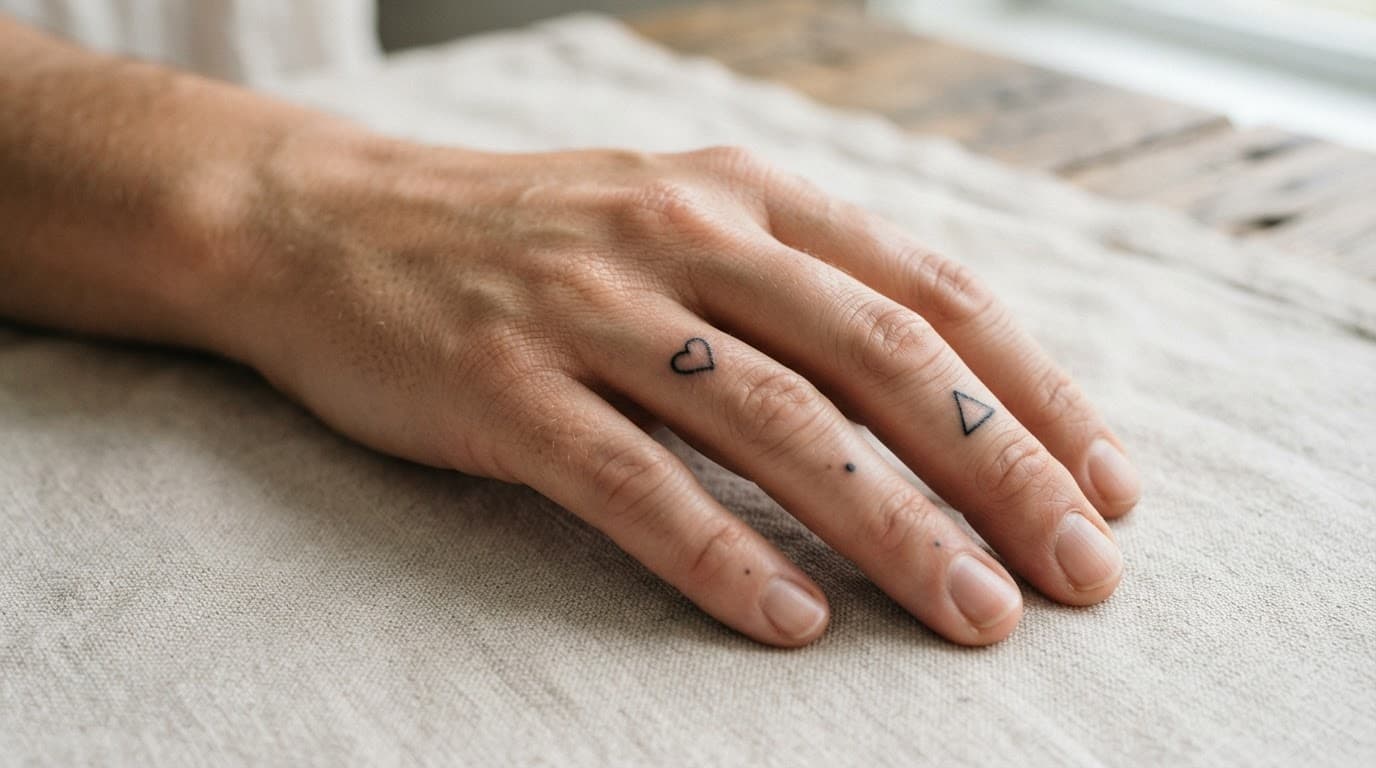
Choose Simple Designs With Enough Open Space
Tiny, high-contrast designs usually age better on fingers because they remain readable as the ink softens. A small heart, star, leaf, initial, or clean geometric shape gives the artist enough room to create distinct lines without crowding the skin.
Crowded details can merge as the tattoo heals and gradually spreads. Very thin lines may look delicate at first, but they can become uneven or disappear faster on a high-friction area. Pale colors also tend to lose definition sooner than black ink, especially when the tattoo receives regular sunlight.
Ask to see the design at its actual size before the appointment. A tattoo that looks clear on a phone screen may become too cramped when reduced to the width of your finger. Your artist can adjust the line weight, spacing, and placement to suit your anatomy.
How Much Do Finger Tattoos Hurt?
Finger tattoos often hurt more than tattoos on areas with more muscle or fat. The skin is thin, the bones sit close to the surface, and the fingers contain many nerve endings. You may feel sharp vibration, heat, or pressure during the session.
The good news is that most finger designs are small, so the tattooing usually ends quickly. Pain varies by person and placement, with the sides, inner fingers, knuckles, and areas near the nail often feeling especially sensitive. If you’re concerned, ask the artist how long your design should take and what breaks are available.
Follow professional aftercare instructions and contact a medical professional if you notice signs of infection or an unusual reaction. The Mayo Clinic’s tattoo safety guidance also recommends protecting fresh tattoos from sun exposure and avoiding swimming while they heal.
Why Finger Tattoos Fade Faster
Hands go through more daily wear than most tattoo locations. Soap, hand sanitizer, cleaning products, jewelry, repeated bending, work surfaces, and clothing all create friction. UV exposure adds another source of fading, especially on the tops of the fingers.
As a result, finger tattoos may lose sharpness sooner than tattoos on the upper arm or thigh. Touch-ups are normal for this placement and don’t automatically mean the artist did poor work. Some people need maintenance within a year, while others get several years from a well-placed design and careful care.
After healing, sunscreen can help slow UV-related fading. The Cleveland Clinic’s tattoo aftercare advice recommends gentle washing, moisturizing, and avoiding water immersion while new ink heals.
Pick an Artist With Healed Hand-Tattoo Examples
Choose an artist who regularly tattoos fingers and hands, not someone who only shows fresh work. Healed photos reveal whether their lines stay clear, how their ink settles, and how they handle high-wear placements.
Before booking, ask about their touch-up policy and expected maintenance. No artist can guarantee that a finger tattoo will remain unchanged, because your skin, habits, healing, and daily exposure all affect the result. An honest artist will explain those limits before you pay a deposit.
How to Care for a New Finger Tattoo
A new finger tattoo needs gentle care from the moment you leave the studio. Hands face constant washing, friction, movement, and contact with shared surfaces, so small mistakes can irritate the skin or affect how the ink heals. Follow your tattoo artist’s instructions first, since bandage type and healing products can vary.
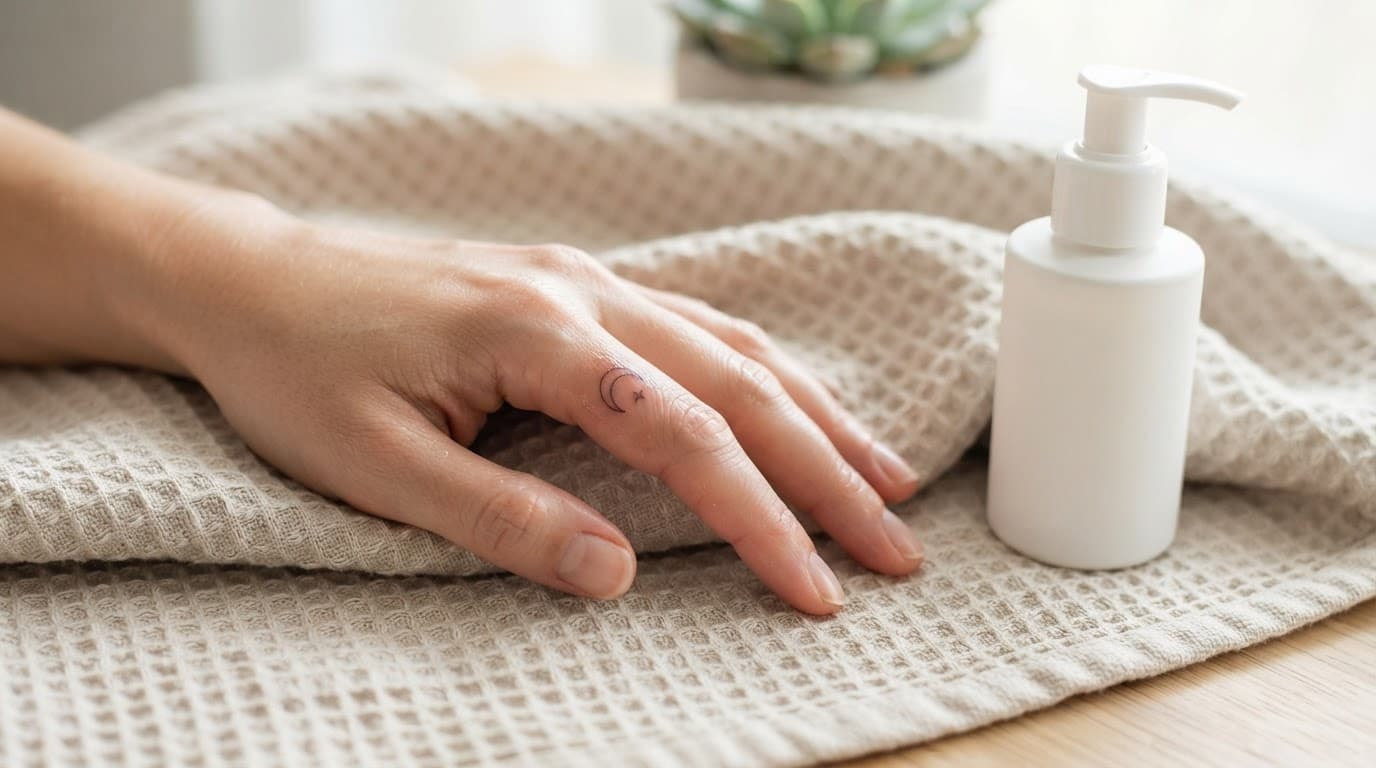
Follow a Gentle Washing and Moisturizing Routine
Wash your hands with soap and water before touching the tattoo. Then clean the area with lukewarm water and a small amount of mild, fragrance-free soap. Use clean fingertips and a gentle motion rather than a washcloth, sponge, or scrub brush. The Cleveland Clinic’s tattoo aftercare instructions also recommend avoiding perfumes and dyes in products used on fresh ink.
After washing, pat the tattoo dry with a clean disposable paper towel. Don’t rub the skin or use a shared hand towel, since fabric can carry bacteria and catch on peeling skin. Once the area feels dry, apply only a thin layer of the fragrance-free moisturizer or healing product your artist recommends. Too much product can leave the tattoo overly wet and may irritate the skin.
During healing, your routine should stay simple:
- Wash the tattoo gently as directed by your artist, usually once or twice a day.
- Pat it dry each time with a clean disposable towel.
- Apply a light layer of recommended moisturizer when the skin feels dry or tight.
- Let the tattoo breathe, and don’t cover it with a new bandage unless your artist tells you to.
Flaking, mild itchiness, and some tenderness can occur as the skin heals. Never pick flakes or scabs, even when they feel tempting to remove. Pulling at them can damage the healing surface and remove pigment.
Protect Your Finger From Water, Friction, and Contamination
Avoid tight rings, gloves, and jewelry that press against the tattoo or trap moisture. Dirty work gloves can introduce bacteria, while tight accessories create rubbing that may disturb peeling skin. Plan ahead if your job involves cleaning, food preparation, construction, gardening, or frequent contact with shared equipment.
Exercise may also require temporary adjustments. Sweat, gym equipment, and repeated friction can irritate a fresh finger tattoo, so keep the area clean and avoid activities that cause rubbing. You can shower, but don’t soak the tattoo in a bath or expose it to pools, hot tubs, lakes, or the ocean until it has fully healed.
Handwashing is important, but repeated washing can dry fresh ink. Use lukewarm water, keep the process gentle, and moisturize lightly afterward.
Keep the tattoo away from direct sunlight while it heals. After the skin has completely closed, apply a broad-spectrum sunscreen rated SPF 30 or higher whenever your hands are outdoors. Regular sun protection helps slow fading, which matters even more for finger tattoos that already experience heavy daily wear.
Know When to Seek Medical Advice
Some redness and soreness are normal at first, but symptoms should gradually improve. Contact a healthcare professional if you notice redness that spreads, worsening pain, severe swelling, pus, fever, red streaks, or skin that becomes increasingly hot. A foul-smelling discharge or swelling that continues to worsen also needs medical attention.
Don’t wait for the tattoo to become dramatically painful before asking for help. Early medical advice is safer than trying to treat a possible infection with extra ointment or home remedies.
Conclusion
The best cute finger tattoo balances personal meaning with a simple design, suitable placement, and realistic expectations about fading. Whether you prefer a tiny flower, animal, symbol, ring design, or short word, choose an idea that still feels right when reduced to the size of your finger. Meaningful initials and personal symbols can also inspire small newborn tattoo designs when family memories are part of your story.
Before your appointment, bring a clear concept to an experienced tattoo artist and review the stencil on your actual finger. Check how it looks when your hand bends, then follow careful healing instructions and plan for possible touch-ups as the tattoo ages. A small tattoo may take up very little space, but the right design can carry a big meaning every day.
Save the pin for later


- 60 Color Tattoos That Healed Beautifully - 25/09/2026
- 40 Most Painful Tattoo Spots - 24/09/2026
- 20 Tattoo Aftercare Mistakes That Ruin Fresh Ink - 23/09/2026

