Feminine foot tattoos can be subtle, stylish, and meaningful while staying easy to show off or cover with shoes. From tiny flowers and celestial symbols to delicate script, the right design can feel personal without taking up much space.
You’ll find 30 foot tattoo ideas for women grouped by design style, along with practical guidance on placement, sizing, pain, fading, healing, and choosing the right artist. Foot tattoos can hurt more than many other placements, and friction from socks and shoes means they need careful aftercare.
If you’re comparing placements, these ankle tattoo ideas can also help you decide where your design will work best. Let’s start with feminine foot tattoo styles that balance beauty, meaning, and lasting readability.
30 Foot Tattoo Ideas for Women That Feel Feminine and Personal
Foot tattoos can stay small while carrying plenty of meaning. Placement matters because the foot’s natural curves can make delicate artwork look intentional instead of crowded.
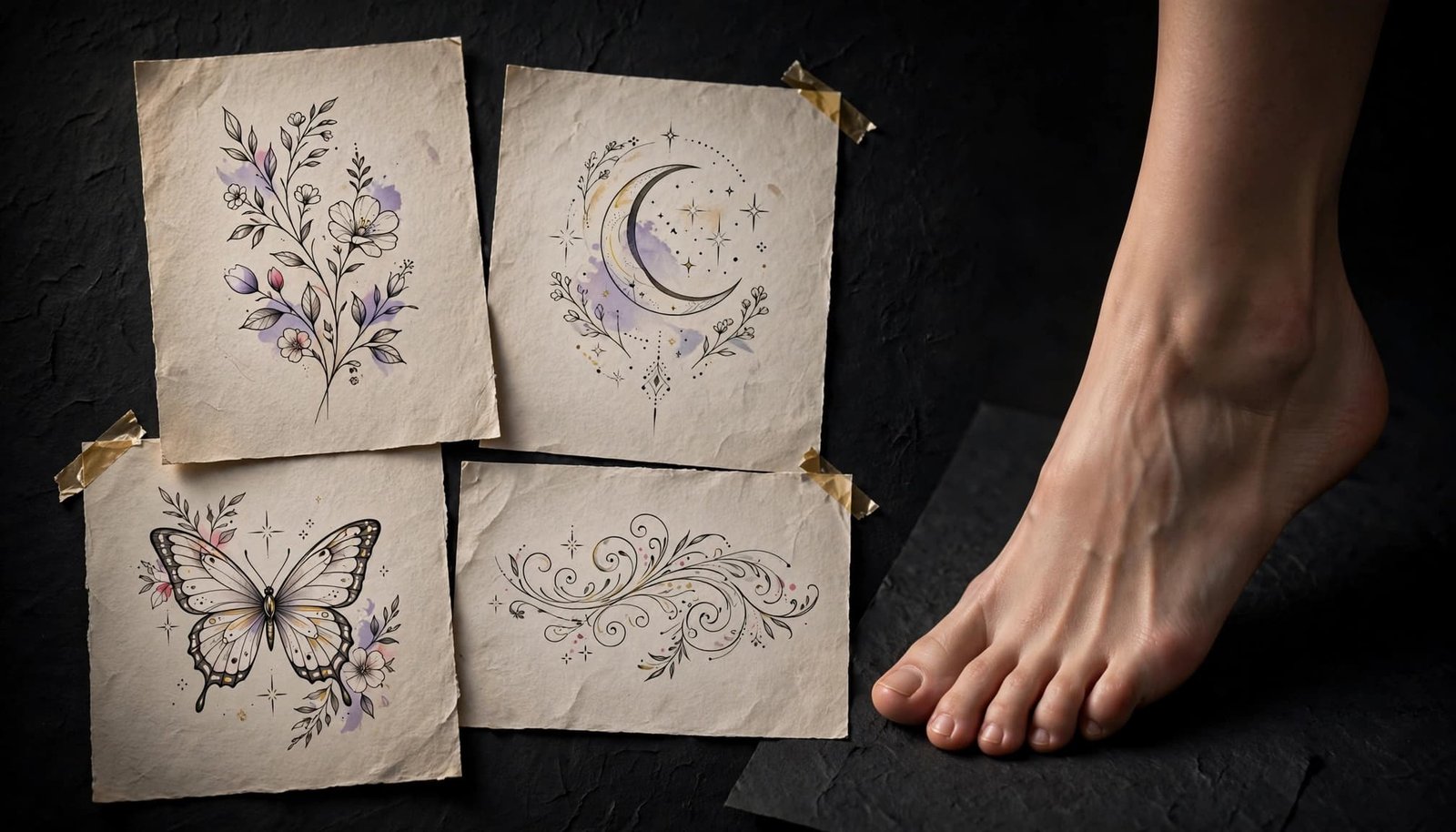
Delicate floral and nature-inspired foot tattoos
These feminine foot tattoo ideas use soft shapes, curved stems, and natural movement. Simple outlines and restrained color usually keep small designs clearer as they age.
- A tiny daisy in fine-line black ink suits the top of the foot and symbolizes cheerful simplicity.
- A fine-line rose along the side of the foot can represent love, strength, or a meaningful person.
- A soft-color watercolor hibiscus near the ankle creates a tropical look tied to joy and confidence.
- A small lotus flower on the top of the foot suggests renewal, peace, and personal growth.
- A cherry blossom branch can curve across the ankle in soft pink ink as a reminder to value change.
- A leafy vine following the foot’s length offers a graceful black-ink design connected with growth.
- A wildflower cluster works well near the ankle, especially when each bloom honors a different memory.
- A lavender sprig along the side of the foot brings a fine-line purple accent and a sense of calm.
- A botanical ankle wrap can circle the ankle with leaves and tiny blossoms in a delicate wraparound style.
- A small wave beside a seashell combines fine-line blue ink with a personal connection to the ocean.
Curved stems can follow the top of the foot, while shorter designs fit the side or ankle. Ask your artist to keep details open and avoid packing too many petals into a small space.
Cute animals, celestial symbols, and meaningful motifs
Small symbols suit the side of the foot and areas near the ankle. A snake or constellation can use more of the foot’s natural length without looking forced.
- A single-line butterfly near the ankle represents freedom, change, and a new chapter.
- A tiny hummingbird on the top of the foot can symbolize resilience, energy, and happiness.
- A fine-line feather along the side suggests lightness, creativity, or remembrance.
- A tiny heart near the ankle offers a simple symbol of love, friendship, or self-acceptance.
- A snake wrap can travel from the ankle toward the top of the foot, representing growth and transformation.
- A moon with two small stars creates a soft black-ink design connected with intuition and hope.
- A small sun symbol brings warm meaning, such as confidence, optimism, or a loved one’s memory.
- A constellation can stretch across the foot in fine-line dots, honoring a birth sign or special night.
- A compass near the ankle represents direction, independence, and trust in your decisions.
- An Eye of Horus in clean black linework can symbolize protection and spiritual awareness.
Script, minimalist, and jewelry-style foot tattoo ideas
Short text usually reads better than a long quote on a curved foot. Thin lettering, clean spacing, and test-size stencils help you judge readability before the needle touches your skin.
- A short quote in fine script can sit along the side, offering a private daily reminder.
- One meaningful word, such as “breathe,” works best in thin lettering near the ankle.
- Initials in minimalist script can honor family members without making the design feel crowded.
- A name or date suits the top of the foot when remembrance is the central meaning.
- Coordinates in small black lettering can mark a birthplace, meeting place, or favorite destination.
- An infinity symbol near the ankle represents lasting love, continuity, or an ongoing promise.
- Geometric linework can form a small triangle or sunburst in crisp black ink, suggesting balance and focus.
- A compact mandala fits the top of the foot, where its symmetry remains easy to see.
- An anklet tattoo can combine dots, links, and tiny charms in a jewelry-inspired wraparound style.
- A minimalist abstract design may use one curved line, connecting the ankle to the foot’s side.
Vine and anklet designs can connect the ankle to the top or side of the foot. Before choosing lettering, test the stencil while standing, since the skin changes shape when you walk.
Choose the Best Foot Tattoo Placement for Your Design
The best foot tattoo placement depends on your design, daily footwear, visibility preferences, and how much movement the area gets. A tiny symbol may suit the side, while a botanical design needs the broader surface on top.
Top of the foot
The top of the foot offers a flatter surface, so it can support slightly larger designs and more detailed linework. Floral arrangements, moons, butterflies, and compact mandalas often look balanced here.
However, this placement stays highly visible with sandals, low shoes, and cropped pants. Shoe tongues, straps, and socks may rub against the tattoo during healing, so plan for loose footwear and less walking at first. Sun exposure can also affect the ink once the tattoo heals.
Side of the foot
The side works well for small scripts, fine-line symbols, feathers, and narrow botanical designs. Its natural length helps lettering or a simple symbol follow the foot without looking crowded.
This area offers more privacy than the top because shoes can cover it easily. Still, the side may press against footwear, especially with snug sneakers or narrow shoes. Ask your artist to check whether your usual shoes touch the planned placement before finalizing the stencil.
For more context on how placement affects discomfort, compare this guide to what getting a tattoo feels like.
Ankle transition
The ankle transition connects the foot to the lower leg, making it a strong choice for anklets, small vines, and designs that continue upward. It also gives you a visible accent without placing the entire tattoo across the foot.
Wraparound vines, anklets, and snakes need enough room to flow around the curves. If the design is too tight, it may look compressed when you stand or walk. The ankle can offer a useful balance between visibility and discretion, although socks and shoe edges may still create friction.
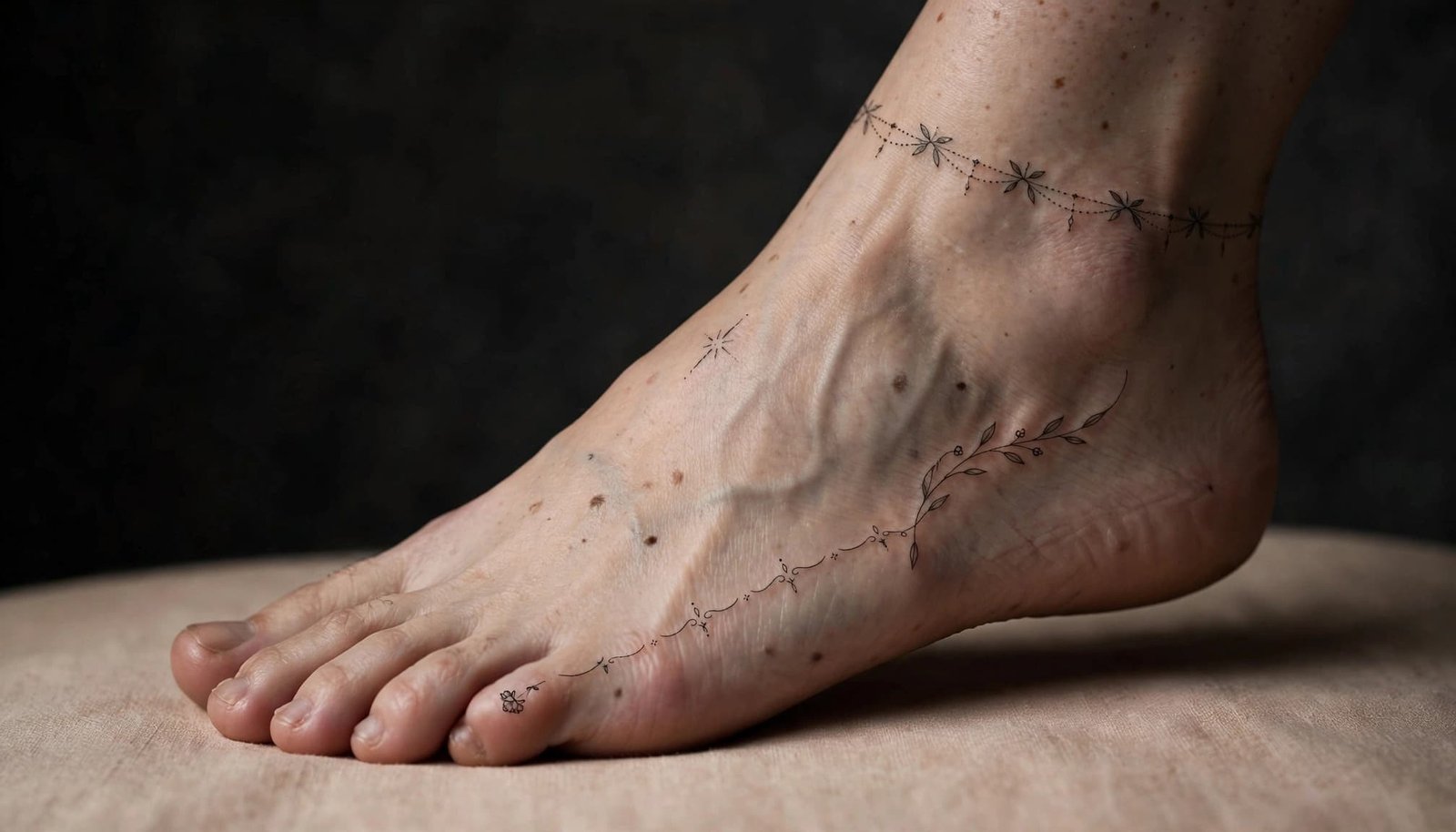
Arch-adjacent area
The area beside the arch suits curved vines, tiny leaves, and elongated symbols. It has less direct visibility, which makes it appealing if you want a meaningful tattoo that stays easy to cover.
Because the foot flexes while you walk, curved artwork may change shape from different angles. A skilled artist can adjust the design so it follows the foot instead of fighting its movement.
Near the pinky toe
The space near the pinky toe fits very small motifs, such as stars, hearts, dots, or a single flower. It works best for minimal designs with open spacing and limited detail.
Before booking, ask your artist to place a stencil while you’re standing and sitting. Check it from the top, side, and front, then walk a few steps. This simple test shows how movement changes the shape and whether your shoes will rub the tattoo.
How to Pick the Right Size, Style, and Ink Color
The best foot tattoo balances the design you love with the space, movement, and friction of your foot. A detailed reference may look beautiful online but lose clarity when reduced to a small area. Before choosing a design, consider how much skin you have available, how often shoes touch it, and whether you want a soft or high-contrast finish.
Match the tattoo size to the available space
Size controls how much detail your tattoo can hold. A tiny heart, star, or simple flower can stay readable at a small scale, but a portrait, long quote, or detailed botanical scene needs more room.
Very tiny details and tightly packed color may blur or fade more quickly on the foot. The skin bends as you walk, while socks and shoes create regular friction. Leave enough space between lines so petals, leaves, and symbols don’t merge as the tattoo ages. Avoid overly thin script, especially for long words or quotes.
A larger design on the top of the foot gives your artist more room for shading, open gaps, and readable linework. For more guidance on matching tattoo size and placement, compare these tattoo placement ideas for women.
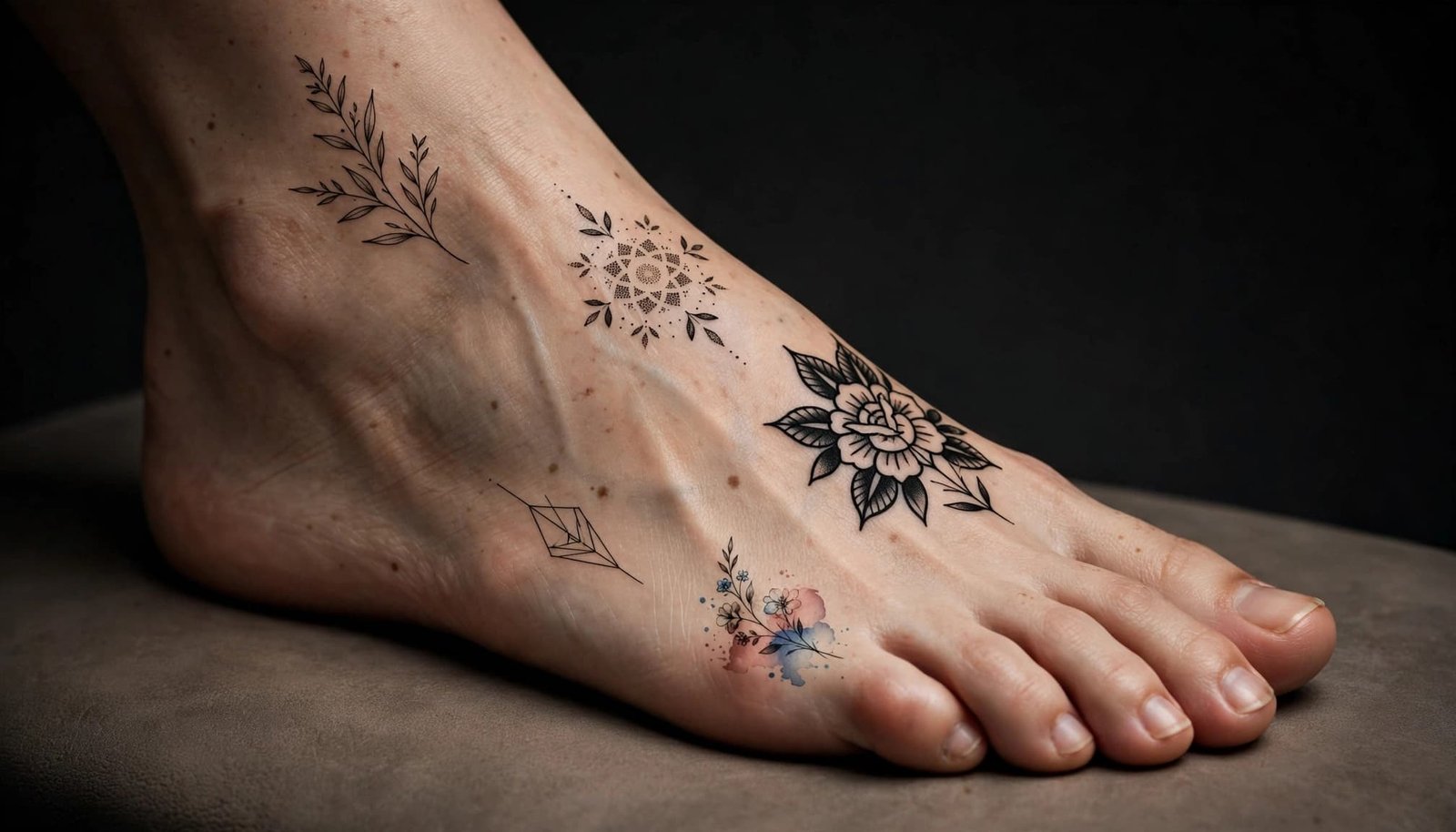
Compare ink styles before choosing
Each style creates a different visual effect and ages differently on foot skin.
- Fine-line black ink gives flowers, moons, and small symbols a timeless appearance. Use enough line weight and spacing to protect readability.
- Delicate dotwork adds texture to mandalas, stars, and shaded designs. Keep the dots open rather than packing them into a small patch.
- Soft watercolor color creates a gentle accent in pink, blue, lavender, or green. Pale shades can fade sooner, so a clean outline may help anchor the design.
- Bold traditional lines provide stronger contrast and usually suit foot tattoos that need a clear shape. Simple flowers, hearts, and swallows work well in this style.
- Minimalist single-needle work looks airy and refined, but it needs careful sizing. Extremely fine lines and microscopic details may soften with time.
Use this simple decision guide
Choose black linework if you want a classic tattoo that stays easy to read. Add one small color accent when you prefer gentle contrast without filling the entire design with pigment. Select a larger top-of-foot composition when your concept depends on lettering, layered florals, or detailed shading.
Your artist should adapt a reference image to your foot’s shape instead of copying another person’s tattoo exactly. A professional can adjust the scale, line weight, spacing, and color so the design fits your anatomy and remains attractive as it heals.
What Foot Tattoos Feel Like and How Long They Take to Heal
Foot tattoos often feel sharper and more sensitive than tattoos on fleshier areas. The skin is thin, cushioning is limited, and parts of the foot sit close to bone. However, pain varies from person to person and depends on the placement, design size, needle work, and session length.
What foot tattoo pain feels like
During the appointment, you may notice a hot scratching or stinging feeling. The top of the foot can feel especially tender, while areas near the toes, ankle, and side may react differently. Longer sessions can also make discomfort build as the skin becomes more irritated.
Some people find the pain manageable because foot tattoos are often small and quick to complete. Others may need short breaks, especially when the design includes shading, color, or repeated passes over the same area. Eat beforehand, stay hydrated, and tell your artist if you need a pause.
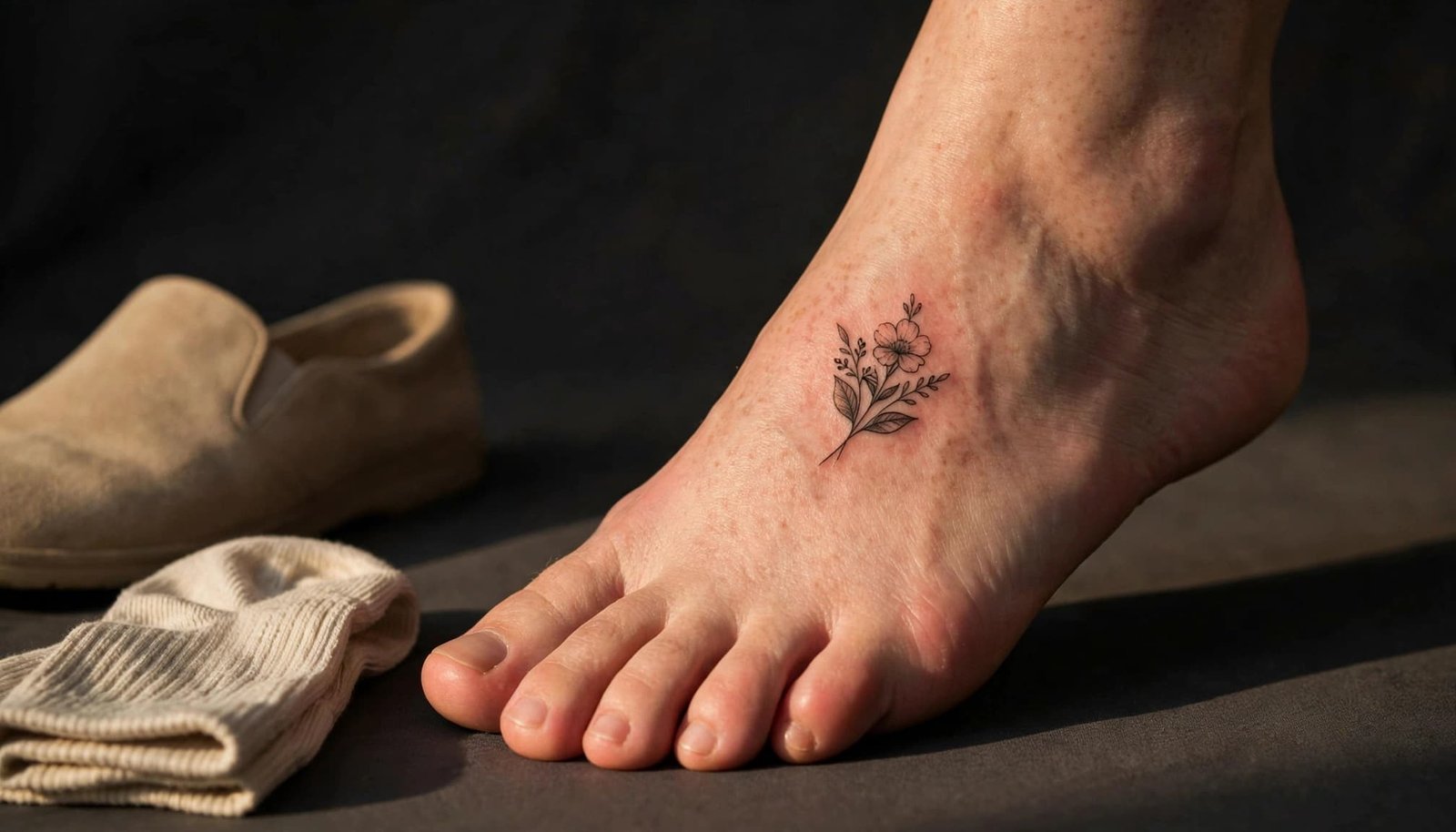
Swelling, soreness, and everyday comfort
Mild redness, tenderness, warmth, swelling, clear fluid, itching, flaking, or light scabbing can occur during normal healing. These symptoms should gradually improve rather than become stronger. Most tattoos heal on a general timeline of about two weeks, but foot tattoos may feel inconvenient for longer because walking and footwear constantly affect the area.
Shoes, socks, and friction can rub against fresh ink. Tight footwear may press on the tattoo, while walking can stretch the skin and increase soreness. Plan to wear clean, loose footwear that doesn’t stick to the tattoo, and reduce unnecessary walking during the first few days.
Follow your tattoo artist’s written aftercare directions because products and coverings can differ. In general, keep the area clean as instructed, wash gently with clean hands, pat it dry, and apply only the recommended product. Avoid soaking the tattoo in baths, pools, hot tubs, lakes, or the ocean. Don’t pick peeling skin or scabs, and limit friction until the surface has healed.
When to seek medical advice
Contact a medical professional promptly if you notice symptoms that worsen instead of improving. Warning signs include:
- Redness that spreads or becomes darker.
- Increasing swelling, severe pain, or worsening tenderness.
- Pus, foul-smelling drainage, or open sores.
- Fever, chills, or red streaks moving away from the tattoo.
For more detail, review the Cleveland Clinic’s guidance on tattoo infection signs and the American Academy of Dermatology’s advice on tattoo skin reactions. When symptoms seem abnormal, don’t wait for the tattoo to improve on its own.
Smart Questions to Ask Before Booking a Feminine Foot Tattoo
A beautiful reference image is only the starting point. Before booking, ask questions that help you judge the artist’s skill, the design’s long-term readability, and the studio’s safety standards.
Review the artist’s experience and healed work
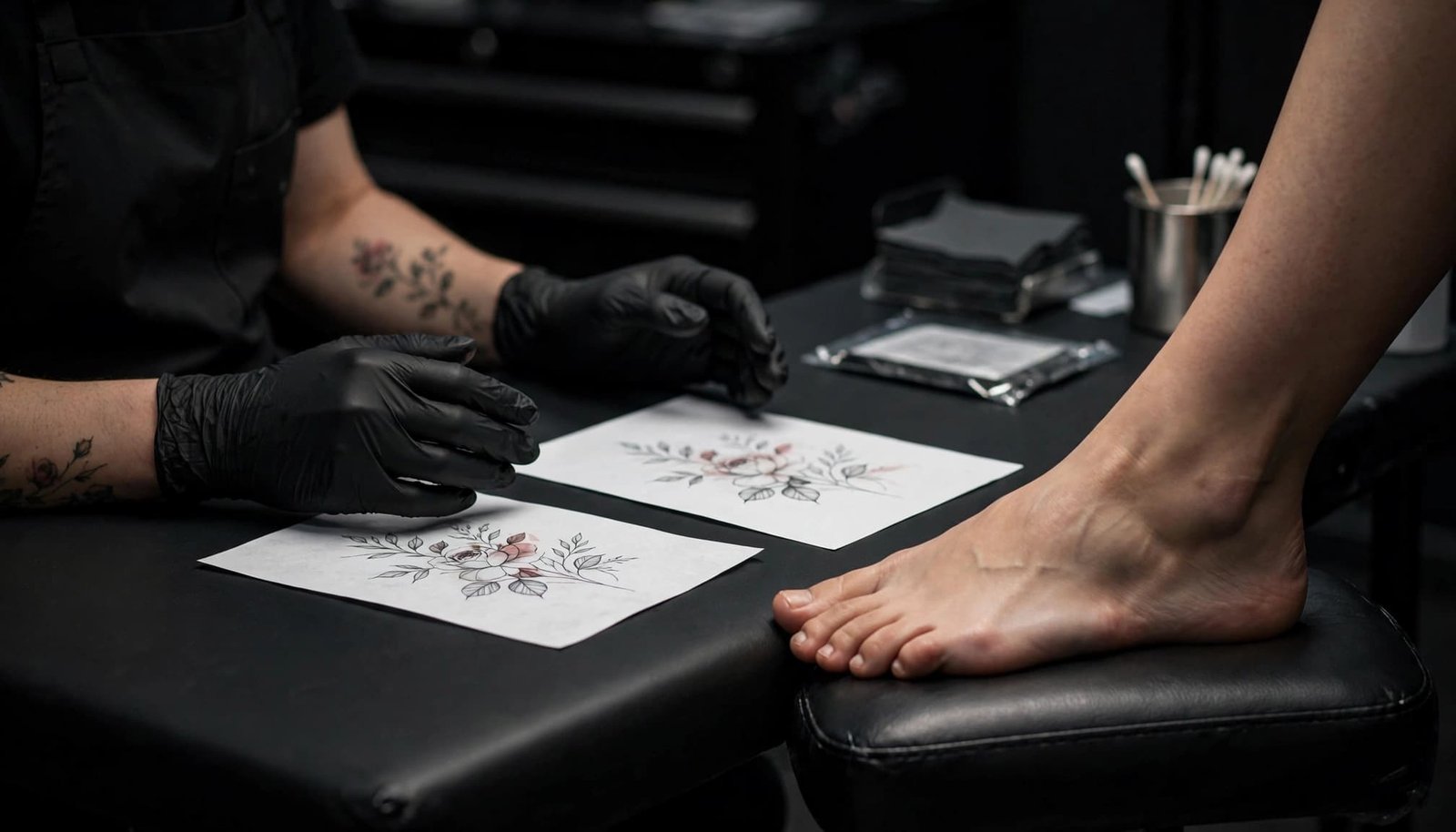
Look through the artist’s portfolio, but don’t judge it only by fresh tattoos photographed under bright studio lighting. Ask to see healed examples, especially small, fine-line, floral, script, and foot tattoos. Healed work shows whether the lines remain readable, whether pale colors hold well, and how the artist handles natural fading.
Ask these questions before you pay a deposit:
- What size do you recommend for this design?
- Will the artwork look better on the top, side, or ankle transition?
- How will walking and footwear affect the tattoo?
- Which ink colors will remain clear on my skin?
- How much fading should I expect, and when might I need a touch-up?
- Does your touch-up policy include foot tattoos?
- What aftercare routine and footwear restrictions do you recommend?
A skilled artist should explain the trade-offs clearly and adjust the reference image to your foot’s shape. If someone promises that an extremely tiny design will keep every intricate detail forever, treat that as a warning sign.
Check the studio and share health information
Choose a reputable studio that looks clean, organized, and professional. The artist should use fresh, sealed needles, single-use supplies when appropriate, gloves, and clear cleaning procedures. The lowest price should never decide where you get tattooed. Poor technique or unsafe hygiene can cost far more than a careful appointment.
Tell the artist about allergies, eczema, psoriasis, sensitive skin, circulation concerns, diabetes, medications that affect bleeding, or past healing problems. Share any previous reaction to tattoo ink or aftercare products before the appointment. Your artist may recommend medical guidance or postpone the session if tattooing could create unnecessary risk.
Before leaving home, use this short preparation checklist:
- Eat a proper meal beforehand.
- Drink enough water.
- Wear loose footwear that won’t rub the area.
- Bring your reference image.
- Leave enough time for consultation, stenciling, and the tattoo session.
Conclusion
The best feminine foot tattoo balances personal meaning, clear design, comfortable placement, and realistic care needs. The 30 ideas above, including flowers, butterflies, script, celestial symbols, vines, and anklet-inspired designs, offer plenty of ways to create something beautiful without overcrowding the foot.
Save a few concepts and discuss them with an experienced tattoo artist. Together, you can choose a size, placement, and line style that stays readable and wearable over time. The right tattoo should feel personal enough to belong to you.
Save the pin for later

- 25 Gothic Tattoo Ideas for a Bold, Dark Look - 21/09/2026
- 34 Black Fine Line Tattoo Ideas for a Delicate Look - 21/09/2026
- 23 Micro Tattoo Ideas for Women With Meaning - 21/09/2026

