Meal prep saves time, but eating the same thing all week gets old fast. If you’ve ever opened the fridge on Wednesday and felt bored before your first bite, you’re not alone.
The good news is that how to meal prep for a week without getting bored comes down to a simple system, not more work. A few smart swaps, better storage, and easy flavor boosters can keep your meals fresh, flexible, and worth eating all week.
That’s what this guide focuses on, so you can prep once and still look forward to lunch and dinner.
Why meal prep gets boring so fast
Meal prep usually starts with good intentions. Then the third lunch of the same chicken bowl hits, and the excitement is gone. That drop-off has less to do with discipline and more to do with repetition, weak prep choices, and meals that never feel fresh.
Boredom shows up when every container looks, tastes, and feels the same. It also shows up when the food stops holding up well in the fridge. Once you spot those patterns, the fix becomes much easier.
The same flavor, texture, and look every day
Eating the same meal on repeat wears people down fast, even when the food is healthy. Dry chicken, plain rice, and steamed broccoli can be a solid meal once or twice, but after that it starts to feel like a chore. Your brain wants a little change, and your appetite does too.
Visual variety matters as well. People eat with their eyes first, so five containers that look identical can feel stale before you take a bite. A little color change, a different sauce, or a new side can make the whole meal feel more appealing.
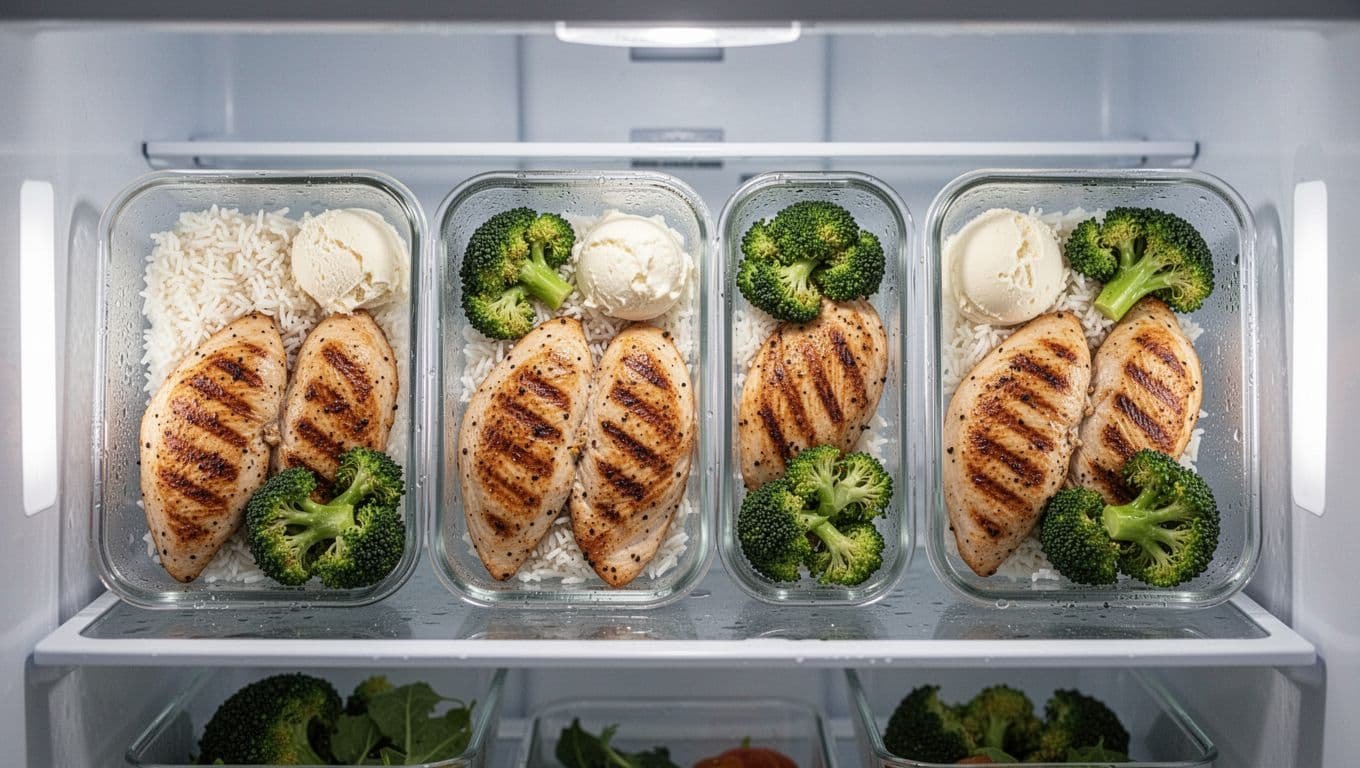
That is why rotating your meals matters. Even switching the same protein into a salad one day and a grain bowl the next can make a big difference. If lunch always looks like lunch from Monday through Friday, boredom shows up early.
Poor prep choices make leftovers taste worse
Some meals get boring because they do not hold up well. Sauces mixed in too early can turn grain bowls soggy, while overcooked chicken dries out by day two. Packing wet ingredients together, like tomatoes, dressing, and greens, can wreck the texture before you even open the lid.
The better prep method depends on the food. Hearty vegetables, grains, roasted proteins, and sturdy sauces usually last longer than crispy or delicate items. That is why healthy work lunch ideas to prep often focus on ingredients that reheat well and stay balanced.
A few simple rules help meals taste fresher:
- Keep sauces separate until serving time.
- Store crunchy toppings on the side.
- Choose proteins that stay tender after reheating.
- Use ingredients that match in moisture and texture.
Boredom is usually a planning problem, not a willpower problem. When prep sets you up with the same taste, same texture, and same look, interest fades. The rest of this guide fixes that with smarter variety and better prep habits.
Build a week of meals from mix-and-match parts
The easiest way to avoid meal prep boredom is to stop making seven matching meals. Instead, prep a few building blocks, then mix them into different combinations during the week. That keeps your food flexible, cuts down on cooking time, and gives you more than one way to use the same ingredients, which is exactly what makes a prep plan hold up past Monday.
A simple formula works well: one or two proteins, a few carbs, several vegetables, and more than one sauce. That setup gives you enough variety to keep meals interesting without turning your kitchen into a full-time restaurant.
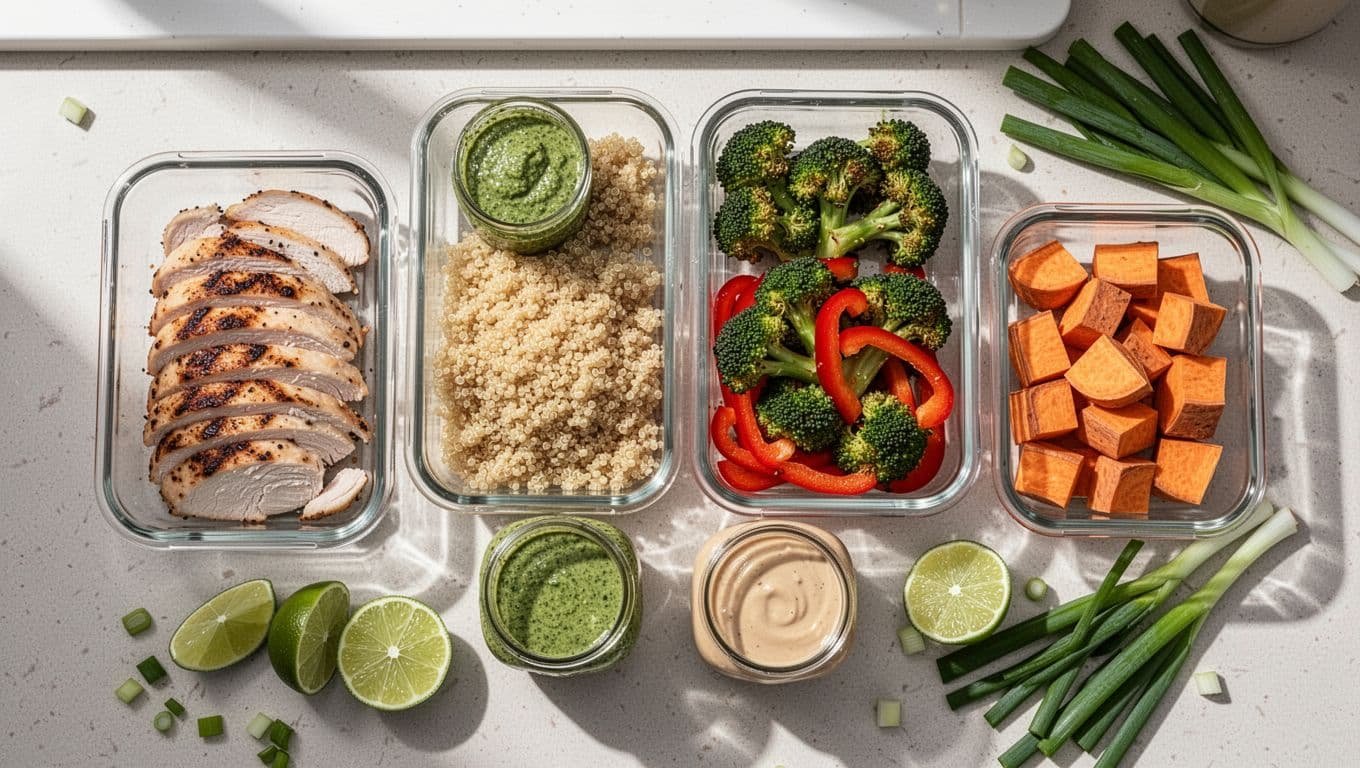
If you want a deeper example of this style, mix-and-match meal prep ideas show how a short prep session can cover several lunches and dinners.
Pick one or two proteins that work in different meals
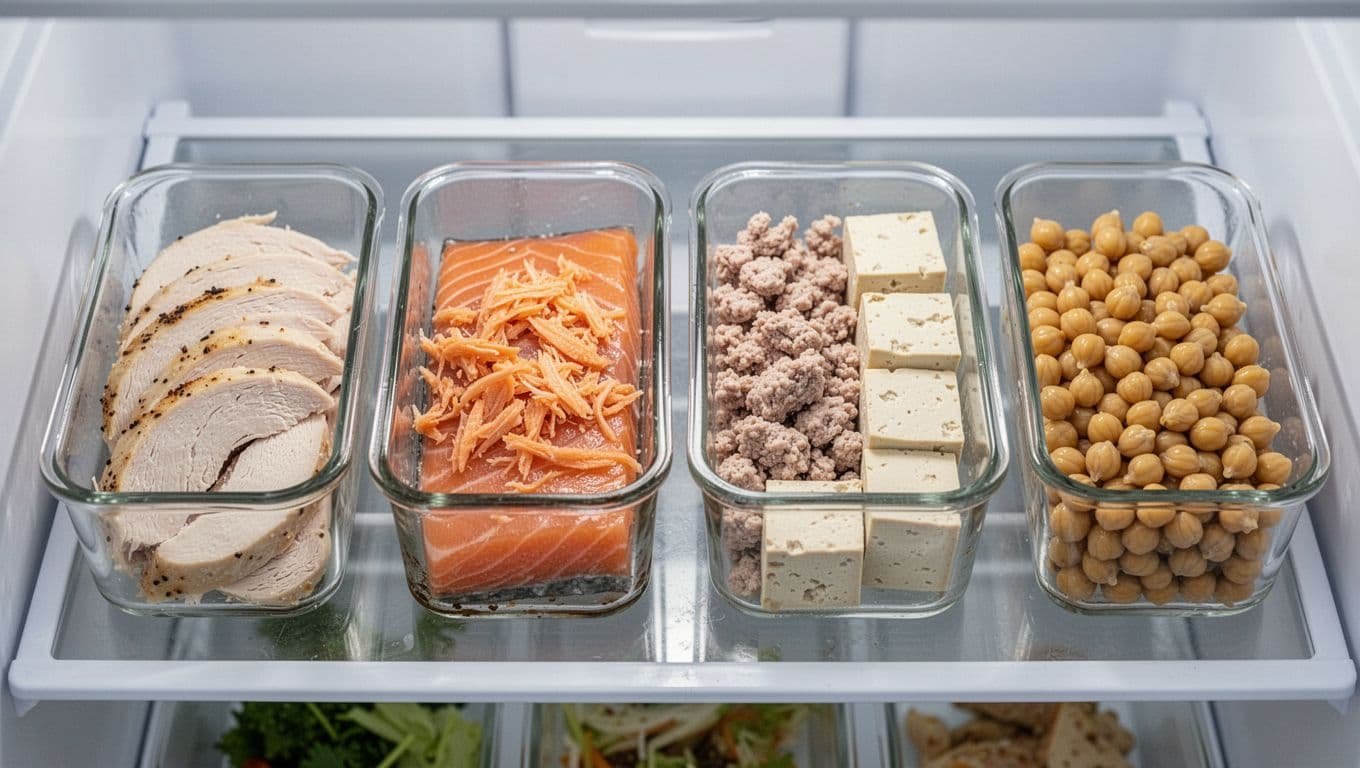
Start with proteins that can change personalities. Chicken, ground turkey, salmon, tofu, beans, and chickpeas all work well because they fit into bowls, wraps, salads, tacos, and pasta without much effort.
Keep the cooking simple so the protein stays neutral enough for later. Roast chicken with salt, pepper, and garlic. Brown ground turkey with basic seasoning. Bake salmon with lemon and herbs. Press and roast tofu, or season beans with cumin and paprika.
That simple base gives you room to change the flavor later. Chicken can go into a taco bowl on Tuesday, then into a pesto pasta on Thursday. Chickpeas can become a salad topper one day and a wrap filling the next.
A good protein base also saves space in your fridge because you only cook once. Store it in separate containers so each meal can take a different direction.
Choose carbs and vegetables that stay useful all week
The best carbs and vegetables are the ones that still taste good after a few days. Rice, quinoa, farro, and sweet potatoes all hold up well, and they can be used in bowls, side dishes, or wrapped into lunch ideas. For a closer look at flexible lunch builds, balanced lunch ideas with protein and carbs can help you see how the pieces fit together.
Some vegetables are better roasted, some are better steamed, and some should stay raw. Roast broccoli, peppers, and zucchini for a softer, deeper flavor. Steam broccoli if you want a lighter side. Leave carrots or peppers raw when you want crunch in a bowl or wrap.
That mix matters because texture keeps meals interesting. A sweet potato bowl feels very different from a rice bowl, even if the protein stays the same. Raw vegetables also help meals feel fresher later in the week.
For storage, choose sturdy produce first. Zucchini, peppers, broccoli, and sweet potatoes usually last well when cooked. Raw greens and cut tomatoes need more care, so keep them for the first half of the week or store them separately.
Use sauces and toppings to change the whole meal
A sauce can make one base meal taste completely different. Pesto turns chicken and pasta into a fresh dinner. Salsa gives beans or turkey a taco feel. Tahini, yogurt sauce, vinaigrettes, and hot sauce all shift the flavor without extra cooking.
Quick pickles and toppings do the same job. Add them and a grain bowl feels brighter. Add them to wraps and the whole meal feels less heavy. Even a small spoonful of sauce changes the mood of the dish.
Keep sauces in separate containers so your meals stay fresh. If you mix them in too early, grains get soggy and greens wilt fast. Store crunchy toppings, like seeds, nuts, or chopped herbs, on the side too.
A few smart pairings go a long way:
- Pesto for pasta, salmon, or chicken bowls
- Salsa for tacos, rice bowls, or beans
- Tahini for roasted vegetables, chickpeas, or farro
- Yogurt sauce for wraps, chicken, or sweet potatoes
- Vinaigrettes for salads and grain bowls
- Hot sauce for almost anything that needs heat
With that setup, you can build five very different meals from the same prep. One night feels like a grain bowl, the next feels like a wrap, and the third feels like a salad with a new dressing. That is the whole trick, keep the parts flexible so the week never feels stuck.
Plan flavor themes so every day feels different
A weekly prep plan gets much easier to stick with when each day has its own flavor direction. You still cook once, but your meals stop tasting like copies of each other.
The trick is simple. Keep the base ingredients the same, then change the seasoning, sauce, and sides to match a different theme. That gives you structure without making the week feel repetitive.
Rotate cuisines instead of repeating one style
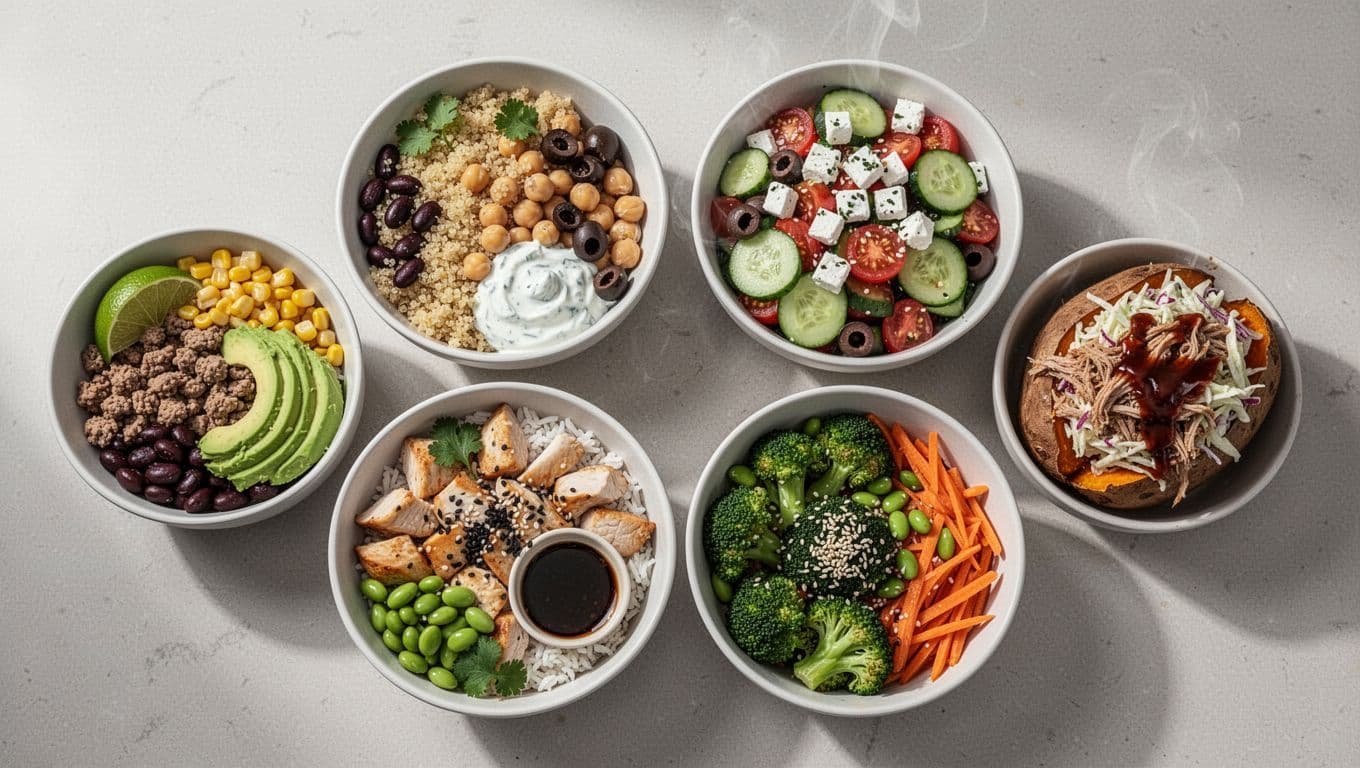
Pick a few flavor lanes and move through them during the week. That might look like Mexican-inspired on Monday, Mediterranean on Tuesday, Asian-inspired on Wednesday, and comfort food later in the week. The ingredients can stay almost the same, but the seasoning changes the whole meal.
For example, chicken, rice, and beans can become taco bowls with salsa and cumin one day. The next day, that same chicken can go into a rice bowl with cucumber, herbs, and a lemon dressing. Later in the week, you can tuck it into a wrap with slaw and a different sauce.
That kind of rotation keeps prep easy for beginners. You do not need four separate shopping lists, just a few flavor ideas and one solid base. If you want more inspiration for flexible lunch setups, balanced lunch ideas with protein and carbs are a good place to start.
Change the texture so meals feel new
Flavor matters, but texture keeps leftovers from feeling stale. Mix creamy, crunchy, crisp, and soft foods across the week so each container feels different.
Toppings make a big difference here. Add nuts, seeds, croutons, slaw, or fresh herbs right before eating. A soft grain bowl suddenly feels brighter when you add something crisp on top.
Texture is one of the fastest ways to make leftovers feel fresh again.
A creamy sauce with roasted vegetables, a crunchy slaw on a wrap, or fresh herbs over rice can turn a plain meal into something worth opening. Small changes do the heavy lifting.
Use breakfast, lunch, and dinner ideas from the same prep
One prep session can cover more than lunch and dinner. Cook a few basics, then split them across the day.
Keep breakfast simple with eggs, oats, fruit, or yogurt bowls. Then use the same vegetables and protein in lunch and dinner bowls, wraps, or salads. That way, you get variety without extra cooking.
For example, roasted sweet potatoes can show up with eggs in the morning, then later with chicken and greens at lunch. A batch of yogurt can become breakfast bowls, while the same fruit also works as a snack. One prep, many meals, less boredom.
A Simple 7-Day Prep Plan That Keeps Things Interesting
A boring week usually starts with a prep plan that tries to do too much, then repeats itself by day three. A better approach is simple: cook one solid batch, then build the week around different meals, textures, and sauces.
This is where a mix-and-match plan shines. It keeps prep manageable on Sunday and gives you enough flexibility to make Monday feel different from Friday. That matters even more now, since 2026 meal prep trends lean toward bold flavors, one-pan meals, and easy batch cooking.
What to cook on prep day
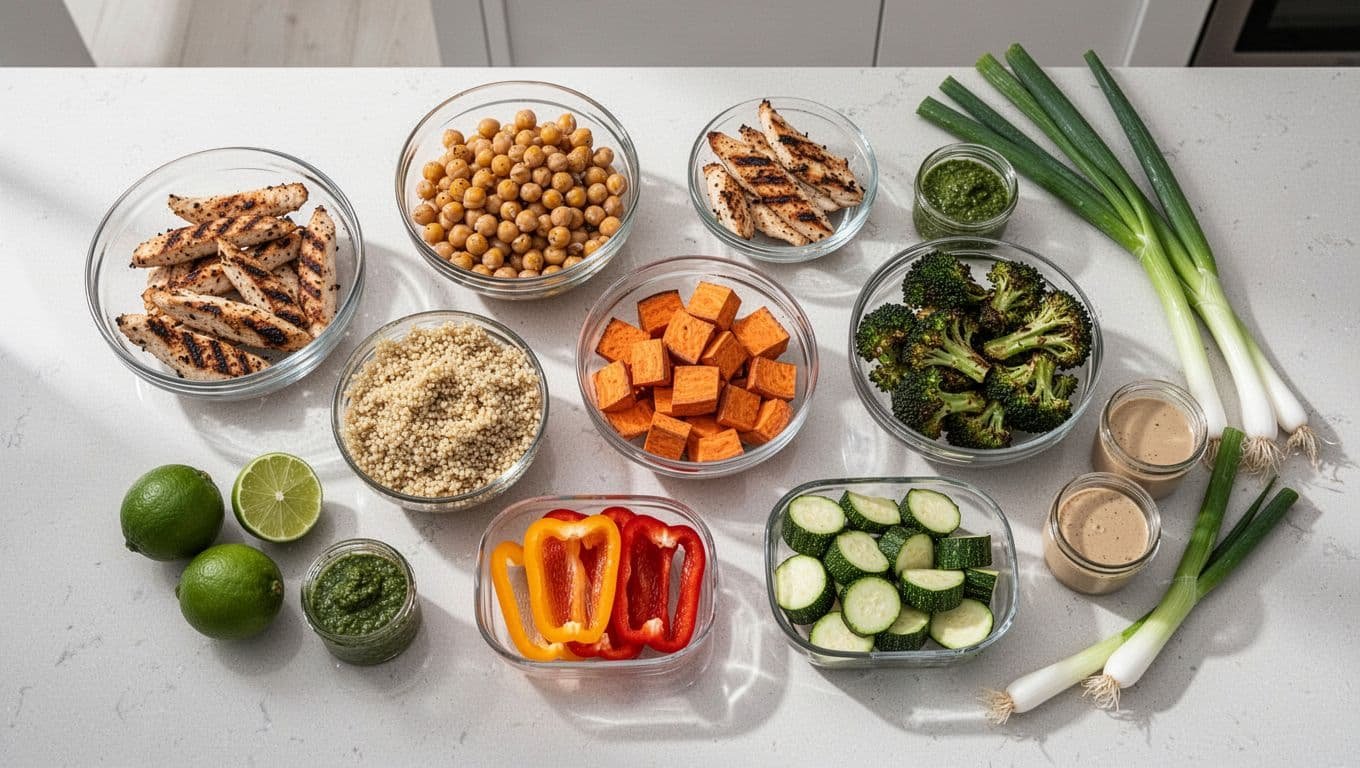
A smart prep day starts with a basic formula: two proteins, two carbs, three vegetables, and two sauces. That gives you enough pieces to build different meals without making a long list of recipes.
Keep the recipes simple. Roast chicken and chickpeas, cook quinoa and sweet potatoes, then add broccoli, peppers, and zucchini. Finish with two sauces that change the mood of the meal, like pesto and tahini, or salsa and yogurt sauce.
The best ingredients are the ones that cross over well. One batch of chicken can go into bowls, wraps, and salads. A tray of vegetables can work with rice one day and soup the next. For a January-friendly planning angle, January meal prep strategies can help you build that kind of structure around your week.
How to remix the same ingredients across the week
The week stays interesting when the meals change shape, even if the base ingredients stay the same. A grain bowl on Monday can become a wrap on Tuesday, a salad on Wednesday, and a stir-fry on Thursday. You are not cooking four different meals, you are just assembling them differently.
Here is a simple example of how one prep session can stretch:
- Monday: Chicken, quinoa, broccoli, and pesto in a grain bowl
- Tuesday: Chicken, peppers, zucchini, and tahini in a wrap
- Wednesday: Chickpeas, sweet potato, greens, and vinaigrette as a salad
- Thursday: Chicken and vegetables stirred into rice with hot sauce
- Friday: Leftover protein and vegetables in a soup or broth bowl
- Saturday: A rice bowl with a new sauce and fresh toppings
- Sunday: Whatever is left, built into eggs, a wrap, or a quick lunch
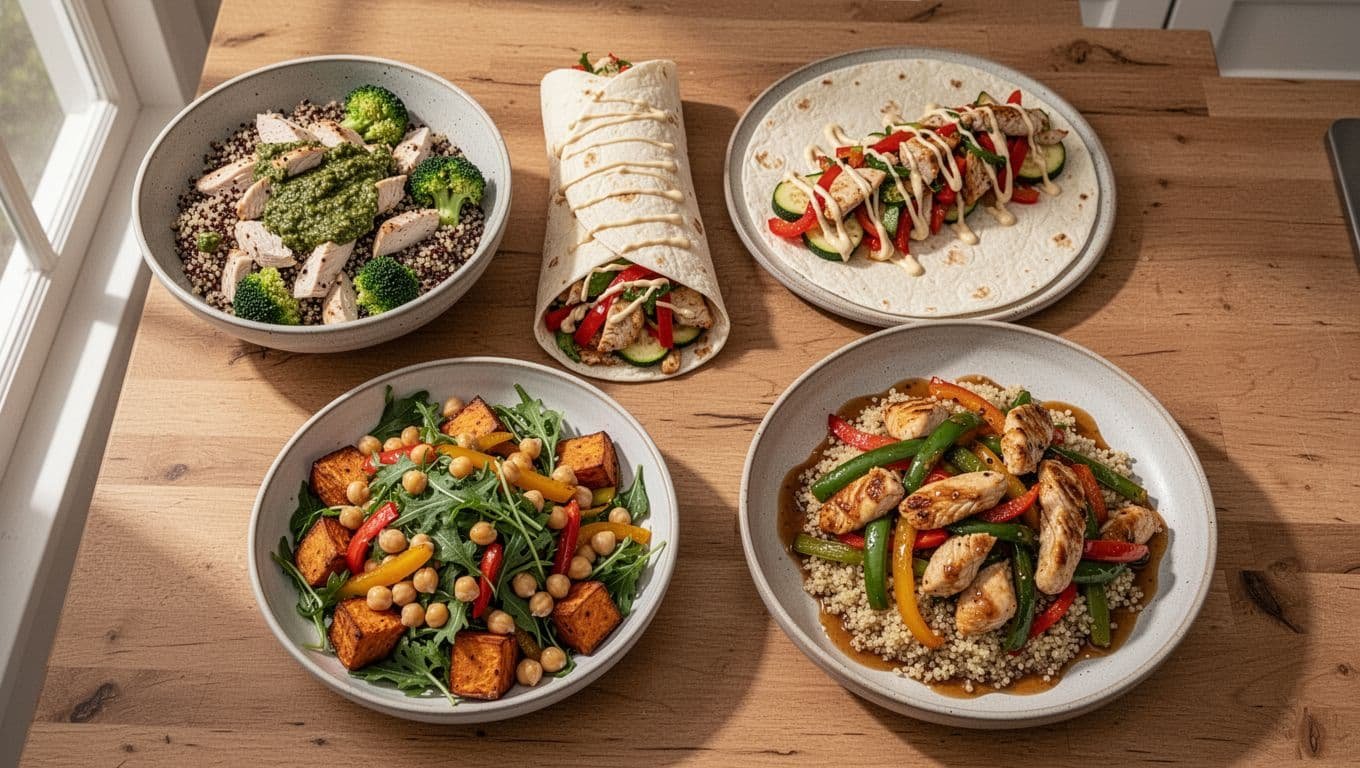
That is the real trick. Variety comes from assembly, not from starting over every day. If you want another simple weekly model, a 7-day meal plan with leftovers shows how far a few smart repeats can go.
A new sauce or a new format can make the same food feel fresh again.
Easy add-ons for busy days
Even a good prep plan needs backup options. On busy days, small add-ons keep meals from feeling thin or repetitive. They also help when your lunch does not look as filling as you expected.
Keep a few low-effort extras on hand:
- Fruit for a fast side or dessert
- Boiled eggs for more protein
- Hummus for wraps, snacks, or veggie plates
- Nuts for crunch and staying power
- Cheese for grain bowls or salads
- Bagged salad for an instant side
- Yogurt for breakfast or a quick snack
These extras fill the gaps without extra cooking. They also help cut snack cravings when your planned meals start to feel too familiar. If you want more ideas for keeping meals balanced and satisfying, meal prep tips for blood sugar control can give you a useful next step.
A simple 7-day prep plan works because it gives you structure without locking you into one meal. Cook a few flexible basics, change the format as the week moves on, and keep a few easy add-ons ready. That way, your fridge stays useful all week, not just on Monday.
Conclusion
Meal prep gets boring when every container looks and tastes the same. The fix is simple, build one prep session around flexible ingredients, smart storage, and a few flavor changes that keep each meal feeling fresh.
You do not need to cook seven different meals to stay interested. You just need enough variety in sauces, textures, and meal formats so lunch on Friday still feels worth eating. A plan like that is easier to repeat, and that is what makes it work.
If breakfast is part of your prep routine too, easy breakfast rotations for busy mornings can help keep the whole week from feeling repetitive. With a little planning, meal prep feels manageable, and it stays useful all week long.
Save pin for later

- 60 Color Tattoos That Healed Beautifully - 25/09/2026
- 40 Most Painful Tattoo Spots - 24/09/2026
- 20 Tattoo Aftercare Mistakes That Ruin Fresh Ink - 23/09/2026

