The dinner rush can turn a kitchen into a mess fast, with crowded counters, missing tools, and no room to work. If you’re cooking in a small kitchen, an older layout, or a busy family space, kitchen storage fixes can save time and cut daily frustration.
This post keeps things practical. You’ll see simple changes that make weeknight cooking easier, without turning your kitchen into a showroom, and if you want a broader reset, this room-by-room kitchen organization guide can help you clear space before you start. The best ideas here focus on speed, access, and storage that fits the way you actually cook.
Helpful video: Beginner’s guide to Kitchen Organization
Start with the storage problems that slow you down
The best kitchen storage fixes start with the pain points you feel every day. If you can spot where you waste time, you can fix the right spot first, instead of reworking the whole kitchen.
Focus on the places that slow prep, cooking, and cleanup. Crowded counters, deep cabinets, and dead corners are usually the first places to tackle because they create the most friction.
Look for the items you use every day
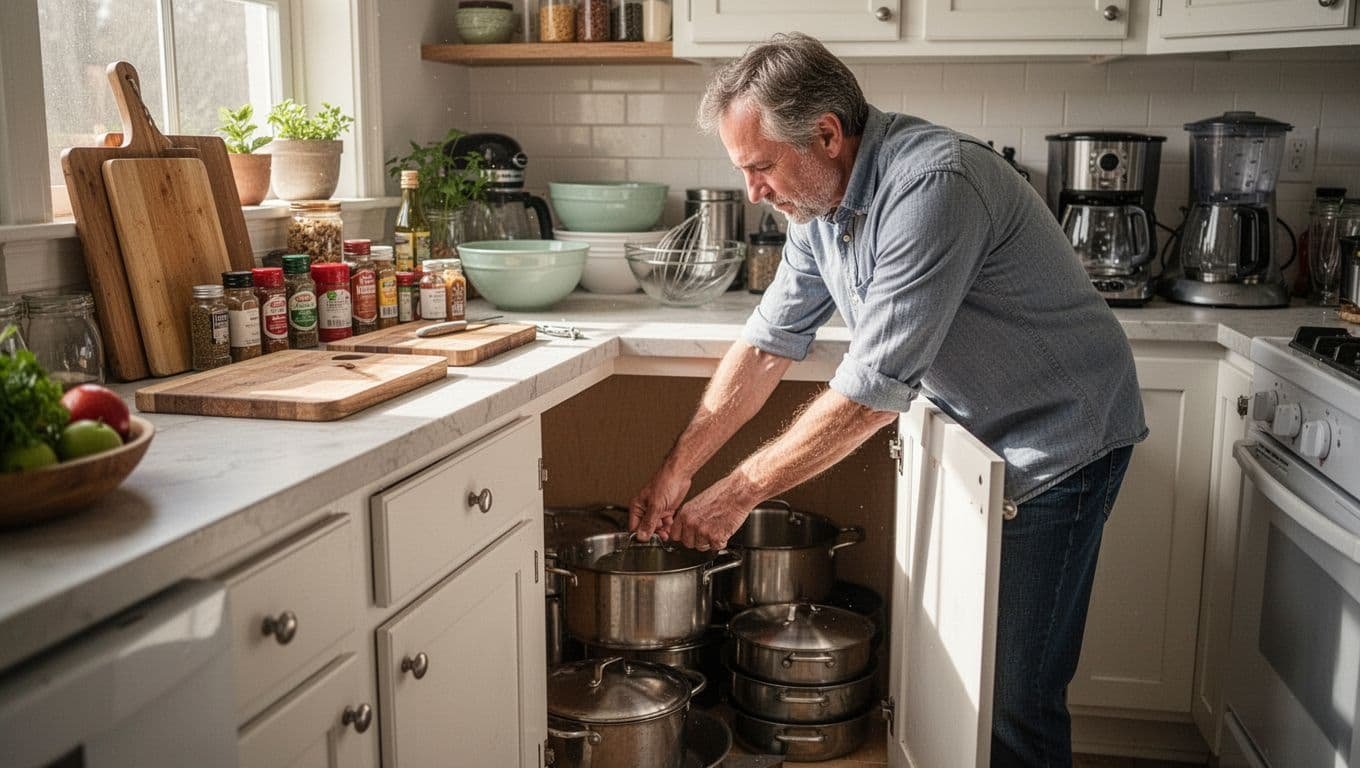
Daily-use items should be the easiest to reach. That means pots, pans, cutting boards, spices, mixing bowls, and snack staples belong near the stove or prep area, not in the back of a cabinet you have to dig through.
When those basics sit close to where you cook, everything speeds up. You grab a pan without bending twice, find the spices before the onions burn, and return tools to the same spot without thinking about it.
A good rule is simple: keep the items you touch most within one or two steps of where you use them. For example, store pans below or beside the stove, cutting boards near the prep zone, and bowls close to the counter where you mix or chop. If you need a bigger reset, a four-box method for kitchen decluttering can help you sort what stays near the action and what can move farther away.
If an item slows you down twice a day, it needs a better home.
You can also group daily foods where you can see them fast. Put coffee, tea, breakfast items, and snack staples in one easy spot so you stop hunting for them during busy mornings. Small changes like that cut clutter and trim the number of steps you take.
Find the spots where things disappear
Some storage areas hide things so well that they might as well be empty. Deep base cabinets, dark corner cabinets, and the space under the sink often waste room because they are hard to use well.
These spots are perfect targets for storage fixes because they cause the most frustration. Pots vanish in the back, lids stack in messy piles, and cleaning supplies get buried behind the pipes under the sink.
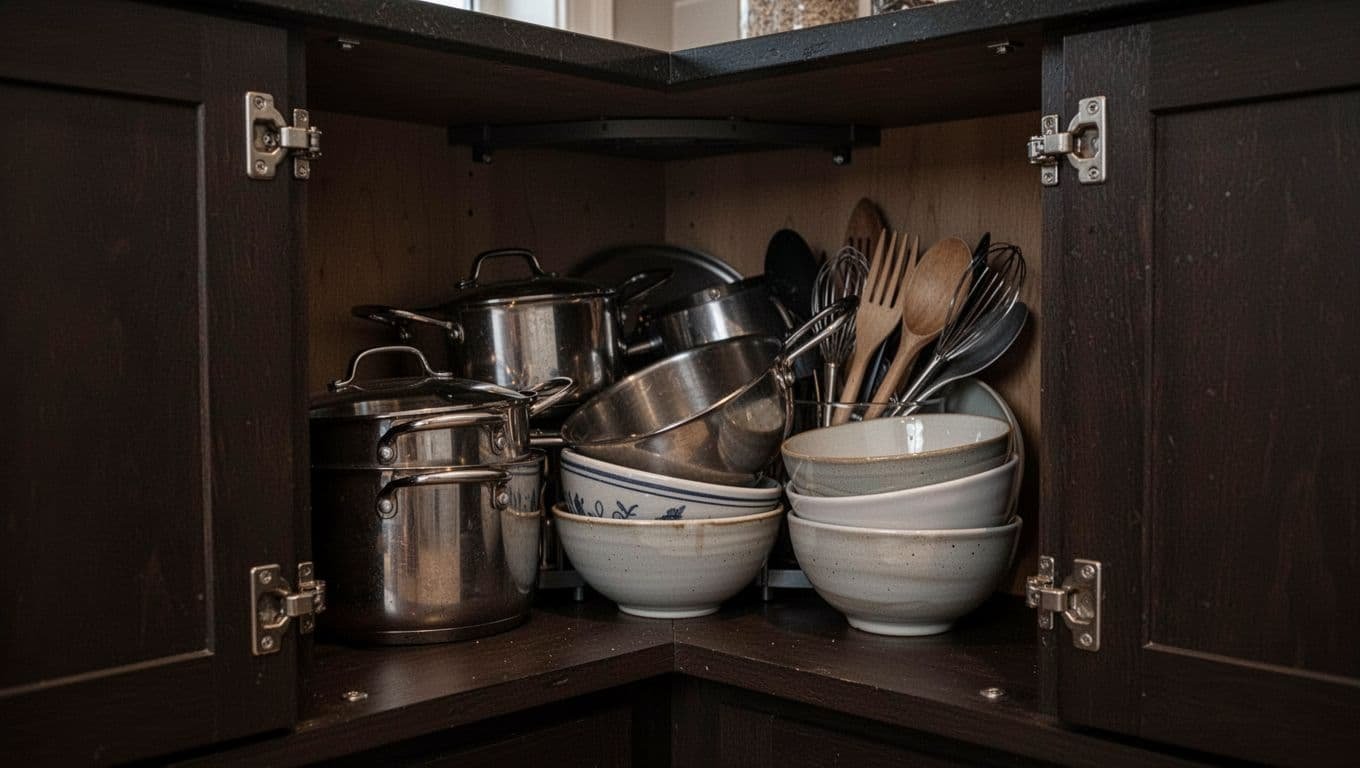
Start by asking what you avoid opening. If you dread a cabinet because it feels like a black hole, that space needs help. Pull-out organizers, bins, risers, and shelf inserts can turn those awkward spots into useful storage instead of lost space.
Common trouble zones are easy to spot:
- Deep base cabinets often bury heavy cookware and lids.
- Corner cabinets trap items you only reach with effort.
- Under-sink spaces waste room around pipes and cleaning products.
- Wide counters collect tools that have no clear home.
According to Real Simple’s storage mistake guide, clutter often builds when storage does not match how a kitchen is used. That is why the fastest fixes solve one daily problem at a time. Move the items you use most, open up the worst dead space, and your kitchen starts working with you instead of against you.
Make cabinets easier to reach with pull-out storage
Pull-out storage is one of the smartest kitchen storage fixes because it brings the cabinet to you. Instead of crouching, reaching, and moving three things to find one, you slide the shelf out and see everything at once.
That matters most when dinner is already in motion. Your hands are full, the stove is hot, and you need a pan now, not after a cabinet search.
Use pull-out drawers for pots and pans
Deep shelves work fine for light dishes, but they are a headache for heavy cookware. Pots and pans stack fast, and the one you need usually ends up at the back or under three others.
Pull-out drawers fix that problem. You can see the whole stack at once, grab what you need without bending deep into the cabinet, and put items back with less hassle. That saves your back, and it also saves time when you’re trying to move fast.
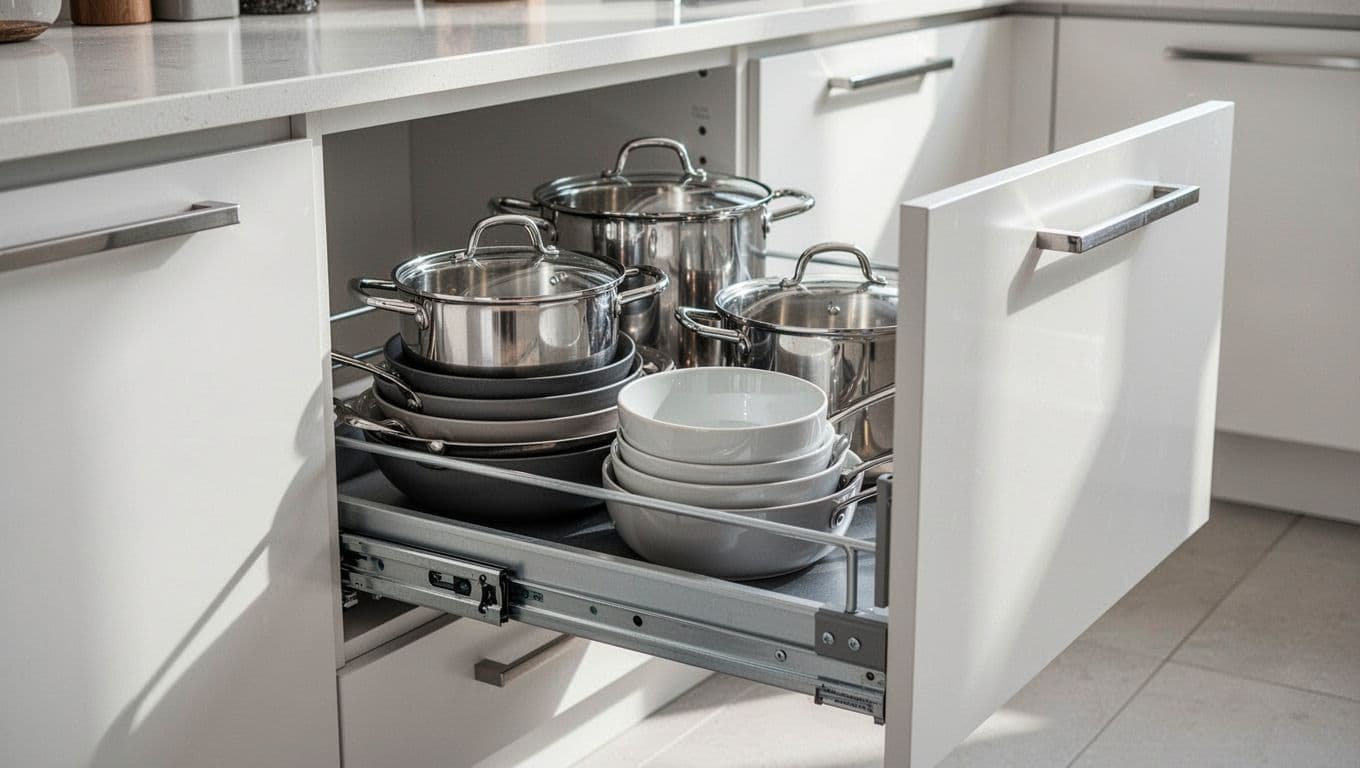
For cookware, a full-extension drawer is especially helpful because it slides all the way out. You don’t have to dig around blind corners or lift a heavy skillet over a pile of lids. If you’re comparing organizer styles, Rev-A-Shelf’s pull-out cabinet options show how much easier full-access storage can be in a real kitchen.
Turn corner cabinets into useful space
Corner cabinets often turn into dead zones because the back half is hard to reach. A lazy Susan helps small items spin into view, while swing-out shelves and pull-out corner trays work better for larger cookware and mixed storage.
These systems matter because they move awkward items toward the front instead of leaving them buried in a dark corner. A pan, casserole dish, or mixing bowl becomes easy to grab, even if the cabinet shape is strange.
If a corner cabinet feels like wasted space, it usually just needs a better motion path.
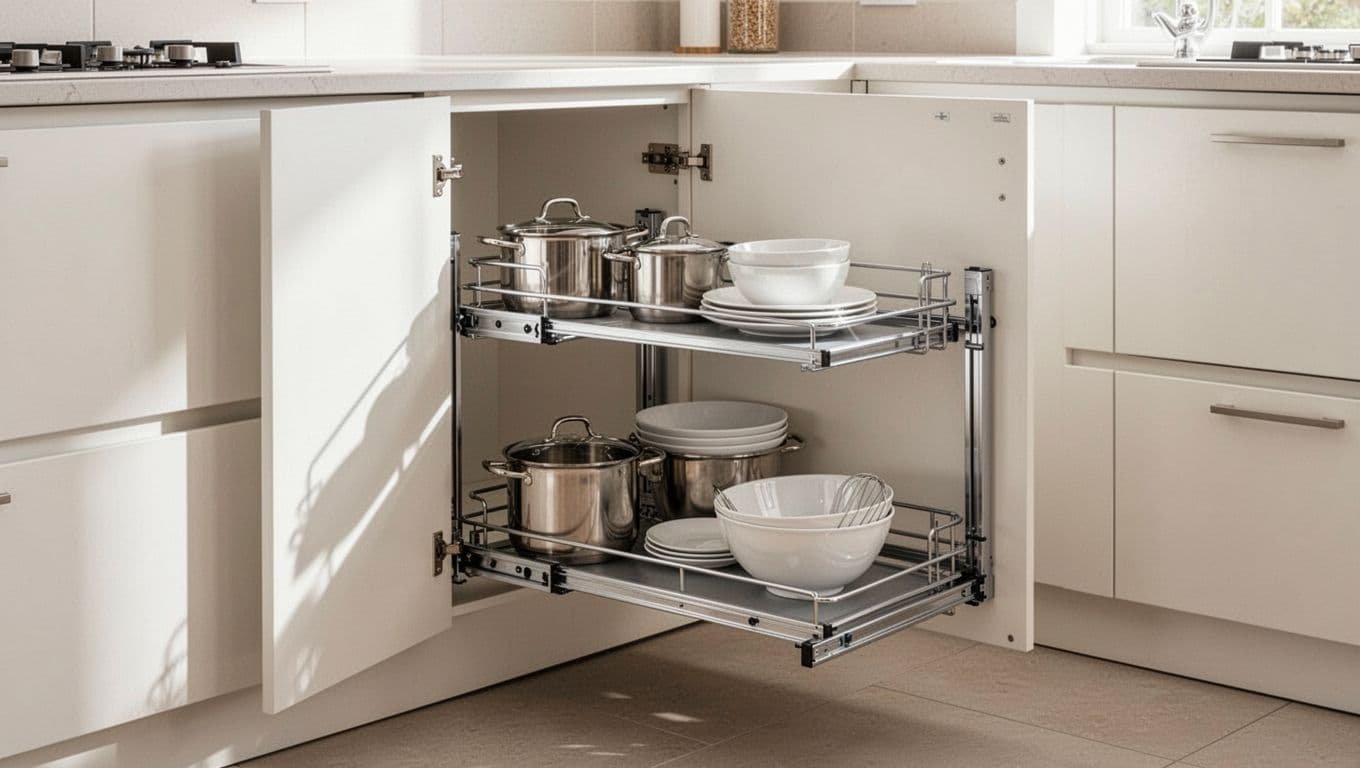
A swing-out tray is a strong choice when you want bigger items to come forward together. It keeps the corner useful without forcing you to reach past pipes, hinges, or stacked containers. That makes it easier to store what you actually use, instead of hiding it in the back.
Add pull-out trays to deep cabinets
Deep pantry cabinets and lower base cabinets often hold more than they can show. Pull-out trays solve that by sliding items forward, so you can see rows of jars, boxes, and backups without emptying the whole shelf.
This setup helps cut waste too. When food is visible, it gets used before it expires, and you stop buying extra cans or spices because the old ones were hiding behind them.
A sliding tray is a simple fix for:
- Pantry staples like cereal, pasta, and canned goods
- Backup items that get lost in the back
- Tall bottles and jars that tip over on fixed shelves
- Mixed storage where one category keeps covering another
In short, pull-out trays make deep cabinets act like shallow ones. That means fewer duplicates, less forgotten food, and a quicker grab when you only have a minute to get dinner started.
Use vertical space so counters stay clear
When floor space is tight, the best fix is often to go up. Vertical storage keeps flat items and backup supplies off the counter, so your prep area stays open for chopping, mixing, and plating.
That matters in a busy kitchen. Every inch you free up at eye level or above means less clutter where you actually cook, and less time moving things around before dinner starts.
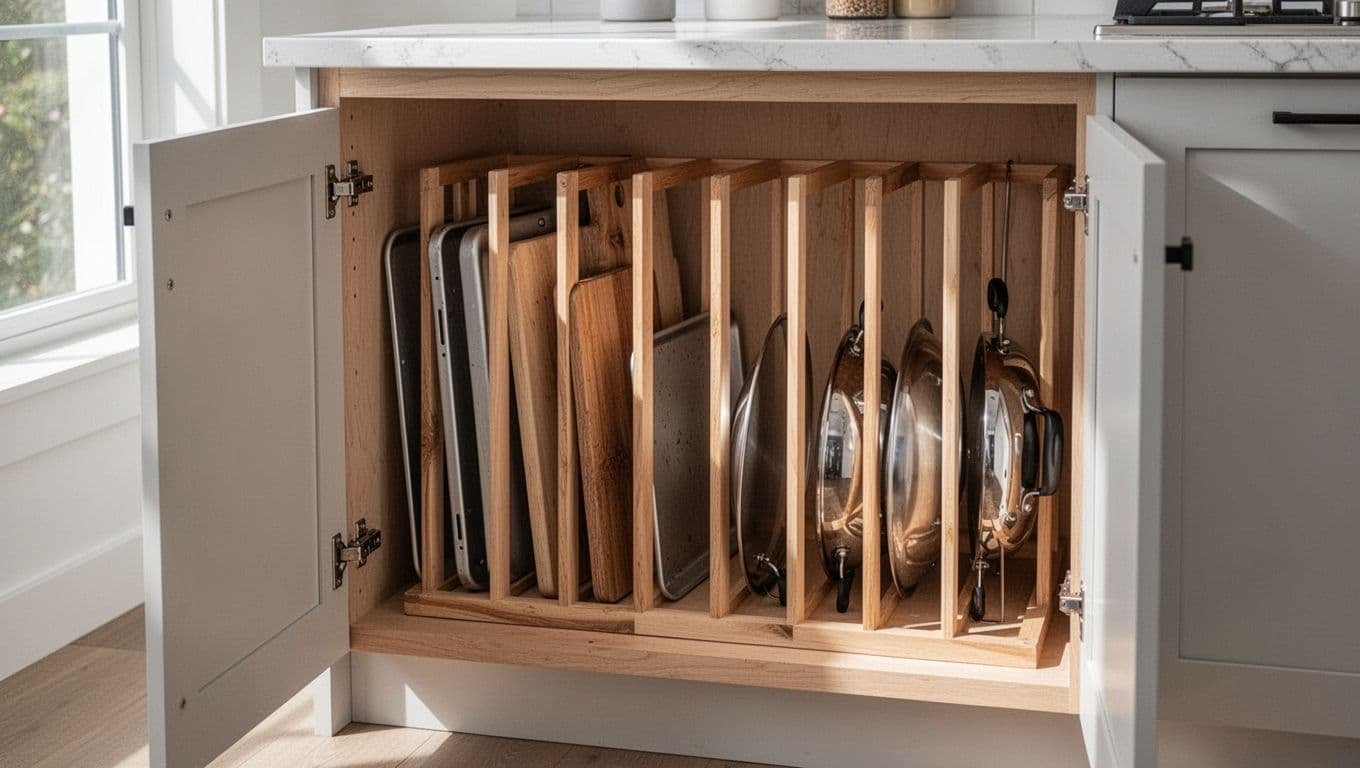
Store trays, lids, and baking sheets upright
Flat items are the easiest things to pile up and the hardest to sort later. Vertical dividers stop baking sheets, trays, and lids from sliding into one messy stack, so each piece has its own slot.
That simple change saves time every day. Instead of pulling out three items to reach the one you want, you grab a single tray or lid and keep the rest in place. It also helps prevent scratches, dents, and that annoying clatter that happens when metal pans shift together.
A divider rack works well in a lower cabinet near the oven or prep zone. If you want a store-bought option, styles like vertical tray divider organizers show how a few narrow slots can hold a lot without taking over the whole cabinet.
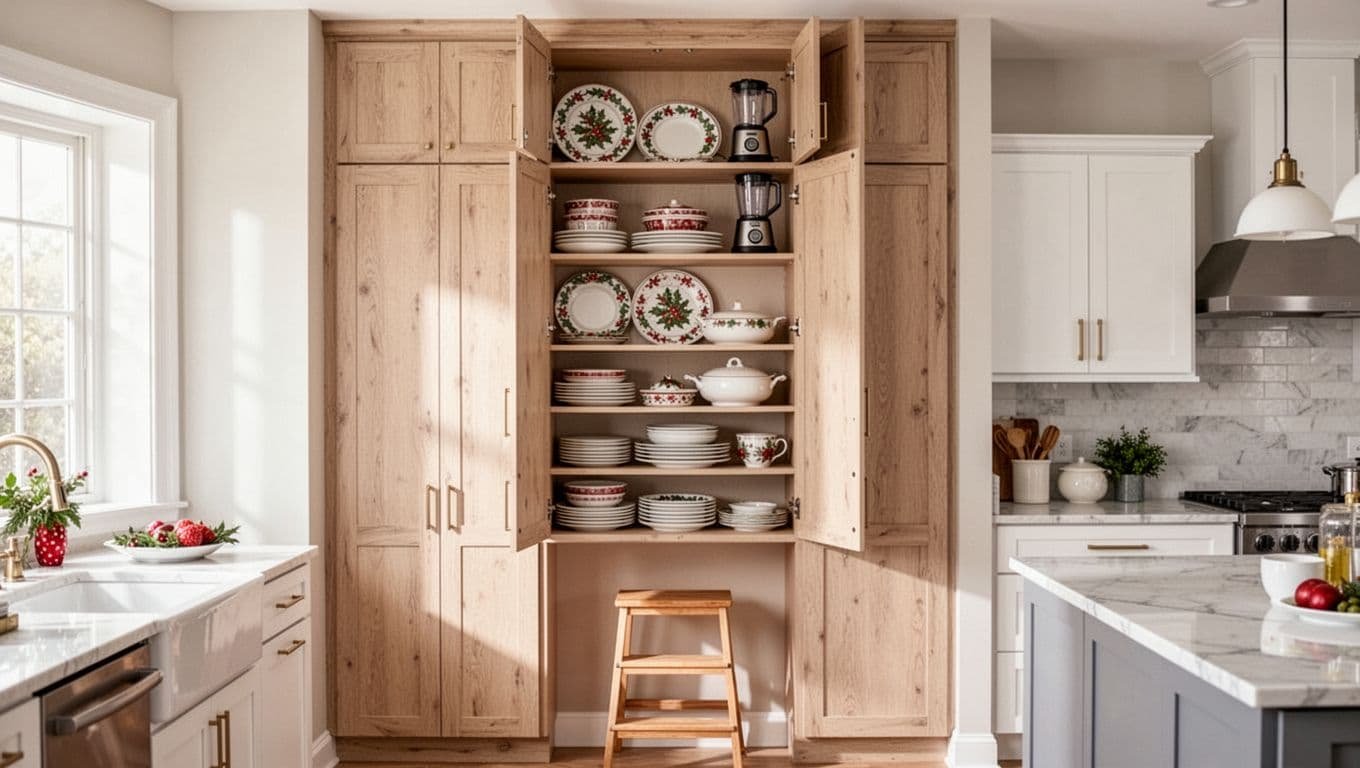
Install ceiling-high cabinets for rarely used items
Upper cabinets can do more than hold glasses and plates. When they reach close to the ceiling, they become a smart place for holiday dishes, extra appliances, and backup supplies you do not need every day.
Keep the lower shelves for daily items like mugs, bowls, and pantry basics. That way, the storage stays practical, and you do not turn every trip to the kitchen into a stretch-and-reach workout.
Put the least-used items highest. Keep the busiest items at waist level or below.
This setup works especially well in smaller kitchens where every lower cabinet already has a job. The high storage holds the extras, while the easy-access zones stay open for the items you use on repeat.
Use slim pull-outs near the fridge or pantry
Slim pull-outs make narrow spaces useful. A gap beside the fridge or pantry can hold spices, cans, oils, or baking basics when you add a narrow vertical organizer.
These pull-outs work because they use height instead of width. You get more storage without crowding the floor plan, and that keeps the main prep areas clear. In a small kitchen, that kind of storage is gold.
They are especially handy for items you reach for often but do not need spread across a full shelf. A slim rack can keep cooking oil, vinegar, flour, and baking soda in one spot, so you can find them fast and put them back just as fast. For more ideas like this, sliding pantry organizers show how narrow spaces can carry a surprising amount.
A simple way to make small kitchens feel bigger
Vertical storage works because it turns empty height into usable room. When trays stand upright, cabinets reach higher, and slim pull-outs tuck into narrow gaps, your counters stay open and your kitchen feels easier to work in.
Start with the items that crowd your prep area most. Move flat pieces into dividers, send rarely used items up high, and use narrow pull-outs for the small things that keep getting lost. That gives you more breathing room without a full remodel.
Make the pantry and snack zone faster to use
A pantry that looks neat but slows you down is still a problem. The goal is simple, build a setup where you can see food fast, sort it fast, and grab what you need without digging.
That matters most on busy weekdays. When meal prep, lunch packing, and after-school snacking all happen in the same stretch of time, every second counts.
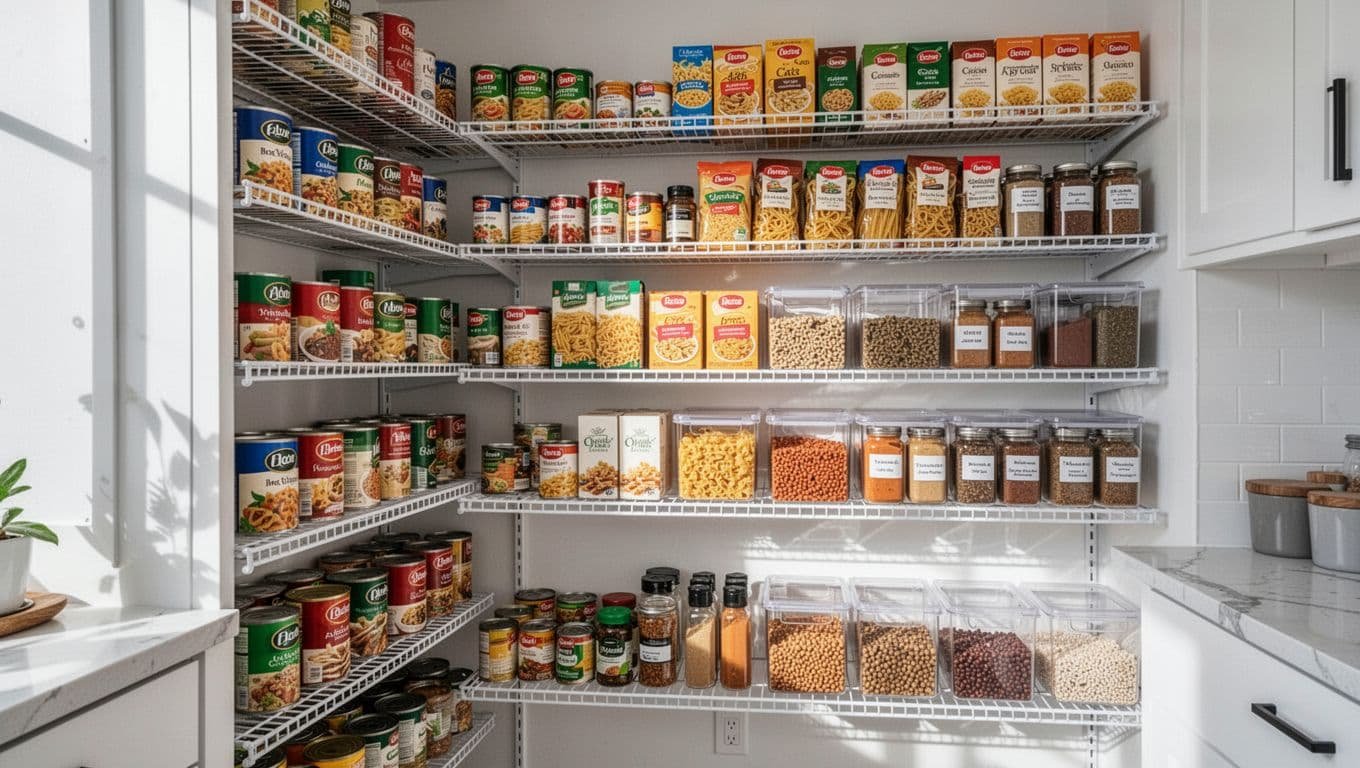
Build a pantry that shows everything at a glance
Start by grouping pantry food by use, not by random shelf space. Tiered shelves help canned goods and jars stay visible, while clear bins keep loose items together. Labeled groups make it easy to spot baking supplies, dinner staples, and school snacks without moving three other things first.
This kind of setup works because your eyes do the sorting for you. You can scan a shelf, see what is low, and use older items before they expire. That cuts down on food waste and keeps you from buying another box of crackers you already have.
A simple pantry flow might look like this:
- Top shelves for backups and bulk items
- Middle shelves for daily meal prep staples
- Clear bins for snacks, packets, and lunch extras
- Low shelves for kids’ grab items or heavier goods
A zoned pantry also fits the way families really cook. The latest pantry storage trends point toward zoned storage for busy households, and it makes sense, because clear zones reduce overbuying as much as they reduce clutter. If you can see your pasta, beans, and cereal at a glance, you shop with more control and waste less food.
If you can’t see it, you usually won’t use it on time.
For breakfast foods, it helps to keep the everyday items together in one visible spot. That way, you can pair pantry storage with quick morning meals using pantry staples and move through the morning without opening every cabinet.
Keep snacks and breakfast foods within easy reach
A grab-and-go zone saves the most time when it sits where people naturally stop. Use one low shelf, one drawer, or one counter bin for cereal, bars, fruit cups, crackers, and lunch-box items. Keep it simple, because the easier it is to refill, the easier it is to maintain.
This works well for school mornings and after-school hunger. Kids can help themselves, lunch packing gets faster, and you stop losing time to small searches for one yogurt pouch or a missing granola bar.
For the best result, group items by meal or use:
- Breakfast basics like cereal, oatmeal cups, and shelf-stable milk
- Lunch helpers like applesauce cups, snack packs, and juice boxes
- Quick snacks like bars, dried fruit, and crackers
- Backups for busy weeks, so you can refill the zone fast
A dedicated snack spot also keeps the rest of the pantry cleaner. When the family knows where the approved grab items live, there is less opening and closing of every cabinet door. That means fewer crumbs spread around, fewer half-empty bags left loose, and less morning chaos around the counter.
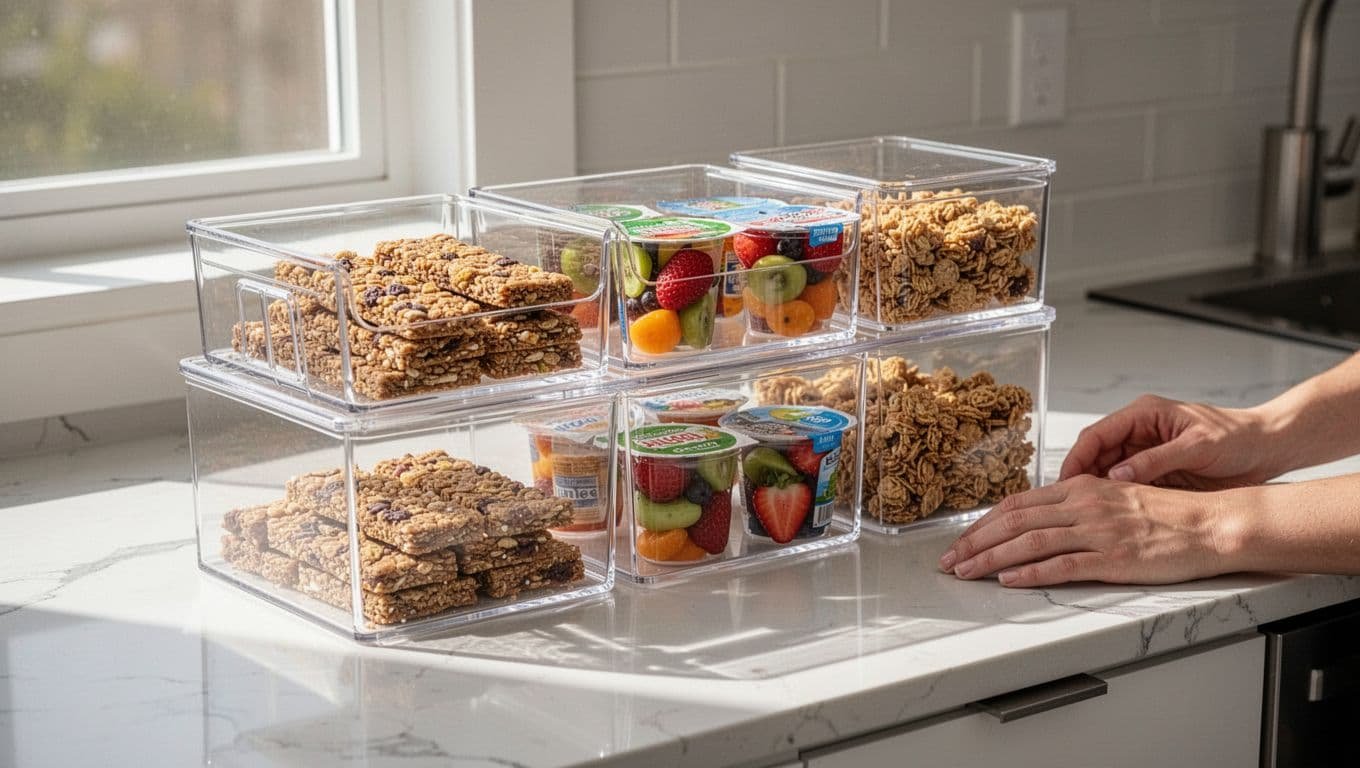
If breakfast is part of the rush, keep those foods near the snack area so they do not get buried behind dinner supplies. A small zone for the items you reach for every day makes the kitchen feel calmer, and it takes almost no extra effort once the system is in place.
Tame the under-sink area and other hidden clutter spots
The hardest kitchen storage problems often hide in plain sight. Under the sink, along toe kicks, and beside appliances, small gaps can turn into catch-alls for cleaners, foil, trash bags, and spare tools.
The fix is simple: give those spaces a job. Once each hidden spot has a clear purpose, you stop stuffing random items wherever they fit and start using every inch with less mess.
Add bins and slides under the sink
The space under the sink gets messy fast because pipes break up the layout. Stackable trays, pull-out bins, and small caddies help you work around that problem instead of fighting it. They let you sort sprays, sponges, brushes, and dish soap into separate groups, so you can grab what you need without digging.
A two-tier setup works well here. Keep heavy items low, then place lighter supplies, like scrub pads or gloves, on top. Pull-out trays are especially useful because they slide forward with one motion, which makes cleanup faster after cooking. When the skillet is dirty and the counter needs wiping, you don’t want to hunt for the spray bottle.
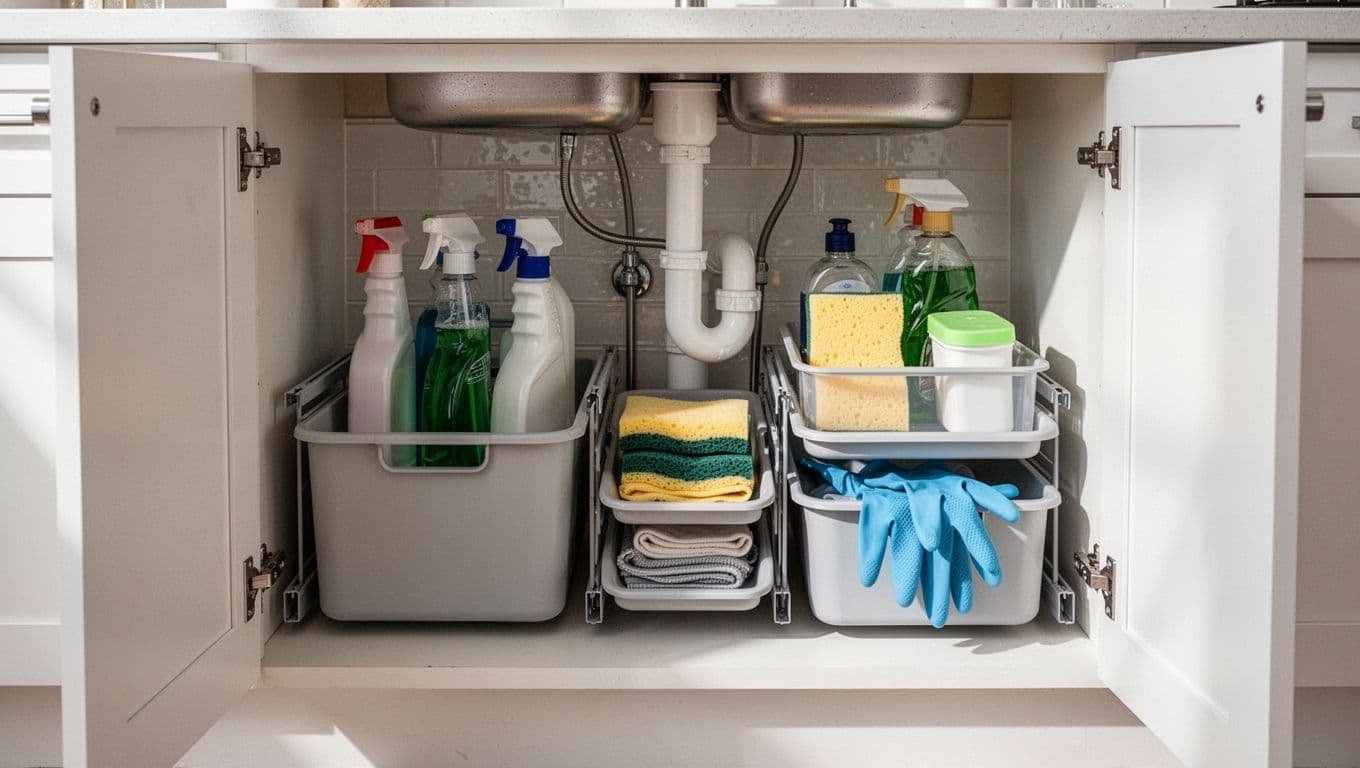
A small caddy can hold the items you use together most often. For example, one container for dishwasher pods and another for wipes keeps the area from turning into a loose pile. That extra order saves time every day. For more inspiration, these under-sink storage ideas show how much easier this zone gets with the right layout.
Use hidden spots for backup supplies
Slim spaces often get ignored, but they are perfect for backups. Toe kicks, narrow gaps, and slim pull-outs beside appliances can hold foil, wraps, garbage bags, and extra sponges without taking up prime cabinet space.
These hidden areas work best for flat or narrow items. Keep aluminum foil and plastic wrap in one shallow slot, then store trash bag rolls or backup sponges in another. That way, you always know where the extras live, and they stay out of the way until you need them.
Hidden storage works best when it holds backup items, not daily clutter.
A slim pull-out beside the fridge or pantry can also keep rarely used supplies in reach. You get more room without adding visual noise, and the main cabinets stay open for the items you use every day.
Once these tucked-away zones have a clear purpose, they stop acting like junk drawers. Instead, they become useful storage that keeps the rest of the kitchen calmer and easier to manage.
Choose everyday storage habits that keep the system working
Good kitchen storage only helps if you use it the same way every day. Once the right spots are set up, the real win comes from small habits that keep items where they belong and stop clutter from creeping back in.
The goal is not perfect order. The goal is a kitchen that still works after a rushed breakfast, a late dinner, and one too many takeout nights. When your habits are simple, the system stays useful without extra effort.
Place the things you use most in the easiest spots
Daily tools belong where your hands naturally go first. Keep pans near the stove, cutting boards near prep space, and spices at eye level or in the closest drawer. That way, you spend less time searching and more time cooking.
A smart setup also cuts down on small frustrations. If you have to bend, reach, or move other items every time you cook, the storage is already working against you. For example, a coffee mug stored beside the maker and a mixing bowl stored near the counter save seconds every day, and those seconds add up fast.
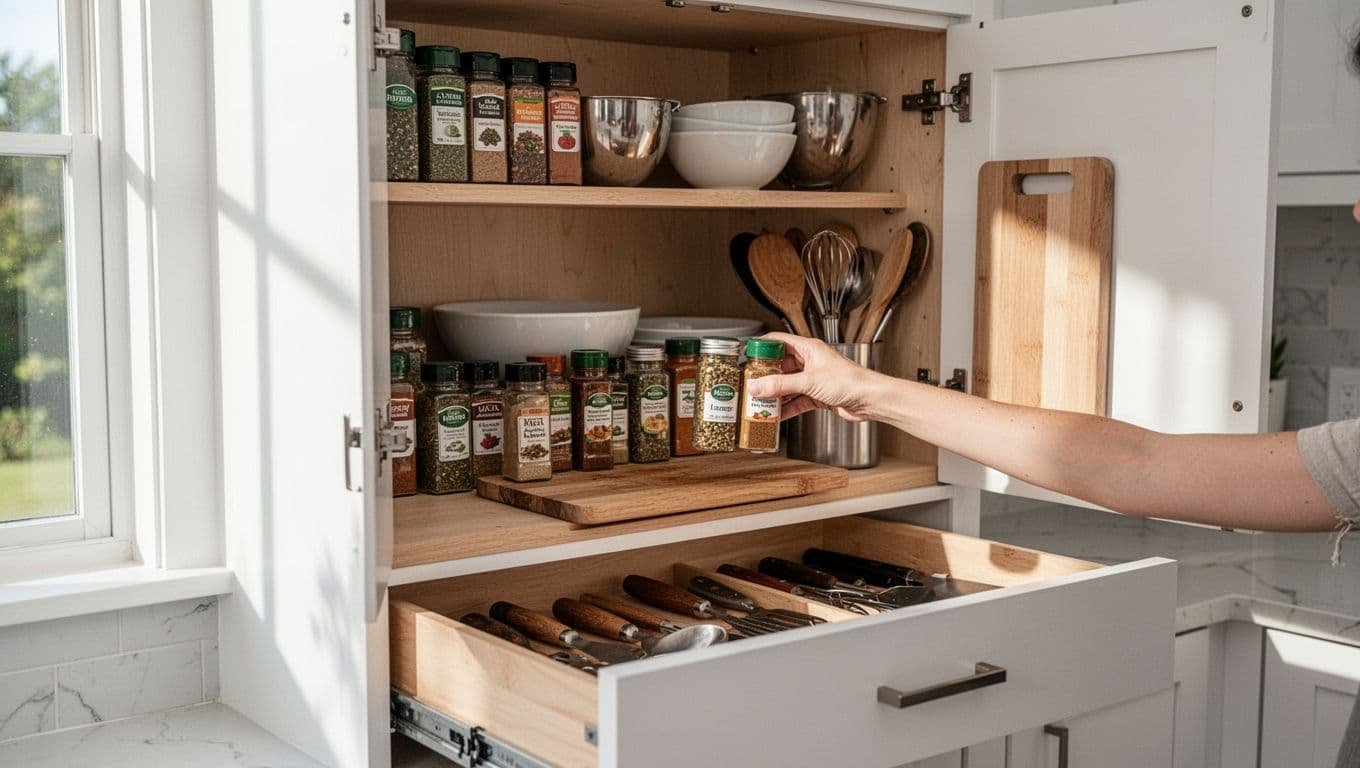
Keep the most-used items in the easiest spots, then let less-used pieces move higher or farther back. That simple rule keeps the flow clear and makes the whole kitchen easier to use. Kitchen organization rules experts swear by often follow the same idea, put the daily items closest to where you work.
Do a quick reset after cooking
A short reset at the end of cooking keeps mess from taking over. Put items back where they belong, wipe one shelf or counter area, and check for duplicates before you walk away.
You do not need a long cleanup session. A few minutes is enough if you focus on the same basic steps each time:
- Return tools to their home.
- Wipe the most-used surface.
- Toss packaging and empty containers.
- Put away one item you might have doubled up on.
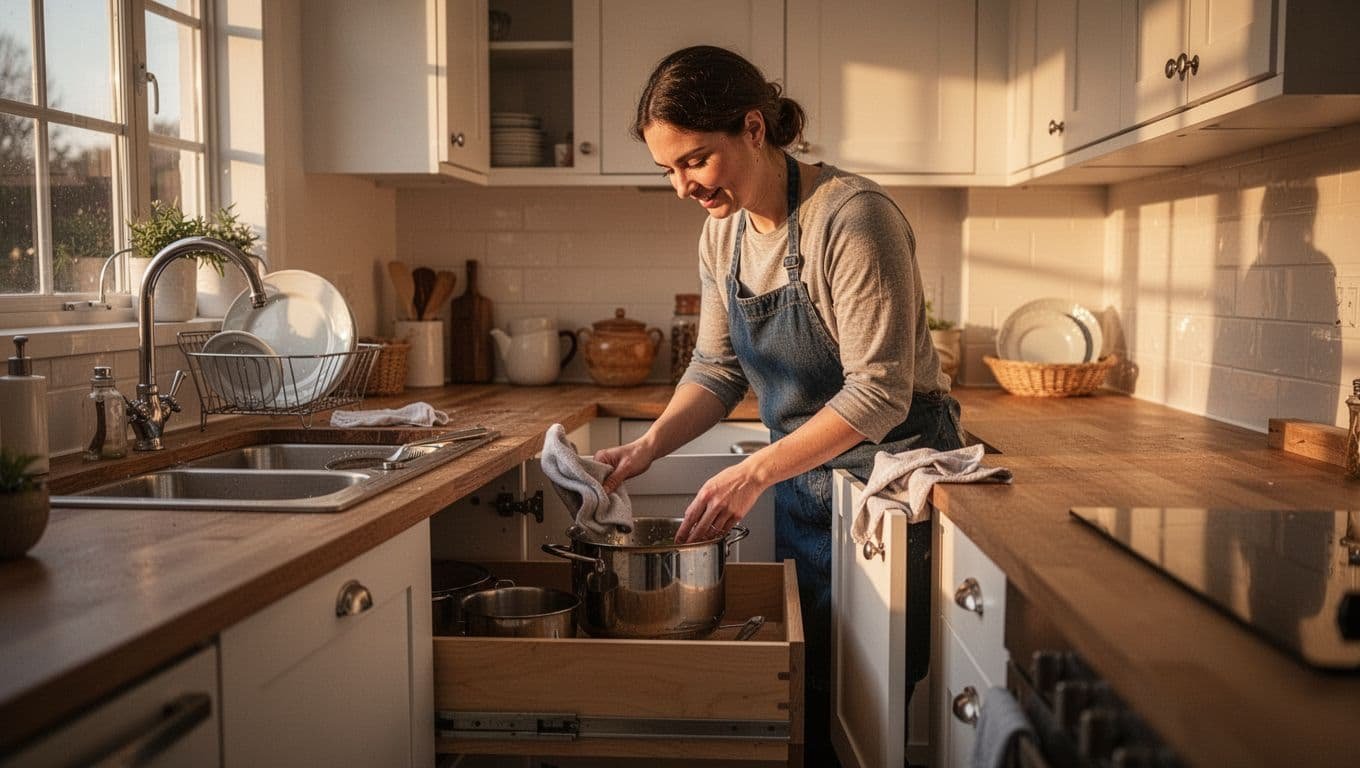
That small routine keeps drawers from filling with random extras and stops counters from turning into permanent drop zones. It also makes the next meal easier, because the kitchen is ready before you even start. If you want this habit to stick, pair it with your evening cleanup or use a daily morning reset routine to keep the whole house on track.
Conclusion
The best kitchen storage fixes are the ones that save time, cut stress, and make dinner feel easier to start. When the items you use most are close at hand, your kitchen works better during the busiest parts of the day.
Start with one or two changes, then build from there. A single pull-out drawer, a clearer pantry zone, or a better spot for daily tools can make a real difference, especially when you keep it up with nightly routines to tidy small kitchen spaces.
A more organized kitchen does not have to look perfect. It just has to help you move faster, clean up sooner, and enjoy weeknight meals a little more.

- Healthy Air Fryer Recipes for Beginners - 21/09/2026
- Healthy Snacks for Late Night Cravings - 21/09/2026
- High Protein Meal Prep Ideas for Easy Weekly Meals - 21/09/2026

