Some of the hardest children to raise are also the brightest, because their minds move faster than their emotions can keep up. They notice everything, ask sharp questions, push back on weak rules, and can melt down over things that seem small to adults.
That mix can make smart children exhausting, confusing, and easy to misread. Boredom can look like defiance, perfectionism can look like stubbornness, and social friction can leave you wondering why a child who thinks so clearly still struggles so much. If you’re also dealing with school-age pressure, this guide to raising school-age kids successfully gives helpful background.
The good news is that these challenges usually sit right beside their strengths, not apart from them. A child who is intense, opinionated, or easily frustrated often needs more patience, more structure, and more room to be understood, and that’s where the real work begins. Smart Kids Aren’t Made With ABC & 123 (Use These 3 Principles Instead) is a useful watch before you move into the next section.
Their minds move faster than their emotions can keep up
A smart child often grows in uneven ways. They may understand big ideas, spot patterns quickly, and ask questions that sound older than their years, yet still react like any other child when they feel tired, embarrassed, or told “no.”
That mismatch is called asynchronous development. In plain language, one part of the child moves ahead while another part stays age-typical. The thinking may feel advanced, but the emotional brakes are still under construction, which is why support has to match both sides.
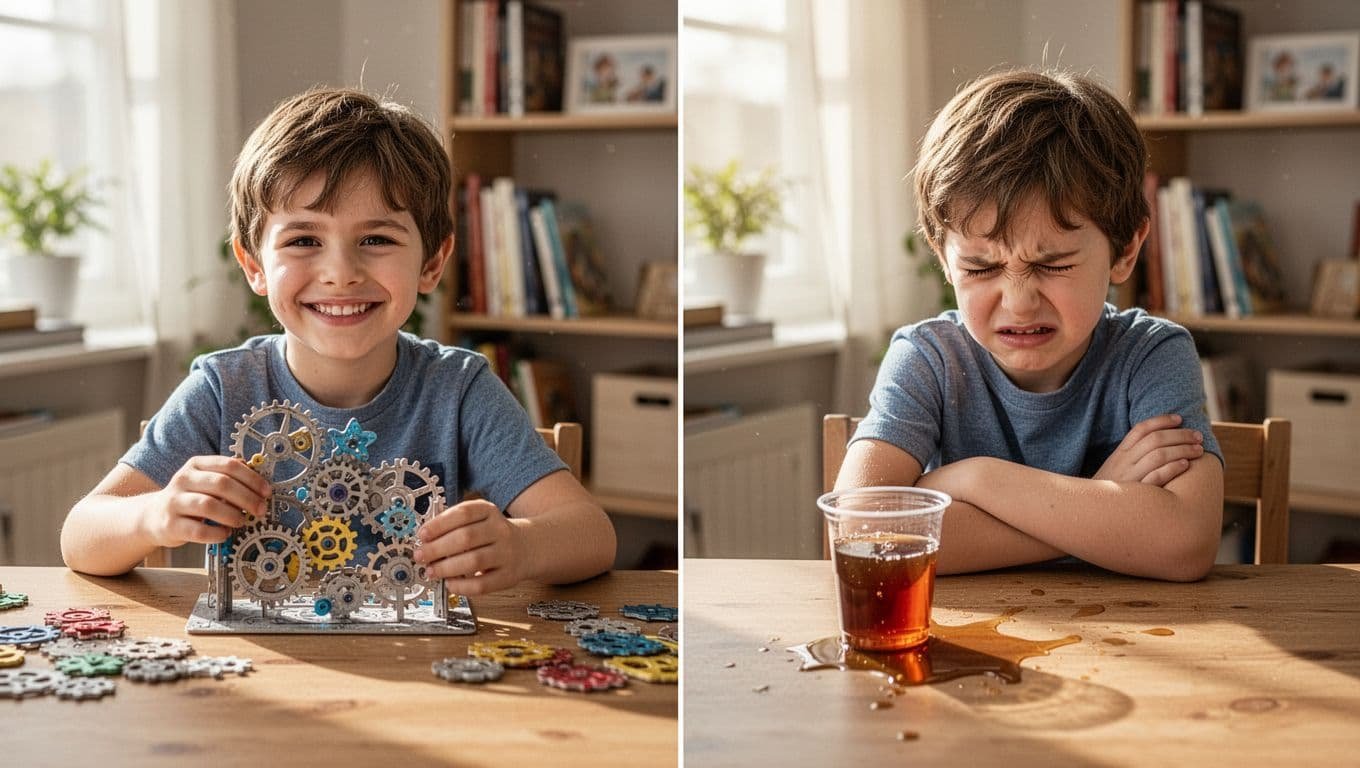
When advanced thinking meets age-appropriate behavior
A child can explain how something should work and still fall apart when it does not go their way. They may solve a hard puzzle, use adult-level logic, or argue their point with real skill, then melt down over waiting ten more minutes for dessert.
That gap shows up in ordinary moments:
- They can build a strong case for a rule, but struggle to share a toy.
- They can read a hard book, but lose control after a small disappointment.
- They can ask thoughtful questions about fairness, but react sharply to losing a game.
This is why parents can feel blindsided. The child sounds older in one moment and much younger in the next. The National Association for Gifted Children describes this uneven growth clearly, and it explains why smart children often need more emotional coaching than adults expect.
Why this gap confuses parents and teachers
Adults often mistake strong reasoning for maturity. A child who speaks well, remembers details, or debates rules can seem ready for more than they really are, so people raise the bar for behavior too fast.
That leads to unfair reactions. A child may be punished for “knowing better” when the real issue is emotional control, not understanding. In schools and at home, that can turn into constant frustration, because the child is treated as older than their feelings can handle.
A bright mind does not always come with grown-up self-control.
This is where many parents need to slow the pace and look at both sides. A child may need help with calm-down skills, waiting, and disappointment, even if they can already discuss ideas like an older kid. Support works best when it matches the child’s actual stage, not just their strongest skill. For more on this balance, nurturing emotional intelligence in children helps bridge the gap between smart thinking and steady behavior.
Boredom hits hard when school feels too easy
When school work is too simple, some smart kids do not settle down, they speed up in the wrong direction. They finish early, wait longer, and start hunting for something that feels more interesting.
That boredom often looks like bad behavior. In reality, the child may just be under-fed mentally and looking for stimulation in the only ways available.
Why easy work can create big behavior problems
A bright child who is under-challenged can treat the classroom like a holding pattern. The work feels flat, so the child creates their own excitement, even if it causes trouble.
That is why boredom can turn into talking back, rushing through work, refusing assignments, or acting silly to get a reaction. A child may also daydream, ignore directions, or shut down and do the bare minimum. How to Help a Gifted Child Bored at School describes this pattern well, because boredom often gets mistaken for laziness or defiance.
A few common signs show up again and again:
- The child argues more during easy tasks.
- The child works fast, then makes careless mistakes.
- The child complains that school is boring or pointless.
- The child behaves better in harder subjects or hands-on work.
That last part matters. If the behavior shows up mostly when the task feels too easy, the issue is likely a lack of challenge. In that case, improving attention when school feels unchallenging can help parents and teachers respond with the right fix.
How parents can tell boredom from defiance
A simple way to tell the difference is to look for the pattern. Defiance usually shows up across settings, because the child is pushing against limits in general. Boredom is narrower, and it often appears in certain classes, subjects, or routines.
For example, a child may resist worksheets, but stay focused during science experiments. Or they may melt down during repetitive spelling drills, yet stay calm during a project that lets them think for themselves.
If the resistance fades when the work gets harder, boredom is part of the problem.
You can also watch the trigger. If the behavior starts after the child finishes early, hears repeated instructions, or gets another worksheet that feels like busywork, boredom is likely driving the reaction. When the pattern is less clear, what kids worry about according to their age can help you rule out anxiety and other stressors.
Strong emotions can make every problem feel bigger
Bright children often notice more, expect more, and feel more. That means a lost game, a wrong answer, or a broken routine can land with outsized force. To a parent, it may look like an overreaction, but to the child it feels urgent and personal.
This is where emotional intensity and low frustration tolerance show up. A child who thinks fast can also react fast, and the gap between “small problem” and “big feeling” can be very short.
Big feelings, small setbacks
A smart, sensitive child can treat one mistake like proof that the whole day is ruined. They may cry over a puzzle piece, rage over a missed goal, or shut down after a single correction. The event looks small from the outside, but the feeling inside is huge.

This happens because many gifted children think in sharp, all-or-nothing terms when they are upset. They may also feel shame quickly, especially if they care a lot about doing things well. Once that feeling lands, everything else gets harder.
A child like this is not trying to make life dramatic. Their nervous system is already on high alert, so the reaction comes out fast and strong. That is why a tiny setback can sound, to them, like the end of the world.
Why calming them is not as easy as reasoning with them
Parents often try to explain the rule, point out the mistake, or give a logical fix. Those tools help later, but they rarely work in the middle of a meltdown. When emotion is high, reason loses the room.
A calm child can understand, “You lost one game, and that does not mean you are bad at games.” An upset child hears only the pain. They need safety first, then language, then the lesson.
The Davidson Institute’s guide to emotional intensity in gifted children makes this clear, strong feelings are part of the package for many gifted kids. That is why a parent’s first job is to lower the heat, not win the argument. A steady voice, a simple boundary, and a brief pause do more than a long lecture.
When a child is this intense, validation matters. Phrases like “I see that this feels huge to you” can help more than “calm down.” If you want a practical way to keep limits in place without turning every upset into a battle, setting firm boundaries with kids gives a useful next step.
Perfectionism can turn talent into stress
Some bright kids do not just want to do well, they want to get everything right the first time. That standard can look impressive, but it often turns school, hobbies, and even friendships into pressure tests. Over time, the child starts protecting self-worth instead of learning.
The fear of being wrong
For some smart children, a mistake feels bigger than a mistake. It feels like proof that they are less smart, less capable, or less liked. That is why a wrong answer can bring tears, anger, or complete shutdown.
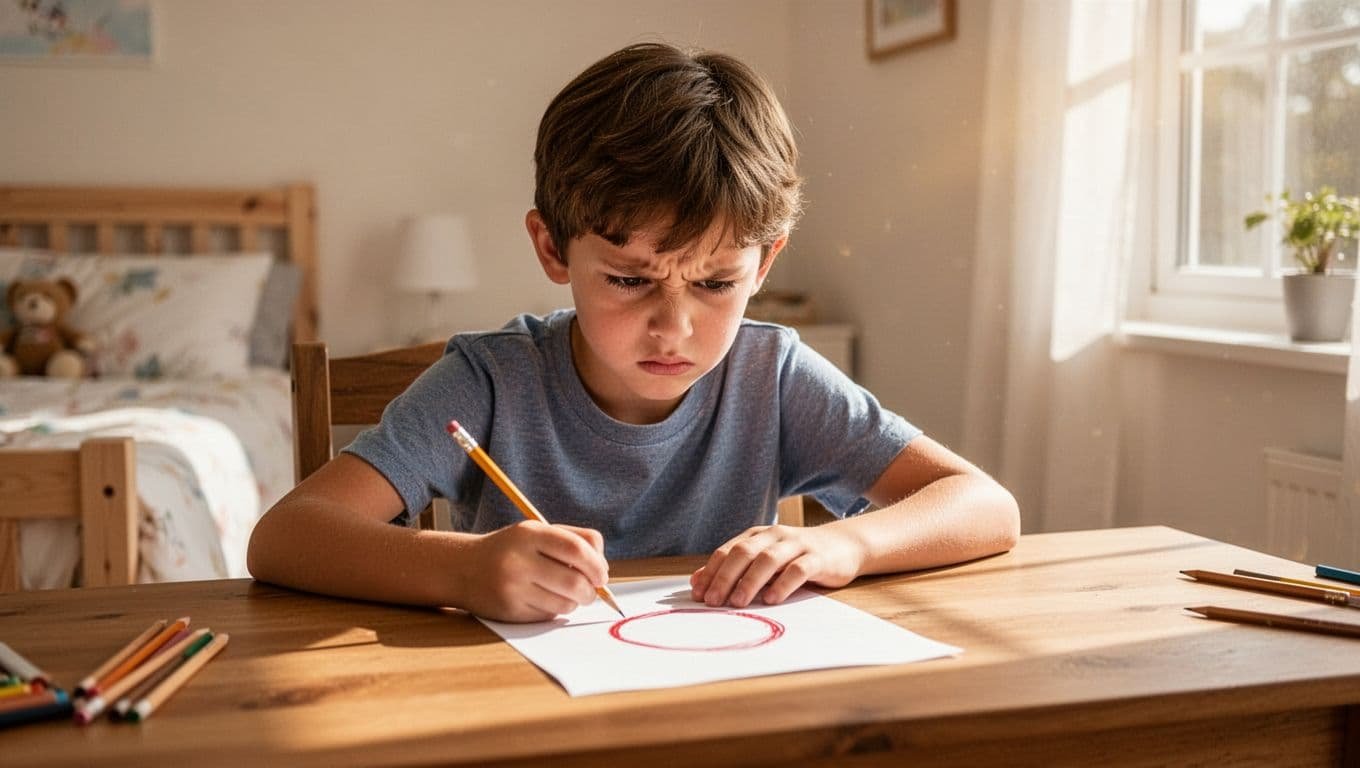
When kids connect errors with shame, they often stop taking healthy risks. They may avoid hard assignments, rush through work, or refuse to start unless they are sure they can finish perfectly. The National Association for Gifted Children notes that this pattern can lead to procrastination, avoidance, and stress in gifted learners.
That fear can also sound like, “I don’t need help,” when the child really means, “I don’t want to look lost.” In practice, talent gets boxed in by worry. The child has the skill, but the fear of being wrong keeps the skill from showing up.
How parents can support effort without feeding pressure
The best praise is specific and calm. Notice the work, the progress, and the choices your child made along the way. Praising effort to build a growth mindset helps kids see that learning grows through practice, not perfection.
Try comments like:
- “You stayed with that problem even when it got tough.”
- “I liked how you tried a new way.”
- “You asked for help at the right time.”
Just as important, let your child struggle without jumping in too fast. A little friction helps kids learn how to think, revise, and recover. If every rough moment gets treated like a crisis, perfectionism grows stronger instead of softer.
Social life can feel awkward, lonely, or out of sync
For many smart children, social life feels like wearing shoes that do not quite fit. They may prefer older kids or adults, use advanced vocabulary, and care about topics other children barely notice. That can make them seem mature in one setting and oddly out of place in another.
When a child keeps missing the rhythm of peer life, they may start pulling back. Some hide their abilities to fit in. Others act younger at school, then sound older and more intense at home. Over time, that mismatch can lead to teasing, loneliness, or the feeling that no one really gets them. For a helpful look at what healthy peer bonds often need, see qualities of a good friend for kids.

Feeling different from other kids
A smart child may walk into a room and notice, almost at once, that their interests do not match the group. They want to talk about black holes, coding, or ancient history, while other kids want jokes, games, and quick fun. That gap can make them feel like a visitor in their own class.
The child may try hard to fit in, then give up after enough awkward moments. They might tone down their words, hide what they know, or stop raising their hand because standing out feels risky. Research on highly gifted children and peer relationships shows that this mismatch can create real social strain, especially when a child has few peers who think at a similar level.
Why friendship skills may lag behind brain power
A bright child can think like an older kid and still need help with basic friendship skills. Sharing, turn-taking, empathy, and reading social cues do not always grow at the same pace as vocabulary or logic.
That is why some smart children sound advanced in conversation but still miss when a classmate feels hurt or bored. They may dominate talks, correct other kids too fast, or talk for ages about one favorite topic. With empathy skills for better relationships, parents can help bridge that gap so the child connects more easily and feels less alone.
Raising a smart child often means parenting the whole environment
Bright children do better when the people around them stay steady. That means the parent, the school, the daily schedule, the screen rules, and even the mood at home all matter. A child with a quick mind can still get thrown off by chaos, too many activities, or tense adults.
The parenting gifted children tips from Davidson make the same point, kids need support that fits their pace and their emotions. When the environment is built well, a smart child has room to think, rest, and act like a child instead of a constant little adult.
What these children need most from adults
Smart kids need steadiness, patience, clear boundaries, and honest connection. They do best when adults stay calm, even when the child has a strong opinion or pushes back hard. If every debate turns into a power struggle, the child learns to fight for space instead of using it well.

A steady parent does not need to win every argument. A better goal is to hold the line without heat, then talk things through once everyone is calm. That style gives a bright child structure without shutting down the curiosity that makes them shine.
School matters too. A child who is bored, overmatched, or socially stressed will bring that strain home. Parents often help most when they partner with teachers, ask for the right level of challenge, and keep adult stress away from the child as much as possible. A calm home works better than a perfect one, and authoritative parenting approaches often fit this kind of child well.
Small changes that can make life easier
The smallest adjustments often help the most. Offer harder books, build in quiet time after school, trim extra activities, and protect sleep before the day starts to fray. If screens keep the child wired, set clear tech limits and stick to them.
A few practical moves can make daily life smoother:
- Give one challenging book, puzzle, or project that stretches the mind.
- Keep one part of the day quiet, with no rush and no demands.
- Cut back on overscheduling if evenings keep ending in tears.
- Hold a steady bedtime, because tired brains lose control faster.

Family stress matters just as much. A child who senses tension between adults, rushed mornings, or constant noise may act out even when school is fine. The goal is not perfect parenting, it’s a home that gives a bright child enough challenge, enough rest, and enough room to settle. For sleep, children’s bedtime sleep guidelines can help you protect the rhythm that smart kids need.
Conclusion
Smart children are harder to raise because their strengths create new challenges at home, at school, and with friends. They get bored fast, feel things hard, and often push toward perfection, so everyday parenting takes more patience than people expect.
These struggles are common. Boredom, intensity, perfectionism, and social mismatch are all part of the same picture, and they do not mean a child is broken or a parent is failing. The best support is steady, calm, and honest, with enough challenge to keep the child engaged and enough structure to help them feel safe. It also helps to watch for signs you’re overparenting your child, because bright kids still need room to handle age-appropriate frustration.
With the right support, these children can grow into confident, balanced adults. Their intensity becomes strength, not strain.
Save pin for later

- 25 Gothic Tattoo Ideas for a Bold, Dark Look - 21/09/2026
- 34 Black Fine Line Tattoo Ideas for a Delicate Look - 21/09/2026
- 23 Micro Tattoo Ideas for Women With Meaning - 21/09/2026

